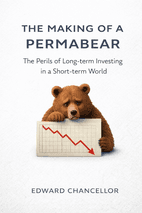
Jeremy Grantham's The Making of a Permabear distills his investment philosophy, arguing that long-term success requires understanding market cycles and behavioral finance to avoid speculative bubbles. It's for serious investors and finance professionals seeking a disciplined, value-focused framework.
Feature
Insta.Page
Blinkist
Shortform
The Making of a Permabear
✓
✕
✕
Summary Depth
Full Chapter-by-Chapter
15-min overview
Section-by-section guides
Audio Narration
✓
✓
✓
Visual Mindmaps
✓
✕
✕
AI Q&A
✓
✕
✕
Quizzes
✓
✕
✕
PDF Downloads
✓
✕
✓
Price
$89.99/yr
$146/yr (PRO)
$199/yr
*Competitor data last verified July 2026.
1 Page Summary
In The Making of a Permabear, legendary investor Jeremy Grantham distills his decades of experience as a co-founder and long-term investment strategist at GMO. The book’s central thesis is that a successful, long-term investment philosophy must be rooted in an understanding of market cycles, mean reversion, and behavioral finance, often requiring the courage to stand against rampant market euphoria. Grantham argues that being a "permabear"—a persistently cautious or skeptical investor—is not about perpetual pessimism but about a disciplined adherence to value, a respect for historical patterns, and a willingness to identify and avoid speculative bubbles, even when it is professionally and socially difficult to do so.
Grantham’s approach is distinctive for its synthesis of rigorous quantitative analysis, economic history, and a sharp critique of short-termism in both markets and corporate management. He illustrates his points with deep dives into major bubbles, from the dot-com era to the 2008 financial crisis, showing how the interplay of irrational investor behavior, easy monetary policy, and ignored fundamentals leads to predictable and painful reversions. The book is as much a memoir of his contrarian calls as it is a framework for analysis, emphasizing the importance of patience and the psychological fortitude required to wait for markets to return to fair value.
The intended audience includes serious individual investors, finance professionals, and anyone interested in the psychological and cyclical forces that drive financial markets. Readers will gain not a collection of stock tips, but a foundational philosophy for navigating volatility and uncertainty. The key takeaway is a reinforced understanding that while timing bubbles perfectly is impossible, recognizing their hallmarks and maintaining a discipline focused on long-term value is the surest path to preserving and growing capital over a full career.
Prologue
Overview
The prologue opens at a moment of profound professional crisis in late 1974. The author and his partner, Dean, are in New York fighting to retain their most prestigious client, the Rockefeller Family Fund, after a period of terrible investment performance. The meeting becomes a defining test of conviction, composure, and the courage to stand by an unpopular but data-driven investment thesis.
A High-Stakes Meeting
The setting is the client's offices in Rockefeller Center. The fund represented a critical, albeit small, portion of their firm's assets, but its prestigious name was vital for credibility. For the first time, Laurance Rockefeller—grandson of Standard Oil's founder—attends the meeting, adding immense pressure. He is flanked by a committee of nine intelligent trustees, including friends of the author, and a watchful advisor.
The Impossible Pitch
Facing the group, the author makes an impassioned case for small-cap value stocks, an asset class that had fallen to an "absolutely all-time low." The data suggested these stocks needed to rise 100 percentage points against the market to return to trend—a staggering claim. Finding this figure "inherently unbelievable," he instead pitches a still-extraordinary 50 percentage points of outperformance, arguing this was a rare, once-in-a-lifetime buying opportunity.
A Stinging Rebuke and a Moment of Fury
At the pitch's conclusion, Laurance Rockefeller delivers a devastating, stage-whispered verdict: “Well, it's a lot of words, but what does it mean?” The author is overcome with fury—his eyes water, he flushes, and he momentarily loses awareness of the room. He experiences an out-of-body sensation as he hears himself interrupt his partner Dean and ask for a second chance to make his case.
Recovery and a Graceful Exit
Given the floor again, he boils his argument down to its essence, delivering it with sharp clarity. Unseen by Mr. Rockefeller, the committee members behind him nod in sympathetic encouragement. After finishing, the partners leave. Walking down Fifth Avenue in silence, contemplating the likely loss of the account, Dean offers a generous and characteristic assessment: “Well, if you've got to go, you might as well go with style.”
Key Takeaways
True investment conviction is tested in moments of maximum pressure and poor short-term results.
Presenting complex, counterintuitive data requires clarity and courage, especially when facing skepticism from powerful figures.
Emotional control is critical; the ability to recover from a professional insult and reframe an argument can salvage a situation.
The narrative establishes a core investment philosophy: extreme valuations, while painful in the short term, can create historic opportunities for those who understand long-term trends.
Partnership and personal grace under pressure, as embodied by Dean's closing remark, provide invaluable support during crises.
Key concepts: Prologue
1. Prologue
High-Stakes Client Crisis
Fighting to retain prestigious Rockefeller Family Fund
Meeting tests conviction during terrible performance
Data suggests 100% outperformance needed for trend
Argues for once-in-a-lifetime buying opportunity
Emotional Crucible
Rockefeller delivers devastating whispered rebuke
Author experiences fury and out-of-body sensation
Requests second chance to make case
Recovery and Grace Under Pressure
Boils argument to essence with sharp clarity
Committee members nod in encouragement
Partners exit contemplating likely account loss
Core Investment Philosophy
True conviction tested during poor short-term results
Extreme valuations create historic opportunities
Partnership provides invaluable support in crises
💡 Try clicking the AI chat button to ask questions about this book!
1. Gasbag
Overview
Jeremy Grantham’s formative years were a crucible for the legendary investor he would become. Born into the twin disciplines of Yorkshire pragmatism and Quaker thrift, his childhood was a masterclass in frugality. Raised by grandparents who built a business empire on the principle that waste was a sin, he absorbed a worldview where "cheap is better than expensive" long before he knew what a stock was. Post-war austerity, empty toy shops, and darned socks weren't hardships but lessons, brainwashing him with an instinctive aversion to extravagance that would define his value-investing philosophy.
This thrifty, analytical mind collided with a fiercely competitive nature at a strict boarding school, where his incessant talking earned him the lifelong nickname "Gasbag." Though he struggled with traditional exams, he dominated in games and sports, learning to identify statistical edges in Monopoly and run profitable candy lotteries. A pivotal, hollow victory in a school race taught him that some wins weren't worth "dying for," a lesson in risk and reward. After a false start studying English, he pivoted to economics at university, where he developed a lasting skepticism for economic theory, viewing it as unhelpful brainwashing for practical investors.
A miserable stint in the family business, marked by comic failures like snipping off his own tie at Harrods, ended after a job interviewer sneered he needed 40 years of experience or a Harvard degree. This rejection became a catalyst. He got into Harvard Business School through a combination of shrewd strategy—outmaneuvering Oxbridge rivals in a group interview—and fortunate support from an employer and a loophole that kept him out of the military.
At HBS, he initially felt like an imposter among polished peers. His breakthrough came not from innate confidence but from preparation and seizing an opportunity during an ethics case, which taught him that many of his seemingly assured classmates were, in his view, "nitwits." Two academic experiences were transformative. The first was the concept of "marketing myopia," which led to a tantalizing but ultimately lost fortune in a consulting project. The second was a class experiment he championed that proved "status trumps content," demonstrating how a speaker's perceived rank unfairly influences how their ideas are received.
This cemented his identity as an "ideas person"—a creative, long-term strategist distinct from short-term "executive types." He describes his thought process as the "butterfly effect," a digressive style of flitting between topics to allow his subconscious to connect dots, tolerating many bad ideas to find a few great ones. He learned, however, that a brilliant idea is worthless without the willingness to fight aggressively for it in a corporate world obsessed with status.
After business school, a Myers-Briggs test confirmed his self-image as a strategic "dolphin" among investment "owls." A brief, disillusioning foray into management consultancy, where telling clients hard truths got his firm fired, pushed him toward investing. He landed a lucrative job at a fund, realizing with irony that he had jumped to "the fortunate side of the equation," where immense financial reward bore little relation to job difficulty or social value. From wartime Yorkshire to the halls of Harvard, every experience wired him to spot value, question consensus, and understand that the market, much like a schoolyard, often rewards perception over substance.
Family Background & Early Influences
Jeremy Grantham introduces himself as the product of "double jeopardy": a Quaker and a Yorkshireman. This combination, he suggests, destined him for value investing, with Yorkshire plain-speaking and Quaker thrift as core inherited traits. He was born in 1938 into a family of contrasting backgrounds. His father, an ambitious civil engineer from the "junior branch of an upper-class family," died overseas in 1942 when Jeremy was just a toddler. Consequently, his mother moved the family to Doncaster, Yorkshire, to live with her resolutely working-class parents.
His maternal grandparents became the central figures in his upbringing. His grandfather, an apostate Quaker, lived by Quaker principles of thrift, modesty, and hard work. Starting with a single bakery, he and his wife built a small empire of 17 stores through sheer frugality. During the war, they ran a restaurant and famously refused to profiteer from food shortages, instead serving affordable meals with remarkable efficiency. Grantham credits this environment—where waste was anathema, socks were darned relentlessly, and clearing one’s plate was mandatory—with brainwashing him into a lifelong aversion to extravagance.
Wartime Childhood & Values
Grantham’s early childhood was defined by wartime and post-war austerity in Britain. Rationing meant sparse toy shops, limited food, and a culture of "make do and mend," enthusiastically promoted by government propaganda like the "Squander Bug." He recounts poignant moments, like his mother weeping in an empty toy shop and his choice of a wooden sword that was soon "mysteriously vanished" by adults. Life improved gradually after the war as rationing eased, marking his first experiences with bananas, melons, and freely available candy—revelations in a time of soaring post-war prosperity.
The values imparted by his grandparents, however, were indelible. He describes his grandfather’s calm atheism on his deathbed and his grandmother’s daily use of the cinema as a babysitter, where he absorbed countless classic films. This upbringing installed a powerful, instinctive operating system: "I hate waste. I feel forced to be economical." He sees his later philanthropic giving as a testament to their powerful hold, a form of "ancestor worship" that shaped his character and, ultimately, his investment philosophy: "every Yorkshireman worth his salt is born with the natural understanding that cheap is better than expensive."
Education & Early Competitive Traits
At age eight, Grantham was sent to the Royal Masonic Junior School for Boys, a boarding school for sons of deceased Freemasons. He found it an alien, cold, and cruel environment. Compulsory silence conflicted with his powerful urge to talk, a trait he attributes to growing up in a household of dominant women where he could hardly get a word in. His incessant talking earned him the nickname "Gasbag Grantham" (shortened to "Gas" by teachers) and made him "the most punished boy in the school," until the staff essentially gave up and granted him a grudging dispensation.
Academically, he struggled with traditional exams due to a poor retrieval memory, though he possessed a strong memory. His competitive nature, which he believes he inherited from his athletic father, found its outlet in sports, where he became victor ludorum. A pivotal moment came during an exhausting half-mile race where he defeated a favored friend through sheer, painful effort. The hollow feeling after that win led him to vow never to try that hard at sport again, realizing winning wasn't worth "dying for."
This competitive and analytical drive also expressed itself in games. He dominated at Monopoly by identifying the "value stocks" on the board—properties with the highest statistical return. He ran a profitable candy lottery and roulette games among classmates, and engaged in shrewd stamp trading, learning early lessons about value, perception, and the unfairness of casual anti-Semitism when his Jewish friend was wrongly blamed for their ventures.
University and Academic Pivot
After failing his A-levels, the author attended a London crammer where he finally studied English literature, excelling under passionate teachers. He passed with top marks but found his first university choices rejecting him. He accepted an offer from Sheffield University, initially studying English before quickly switching to economics to avoid intense competition and challenging language requirements. He found the economic curriculum of the era, focused on theory and history rather than complex econometrics, to be a relief. He expresses deep skepticism about modern economics, viewing it as unhelpful for investors and a form of intellectual brainwashing, recalling how long it took to "deprogram" economics PhDs at his firm. He thrived academically in his second year, impressing the economist Sir John Hicks and earning an offer to pursue a doctorate on taxation and incentives—an opportunity he declined.
The Family Business and an Unhappy Stint
Following graduation, the author joined his stepfather's catering and hospital equipment business, feeling pressured by what he saw as a "mild form of blackmail." He found the work miserable but memorable for its comical failures: at Harrods, he accidentally snipped off his own tie with a multi-tool during a demonstration, and he shattered a "indestructible" polycarbonate teacup when a hospital buyer jumped on it. His only consolations were rewarding himself with 15 minutes of reading after appointments and attempting to learn languages from tapes recorded by foreign girlfriends. Extricating himself from the family business caused immense anxiety, and it was only after his stepfather discovered a botched job interview that he finally found the nerve to leave.
Career Transition and the Path to Harvard
Job hunting led to a demeaning interview with a consulting firm, where a dismissive executive sneered that he should come back after 40 years of experience or a Harvard Business School degree. This directly motivated him to apply to HBS. He also interviewed with Shell, where he confidently handled a question mocking Sheffield as a "cultural wilderness" and was offered a well-paid executive trainee position. During his nine months at Shell, he wrote an unconventional, widely circulated paper arguing the U.S. should become a coal-based economy. His Harvard application process included a test he aced and a notorious group interview where he ruthlessly outmaneuvered a group of Oxbridge candidates by steering the discussion to a topic he had mastered, securing his admission.
Parallel to this, he met and quickly proposed to Hanne, a German au pair, forging a relationship that provided personal support during this turbulent professional period. His departure for Harvard was smoothed by a remarkable offer from a senior Shell executive, a fellow Yorkshireman, who agreed to keep him on the payroll during his studies, covering a third of the costs. He also narrowly avoided military service in both the UK and the U.S. due to fortunate timing and loopholes.
Arrival at Harvard Business School
He arrived at HBS to find it less an intellectual challenge and more a "spectacularly rigorous trade school," focused on rapid case studies and corporate jargon. The financial support from Shell and freedom from the draft allowed him to focus fully on this new phase.
Finding His Voice
The author describes overcoming intense intimidation during his first six weeks at Harvard Business School, where he felt like an imposter among the confident Ivy League graduates. His breakthrough came during a case study on ethics—a topic he enjoyed but others dismissed. After volunteering and delivering a well-prepared presentation, he successfully defended his thesis against classmates and earned rare praise from both a high-status peer and the visiting professor. This experience was transformative, teaching him that many in the class shared his initial fears, and that a significant portion of his peers were, in his estimation, "nitwits." It also highlighted the divide between the naturally confident and those who had to find their footing.
Standout Lessons and a Lost Fortune
Two courses left a lasting impact. The first was Ted Levitt's marketing class, which introduced the seminal idea of "marketing myopia"—that companies should define themselves by the need they serve, not the product they make (e.g., "energy companies" not "oil companies"). This led to a consulting project for International Minerals and Chemicals (IMC). The author's team concluded IMC could not compete directly with the entrenched market leader, Scott's, in the lawn fertilizer business and should instead acquire the company. While the idea was initially rejected by IMC's managers, it ultimately convinced the company's chairman, who flew the team to a retreat. The group was promised a life-changing finder's fee, but the deal—and their fee—vanished when the chairman was ousted in a corporate coup.
The "Status" Experiment and Identifying as an "Ideas Person"
The other memorable course was a short-lived experiment in group dynamics. The author proposed and fiercely debated for an experiment to measure how a person's perceived status influenced how their ideas were received. The class ranked each member by status with "incredible unanimity." The experiment proved that identical comments received high scores when delivered by high-status individuals and low scores when delivered by low-status individuals. This confirmed that people often respond to the speaker's standing, not the content of the idea. This experience cemented the author's self-identification as an "ideas person"—a creative, long-term thinker—as opposed to the "executive type" focused on short-term implementation and crisis management.
Butterfly Effect Thinking
The author explains his method of generating ideas through what his colleagues call the "butterfly effect." He thrives on asking simple, fundamental questions ("What is going on here?") but has a limited attention span, needing to flit between topics. He deliberately takes breaks, digresses, and tells stories, allowing his subconscious to process problems. He believes this method, tolerating many half-baked ideas to find a few truly good ones, is essential for original thinking in investing. He also stresses that having a good idea is not enough; one must be prepared to fight aggressively for it in the corporate world, where an idea's merit is often secondary to the status of its proposer.
From Consultancy to Investing
After business school, a Myers-Briggs test at a client dinner typed him as an INFJ—a "dolphin" among the "owls" (the investment heads from major firms), reinforcing his self-view as a strategist, not a natural executive leader. His early career included lucrative summer jobs and a stint at a management consultancy, Cresap McCormick and Paget. He quickly grew disillusioned with consulting's tendency to tell clients what they wanted to hear, citing a project where the correct but unwelcome advice to sell the Old Spice brand got his firm fired. Seeking more excitement, he targeted the investment industry. After a rejected interview at Fidelity, he accepted a job at Keystone Funds for a surprisingly high salary, realizing he had "jumped to the fortunate side of the equation," where financial rewards bore little relation to job difficulty or social usefulness.
Key Takeaways
Confidence is Constructed: Initial feelings of being an imposter are common and can be overcome through preparation and seizing the right opportunity to prove one's capability.
Status Trumps Content: In group settings, the perceived status of a speaker often influences the reception of their ideas more than the quality of the ideas themselves.
Value the "Ideas People": Organizations need both creative, long-term thinkers ("ideas people") and efficient, short-term implementers ("executive types"), but they function very differently.
Embrace Digressive Thinking: Creative idea generation often benefits from a non-linear, "butterfly" approach that allows for breaks and subconscious processing rather than forced, continuous focus.
Fight for Your Ideas: In the corporate world, excellent ideas do not speak for themselves; they require persistent and forceful advocacy from their originator.
The Reward Paradox: High compensation in fields like finance is not necessarily correlated with job difficulty or social value, but rather with the industry's economic structure.
Key concepts: 1. Gasbag
2. 1. Gasbag
Foundational Values & Upbringing
Raised with Yorkshire pragmatism and Quaker thrift
Grandparents' business built on principle that waste is sin
Wartime austerity brainwashed instinctive aversion to extravagance
School Years & Competitive Nature
Earned lifelong nickname 'Gasbag' for incessant talking
Learned to identify statistical edges in games and sports
Hollow victory in race taught lesson about risk and reward
Academic Development & Skepticism
Pivoted from English to economics at university
Developed lasting skepticism for economic theory
Viewed theory as unhelpful brainwashing for practical investors
Harvard Business School Breakthrough
Initial imposter syndrome among polished peers
Breakthrough came from preparation and seizing opportunity
Learned many assured classmates were 'nitwits' in his view
Transformative Academic Concepts
'Marketing myopia' concept led to tantalizing lost fortune
Class experiment proved 'status trumps content'
Demonstrated how speaker's rank unfairly influences ideas
Disillusionment with management consultancy pushed toward investing
Realized investment offered 'fortunate side of the equation'
2. The Zero-Sum Game
Overview
The chapter chronicles a journey from naive enthusiasm to hard-won wisdom, tracing the evolution of an investor’s philosophy. It begins with a teenage foray into the market, fueled by misguided insider advice that ends in a family friend’s ruin and an early lesson in the dangers of incomplete information. This pattern repeats during a speculative "gunslinger phase" in business school, where leveraged bets on trendy stocks like American Raceways lead to painful losses. These experiences forge core principles: the necessity of diversification, the ever-present risk of fraud, and the importance of understanding deep cultural barriers to a business. They ultimately catalyze a shift from speculation to a frugal, conservative approach aligned with the value investing of Benjamin Graham.
Entering the professional world at Keystone in Boston, the author finds an investment landscape he considers amateurish, dominated by salesmanship over rigorous analysis. His first major success comes with a deep-value analysis of Brunswick, though it leads to a tense SEC interrogation that narrowly avoids implicating him in rule-breaking activism meant to benefit fund investors. This success builds his reputation but also fuels a restless ambition. He co-founds Batterymarch Financial with grand dreams, only to confront a brutal reality of near-zero assets, personal financial wipeouts, and years of extreme frugality that test the team’s resolve.
Within this lean, research-focused environment, a revolutionary idea crystallizes. It stems not from academic theory but from a pragmatic observation: investing is a zero-sum game. Like poker, for every winner there is a loser, and all players pay costs. Since active managers collectively are the market, they cannot beat themselves and only add drag. This logic births the concept of index funds, an idea so obvious yet so derided that it earns Batterymarch "Dubious Achievement Awards" for years before gaining a foothold, later championed by Jack Bogle at Vanguard.
While indexing brought notoriety, Batterymarch’s heart was contrarian value investing, specializing in neglected, small-to-medium companies. Immersive analysis of small caps revealed they moved in dramatic cycles and that their long-term outperformance largely came from the mechanical process of rebalancing—selling winners that had grown large and buying losers that had become small. This "buying losers" strategy directly contradicted Wall Street adages and proved highly effective, especially when averaging down on falling prices. This led to a massive, career-risking bet against the fashionable Nifty Fifty stocks in the early 1970s, a contrarian stance that caused severe underperformance and client losses as the mania peaked.
Enduring this storm required immense conviction, rooted in proprietary data showing small caps were historically cheap. The dramatic market reversal in 1975 validated this faith spectacularly, launching a historic small-cap rally that catapulted Batterymarch’s performance and assets. This period cemented a foundational belief: the market can be profoundly inefficient, especially with smaller, neglected companies, and trusting one’s own diligent research is paramount. It also highlighted a key distinction: one can have far greater statistical confidence in a broad, quantitative sector bet than in any single company’s fate. The resulting explosive success, however, sowed seeds of discord over credit for the firm’s innovative strategies, leading the author to eventually depart and seek accountability on his own terms.
The author recounts his earliest foray into investing at age sixteen, motivated by the overconfident projections of a family friend involved with Acrow, a scaffolding company. With £16 from his childhood savings account, he purchased Acrow A shares through a bemused bank manager. Years later, as he prepared for business school, he sold these shares—now worth about £100—to his mother to avoid brokerage fees. Shortly afterward, Acrow collapsed to zero, wiping out the family friend's nest egg and teaching a harsh first lesson: even enthusiastic "inside" advice from company insiders can be dangerously incomplete or misguided.
Business School and the Gunslinger Phase
Arriving in America for business school, the author and a friend, Phillip, began investing with summer earnings, seduced by freely available Wall Street research and a rising bull market. After graduating and starting a consulting job, he embarked on an aggressive plan to grow his capital quickly to return to Europe wealthy. He employed leveraged borrowing tactics, using mutual fund certificates as collateral, and plunged into the speculative "go-go" market of the late 1960s, focusing on tiny, risky stocks.
His defining speculative moment came with American Raceways, a company aiming to bring Formula 1 racing to the U.S. After an initial purchase, the stock soared, and he sold all his other holdings to triple his position on margin. The stock skyrocketed further, briefly making him paper-rich before it crumbled due to a fundamental cultural miscalculation—Americans did not take to Formula 1. He sold at a significant loss, a pattern repeated with the ahead-of-its-time technology firm Market Monitor Data Systems, which ultimately left him with only $5,000 of his accumulated capital.
Hard-Won Investment Lessons
These painful losses taught enduring principles: the peril of acting on limited inside information; the necessity of diversification; the constant risk of fraud or incompetence; and the importance of understanding deep cultural or infrastructural barriers to a business model. Most significantly, the experience transformed him from a speculator seeking excitement into a patient, long-term value investor, aligning with his naturally frugal and conservative temperament. He embraced the philosophy of Benjamin Graham, focusing on fundamental ratios, safety margins, and the bedrock value beneath market prices.
Entering the Professional World at Keystone
Moving to Boston, he joined the investment firm Keystone. He found the late-1960s investment world "terribly amateurish," dominated by salesmanship rather than analysis. At Keystone, he was struck by the lack of rigorous standards; valuation was based on arbitrary rules of thumb like P/E ratios. He began obsessively questioning what true value was and how to measure it. A memorable encounter with the economist Franco Modigliani, who graciously accepted a public correction from him, left a lasting impression of intellectual generosity.
Keystone’s structure, which segmented the market into graded risk categories, was a brilliant innovation that was never effectively marketed. The author’s first major professional analysis was on Brunswick, a company whose sum-of-parts value far exceeded its market price. His research prompted Keystone and Fidelity to take large positions and attracted a potential acquirer. However, Brunswick management attempted a defensive merger to entrench themselves, a move the author helped block by rallying shareholder opposition. While this activism was successful, the subsequent takeover bid fell apart due to a Wall Street backlash against aggressive financiers, and the author later found himself subpoenaed by the SEC regarding the events.
The SEC Interrogation and Early Career Moves
Following his successful Brunswick analysis, the narrator found himself in an SEC interrogation room, where every word was recorded. The investigators focused narrowly on whether he had informed his superiors about a market rumor regarding a pending offer for Brunswick. They were satisfied when he explained that in the deal-heavy environment of 1968, reporting every rumor would have gotten him fired. Crucially, they never asked the more damning questions: whether he was personally involved or had tipped off investment banking friends. He had resolved to confess if asked, as his actions—aimed at maximizing returns for mutual fund investors—technically violated rules against interfering in corporate affairs. He felt a bullet had whistled past his ear. The deal died, but Keystone sold its stock at a large profit, cementing his reputation.
This success led to him being given the airline industry to cover. He innovated by hosting a debate between the leading bull and bear analysts for Keystone's fund managers, creating a minor sensation. Concluding the entire regulated industry was a buy, he wrote Keystone's first industry recommendation, a boilerplate case duplicated for each airline. Fund managers like Dean LeBaron bought in heavily. After less than a year, his salary was generously increased to $20,000, but he grew restless.
Founding Batterymarch and Lean Years
Socializing with a friend from a competing firm, he concocted a cocky plan to start their own fund, with Dean LeBaron as chairman. Dean initially agreed, then backtracked, deciding to start his own firm instead. Dean then proposed that the narrator join him, creating a dilemma. He ultimately chose Dean, offering his friend a job, which was declined. In June 1969, Batterymarch Financial was founded, with a 60/40 ownership split favoring Dean and grandiose dreams of managing a billion dollars quickly.
The reality was brutally sobering. A year later, they had one $100,000 account. Soon, they were surviving on Dean's wife’s money while the narrator worked for nothing. By the end of 1974, after over five years, they managed just $48 million. The narrator’s personal $80,000 investment portfolio, accrued before leaving Keystone, was wiped down to $5,000 within six months due to his own "gunslinging" adventures, making his wife Hanne’s income essential. They lived in extreme frugality for years, barely affording newspapers or new clothes, sustaining themselves on hope.
Team Dynamics and an Intellectual Haven
Dick Mayo, a former Keystone colleague, joined and took over portfolio management of their paper portfolio, with the narrator handling the remainder. They operated on a rule of unanimous stock selection. Dean, a hard-working, ambitious, and charismatic Harvard Baker Scholar, focused on business development and mastering the art of positive propaganda—a crucial lesson about promoting good ideas.
Freed from bureaucracy, the narrator's role was pure research heaven. He had no managerial duties, no required meetings, and could spend weeks burrowing into any interesting idea across niche industries like regional trucking and food retail.
The Genesis of the Zero-Sum Game
In his second year at Batterymarch, a pivotal idea emerged during a Harvard Business School case discussion led by Dean’s friend, Lee Bodenhamer. The case compared three investment styles. When asked to comment, the narrator pointed out that no one had suggested simply giving money to Standard & Poor's, as the index appeared to be the best bargain on risk, return, and cost.
Back at the office, they toyed with starting an index-tracking fund. Dean initially hated the idea and forbade further discussion. The narrator’s investing friends, especially the knowledgeable Ezra Mager, ridiculed it, arguing Americans would never settle for mediocrity. For over 30 years, this proved true.
The insight crystallized not from the academic "efficient market hypothesis," which he dismissed, but from the undeniable reality that investing is a zero-sum game. Like poker, for every winner there is a loser, and all players incur costs (fees, commissions). Since money managers collectively are the market, they cannot beat themselves and only add costs. To outperform by 2% with 2% costs, they had to find players who would underperform by 6%.
The Slow, Derided Birth of Indexing
Despite its logic, the idea was a hard sell. Batterymarch proposed an index fund to a prospective client in 1971, who declined. They were unaware that Wells Fargo (responding to a client request) and American National Bank of Chicago were working on similar concepts independently. The narrator's zero-sum argument contrasted with others' efficiency-based reasoning.
For years, indexing was mocked. Pensions and Investments magazine gave Batterymarch "Dubious Achievement Awards" in 1972 and 1973 for the most talked-about product with no assets. The first client, a local telephone company, finally signed up in 1973. By February 1976, only $500 million was indexed across the "Big Three."
Bogle, Vanguard, and Inevitable Victory
In August 1976, Jack Bogle launched Vanguard's First Index Investment Trust with a mere $11 million, derided as "Bogle’s Folly" and even called "un-American" by competitors. Bogle’s premise aligned with the zero-sum game. The narrator deeply respected Bogle’s dogged, low-cost, pro-investor focus, even as Vanguard started slowly, attracting mostly finance professors.
The narrator saw indexing’s success as inevitable, a simple, fully-formed idea born from asking where investment returns come from. He concluded that for the average institution or ordinary investor, indexing is the prudent, low-cost choice. The great irony is that as indexing succeeds and the worst "poker players" drop out, the remaining active players become more skilled, making outperformance increasingly difficult—a problem for future generations to solve.
Key Takeaways
A pivotal SEC investigation highlighted the conflict between fiduciary duty and regulations, allowing the author to escape unscathed and build his reputation.
The founding of Batterymarch was born of ambition but met with a harsh financial reality, leading to years of personal and professional frugality that forged team cohesion.
The core investment insight was not market efficiency, but the zero-sum game: after costs, active managers collectively must underperform the market.
The index fund, though logically compelling, faced decades of derision and slow adoption before pioneers like Jack Bogle at Vanguard proved its overwhelming long-term value for ordinary investors.
True, simple ideas in finance can be obvious yet revolutionary, but their adoption is never guaranteed and often requires surviving a long, uncertain gestation period.
Batterymarch’s Contrarian Philosophy
While indexing brought the firm early notoriety, Batterymarch's core identity was as a value fund, seeking lower risk and higher returns by buying stocks cheap relative to their fundamental value. The approach was consciously contrarian, moving away from the herd to specialize in neglected, unfashionable stocks. This led to the creation of the "Batterymarch Universe"—about 100 small-to-medium sized, quality companies that were so under-followed that a simple phone call could provide a significant informational edge. The author found the classic value investing text, Graham and Dodd’s Security Analysis, to be stating the obvious, and preferred Keynes’s insights into market psychology, even clarifying that Graham’s famous "voting machine" quote did not originally include the "weighing machine" counterpart.
The Discovery of Small Cap Cycles
The author immersed himself in analyzing small cap stocks, laboriously creating what he believes was the first small cap index by hand using the Fisher-Lorie database. Charting this data revealed two key insights: over the long term, small caps delivered superior returns, but their performance moved in dramatic, cyclical waves. Crucially, they were far riskier, suffering catastrophic losses during the Depression. This inherent risk meant they should trade at a discount, justifying their higher returns in normal times. However, the analysis also showed that most of the extra return came not from holding small companies, but from the annual rebalancing process that systematically sold winners (which had grown large) and bought losers (which had become small).
The Power of Selling Winners and Buying Losers
This rebalancing strategy directly contradicted the conventional wisdom to "cut your losses and let your profits run." Batterymarch discovered that in a mean-reverting world, selling winners and buying losers was a winning strategy. They tested this by examining failing companies within their universe, finding that most survived and recovered. Averaging down—buying more of a stock as its price fell—proved particularly profitable. Their analysis showed that initial purchases outperformed, but second purchases (averaging down) did even better, and buying "serial losers" a third time produced the best returns of all. This process was their method for capturing a "mean reversion premium."
Sector Tilting and the Nifty Fifty Climax
The author concluded there was no pure "small cap effect," only a mean reversion effect and a risk premium for lower quality. The real advantage in the early 1970s was the lack of competition. Using David Morse’s innovative dividend discount model as a screening tool, Batterymarch began "sector tilting," heavily weighting the portfolio toward small caps because they were historically cheap. This positioned them diametrically against the "Nifty Fifty" boom—a mania for large, high-quality "one decision" stocks like IBM and Coca-Cola, where valuation was ignored. The author’s data showed the Nifty Fifty trading at a 50% premium to fair value, while his small caps were dirt cheap, creating an extreme valuation gap exemplified by the similar grocery chains Safeway (expensive) and Albertsons (cheap).
Weathering the Storm
This contrarian bet brought severe career risk and short-term pain. As the Nifty Fifty frenzy peaked, Batterymarch suffered sickening underperformance. The subsequent brutal bear market of 1973-74 crushed all stocks, but small caps became absurdly cheap, with some like Security-Connecticut Life falling 90% despite steady 15% annual earnings growth. While Batterymarch’s higher-quality small cap portfolio held up better than the small cap universe, they still lost a third of their business because clients found losing money in obscure companies "inelegantly" compared to losing it in household names. A make-or-break meeting with their largest client, Laurance Rockefeller, resulted in a reprieve just before the market turned.
The Reversal and Revelation
The market's sudden reversal in early 1975 was dramatic and total. A powerful bull market began, lifting everything, but small cap value stocks led the charge with extraordinary force. This explosive, broad rally—the widest in history at the time—catapulted the author’s fully invested portfolio forward while competitors lagged with cash. The specific bet on Security-Connecticut Life paid off spectacularly, its price soaring until it was acquired at a massive premium. This experience delivered a foundational lesson: the market can be profoundly inefficient, especially with smaller, neglected companies, and trusting one's own diligent research is paramount.
Confidence in Data vs. Single-Company Risk
This episode highlighted a critical distinction. While the author had been temporarily bullied by the market into doubting a single stock, their confidence in the data for the entire small-cap sector never wavered. By the market's low, the statistical case for small caps—backed by proprietary data showing they were 50% cheap relative to history—was a source of immense conviction. This forged another key principle: one can be far more confident in a systemic, quantitative bet on a broad sector than in any single company, where hidden, idiosyncratic risks always exist.
Validation and Aftermath
The success was validated in a meeting with the Rockefeller Family Fund, where Laurance Rockefeller offered rare, near-apologetic praise. The author’s hand-drawn charts illustrated the stunning valuation reversal: by December 1977, the smallest stocks had swung from a deep discount to a large premium relative to large caps. The bullish small-cap call was, if anything, too conservative, as a historic rally commenced that would see small stocks outperform large by 177% over the following eight years.
Batterymarch’s performance during this period was exceptional, consistently generating alpha. This success translated into explosive growth, with assets under management doubling every six months. However, this very success sowed the seeds of departure. The senior partner, Dean, claimed disproportionate credit for the firm's innovative strategies (like its early focus on small-cap, quality, and value), including indexing, which he had originally opposed. Combined with concerns over unsustainable growth and fair compensation, this led the author and colleague Dick to sell their stakes back at a less-than-generous multiple, choosing to seek credit—or blame—on their own terms.
Key Takeaways
Market Inefficiency: The market can be wildly wrong, particularly regarding smaller, less-followed companies, creating opportunities for those who do their own work.
Trust Your Work: The most powerful lesson is learning to trust your own analysis and data over prevailing market sentiment.
Sector vs. Stock: Statistical confidence is stronger and more defensible when applied to a broad, well-researched sector or factor than to any single company.
Credit & Partnership: In creative enterprises, fair recognition for ideas can be as important as financial compensation, and misalignment on this can fracture even successful partnerships.
Key concepts: 2. The Zero-Sum Game
3. 2. The Zero-Sum Game
Early Painful Lessons
Family friend's ruin from misguided insider advice
Speculative 'gunslinger phase' leads to major losses
Learns dangers of incomplete information and leverage
Formative Investment Principles
Necessity of diversification and fraud awareness
Understanding deep cultural barriers to businesses
Shift from speculation to conservative value investing
Professional Beginnings at Keystone
Finds amateurish landscape dominated by salesmanship
Deep-value success with Brunswick attracts SEC scrutiny
Builds reputation but fuels restless ambition
Batterymarch's Lean Startup Struggle
Co-founds firm with grand dreams but zero assets
Confronts personal financial wipeouts and extreme frugality
This chapter recounts the formative years of GMO, founded by Jeremy Grantham, Dick Mayo, and Eijk van Otterloo, who launched the firm with a shared contrarian, value-first philosophy but scant resources. Their scrappy beginnings saw them deferring salaries and operating from a small office, relying on the portfolio they brought from their previous firm. A pivotal turn came when, through a series of last-minute pitches orchestrated by a consultant, they landed three major institutional accounts in a single week, securing the firm's survival. Early success was bolstered by strong performance and a historic bet on bonds in 1982, where they capitalized on mispriced yields, underscoring a client truism: wins forgive lapses, but losses magnify them. This experience crystallized Grantham's concept of the amateur's advantage, where outsiders can act decisively at market extremes, free from the constraints that bind professionals.
Despite their momentum, Grantham soon sounded alarm bells with his speech "The Death of Value," warning that value investing had become a crowded trade reliant on backward-looking metrics, a prescient call as cheap stocks stalled for years. To deepen their approach, Grantham partnered with mathematician Chris Darnell, bridging intuitive hunches with rigorous testing. Their collaboration fueled the build-out of an early quantitative engine, including a pioneering database compiled from library sources. A proposal from the International Monetary Fund led to the birth of GMO's formal quant business, even as early losses tested their ethics and spurred model refinement.
At the heart of their refined system lay the principle of mean reversion, the idea that profitability and prices revert to long-term averages, tempered by factors like quality—such as strong brands or low debt—that slow this process. This quality-tilted value model proved its mettle during the tech boom, famously identifying Microsoft as cheap throughout its rise and exiting before the bubble burst, the so-called Microsoft effect. To manage volatility, they integrated momentum, initially viewed as the "Antichrist" to value but embraced as a pragmatic complement. They settled on a 60-40 mix of value and momentum, balancing philosophical conviction in value with a wary acceptance of momentum's behavioral roots.
In exploring new edges, GMO tested a factor called neglect, based on low analyst coverage, which showed promise in historical data but failed utterly once live, highlighting how market inefficiencies can vanish upon implementation. Their quant team, wary of overcomplication, learned that elegant, multi-dimensional models often underperformed simpler versions, a lesson reinforced when their less-tweaked international products outpaced sophisticated U.S. efforts. Over time, the widespread adoption of technology eroded GMO's early edge, leading to a poignant realization: their deep, sample-based knowledge might have been more durable without computers. Ultimately, the chapter emphasizes the triumph of simple persistence—a basic model from 1982 would have outperformed its complex successors, underscoring that in quantitative investing, complexity often undermines performance, and behavioral factors like momentum reveal enduring market inefficiencies, even as they evolve.
The Founding Trio and Scrappy Beginnings
The partnership of Jeremy Grantham, Dick Mayo, and Eijk van Otterloo was formalized with the incorporation of GMO in October 1977. United by a contrarian, value-first philosophy but possessing different personal styles, they set a cautious initial goal: raise $10 million within three years or dissolve. Operating from a small office in the Batterymarch Building—with rent covered by early partner Kingsley Durant—the founders deferred legal fees and declined a financing offer that would have ceded majority control, starting with no salaries for themselves.
They launched with a single U.S. equity product, literally transferring the stock portfolio they had managed at Batterymarch. Grantham focused on building quantitative models to identify what to buy, while Mayo handled stock selection. For years, they benefited from the foundational work done at their former firm, even as industry consultants inexplicably continued to recommend Batterymarch without noticing the exodus of its investment team.
The Make-or-Break Week
The young firm’s breakthrough came unexpectedly from a brief visit by Hunter Lewis of Cambridge Associates. Grantham handed Lewis a disorganized sheaf of his working investment essays. Weeks later, Lewis called with a last-minute opportunity to present to Swarthmore College’s endowment committee. The trio delivered a nerve-wracking but successful pitch, winning a $5 million account. Astoundingly, Lewis called twice more in rapid succession, leading to similar last-minute presentations that landed them the pension funds of Corning Glass and the World Bank. In one week, GMO went from having virtually no institutional business to securing three prestigious accounts, ensuring the firm’s survival.
Performance, Discipline, and a Historic Bond Bet
Building on this momentum, GMO’s flagship fund outperformed the S&P 500 significantly in 1978 and 1979. As assets grew, they adhered to their cap, closing the fund at $250 million. Their early success was cemented by a bold, non-conformist move in 1982. Observing crushing bond yields near 16%—which implied permanent, astronomically high inflation—Grantham and Mayo saw profound mispricing. As equity managers, they aggressively bought long-term Treasury and ECU bonds for their fund. Mayo made an even more leveraged personal bet. They were proven right as interest rates peaked and fell dramatically, generating enormous gains. This trade, while a spectacular success, highlighted a client truism: wins forgive a lack of discipline, while losses magnify it.
The "Amateur's Advantage"
This experience crystallized a concept Grantham termed the “amateur’s advantage.” A professional, deeply entrenched in an asset class, is often forced to endure painful losses all the way to a market bottom and may lack the capital or conviction to buy at the extremes. An outsider, or “amateur,” can wait for an asset to become a true statistical outlier and then act decisively with fresh capital. He later applied this principle sporadically in commodities, such as buying oil futures with Dick Mayo at $10 per barrel in 1998, near the absolute low.
Warning Bells: "The Death of Value"
Despite strong performance, GMO’s early move away from small-cap value stocks proved premature, as that style became wildly popular in the early 1980s. By 1983, Grantham grew concerned that value investing had become a crowded, sanitized trade. In a speech titled “The Death of Value,” he argued that the sheer weight of new capital flowing into low P/B and low P/E stocks had eliminated their margin of safety. He warned that these “value” stocks were often low-quality companies and that simplistic metrics were backward-looking and risky. His warning proved prescient, as the cheapest value stocks ceased to provide excess returns for nearly two decades afterward.
Partnership with a Mathematical Genius
The narrative shifts to Grantham's admission of his own mathematical limitations—a "complete phobia of advanced mathematics"—and his pivotal partnership with Chris Darnell, a brilliant mathematician from Yale. This collaboration was the engine of GMO’s early quantitative research. Grantham supplied the investment hunches and conceptual frameworks, particularly around value cycles and mean reversion, while Darnell provided the mathematical rigor to test and formalize these ideas. Their dynamic was remarkably efficient: Grantham would arrive with a handful of new ideas each morning, and Darnell would swiftly identify the flaws, allowing them to rapidly iterate and refine their thinking. This symbiosis was crucial, as Grantham’s intuitive, real-world sense of numbers could catch errors in Darnell’s models, ensuring their work remained grounded.
Building the Early Quant Engine
To support this work, GMO made a significant early investment in a Prime mini-computer, a rarity in an industry that used computers only for back-office functions. Darnell’s first monumental task was to manually build a historical database of U.S. company financials from Value Line copies at the Boston Public Library. This painstaking work created one of the first computerized investment databases, enabling them to test hypotheses about valuation and cycles systematically. Their first quant model in 1980 was essentially an "expert system," designed to replicate the stock-picking logic they used manually, continuously refined until the computer's output portfolios made intuitive sense.
The IMF and the Birth of a Quant Fund
Despite having closed their main fund, GMO was approached by the International Monetary Fund’s pension managers, who were intrigued by their performance and methodology. During a famously spartan meeting, Grantham and his team explained their entire approach. The IMF’s Paul Woolley proposed a novel idea: instead of investing in the closed stock-picking fund, GMO should create a new product based solely on their top-down, quantitative models. This proposal sparked internal debate but ultimately launched GMO’s formal quant business in 1979. The timing was terrible, as a value downturn immediately caused losses. GMO’s ethical response was to move the IMF into their main fund at no fee until losses were recovered—a gesture that preserved the relationship and allowed them to develop a much-improved "second-generation" model.
Mean Reversion as a Foundational Principle
The core of their refined model was the principle of mean reversion—the idea that corporate profitability and asset prices inevitably wander back toward long-term averages. Grantham explains this as the fundamental logic of a free market: high profits attract competition, which drives them down, and vice-versa. Their research advanced beyond simple models by identifying factors that sped up or slowed down this reversion. They found that "quality" characteristics—like monopoly power, strong brands, and low debt—slowed regression, allowing high returns to persist. Cyclical industries and high debt accelerated it. This allowed them to build a value model that explicitly screened for quality, resulting in a portfolio that was cheap but not inherently riskier than the market, unlike traditional low P/B "dopey value" approaches.
The "Microsoft Effect" and Model Validation
The superiority of their quality-tilted value model became starkly apparent in the mid-1990s, a period when traditional P/B-based value investing began to falter. Their dividend discount model, which accounted for stable, high returns and slow mean reversion, consistently identified Microsoft as profoundly cheap throughout its massive run-up, even when its price was 7x book value. It remained in their cheapest "decile" until mid-1999, at which point their disciplined trading system began a one-year exit. They were largely out by the summer of 2000, just before the tech bubble burst. This "Microsoft effect" demonstrated their model’s ability to value exceptional companies correctly and capture their growth within a value framework, a feat simple metrics could not achieve.
Integrating Momentum
Finally, the section notes that to manage the inherent volatility of value strategies, they began to explore incorporating momentum—selecting stocks based on recent price or earnings trends. While they had data on momentum from earlier days, they now actively considered it as a potential factor to balance their value focus, setting the stage for the multi-factor quantitative approaches that would follow.
Momentum and Value: The Unlikely Partnership
The chapter reveals how GMO operationalized the tension between momentum and value investing. Momentum, described as the market's version of Newton's First Law, involved buying stocks that had performed well recently, with the understanding that value metrics were irrelevant for such positions. This approach was seen as the "Antichrist" to their core value philosophy, but it was embraced as a pragmatic tool. The firm found these factors were negatively correlated, balancing each other beautifully. After testing, they settled on a 60% value and 40% momentum mix, initially using both earnings and price momentum but eventually simplifying to just price momentum. The author expresses a deep, philosophical trust in value investing—it provided measurable confidence during painful losses—but only a pragmatic, uneasy acceptance of momentum, which he viewed as a "behavioral twitch" that might one day fail permanently.
The Illusory Promise of "Neglect"
In their quest for new edges, GMO identified a parameter they called "neglect," measured by low analyst coverage, scant information flow, and low beta. For about 25 years, historical data suggested neglect worked with even greater power than value or momentum, seeming to offer a "free lunch" by increasing portfolio quality and lowering risk. However, the moment they formally incorporated it into their live model, it stopped working entirely. After six frustrating years, they abandoned it, upon which it showed only faint signs of life. The author wryly attributes this to "gremlins," concluding that neglect was not a standalone law of nature but was dependent on value, and its failure was an early signal of the rising bubble favoring high-beta stocks.
Quantitative Ambitions and Human Limits
GMO assembled a small, talented quant team, including hires like Alexis Belash and Michael Kagan, who famously chose GMO over an early job at Microsoft. Their quantitative approach was unique, founded by practitioners with traditional "tire-kicking" research experience. This background made them wary of the common quant pitfalls: a blind devotion to mathematical elegance and a tendency to "march off the edge of a cliff" following complex models. They experimented with sophisticated multi-dimensional models (even a brief, mind-boggling foray into four-dimensional smoothing), but these elegant constructions consistently underperformed their simpler, earlier versions. An ironic lesson emerged: their international products, which used less-tweaked models due to fewer resources, often outperformed their more "advanced" U.S. efforts.
The Erosion of a Technological Edge
The narrative reflects on the lifecycle of competitive advantage in investing. In the early days, GMO pioneered the use of bulky, expensive computers for stock analysis, giving them a significant edge over firms reliant on "hand-cranked" data from library stacks. This period yielded great returns. However, the author notes with resignation that the widespread adoption of powerful computers across the industry inevitably arbitraged away their quant edge. In a poignant admission, he states that GMO would have been better off had the computer never been invented, as their deep, sample-based knowledge was more durable in a less technologically saturated environment.
The Triumph of Simple Persistence
A recurring and humbling theme is the superiority of simple, robust models over complex ones. Despite "100 or so changes" over two decades—each rigorously tested and theoretically sound—their very first serious quant model from 1982 "would have beaten the pants off" the more sophisticated successors. The primitive combination of a basic value measure and simple price momentum ("hands up which stocks did best last year") fit together more effectively than any refined version. The chapter closes with evidence of market inefficiency, noting that high-quality, low-risk stocks historically outperformed, contradicting standard finance theory, and that systematic rebalancing within indices added consistent value.
Key Takeaways
Momentum and value are powerfully complementary factors, but they require different mindsets: value provides philosophical conviction, while momentum demands pragmatic acceptance.
In quantitative investing, complexity and elegance are often enemies of performance; simple, durable models frequently outperform their overly sophisticated successors.
Competitive edges in finance, especially technology-driven ones, are often transient and will be arbitraged away as methods become widespread.
Behavioral factors like momentum and neglect highlight market inefficiencies, but their efficacy can vanish when widely recognized or implemented, underscoring the dynamic nature of markets.
Key concepts: 3. Grantham, Mayo, Van Otterloo
4. 3. Grantham, Mayo, Van Otterloo
Founding & Scrappy Beginnings
Founded in 1977 with a contrarian, value-first philosophy
Started with deferred salaries and a single transferred portfolio
Secured survival via three major accounts in one pivotal week
Core Investment Philosophy
Built on the principle of mean reversion in prices/profitability
Integrated quality factors to slow expected reversion
Balanced value with momentum (60-40) to manage volatility
Quantitative Evolution
Partnered with mathematician to build rigorous testing models
Pioneered an early database compiled from library sources
Learned that simpler models often outperformed complex ones
Key Behavioral Insights
The amateur's advantage: outsiders act decisively at extremes
Momentum embraced as a pragmatic, behavioral complement
Client truism: wins forgive lapses, losses magnify them
Historic Trades & Validation
1982 bond bet capitalized on mispriced, high yields
Microsoft effect: identified as cheap throughout tech rise
Exited tech bubble before it burst, validating their model
Challenges & Lessons Learned
Grantham's 'Death of Value' warning on crowded trades
Neglect factor failed live, showing edges can vanish
Technology adoption eventually eroded their early quant edge
Enduring Realization
Simple persistence outperformed complex model iterations
Complexity often undermines performance in quant investing
Behavioral factors reveal enduring, though evolving, inefficiencies
You've reached the end of the free chapters
Next chapter: “The Sausage Factory” is locked
Keep reading The Making of a Permabear — and unlock all 500+ book summaries with audio, mindmaps and AI Q&A.
$0.00 due today · 7 days free, then $89.99/year ($7.49/mo) · Cancel anytime before day 7
Jeremy Grantham is a British investor and co-founder of the asset management firm GMO, known for his expertise in financial market bubbles and value investing. He is notable for his long-term investment forecasts and quarterly newsletters, which often analyze market cycles and advocate for environmental sustainability. Grantham's background includes a degree from the University of Sheffield and an MBA from Harvard Business School.
📚 Explore Our Book Summary Library
Discover more insightful book summaries from our collection