As an Amazon Associate, we earn from qualifying purchases.
What is the book A World Appears about?
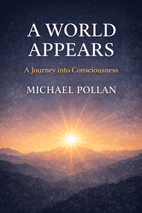
Michael Pollan's A World Appears is a panoramic exploration of consciousness—what it is, who has it, and why taking readers to the cutting edge of neuroscience, philosophy, and psychedelic research. This blend of science and philosophy is for readers of mind expanding nonfiction and anyone drawn to the deepest questions of what it means to be human.
Feature
Insta.Page
Blinkist
Shortform
Summary Depth
Full Chapter-by-Chapter
15-min overview
Section-by-section guides
Audio Narration
✓
✓
✓
Full access to all 700+ summaries
✓
✓
✓
Visual Mindmaps
✓
✕
✕
AI Q&A
✓
✕
✕
Missing a book? Request it, usually live within 48h
✓
✕
✕
Quizzes
✓
✕
✕
PDF Downloads
✓
✕
✓
Send to Kindle
✓
✓
✓
Price
$89.99/yr
$146/yr (PRO)
$199/yr
*Competitor data last verified July 2026.
1 Page Summary
In A World Appears, Michael Pollan delivers a panoramic exploration of one of nature's greatest mysteries: consciousness. The book's central inquiry asks what it is, who has it, and why grappling with the fundamental fact that it feels like something to be us. Pollan argues that after decades of neuroscience assuming the brain alone generates our subjective reality, the field is now entertaining far more radical possibilities that challenge our understanding of what it means to be human.
Pollan's approach is characteristically expansive, bringing together radically different perspectives, scientific, philosophical, literary, spiritual, and psychedelic to see what each can teach us about consciousness. He takes readers to the cutting edge of research, introducing "plant neurobiologists" searching for the first flicker of awareness in vegetation, scientists striving to engineer feelings into artificial intelligence, and psychologists and novelists working to capture the slippery stream of felt experience. What makes the book distinctive is Pollan's ability to scent the direction culture is heading, as he did with food and psychedelics, now turning his attention to the deepest questions of mind and self.
The intended audience is broad, appealing to readers interested in neuroscience, philosophy, psychology, and the nature of human experience. Those who have followed the recent explosion of research into psychedelics and non-materialist theories of mind will find particularly rich material. Readers will be taken into the laboratories of their own minds, ultimately discovering a world far deeper and stranger than everyday reality, and gaining tools to make better use of the gift of awareness to more meaningfully connect with the world and their deepest selves.
Minds Before Brains?
Overview
This opening chapter challenges the deeply ingrained assumption that consciousness is a rare phenomenon, exclusive to humans or a handful of "advanced" animals. It argues that to truly understand consciousness, we should not begin with its most complex human manifestation but instead look for its simplest possible forms in nature, long before the evolution of brains. The narrative traces how Western science, for methodological and historical reasons, systematically excluded subjective experience from its study of the natural world, creating a "blind spot" that makes consciousness seem like an inexplicable anomaly or magic. The chapter proposes a radical reorientation: starting the search for sentience at the very roots of the tree of life.
The Historical Bifurcation of Nature
The modern reluctance to see consciousness in other beings stems from a specific historical foundation laid in the 17th century. Galileo initiated this shift by dividing reality into "primary qualities" (objective, measurable properties like size and motion) and "secondary qualities" (subjective experiences like color and taste). He proposed that science should concern itself only with the former, the quantifiable world written in the "language of mathematics." This methodological move effectively evicted lived experience from the scientific description of nature, relegating it to the human mind.
From Methodology to Metaphysics
What began as a practical methodological choice hardened into a metaphysical belief. Descartes formalized this division, positing two distinct substances: res extensa (physical matter) and res cogitans (thinking mind), which he granted only to humans. This philosophical dualism allowed him to dismiss animal cries during vivisection as mere mechanical noise, devoid of feeling. The success of focusing solely on the quantifiable material world was so profound that the map—the mathematical model of reality—eventually became mistaken for the territory itself. The rich reality of subjective experience was written out of the scientific story, reducing the vibrant world to mere quantities and resources.
The Enduring Blind Spot and a New Starting Point
This historical trajectory created what philosophers and scientists call a "blind spot" in Western science: its inability to account for or take seriously the reality of lived experience, or phenomenology. The irony is that by excluding consciousness from nature for centuries, science has inadvertently made it appear supernatural—an uncanny magic divorced from the material world. The chapter concludes by proposing a corrective path. To make the "hard problem" of consciousness less daunting, we should invert the usual approach. Instead of starting from the top with human self-awareness, we should look deep into nature, to brainless, ancient life forms, beginning with plants, and ask: What if a rudimentary sentience is a widespread, fundamental property of life?
Key concepts: Minds Before Brains?
1. Minds Before Brains?
Challenging Assumptions About Consciousness
Consciousness is not exclusive to humans or advanced animals
Search for simplest forms in nature, before brains evolved
Start at the roots of the tree of life
Galileo's Historical Bifurcation
Divided reality into primary and secondary qualities
Science focused only on measurable, objective properties
Evicted subjective experience from scientific description
Descartes' Metaphysical Dualism
Formalized division into physical matter and thinking mind
Granted consciousness only to humans, not animals
Mathematical model became mistaken for reality itself
The Scientific Blind Spot
Western science cannot account for lived experience
Excluding consciousness makes it seem supernatural
Reduced vibrant world to mere quantities and resources
Proposed Corrective Approach
Invert the usual top-down approach to consciousness
Look to brainless, ancient life forms like plants
Consider rudimentary sentience as fundamental to life
💡 Try clicking the AI chat button to ask questions about this book!
Plants Awaken
Overview
The chapter opens with the author’s personal, psychedelic-inspired moment of certainty regarding plant consciousness, using this experience as a launching point to explore a profound philosophical and scientific question: Is the perception of an animated, conscious world a form of magical thinking, or a crucial truth we have forgotten?
The Psychedelic Lens and a Reanimated World
The author recounts eating psilocybin mushrooms and feeling an undeniable conviction that the plants in his garden were sentient, awake, and aware in their own way. While not attributing human-like interiority or opinions to them, he sensed they possessed an elemental awareness, with preferences and a viewpoint shaped by their environment—whether basking in sun or being eaten by insects. This personal anecdote introduces the chapter’s central tension between two starkly different perceptions of reality.
Science, Studies, and Shifting Beliefs
This personal experience is framed by scientific research suggesting it is not unique. Studies from Johns Hopkins and Imperial College London are cited, showing that psychedelic experiences significantly increase people’s attribution of consciousness to plants, fungi, and non-living entities, and often shift fundamental beliefs from materialism toward panpsychism (the idea that mind is a fundamental feature of the universe). The chapter posits these substances might either uncover a suppressed intuition or simply promote an adaptive but false “hyperactive agency detection.”
A Pragmatic Test for a Living World
The narrative then questions the utility of our default, materialist worldview. The author contrasts the Western “dead-world” model—which has enabled exploitation and ecological crisis—with the animistic perspectives of traditional cultures. Drawing on William James, he suggests judging the “plant consciousness” hypothesis not by its ultimate truth (which may be unprovable) but by its pragmatic value: What would it mean for us to act as if the world is alive? The psychedelic certainty, what James called the “noetic quality” of mystical experience, is presented as a hypothesis worthy of serious consideration, not dismissal.
The Lingering Doubt and the Brain Question
Finally, the chapter returns to the sober, everyday state where plants seem like inert “green backdrop.” It directly challenges the common-sense reason for denying them consciousness: their lack of a brain. This sets up the core scientific and philosophical debate to be explored further, noting that theories like Integrated Information Theory argue consciousness may not require a brain at all, but could be a property of any sufficiently integrated system.
Key Takeaways
Altered states of consciousness, particularly through psychedelics, can dramatically shift one’s perception toward seeing the natural world as animate and aware.
Scientific studies corroborate that such experiences increase beliefs in plant consciousness and challenge materialist worldviews.
The Western model of an insentient world has had dire ecological consequences, prompting a pragmatic question: Would acting as if the world is conscious lead to more adaptive outcomes?
The everyday doubt about plant consciousness rests largely on the assumption that brains are necessary for consciousness, an assumption not all scientists share.
Key concepts: Plants Awaken
2. Plants Awaken
Psychedelic Experience of Plant Consciousness
Personal certainty of plant sentience from psilocybin
Plants perceived with elemental awareness and preferences
Introduces tension between different reality perceptions
Scientific Research on Consciousness Attribution
Studies show psychedelics increase belief in plant consciousness
Shifts beliefs from materialism toward panpsychism
Could reveal intuition or create false agency detection
Pragmatic Value of an Animate Worldview
Contrasts Western 'dead-world' model with animistic cultures
Judge hypothesis by practical outcomes, not ultimate truth
Challenging the Brain Requirement
Everyday doubt stems from plants lacking brains
Some theories argue brains aren't necessary for consciousness
Consciousness could be property of integrated systems
Philosophical Tension and Core Question
Is plant consciousness magical thinking or forgotten truth?
Psychedelic certainty has 'noetic quality' worthy of consideration
Sets up debate between materialist and panpsychist views
Is It Like Anything to Be a Plant?
Overview
This section challenges deep-seated assumptions about where consciousness might be found in nature, questioning whether sentience requires a brain or even a nervous system. It argues against "cerebrocentrism"—the bias that consciousness is exclusive to brain-possessing animals—and explores the profound difficulty of imagining the subjective experience of beings as fundamentally different from us as plants.
The Problem of Cerebrocentric Bias
The text points out that neuroscience has not yet identified the precise biological structures necessary for consciousness, yet we automatically assume they will be found in brains. This bias is likened to an unexamined faith. It questions whether we truly believe conscious alien life would necessarily have brains like ours and notes that even on Earth, functions like memory and decision-making are not exclusive to brains. This opens the door to considering consciousness in systems without conventional neural hardware.
Nagel's Question and the Limits of Imagination
Thomas Nagel's famous question—"What is it like to be a bat?"—provides the philosophical framework. His definition equates consciousness with having a subjective experience ("something it is like"). However, determining this for another being, especially a non-human, forces us to rely on our own conscious imagination, as there is no objective, "view from nowhere." This makes the project inherently subjective but also validates the use of lived experience in the inquiry. While we can approximate a bat's echolocating world, the case of plants presents a far greater imaginative challenge.
The Radical Otherness of Plants
Plants defy our intuitive models of consciousness at every turn: they lack eyes and nervous systems, operate on a vastly slower timescale, and have their integrative "command centers" in their root tips underground. The hypothesis of plant neurobiologists and Charles Darwin's own observations suggest a distributed intelligence. Darwin, in particular, saw the primary root tip as functioning like a brain and envisioned the plant as an upside-down animal, actively exploring its environment through slow, deliberate movement (circumnutation).
Progress and Persistent Prejudice
Scientific consensus on consciousness has slowly expanded beyond humans, as evidenced by declarations like the Cambridge Declaration on Consciousness (2012) and the New York Declaration on Animal Consciousness (2024). These have progressively included more invertebrates. However, this progress has not shaken the core prejudices of zoocentrism and neurocentrism—the belief that only animals with neurons can be conscious. The text suggests this bias stems from an equation of consciousness with the rapid "sense, process, act" cycle needed by mobile creatures, a tempo utterly alien to plant life.
Key Takeaways
Consciousness is not proven to be dependent on a brain; the assumption that it is constitutes a "cerebrocentric" bias.
Determining if another being is conscious inevitably involves using our own subjective imagination, as there is no purely objective standpoint.
Plants present an extreme challenge to our imagination due to their radically different design, pace of life, and疑似 distributed intelligence.
While science has gradually recognized consciousness in more animal species, it remains firmly zoocentric and neurocentric, excluding plants based on their lack of a rapid, neuron-based processing system.
Consciousness declarations expanding to invertebrates
Zoocentrism and neurocentrism remain dominant
Bias favors rapid neuron-based processing
Imaginative Challenge of Plant Experience
Plants defy intuitive consciousness models
Darwin saw root tips as brain-like
Upside-down animal actively exploring environment
Enter the Plant Neurobiologists
Overview
Defining the Spectrum of Mind
Before introducing the plant neurobiologists, the chapter carefully disentangles a suite of often-confused terms: sentience, consciousness, intelligence, and cognition. It posits sentience as the most elemental form—"the feeling of being alive"—characterized by sensing an environment, responding intelligently to it, and possessing a degree of awareness, sensation, and agency. Consciousness is presented as a more evolutionarily advanced state that includes sentience but adds capabilities like a sense of self, emotion, and reflection.
Intelligence is defined as a flexible capacity to achieve goals, not dependent on consciousness, as demonstrated by computers. Cognition involves the acquisition and processing of information, another capacity shared with machines. The broadest term, mind, encompasses all cognitive functions, conscious and unconscious. Clarifying these terms is framed as an ethical imperative, as conferring consciousness (and its capacity for suffering) upon a being grants it moral consideration.
The Plant Neurobiology Perspective
The chapter then introduces a provocative group of scientists and philosophers who call themselves "plant neurobiologists." They use the term deliberately to challenge scientific orthodoxies—specifically, neurocentrism (the idea that neurons are necessary for intelligence) and zoocentrism (the belief that only animals are cognitive beings). Led by figures like Paco Calvo, their work is a collective thought experiment that applies terms like cognition and intelligence to beings with a radically different umwelt, or lived experience, than our own.
Calvo directly engages Thomas Nagel's famous question by asking, "What Is It Like to Be a Plant?" He argues that while we cannot yet determine if plants are conscious or sentient, we can use scientific understanding to imagine their point of view. This effort is necessary to locate how far down the tree of life consciousness might extend. The chapter vigorously counters the notion that immobile plants are simple or "stupid," arguing instead that an organism that cannot flee must be exceptionally smart to survive.
Evidence of Plant Intelligence
The summary presents a compelling catalogue of experimental findings from plant neurobiology that depict plants as dynamic, intelligent agents:
Learning and Memory: Mimosa pudica can be taught to ignore a harmless stressor (a falling pot) and retains this memory for over twenty-eight days—longer than a fruit fly.
Prediction and Planning: Pea plants choose to invest root growth in soil where nutrient levels are increasing, rather than in soil with immediately higher nutrients, suggesting an ability to anticipate future conditions.
Communication and Social Behavior: Plants send and receive signals, distinguish kin from strangers, and adjust competitive behaviors accordingly. Kin plants share resources, while strangers compete.
Self-Recognition: Plants grow aggressively to escape shade cast by others, but do not react to shade cast by their own leaves, indicating a form of self-awareness.
Sensory Integration: Plants integrate information from more than twenty distinct senses.
This portrait challenges the view of plant intelligence as merely a hardwired, species-level adaptation (genotype). Instead, it highlights the agile, problem-solving intelligence of individual plants (phenotype) as they navigate their unique circumstances.
Key Takeaways
Sentience (basic awareness) and consciousness (complex self-awareness) exist on a spectrum, with profound ethical implications for where we draw lines.
The plant neurobiology movement intentionally challenges neurocentric and zoocentric biases, forcing a re-examination of what intelligence, cognition, and sentience can look like.
Experimental evidence reveals plants as capable of learning, memory, prediction, communication, kin recognition, and self-recognition—hallmarks of intelligent behavior.
Asking "what it is like to be a plant" is a valid philosophical and scientific tool to expand our understanding of consciousness and mind in nature.
Key concepts: Enter the Plant Neurobiologists
4. Enter the Plant Neurobiologists
Defining Mind and Consciousness
Sentience is basic awareness and feeling alive
Consciousness adds self-awareness and reflection
Intelligence is goal-achieving capacity without consciousness
Mind encompasses all cognitive functions
Plant Neurobiology Movement
Challenges neurocentrism and zoocentrism
Asks 'What is it like to be a plant?'
Views immobile plants as exceptionally smart
Uses terms like cognition for plants deliberately
Evidence of Plant Learning
Mimosa learns to ignore harmless stressors
Retains memory longer than fruit flies
Pea plants anticipate future nutrient conditions
Shows individual problem-solving intelligence
Plant Social and Sensory Capabilities
Plants communicate and distinguish kin
Show self-recognition through shade responses
Integrate information from 20+ senses
Adjust behavior based on social context
Ethical and Philosophical Implications
Consciousness confers moral consideration
Expands understanding of mind in nature
Forces re-examination of intelligence definitions
Locates consciousness on evolutionary spectrum
You've reached the end of the free chapters
Next chapter: “Are Neurons Overrated?” is locked
Keep reading A World Appears — and unlock all 700+ book summaries with audio, mindmaps and AI Q&A.
$0.00 due today · 7 days free, then $89.99/year ($7.49/mo) · Cancel anytime before day 7
Michael Pollan is an American author, journalist, and professor best known for his influential works on food, agriculture, and the human relationship with plants. His notable books include *The Omnivore's Dilemma*, *In Defense of Food*, and *How to Change Your Mind*, which explore topics from industrial food systems to the science of psychedelics. He is a longtime contributor to *The New York Times Magazine* and a professor at the University of California, Berkeley.
📚 Explore Our Book Summary Library
Discover more insightful book summaries from our collection