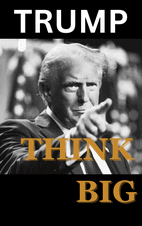
Donald J. Trump's Think Big offers motivational strategies for achieving ambitious goals in business and life, drawing on personal anecdotes about confidence, risk-taking, and persistence. It targets aspiring entrepreneurs and professionals seeking inspiration for personal and career growth.
Feature
Insta.Page
Blinkist
Shortform
Summary Depth
Full Chapter-by-Chapter
15-min overview
Section-by-section guides
Audio Narration
✓
✓
✓
Visual Mindmaps
✓
✕
✕
AI Q&A
✓
✕
✕
Quizzes
✓
✕
✕
PDF Downloads
✓
✕
✓
Price
$89.99/yr
$146/yr (PRO)
$199/yr
*Competitor data last verified July 2026.
1 Page Summary
Think Big: Make It Happen in Business and Life by Donald J. Trump and Bill Zanker is a motivational guide that emphasizes the importance of ambition, confidence, and strategic thinking in achieving success. The book encourages readers to "think big" by setting lofty goals, taking calculated risks, and maintaining a relentless focus on their vision. Trump and Zanker draw from their own experiences in business and life, sharing anecdotes and lessons that highlight the value of persistence, adaptability, and learning from failures. They stress the importance of branding, networking, and leveraging opportunities to create lasting success.
Historically, the book reflects Trump's reputation as a larger-than-life entrepreneur and his ability to turn challenges into opportunities. Written during a period of economic uncertainty, it resonates with readers seeking inspiration and practical advice for navigating competitive environments. The authors advocate for a mindset that embraces boldness and innovation, urging individuals to break free from self-imposed limitations and societal expectations.
The lasting impact of Think Big lies in its universal appeal to aspiring entrepreneurs, professionals, and anyone striving for personal growth. While Trump's later political career has influenced public perception of his business acumen, the book remains a testament to his ability to inspire ambition and action. Its core message—dreaming big and taking decisive steps to achieve those dreams—continues to resonate, making it a timeless resource for those seeking to transform their aspirations into reality.
Introduction
Building the Foundation
Zanker launched The Learning Annex in 1979 from his tiny Manhattan apartment, hustling in a clown costume to promote classes. His early strategy relied on quirky marketing (like offering discounts via “the clown”) and recruiting niche instructors. But after realizing traditional education models were too slow for modern audiences, he reimagined the brand as “edu-tainment”—short, engaging sessions taught by charismatic experts. This shift laid the groundwork for scaling up, though the company remained modest until celebrity star power entered the picture.
The Celebrity Edge
To stand out, Zanker pursued big-name personalities, leveraging guilt trips over big paychecks. Stars like Sarah Jessica Parker, Henry Kissinger, and Clive Davis agreed to teach, drawn by appeals to “give back.” These high-profile figures drew massive crowds, proving that glamour and credibility could drive demand. However, Trump remained elusive. Zanker’s usual tactics failed until he embraced a radical mindset shift: Think bigger than ever before.
The Trump Gambit
Trump’s team repeatedly rejected Zanker’s offers, even at $100,000. Refusing to back down, Zanker channeled Tony Robbins’ advice to “push beyond limits” and stunned everyone—including himself—by offering $1 million. The risk was astronomical: The Learning Annex’s annual revenue was only $5.5 million at the time. Trump countered with a demand for 10,000 attendees, a number Zanker blindly promised. The result? Over 31,500 people showed up, validating Trump’s mantra that “thinking big” attracts big outcomes.
Ripple Effects of Thinking Big
The Trump deal transformed Zanker’s business and mindset. Revenue surged 400% annually, hitting $102 million. Wealth Expos expanded to cities like San Francisco and Los Angeles, drawing tens of thousands. Personally, Zanker gained unshakable confidence, pursuing icons like Warren Buffett and Bill Clinton without hesitation. His family life also improved—his wife admired his boldness, and his children embraced ambition. Trump’s loyalty, professionalism, and insistence on self-worth became Zanker’s blueprint for success.
Key Takeaways
Think Big or Go Home: Small goals yield small results. Aiming for “impossible” targets forces innovation and growth.
Embrace Risk: Zanker’s $1 million gamble seemed reckless, but it unlocked exponential returns.
Leverage Star Power: Credibility from high-profile figures can amplify your brand’s reach.
Self-Belief is Non-Negotiable: Overcoming insecurities and trusting your gut builds unstoppable momentum.
Loyalty and Boldness Pay Off: Trump’s example shows that demanding your worth and staying loyal to partners creates lasting success.
Zanker’s story proves that adopting a “kick-ass attitude” isn’t just about wealth—it’s about rewriting your limits and living fearlessly.
Key concepts: Introduction
1. Introduction
Building the Foundation
Launched The Learning Annex in 1979 with quirky marketing tactics
Shifted to 'edu-tainment'—short, engaging sessions by charismatic experts
Early growth was modest until celebrity involvement
Relied on niche instructors and unconventional promotions
The Celebrity Edge
Pursued big-name personalities by appealing to their desire to 'give back'
Stars like Sarah Jessica Parker and Henry Kissinger drew massive crowds
Trump remained elusive until a mindset shift occurred
Proved glamour and credibility drive demand
The Trump Gambit
Offered Trump $1 million after repeated rejections—a huge financial risk
Blindly promised 10,000 attendees, but over 31,500 showed up
Validated the power of 'thinking big' to attract big outcomes
Revenue was only $5.5 million at the time, making the gamble astronomical
Ripple Effects of Thinking Big
Revenue surged 400% annually, reaching $102 million
Expanded Wealth Expos to major cities with massive attendance
Gained confidence to pursue icons like Warren Buffett and Bill Clinton
Improved personal life—family admired his boldness and ambition
Adopted Trump’s loyalty, professionalism, and self-worth as a blueprint
Key Takeaways
Think Big or Go Home: Small goals yield small results; aim for 'impossible' targets
Embrace Risk: High-stakes gambles can unlock exponential returns
Leverage Star Power: High-profile figures amplify brand reach and credibility
Self-Belief is Non-Negotiable: Overcoming insecurities builds unstoppable momentum
Loyalty and Boldness Pay Off: Demand your worth and stay loyal to partners
💡 Try clicking the AI chat button to ask questions about this book!
1: Do You Have What It Takes?
Overview
Chapter 1: Do You Have What It Takes? dives headfirst into the raw, unapologetic truths about what separates high achievers from the crowd. It starts with a wake-up call: a Success Mindset Audit that brutally assesses your financial hunger, resilience, and daily habits. Are you settling for “good enough” or gunning for $5M+? Do you crumble under pressure or weaponize problems as stepping stones? The quiz isn’t just a scorecard—it’s a mirror forcing readers to confront whether they’re playing to win or just playing along.
The chapter then unpacks the traits of winners, weaving gritty anecdotes with hard-hitting principles. Think big—absurdly big—like turning a vacant lot into a $62M deal. Thrive on chaos, because solving impossible problems is where legends are made. Love your work like it’s a calling, not a chore, and guard your ambitions in a world where even allies might stab your back. The author’s own stories—like bombarding a deli magnate with flowers until he caved or staging an elaborate ruse to win over Robert Kiyosaki’s gatekeeper—hammer home a mantra: “No” is just a starting point.
But raw ambition isn’t enough. The real magic lies in relentless persistence. Donald Trump’s comebacks, Steve Madden’s rebound from scandal, and the author’s cross-country rejections-turned-victories prove that grit outshines pedigree every time. Talent fades; stubbornness sticks. This isn’t about motivational fluff—it’s about emotional toughness, like retaliating against rivals to protect your turf or treating prenups as armor in a “vicious” world.
The chapter crescendos with the Trump IT Quality: a cocktail of ruthless focus, creative hustle, and primal instinct. Winners don’t coast after victories—they reset the bar higher. They trust their gut but verify everything, balancing paranoia with precision. And they know success isn’t a straight line—it’s a bloody-knuckled climb where daily action trumps perfection and knowledge becomes a weapon.
By the end, the message is clear: Mediocrity is a choice. Dreaming aggressively, embracing conflict, and outworking everyone isn’t optional—it’s survival. Retake the quiz, internalize the grind, and watch your ambition (and net worth) explode. Because in this game, the only thing harder than winning? Living with the regret of never trying.
The Success Mindset Audit
The core of this section is a 15-question quiz designed to gauge whether readers possess the traits of high achievers. Questions probe:
Financial ambition (e.g., aiming for $5M+ in five years vs. settling for less).
Response to adversity (fighting back vs. retreating).
Daily habits (time spent building wealth, investing in education).
Attitudes toward work, risk, and relationships (loving vs. tolerating work, securing prenups).
Scoring ranges from “Poor” (15–25 points) to “Excellent” (46–60 points), with the author bluntly stating that anything below 46 signals a need for drastic attitude shifts.
Decoding the Traits of Winners
The author dissects key quiz questions to reveal deeper principles:
Aim absurdly high: Settling for modest goals reflects a “lack of ambition.” Example: The author’s $62M real estate deal stemmed from dreaming big about a vacant lot.
Thrive on problems: Solving tough issues is what separates CEOs from the crowd.
Work = passion: Loving your job fuels endurance through challenges.
Never trust blindly: The world is “brutal,” and even friends may undermine you.
Retaliate fiercely: The author advises, “Always get even” to deter future attacks.
Anecdotes highlight persistence, like bombarding Zabar’s owner Murray Klein with daily flowers until he agreed to teach a class, or relentlessly pursuing Robert Kiyosaki for months.
The Power of Relentless Drive
The author underscores persistence as the ultimate differentiator, citing Donald Trump’s comebacks and Steve Madden’s post-scandal resurgence. He shares personal stories of rejection—like flying cross-country to meet Kiyosaki, only to be turned away—and doubling down until success followed. The message is clear: Talent and education matter less than dogged determination. Even Wharton graduates often falter without grit, while underdogs with focus outshine them.
Embrace conflict: Success requires battling critics, rivals, and self-doubt.
Invest in yourself: Time and money spent on education are non-negotiable.
Persistence > pedigree: Outwork, outlast, and outmaneuver—even when logic says quit.
Protect your assets: Prenups aren’t cynical; they’re survival tools in a “vicious” world.
The chapter closes with a rallying cry: Retake the quiz after internalizing the book’s lessons, and watch your score—and ambition—soar.
The Power of Relentless Persistence
The author shares a story about courting Sharon, a gatekeeper to Robert Kiyosaki, to secure his involvement with The Learning Annex. To impress her, he orchestrated a charade at The 21 Club, bribing the maître d’ $120 to stage a warm welcome and “usual table” greeting. The stunt worked, leading to a partnership that started as a single speaking engagement but snowballed into a long-term collaboration. The takeaway? “No” was not an option—a mindset that defines the author’s approach to overcoming rejection.
The Trump IT Quality: A Winner’s Formula
Success demands a ruthless blend of self-honesty and grit. The author argues that “getting rich is tough,” requiring a willingness to endure setbacks, outwork competitors, and stay emotionally detached from obstacles. This “Trump IT quality” separates the top 2% of achievers from the rest. Key traits include:
Relentless focus on objectives, even during success
Creative problem-solving under pressure
Trusting intuition while staying skeptical of others
Aggressive accountability (e.g., “kicking ass” to win)
Core Principles for Success
The chapter distills actionable advice for building an unstoppable mindset:
Dream audaciously—your goals shape your trajectory.
Stay “lean and hungry”—complacency kills momentum.
Prioritize daily action over perfection.
Leverage knowledge as a competitive weapon.
Fuel efforts with passion—it’s contagious and sustaining.
Persistence isn’t optional—reinvent 'no' as a temporary obstacle
Success requires emotional toughness and a willingness to make unpopular decisions
Audacity in goal-setting creates opportunities others dismiss as impossible
Trust your instincts but verify everything—even allies
Never plateau; reset higher goals after every win
2: Passion, Passion, Passion!
Overview
Passion isn’t just a feeling—it’s the engine of extraordinary achievement. This chapter paints a vivid picture of how loving what you do transforms effort into purpose, turns crises into creative fuel, and builds legacies that outlast setbacks. From revitalizing crumbling neighborhoods with projects like Trump Tower to surviving financial freefalls in the 1990s, the stories here reveal a pattern: passion-driven work doesn’t just attract success—it defines it.
Take Vince McMahon, who turned wrestling into a global spectacle by embracing the chaos of entertainment, or Stan, who escaped Wall Street misery by pivoting to construction—a field that lit his fire. Their journeys prove that alignment between work and passion isn’t optional; it’s the difference between thriving and languishing. Even in high-pressure moments—whether navigating billion-dollar debt or executing risky deals—passion provides focus, turning stress into a game to win rather than a burden to bear.
But passion alone isn’t enough. The chapter digs into the gritty details of strategic respect—how burning bridges with arrogance can destroy careers, while humility and flattery forge alliances that weather storms. It’s about reframing challenges: shifting a team’s panic over debt into excitement for future projects, or viewing a botched city project like Wollman Rink as a puzzle to solve, not a disaster to flee.
Life’s fragility puts it all in perspective. Comparing business stress to tragedies like 9/11 or natural disasters, the message is clear: pressure is trivial next to real adversity. This mindset, paired with relentless learning from failures—both yours and others’—builds the tenacity needed to outlast competitors.
The chapter doesn’t shy from tough truths. Overpraising kids creates entitlement, not grit, while action over perfection—like launching deals as a student or pivoting careers midstream—is the antidote to procrastination. Even Bill Zanker’s leap from failed filmmaker to education mogul underscores that bliss follows bold moves, not safe bets.
In the end, it’s about loving the grind—whether reinventing your brand, surviving market crashes, or parenting for resilience. Because legacy isn’t built on talent or luck. It’s forged by those who outcompete their comfort zones, treat pressure as a privilege, and chase work that feels less like labor and more like a mission.
The Power of Passion-Driven Work
The author argues that passion isn’t just a motivator—it’s a multiplier. When you love your work, effort feels less like labor and more like a mission. For instance, the author’s obsession with deal-making and real estate revitalization led to iconic projects like Trump Tower and the Grand Hyatt, which revitalized neighborhoods and cemented his reputation. Passion also attracts opportunities: projects like The Apprentice and beauty pageants came to him because of his visible enthusiasm for his craft.
Transforming Challenges into Triumphs
Passion isn’t just for smooth sailing—it’s critical during crises. The author recounts surviving near-financial ruin in the 1990s by leaning into his love for real estate and deal-making. Similarly, renovating the Wollman Skating Rink (a project the city had botched for years) succeeded because he treated it as a creative challenge, not a profit grab. The lesson? Passionate people see obstacles as puzzles to solve, not reasons to quit.
Real-World Examples: Stan and Vince McMahon
The chapter contrasts two paths: Stan, a Wall Street worker miserable in his father’s shadow, and Vince McMahon, a wrestling mogul who thrives on his love for entertainment. Stan’s pivot to construction (a field he adored) transformed his life, proving that aligning work with passion breeds fulfillment. McMahon’s sold-out events and meticulous management of WWE illustrate how deep expertise combined with enthusiasm creates dominance in any field. Both stories underscore that success isn’t about talent alone—it’s about loving the grind.
The Role of Pressure and Resilience
Passion also fuels resilience under pressure. The author admits that high-stakes careers demand grace in chaos, citing athletes like Tom Brady and business leaders who thrive in crisis. He contrasts this with “idea people” who lack execution drive and geniuses who crumble under stress (like his anxious Wharton classmate). The key takeaway? Pressure is inevitable, but passion provides the focus to navigate it.
Key Takeaways
Passion > Profit: Prioritize meaningful work over monetary gain; success follows purpose.
Crisis as Fuel: Use passion to reframe challenges as opportunities, not setbacks.
Alignment Matters: Misaligned careers breed misery—seek work that excites you, even if it means defying expectations.
Pressure Tests Character: Passionate people handle stress by staying solution-focused, not problem-obsessed.
Legacy Through Love: The projects you care about most will define your impact—and your legacy.
Strategic Respect and Resilience in Business
The Cost of Arrogance vs. Strategic Respect
The chapter contrasts two approaches to handling professional relationships: arrogance and humility. A rival developer’s dismissive treatment of bankers backfired catastrophically when the real estate market crashed. Banks foreclosed ruthlessly on his personal guarantees, ending his career. In contrast, Trump’s strategy of flattery and respect cultivated goodwill, ensuring banks treated him more leniently during crises. The lesson? Burn bridges at your peril—relationships built on mutual respect endure.
Reframing Challenges Through Optimism
Facing overwhelming debt in the early ’90s, Trump shifted his team’s focus from financial ruin to envisioning future projects. This pivot from despair to excitement revitalized morale and sparked new deals, even when logic suggested otherwise. The takeaway? Mental resilience isn’t about ignoring problems—it’s about redirecting energy toward solutions.
Embracing Life’s Fragility and Perspective
Pressure? “It Doesn’t Matter”
Trump dismisses stress by contextualizing business pressures against life’s unpredictability—from 9/11 to natural disasters. Hosting wounded veterans at Mar-a-Lago reinforced his view that setbacks are trivial compared to larger human struggles. His mantra: “What the hell difference does it make?”
The Formula of Knowledge and Tenacity
Learn from Mistakes—Yours and Others’
Trump’s “Formula of Knowledge” emphasizes studying others’ failures to avoid repeating them. For instance, surviving the ’90s crash taught him to anticipate market cycles. Meanwhile, persistence separates winners from quitters: Michelle Sorro’s exit from The Apprentice exemplified how quitting forfeits opportunity, while Trump’s 30-year grind to complete Trump Place proved relentless focus pays off.
The Perils of Overindulgent Parenting
Critiquing the “self-esteem movement,” Trump argues excessive praise creates entitlement, not grit. Contrasting Ivanka’s gratitude in Born Rich with peers’ entitled attitudes, he stresses teaching children to earn success. Praise effort, not existence—entitlement breeds fragility.
Competitive Drive and Self-Reinvention
Outcompete Your Comfort Zone
Trump’s refusal to retire mirrors his philosophy: stagnation equals decline. Expanding his brand into vodka, apparel, and media (despite tech disinterest) highlights pushing boundaries. Competition isn’t just against others—it’s against your past self.
Action Over Perfection
Start Now, Perfect Later
Trump began real estate deals as a student, underscoring that waiting for the “perfect moment” is futile. Katie Couric’s visible lack of passion serves as a cautionary tale: procrastination kills dreams; action fuels mastery.
Zanker’s Journey to Passion-Driven Work
From Filmmaking Fantasies to “Bliss”
Learning Annex founder Bill Zanker’s pivot to education—fueled by his love of learning—illustrates aligning work with passion. Firing a dispassionate employee (who later thrived as a travel writer) reinforced his belief: “Do what you love, and the money will follow.”
Perfection is procrastination in disguise—act immediately.
Love your work, or find work you love—passion fuels success.
3: Basic Instincts
Overview
Chapter 3: Basic Instincts dives into the art of trusting your gut—even when the world says otherwise. At its core, the chapter argues that instincts, sharpened by experience and tempered with logic, are the secret sauce behind some of the most audacious wins in business and life. Take Trump’s early gamble on Manhattan’s derelict Penn Central properties: while the city teetered on bankruptcy, he saw riverside potential others missed, transforming “reckless” bets into goldmines. Similarly, snatching up 40 Wall Street during a market slump—dismissed as a “money pit”—proved critics wrong when his vision of downtown’s revival paid off spectacularly.
But instincts aren’t just about bold moves; they’re about timing. Waiting years to pounce on 40 Wall Street or dodging a storm-doomed property purchase shows how patience can turn gut feelings into strategic wins. Even in entertainment, Trump’s handshake deal for The Apprentice defied industry logic, blending trust and timing to create a cultural phenomenon.
The chapter doesn’t shy from the messy middle where data clashes with intuition. Should 40 Wall Street go residential or commercial? Logic said one thing, his gut another—and the latter won. Yet, instincts aren’t magic. They’re honed through repetition, like a poker player reading bluffs or a entrepreneur spotting patterns in chaos. The Learning Annex gamble—funded by maxed credit cards and sheer belief—exemplifies this: doubling down on practical education tapped into unmet hunger, turning skepticism into a fastest-growing company.
Crucially, the narrative warns against analysis paralysis. Endless data-crunching can stifle action, while leaning on trusted teams to pressure-test hunches keeps instincts sharp. Whether launching expos without formal studies or negotiating deals by masking eagerness, the message is clear: balance matters. Gather facts, then let your subconscious work.
In the end, the chapter paints instincts as a muscle—built through risks, failures, and tiny daily decisions. It’s not about ignoring logic but marrying it with courage, knowing when to leap and when to wait. From riverfront dirt to prime-time TV, the thread is the same: trusting yourself—even when no one else does—can rewrite the rules of the game.
The Penn Central Gamble
In 1974, Trump pursued abandoned Penn Central Railroad properties on Manhattan’s West Side—a move dismissed as reckless due to the area’s dangerous reputation and the city’s financial crisis. With no money down, he secured options for $62 million in riverfront land, betting on its untapped potential. Despite pushback from community boards and permit hurdles, his vision transformed these sites into lucrative developments. This deal, alongside renovating the Commodore Hotel into the Grand Hyatt, cemented his reputation as a risk-taker who trusted his instincts over naysayers.
40 Wall Street: Defying the "Money Pit" Label
In 1993, Trump bought the struggling 70-story 40 Wall Street tower for $1 million during a market slump. Major real estate figures rejected partnership offers, calling it a “loser.” Undeterred, Trump negotiated tax reductions, turning the property profitable. The building’s value skyrocketed, with a recent $535 million offer underscoring his foresight. He credits this win to ignoring consensus and leveraging his gut feeling about downtown Manhattan’s eventual revival.
The Apprentice: A Handshake Deal That Rewrote TV
Trump’s instincts again prevailed when he partnered with Mark Burnett on The Apprentice. Despite his agent’s warnings (“no business show survives prime time”), Trump honored a handshake deal, prioritizing trust over industry norms. The show became NBC’s top-rated program, defying expectations. His negotiation for “Friends-level money” ($12 million per episode) highlighted his blend of boldness and timing, proving that unorthodox risks could yield unprecedented rewards.
Blending Logic and Instinct
Trump advocates for balancing data with intuition. For example, while logic suggested converting 40 Wall Street to residential units, his gut insisted on commercial use—a decision validated by its later success. Similarly, entering the golf industry merged his passion with strategic location choices. He stresses that instincts sharpen with practice, urging readers to test them on smaller decisions first (e.g., hiring or personal relationships) to build confidence.
The Role of Timing
Instincts often hinge on patience. Trump waited years to acquire 40 Wall Street, timing his move to align with market shifts. He compares this to comedians’ split-second timing or athletes like Federer, where precision outweighs brute force. A delayed property purchase spared him storm-related losses, illustrating how gut feelings can signal when to act—or wait. In negotiations, he masks eagerness to let opponents reveal weaknesses, leveraging timing to secure favorable terms.
Key Takeaways
Trust Your Gut: Instincts, honed through experience, often reveal opportunities logic misses.
Defy Consensus: Biggest wins (e.g., 40 Wall Street, The Apprentice) come from bucking trends.
Handshake Integrity: Your word builds trust; breaking it damages credibility irreparably.
Balance Logic and Instinct: Use data to inform, but let intuition guide final decisions.
Master Timing: Wait for the right moment—patience and observation often reveal hidden advantages.
Embrace Risk: Calculated leaps, even in uncertainty, can yield outsized rewards.
Trusting Instincts in Business Decisions
The author recounts his decision to reacquire The Learning Annex in 2001, despite lacking funds and facing skepticism. His gut told him the business had untapped potential, even though banks and lenders refused to back him. To finance the purchase, he leveraged personal assets—taking a second mortgage, maxing credit cards, and borrowing from friends—and convinced the owner to accept a one-year payment note. This gamble paid off: The Learning Annex later landed on Inc. magazine’s list of fastest-growing companies.
The success stemmed from doubling down on practical courses like real estate and wealth-building, which resonated with audiences hungry for financial education missing from traditional schooling. Observing surging attendance, the author’s instincts pushed him to launch a large-scale expo featuring top experts—a novel concept at the time. He bypassed formal analyses, relying instead on firsthand data and intuition honed through years of experience.
Cultivating Instinct Through Experience
The chapter emphasizes that instincts aren’t mystical; they’re informed by repeated exposure to similar scenarios. Like a poker pro reading opponents, the brain subconsciously processes patterns. The author sharpened his instincts by actively using them, even consulting his team’s “gut feelings” to cross-check doubts. For example, his VP, Samantha, often encouraged him to trust his intuition, framing it as a critical tool in their success.
Conversely, the author critiques over-analysis, citing a lawyer paralyzed by endless data reviews. He argues that after gathering facts, stepping back—whether through exercise, distraction, or sleep—allows the subconscious to synthesize insights. This balance between logic and instinct is key: “Get all the facts, then go with your gut.”
Key Takeaways
Instincts thrive on experience: Repeated exposure to situations builds subconscious pattern recognition.
Balance data with intuition: Gather facts, but trust your gut to make bold, timely decisions.
Collaborate with aligned teams: Surround yourself with people who value instinct and can challenge or affirm your hunches.
Avoid analysis paralysis: Overthinking stifles action; let your subconscious process information before deciding.
Instincts demand courage: Betting on yourself often requires personal risk, but it can lead to outsized rewards.
Key concepts: 3: Basic Instincts
4. 3: Basic Instincts
The Power of Instincts
Instincts, sharpened by experience, drive audacious wins
Trump's Penn Central gamble turned derelict properties into goldmines
Trusting gut over naysayers can rewrite the rules of the game
Case Studies in Instinct-Driven Success
40 Wall Street: Defying 'money pit' label with strategic timing
The Apprentice: Handshake deal that defied TV industry norms
Learning Annex: Maxed credit cards for an untapped education market
Balancing Instinct and Logic
Data informs, but intuition guides final decisions (e.g., 40 Wall Street commercial use)
Avoid analysis paralysis—pressure-test hunches with trusted teams
Golf industry entry: Merging passion with strategic location choices
The Art of Timing
Patience turns gut feelings into strategic wins (e.g., waiting for 40 Wall Street)
Mask eagerness in negotiations to leverage opponents' weaknesses
Dodged storm-doomed property by heeding instinctual timing
Honing Your Instincts
Practice on small decisions (hiring, relationships) to build confidence
Embrace risk and failure as training for bigger leaps
Instincts are a muscle—strengthened through repetition and pattern recognition
Key Takeaways
Defy consensus—biggest wins come from bucking trends