1. Why Investing Is Easier For You Than Warren Buffett
Chapter 1 of 4
0:000:00
EN
1x
Voice
PDF
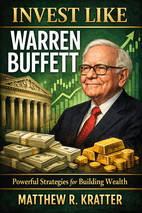
Invest Like Warren Buffett
by Matthew R. Kratter
What is the book Invest Like Warren Buffett about?
Matthew R. Kratter's Invest Like Warren Buffett distills the legendary investor's value philosophy into actionable steps for individual investors, covering fundamental analysis, margin of safety, and long-term wealth building.
Feature
Insta.Page
Blinkist
Shortform
Summary Depth
Full Chapter-by-Chapter
15-min overview
Section-by-section guides
Audio Narration
✓
✓
✓
Visual Mindmaps
✓
✕
✕
AI Q&A
✓
✕
✕
Quizzes
✓
✕
✕
PDF Downloads
✓
✕
✓
Price
$89.99/yr
$146/yr (PRO)
$199/yr
*Competitor data last verified July 2026.
1 Page Summary
Invest Like Warren Buffett: Powerful Strategies for Building Wealth by Matthew R. Kratter distills the core principles of the legendary investor into an actionable guide for the modern individual. The book emphasizes Buffett's foundational value investing philosophy, which involves identifying and purchasing shares of high-quality companies when they are trading for less than their intrinsic value. Key concepts include the importance of a long-term "buy and hold" mindset, the necessity of thorough fundamental analysis to understand a business, and the critical practice of maintaining a "margin of safety" to protect against errors and market downturns. Kratter presents these timeless strategies as a deliberate alternative to short-term speculation and market timing.
The work places Buffett's approach within the historical context of his mentors, Benjamin Graham and Philip Fisher, highlighting how Buffett synthesized Graham's quantitative focus on statistical bargains with Fisher's qualitative emphasis on outstanding management and durable competitive advantages. This evolution is framed against the backdrop of various market cycles, demonstrating how a disciplined value investing strategy has consistently weathered periods of volatility and panic. Kratter underscores that Buffett's success is not rooted in predicting macroeconomic trends but in a steadfast commitment to owning pieces of wonderful businesses for decades.
The lasting impact of Kratter's synthesis is its democratization of a powerful wealth-building framework. By breaking down complex financial concepts into clear, step-by-step instructions, the book empowers readers to cultivate the patience and discipline required for successful long-term investing. It leaves readers with the enduring lesson that building wealth in the stock market is less about genius and more about avoiding catastrophic mistakes, thinking like a business owner, and letting the power of compounding work over time.
1. Why Investing Is Easier For You Than Warren Buffett
Overview
The chapter opens with a fascinating paradox: while Warren Buffett is the greatest investor alive, an ordinary individual actually operates under a set of advantages he no longer enjoys. His immense success and the scale of his capital have become his biggest constraints. This section explores those limitations and contrasts them with the freedoms available to the everyday investor, while distilling Buffett’s core, timeless philosophy into an actionable approach anyone can follow.
The Constraints of Scale
Buffett’s legendary success has created a unique problem: he has too much money to manage effectively by his own historical standards. With tens of billions in cash that must be deployed, he is restricted to investing only in the world’s largest companies. Furthermore, when he decides to buy or sell, he must move with extreme slowness and secrecy; any hint of his activity can move the market price against him. His position in Coca-Cola in 1999 illustrates this perfectly—despite believing the stock was overvalued, his role on the board and the sheer size of his holdings made a simple sale impossible.
The Individual Investor's Advantage
In stark contrast, the individual investor operates with agility and freedom. You can invest in companies of any size, from the smallest micro-cap to the largest mega-cap, without affecting the share price. This allows you to target the smaller, faster-growing companies that were the foundation of Buffett’s early success—opportunities now closed to him. You can buy and sell decisively, without bureaucratic hurdles or market-moving repercussions. Your portfolio is a silent, nimble vehicle unburdened by the weight of billions.
Buffett's Strategy, Simplified
The essence of Buffett’s approach is deceptively simple: Buy shares in a few high-quality, well-run businesses at a fair price, and then hold them forever. The philosophy rejects complexity, favoring the search for “1-foot bars” over attempting spectacular leaps. It begins with a fundamental mindset shift: a stock is not a ticker symbol or a line on a chart, but a legal ownership stake in a real business, entitling you to a share of its future profits. Success comes from identifying wonderful businesses (a skill covered in later chapters), paying a reasonable price for them, and allowing the power of compounding to work over time.
Key Takeaways
Your size is your superpower. You have the agility to invest in a vast universe of companies and make quick decisions, freedoms denied to Buffett due to his colossal scale.
The strategy is simple, but not easy. Buffett’s core philosophy is publicly available and straightforward, but it requires discipline to ignore market noise and the temptation to make investing needlessly complex.
Think like an owner, not a trader. The foundational shift is viewing a stock as partial ownership of a business with underlying profits, not as a speculative token to be traded.
Look for "1-foot bars." Extraordinary returns often come from consistently stepping over easy obstacles—finding high-quality companies at fair prices—rather than attempting heroic feats of market timing or stock picking.
Key concepts: 1. Why Investing Is Easier For You Than Warren Buffett
1. Why Investing Is Easier For You Than Warren Buffett
The Paradox of Scale: Buffett's Constraints
Buffett's immense capital restricts him to investing only in the world's largest companies
He must move with extreme slowness and secrecy to avoid moving market prices against him
His position in Coca-Cola (1999) illustrates how scale can trap investments even when overvalued
His success has created limitations that prevent him from replicating his early investment approach
The Individual Investor's Strategic Advantages
You can invest in companies of any size without affecting share prices
Access to smaller, faster-growing companies that were foundational to Buffett's early success
Ability to buy and sell decisively without bureaucratic hurdles or market-moving repercussions
Your portfolio operates with agility and freedom unburdened by billions in capital
Core Buffett Philosophy Simplified
Buy shares in a few high-quality, well-run businesses at a fair price and hold them forever
Reject complexity in favor of searching for '1-foot bars' rather than attempting spectacular leaps
Stock represents legal ownership in a real business, not just a ticker symbol or chart line
Success comes from identifying wonderful businesses and allowing compounding to work over time
Actionable Mindset Shifts for Individual Investors
Your small size is your superpower—leverage your agility in the market
Think like an owner of businesses rather than a trader of stocks
Focus on consistent, simple opportunities rather than heroic market timing
Maintain discipline to ignore market noise and avoid unnecessary complexity
💡 Try clicking the AI chat button to ask questions about this book!
2. What A Not-So-Great Business Looks Like
Overview
Overview
This chapter explores Warren Buffett's fundamental investment philosophy by first examining the antithesis of a desirable company. It argues that to recognize a truly great business, one must understand the hallmarks of a mediocre one. Through a relatable example and clear characteristics, the chapter paints a picture of the kind of enterprise that, while essential to the economy, is unlikely to build substantial long-term wealth for its owners.
Buffett's Fundamental Dichotomy
Buffett simplifies the investment world into two categories: wonderful businesses and everything else. He advises that an investor's precious time and capital should be devoted almost exclusively to seeking out the former. The rationale is straightforward—settling for or even analyzing sub-par companies is an inefficient use of resources that could be better deployed elsewhere.
A Classic Commodity: The Humble Staple
To illustrate a "not-so-great" business, the chapter turns to an everyday object: the paper staple. It asks whether consumers have brand loyalty or excitement about staple innovation. The answer is universally "no." Staples are the epitome of a commodity—fungible, price-sensitive, and purchased based solely on cost and availability. Manufacturers like SwingLine or Rapid operate in a brutally competitive arena where the lowest cost producer wins, and any efficiency gains are largely passed to the customer, not retained as profit.
The Hallmarks of a Mediocre Business
From the staple example, key characteristics emerge. A not-so-great business typically operates in a fragmented, highly competitive market. It produces a commodity product with little to no meaningful brand differentiation. Crucially, it lacks pricing power. This means the business cannot raise prices without losing customers, and it cannot retain the benefits of cost savings. The profits are constantly squeezed by competition, leaving little for the owners.
Industries Filled with Price Competition
The chapter provides a sobering list of sectors where these dynamics are common. These include semiconductor manufacturing, airlines, automobile production, agriculture (like corn and wheat), mining for metals, and most restaurants (with rare exceptions). A clear pattern emerges: manufacturing and raw material production are often fraught with these challenges, which is why a company like Apple strategically avoids owning factories and focuses on areas where it can build a moat.
Thinking Like an Owner
It’s important to note that there's no moral judgment here. These businesses provide vital goods, services, and employment. The modern world relies on them. However, the chapter shifts perspective to that of an owner, like Buffett or Scrooge McDuck, whose goal is wealth accumulation over decades. From this vantage point, a price-competitive business is a tough path to prosperity. The constant pressure on margins makes it extremely difficult to generate and sustain the outsized returns that define great investments.
Key Takeaways
Warren Buffett’s framework divides businesses into two groups: the exceptional few and all the rest, advising investors to focus solely on the former.
A "not-so-great" business is often defined by its commodity product, lack of brand power, and operation within a fragmented, hyper-competitive industry.
The most damaging trait is a lack of pricing power, where cost benefits are transferred to the customer and profits are perpetually thin.
Many essential industries—from airlines to textiles—are populated by such companies, making them poor vehicles for long-term wealth building.
The chapter underscores a critical shift in mindset: from appreciating a business's societal role to evaluating its potential for generating durable owner profits.
Key concepts: 2. What A Not-So-Great Business Looks Like
2. What A Not-So-Great Business Looks Like
Buffett's Investment Framework
Simplifies businesses into two categories: wonderful businesses vs. everything else
Advises focusing precious time and capital exclusively on seeking wonderful businesses
Analyzing sub-par companies is an inefficient use of resources
The Commodity Business Example
Uses the paper staple as a classic example of a not-so-great business
Consumers have no brand loyalty or excitement about staple innovation
Staples are fungible, price-sensitive commodities purchased based solely on cost
Manufacturers operate in brutally competitive arenas where lowest cost producer wins
Efficiency gains are passed to customers rather than retained as profit
Characteristics of Mediocre Businesses
Operates in fragmented, highly competitive markets
Produces commodity products with little to no meaningful brand differentiation
Lacks pricing power - cannot raise prices without losing customers
Cannot retain benefits of cost savings - profits are constantly squeezed by competition
Industries Prone to Price Competition
Semiconductor manufacturing, airlines, automobile production
Agriculture (corn, wheat), mining for metals
Most restaurants (with rare exceptions)
Manufacturing and raw material production often face these challenges
Companies like Apple strategically avoid owning factories to build moats instead
Owner's Perspective on Wealth Building
No moral judgment - these businesses provide vital goods, services, and employment
From wealth accumulation perspective, price-competitive businesses are tough paths to prosperity
Constant pressure on margins makes generating outsized returns extremely difficult
Requires shift from appreciating societal role to evaluating durable owner profit potential
3. How To Spot A Great Business
Overview
This chapter builds upon the understanding of poor businesses by outlining the defining characteristics of a superior one. It distills Warren Buffett's investing philosophy into a practical checklist for identifying companies with durable competitive advantages and excellent long-term prospects.
The Hallmarks of a Great Business
Simplicity and Understandability
A great business is fundamentally simple. This means an investor can clearly comprehend what the company does and how it generates profit. While Warren Buffett finds insurance simple, you might find a technology company more understandable. The critical rule is to never invest in what you cannot grasp—a principle that would have saved investors from Enron. Familiarity and personal affinity for a company's products, like loving your iPhone before buying Apple stock, can be a powerful advantage.
Powerful Brand Recognition
Outstanding businesses occupy a permanent place in the consumer's mind. They possess such strong brand equity that even a child can identify them—think Disney, Apple, or Coca-Cola. This recognition creates a "mindshare" where the brand becomes synonymous with the product category itself, like Nike with running shoes or McDonald's with fast food.
Product Longevity and Stability
The best businesses sell products or services that are timeless and require minimal reinvention. Consider Coca-Cola: its core product is essentially the same today as it was decades ago and will likely remain so in the future. This contrasts sharply with industries like semiconductors, where companies must constantly reinvest profits into research and development just to stay relevant, leaving less money for shareholders.
The Power of Repeat Purchases
A fantastic business benefits from selling things people need to buy over and over. While a car or a house is purchased infrequently, items like razor blades, toothpaste, coffee, and candy are consumed continuously. Businesses selling these recurring-need items—especially those with mildly addictive qualities—enjoy a predictable, recurring revenue stream.
Pricing Power: The Ultimate Test
The most critical characteristic is a company's ability to raise prices without losing customers. Strong brands grant this power. A loyal Coke drinker won't switch to a generic cola to save a dime, allowing Coca-Cola to raise prices alongside inflation. As Buffett notes, if you need "a prayer session" before raising prices, you have a terrible business. Companies like See's Candies and Disney demonstrate extraordinary pricing power, as customer loyalty allows them to increase prices even faster than inflation.
The Protective Moat
Buffett encapsulates all these traits with the metaphor of a "moat." A great business possesses a durable competitive advantage—a moat—that protects it from competitors. This can be a powerful brand, a key patent, a low-cost structure, or a local monopoly. A durable moat, like Coca-Cola's century-old brand affinity, ensures the competitive advantage persists for decades, allowing profits to be paid to owners rather than constantly reinvested for defense.
Key Takeaways
Invest only in businesses you genuinely understand.
Seek companies with iconic brands that own a piece of the consumer's psyche.
Favor businesses with timeless products over those in relentless technological races.
Prioritize companies that benefit from repeat customer purchases.
The single most important sign of a great business is strong pricing power.
Always look for a wide and durable "moat"—a sustainable competitive advantage that protects profits.
Key concepts: 3. How To Spot A Great Business
3. How To Spot A Great Business
Simplicity and Understandability
Invest only in businesses whose operations and profit generation you can clearly comprehend
Personal affinity for a company's products can be a significant advantage
Avoid investing in anything you don't understand to prevent catastrophic losses
Powerful Brand Recognition
Great businesses occupy permanent space in consumers' minds
Strong brand equity makes brands synonymous with product categories
Iconic brands like Disney, Apple, and Coca-Cola create powerful 'mindshare'
Product Longevity and Stability
Timeless products require minimal reinvention over decades
Contrast with technology-driven industries that require constant R&D reinvestment
Stable products allow profits to flow to shareholders rather than being reinvested for survival
The Power of Repeat Purchases
Fantastic businesses sell products people need to buy repeatedly
Products with mildly addictive qualities enhance customer retention
Pricing Power: The Ultimate Test
The most critical characteristic of a great business
Ability to raise prices without losing customers to competitors
Strong brand loyalty enables price increases that outpace inflation
The Protective Moat
Durable competitive advantage that protects profits from competitors
Can manifest as brands, patents, low-cost structures, or local monopolies
A durable moat allows profits to be paid to owners rather than constantly reinvested for defense
4. Sneaky Tricks For Identifying A Great Business From Its Financial Statements
Overview
This chapter translates the qualitative traits of a great business into concrete, measurable financial signals. It argues that a company's economic strength and durable competitive advantage—its moat—are directly visible in its financial statements. By learning a few key metrics and patterns, an investor can distinguish a wonderful business like Johnson & Johnson from a cyclical, price-competitive one like Ford Motor Company. The chapter provides five specific financial filters to apply, using these two companies as contrasting case studies throughout.
The Foundation: Earnings Per Share Trend
The most immediate sign of a great business is the long-term trajectory of its earnings per share (EPS). A strong moat allows a company to generate reliably growing profits. Johnson & Johnson’s EPS, for example, displays a "nice smooth uptrend" from 2002 to 2017. In stark contrast, Ford Motor Company’s earnings are volatile, bouncing from positive to negative figures year over year. This instability reveals a business without pricing power, forced to compete on price and suffer losses during downturns. The first rule is clear: a great business shows a smooth, upward trend in earnings.
Measuring Efficiency: Return on Equity
While growing earnings are good, efficiency is paramount. Return on Equity (ROE) measures how profitably a company uses shareholders’ invested capital. It is calculated as Net Profit divided by Shareholder Equity. A consistently high ROE—above 20%—suggests a powerful economic engine. Coke’s ROE reliably sits in the high 20s to low 30s. Ford’s, however, is erratic and often not calculatable during loss-making years. While a high ROE is a positive signal, it can be artificially inflated by taking on large amounts of debt, which increases risk.
The Debt-Adjusted View: Return on Total Capital
To see through any debt-fueled illusions, we turn to Return on Total Capital (ROTC). This metric includes long-term debt in the capital base, showing how efficiently the company uses all its permanent funding, both equity and debt. A great business will consistently generate an ROTC above 15%. Coke’s ROTC meets this benchmark comfortably. Ford’s, however, is consistently far below it, often in the single digits. This confirms that Ford’s occasional spikes in ROE were not driven by operational excellence but by financial leverage, and its core business fails to clear the hurdle of true quality.
Assessing Financial Risk: The Debt Burden
A great business should not be overburdened by debt. A prudent rule is that a company’s long-term debt should be payable using four years or less of its net profit. This test highlights financial resilience. Johnson & Johnson, with its massive profits, could theoretically pay off its $28 billion debt in about three years. Ford, with nearly $129 billion in debt and less reliable profits, would need an untenable 21 years of earnings to become debt-free. This stark difference underscores the relative risk and fragility of the automotive business model compared to the fortress-like balance sheet of a true blue-chip.
Returning Cash to Shareholders
Finally, a mature great business generates more cash than it needs to maintain and grow its operations. This excess cash should be returned to shareholders, signaling both financial strength and management’s shareholder-friendly discipline. This is done through dividends (direct cash payments) and stock buybacks (which increase each remaining shareholder’s ownership stake). Over a recent three-year period, Coke returned a staggering $16 billion in dividends and bought back $8.5 billion of its own stock. This is the hallmark of what Charlie Munger calls a business that "drowns us in cash."
Key Takeaways
Look for Smooth Growth: A great business displays a consistent, upward trend in earnings per share, not volatile swings.
Demand High Efficiency: Seek a consistent Return on Equity (ROE) above 20%.
Look Through the Debt: Ensure a consistent Return on Total Capital (ROTC) above 15% to confirm efficiency isn’t debt-driven.
Check the Debt Load: The company’s long-term debt should be manageable, ideally payable with less than four years of net profit.
Follow the Cash: A mature great business will return excess capital to shareholders through reliable dividends and/or stock buybacks.
Key concepts: 4. Sneaky Tricks For Identifying A Great Business From Its Financial Statements
4. Sneaky Tricks For Identifying A Great Business From Its Financial Statements
The Foundation: Earnings Per Share Trend
A great business shows a smooth, upward trend in EPS over the long term.
This reflects pricing power and a durable competitive advantage (moat).
Volatile or cyclical earnings (e.g., Ford) indicate a business competing on price and lacking stability.
The EPS trend is the most immediate financial signal of business quality.
Measuring Efficiency: Return on Equity
Return on Equity (ROE) measures profitability relative to shareholders' invested capital.
A consistently high ROE (above 20%) signals a powerful economic engine (e.g., Coke).
Erratic or low ROE indicates operational weakness or cyclicality.
High ROE can be artificially inflated by excessive debt, adding risk.
The Debt-Adjusted View: Return on Total Capital
Return on Total Capital (ROTC) includes long-term debt in the capital base.
It reveals true operational efficiency by accounting for all permanent funding.
A great business consistently generates ROTC above 15%.
A low ROTC (e.g., Ford) confirms that high ROE spikes are debt-driven, not from excellence.
Assessing Financial Risk: The Debt Burden
A great business has a manageable debt load relative to its profits.
A prudent rule: long-term debt should be payable using ≤4 years of net profit.
This test highlights financial resilience and balance sheet strength (e.g., Johnson & Johnson).
Excessive debt (e.g., Ford's 21-year payback) signals fragility and high risk.
Returning Cash to Shareholders
A mature great business generates excess cash beyond operational needs.
Excess cash should be returned via dividends and/or stock buybacks.
This signals financial strength and shareholder-friendly management.
Substantial, consistent returns (e.g., Coke) are the hallmark of a cash-generating 'moat' business.
Key Takeaways: Five Financial Filters
Look for Smooth Growth: Consistent upward EPS trend.
Demand High Efficiency: Consistent ROE > 20%.
Look Through the Debt: Consistent ROTC > 15%.
Check the Debt Load: Debt payable with <4 years of net profit.
Follow the Cash: Reliable return of capital via dividends/buybacks.
You've reached the end of the free chapters
Next chapter: “How Much To Pay For A High-Quality Business” is locked
Keep reading Invest Like Warren Buffett — and unlock all 600+ book summaries with audio, mindmaps and AI Q&A.
$0.00 due today · 7 days free, then $89.99/year ($7.49/mo) · Cancel anytime before day 7
Matthew R. Kratter is a former hedge fund manager and experienced trader who founded the Trader University platform. He is best known for his educational books and courses on cryptocurrency and stock market investing, including his popular guide "The Bitcoin Beginner's Bible." His work focuses on providing practical strategies for navigating volatile markets.
📚 Explore Our Book Summary Library
Discover more insightful book summaries from our collection