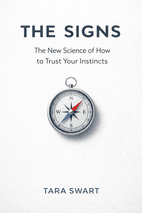
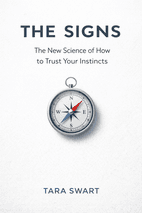
Dr. Tara Swart MD PhD's The Signs merges neuroscience with zodiac archetypes as a psychological framework for self-awareness and growth, offering practical exercises to rewire limiting beliefs. It's for anyone seeking a science-based tool for introspection and behavioral change.
Feature
Insta.Page
Blinkist
Shortform
Summary Depth
Full Chapter-by-Chapter
15-min overview
Section-by-section guides
Audio Narration
✓
✓
✓
Visual Mindmaps
✓
✕
✕
AI Q&A
✓
✕
✕
Quizzes
✓
✕
✕
PDF Downloads
✓
✕
✓
Price
$89.99/yr
$146/yr (PRO)
$199/yr
*Competitor data last verified July 2026.
1 Page Summary
In The Signs, neuroscientist and former psychiatrist Dr. Tara Swart presents a unique framework for personal growth by merging modern neuroscience with the ancient archetypes of the zodiac. The book's central thesis is that the 12 zodiac signs represent deeply ingrained, universal patterns of human behavior and potential. Swart argues that by understanding the core strengths, challenges, and motivations associated with each sign—not for prediction, but as a psychological lens—we can gain profound self-awareness and rewire our brains to overcome limiting beliefs and unlock latent capabilities.
Dr. Swart's approach is distinctly science-based, setting this book apart from traditional astrology guides. She decouples the signs from celestial fortune-telling and instead maps their characteristics onto known neural pathways, cognitive biases, and principles of neuroplasticity. For each sign, she provides practical exercises, mindfulness techniques, and neuroscience-backed strategies designed to help individuals embody the positive traits (like the courage of Aries or the analytical nature of Virgo) while managing the potential pitfalls, thereby actively shaping their own brain chemistry and life outcomes.
The intended audience is anyone interested in self-improvement, psychology, and holistic well-being who may be skeptical of mysticism but curious about symbolic systems. Readers will gain a novel toolkit for introspection and behavioral change, learning to use the signs as a mirror for their own psyche and a blueprint for intentional living. By the end, Swart aims to empower individuals to move beyond fixed labels and consciously cultivate the best qualities of all the signs to create a more resilient, balanced, and fulfilling life.
Introduction
Overview
This introduction presents a central dilemma of modern existence: our species evolved to find meaning, guidance, and connection through our senses and intuitive awareness of the world, but contemporary life has systematically severed us from these innate capacities. The author, drawing from her background in psychiatry and neuroscience, frames the widespread feelings of anxiety, disconnection, and lack of purpose as symptoms of this loss. She proposes that reclaiming our ability to notice and interpret "signs"—meaningful coincidences or messages from our environment, body, and perhaps beyond—can serve as a powerful antidote, guiding us back to a more fulfilling and connected life.
The Disconnect of Modern Life
The text opens by contrasting ancient human life, where survival depended on acute sensory observation and instinct, with our current reality. Where once we derived meaning from observing nature and creating symbolic art, we are now besieged by digital distractions, consumerism, and a relentless pace driven by technology. This shift has led to a profound sense of being lost or adrift. The author cites alarming statistics on rising mental health issues, particularly among the young, linking them to smartphone and social media saturation. Urbanization, extreme individualism, and a move away from communal spirituality have further narrowed our perception, placing "blinkers" on our ability to see a wider, more meaningful reality.
The Cost of Rational Overreliance
Our typical response to feeling lost, the author argues, is to double down on rational, logical thinking. However, an overemphasis on rationality is presented as part of the problem, not the solution. It causes us to dismiss a vital source of wisdom: our intuition. Rationality provides clear "landmarks," but intuition reveals the subtle "gradients" between them, enabling more nuanced and holistic decision-making. The modern dismissal of intuitive feeling—that "gut" sense—is characterized as ignoring a crucial resource for navigating life's complex challenges, from relationships to finding one's purpose.
Intuition as a Guiding Force
The author establishes intuition not as a mystical fantasy, but as a faculty with a growing body of neuroscientific evidence. It is described as a conduit to knowledge held in the body and subconscious, a way to interpret subtle messages from our internal and external worlds. Developing trust in one's intuition is framed as the foundational skill necessary to even begin to notice "signs." When we are tuned in, we become better equipped to perceive and decipher these guiding signals, which can offer clarity, strength, and direction.
Recognizing and Interpreting Signs
Signs are introduced as unexplained but meaningful occurrences, like the author's experience with robins after a personal loss. They may feel paranormal, esoteric, or mystical, and their perceived source—whether the universe, a spiritual force, or departed loved ones—is presented as a matter of personal belief. The concept is legitimized through Carl Jung's idea of "synchronicity," or meaningful coincidence. Crucially, the author emphasizes that the true power of a sign lies not in its objective origin, but in its personal interpretation and the comfort, joy, or guidance it provides the observer.
A Framework for Reconnection
The introduction outlines the book's practical mission: to provide a credible, science-informed pathway for readers to welcome signs back into their lives. It promises a two-part structure. Part One will explore the evidence for a non-physical aspect of mind and delve deeper into honing intuition as an interpretive tool. Part Two will offer practical methods to create conditions ripe for receiving signs, focusing on sharpening the senses, fostering creativity, and deepening connections with nature and community. The author encourages readers to approach the book with an open mind, to use a journal for observations, and to understand that one need not experience trauma to benefit—this practice is offered as a way for anyone to enrich their daily life, find validation, and experience a more expansive, guided, and fulfilling existence.
Key Takeaways
Modern life's pace, technology, and focus on materialism have disconnected us from the intuitive, sensory awareness that is crucial for well-being and a sense of purpose.
Over-relying on rational thought while dismissing intuition limits our decision-making resources and contributes to feelings of anxiety and being lost.
"Signs" are personal, meaningful events or coincidences that can offer guidance and comfort; their value lies in your interpretation, not their debatable source.
Trusting your intuition is the essential first step to becoming receptive to noticing and understanding signs.
The book provides a structured, evidence-based approach to relearning this skill set, with the goal of helping readers feel more connected, guided, and alive in their daily lives.
💡 Try clicking the AI chat button to ask questions about this book!
Chapter 1: Signs from Beyond
Overview
The chapter opens with a deeply personal moment where a seemingly random slip of paper during a therapeutic exercise bears the exact age and initials of the author's late partner, Robin. This profound coincidence feels like a direct sign, prompting an exploration of similar stories from others who have received what they perceive as messages from beyond. These experiences collectively raise a fundamental question: could consciousness persist after death? This inquiry leads directly to the ancient mind-body problem, the philosophical debate over whether consciousness is merely a product of the physical brain or something that can exist separately.
The text then examines phenomena that challenge a purely materialist view. It details near-death experiences (NDEs), where individuals report lucid consciousness during clinical death, often bringing back verifiable information. It also explores terminal lucidity, the mysterious return of clarity in those with severe brain diseases just before death, and the intriguing accounts of children’s past-life memories. These instances suggest consciousness might not be wholly dependent on a functioning brain. Building this case, the discussion introduces modern scientific analogies, like the brain as a receiver for consciousness, and contrasts the relatively recent dominance of materialism with the enduring, global intuition of dualism. From Hindu moksha to the Christian soul, the separation of mind and body is shown to be a cornerstone across religions and ancient cultures worldwide.
Ultimately, the chapter proposes that the separation hinted at by near-death experiences might be a constant reality we can occasionally touch. By softening rigid materialist assumptions and through practices that alter our state of awareness—like meditation or deep creativity—we can cultivate a greater openness. This receptivity allows us to better perceive intuition and potential signs, fostering a deeper sense of connection and purpose, and sets the stage for a fuller exploration of intuitive wisdom.
The Dear Me Project and a Striking Coincidence
The author begins by recounting her participation in the Dear Me Project, a documentary exercise in writing therapy where participants write a letter to their younger selves. While asked to provide the neuroscience behind the practice, she chose to personally participate. During filming at her London home, the filmmaker, Sarah Kapoor, and her husband, John Christensen, presented a hat with numbered slips of paper. The author drew the number 70—the age her late partner, Robin, would have turned that year—a poignant moment she noted.
After the interview, a visibly emotional John urged her to check the back of her slip. Retrieving it from the hat, she discovered the initials "RB" printed on the reverse. This was a profound and statistically unlikely coincidence, as the numbers were printed on recycled paper with unrelated initials, and Robin's favourite maple syrup had been a gift from the Canadian filmmakers. This unexpected event transformed a therapeutic exercise into what she perceived as a direct sign from Robin.
Accounts of Signs from Others
This personal experience is bolstered by stories from others who have shared similar encounters. Rosie Wyatt described a flash of white light at her bedroom door the night her best friend Richard died; she later learned he had said he would try to communicate through light. Another friend, Simon, experienced a vivid, stress-inducing dream on the one-year anniversary of his mentor's death, which the mentor's widow interpreted as a visit.
These anecdotes collectively prompt a profound question: could consciousness persist after death, enabling such communication? This question forms the core inquiry of the chapter.
The Mind-Body Problem
The possibility of "signs" rests on the ancient philosophical debate known as the mind-body problem: is consciousness a product of the physical brain, or a separate entity? The chapter outlines two primary schools of thought:
Dualism: The mind and body are separate (e.g., Descartes).
Monism: All things arise from a single source, such as materialism (everything, including consciousness, stems from physical matter).
Neuroscience has yet to explain how physical brain processes translate into subjective experience (the "hard problem"), leaving the door open for alternative explanations. The author suggests three phenomena that may indicate consciousness is separate from the body.
Potential Evidence for Separable Consciousness
1. Near-Death Experiences (NDEs)
NDEs occur when people are clinically dead (no heartbeat or brain activity) but are resuscitated and report lucid consciousness. Psychiatrist Dr. Bruce Greyson, a leading NDE researcher, notes remarkable consistency across thousands of cases globally. Common features include accelerated thought, peace, out-of-body experiences, encounters with deceased beings, life reviews, and a permanent positive transformation.
The author highlights particularly evidential cases, like a South African patient who, during an NDE, met his recently deceased nurse and relayed specific details of her fatal car accident—information he could not have known. Such cases challenge a purely materialist view.
2. Terminal Lucidity (TL)
This phenomenon involves the unexpected return of mental clarity and memory in individuals with severe brain deterioration (e.g., advanced dementia) shortly before death. An example is given of a woman with dementia who suddenly recognized her son and held a coherent, loving conversation before dying that night. Professor Alexander Batthyany suggests TL implies the conscious self is not wholly dependent on a healthy brain.
3. Past-Life Memories
Research by psychiatrists like Ian Stevenson and Jim B. Tucker has documented young children's detailed memories of apparent past lives, often including unlearned knowledge. While not scientifically proven, these memories are presented as another intriguing piece of the puzzle regarding the continuity of consciousness.
The chapter posits that NDEs provide the most compelling evidence, as those who experience them consistently lose their fear of death, convinced that consciousness endures. The possibility that a part of us persists cannot be dismissed.
The Case for Mind-Body Separation
The chapter builds its argument by examining credible alternatives to materialism, focusing on the dualist perspective. It references modern scientific thinkers like Stanford neuroscientist David Eagleman, who uses the analogy of a radio to suggest the brain might be a receiver for consciousness rather than its generator. This is further supported by the work of cognitive psychologist Donald Hoffman, whose model proposes consciousness as a fundamental aspect of reality that causes brain activity, not the other way around.
A Historical and Global Perspective
The text then establishes that dualism is not a fringe idea but a persistent, cross-cultural intuition throughout human history. It contrasts the relatively recent rise of materialist philosophy with the enduring dualist foundations of the world's major religions and ancient civilizations. The author provides specific examples, from the Hindu and Buddhist concepts of reincarnation and liberation (moksha, nirvana) to the shared soul-body dichotomy in Christianity, Judaism, and Islam.
This global perspective is extended to ancient cultures, including the Egyptians with their complex concepts of the ka and ba, the Greco-Roman underworld, Norse paganism, and Mesoamerican Mayan beliefs in ancestor communication. The cumulative effect is to demonstrate that the separation of mind and body has been humanity's most common answer to the mysteries of life and death.
Integrating Experience and Belief
The narrative culminates by connecting these historical beliefs with modern experiential evidence. The author posits that the separation of mind from body, suggested by near-death experiences, is not an anomaly but a glimpse of a constant reality. This state can be approximated not only at the brink of death but through conscious practices that alter our nervous system's state—such as meditation, creativity, or communal rituals.
The ultimate invitation is to soften rigid materialist assumptions and cultivate openness. By letting go of strictly rational frameworks, one becomes more receptive to intuition and potential signs from beyond, which can foster a deeper sense of purpose. This sets the stage for a deeper exploration of intuition in the following chapter.
Key Takeaways
The dualist perspective, which sees consciousness as separate from the physical body, is supported by both modern scientific theories and the overwhelming majority of historical and global spiritual traditions.
Practices that alter our state of awareness can help us experience the mind's capacity beyond ordinary material limits, making us more open to non-ordinary phenomena.
Cultivating this openness and relying more on intuition are practical steps toward recognizing potential signs from beyond and finding greater purpose.
Key concepts: Chapter 1: Signs from Beyond
2. Chapter 1: Signs from Beyond
Personal Sign from Beyond
Author's slip of paper bears Robin's age and initials
Statistically unlikely coincidence perceived as direct message
Event transforms therapeutic exercise into profound experience
Shared Accounts of After-Death Communication
Rosie Wyatt sees light flash when friend dies
Simon has vivid dream on mentor's death anniversary
Collective stories prompt question of persistent consciousness
The Core Philosophical Question
Ancient mind-body problem: is consciousness separate?
Dualism vs. Materialism as competing explanations
Neuroscience's 'hard problem' leaves door open
Near-Death Experiences as Evidence
Lucid consciousness reported during clinical death
Global consistency in features like peace and life review
Verifiable cases challenge materialist view
Terminal Lucidity Phenomenon
Unexpected clarity returns before death in dementia
Suggests conscious self not dependent on healthy brain
Example: woman recognizes son coherently before dying
Historical and Cultural Context
Dualism is enduring global intuition across cultures
Practices like meditation can foster deeper connection
Chapter 2: Are You Accessing Your Full Wisdom?
Overview
This chapter opens with a personal story from the author's medical school days, where a vivid dream about her then-boyfriend's family seemed to foreshadow his father's sudden passing. This experience serves as a springboard into exploring the nature of hidden wisdom—specifically, intuition and precognition. The narrative suggests that we all possess a deep well of knowledge we often overlook, and it guides us through understanding how our brains filter information, the tension between logic and intuition, and practical steps to tap into this innate guidance system for noticing and interpreting signs in our lives.
The Mind's Selective Attention
Our brains are wired for efficiency, constantly filtering out sensory data deemed non-essential through processes like the ascending reticular activating system (ARAS). This explains why a new parent might sleep through noise but wake at their baby's whimper, or why we're not perpetually aware of the feel of our clothing. This filtering is part of the brain's saliency network, which prioritizes information based on novelty, personal passion, and emotional value. A fascinating example is the "frequency illusion," where buying a new car makes you suddenly notice the same model everywhere. The key insight is that we can intentionally influence this system. By mindfully directing our attention—through tools like action boards or affirmations—we can prime our brains to notice opportunities and signs that would otherwise be filtered out.
Cultivating an Abundant Mindset
Underpinning our ability to notice signs is our overall mindset. The brain has a natural negativity bias, a survival holdover that makes us risk-averse. In today's safer world, we can consciously cultivate an abundant mindset to thrive rather than just survive. This involves proactively focusing on gratitude, beauty, and positive outcomes, which helps prune negative neural pathways and strengthen beneficial ones through repetition and emotional intensity. Like tending a garden, this practice allows new, positive patterns to flourish, reducing stress and clearing the way for intuition to surface.
Reclaiming Intuition in a Logical World
Historically, humans relied heavily on mind-body connection and intuition for survival, often through rituals and physical awareness. In modern times, however, sedentary lifestyles and an overreliance on data and logic have led to a disconnection from this embodied wisdom. While intuition was once dismissed in fields like business, neuroscience now validates it. Brain imaging shows areas like the orbitofrontal cortex process incomplete information non-consciously, manifesting as "gut instinct." The author notes that many seasoned leaders now trust intuition for crucial decisions, drawing on a lifetime of pattern recognition. The challenge is to reintegrate this physical and emotional knowledge, moving beyond quick fixes and external influencers to access our internal guidance.
The Physical Roots of Gut Feeling
Accessing intuition effectively requires engaging both emotional and physical centers. Deep in the limbic system, emotional memories are stored, while the cortex handles logical working memory. Through Hebbian learning—where neurons that fire together wire together—repeated experiences create strong neural pathways. Wisdom and pattern recognition become embedded not just in the brain but throughout the body, in the gut, spinal cord, and even fascia. This is why intuition is often called a "gut instinct." Our life experiences, including stress and trauma, leave physical imprints, creating bracing patterns in our musculature. By acknowledging this mind-body connection, we can tap into a vast, non-conscious store of knowledge that guides decision-making and sign interpretation.
Dreams and Journaling as Pathways
Dreams offer a unique window into hidden wisdom, as the relaxed state of sleep reduces the brain's filtering, sometimes allowing access to intuitive insights or premonitions. The author emphasizes the importance of recording dreams, dilemmas, and bodily signals in a journal. This practice, especially when started young, helps hone intuition by creating a retrievable record of patterns and learning opportunities. Over time, reviewing journal entries can reveal connections between intuitive hunches and outcomes, building confidence in one's inner voice.
Intuition in Action: Recognizing the Signs
The chapter illustrates the powerful link between intuition and signs through personal and shared anecdotes. For instance, as a junior doctor, the author's persistent gut feeling about a severe nosebleed led to lifesaving intervention. Another story tells of a woman on vacation who trusted her instinct to travel, later interpreting a praying mantis on her doorstep as a sign of good fortune—which unfolded through a holiday romance and an unexpected job redundancy that propelled her toward her passions. These examples underscore that listening to intuition often opens us to noticing and correctly interpreting signs, creating a synergistic cycle of guidance.
Key Takeaways
You can prime your brain to notice signs by intentionally directing your attention and cultivating an abundant mindset.
Intuition is a honable skill, rooted in both mind and body, that acts as a personal superpower for decision-making.
Regular practices like journaling and recording dreams strengthen your connection to hidden wisdom, enhancing your ability to see and understand the signs around you.
Key concepts: Chapter 2: Are You Accessing Your Full Wisdom?
3. Chapter 2: Are You Accessing Your Full Wisdom?
The Brain's Selective Filtering
Brains filter sensory data for efficiency via the ARAS
Saliency network prioritizes novelty and emotional value
We can intentionally prime attention to notice signs
Cultivating an Abundant Mindset
Counteract natural negativity bias consciously
Focus on gratitude and positive outcomes
Prune negative pathways to clear space for intuition
Reclaiming Embodied Intuition
Modern life disconnects us from physical wisdom
Neuroscience validates gut instinct as pattern recognition
Integrate emotional and physical knowledge for guidance
Physical Roots of Gut Feeling
Wisdom embeds in body via Hebbian learning
Life experiences create physical imprints and patterns
Intuition draws from non-conscious bodily knowledge
Practical Pathways to Wisdom
Dreams offer unfiltered intuitive insights
Journaling builds pattern recognition over time
Trusting intuition opens us to interpreting signs
Chapter 3: Life with Signs
Overview
The chapter opens with a poignant story where a chance meeting leads to a reading with a medium, who shares astonishingly accurate details about the author's late husband. This experience becomes a powerful sign, offering undeniable comfort and confirming that love can transcend loss. Embracing such signs brings profound benefits, much like those reported by people who've had Near-Death Experiences (NDEs): a reduced fear of death, a renewed zest for life, and the courage to take healthy risks. On a practical level, signs can guide decision-making, helping build self-trust—like in the tale of a house-hunter who found her home through a personal symbol.
This openness to signs does more than provide solace; it expands perspective and strengthens intuition, akin to learning a new language that rewires the brain through neuroplasticity. It also becomes a direct pathway to discovering purpose, creating a beautiful cycle where following signs reveals a deeper raison d'être, and that purpose makes signs more visible. This connection to something larger—whether through serving others or feeling part of a community—fuels psychological well-being and mirrors the longevity secrets of Blue Zones.
The transformative effects of altered states, from NDEs to practices like dark retreats or the liminal space of hypnagogia, show that similar perspectives can be accessed deliberately. Remarkably, even studying NDEs in a classroom can reduce fear and increase compassion, suggesting that trusting in signs is an accessible way to gain these life-enhancing views. In a rational age often skeptical of the unseen, the chapter makes a compelling case for spirituality as a fundamental human need—a connection to nature, beauty, and the universe. Signs serve as a universal language that counters isolation, offering meaning beyond what science can measure.
Recognizing signs is a deeply personal endeavor, with common symbols like animals, shapes in clouds, song lyrics, or repeating numbers such as angel numbers. Interpretation is key, and the most meaningful signs are those you assign significance to, often tied to loved ones or memories. To actively engage, you can journal to identify your symbolic language, set rules to avoid over-interpretation, and ask for guidance through meditation or quiet moments in nature. A vivid supermoon story illustrates how asking for a sign can yield breathtaking responses, offering both comfort in grief and practical direction for moving forward.
Ultimately, being open to signs widens your available resources and solutions, much like broadening your tastes on a streaming platform. This receptivity requires cultivating the right internal conditions—reducing stress and honing intuition—which sets the stage for deeper exploration into living a life attuned to these subtle yet powerful guides.
A Serendipitous Reading
A chance encounter with a taxi driver named Roony, initially met through social media, leads to an invitation to meet his grandmother, a medium. During a reading in her special room, the author hands over her wedding ring as a focal object. Initially, the medium speaks of the author’s grandmother, which feels frustrating as she hopes for a connection with her late husband, Robin. Suddenly, the medium asks, “Oh, is there someone called Rob?” and proceeds to share profoundly private and accurate details, offering undeniable confirmation of Robin’s continued presence. This experience becomes a powerful, comforting sign, validating the author’s open-minded journey.
The Multifaceted Benefits of Signs
Embracing signs offers profound psychological and emotional comfort. The primary benefit is the solace found in believing a loved one’s spirit endures, providing a hopeful alternative to the finality of death. This belief mirrors benefits reported by those who’ve had Near-Death Experiences (NDEs): reduced fear of death, increased willingness to take healthy risks, and a greater zest for life.
Signs also serve as practical guides for decision-making, building self-trust. The story of Jemma Amos’s mother illustrates this perfectly. While house-hunting, she asked for an “unmistakeable sign.” Upon entering a house she was reluctant to view, she immediately saw horse-riding equipment in the entrance—a powerful personal symbol connected to her daughter. She instantly knew it was her new home.
On a cognitive level, being open to signs broadens perspective, encourages flexible thinking, and strengthens intuition. It aligns with the concept of neuroplasticity, acting like learning a new language that expands one’s horizons and capabilities. When signs are abundant, the author feels she is operating as the best version of herself.
Purpose Through Connection
Signs are presented as a direct pathway to discovering one’s purpose—a strong sense of raison d'être that transcends self-interest. This creates a virtuous cycle: following signs helps uncover purpose, and a deepening purpose makes signs more apparent. True well-being requires more than physical health; it needs a purpose that connects you to something larger, such as serving others.
Psychologist Carol Ryff’s model includes purpose as a key factor for psychological well-being. This is echoed in the longevity observed in Blue Zones, where community contribution provides purpose into advanced age. Signs foster a sense of connection—to self, to others, and to the universe—which in itself becomes a source of purpose, moving one away from a narrow, selfish focus toward altruism and open-mindedness.
New Perspectives from Altered States
The transformative effects of NDEs are explored as a parallel to the benefits of believing in signs. NDErs often report a permanent positive shift: loss of fear of death, increased compassion, greater life appreciation, and reduced attachment to material possessions. They describe a unifying, benevolent spiritual force, often felt as a warm light.
Similar states can be accessed through deliberate practices, though typically with less intensity than an NDE. Dark retreats, involving extended time in pitch darkness, can induce vivid dreams and visual hallucinations, leading to increased mindfulness and self-esteem. More accessibly, states like hypnagogia (the threshold between waking and sleep) can be a fertile ground for receiving signs.
Remarkably, studies show that simply learning about NDEs in an academic setting can impart similar benefits—like reduced fear of death and greater compassion—to students. The author argues that trusting in signs offers a similarly accessible way to gain these life-enhancing perspectives: reducing fear, increasing confidence, and fostering awe.
The Case for Spirituality in a Rational Age
Despite a Western cultural emphasis on scientific materialism, approximately 85% of the global population identifies with a religion or spiritual belief. The author distinguishes spirituality from organized religion, framing it as a connection to nature, beauty, and something larger than oneself—a fundamental human need.
Our ancestors derived comfort and understanding of continuity from observing nature’s endless cycles of regeneration. Signs are presented as a universal language that can reconnect us to this holistic outlook, countering modern fragmentation and isolation.
The chapter concludes by challenging a purely empirical worldview. While science explains much, it doesn’t address the value of unmeasurable experiences. Engaging with signs is a skill that develops with practice, like learning a language. Even if one is skeptical of their supernatural origin, the act of heightened awareness alone can reveal personal meaning and provide guidance, comfort, and a deeper sense of purpose. The utility and positive impact of signs are ultimately more important than proving their source.
Recognizing Signs
This section explores the deeply personal nature of signs and how to identify your own. There are no universal rules, as interpretation is key, but many people report common symbols. These often come from nature, such as white feathers, specific animals (like robins), or butterflies. Finding shapes—like a heart in a paving stone—or receiving messages through song lyrics and music are also frequent occurrences. Perhaps the most widespread signs are numerical, like repeatedly seeing 11:11 or other sequences often called "angel numbers," which some interpret as guidance from the universe or departed loved ones. The text distinguishes between soulmates and the more intense concept of "twin flames," a soul split into two. Ultimately, while numerology offers traditional meanings, the most impactful signs are those you personally assign meaning to, often connected to a specific person or memory.
Asking for and Interpreting Signs
The author provides a practical framework for actively engaging with signs. The first step is to use a journal to catalog repeating patterns, symbols, or animals that grab your attention, helping to identify your personal symbolic language. To avoid interpreting everything as a sign, it’s useful to set "rules," like requiring a sign to appear three times or in an unexpected context. Once you know your signs, you can ask for them. A step-by-step process is offered: center yourself through meditation or nature, clearly state your need for guidance, specify a personal and unique sign, send love and gratitude, and then wait and record the result.
The author illustrates this with a powerful personal story. During a moment of deep distress on a supermoon night, she magnetically desired a sign from her late husband, Robin, vaguely asking to see him "with the moon." The resulting experience—a perfectly timed moon sighting crossed by airplane jet streams that formed a kiss, alongside a cloud resembling Robin’s profile—felt like an undeniable communication. This experience underscored that signs offer both comfort for grief and guidance for moving forward, providing access to a perspective greater than our own.
The text concludes by comparing our perception to a streaming algorithm: if we only rely on our limited, everyday perspective, we narrow the "suggestions" life can offer. Being open to signs widens the available resources and solutions. However, this receptivity requires creating the right internal conditions, which involves reducing stress, opening the mind, and honing intuition—topics set for exploration in the next part of the book.
Key Takeaways
Signs are personal and interpreted through your own frame of reference; common types include animals, shapes, music, and repeating numbers.
You can actively cultivate a relationship with signs by identifying your personal symbols through journaling and then specifically asking for guidance when needed.
Signs serve a dual purpose: providing comfort in times of grief and offering practical guidance for life's decisions and challenges.
Remaining open to signs expands your available resources and perspectives, much like broadening your tastes reveals more options from an algorithm.
Receiving signs consistently requires creating the right mental conditions, which involves practices that reduce stress and heighten awareness.
Key concepts: Chapter 3: Life with Signs
4. Chapter 3: Life with Signs
The Nature and Power of Signs
Signs offer comfort that love transcends death
They act as a universal language countering isolation
Personal interpretation gives them meaning
Psychological and Emotional Benefits
Reduces fear of death and increases zest for life
Provides solace and counters grief's finality
Encourages taking healthy risks
Practical Guidance and Decision-Making
Signs can guide concrete choices like house-hunting
Builds self-trust through intuitive confirmation
Widens available resources and solutions
Connection to Purpose and Well-being
Following signs reveals deeper life purpose
Purpose and signs create a reinforcing cycle
Connects to something larger than oneself
Cognitive Expansion and Intuition
Opens perspective and encourages flexible thinking
Strengthens intuition like learning a new language
Aligns with neuroplasticity's brain-rewiring effects
Recognizing and Interpreting Signs
Common symbols include animals, songs, numbers
Journaling helps identify personal symbolic language
Setting rules prevents over-interpretation
Cultivating Receptivity to Signs
Requires reducing stress and honing intuition
Can be sought through meditation or nature
Asking for signs can yield direct responses
You've reached the end of the free chapters
Next chapter: “Connect with Your Intuition” is locked
Keep reading The Signs — and unlock all 500+ book summaries with audio, mindmaps and AI Q&A.
$0.00 due today · 7 days free, then $89.99/year ($7.49/mo) · Cancel anytime before day 7
Dr. Tara Swart is a neuroscientist, medical doctor, and senior lecturer at MIT Sloan who specializes in the neuroscience of leadership and resilience. She is the author of "The Source: The Secrets of the Universe, the Science of the Brain" and translates complex brain science into practical strategies for peak performance in business and life.
📚 Explore Our Book Summary Library
Discover more insightful book summaries from our collection

![The Explosive Child [Sixth Edition] by Ross W. Greene PhD - Book Summary](/_next/image?url=https%3A%2F%2Fapi.insta.page%2Fstorage%2Fv1%2Fobject%2Fpublic%2Fsmall_bookcovers2%2FB08NP52GTW.png&w=3840&q=75)