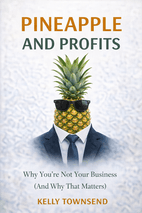
Pineapple and Profits: Why You're Not Your Business
by Kelly Townsend
What is the book Pineapple and Profits: Why You're Not Your Business about?
Kelly Townsend's Pineapple and Profits provides a framework for entrepreneurs to separate their personal identity from their business operations, offering practical strategies to reduce burnout and build a sustainable, systemized company.
Feature
Insta.Page
Blinkist
Shortform
Pineapple and Profits: Why Yo…
✓
✕
✕
Summary Depth
Full Chapter-by-Chapter
15-min overview
Section-by-section guides
Audio Narration
✓
✓
✓
Visual Mindmaps
✓
✕
✕
AI Q&A
✓
✕
✕
Quizzes
✓
✕
✕
PDF Downloads
✓
✕
✓
Price
$89.99/yr
$146/yr (PRO)
$199/yr
*Competitor data last verified July 2026.
1 Page Summary
In "Pineapple and Profits: Why You're Not Your Business (And Why That Matters)," Kelly Townsend tackles a critical but often overlooked issue for entrepreneurs and small business owners: the dangerous conflation of personal identity with one's company. The central thesis is that when founders view their business as an extension of themselves, they create immense personal risk, stifle the business's growth potential, and sacrifice their own well-being. Townsend argues that a healthy, profitable, and sustainable business must be treated as a separate, systemized entity, not as the owner's alter ego.
Townsend's approach is practical and grounded in real-world business mechanics, distinguishing it from purely psychological self-help books. Using the metaphor of the "pineapple"—representing the unique, personal passions of the founder—and "profits"—representing the systematic, operational engine of the business—she provides a framework for separating the two. The book likely offers actionable strategies for building operational systems, delegating effectively, and making strategic decisions based on data rather than emotion, all aimed at creating a business that can thrive independently of the owner's constant direct involvement.
The book is primarily intended for solopreneurs, founders, and small business owners who feel overwhelmed, stuck in daily operations, or emotionally burned out by their venture. Readers will gain a clear roadmap for disentangling their personal worth from their company's performance, reducing their own workload, and building a more valuable and transferable asset. Ultimately, Townsend promises not just greater business profitability, but also the reclaiming of personal freedom and peace of mind.
Introduction
Overview
The introduction serves as a heartfelt invitation to a transformative journey, directly addressing you, the reader, who senses a gap between your current business reality and the freedom and impact you desire. It acknowledges the common frustration of feeling controlled by your business rather than leading it, and promises that the path forward lies in shifting your perspective. The authors, drawing from decades of experience, frame this book as a toolkit for self-discovery and practical change, emphasizing that real growth stems from what you uncover for yourself.
The Invitation to Change
By picking up this book, you've signaled a readiness to break free from old patterns. The authors recognize that you might feel stuck, capable of more but unsure how to proceed. They assure you that you're not alone, sharing that their work with countless executives and owners has revealed a universal hunger for growth. This section connects with you on a personal level, validating your frustrations while instilling confidence that the business and freedom you envision are entirely achievable.
A Transformative Encounter
The narrative shares a pivotal moment: when Kelly met Peter. His unique ability to demystify accounting shattered her personal barriers around finance. This personal story isn't just an anecdote; it illustrates the core promise of the book. Their collaboration created a new context for Kelly's business, showing how a shift in understanding can lead to profound change. It underscores that the insights you'll gain are born from real, tested experience.
The Tools for Transformation
Here, the introduction outlines the concrete discoveries awaiting you. You'll learn to see your business as a separate entity—a strategic move to gain clarity and power, not to create detachment. The key tools include:
Identifying and rebuilding the limiting conversations and assumptions that constrain growth.
A simple framework to make finance intuitive, designed to help you RELAX.
The principle of "thinking double" for every financial decision.
Using your word to create your future value cycle.
These are presented not as abstract concepts but as practical tools that have reshaped hundreds of businesses. The emphasis is on transforming how you see your operation, which in turn transforms what you do.
A Call to Active Participation
The authors make a clear distinction: this book requires action. They urge you not just to read, but to live and implement its lessons. This is framed as an invitation to co-create a new future. The tone is both supportive and direct, stressing that tools only work when used. It reinforces that your journey starts the moment you engage with the content, encouraging you to move from passive reading to active application.
Key Takeaways
You are not alone in feeling stuck; the desire to lead your business rather than be controlled by it is a common starting point for growth.
True business transformation begins with a shift in perspective, seeing your operation as separate from yourself to gain strategic power.
The book provides practical, tested tools focused on rebuilding limiting mindsets, simplifying finance, making disciplined decisions, and leveraging language to create value.
Implementation is non-negotiable; the promised change only occurs when you actively apply the concepts to your business.
Your readiness to start this journey is the first step toward achieving the freedom, impact, and business you envision.
Key concepts: Introduction
1. Introduction
The Invitation to Change
Acknowledges the reader's readiness to break free from feeling stuck and controlled by their business
Validates the common frustration of being capable of more but unsure how to proceed
Assures the reader they are not alone, based on experience with countless executives and owners
Instills confidence that the envisioned business and freedom are achievable
A Transformative Encounter
Shares the pivotal meeting between the authors as a real-world example of breakthrough
Illustrates how demystifying finance shattered personal barriers and created a new business context
Demonstrates that profound change stems from a shift in understanding and perspective
Establishes the book's insights as born from tested, collaborative experience
The Tools for Transformation
Teaches seeing the business as a separate entity to gain strategic clarity and power
Focuses on identifying and rebuilding limiting conversations and assumptions that constrain growth
Provides a simple framework to make finance intuitive and help the reader RELAX
Introduces the principle of 'thinking double' for every financial decision
Emphasizes using language (your word) to create your future value cycle
A Call to Active Participation
Clearly states that the book requires action, not just passive reading
Frames the journey as an invitation to co-create a new future through implementation
Stresses that tools only work when actively used and applied
Encourages moving from passive consumption to active application from the start
Core Promises and Takeaways
True transformation begins with a shift in perspective, not just tactics
Provides practical, tested tools focused on mindset, finance, decision-making, and language
Implementation is non-negotiable for achieving the promised change
The reader's readiness is the first step toward achieving freedom, impact, and their envisioned business
💡 Try clicking the AI chat button to ask questions about this book!
1. Pineapple
Overview
This chapter opens with a vivid scene at a bustling organic market, where Alicia sells a pineapple to Carlos. This simple transaction sparks a profound revelation: while Alicia feels she sold the pineapple, in reality, her business entity did. This illustrates a common pitfall for entrepreneurs—the tendency to collapse our personal identity with our business. The chapter explores how this "pineapple" moment represents a widespread misconception that limits growth, and it introduces the core principle that separating yourself from your business is the first step toward unlocking its true potential as a valuable asset.
The "Pineapple" Moment and Collapsing Contexts
The story of Alicia and Carlos serves as a powerful metaphor. When we instinctively say "Alicia sold the pineapple," we mirror the habit of fusing our sense of self with our company. This is what the book calls collapsing contexts—blurring the lines between the owner and the business entity. Financially and legally, the business enters transactions, not the individual. Recognizing this separation is crucial because it shifts your perspective from personal comfort to what is objectively best for the business's health and growth.
The Hidden Constraints: Limiting Beliefs
The chapter suggests that what often keeps a business small isn't just external factors like capital or competition, but internal narratives. These are the limiting beliefs that arise from collapsed contexts. You might hear yourself thinking, "I have to work hard for every dollar," or "Nobody can do it as well as me." Similarly, business-focused thoughts like "There's never enough money" reinforce scarcity. These conversations, both personal and about the business, create invisible barriers to expansion and success.
Consequences of the Collapse
When you are your business, several challenges emerge. Decision-making becomes subjective and emotionally charged. You may undervalue your time, get stuck working in the business rather than on it, and struggle to switch off, leading to burnout. Roles become模糊, and critical activities like exit planning or valuing the business as an asset are overlooked. This collapse prevents the business from evolving beyond your personal limitations and skill set.
The Power of Healthy Separation
In contrast, business owners who maintain a healthy separation engage with their company differently. They ask strategic questions focused on the business's needs: "Will this decision increase exit valuation?" or "What systems will help us scale?" Their priorities shift to building an asset of value, client retention, and data-driven decisions. This separation grants objectivity, clearer financial strategy, and opens doors to new opportunities like partnerships and financing. It transforms the business into a vehicle for legacy and community contribution, rather than just a job.
A Transformative Case Study
The principle comes to life in the story of a dressmaker in eSwatini. As a community leader, she felt personal obligation to lend money for emergencies, which hindered her business savings. Upon grasping the "pineapple" concept, she realized she could say, "That's not my money, it's the business's money." This mental shift empowered her to protect her business's finances, demonstrating how separation creates practical boundaries and fosters growth.
Reflection and Action
To begin applying this concept, the chapter encourages reflection. Consider your daily challenges, what matters most about your business, and where you feel stuck. By examining your internal dialogue, you can start to identify where you might be collapsing your identity with your business's identity.
Key Takeaways
Begin noticing the collapse between yourself and your business in your thoughts and language.
Recognize that this collapse limits possibilities, leading to subjective decisions and burnout.
Consciously practice shifting from “I am the business” to “I own the business.”
Viewing your business as a separate entity provides objectivity, clearer financial strategy, and paves the way for long-term sustainability and growth.
Key concepts: 1. Pineapple
2. 1. Pineapple
The Pineapple Transaction Metaphor
Illustrates the common pitfall of collapsing personal identity with business identity
Shows that legally and financially, the business entity—not the individual—enters transactions
Represents a widespread misconception that limits business growth and potential
Understanding Collapsed Contexts
Blurring the lines between owner and business entity creates fused identity
Leads to instinctive language like 'I sold' instead of 'my business sold'
Prevents viewing the business as a separate, valuable asset
Limiting Beliefs from Collapsed Identity
Internal narratives like 'I have to work hard for every dollar' create barriers
Business-focused scarcity thoughts such as 'There's never enough money'
These beliefs become invisible constraints that keep businesses small
Consequences of Identity Collapse
Decision-making becomes subjective and emotionally charged
Leads to working in the business rather than on it, causing burnout
Prevents exit planning and proper business valuation as an asset
Roles become模糊 and business cannot evolve beyond owner's limitations
Benefits of Healthy Separation
Enables strategic questions focused on business needs and exit valuation
Shifts priorities to building valuable assets and data-driven decisions
Provides objectivity, clearer financial strategy, and opens new opportunities
Transforms business into vehicle for legacy rather than just a job
Practical Application Through Case Study
Dressmaker in eSwatini learned to separate personal obligation from business finances
Mental shift allowed her to say 'That's not my money, it's the business's money'
Demonstrates how separation creates practical boundaries for growth
Implementation and Reflection
Begin noticing collapsed language and thoughts in daily business interactions
Examine internal dialogue to identify where identity fusion occurs
Consciously practice shifting from 'I am the business' to 'I own the business'
View business as separate entity for long-term sustainability and growth
2. A common limiting belief: numbers and finance
Overview
This chapter explores one of the most pervasive obstacles that keeps owner-operated businesses from reaching their full potential: the deep-seated, often unexamined fear and confusion surrounding numbers and finance. It reveals how personal limiting beliefs, often rooted in early experiences, can silently dictate financial avoidance and hinder strategic growth. Through personal narratives and practical insights, the chapter invites you to reconsider your relationship with money management, framing financial literacy not as a innate talent but as an accessible language to be learned.
The Silent Script of Limiting Beliefs
For many dedicated business owners, a tightness in the chest or a wave of confusion when reviewing financial statements isn't just stress—it's the echo of a long-held story. The narrative that "I'm not a numbers person" is frequently a past-based belief, mistaken for a character flaw. This belief becomes a major block, causing owners to delegate or abdicate financial responsibility, effectively managing their business with the parking brake on. The chapter emphasizes that this is a common pattern, especially among those who have mastered their technical craft but find the business side uncharted territory.
A Personal Story of Transformation
Kelly's journey illustrates how a single childhood event—a lower grade in math at age eight—solidified into a core identity that shaped decades of decisions. This belief led her to avoid spreadsheets and shy away from financial leadership, even as she excelled in her professional field. Her experience underscores that these limitations are learned, not inherent. The turning point came when she attended a workshop by Peter, a financial educator who approaches finance as a visual, plain-language system rather than a test of mathematical skill. For Kelly, it was a profound moment of recognition: the barrier wasn't her ability but a 40-year-old conversation she had never questioned.
Finance as a Visual Language
Peter's approach demystifies finance by treating it as a language that can be made intuitive through color and shape. His collaboration with Kelly began from a shared understanding that business owners don't need to become accountants; they need clear tools to understand their financial story. Their partnership has helped hundreds uncover similar breakthroughs, moving from fear to clarity. This section highlights that financial literacy is a critical, learnable skill set for strategic decision-making, separate from one's technical expertise.
When a Balance Sheet Becomes a Zebra
A powerful metaphor emerges from a workshop participant who described her confusion by saying, "When I see a balance sheet, I see a zebra." Just as a zebra's stripes confuse predators by blurring individual lines, traditional financial reports can create a bewildering mosaic of numbers and terms. This analogy captures the visceral reaction many have—a sense of not knowing where to start. The chapter uses this to explain why visual tools are so effective: they remove the "stripes" of confusion, allowing you to clearly distinguish assets from liabilities and understand the whole picture at a glance.
Your Invitation to Reflect
The chapter encourages an honest inventory of your current engagement with your business finances. It asks you to consider how you feel when dealing with money, what beliefs you hold, and how much time you spend understanding your financial reports. This reflection is the first step toward change, emphasizing that self-awareness precedes growth. By examining your relationship with finance, you begin to separate your personal identity from the business's identity, stepping more fully into the role of owner.
Key Takeaways
Question your existing beliefs: Recognize that long-held thoughts about your abilities with money or numbers are often outdated stories, not truths. Actively challenge them to unlock new growth.
Listen to yourself: Pay close attention to your internal and external dialogue about finance. This awareness is the first step in changing the narrative that influences your business decisions.
Key concepts: 2. A common limiting belief: numbers and finance
3. 2. A common limiting belief: numbers and finance
The Nature of the Limiting Belief
The belief 'I'm not a numbers person' is a past-based narrative mistaken for a character flaw
This belief causes financial avoidance, delegation, or abdication of financial responsibility
It acts as a major block to strategic growth, like managing a business with the parking brake on
Common among owners who master their technical craft but find the business side uncharted
Personal Transformation Through Awareness
Limiting beliefs are often rooted in early experiences (e.g., a childhood grade in math)
These beliefs solidify into core identities that shape decades of business decisions
The barrier is often an unexamined internal conversation, not a lack of innate ability
Recognition and questioning of these old stories is the turning point for change
Redefining Financial Literacy
Finance should be approached as a visual, plain-language system, not a test of math skill
Business owners need clear tools to understand their financial story, not to become accountants
Financial literacy is a critical, learnable skill set for strategic decision-making
It is separate from one's technical or professional expertise
The Visual Metaphor of Confusion
Traditional financial reports can create a 'zebra effect'—a bewildering mosaic of numbers
This confusion causes a visceral reaction of not knowing where to start
Visual tools remove the 'stripes' of confusion by clarifying assets, liabilities, and the whole picture
Clarity comes from distinguishing components at a glance, not deciphering dense data
The Path to Change: Reflection and Action
Begin with an honest inventory of your current engagement with business finances
Examine your feelings, beliefs, and time spent understanding financial reports
Self-awareness precedes growth; separate personal identity from business identity
Actively challenge outdated stories to unlock new growth and step fully into the owner role
3. Learning any skill starts with language
Overview
The chapter establishes a foundational principle: mastering any new domain, from sports to medicine to business, begins with learning its unique language. It argues that business and financial literacy are no different—they require fluency in the specific terms, structures, and logic of that world. The chapter introduces a powerful tool for gaining this fluency: a visual communication model called the BaSIS Board, which transforms abstract financial concepts into an intuitive framework for understanding and managing a business.
The Communication Model: A Lens for Your Business
At the heart of this linguistic approach is the BaSIS Board, a model derived from the Balance Sheet and Income Statement. This model is presented not just as a set of numbers, but as the essential narrative framework for a business. It visually organizes all business activity into five core categories, or "boxes," which together tell the complete story of a company’s resources and performance. Understanding this model involves grasping three interconnected dimensions: the precise language of its terms, the structure of how they are organized, and the logic of how they interact and change.
The Five Absolute Categories: RELAX
All business finance can be sorted into five immutable categories, summarized by the mnemonic RELAX:
Revenue
Equity
Liabilities
Assets
eXpenses
These five boxes form two fundamental reports. The top three (Assets, Liabilities, Equity) represent a snapshot of what the business owns and owes—the Balance Sheet. The bottom two (Revenue, Expenses) represent the business's performance over time—the Income Statement. The model further groups these into a powerful duality: the three orange boxes on the right (Sources of funds: Liabilities, Equity, Revenue) provide the energy for the business, which is then deployed into the two green boxes on the left (Uses of funds: Assets and Expenses).
Accounting Reframed: A 500-Year-Old Language
The chapter challenges the common aversion to accounting by reframing it as one of humanity's most crucial and enduring social technologies—a 500-year-old communication system. At its core, accounting is a sophisticated method of sorting and grouping information, much like organizing a kitchen. The Chart of Accounts is your customizable menu of categories within the five absolute boxes, allowing you to track details relevant to your decisions. While you have flexibility in designing sub-categories, the integrity of the five main "rooms" must never be compromised, as they are the universal grammar of business storytelling.
The Energy of Your Business: Accounting vs. Finance
A critical distinction is drawn between accounting and finance, using the metaphor of a wheel. Accounting sits at the center; it is the system that captures "what's so"—the objective, historical state of the business's finances. Finance is the energy that flows through the entire wheel; it is the active management and deployment of money to create momentum and growth. You cannot effectively manage the energy (finance) without a clear, accurate picture of its flow (accounting). Mastering the language of accounting gives you the clarity to make powerful financial decisions and truly own your business, separating your personal identity from your business identity.
Key Takeaways
Language is the gateway to mastery. Proficiency in business, as in any field, starts with learning its specific vocabulary and conceptual framework.
The BaSIS Board is a storytelling tool. This communication model visually organizes all business activity into five core categories (RELAX), transforming financial data into a coherent narrative of sources and uses of funds.
Accounting is a powerful language, not a chore. It is a timeless system for sorting financial information. Understanding its three dimensions—language, structure, and logic—makes it intuitive.
Clarity precedes control. Accounting provides the essential "what's so" financial clarity, which is the prerequisite for effective financial management and energetic business growth.
Separate your identities. Business health requires you to step out of your personal language and self-doubt ("I'm bad with numbers") and learn to operate within the objective language of business.
Key concepts: 3. Learning any skill starts with language
4. 3. Learning any skill starts with language
The Foundational Principle: Language as Gateway to Mastery
Mastering any new domain begins with learning its unique language and conceptual framework
Business and financial literacy require fluency in specific terms, structures, and logic
The BaSIS Board transforms abstract financial concepts into an intuitive visual framework
The BaSIS Board: A Visual Communication Model
Derived from Balance Sheet and Income Statement to create a business narrative framework
Organizes all business activity into five core categories or 'boxes'
Requires understanding three dimensions: language, structure, and logic of terms
Serves as the essential storytelling tool for a company's resources and performance
The Five Absolute Categories: RELAX Framework
All business finance sorts into five immutable categories: Revenue, Equity, Liabilities, Assets, eXpenses
Top three (Assets, Liabilities, Equity) form the Balance Sheet - a snapshot of ownership
Bottom two (Revenue, Expenses) form the Income Statement - performance over time
Creates a duality: Sources of funds (Liabilities, Equity, Revenue) vs. Uses of funds (Assets, Expenses)
Accounting Reframed: A 500-Year-Old Social Technology
Accounting is a crucial communication system, not just a chore
Core function is sophisticated sorting and grouping of information
Chart of Accounts provides customizable sub-categories within the five main boxes
The five main categories represent universal grammar that must never be compromised
Accounting vs. Finance: The Wheel Metaphor
Accounting is the center - captures 'what's so' (objective historical state)
Finance is the energy flowing through the wheel - active money management for growth
Cannot effectively manage finance without clear accounting picture
Mastering accounting language enables powerful financial decisions and business ownership
Practical Implementation and Mindset Shifts
Clarity precedes control - accounting provides essential financial clarity
Separate personal identity from business identity to ensure objective decision-making
Move beyond self-doubt ('I'm bad with numbers') to operate in business language
Financial fluency enables true business ownership and energetic growth
You've reached the end of the free chapters
Next chapter: “The balance sheet: A butterfly” is locked
Keep reading Pineapple and Profits: Why You're Not Your Business — and unlock all 600+ book summaries with audio, mindmaps and AI Q&A.
$0.00 due today · 7 days free, then $89.99/year ($7.49/mo) · Cancel anytime before day 7
plus sales tax where applicable
If you like this summary, you probably also like these summaries...
Kelly Townsend is a contemporary author and educator known for her young adult fiction and works exploring themes of identity and social justice. Her notable novels include "The Paper Girl of Paris" and "The Color of Sound," which often draw from her background in history and her experience as a high school English teacher. Her writing is celebrated for its emotional depth and its ability to connect with teenage readers.
📚 Explore Our Book Summary Library
Discover more insightful book summaries from our collection