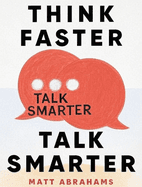
What is the book Think Faster, Talk Smarter about?
Matt Abrahams's Think Faster, Talk Smarter offers actionable strategies for mastering spontaneous speaking, from structuring impromptu responses to managing anxiety. It's designed for professionals, students, and anyone needing to communicate clearly and confidently under pressure.
Feature
Insta.Page
Blinkist
Shortform
Think Faster, Talk Smarter
✓
✕
✓
Summary Depth
Full Chapter-by-Chapter
15-min overview
Section-by-section guides
Audio Narration
✓
✓
✓
Visual Mindmaps
✓
✕
✕
AI Q&A
✓
✕
✕
Quizzes
✓
✕
✕
PDF Downloads
✓
✕
✓
Price
$89.99/yr
$146/yr (PRO)
$199/yr
*Competitor data last verified July 2026.
1 Page Summary
Think Faster, Talk Smarter by Matt Abrahams is a practical guide to improving communication skills by mastering spontaneous speaking. Abrahams, a Stanford lecturer and communication expert, draws on neuroscience, psychology, and his own experience to offer actionable strategies for thinking on your feet. Key concepts include the "What, So What, Now What" framework for structuring impromptu responses, techniques to manage anxiety, and methods to enhance clarity and confidence in high-pressure situations.
The book is grounded in historical and contemporary research on communication, referencing figures like Dale Carnegie and modern studies on cognitive load. Abrahams emphasizes the importance of preparation, mindfulness, and adaptability, arguing that effective spontaneous speaking is a skill that can be developed—not just an innate talent. He also addresses the role of technology and remote communication, making the content relevant for today’s digital world.
Think Faster, Talk Smarter has had a lasting impact by demystifying the art of impromptu communication for professionals, students, and public speakers. Its accessible, research-backed advice has made it a go-to resource for anyone looking to articulate ideas more effectively under pressure. By blending theory with real-world applications, Abrahams empowers readers to transform nervousness into persuasive, confident dialogue.
Introduction
Overview
The pressure to speak off-the-cuff can turn even routine interactions into nerve-wracking trials. From Zoom meetings gone silent to elevator pitches that fall flat, the physical and mental toll of spontaneity—sweaty palms, racing thoughts, frozen responses—reveals a universal truth: anxiety often hijacks our best intentions. Stories like Irma’s decades-long avoidance of public speaking or Chris’s career-damaging fumbles highlight how past failures cement self-fulfilling cycles of fear, where dread of judgment sabotages future success.
But what if these moments could become opportunities? The chapter introduces Think Faster, Talk Smarter, a six-step framework that replaces perfectionism with adaptability. Instead of chasing polished performances à la TED Talks, it champions authenticity—encouraging listeners to calm their nerves, tune into their audience, and structure ideas like improvisational jazz musicians. The method doesn’t promise flawlessness; it embraces “missed takes” as part of the process, arguing that rehearsed scripts pale next to genuine connection.
The author’s own journey—from alphabetical order-induced classroom call-outs to teaching Stanford workshops—underscores that comfort with spontaneity isn’t innate. It’s built through deliberate practice, like training muscles to react under pressure. Whether crafting a wedding toast or navigating a CEO’s unexpected question, the focus shifts from memorization to mindset shifts: viewing interactions as collaborations rather than evaluations.
At its core, the chapter challenges the myth that quick thinking is a talent reserved for the lucky few. By reframing anxiety as a shared human experience and offering actionable strategies—active listening, storytelling frameworks, embracing imperfection—it positions communication agility as a learnable skill. The goal isn’t to eliminate nerves but to transform them into fuel, turning high-stakes moments into chances to articulate ideas with clarity, brevity, and unmistakable humanity.
The Anxiety of Spontaneous Speaking
Unexpected questions or requests to speak can trigger intense anxiety. Common scenarios—like being asked for input in a Zoom meeting, giving an elevator pitch after a bad presentation, or making small talk with a CEO—highlight how pressure to perform quickly and coherently can derail even confident individuals. Physical reactions (sweaty palms, dry mouth) and mental blocks often lead to rambling, hesitation, or freezing up entirely. The example of director Michael Bay’s teleprompter malfunction at CES 2014 illustrates how even seasoned professionals can unravel without preparation.
The Lingering Impact of Past Failures
Negative experiences with spontaneous speaking can shape lifelong behavior. Irma, a librarian, avoided public speaking for decades after a humiliating high school incident. Similarly, Chris, a software employee, lost credibility (and eventually his job) due to incoherent responses under pressure. These stories underscore how fear of judgment or failure creates a self-fulfilling cycle: anxiety worsens performance, which amplifies future anxiety. This cycle leads many to avoid opportunities, stifling personal and professional growth.
A Method for Mastery: The Think Faster, Talk Smarter Approach
The book introduces a six-step framework to reframe and improve spontaneous communication:
Calm: Develop personalized strategies to manage anxiety.
Unlock: Shift from self-judgment to viewing interactions as collaborative opportunities.
Redefine: Embrace imperfection and “missed takes” over perfectionism.
Listen: Tune into both the audience’s needs and your intuition.
Structure: Use storytelling techniques to organize ideas coherently.
Focus: Prioritize clarity, relevance, and brevity.
This method emphasizes practice over innate talent, comparing spontaneous speaking to jazz improvisation—fluid, adaptive, and rooted in preparation.
Debunking the Myth of Perfect Communication
The illusion of flawlessness in rehearsed talks (e.g., TED Talks, Steve Jobs’ keynotes) sets unrealistic standards for everyday interactions. Unlike scripted speeches, spontaneous communication thrives on authenticity, not polish. Striving for perfection increases stress and disconnects speakers from their audience. Instead, embracing imperfection allows for genuine engagement and adaptability.
From Personal Experience to Proven Framework
The author’s lifelong exposure to impromptu speaking—thanks to a last name starting with “Ab” that placed him first in alphabetical call-outs—built his comfort with spontaneity. This foundation inspired his Stanford workshop, Think Fast, Talk Smart, designed to help students thrive in cold-call scenarios. The workshop’s success (expanding to corporate training and online resources) demonstrates that anyone can cultivate confidence through deliberate practice and mindset shifts.
Key Takeaways
Spontaneous speaking triggers anxiety but can be reframed as an opportunity for connection.
Past failures often create mental barriers; breaking these requires embracing imperfection.
The six-step Think Faster, Talk Smarter method prioritizes preparation, active listening, and structured storytelling.
Authenticity beats perfection: Effective communication hinges on adaptability, not rehearsed polish.
Practice and mindset shifts—not innate talent—are the keys to mastering impromptu interactions.
Practical Application in Real-Life Scenarios
Imagine this book as your go-to companion for high-stakes moments. Whether it’s a pivotal work presentation, a friend’s wedding toast, or an unexpected media interview, the strategies here are designed to be revisited and applied before these events unfold. The goal isn’t to memorize scripts but to build adaptable skills that let you pivot gracefully under pressure. By integrating new techniques into your daily interactions, you’ll cultivate reflexes that help you stay poised, articulate, and authentic—even when caught off guard.
Human Vulnerability in Meaningful Moments
The author acknowledges a paradox: Many of life’s most significant exchanges happen spontaneously, yet our instincts often betray us in these very moments. Stress can mute our personalities, flatten our ideas, or lead to rambling responses. This isn’t a flaw but a universal human trait—one that can be reshaped. The text challenges the notion that quick thinking is an innate gift, arguing instead that it’s a muscle anyone can strengthen with deliberate practice.
Building a Foundation for Authentic Communication
Central to the chapter is the promise of six actionable steps. These aren’t rigid rules but frameworks to help you organize thoughts rapidly and express them with clarity. The focus is on staying true to your voice while sharpening your ability to improvise. For instance, learning to structure ideas on the fly or read a room’s energy can transform anxiety into confidence. The message is clear: Mastery comes not from perfection but from embracing progress.
Key Takeaways
Practice Makes Preparedness: Treat communication skills as a toolkit to refine through repetition, not a one-time fix.
Embrace Imperfection: Spontaneity is messy by nature, but training reduces the gap between intention and execution.
Six Steps to Agility: The upcoming methods offer a roadmap to think faster, speak clearer, and remain authentically you in any scenario.
Embraces imperfection and collaboration over perfectionism.
Compares spontaneity to jazz improvisation—rooted in practice, not innate talent.
Debunking Perfect Communication
Rehearsed talks (TED, Steve Jobs) set unrealistic standards for spontaneity.
Authenticity and adaptability matter more than polish.
Imperfection fosters genuine audience connection.
From Personal Experience to Proven Method
Author’s early exposure to impromptu speaking (alphabetical call-outs) built confidence.
Stanford workshop success led to corporate training and online resources.
Mastery requires deliberate practice and mindset shifts, not innate talent.
Key Takeaways
Reframe anxiety as an opportunity for authentic connection.
Break cycles of fear by embracing imperfection.
Six-step method prioritizes preparation, listening, and storytelling.
Adaptability beats rehearsed perfection.
Confidence is learnable through practice.
Practical Application in Real-Life Scenarios
Designed as a companion for high-stakes moments like presentations, toasts, or interviews
Focus on adaptable skills over memorized scripts for graceful pivots under pressure
Daily integration of techniques builds reflexes for poise and authenticity
Prepares users to stay articulate even in unexpected situations
Human Vulnerability in Meaningful Moments
Highlights paradox: important exchanges are often spontaneous, yet stress disrupts our instincts
Stress can mute personalities or lead to disorganized responses—a universal human trait
Challenges the myth that quick thinking is innate; frames it as a trainable skill
Emphasizes reshaping natural reactions through deliberate practice
Building a Foundation for Authentic Communication
Six actionable steps serve as flexible frameworks, not rigid rules
Focus on rapid thought organization and clear expression while preserving authenticity
Skills like on-the-fly structuring and reading room energy convert anxiety into confidence
Mastery framed as progress, not perfection
Key Takeaways
Communication skills improve through repetition and practice, not one-time fixes
Embrace spontaneity's messiness—training narrows the gap between intent and execution
Six-step roadmap to faster thinking, clearer speaking, and authentic presence
💡 Try clicking the AI chat button to ask questions about this book!
Chapter 1: Calm: Tame the Anxiety Beast
Overview
The chapter explores how to transform speaking anxiety from a paralyzing force into a manageable challenge. It begins by breaking down anxiety into three core components: affective emotions like stress, behavioral symptoms such as shaky speech, and cognitive hurdles including negative self-talk. Recognizing these layers opens the door to targeted strategies, from mindfulness practices that reframe nervousness as excitement to tactical fixes like deep breathing and cooling the body to steady physical reactions. Quieting the inner critic involves replacing self-doubt with positive mantras and reality-checking catastrophic thoughts using the spotlight effect—the realization that others aren’t scrutinizing every flaw. Practical speech adjustments, like syncing phrases with breath to eliminate filler words, bridge theory with real-world application.
Central to the chapter is the idea of crafting a personalized Anxiety Management Plan (AMP)—a flexible toolkit combining techniques like acronyms (BOOM) and physical aids. This approach comes alive through stories like Stephanie’s, who transformed her leadership during COVID-19 by focusing on Heart (purpose over perfection), Speech (controlled pacing), and Mind (reframing fear). A CEO interview anecdote further illustrates how embracing spontaneity can turn panic into authenticity, proving that anxiety management isn’t about perfection but presence. Key takeaways emphasize continuous experimentation, prioritizing audience needs, and leveraging small, deliberate actions—like strategic pauses or daily breathwork—to build lasting confidence in high-stakes moments.
Understanding the ABCs of Anxiety
The chapter breaks down speaking anxiety into three categories: affective (emotional responses like stress or feeling overwhelmed), behavioral (physical symptoms like sweating or shaky speech), and cognitive (mental challenges like negative self-talk or blanking out). Recognizing these categories helps pinpoint strategies to manage each type of symptom.
Mindfulness and Reframing Emotions
Instead of suppressing anxiety, the chapter advocates mindfulness: observing emotions without judgment. Acknowledge nervousness as normal (“I’m nervous because this matters”) to create psychological distance. Reframing anxiety as excitement (e.g., saying “I am excited” aloud) taps into similar physiological arousal but shifts the mindset to opportunity rather than threat.
Breathing and Body Control
To combat behavioral symptoms:
Deep breathing: Inhale for 3 counts, exhale for 6 to calm the nervous system.
Slow movements: Deliberately slow gestures or pacing to reduce speech speed and shakiness.
Cooling down: Hold a cold object (e.g., water bottle) to lower body temperature and reduce blushing/sweating.
Saliva activation: Chew gum or sip water beforehand to prevent dry mouth.
Quieting the Inner Critic
Cognitive symptoms like self-doubt or mental blanks are addressed through:
Positive mantras: Replace negative thoughts with affirmations like “I have value to add.”
Rationalization: Challenge catastrophic thinking (“What’s the worst that could happen?”) and remember the spotlight effect (others aren’t scrutinizing you as much as you think).
Strategic pauses: Repeat a key phrase or ask a generic question (e.g., “How might this apply to your work?”) to buy time and regroup.
Eliminating Filler Words
Sync speech with breath to minimize “ums” and “uhs”:
End sentences/phrases with an exhale, forcing a natural pause to inhale (and preventing filler words).
Practice with simple scripts (e.g., describing how to make a sandwich) to build breath-sentence alignment.
Building Your Anxiety Management Plan (AMP)
The chapter encourages creating a personalized toolkit:
Combine 3–5 techniques (e.g., deep breathing + cooling + mantras).
Use acronyms (e.g., BOOM: Breathe, Observe, Oxygenate, Mantra) for easy recall.
Include physical aids (water, lozenge, affirmation cards) for on-the-spot support.
By addressing symptoms holistically, readers learn to “dial down” anxiety’s intensity and reclaim control in spontaneous speaking scenarios.
Stephanie’s Journey Through Crisis and Growth
Stephanie’s leadership during COVID-19 tested her ability to balance authority with empathy. As a non-native English speaker, her anxiety manifested in rushed speech, defensive body language, and sleeplessness. The pressure to guide older, skeptical employees through business changes amplified her self-doubt, leading her to consider resigning. Her turning point came through a personalized Anxiety Management Plan (AMP)—a flexible framework she adapted into three pillars: Heart, Speech, and Mind (HSM).
Heart: Purpose Over Perfection
Stephanie shifted her focus from self-judgment to serving her team. By grounding herself in the intention to support others, she reduced self-consciousness and connected more authentically.
Speech: Tactical Communication Adjustments
To counter her habit of rushing words, she slowed her gestures and inserted pauses by asking questions. These small technical tweaks created space for clarity and calm.
Mind: Reframing Fear
Stephanie challenged catastrophic thinking (“What if I blank out?”) with reality checks. Recognizing that her worst-case scenarios rarely materialized helped her regain perspective.
From Theory to Real-World Experimentation
The author shares a personal story of using their AMP during a high-stakes CEO interview. When asked an unexpected metaphor-based question (“What’s under your onion layers?”), they deployed a breath-focused mantra (“I have value to offer”) to recover from panic. This allowed them to improvise a vulnerable, story-driven answer about emotional openness—a response that stood out and secured the job.
Spontaneity as a Gateway to Authenticity
Managing anxiety isn’t just about surviving stress; it unlocks creativity and connection. By staying present, the author turned a bizarre question into a chance to showcase empathy and leadership values.
Key Takeaways
AMP as a Living Tool: Anxiety management requires continuous experimentation. Test techniques, discard what doesn’t work, and refine your plan.
Serve, Don’t Perform: Focus on your audience’s needs (“Heart”) to sideline self-doubt.
Embrace Imperfection: Fear of failure often exaggerates risks. Reality-check your worries (“Mind”).
Small Actions, Big Impact: Slowing speech, pausing, and breathwork can create immediate calm.
Drill for Resilience: Daily breathing exercises and post-interaction reflections build long-term confidence.
Key concepts: Chapter 1: Calm: Tame the Anxiety Beast
2. Chapter 1: Calm: Tame the Anxiety Beast
Understanding the ABCs of Anxiety
Affective: Emotional responses like stress or feeling overwhelmed
Behavioral: Physical symptoms like sweating or shaky speech
Cognitive: Mental challenges like negative self-talk or blanking out
Mindfulness and Reframing Emotions
Observe emotions without judgment (mindfulness)
Reframe anxiety as excitement to shift mindset
Acknowledge nervousness as normal ('I’m nervous because this matters')
Breathing and Body Control
Deep breathing (inhale 3 counts, exhale 6) to calm the nervous system
Slow movements to reduce speech speed and shakiness
Cooling down (e.g., holding a cold object) to lower body temperature
Saliva activation (chew gum or sip water) to prevent dry mouth
Quieting the Inner Critic
Use positive mantras ('I have value to add') to replace self-doubt
Challenge catastrophic thinking with rationalization
Leverage the spotlight effect (others aren’t scrutinizing you as much)
Use strategic pauses to regroup during mental blanks
Eliminating Filler Words
Sync speech with breath to minimize 'ums' and 'uhs'
End sentences with an exhale to force natural pauses
Practice breath-sentence alignment with simple scripts
At the heart of this chapter lies a paradox: clinging to “correctness” often stifles the messy, authentic connections that make communication meaningful. Through vivid stories and research, it exposes how mental shortcuts—like relying on price tags to choose spaghetti sauce or defaulting to scripted feedback—trap us in predictable patterns. These heuristics might streamline decisions, but they also muzzle spontaneity. Imagine students freezing during a game of shouting wrong names, or professionals recycling tired phrases instead of engaging deeply. The brain’s craving for efficiency, it turns out, can be its own worst enemy.
Yet breaking free isn’t about grand gestures. A classroom disrupted by a student yelling “I love spaghetti!” shifts when met with humor and a tossed Parmesan packet. Stanford students turn $5 into profit not by following service norms but by auctioning their presentation time. These moments reveal a truth: innovation thrives when we abandon rulebooks. The chapter digs into the tyranny of self-evaluation, where even “failing” at being wrong becomes a source of paralysis—like the player agonizing over whether their wrong answer was “wrong enough.” Perfectionism, it argues, drains cognitive resources better spent on presence and creativity.
The path forward? Stress awareness, environmental tweaks, and borrowing strategies from unrelated fields—like redesigning emergency rooms using Formula 1 pit crew logic. Mistakes become “missed-takes”: stepping stones rather than stumbles. A Nobel laureate reimagines speeches as dialogues, while a former stutterer finds his voice through incremental risks. The message crystallizes: communication isn’t a performance to nail but a conversation to shape. By embracing imperfect communication—simpler language, curiosity, and bullet points over scripts—we reconnect with the spontaneity already woven into daily life.
Ultimately, the chapter challenges readers to see mediocrity not as failure but as liberation. It’s in the “dull” moments, free from self-monitoring, that authenticity and unexpected solutions emerge. As one voice puts it, our value lies not in titles but in the “sum total” of our lived experiences—flaws and all.
The Struggle to Shout Wrong Names
The chapter opens with a deceptively simple improv game: point to objects and shout intentionally incorrect names. Participants often freeze, overthink, or criticize themselves for "failing" at being wrong. This tension reveals our brain’s preference for predictable patterns (like the Stroop Test, where conflicting color-word recognition slows us down). The game isn’t about creativity—it’s about confronting the discomfort of imperfection.
When Efficiency Backfires: The Heuristic Habit
Our brains rely on mental shortcuts (heuristics) to streamline decisions, like choosing spaghetti sauce based on price or organic labels. But in spontaneous communication, these shortcuts stifle authenticity. For example, Langer’s photocopier experiment showed how the word “because” triggers automatic compliance, even with weak reasoning. Similarly, defaulting to stock phrases (“It is what it is”) or feedback templates can make us miss emotional cues or opportunities for deeper connection.
The Stanford $5 Challenge: Creativity Beyond Rules
A Stanford design competition tasked students with turning $5 into maximum profit. Most teams followed service-oriented heuristics (selling tire checks or restaurant reservations). The winning team broke the mold by auctioning their presentation time to recruiters. Their success highlights how abandoning default strategies unlocks innovation. The lesson? Heuristics limit possibilities; stepping outside them fosters unexpected solutions.
Classroom Chaos and Parmesan Cheese
A disruptive student’s random outbursts (“I love spaghetti!”) challenged the author’s teaching heuristics (ignore or reprimand). By tossing a Parmesan packet and quipping, “Now, that’s the right way to eat spaghetti!”, the author defused tension through spontaneity. This moment—rooted in humor and improvisation—shifted classroom dynamics, proving that ditching “correct” responses can build rapport and authenticity.
Rewiring Mental Shortcuts
To combat heuristic dependence, the chapter suggests:
Stress Awareness: Recognize when pressure triggers autopilot reactions.
Environmental Shifts: Change physical spaces (e.g., writing in a courtroom) to disrupt ingrained patterns.
Cross-Domain Inspiration: Like IDEO’s ER redesign inspired by Formula 1 pit crews, borrow strategies from unrelated fields to spark creativity.
The Tyranny of Self-Evaluation
Players of Shout the Wrong Name often judge their “wrongness” (“I wasn’t wrong enough”). This perfectionism stems from cultural conditioning that equates mistakes with failure. One student froze, paralyzed by his internal “rulebook” for wrong answers. The chapter argues that self-monitoring drains cognitive resources, leaving less capacity for genuine engagement. Letting go of evaluation—embracing “dullness”—paradoxically frees us to be more present and inventive.
Next Section Preview: The final part of the chapter will explore actionable strategies to embrace mediocrity, including the “Dare to Be Dull” mindset and practical exercises to build spontaneous communication confidence.
The Power of Imperfect Communication
Embrace Mistakes as Missed-Takes
Steve Johnston’s “cathedral vs. brick” analogy sets the stage: effective communication isn’t about grand ideas but about contributing small, connective pieces. Mistakes, reframed as “missed-takes,” become opportunities for growth. Stanford professor S. Christian Wheeler emphasizes that failure is a sign of operating at the edge of our abilities, pushing us to adapt. For example, a software company’s “Failure Fridays” normalized mistakes by celebrating them as learning tools. Similarly, adjusting martial arts techniques through trial and error led to discovering a more powerful punch—proof that imperfection fuels progress.
Reframing Communication as Conversations
Many approach spontaneous interactions like performances, leading to self-monitoring and anxiety. Instead, treating them as casual conversations reduces pressure. Strategies include:
Simpler language: Replace formal phrases (“It is imperative…”) with inclusive, direct statements (“We must…”).
Ask questions: Shift from monologues to dialogues, creating a back-and-forth flow.
Avoid memorization: Use bullet points instead of scripts to stay flexible and present.
A Nobel laureate improved his speeches by framing them around research questions, making them feel like interactive discussions rather than rehearsed lectures.
Reconnecting with Your Spontaneous Self
Anthony Veneziale, cofounder of Freestyle Love Supreme, transformed childhood speech struggles into mastery through incremental risk-taking. His story underscores the value of “low-risk exposure therapy”—practicing spontaneity in safe, gradual ways. For marginalized groups or those battling imposter syndrome, Vivek Venugopal advises leaning into unique lived experiences as strengths. The goal isn’t perfection but authenticity: “Our daily lives are spontaneous,” and communication should mirror that natural flow.
Key Takeaways
Mistakes are mentors: Treat errors as “missed-takes” that guide improvement.
Conversation > performance: Use casual language, questions, and outlines to reduce formality.
Practice incremental spontaneity: Build confidence through small, low-stakes interactions.
Own your perspective: Your unique experiences are your communication superpower.
“The reason you’ve been asked to speak isn’t because of your title—it’s because of the sum total of your experiences.” – Vivek Venugopal
Mental shortcuts (heuristics) streamline decisions but stifle spontaneity
Perfectionism drains cognitive resources needed for creativity
Authentic connection thrives in messy, unscripted moments
The Struggle to Shout Wrong Names
Improv games reveal discomfort with intentional imperfection
Brain prioritizes predictable patterns (e.g., Stroop Test effect)
Self-criticism emerges even when 'failing correctly' is the goal
When Efficiency Backfires
Heuristics lead to autopilot responses (e.g., price-based decisions)
Stock phrases and templates replace genuine engagement
Langer's photocopier experiment shows power of meaningless 'because'
Breaking Heuristic Habits
Stanford $5 Challenge: Winning team auctioned presentation time
Classroom spaghetti outburst resolved with humor (Parmesan toss)
Innovation requires abandoning rulebooks and default strategies
Rewiring for Spontaneity
Stress awareness to identify autopilot triggers
Environmental shifts disrupt ingrained patterns
Cross-domain inspiration (e.g., ERs modeled after Formula 1 pit crews)
The Tyranny of Self-Evaluation
Perfectionism paralyzes (e.g., 'Was I wrong enough?')
Cultural conditioning frames mistakes as failures
Self-monitoring exhausts cognitive capacity for presence
Embracing Imperfect Communication
Nobel laureate reimagines speeches as dialogues
Stutterer finds voice through incremental risks
Simpler language and bullet points outperform scripts
Mediocrity as Liberation
'Dull' moments free from self-monitoring foster authenticity
Value lies in lived experiences, not titles or perfection
Missed-takes (not mistakes) become stepping stones
Embrace Mistakes as Missed-Takes
Reframe mistakes as 'missed-takes'—opportunities for growth and learning.
Failure signals operating at the edge of one's abilities, pushing adaptation (S. Christian Wheeler).
Example: 'Failure Fridays' normalize mistakes as tools for improvement.
Imperfection fuels progress, as seen in iterative refinement (e.g., martial arts techniques).
Reframing Communication as Conversations
Treat interactions as casual conversations, not performances, to reduce pressure.
Use simpler, inclusive language (e.g., 'We must...' instead of 'It is imperative...').
Shift from monologues to dialogues by asking questions to create engagement.
Avoid memorization; use bullet points for flexibility and presence.
Example: A Nobel laureate improved speeches by framing them as research discussions.
Reconnecting with Your Spontaneous Self
Incremental risk-taking (e.g., Anthony Veneziale's 'low-risk exposure therapy') builds spontaneity.
Marginalized groups/imposter syndrome sufferers can lean into lived experiences as strengths.
Authenticity > perfection—communication should mirror natural daily spontaneity.
Example: Overcoming speech struggles through gradual practice and self-acceptance.
Key Takeaways
Mistakes are mentors ('missed-takes') guiding improvement.
Prioritize conversation over performance with casual language and questions.
Build confidence through incremental, low-stakes spontaneity practice.
Unique experiences are communication superpowers (Vivek Venugopal).
Chapter 3: Redefine: Mind Your Mindset
Overview
Transforming anxiety into meaningful engagement begins with reshaping how we perceive spontaneous communication. The chapter explores how adopting a growth mindset turns self-doubt into curiosity, allowing stumbles to become stepping stones rather than roadblocks. By focusing on progress over perfection—celebrating effort, embracing “not yet,” and setting small goals—individuals unlock creativity and resilience, freeing themselves from the paralysis of fearing failure.
Shifting attention outward is equally transformative. Moving from self-consciousness to audience-centricity builds genuine connection, whether by reading a room’s energy, treating listeners as allies, or boldly inviting participation. This external focus not only eases nerves but also creates space for collaboration, exemplified by improvisation’s Yes, And… principle. Here, ideas aren’t shut down but expanded—whether navigating hecklers, resolving conflicts, or playfully accepting imaginary turtles—fostering creativity and trust.
Central to these shifts is the Next Play philosophy, which prioritizes recovery over regret. Like a coach urging athletes to move past a fumble, this mindset values presence and adaptability. Techniques like the New Choice exercise train individuals to pivot gracefully, whether recovering from a speech freeze or reframing a layoff as a chance for reinvention. Real-world stories—from a manager launching a mentorship program after job loss to a speaker transforming vulnerability into authenticity—show how crises can catalyze growth when met with empathy and purpose.
Ultimately, the chapter underscores that spontaneity thrives not in perfection but in purposeful action. By marrying resilience with curiosity, and audience alignment with collaborative openness, everyday interactions become opportunities to uncover hidden paths—where even missteps can lead to unexpected, meaningful destinations.
Embracing Opportunity Through Mindset Shifts
This section explores how reframing spontaneous communication as an opportunity—rather than a threat—unlocks creativity, connection, and growth. By adopting three mindset shifts, we can transform anxiety into engagement.
From Fixed to Growth: Unlocking Potential
Carol Dweck’s research on fixed vs. growth mindsets reveals that viewing skills as malleable fosters resilience. A fixed mindset traps us in self-doubt (“I’m bad at speaking off the cuff”), while a growth mindset emphasizes progress (“I can improve with practice”). For spontaneous speaking, this shift reduces anxiety and reframes failures as learning opportunities.
Practical steps include:
Praising effort over outcomes (e.g., celebrating preparation, not just flawless delivery).
Using a “not yet” mantra to acknowledge progress (“I haven’t mastered this skill yet”).
Setting incremental goals (e.g., practicing one Q&A technique per meeting).
From Self-Conscious to Audience-Centric
When nervous, we hyper-focus on ourselves—our tone, mistakes, or perceived judgment. Shifting attention to the audience builds rapport and reduces self-consciousness. Patricia Ryan Madson advises studying the room: noting energy levels, interactions, and environmental cues to tailor communication.
Key strategies:
Asking, “What does this audience need right now?” (e.g., clarity, empathy, humor).
Treating listeners as allies, not critics—most want you to succeed.
Embracing “inner diva” moments: requesting attention or participation to foster connection.
TRY IT: Before your next meeting, observe the room’s dynamics. Note who’s engaged, distracted, or influential, and adjust your approach accordingly.
From “No” to “Yes, And…”
Improvisation’s golden rule—“Yes, And…”—encourages acceptance and collaboration. Instead of shutting down ideas (“Yes, but…”), build on them. This mindset fosters creativity and disarms conflict.
Examples in action:
Trevor Wallace turns hecklers into comedic partners, creating viral moments.
A manager resolves team conflict by highlighting shared goals (“Yes, we agree on the problem—and here’s a hybrid solution”).
TRY IT: Play the “imaginary gift” game: Accept a partner’s absurd “gift” (e.g., a turtle) and justify it collaboratively. Notice how this openness sparks joy and connection.
Key Techniques for Sustained Shifts
Pause judgment: Replace instant criticism with curiosity (“What’s the logic behind this idea?”).
Seek alignment: Start tense conversations by acknowledging common ground.
Practice improvisation: Use low-stakes games to normalize spontaneity and reduce fear.
By internalizing these shifts, spontaneous speaking becomes less about survival and more about discovery—a chance to uncover “hidden trails” in conversations, much like Dan Klein’s urban park revelation.
Embracing the “Next Play” Philosophy
Patricia Ryan Madson’s commencement speech mishap illustrates the power of moving forward after a mistake. When she prematurely interrupted an orchestra performance, she didn’t wallow in embarrassment—she calmly reset and tried again. Her lesson? Recovery matters more than the error itself. This mirrors Coach Mike Krzyzewski’s “next play” mantra in sports: whether you score a touchdown or fumble the ball, focus on the now. NBA veteran Shane Battier credits this mindset for maintaining momentum amid highs and lows. The Zen parable of the farmer (“Maybe”) reinforces this idea: outcomes are rarely final. A setback today could be a hidden blessing tomorrow. By suspending judgment and staying present, we free ourselves to act decisively in the moment.
Practicing the “Next Play” Mindset
To build resilience, improvisers use exercises like New Choice, where performers abruptly pivot mid-scene when prompted. This trains adaptability and emotional detachment from past actions. Tie Kim, a nonprofit CFO, applies this by letting go of verbal stumbles during presentations—he acknowledges them briefly, then refocuses on his message. The author shares a personal example: after freezing during a speech about the Parkland shooting, they recentered by stating their speaking goal outright. This vulnerability enhanced authenticity, proving that audiences value recovery over perfection.
Real-World Application: Turning Layoffs into Opportunities
The author’s experience laying off 10 employees highlights how all four mindset shifts can transform crises. By framing job loss as a chance for growth (growth mindset), prioritizing employees’ needs (audience focus), brainstorming collaboratively (“Yes, and…”), and avoiding emotional fixation (next play), difficult conversations became catalysts for reinvention. For instance, Sandy, a laid-off manager, leveraged her severance to launch a mentoring program—a dream she’d deferred. The author’s approach minimized despair and maximized forward momentum, showing that even painful moments can unlock unexpected doors.
Key Takeaways
Recover, don’t regret: Mistakes are inevitable; how you bounce back defines your impact.
Stay present: Dwelling on past wins or losses blinds you to current opportunities.
Reframe challenges: Even crises can be pivots for growth when approached with curiosity and empathy.
Practice adaptability: Tools like “New Choice” train mental agility for high-pressure moments.
Lead with purpose: Aligning actions to a broader goal (e.g., helping others) fosters resilience and authenticity.
Key concepts: Chapter 3: Redefine: Mind Your Mindset
4. Chapter 3: Redefine: Mind Your Mindset
Embracing Opportunity Through Mindset Shifts
Reframe spontaneous communication as an opportunity, not a threat
Three key mindset shifts: Growth, Audience-Centric, and 'Yes, And...'
Transforms anxiety into creativity, connection, and growth
From Fixed to Growth: Unlocking Potential
Carol Dweck’s research: View skills as malleable to foster resilience
Praise effort over outcomes (e.g., preparation vs. flawless delivery)
Use 'not yet' to acknowledge progress and set incremental goals
From Self-Conscious to Audience-Centric
Shift focus from self to audience to reduce anxiety and build rapport
Study the room: Note energy levels, interactions, and environmental cues
Treat listeners as allies, not critics—most want you to succeed
From 'No' to 'Yes, And...'
Improvisation’s golden rule: Accept and build on ideas collaboratively
Disarms conflict and fosters creativity (e.g., handling hecklers)
Practice with low-stakes games (e.g., 'imaginary gift' exercise)
Key Techniques for Sustained Shifts
Pause judgment—replace criticism with curiosity
Seek alignment in tense conversations by acknowledging common ground
Normalize spontaneity through improvisation practice
Embracing the 'Next Play' Philosophy
Recovery matters more than the error itself (e.g., Patricia Ryan Madson’s mishap)
Coach K’s mantra: Focus on the now, not past failures or successes
Zen parable of the farmer ('Maybe'): Outcomes are rarely final
Core Chapter Themes
Spontaneity thrives in purposeful action, not perfection
Marry resilience with curiosity and audience alignment with collaborative openness
Missteps can lead to unexpected, meaningful destinations
Practicing the 'Next Play' Mindset
Use exercises like 'New Choice' to train adaptability and emotional detachment from past actions.
Acknowledge mistakes briefly, then refocus on the present goal (e.g., Tie Kim's approach to public speaking).
Vulnerability in recovery (e.g., author's speech freeze) can enhance authenticity more than perfection.
Audiences value resilience and recovery over flawless performance.
Real-World Application: Turning Layoffs into Opportunities
Apply all four mindset shifts (growth, audience focus, 'Yes, and...', 'next play') to reframe crises as growth opportunities.
Collaborative brainstorming and empathy can transform painful conversations into catalysts for reinvention.
Example: Sandy leveraged a layoff to launch a deferred dream (mentoring program).
Minimize despair by focusing on forward momentum and unlocking unexpected doors.
Key Takeaways
Recover, don’t regret: Bouncing back defines impact more than avoiding mistakes.
Stay present to avoid being blinded by past wins or losses.
Reframe challenges with curiosity and empathy to uncover growth pivots.
Practice adaptability (e.g., 'New Choice') for high-pressure agility.
Lead with purpose (e.g., helping others) to foster resilience and authenticity.
You've reached the end of the free chapters
Next chapter: “Listen: Don’t Just Do Something… Stand There!” is locked
Keep reading Think Faster, Talk Smarter — and unlock all 600+ book summaries with audio, mindmaps and AI Q&A.
$0.00 due today · 7 days free, then $89.99/year ($7.49/mo) · Cancel anytime before day 7