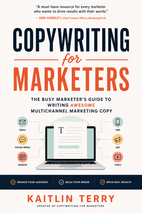
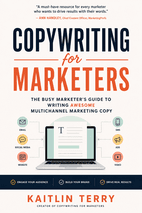
Kaitlin Terry's Copywriting for Marketers provides busy marketers with a step-by-step system for planning, writing, and optimizing multichannel copy using psychological principles and data-driven decisions, covering audience research, persuasion tactics, channel-specific strategies, and rigorous A/B testing.
Feature
Insta.Page
Blinkist
Shortform
Copywriting for Marketers
✓
✕
✕
Summary Depth
Full Chapter-by-Chapter
15-min overview
Section-by-section guides
Audio Narration
✓
✓
✓
Visual Mindmaps
✓
✕
✕
AI Q&A
✓
✕
✕
Quizzes
✓
✕
✕
PDF Downloads
✓
✕
✓
Price
$89.99/yr
$146/yr (PRO)
$199/yr
*Competitor data last verified July 2026.
1 Page Summary
Based strictly on the provided chapter content, here is a three-paragraph summary of "Copywriting for Marketers."
This book serves as a practical guide for busy marketers, positioning copywriting as the critical voice of a brand that shapes perception and drives campaigns. The author's central thesis is that effective copy is not just about describing products but about creating emotional connections that change behavior, requiring the copywriter to act as a blend of detective, psychologist, and storyteller. The book distinguishes between B2C and B2B copywriting, noting that while both rely on psychological triggers like reciprocity, social proof, and scarcity, B2B requires a distinct focus on logic, ROI, group decision-making, and thought leadership. A foundational concept is the need to move beyond demographics to psychographic profiling, behavioral insights, and pain-point identification, which are woven into a living audience profile.
The book’s distinctive approach is highly systematic, providing a step-by-step framework for the entire copywriting process. It begins with strategic planning using the SMART framework to define objectives and build a content calendar. It then delves into the psychology of persuasion, drawing on Dr. Robert Cialdini’s principles and illustrating them with campaigns from brands like Nike, Apple, and Dove. The author treats each marketing channel as a distinct discipline, offering specific tactics for email, blog posts, and articles, emphasizing audience segmentation, A/B testing, and data measurement. The final components of the system are rigorous optimization, which includes a diagnostic toolkit of KPIs, data analysis, and a four-phase A/B testing methodology, and a path to mastery that balances B2B and B2C worlds while incorporating AI, voice search, and a strong ethical backbone.
The intended audience is the busy marketer who needs a comprehensive, action-oriented manual to improve their multichannel copywriting. Readers will gain a step-by-step process for planning, writing, and optimizing copy across different channels, grounded in psychological principles and data-driven decision-making. The book promises to equip them with tools like audience personas and content calendars, while also emphasizing the need for continuous learning, personal branding, and ethical marketing. By treating every campaign as a learning opportunity through rigorous testing, the reader will learn to balance the art of compelling storytelling with the science of data-backed evidence, ultimately creating copy that connects authentically and drives measurable results.
Chapter 1: Foundations
Overview
A struggling bakery couldn't sell its perfect pastries until a heartfelt story about family recipes turned things around. Words don’t just describe products—they create emotional connections that change behavior. A copywriter works as a mix of detective, psychologist, and storyteller, digging beyond demographics to uncover wants, fears, and motivations. Persuasion’s principles have stayed constant even as media exploded from print to pixels. Copywriting evolved from dry, feature-heavy newspaper ads to today’s conversational, personality-driven brand stories shaped by data, SEO, and ethical expectations. Copywriting is the voice of a brand, shaping perception and driving campaigns by taking audiences on an emotional journey—whether B2C transformations or B2B case studies about solving business problems. The B2B difference gets its own spotlight: group decision-making, ROI focus, thought leadership, and a longer sales funnel demand a distinct blend of logic and credibility. Underlying it all is psychology—emotional triggers like joy, FOMO, and belonging, plus rational benefits, scarcity, social proof, and reciprocity. But none of this works without knowing your audience inside and out. The chapter provides a thorough breakdown of audience research, moving beyond simple demographics to psychographic profiling, behavioral insights, pain-point identification, and competitor analysis—all woven into a living profile of who you’re writing for. Real-world examples bring the theory to life: Dove’s “Real Beauty,” Spotify’s personalized playlists, Nike’s segment-specific messaging, Airbnb’s experience-focused copy, and Old Spice’s irreverent humor. When copy mirrors what your audience values, engagement follows naturally. Copywriting sits at the intersection of art, psychology, and strategy—not just persuasion, but genuine connection that reflects what your audience already feels. The key takeaways reinforce that effective copy requires a blend of research methods, behavioral segmentation, and authentic positioning to transform words into tools for lasting impact.
The Bakery That Sparked a Transformation
A struggling bakery couldn't draw customers until a simple, heartfelt story about family recipes turned the tide. That's the core idea of copywriting—words, when crafted with care, don't just describe products; they create emotional connections that change behavior. This chapter treats that insight as your foundation, walking you through the mechanics of copy that captivates and converts.
What a Copywriter Really Does
Your job is to weave words that connect with your audience. The goal isn't just to inform—it's to make someone feel understood. Great copywriters dive deeper than demographics, exploring wants, fears, and motivations. This chapter shows you how to conduct audience research that uncovers those hidden drivers.
From Plain Facts to Emotional Narratives: The Evolution of Copywriting
Copywriting has come a long way from straightforward, feature-centric newspaper ads. Today, the digital revolution has fractured attention spans. Modern copywriting is less about listing features and more about storytelling. Brands now have personalities and values. Language has become conversational, data allows for hyper-personalization, SEO adds a technical layer, and consumers expect transparency and social responsibility.
Why Copywriting Drives Campaigns
Copywriting is the voice of a brand. A successful campaign takes the audience on an emotional journey. The most impactful copy is clear, concise, and persuasive. Consistency across platforms builds trust, and adaptability is key—a tweet requires a different approach than a white paper, but the core message must shine through.
The B2B Difference
B2B copywriting demands a distinct approach. Decisions are made by groups, so copy must appeal to logic and multiple stakeholders. The focus should be on ROI and long-term value, supported by case studies. Relationship-building is paramount, and copy must navigate a longer sales funnel with educational content at the awareness stage and evidence at the decision stage.
The Psychology Behind the Words
Emotional triggers—joy, FOMO, desire for belonging—drive decisions. Storytelling transforms a brand from seller to companion. Rational benefits must back up emotions. Persuasive techniques like scarcity, social proof, and reciprocity subtly influence behavior. In B2B, trust, reliability, and expertise are the key psychological anchors.
Knowing Your Audience Inside and Out
Effective copywriting doesn't happen in a vacuum. Marketers should leverage existing persona research and product messaging. This alignment ensures the copy speaks to the target audience's pain points and aligns with strategic goals.
Conducting Audience Research
Thorough research goes beyond demographics. Use these methods:
Surveys and interviews: Direct conversations reveal preferences and pain points.
Social media analytics: Analyze interactions and follower demographics.
Website analytics: See which pages engage visitors and where they drop off.
Competitor tactics: Learn from what works in your industry.
Trends and feedback: Monitor shifts in consumer behavior.
Real-World Applications of Audience-Targeted Copywriting
Five brand examples demonstrate audience insight translated into powerful campaigns:
Dove’s “Real Beauty” – Featured diverse body types, sparking a conversation about authenticity.
Spotify’s Personalized Playlists – Leveraged listening data to create “Made for [Your Name]” playlists, making users feel seen.
Nike’s Audience Segmentation – Tailors messaging for athletes, fitness enthusiasts, and fashion-forward youth.
Airbnb’s Experience-Focused Copy – Taps into the desire for unique, local adventures, selling a feeling, not just a stay.
Old Spice’s Humor – Targeted younger men with absurd, viral-worthy ads that matched their appreciation for wit.
When copy mirrors what your audience values, engagement follows naturally.
In Essence
Copywriting sits at the intersection of art, psychology, and strategy. It’s not just about writing persuasive sentences—it’s about crafting messages that reflect your audience’s core values. Done right, copywriting builds brand awareness, fosters loyalty, and transforms words into tools for lasting impact.
Key Takeaways
Audience research requires a blend of demographics, psychographics, behavior, pain points, and competitor analysis—not just one source of data.
Segmentation by behavior (new visitors, loyal customers, cart abandoners) demands completely different messaging approaches.
Real-world examples show that personalization, emotional resonance, and authentic positioning consistently outperform generic copy.
The ultimate goal of copywriting is connection, not just persuasion—words should reflect what your audience already feels.
Key concepts: Chapter 1: Foundations
1. Chapter 1: Foundations
What a Copywriter Does
Creates emotional connections that change behavior
Works as detective, psychologist, and storyteller
Uncovers wants, fears, and motivations beyond demographics
Evolution of Copywriting
From dry, feature-heavy newspaper ads to brand stories
Now conversational, personality-driven, and data-informed
SEO and ethical expectations shape modern copy
Copywriting's Role in Campaigns
Voice of the brand shaping perception
Takes audiences on an emotional journey
Consistency builds trust across platforms
The B2B Difference
Group decision-making requires logic and credibility
Focus on ROI, long-term value, and case studies
Longer sales funnel needs educational content
Psychology Behind Persuasion
Emotional triggers: joy, FOMO, belonging
Rational benefits must back up emotions
Scarcity, social proof, and reciprocity influence behavior
Audience Research Methods
Surveys and interviews reveal pain points
Social media and website analytics show behavior
Competitor analysis and trend monitoring
Real-World Examples
Dove's 'Real Beauty' mirrors audience values
Spotify personalizes playlists for engagement
Old Spice uses irreverent humor effectively
💡 Try clicking the AI chat button to ask questions about this book!
Chapter 2: Planning
Overview
Strategic copywriting begins not with words but with understanding the people behind every sale. A marketplace vendor captivating a crowd shows that effective planning requires deep audience empathy, clear objectives, and ethical research. From there, the foundation is built with the SMART framework—turning vague ideas into goals that are specific, measurable, achievable, relevant, and time-bound. Every piece of copy must then have a clear purpose, whether driving conversions through strong calls to action, building brand awareness through emotional storytelling, positioning the brand as a thought leader with informative content, or optimizing for SEO. But none of this works without solid research: market analysis, competitor breakdowns using tools like Semrush, direct customer surveys, analytics data, and unfiltered feedback from reviews and social channels. Research methods shift between B2B’s data-focused approach and B2C’s psychological insights, while niche markets demand deep ethnographic study. AI elevates this research by predicting trends, personalizing content, and refining headlines—examples from Volkswagen, JP Morgan Chase, and Mastercard show real-world impact across sectors.
Once insights are gathered, building a content plan becomes a tactical process. Key themes are turned into a content calendar that specifies types, frequencies, and platforms, using tools like Trello or Google Sheets to create a living, linked document that serves as a single source of truth. Centralized document management prevents scheduling conflicts, with view-only access for the broader team and edit control for a few. Breaking down the creation process visually—on a whiteboard or spreadsheet—maps the logical flow of messages for each asset and audience segment, such as a B2B event email sequence from “Save the date” to “Still a chance to register.” Tailoring messages to different personas and integrating content across platforms (blog posts, social media) early on prevents surprises and ensures consistency. Coordination across teams (email, SEO, other marketing) via regular meetings and integration tools connects the content to the bigger picture. Digital tools like CMS, analytics, and project management software streamline everything, but flexibility remains key to adapt to shifting audience preferences. Real-world examples—HubSpot’s consistent posting, Red Bull’s diverse multimedia, Airbnb’s “Live There” cross-platform alignment—provide inspiration for consistency, variety, and integration. Ultimately, a well-planned content schedule, built with careful coordination and a clear view of the campaign’s structure, ensures copy that reaches an audience and makes a real impact.
Key Takeaways
A content calendar works best as a living, linked document—keep it centralized, version-controlled, and accessible to the whole team.
Break down content creation visually (whiteboards, columns) and plan the logical flow of messages for each asset and audience segment.
Coordinate early with other marketing functions (email, SEO, social) to ensure consistency and avoid last-minute surprises.
Use digital tools (CMS, analytics, project management) but build in flexibility to adapt to changing conditions.
Study successful brand schedules (HubSpot, Red Bull, Airbnb) for inspiration on consistency, variety, and cross-platform integration.
Specify types, frequencies, platforms using Trello or Sheets
View-only access for team, edit control for few
Visual Planning & Cross-Platform Integration
Map logical message flow for each asset and segment
Tailor messages to personas across blog, social, email
Coordinate early with email, SEO, and other teams
Brand Examples & Flexibility
HubSpot: consistent posting; Red Bull: diverse multimedia
Airbnb: cross-platform alignment with 'Live There'
Use digital tools but build in adaptability
Chapter 3: Persuasion
Overview
Persuasion isn't about manipulation—it's about understanding the psychological triggers that guide human decisions. This chapter unpacks those triggers, starting with Dr. Robert Cialdini's principles: reciprocity, commitment and consistency, social proof, authority, liking, scarcity, and unity. Reciprocity means offering real value first to create obligation; commitment and consistency leverage small actions toward larger ones; social proof reduces uncertainty by showing others have chosen well; authority borrows credibility from experts; liking relies on warmth; scarcity triggers fear of missing out; and unity fosters shared identity. These are tools for genuine connection, brought to life through campaigns like Nike's "Just Do It" (empowerment and unity), Apple's "Think Different" (authority and liking), Coca-Cola's "Share a Coke" (personalization), and Dove's "Real Beauty" (authentic representation).
But you also need to know who you're persuading. That's where audience personas come in—detailed profiles that go beyond demographics to capture motivations and pain points. The chapter walks through building personas: gathering data (including psychographics), creating profiles with names and backstories, and refining them with fresh insights. Tailoring copy means adjusting messaging and tone. A Budget-Conscious Parent needs reassurance about value, while a Tech-Savvy Millennial craves innovation and social proof. For B2B contexts, personas shift to professional roles—line managers, executives, technical users—each with distinct pain points and content preferences.
Beyond logic lies storytelling and emotional appeal. The chapter explores how language (power words), imagery (sensory details), and rhythm (sentence pacing) evoke joy, trust, or urgency. Case studies like Airbnb (belonging through real stories) and Always #LikeAGirl (reframing a narrative into empowerment) show how story-driven campaigns resonate. A practical exercise demonstrates transforming a dry fact ("Our software increases productivity by 30%") into an emotional narrative about balance and satisfaction.
The Psychology of Persuasion and Cialdini's Principles
Persuasion isn't about tricking people—it's about understanding psychological levers. Each principle taps into a deep-seated instinct.
Reciprocity is the instinct to return favors. Offer real value upfront—a free guide or webinar—and the audience feels obligation to give back.
Commitment and Consistency leverages our desire to align with past actions. Get someone to take a small step (like a free trial), and they're more likely to commit later.
Social Proof eases uncertainty by showing others have chosen well. Testimonials, user counts, and endorsements reduce perceived risk.
Authority builds trust through expertise. Associating with experts or awards borrows credibility.
Liking is simple: we say yes to people we like. A conversational tone or shared values creates warmth.
Scarcity triggers fear of missing out. Limited-time offers or low stock alerts create urgency.
Unity creates shared identity. Copy that speaks to "us" fosters belonging.
Real-World Campaigns That Made It Sing
Nike's "Just Do It" sells overcoming obstacles, not shoes. Apple's "Think Different" used authority and liking by associating with iconic figures. Coca-Cola's "Share a Coke" personalized a mass-market product. Dove's "Real Beauty" featured real women, building loyalty through authenticity.
Audience Personas: The Blueprint for Tailored Copy
Personas turn a vague target audience into a living person you can write to directly.
Stage 1: Gathering Initial Data starts with demographics and behavioral data, but the real gold is psychographics—values, interests, and emotional drivers.
Stage 2: Creating Detailed Personas gives each persona a name and backstory. "Budget-Conscious Brenda" values durability; "Tech-Savvy Trevor" wants cutting-edge features.
Stage 3: Refining and Validating is ongoing. Use surveys and A/B testing to keep personas sharp.
Utilizing Personas means tailoring messaging, tone, and channel to each group. For technical audiences, focus on specs; for executives, highlight ROI.
Comparing Copy for Two Distinct Personas
Persona A—The Budget-Conscious Parent needs reassurance about value and durability. Use warm, practical language and highlight guarantees.
Persona B—The Tech-Savvy Millennial is driven by innovation and social validation. Focus on features, use casual tone, and leverage social proof.
Key Takeaways
Persuasion in copywriting is rooted in psychological principles that trigger innate human responses.
Cialdini's principles are powerful only when applied genuinely and tailored to context.
Famous campaigns like Nike's "Just Do It" and Dove's "Real Beauty" show how these principles create lasting emotional connections.
Audience personas go beyond demographics to capture psychographics, turning abstract targets into relatable characters.
Crafting personas involves data gathering, detailed creation, and continuous validation.
Tailoring copy to different personas means adjusting messaging, tone, and channels to speak directly to each group's unique motivations and pain points.
B2B Persona Development
In B2B, focus on professional roles and business challenges. A line manager wants efficiency; an executive cares about ROI; a technical user needs integration. Content consumption shifts to industry publications and professional networks. Use jargon that signals expertise. The goal is to speak directly to each role's pain points.
Putting Personas Into Practice: Three Exercises
Exercise 1 – Budget-Conscious Parent: Write a product description emphasizing longevity, safety, and value.
Exercise 2 – Tech-Savvy Millennial: Craft a social media post highlighting cutting-edge features and social proof.
Exercise 3 – Eco-Conscious Consumer: Create an email campaign emphasizing sustainability and ethical manufacturing.
Storytelling and Emotional Appeal
Language – Use power words like "unleash" or "transform" to stir action. Tone sets the emotional backdrop.
Imagery – Create vivid sensory experiences. Engage all senses to immerse the reader.
Rhythm and Pace – Short sentences build urgency; long sentences calm. Mix them to guide emotional response.
Evoking Specific Emotions – Joy calls for upbeat language; trust requires steady reassurance; curiosity thrives on mystery.
Case Studies That Hit Home
Airbnb – Used real stories to evoke belonging.
Always #LikeAGirl – Reframed an insult into empowerment.
Exercise: Transform a Factual Message into an Emotional Narrative
Factual: "Our software increases productivity by 30%."
Transformed: "Imagine this: It's only 4 p.m. and you're already ticking off the last task. With our software, what used to be a frantic race is now a leisurely stroll to success. Reclaim your time and experience the joy of a well-balanced life."
Key Takeaways
B2B personas require a close look at professional roles, pain points, and industry-specific content preferences.
Practical exercises help cement persona-based writing for different audiences.
Emotional appeal relies on precise language, vivid imagery, rhythmic pacing, and targeted emotion evocation.
Case studies like Airbnb and Always #LikeAGirl show how story-driven campaigns create powerful connections.
The ultimate goal is crafting an experience that resonates personally and emotionally, turning reading into a journey of persuasion.
Key concepts: Chapter 3: Persuasion
3. Chapter 3: Persuasion
Cialdini's Principles of Persuasion
Reciprocity: Offer value first to create obligation
Commitment & Consistency: Small steps lead to larger ones
Social Proof: Show others have chosen well
Scarcity: Trigger fear of missing out
Additional Persuasion Principles
Authority: Borrow credibility from experts
Liking: Build warmth through shared values
Unity: Foster shared identity and belonging
Real-World Campaign Examples
Nike's 'Just Do It' sells empowerment, not shoes
Apple's 'Think Different' uses authority and liking
Coca-Cola's 'Share a Coke' personalizes mass product
Dove's 'Real Beauty' builds loyalty through authenticity
Building Audience Personas
Go beyond demographics to psychographics
Create profiles with names and backstories
Refine continuously with surveys and A/B testing
Tailor messaging to each persona's motivations
Tailoring Copy to Personas
Budget-Conscious Parent: Reassure with value and durability
Tech-Savvy Millennial: Highlight innovation and social proof
B2B roles: Focus on efficiency, ROI, or integration
Adjust tone and channel for each group
Storytelling and Emotional Appeal
Use power words and sensory imagery
Vary sentence rhythm to evoke emotions
Transform dry facts into emotional narratives
Case studies: Airbnb (belonging) and #LikeAGirl (empowerment)
B2B Persona Development
Focus on professional roles and business challenges
Line managers want efficiency; executives care about ROI
Use industry jargon to signal expertise
Target content to professional networks and publications
Chapter 4: Channels
Overview
Every email starts with a subject line. It needs to be clear, urgent, and personal enough to get opened, but never misleading. The email body works best when it rewards skimmers with short paragraphs, bullet points, and a clean structure that puts deadlines and offers front and center. The call to action is the key moment: unmistakable, often time-sensitive, and tested relentlessly. None of this works without audience segmentation; treating every subscriber the same is a recipe for irrelevance. Age, location, behavior, and interests shape how you tailor tone and imagery. A/B testing on subject lines, CTAs, even button colors, turns guesswork into data. Measuring opens, clicks, conversions, bounces, and list growth against industry benchmarks keeps campaigns on track.
The same audience-first thinking applies to blog and article writing. Understanding readers through personas and empathy makes content resonate. Storytelling turns dry facts into narratives that hook and hold. Persuasive writing focuses on benefits over features, speaks in a conversational tone, and backs every claim with proof. Visuals like infographics, videos, and charts break up text and speed up understanding. Real case studies prove the point: a health blog using empathetic storytelling grew subscribers by 30%, while a tech blog using branded infographics saw a 50% surge in social shares. An SEO-friendly article exercise walks through keyword research, natural integration, and proper tagging, while a larger framework shows how to balance user engagement with business goals—matching CTAs to the buyer’s journey and measuring KPIs without sacrificing readability.
Web advertising copy operates under even tighter constraints. The headline must hook instantly with curiosity, urgency, or relevance. The messaging is concise but powerful, and the CTA leaves no room for doubt. Each platform demands a different rhythm: Google Ads prizes clarity and keywords, Instagram relies on visuals with emotive captions, X needs wit, LinkedIn values information, and email allows personalization. Successful ad campaigns show that emotional connection and a clear value proposition consistently outperform generic pitches. A workshop on designing ads emphasizes iterative testing, and measuring success means looking beyond CTR to conversion rates and engagement.
No single channel operates on its own. Channel convergence means connecting email, blog content, and paid ads into one conversation. A consistent message across platforms builds trust, while each channel’s unique strengths can be layered to nudge the audience toward conversion. The landscape keeps changing, so adaptability and relentless testing are non-negotiable. Creativity is what keeps your message from being noise.
Subject Lines: The First Impression
The subject line must catch the eye while conveying the message’s essence. Techniques include creating urgency and sparking curiosity. Clarity and brevity are non-negotiable; overly clever lines can confuse and break trust. Personalization boosts visibility. A/B testing is the only way to know what works.
Structuring the Email Body
Once the subject line earns an open, the body must deliver. Open with impact, use storytelling, and keep language clear and concise. Bullet points and subheadings help organize key points. Important information like deadlines should be prominent. Visuals break up text, and brand consistency builds trust.
Calls to Action: The Key Moment
The CTA must leave no doubt about the desired action. Urgency and incentives motivate clicks. A button with contrasting color draws the eye. Personalization and A/B testing on wording, color, and placement refine effectiveness.
Audience Segmentation: Speaking to Groups, Not Crowds
Segmentation transforms email from spray-and-pray to precision targeting. Bases include age, location, behavior, interests, and B2B nuances. Each segment receives adapted content, raising relevance, engagement, and revenue.
Measuring Campaign Effectiveness
Track open rates, click-through rates, conversion rates, bounce rates, list growth, and unsubscribe rates. Compare against industry benchmarks and monitor trends over time.
Workshop: Building a Campaign Step by Step
Define objectives, understand and segment your audience, craft a clear message with a strong CTA, design mobile-friendly emails, personalize and A/B test, schedule sends, measure results, and keep your list clean.
Blog and Article Writing: The Foundation
Audience understanding is the bedrock. Create personas, practice empathy, and use storytelling to make ideas personal. Persuasive writing focuses on benefits, uses a conversational tone, and backs claims with evidence. A well-defined CTA guides readers.
Visuals: The Difference Maker
Visuals grab attention and aid comprehension. Infographics simplify complex data, videos add dynamism, charts clarify trends, and photo essays tell stories. Optimize for speed and mobile.
Case Studies of Successful Content
The Health Blog: Empathetic storytelling boosted subscribers by 30% in six months.
Tech Insights: Infographics on complex topics led to a 50% surge in social shares.
Crafting an SEO-Friendly Article: Step-by-Step Exercise
Do keyword research, outline the article, weave keywords naturally, add expert quotes and visuals, end with a CTA, and optimize title tags and meta descriptions.
Balancing User Engagement With Business Goals
Keep content audience-centric, place CTAs matching the buyer’s journey, measure KPIs, and never sacrifice user experience for SEO.
Crafting Persuasive Web Advertising Copy
The headline must hook instantly. Keep messaging concise but powerful. The CTA should be clear and create immediacy. Emotional appeal drives action. Adapt to each platform: Google Ads needs clarity, Instagram needs visuals, X needs wit, LinkedIn needs value, email needs personalization. A/B test and maintain brand consistency.
Breakdown of Successful Web Ad Campaigns
Campaign A: Storytelling approach → 30% increase in CTR.
Campaign B: Time-sensitive offers → 20% boost in conversion rates.
Both made an emotional connection and communicated a clear value proposition.
Workshop on Designing and Writing Web Ads
Understand your audience, craft a clear value proposition, use high-quality visuals, and write strong headlines and CTAs. Measure CTR, conversion rates, and engagement. A/B test continuously.
In Essence
Digital marketing copywriting blends art and strategy. Core ingredients are clarity, audience resonance, and compelling CTAs. Continuous measurement and iteration turn good copy into results.
Key Takeaways
Persuasive writing thrives on benefits, conversational tone, proof, and a strong CTA.
Visuals dramatically boost comprehension and retention.
Case studies show empathetic storytelling and visual explanations drive measurable growth.
SEO-friendly articles require careful keyword research and natural integration.
Balance user engagement with business goals by aligning content, CTAs, and KPIs with the buyer’s journey.
Web ad copy succeeds with strong headlines, concise messaging, emotional appeal, and platform-specific adaptation.
A/B testing and continuous measurement are nonnegotiable for optimization.
The Art of Channel Convergence
Success means treating each channel as a phase in a continuous conversation. The landscape keeps changing, so stay curious and test relentlessly. Creativity prevents your message from getting lost in the noise.
Key concepts: Chapter 4: Channels
4. Chapter 4: Channels
Email Subject Lines
Must be clear, urgent, and personal
Avoid misleading or overly clever lines
Personalization boosts open rates
A/B testing is essential for optimization
Email Body Structure
Reward skimmers with short paragraphs and bullets
Place deadlines and offers prominently
Use storytelling and clear language
Maintain brand consistency with visuals
Calls to Action (CTAs)
Make the desired action unmistakable
Use urgency and contrasting button colors
Personalize and A/B test wording and placement
Incentives motivate clicks and conversions
Audience Segmentation
Target based on age, location, behavior, interests
Adapt content for each segment
Raises relevance, engagement, and revenue
Avoid treating all subscribers the same
Blog and Article Writing
Understand audience through personas and empathy
Use storytelling to make ideas personal
Focus on benefits, not features
Back claims with evidence and visuals
Web Advertising Copy
Hook instantly with curiosity or urgency
Adapt rhythm to each platform (Google, Instagram, X)
Emotional connection outperforms generic pitches
Measure success beyond CTR to conversions
Channel Convergence
Connect email, blog, and ads into one conversation
Consistent message builds trust across platforms
Layer each channel's strengths to nudge conversion
Adaptability and testing are non-negotiable
You've reached the end of the free chapters
Next chapter: “Optimization” is locked
Keep reading Copywriting for Marketers — and unlock all 600+ book summaries with audio, mindmaps and AI Q&A.
$0.00 due today · 7 days free, then $89.99/year ($7.49/mo) · Cancel anytime before day 7
Kaitlin Terry is a food writer and recipe developer specializing in plant-based nutrition, known for her work on The Full Helping blog and her cookbook, *Vegan for Everybody*. She holds a degree in journalism and has contributed to publications like Food52 and The Kitchn, focusing on accessible, whole-food vegan cooking that emphasizes seasonal ingredients. Her expertise in balanced, approachable plant-based meals has made her a trusted voice for home cooks exploring veganism.
Frequently Asked Questions about Copywriting for Marketers
What is Copywriting for Marketers about?
The book covers the complete process of copywriting from foundations to mastery, blending psychology, strategy, and data. It teaches how to research audiences using psychographics and behavioral insights, plan campaigns using SMART goals, apply persuasion principles like Cialdini's, and optimize results through A/B testing and analytics. The book distinguishes between B2B and B2C copywriting and emphasizes ethical marketing and continuous learning, with real-world examples from brands like Nike and Dove.
Who is the author of Copywriting for Marketers?
Kaitlin Terry is the author. Her expertise is reflected in the book's thorough exploration of audience research, persuasion psychology, and data-driven optimization, including real-world case studies from brands like Nike, Apple, and Dove. The content demonstrates a deep understanding of how to craft copy that creates emotional connections and drives measurable results.
Is Copywriting for Marketers worth reading?
Yes, it's a comprehensive, actionable guide that bridges creative writing and marketing science. It provides practical frameworks like SMART goals, persona building, and Cialdini's principles, all supported by real examples and a systematic approach to optimization. Whether you're a beginner or seasoned marketer, this book offers both foundational knowledge and advanced techniques for crafting copy that truly connects and converts.
What are the key lessons from Copywriting for Marketers?
Key lessons include mastering audience research beyond demographics to uncover deep motivations and pain points, and applying Cialdini's seven principles of persuasion ethically. Strategic planning using SMART goals and A/B testing turns guesswork into data-driven decisions. Finally, balancing creativity with data and maintaining ethical standards builds lasting trust and brand loyalty.
📚 Explore Our Book Summary Library
Discover more insightful book summaries from our collection