Chapter One - The Three Pillars of Entrepreneurial Success
Chapter 1 of 4
0:000:00
EN
1x
Voice
PDF
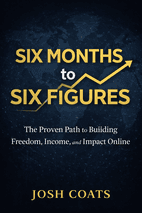
Six Months to Six Figures
by Josh Coats
What is the book Six Months to Six Figures about?
Josh Coats's Six Months to Six Figures provides a step-by-step blueprint for building a high-income online business, covering mindset, digital product creation, and marketing. It's for aspiring entrepreneurs seeking a fast, actionable path to financial freedom.
Feature
Insta.Page
Blinkist
Shortform
Summary Depth
Full Chapter-by-Chapter
15-min overview
Section-by-section guides
Audio Narration
✓
✓
✓
Visual Mindmaps
✓
✕
✕
AI Q&A
✓
✕
✕
Quizzes
✓
✕
✕
PDF Downloads
✓
✕
✓
Price
$89.99/yr
$146/yr (PRO)
$199/yr
*Competitor data last verified July 2026.
1 Page Summary
In Six Months to Six Figures, author and entrepreneur Josh Coats presents a direct, action-oriented blueprint for building a high-income online business within a short timeframe. The central thesis is that by leveraging modern digital tools and a specific mindset, it is possible to create a location-independent career generating significant revenue—potentially reaching a six-figure annual income—in approximately six months. Coats argues against traditional, slow-growth career paths, instead advocating for a focused, systematic approach to entrepreneurship that prioritizes speed, impact, and personal freedom.
The book's distinctive approach lies in its structured, step-by-step methodology. Coats outlines a clear path that moves from mindset shifts and foundational principles to practical execution in areas like digital product creation, affiliate marketing, and building an audience. It emphasizes the importance of providing immediate value, mastering essential online skills, and developing a "CEO mindset" from the outset. Unlike more theoretical business books, this guide is designed as a tactical playbook, with an emphasis on taking rapid, consistent action and measuring progress against tangible milestones.
The intended audience is aspiring entrepreneurs, freelancers, and professionals who feel trapped in traditional employment and seek to build a profitable online venture quickly. Readers will gain a concrete framework for launching their digital business, including strategies for identifying a profitable niche, creating offers, and implementing marketing systems. The book promises not just financial results but the creation of a lifestyle defined by freedom, impact, and control over one's time and income.
Chapter One - The Three Pillars of Entrepreneurial Success
Overview
Chapter Overview
The chapter opens by speaking directly to an entrepreneur who has tasted success but feels stuck in a frustrating cycle of inconsistency and near-breakthroughs. It challenges the common, fragmented advice that plagues the industry and introduces a central metaphor: building a business with mismatched puzzle pieces leads to exhaustion. The solution presented is not another silver-bullet tactic, but an integrated system built on three foundational pillars that must work in harmony. This framework promises to replace the search for the elusive "one thing" with a complete picture for sustainable growth.
The Belief Bridge and the "One Thing" Myth
Many entrepreneurs feel stuck not from laziness, but from acting on incomplete, contradictory advice. The chapter introduces the "Belief Bridge" concept to explain this gap between effort and results. It uses the analogy of children arguing over which single skill made Michael Jordan great, highlighting a critical flaw in entrepreneurial thinking. The pervasive, dangerous myth sold online is that success hinges on mastering just one element—be it mindset, consistency, or a specific sales script. When these isolated strategies fail to produce lasting change, entrepreneurs often internalize the blame, questioning their own worth. The truth is that failure usually stems from a lack of integration, not a lack of effort.
The Three Pillars of Entrepreneurial Success
Sustainable growth requires the development and synchronization of three core pillars. Mastering only one leads to inevitable plateaus.
Pillar One: The Psychology of the Subconscious (Identity and Belief)
This pillar addresses the internal world, where subconscious programming dictates confidence, fears, self-worth, and follow-through. When an entrepreneur knows what to do but can't execute consistently, it's not laziness—it's identity overriding goals. While essential, mindset work alone is insufficient; a strong identity without effective communication leaves you confident but invisible.
Pillar Two: The Psychology of Messaging (Communication and Influence)
This is the art of communicating value in a way that creates movement. It’s not about posting more or being louder, but about understanding the psychology of human decision-making. Effective messaging builds trust, creates curiosity, and leads people from a problem to a solution. However, strong messaging with a weak identity will attract opportunities that are then sabotaged from within.
Pillar Three: Performance Leadership (Ownership, Behavior, & Culture)
The most overlooked pillar, performance leadership is the skill of drawing out potential in clients, teams, and oneself by fostering ownership. It is coaching-based and psychology-driven, creating consistency, retention, and business longevity. Without it, success becomes exhausting and inconsistent. Conversely, strong leadership with unclear messaging means you have no one to lead.
The Imperative of Integration
The pillars are interdependent. The structure of your business wobbles if any single pillar is missing or underdeveloped. The chapter emphasizes that entrepreneurship is a "multi-skill sport" demanding this integration. The promise of the book is to provide the tools to build these pillars into a cohesive system, moving from collecting information to creating transformation.
Key Takeaways
Entrepreneurial stagnation is typically a problem of integration, not a lack of effort or the wrong "one thing."
Sustainable success rests on three interdependent pillars: Identity (subconscious belief), Messaging (psychological communication), and Performance Leadership (coaching for ownership).
Identity dictates your execution; knowing what to do but not doing it is often a subconscious block, not laziness.
Messaging is the psychology of influence, crucial for turning your value into movement and attraction.
Performance Leadership is essential for creating consistent results, whether leading a team, clients, or yourself.
Mastering only one pillar leads to specific limitations: strong identity alone leaves you invisible, strong messaging alone leads to self-sabotage, and strong leadership alone has no one to follow.
The path forward involves developing all three pillars into a cohesive system where they reinforce each other.
Key concepts: Chapter One - The Three Pillars of Entrepreneurial Success
1. Chapter One - The Three Pillars of Entrepreneurial Success
The Problem of Fragmented Advice
Entrepreneurs stuck by contradictory, incomplete advice
The dangerous myth of the single 'one thing' for success
Failure stems from lack of integration, not lack of effort
Psychology of communicating value to create movement
Builds trust and guides from problem to solution
Alone, attracts opportunities that get sabotaged
Pillar Three: Performance Leadership
Draws out potential through coaching and ownership
Creates consistency, retention, and business longevity
Alone, means you have no one to lead
The Imperative of Integration
Pillars are interdependent; business wobbles if one is weak
Entrepreneurship is a multi-skill sport
Success requires a cohesive system, not isolated tactics
💡 Try clicking the AI chat button to ask questions about this book!
Chapter Two - The Power of Speed: Confidence in Action
Overview
This chapter dismantles the common belief that failure stems from a lack of intelligence, tools, or dreams. Instead, it identifies the true culprit as the simple act of stopping—the cycle of overthinking, hesitation, and waiting for perfect conditions that allows faster movers to seize opportunities. The central thesis is that speed is a deliberate strategy. Decisive action builds momentum, and that momentum is the very engine that constructs authentic confidence. By moving quickly, you accumulate evidence of your own capability, reprogram limiting subconscious beliefs, and create a magnetic energy that attracts sales, inspires teams, and turns aspirations into achievements.
The Cycle of Inaction and the Confidence Solution
The painful pattern of setting goals with fervent intention only to stall within days is a familiar trap. This inconsistency, the cycle of start-stop-start-stop, is what erodes self-trust. Every broken promise to yourself becomes evidence filed away in your subconscious, reinforcing a narrative that you cannot follow through. The antidote is speed. Moving quickly bypasses overthinking, creates immediate momentum, and begins compiling evidence in the opposite direction. It’s not about recklessness, but about valuing progress over perfection. Speed keeps ideas flowing, energy high, and doors of possibility open, signaling to yourself and others that you are serious and in the game.
Reprogramming the Subconscious Through Action
Your subconscious mind is a record-keeper, not a judge. It files evidence based on your actions. Repeatedly breaking small promises to yourself builds a heavy "file" that whispers you are undisciplined and untrustworthy. The key to rewriting this script is consistent, quick action. By keeping your word to yourself in small, decisive ways—like showing up for a workout or sending a follow-up—you create a new file of evidence. The marathon training example illustrates this perfectly: each daily run, each kept promise, stacked tiny wins that built the unshakable belief necessary to finish the 26.2 miles. Confidence is built in the doing, not the planning.
Sales and Energy: The Magnetic Pull of Momentum
In business, people are not bought by perfect plans or flawless scripts; they are compelled by energy and conviction. Sales psychology reveals that people want to be led by someone who is already in motion. Your confidence, generated through your own consistent action, creates trust. When you share your journey, your real-time results, and your excited momentum, that energy becomes magnetic. It tells a story others want to join. Hesitation, by contrast, flatlines your energy. Leadership, therefore, is about modeling the speed and action you want to see, because teams mirror the energy and pace of their leader.
The Leadership Ripple and Celebrating the Journey
Leadership effectiveness is directly tied to the speed you model. Your team will amplify your behavior—if you hesitate, they will stall; if you move with purposeful speed, they learn to pivot and act quickly. This creates a high-vibe, trusting community where momentum fuels collective belief. However, speed must be balanced with celebration. Achieving a goal without pausing to honor the milestone can leave you feeling empty. Creating a meaningful memory tied to an achievement—a special dinner, a vacation, a simple toast—cements the win in your heart and builds a sustainable culture of success where the journey itself is cherished.
Practical Frameworks for Unstoppable Action
Building confidence through speed requires a practical system. The Action + Feedback + Adjustment Cycle is a core framework:
Download the idea.
Take immediate action.
Gather feedback.
Adjust and keep moving.
This cycle prioritizes learning in motion over paralysis by analysis. It keeps the creative channels open and turns every stumble into a strengthening lesson. This action-oriented mindset must be fueled by high, sustainable energy. Investing in personal growth and mindset ensures that when challenges arise, you and your team can adapt fast without crumbling. By choosing to be the energy in the room—magnetic, confident, and unstoppable—you naturally attract the right people and opportunities.
Key Takeaways
Confidence is a Byproduct, Not a Prerequisite: You don't need to feel confident to start; confidence is built from the evidence you create by taking action and keeping promises to yourself.
Momentum Over Perfection: Waiting for the perfect plan or moment guarantees you'll be left behind. Imperfect action creates clarity and opportunity faster than perfect planning ever will.
Speed Reprograms Your Mind: Quick, decisive actions rewrite the subconscious "file" that says you don't follow through, replacing it with proof that you are a person who acts.
Energy Sells and Leads: In business and leadership, people buy into your energy, momentum, and belief—not a flawless script. Your action gives others permission to act.
Lead with Your Pace: Your team will mirror your speed. Moving with intention and energy sets a pace that creates a high-performing, adaptive culture.
Celebrate to Cement Wins: Moving fast must include pausing to celebrate milestones in a meaningful way. This creates lasting memories and makes the journey rewarding.
Use the Action Framework: Implement the Action > Feedback > Adjustment cycle to stay in motion, learn quickly, and maintain creative flow without burning out.
Key concepts: Chapter Two - The Power of Speed: Confidence in Action
2. Chapter Two - The Power of Speed: Confidence in Action
The Core Problem and Solution
Failure stems from stopping, not lack of intelligence
Speed is a deliberate strategy to build momentum
Momentum constructs authentic confidence through action
Purposeful speed creates a high-vibe, trusting community
Balance speed with celebration of milestones
Practical Action Frameworks
Use the Action + Feedback + Adjustment Cycle
Prioritize learning in motion over analysis paralysis
Fuel action with sustainable personal energy
Chapter 3 - Stacking Priorities, Not Sacrifices
Overview
This chapter challenges the pervasive "hustle culture" narrative that demands endless personal sacrifice for professional success. Through a vulnerable recounting of her own journey to burnout as a high-achieving medical professional, new mother, and network marketing leader, Jill Sager introduces a transformative alternative: the Pile of Rocks Priority System. It argues that sustainable success isn't built on sacrificing what matters most, but on intentionally structuring your life with your core priorities as a solid foundation.
The Catalyst for Change: Success That Felt Like Grief
Jill describes reaching a significant professional milestone—earning a major pin at a high-energy company event. Externally, it was a moment of triumph, but internally, she was overcome with grief. She realized she had followed the common blueprint of relentless sacrifice and had arrived at her goal feeling hollow, disconnected from her family, and unrecognizable to herself. This moment of clarity, not crisis, became the turning point where she understood that the "sacrifice for a season" model had become an unsustainable lifestyle, leading her to abandon her own well-being.
The Pile of Rocks Metaphor: Diagnosing a Wobbly Life
The core framework is introduced through a simple, powerful metaphor: each life priority is a rock in a pile. Stability depends on the size and placement of these rocks. When Jill mapped her own life, she saw the architectural flaw:
Faith was a pebble-sized foundation, too small to build upon.
Herself was missing from the stack entirely.
Marriage and Kids were squeezed in the middle.
Her Business was a massive boulder placed at the very top, its weight putting unbearable pressure on everything beneath it.
This visualization provided relief, not shame. The problem wasn't her ability; it was the faulty order of her priorities.
Rebuilding from the Foundation Up
Realignment began not with grand gestures, but with small, intentional decisions to strengthen her foundational rocks:
Faith: Redefined not necessarily as religion, but as the core belief system you would lean on if you lost everything. Strengthening this created a calm, steadying presence.
Herself: The hardest rock to rebuild. She shifted from self-abandonment to self-integrity through daily choices—resting without guilt, asking for help, and treating her own well-being as essential. She frames it practically: if you are emotionally depleted (an "emotional fever"), you cannot show up for anyone else effectively.
Marriage & Motherhood: As her foundation solidified, space and patience returned. Relationships stopped feeling like logistical burdens and regained their priority, becoming sources of connection rather than stress.
The Paradox: A Stronger Foundation Fuels Sustainable Business Growth
The most counterintuitive revelation was that deprioritizing her business for the sake of her foundation did not cause it to crumble. Instead, by moving it to its proper place in the stack, her business began to experience stable, rooted growth. She stopped leading from insecurity, panic, and the need to prove her worth. This shift to leading from clarity and presence transformed her team's energy as well, creating a culture of sustainable ownership rather than frantic hustle.
Key Takeaways
Sacrifice becomes a lifestyle, not a season, if not intentionally bounded. The common "grind now, enjoy later" mentality often leads to permanent burnout and personal disconnection.
Your life's stability depends on its architecture. List your priorities as rocks; if the heaviest ones (like work) are on top of weak foundations (like self-care), everything will feel wobbly.
You must build your foundation first. A business, or any major endeavor, cannot be sustainably supported by a neglected self, strained relationships, or a lack of core belief.
Sustainable success is an inside-out process. When you lead from a place of personal stability and ownership—of your time, energy, and boundaries—your business becomes an empowering extension of your life, not a force that consumes it.
Leadership energy is contagious. Your team will mirror your state. Leading from regulation and clarity fosters a healthier, more effective team culture than leading from pressure and urgency.
Key concepts: Chapter 3 - Stacking Priorities, Not Sacrifices
3. Chapter 3 - Stacking Priorities, Not Sacrifices
Christine Vance reflects on a profound personal and professional victory: enjoying her fourth earned Lifestyle Getaway in Punta Cana, this time with her daughter. This moment of freedom and fulfillment stands in stark contrast to her earlier years of burnout, inconsistency, and self-doubt. The chapter chronicles her journey from a pattern of failed starts in network marketing to achieving sustainable six-figure success, revealing that the pivotal shift wasn't in strategy, but in a fundamental internal transformation guided by a coach.
From Serial Starter to Burned-Out Healthcare Worker
Christine’s entrepreneurial spark ignited early, inspired by her mother’s success. She started her first network marketing business at eighteen but spent years jumping between opportunities, mistaking activity for achievement. She believed success was external—finding the perfect company or product—and lacked the self-belief and discipline to build consistently. This pattern led her to write off the entire industry after what she perceived as repeated failures. Life then steered her into a demanding season as a mother of four working brutal overnight shifts in healthcare, a period defined by an exhaustion so deep she would pull over at rest stops to sleep just to survive the drive home. During this time, her sister found success with a health and wellness company, but Christine, hardened by past disappointments, wanted no part of it.
The Catalytic Leap and the Missing Piece
After leaving healthcare, Christine took a leap and opened a photography studio, rediscovering a sense of aliveness. It was then she finally joined her sister’s company, driven by a longing to be part of something meaningful. Despite her desire, old patterns resurfaced. For two years, she showed up inconsistently, plagued by fear and the implicit belief that she would fail again. She built some success, but it felt fragile and unsustainable. The breakthrough came when she invested in a coaching program, “6 Months to 6 Figures,” despite initial resistance. She expected business tactics but discovered the real work was internal.
Mindset as the Foundation: Rewriting the Inner Narrative
Her coach immediately identified that Christine’s inconsistency stemmed not from a lack of motivation, but from deep-seated limiting beliefs. The coach provided a critical reframe: belief is not a feeling you wait for, but a practice you cultivate. Christine learned to discern the quiet, sabotaging voice in her head, asking a powerful question: “Is this fact, or is this fear?” She began the diligent work of rewriting her internal story, choosing curiosity over criticism and belief over fear. This internal shift radically changed her external expression; she began showing up authentically online, sharing her struggles and truths, which in turn forged genuine connections with her audience.
The Ripple Effect of Belief and Stepping into Leadership
As Christine transformed, so did her business. It evolved from a transaction to a platform for transformation. Leadership, she learned, was not about authority but about example—you cannot guide others where you haven’t gone yourself. Women began reaching out for help, and she stepped into mentorship. In holding space for others, she saw a universal pattern: sustainable success always begins with inner work and chosen belief. Her role became about believing in her clients fiercely until they could believe in themselves, creating a powerful ripple effect of empowerment. This cycle of giving accelerated her own growth and fulfillment.
Full Circle: The Woman Who Now Holds the Bridge
The chapter concludes back in Punta Cana, with Christine experiencing the tangible fruits of her journey—not just the trip, but the woman she became to earn it. She recognizes every past version of herself, even the “failures,” as a necessary part of her foundation. Now, she sees her purpose as holding the bridge for other women, guiding them through the messy middle of their own transformations. She extends an invitation to the reader who sees themselves in her story, offering the same gift her coach gave her: unwavering belief and a proven path from doubt to presence and freedom.
Key Takeaways
Sustainable success is an inside-out process; the primary work is transforming your mindset and beliefs, not just mastering external tactics.
Belief is a conscious practice, not a passive feeling. It involves consistently choosing a new narrative over old, fear-based thoughts.
Authentic connection, built on vulnerability and truth, is far more powerful than polished performance in building a business and community.
True leadership is modeling the transformation you teach. You cannot effectively guide others through a process you haven’t committed to yourself.
Past perceived failures are not dead ends; they are foundational lessons that prepare you for your current purpose.
Having a coach or mentor who believes in you before you believe in yourself can be the critical catalyst for breaking cycles of inconsistency and doubt.
Key concepts: Chapter Four - The Woman Who Chose to Believe
4. Chapter Four - The Woman Who Chose to Believe
The Starting Point: Burnout and Failed Patterns
Early network marketing attempts led to serial starting
Mistook constant activity for meaningful achievement
Exhausted healthcare worker with deep burnout
Hardened by past disappointments in the industry
The Catalytic Investment in Coaching
Joined coaching program expecting business tactics
Discovered the real work was internal transformation
Initial resistance gave way to pivotal breakthrough
Identified inconsistency stemmed from limiting beliefs
Mindset Transformation as Foundation
Belief is a practice, not a feeling to wait for
Learned to ask: 'Is this fact, or is this fear?'
Rewrote internal narrative from fear to curiosity
Authentic sharing replaced polished performance
Leadership Through Personal Transformation
Business evolved from transaction to transformation platform
Cannot guide others where you haven't gone yourself
Stepped into mentorship as women sought help
Believed in clients until they believed in themselves
Full Circle: Purpose and Payoff
Past failures were necessary foundation for success
Tangible freedom earned through internal work
Purpose became holding the bridge for other women
Extends invitation to readers in similar struggle
You've reached the end of the free chapters
Next chapter: “The Effortlessly Productive Method” is locked
Keep reading Six Months to Six Figures — and unlock all 600+ book summaries with audio, mindmaps and AI Q&A.
$0.00 due today · 7 days free, then $89.99/year ($7.49/mo) · Cancel anytime before day 7
Josh Coats is a contemporary author and financial commentator best known for his book "The Simple Path to Wealth," which distills complex investment principles into accessible advice for achieving financial independence. His expertise stems from a long career in finance and his popular blog, where he advocates for low-cost index fund investing and frugality.
📚 Explore Our Book Summary Library
Discover more insightful book summaries from our collection