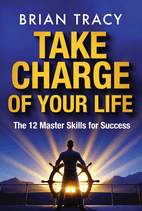
Brian Tracy's Take Charge of Your Life presents twelve master skills for transforming your life, from maximizing potential to achieving financial independence, based on mental laws and practical goal-setting systems. Written for anyone feeling stuck or underperforming who wants actionable steps to take ownership of their success.
Feature
Insta.Page
Blinkist
Shortform
Summary Depth
Full Chapter-by-Chapter
15-min overview
Section-by-section guides
Audio Narration
✓
✓
✓
Visual Mindmaps
✓
✕
✕
AI Q&A
✓
✕
✕
Quizzes
✓
✕
✕
PDF Downloads
✓
✕
✓
Price
$89.99/yr
$146/yr (PRO)
$199/yr
*Competitor data last verified July 2026.
1 Page Summary
In Take Charge of Your Life: The 12 Master Skills for Success, Brian Tracy distills decades of personal experience and study into a practical framework for transforming one’s life. The book opens with the author’s own story of rising from poverty—washing dishes, drifting between jobs, and even sleeping in his car—to become a successful business leader, driven by the pivotal realization that no one was coming to rescue him. This sets the stage for his central thesis: success is not a matter of luck or background, but of learning and applying a specific set of mental laws and skills. Tracy argues that while people are born with a supercomputer-like brain, they are given no instruction manual, leaving 84% feeling underperforming. The solution lies in understanding and aligning with natural mental laws—such as the Law of Control (your self-esteem depends on feeling in charge) and the Law of Cause and Effect—which are as reliable as gravity.
The book’s distinctive approach combines psychology, goal-setting methodology, and practical productivity systems. Tracy introduces foundational concepts like the self-concept (the “master program” of your mental computer, composed of self-ideal, self-image, and self-esteem), which can never be outperformed, and the equation for individual potential where Attitude acts as an unlimited multiplier. He dedicates significant depth to goal setting, noting that fewer than 3% have written goals, and provides a detailed twelve-step process from burning desire to absolute belief, writing goals down, and setting deadlines. A key highlight is the superconscious mind—a universal intelligence activated by clear goals, complete commitment, and decisive action, which then delivers solutions through intuition and synchronicity. Tracy also redefines time management as the “outward expression of self-discipline,” with foundational tools like the TRAF system for paper flow, ABCDE method for prioritization, and the 80/20 rule. Later chapters cover streamlining your life (viewing time as capital and energy as a pipeline), increasing earning ability (by investing 3% of income into reading, audio learning, and seminars), and financial independence through the habits of paying yourself first and delayed gratification.
The intended audience is anyone who feels stuck, underperforming, or simply drifting through life—whether in their career, finances, or personal fulfillment. Tracy writes for the person who has been told for years to set goals but never learned how, or who has felt that their outer circumstances don’t match their inner potential. What sets this book apart is its systematic, no-excuses practicality: it doesn’t just inspire but provides actionable processes, from informational interviews to unlock hidden jobs to a daily to-do list anchored by the question “What is the most valuable use of my time right now?” Readers will gain a clear mental framework for taking ownership of their lives, along with step-by-step tools to maximize their potential, manage their energy, and achieve financial independence. Ultimately, Tracy’s message is that by mastering these twelve skills—starting with the mind and ending with money—anyone can move from surviving to thriving.
Introduction
Overview
You’re about to open a book that the author believes could be the most important one you ever read—and it’s taken him twenty-five years of real-world experience to put it together. He starts by sharing his own story, not to impress you, but to show you where he came from. Raised poor, he did badly in school, failed in high school, and ended up washing dishes in a hotel kitchen. For years he drifted from job to job, city to city, even working as a farm laborer in different countries. Then, at twenty-three, something clicked: he realized that if he wanted his life to change, he had to change first. No one was coming to rescue him, and this life wasn’t a rehearsal.
That realization sent him on a search for what makes some people more successful than others. He started reading, listening to audios, attending courses, and asking for advice. He sold, studied sales, and rose to the top of every sales organization he joined. He moved into management and earned an MBA at night school. He studied marketing, strategy, psychology, philosophy, history, and human potential. Over time, his situation transformed—from sleeping in his car to owning his own home, then a bigger one. He went from rags to riches by practicing the very ideas he shares in this book.
By 1981, he began teaching these principles in seminars, and people immediately said the experience felt like a fresh start or a blank check on the future. The course expanded, audios and videos followed, and now this book represents the most comprehensive lifelong success course he’s ever created. He promises it will change your life—but only if you read it more than once, pausing to reflect on the key ideas. The teaching is in the words, but the learning happens in the silence.
He invites you to journey to the frontiers of your mind and your infinite possibilities. No one else in history has ever been exactly like you, and you have the potential to do something extraordinary—something only you can do. The real question is: will you do it? Most great achievers weren’t born with extraordinary gifts. They simply developed their average talents to a very high degree in a specific area. Your potential must be nurtured and worked on if you ever want to get something great out of yourself.
Key Takeaways
Your life won’t change until you decide to change yourself—no one else is coming to save you.
Success comes from developing average talents into extraordinary skills through constant learning and practice.
Reading and reflecting deeply on key ideas is more valuable than speed-reading through them.
You have a unique potential that no one else possesses; the only question is whether you’ll act on it.
The author’s personal transformation from poverty to prosperity proves these principles work—if you apply them.
Key concepts: Introduction
1. Introduction
Author's Personal Journey
From poverty and failure to success
Realization: change yourself to change your life
Twenty-five years of real-world experience
The Search for Success Principles
Studied sales, marketing, psychology, and history
Practiced ideas to transform from rags to riches
Developed average talents into extraordinary skills
The Book as a Life-Changing Course
Comprehensive lifelong success course
Requires multiple readings and deep reflection
Learning happens in silence, not just words
Your Unique Potential
No one else in history is exactly like you
Potential to do something extraordinary
Must nurture and work on your potential
Call to Action
Decide to change yourself—no one else will
Apply principles for transformation
The only question: will you act on it?
💡 Try clicking the AI chat button to ask questions about this book!
One: Maximize Your Potential
Overview
Individual potential is defined through an equation: Inborn attributes plus Acquired attributes multiplied by Attitude equals IHP. Attitude isn’t just a nice-to-have—it’s the most important word in the language, and it acts as a multiplier that can be expanded almost without limit. What makes an attitude positive? It boils down to how you respond when things go wrong, and that response is shaped by your expectations, which come from your core beliefs. Those beliefs reside in your self-concept—the master program of your mental computer. Your self-concept has three components: the self-ideal (the vision of who you want to become), the self-image (how you see yourself), and self-esteem (how much you like yourself). You can never outperform your self-concept in any area.
No one is born with a self-concept; it’s entirely learned. Children build theirs through imitation and the pleasure principle—moving toward comfort and away from discomfort. The withdrawal of parental love is the most traumatic discomfort, and much adult personality trouble traces back to love withheld in childhood. Two negative habit patterns develop from common parental mistakes: the inhibitive pattern (from repeated “Don’t!”) creates an internal “I can’t” that crystallizes into the fear of failure; the compulsive pattern (from conditional love) creates an internal “I have to” that becomes the fear of rejection. These fears are learned, which means they can be unlearned. A simple action exercise—completing the sentence “If I were totally unafraid…”—reveals how much fear is running the show and opens up wonderful possibilities.
Before real success can happen, you must accept complete responsibility for who you are and everything you become. No exceptions. Most people carry an unconscious expectation that someone else is still responsible for them—a hangover from childhood. That expectation is the source of most unhappiness and underachievement. The excuses people use to avoid setting clear goals and making total commitments are their “white rabbits.” Your job is to go rabbit hunting. Ask yourself if anyone with your exact limitation has succeeded despite it; if the answer is yes, that excuse is invalid. Excusitis is fatal to success.
Accepting full responsibility is difficult at first, then exhilarating and free. There’s a direct relationship between how much responsibility you accept and how much control you feel—more responsibility equals more freedom and happiness. Negative emotions are robber emotions—the single greatest cause of unhappiness, underachievement, and failure. They are completely unnecessary and unnatural; every negative emotion is learned and can be unlearned. The four causes of negative emotions are justification, identification, lack of consideration, and blaming—which is the root cause of 99% of negativity. The instant you stop blaming anyone or anything, your negative emotions cease. Saying the words “I am responsible” short-circuits negativity immediately.
Even one negative emotion held onto—one area of the past where you refuse to accept responsibility—acts like a locked brake on a perfect car, sabotaging everything. You become what you teach; every time you remind someone else that they are responsible, you reinforce that truth in your own mind. An action exercise in radical ownership asks you to list every person or situation that stirs negative feelings and, for each, complete the sentence “I am responsible for this because…” The point is not self-blame but self-liberation. Once you own your part, the situation loses its power to hold you hostage, and self-esteem rises as you step into control.
Your attitude—shaped by expectations and beliefs—directly drives performance. The self-concept’s three parts (self-ideal, self-image, self-esteem) determine your reality. Negative emotions are learned and can be unlearned. Taking full responsibility for everything in your life is the fastest route to peak performance and genuine freedom.
Key Takeaways
Your attitude—shaped by expectations and beliefs—directly drives performance.
The self-concept has three parts: self-ideal, self-image, and self-esteem.
Negative emotions are learned and can be unlearned.
Taking full responsibility for everything in your life is the fastest route to peak performance and genuine freedom.
Key concepts: One: Maximize Your Potential
2. One: Maximize Your Potential
The Potential Equation
Potential = (Inborn + Acquired) × Attitude
Attitude is the most important word in language
Attitude acts as an expandable multiplier
Positive attitude depends on response to problems
Self-Concept: The Master Program
Self-concept has three components: ideal, image, esteem
You can never outperform your self-concept
Self-concept is entirely learned, not inborn
Built through imitation and pleasure principle
Two Learned Fears
Inhibitive pattern creates fear of failure
Compulsive pattern creates fear of rejection
Both fears stem from parental love withdrawal
Fears can be unlearned since they are learned
Radical Responsibility
Accept complete responsibility for everything
Excuses are 'white rabbits' that block success
Excusitis is fatal to achievement
More responsibility equals more freedom
Eliminating Negative Emotions
Negative emotions are learned and unnecessary
Blaming is the root cause of 99% of negativity
Saying 'I am responsible' short-circuits negativity
One held negative emotion acts like a locked brake
Two: The Mental Laws of the Universe
Overview
Despite an ocean of success literature, only 5% of people achieve financial independence by retirement, and 84% feel they’re underperforming. The real problem isn’t a lack of opportunity—it’s that we’re handed a three-pound supercomputer called a brain with zero instructions. Like a powerful PC left without a manual, most people fumble through life never realizing the mental laws governing their experience are just as reliable as gravity. These aren’t man-made rules you can bend; they are natural laws, split into physical (proven in labs) and mental (proven through experience). The ancient mystery schools taught them only to the dedicated few, but now they’re available to anyone willing to apply them. The chapter reveals that when life works, you’re aligned with them; when it doesn’t, you’ve unknowingly violated one. And you can always measure alignment by the results you get.
The law of control is foundational: you feel good about yourself to the degree you feel in charge of your life. Psychologists call this internal versus external locus of control. The moment you place your hands back on the steering wheel—starting with your thoughts, the one thing you always command—you reclaim power. The law of cause and effect is the iron law of the universe: every effect has a specific cause, no accidents. Thoughts are the primary seeds; change the quality of your thinking, and your outer world shifts to match. The law of belief says whatever you believe with feeling becomes your reality, filtering out contradictory information. Most people operate from a benevolent or malevolent worldview, and self-limiting beliefs act as invisible chains. Henry Ford captured it: whether you think you can or cannot, you’re right.
The law of expectation turns your confident predictions into self-fulfilling prophecies. You don’t get what you want; you get what you expect. This plays out in four critical domains: what your parents expected of you, what your boss expects, what you expect of others, and—most powerfully—what you expect of yourself. Successful people radiate a confident positive expectancy, even becoming “inverse paranoids” who believe the universe is conspiring to do them good. The law of attraction works like sympathetic resonance: you are a living magnet, drawing people and situations that match your dominant thoughts. The more emotion attached to a thought, the faster it manifests. The law of correspondence is the mirror principle: as within, so without. Your outer world—relationships, health, income, even the condition of your car—perfectly reflects your inner state. Change the inner, and the outer must follow. The law of mental equivalency sums them all up: thoughts objectify themselves. Whatever you vividly imagine, repeat, and charge with emotion becomes your reality.
Below these seven primary laws, the subconscious mind is the powerhouse. The conscious mind is like a golf ball stuck to a basketball—tiny compared to the vast, obedient subconscious. The conscious decides; the subconscious executes, maintaining both physical and mental homeostasis. Additional laws refine this system: the law of concentration says whatever you dwell upon grows; successful people think only about what they want. The law of substitution lets you deliberately replace a negative thought with a positive one since the conscious mind can hold only one thought at a time. The law of habit reminds us that everything we are is the result of repeated patterns, and self-discipline is essential to break free from comfort zones. The law of practice makes repetition the engine of new habits. The law of emotion reveals that every decision is 100% emotional, driven by either fear or desire—and most people choose fear, which brings more of what they fear. The solution is to substitute desire for fear, focusing exclusively on what you want.
Most people operate on autopilot, only waking up briefly when shocked. To become all you can be requires deliberate consciousness. A powerful reframe is the reincarnation exercise: imagine you chose your parents and life circumstances as a cosmic curriculum for your growth. If you truly believed that, you’d stop seeing yourself as a victim and start feeling like an active participant. Every hardship becomes a lesson, and your life takes on a sense of destiny. This perspective activates the mental laws in practice: control when you see yourself as the creative force, cause and effect when you recognize nothing is accidental, belief when you accept your experiences are leading you somewhere, expectation when you optimistically await something worthwhile from everything, attraction when your dominant thoughts become hope and confidence, and correspondence when your inner purpose begins to reflect in your outer world. You use substitution to keep out negativity, emotion to focus on desire rather than fear, repetition to cement new attitudes, and concentration to dwell on courage and faith—knowing that whatever you hold in your mind long enough will eventually materialize. Whatever you want, wants you.
A practical test: take a sheet of paper and list everything you want in life. Then for twenty-four hours, think and talk only about that list—no criticizing, condemning, complaining, or worrying. This simple exercise reveals your true level of mental discipline and shows exactly how far you have to go.
Key Takeaways
You activate control by consciously choosing to be the creative influence in your own life.
Believing everything happens for a reason triggers the laws of cause and effect, belief, and expectations.
Your dominant thoughts, held with concentration and repetition, shape your outer reality through attraction and correspondence.
The 24-hour positivity challenge gives immediate insight into your mental habits.
Developing a superior way of thinking requires constant substitution of negative thoughts with faith, hope, and love until they become automatic.
Key concepts: Two: The Mental Laws of the Universe
3. Two: The Mental Laws of the Universe
The Problem: No Manual for the Brain
Only 5% achieve financial independence by retirement
84% feel they're underperforming in life
Brain is a supercomputer with zero instructions
Mental laws are as reliable as gravity
Law of Control
You feel good when in charge of your life
Internal vs external locus of control
Reclaim power by steering your thoughts
Thoughts are the one thing you always command
Law of Cause and Effect
Every effect has a specific cause, no accidents
Thoughts are the primary seeds of reality
Change thinking quality to shift outer world
Iron law of the universe
Law of Belief and Expectation
Belief with feeling becomes your reality
Self-limiting beliefs act as invisible chains
You get what you expect, not what you want
Successful people radiate confident positive expectancy
Law of Attraction and Correspondence
You are a living magnet for matching thoughts
Emotion speeds up manifestation of thoughts
Outer world perfectly reflects inner state
Change the inner, and the outer must follow
The Subconscious Powerhouse
Conscious mind is tiny compared to subconscious
Conscious decides; subconscious executes
Maintains physical and mental homeostasis
Thoughts objectify themselves through repetition
Practical Application: The Reincarnation Exercise
Imagine you chose your life as cosmic curriculum
Stop seeing yourself as a victim
Every hardship becomes a lesson
Test: talk only about wants for 24 hours
Three: Strategic Thinking
Overview
Strategic thinking redefines success by shifting focus from corporate return on equity to personal return on energy—investing mental, emotional, and physical effort where it yields the greatest joy and reward. It starts with the truth that success is goals, and everything else is commentary. Without your own goals, you work for someone else’s. Before setting any goal, you must start with values: clarifying the principles you believe in and won’t compromise. A value is either fully present or it isn’t—integrity means telling the truth even at personal cost. Your actions, not words, reveal your true values. To uncover them, ask whom you most admire and why. The qualities you respect in others point to what you aspire to in yourself. Watch out for negative values like fear of confrontation, failure, or poverty, which can override positive ones. Identify them to eliminate them.
Once values are clear, write a mission statement in the present tense, as if already true five to ten years from now. This programs your subconscious and aligns your inner and outer lives. Then comes the outer game of success: creating a dream list with no limitations, then dividing it into six categories—physical, mental, emotional, spiritual, financial, and social. Use the ABC method to prioritize: mark A for truly important goals, B for less so, C for the rest. Transfer all A goals to a clean sheet per category and rank them A-1, A-2, etc. This simple organization puts you ahead of 99% of people and activates the law of attraction.
Identifying unique strengths is powerful: what do you do easily that others find difficult? Success happens when goals align with natural talents, but remember success has two sides—being and doing. You must become the kind of person capable of achieving what you want, because you don’t get what you want; you get what you deserve based on who you’ve become. Keep two helpful questions handy: “What am I trying to do?” and “How am I trying to do it?” When plans hit obstacles, rewrite them—flexibility is not quitting, it’s strategic adaptation. Finally, applying the mental laws systematically overcomes the comfort zone. The laws of control, cause and effect, belief, expectations, attraction, correspondence, subconscious activity, concentration, substitution, habit, and practice all work automatically when you have a clearly defined, intense goal. The master skill of success is goal setting: decide exactly what you want, determine the price you must pay, and resolve to pay it in full, in advance, every time. Intensity of purpose carries you further than any other single quality.
Success Is Goals
A group of successful creators concluded that success is goals, and everything else is commentary. The ability to set goals and make plans matters more than any other single skill. Without your own goals, you end up working to achieve someone else’s.
Start with Values
Strategic thinking begins by clarifying your values—the principles you absolutely believe in and will not compromise. Successful people are crystal clear about what they stand for. Unsuccessful people are fuzzy and ready to compromise for short-term gain. A value is either fully present or it isn’t. Integrity means you always tell the truth, even at personal cost. Your actions, not words, reveal your true values. Every decision is a choice between what you value more and what you value less. The superior person chooses the higher value.
Whom Do You Most Admire?
To determine your values, ask which three people you admire most and why. The qualities you respect in them point to what you aspire to in yourself. Your self-ideal, self-image, and self-esteem are interconnected. When your behavior matches your ideal, your self-image improves and self-esteem rises. Write down the qualities you admire—courage, integrity, determination—and organize your values in priority order, with integrity often taking the top spot.
Negative Values
Positive values are easy to name. Negative values are subtler and more dangerous. Fear of confrontation can override emotional integrity. Fear of poverty can compromise honesty. Fear of failure can sabotage the desire for success. Most people fail because their fear of failure outweighs their desire for success. Identifying these negative values is the first step to eliminating them.
Your Mission Statement
Once your values are clear, write a mission statement in the present tense, as if already true five to ten years from now. Describe the best person you could possibly be, based on your values. This programs your subconscious mind and organizes your self-ideal.
The Outer Game of Success
After the inner game comes the outer game: deciding what you want to do with your life. Start with a dream list with no limitations. Then divide it into six categories: physical, mental, emotional, spiritual, financial, and social.
The ABC Method
Once you have a hundred or more goals, prioritize them. Mark A for really important goals, B for less important, C for the rest. Transfer all A goals under each category to a clean sheet and rank them A-1, A-2, etc. This puts you ahead of 99% of people and activates the law of attraction.
Identifying Unique Strengths
Ask, “What are my unique strengths?” What do you do easily that others find difficult? Success happens when goals align with your natural talents. But success has two sides: being and doing. You must become the kind of person capable of achieving what you want. You don’t get what you want—you get what you deserve based on who you’ve become.
Two Helpful Questions
Keep two questions handy: “What am I trying to do?” and “How am I trying to do it?” When plans hit obstacles, rewrite them. Flexibility is not quitting—it’s strategic adaptation. Keep your vision fixed but be willing to change methods.
Applying the Mental Laws
Your greatest enemy is the comfort zone. Goal setting gives you control over the direction of change. With a clear goal, the mental laws work automatically: Law of Control, Cause and Effect, Belief, Expectations, Attraction, Correspondence, Subconscious Activity, Concentration, Substitution, Habit, and Practice. With a clearly defined purpose, you become unstoppable. The single best predictor of success is intensity of purpose. H.L. Hunt’s formula: decide exactly what you want, determine the price you must pay, and resolve to pay it in full, in advance, every time.
Key Takeaways
Organize your goals into categories and prioritize them with a clear A-1, A-2 system to activate your subconscious mind and the law of attraction.
Success happens when your goals align with your natural talents; become the person who deserves the success you want.
Use the two questions “What am I trying to do?” and “How am I trying to do it?” to stay flexible and rewrite plans until they work.
All the mental laws work automatically when you have a clearly defined, intense goal—use them to overcome the comfort zone and accelerate progress.
The master skill of success is goal setting: you must pay the full price in advance, and intensity of purpose will carry you further than any other single quality.
Key concepts: Three: Strategic Thinking
4. Three: Strategic Thinking
Personal Return on Energy
Shift focus from corporate ROI to personal energy investment
Invest mental, emotional, physical effort for greatest joy
Success is goals; everything else is commentary
Without your own goals, you work for others
Start with Values
Clarify principles you believe in and won't compromise
A value is either fully present or it isn't
Actions, not words, reveal true values
Superior person chooses the higher value
Identify Values Through Admiration
Ask whom you most admire and why
Respected qualities point to your own aspirations
Watch for negative values like fear of failure
Identify negative values to eliminate them
Mission Statement
Write in present tense as if already true
Describe the best person you could be
Programs subconscious and aligns inner/outer life
Based on your clarified values
The Outer Game: Dream List & Categories
Create a dream list with no limitations
Divide into six categories: physical, mental, emotional
Include spiritual, financial, and social goals
Activate law of attraction through organization
ABC Method for Prioritization
Mark A for truly important goals
Mark B for less important, C for the rest
Transfer A goals and rank them A-1, A-2, etc.
This puts you ahead of 99% of people
Unique Strengths & Strategic Adaptation
Identify what you do easily that others find hard
Success requires being and doing, not just goals
Keep asking: 'What am I trying to do?'
Be flexible—rewrite plans, not vision
You've reached the end of the free chapters
Next chapter: “The Benefits of Goal Setting” is locked
Keep reading Take Charge of Your Life — and unlock all 600+ book summaries with audio, mindmaps and AI Q&A.
$0.00 due today · 7 days free, then $89.99/year ($7.49/mo) · Cancel anytime before day 7
Brian Tracy is a Canadian-American author and motivational speaker, best known for his expertise in personal and business success. He has written over 80 books, including *Eat That Frog!* and *The Psychology of Achievement*, which focus on goal setting, time management, and leadership. Tracy began his career in sales and real estate, drawing on those experiences to build a global reputation as a self-development authority.
Frequently Asked Questions about Take Charge of Your Life
What is Take Charge of Your Life about?
This book provides a practical roadmap for transforming your life by taking full responsibility for your thoughts, actions, and results. It covers foundational principles like the mental laws of the universe, strategic goal setting, and time management, all rooted in the idea that your attitude is the key multiplier of your potential. The author shares actionable steps to maximize your earning ability, get the job you want, and achieve financial independence, drawing from decades of real-world experience.
Who is the author of Take Charge of Your Life?
Brian Tracy is a bestselling author and motivational speaker who overcame a humble beginning washing dishes and sleeping in his car. Through relentless self-education and application of success principles, he rose to the top of sales organizations, earned an MBA, and became a leading authority on personal and professional development. This book distills 25 years of his research and experience into a comprehensive guide for taking charge of your life.
Is Take Charge of Your Life worth reading?
This book is absolutely worth reading because it goes beyond generic advice and provides a proven, step-by-step system for achieving success in every area of life. It addresses the real reasons most people underperform—like lacking written goals or not taking responsibility—and offers practical tools like the ABCDE method and the 12-step goal-setting process. Readers consistently report it as one of the most impactful books they've ever read, with insights that can be applied immediately.
What are the key lessons from Take Charge of Your Life?
One of the most critical lessons is that you must take complete responsibility for your life—no one is coming to rescue you—and that your attitude is the multiplier that determines your potential. Success is defined by goals, and written goals with specific benefits and deadlines program your subconscious and superconscious mind to attract resources and opportunities. Time management is the outward expression of self-discipline, and investing 3% of your income in continuous learning through reading, audio, and seminars compounds into exponential growth over time. Finally, paying yourself first at least 10% of your income and embracing delayed gratification builds the financial independence that lets you walk away from bad jobs and toxic situations.
📚 Explore Our Book Summary Library
Discover more insightful book summaries from our collection