Take Charge of Your Life Quotes
by Brian Tracy
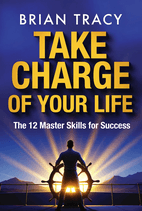
These quotes come from a book that doesn't waste your time. Each line pushes you to look in the mirror and ask what you can do differently. You'll find sharp reminders about taking action, setting goals, and facing your fears. The best lines are short, direct, and unforgettable.
What makes Take Charge of Your Life so quotable is its no nonsense tone. Brian Tracy writes as if he is speaking directly to you, with no room for excuses. The wisdom here is practical and timeless, meant to be revisited when you need a jolt of motivation. It is the kind of book you underline, dog ear, and share with friends.
Top Quotes from Take Charge of Your Life
“I realized that if I wanted my life to change, I would have to change. If I wanted my life to get better, I would personally have to get better.”
The author describes his turning point at age twenty-three when he understood personal responsibility.
This line powerfully captures the core principle that lasting change begins within oneself, resonating with anyone who feels stuck waiting for external circumstances to improve.
“I saw that this life was not a rehearsal for something else. No one was coming to the rescue.”
The author reflects on the same transformative realization.
It delivers a blunt, liberating truth that dismisses passivity and inspires readers to take ownership of their own lives.
“The fear of failure is the greatest single obstacle to success in adult life.”
The author describes how the inhibitive habit pattern learned in childhood crystallizes into the fear of failure.
It names the most common psychological barrier in a direct, universal way, motivating readers to confront and overcome it.
“One person who will take action is worth ten brilliant talkers who end up doing nothing.”
From the same section about the first reason people don't set goals.
This memorable contrast between action and talk underscores the value of execution over intention, motivating readers to move from planning to doing.
“Perhaps the best definition of character is the ability to carry through on a resolution after the mood in which the resolution was made has passed.”
The author discusses the mental obstacle of inertia and defines character in relation to goal persistence.
This line resonates because it reframes character not as a fixed trait but as a choice to persist beyond initial motivation, a universally relatable struggle.
“Goals that are not in writing are not goals at all. They're merely wishes or fantasies.”
Step three of the twelve-step goal-setting process emphasizes the importance of writing down goals.
The stark distinction between a wish and a goal is memorable and actionable, pushing readers to commit their aspirations to paper.
“Perhaps the very worst use of time is to do something well that need not be done at all.”
The author discusses common time-wasting habits.
It is a stark reminder that efficiency without purpose is meaningless, urging readers to prioritize tasks that truly matter.
Themes Behind the Quotes
A central theme is that your life mirrors your internal state. To change the outer circumstances, you must first change your thoughts, beliefs, and actions. The quotes emphasize that you are the architect of your own life, with no one coming to save you. Taking full responsibility is the first step toward any real progress. They also highlight the power of aligning your inner values with your outer actions for integrity and authenticity.
Another key theme is the importance of clear goals and persistent action. Many lines stress that vague wishes are not enough, you must write them down and commit fully. Fear of failure and comfort zones are seen as the main obstacles, but the quotes also remind us that failure is a necessary teacher. Character, defined as following through on commitments even when motivation fades, is another recurring idea. Finally, time is your most valuable asset, and how you use it determines your success.
Quotes by Chapter
Introduction
“The teaching is in the words, but the learning is in the silence.”
The author offers advice on how to read the book effectively.
This poetic reminder encourages deep reflection, suggesting that true understanding requires quiet contemplation beyond mere reading.
“In the entire history of the human race, there never has been and never will be anyone just like you.”
The author concludes the introduction by emphasizing individual uniqueness.
It affirms personal worth and potential, giving readers a profound sense of purpose and motivation to pursue their extraordinary path.
One: Maximize Your Potential
“Attitude is the most important word in the English language.”
The author references the late inspirational speaker Earl Nightingale who called attitude the most important word.
This succinctly captures the central role of attitude in determining performance and success, making it a memorable and motivating axiom.
“Your comfort zone is the great enemy of your individual potential.”
The author explains how homeostasis and comfort zones trap people in ruts.
It powerfully articulates the paradox of seeking comfort at the expense of growth, urging readers to challenge their boundaries.
“All personality problems are the result of love withheld.”
The author cites a psychologist's insight while discussing childhood development and the need for unconditional love.
This profound and provocative statement links early emotional deprivation to lifelong struggles, resonating deeply with anyone reflecting on their own personality.
Two: The Mental Laws of the Universe
“You feel positive about yourself to the degree to which you feel that you are in control of your own life.”
The author introduces the Law of Control, one of the mental laws of the universe.
This line directly links self-esteem to personal agency, reminding readers that their sense of control is foundational to happiness and success.
“Thoughts are causes, and conditions are effects.”
From the explanation of the Law of Cause and Effect.
It succinctly captures the powerful idea that our mental activity shapes our external reality, encouraging intentional thinking.
“If you change the quality of your thinking, you'll change the quality of your life.”
A key takeaway from the Law of Cause and Effect section.
This is an empowering, actionable statement that offers hope and a clear path to transformation through changing one's mindset.
“You do not necessarily believe what you see, but you see what you already believe.”
The author discusses the Law of Belief and how our beliefs filter perception.
It challenges readers to examine their assumptions and highlights the self-reinforcing nature of belief, a profound insight for personal growth.
Three: Strategic Thinking
“Those who do not have goals are doomed forever to work for those who do.”
From an article the author wrote for National Employment Weekly.
This line is a stark, memorable reminder that lack of personal direction leads to serving others' agendas, motivating readers to set clear goals.
“Your inner and outer lives should fit together like a hand in a glove.”
From the section on aligning values with goals and activities.
This vivid metaphor encapsulates the ideal of congruence between beliefs and actions, inspiring readers to seek harmony in their lives.
“You will become what you think about most of the time.”
From the discussion on how admiration of qualities leads to embodying them.
It reinforces the power of focus and mindset, encouraging readers to deliberately direct their thoughts toward their aspirations.
“The only way that you demonstrate what your values really are is through your actions.”
From the section on values clarification.
This statement cuts through self-deception, emphasizing that true character is revealed by behavior, not intentions, prompting honest self-reflection.
Four: The Benefits of Goal Setting
“Your true values and beliefs are always and only expressed in your actions.”
This appears twice in the section explaining the first reason people don't set goals—they are talkers instead of doers.
It forces self-reflection by equating a person's real beliefs with their deeds, not their words, making it a powerful call to authenticity.
“Failure is an indispensable prerequisite for success.”
This appears twice in the discussion of the seventh reason people don't set goals—the fear of failure.
It reframes failure as necessary rather than shameful, giving readers permission to take risks without fear.
“Within every adversity is the seed of an equal or greater opportunity or advantage.”
Napoleon Hill is quoted in the section on overcoming the fear of failure.
This classic insight empowers readers to see setbacks as opportunities, transforming a negative mindset into a growth-oriented one.
Five: The Twelve-Step Process
“If you want it badly enough and long enough and hard enough, there's virtually nothing that can stop you from achieving it.”
The author describes the power of burning desire in step one of goal setting.
This line captures the essence of relentless determination and gives readers a simple, powerful belief to hold onto when facing obstacles.
“The most difficult mental obstacle to overcome is inertia: the tendency to slip back into a comfort zone and lose your forward momentum.”
The author introduces the concept of inertia as a primary mental barrier to success.
Readers identify with the struggle to maintain progress and find validation in naming this common experience, making the advice feel personal and practical.
Six: The Superconscious: The Secret of the Ages
“You have available to you a power and an intelligence which, when properly used, will enable you to solve any problem, overcome any obstacle, and achieve any goal that you sincerely desire long enough and hard enough.”
The author reveals the secret of the ages.
This encapsulates the book's core promise, empowering readers to believe in their unlimited potential.
“Any thought, goal, plan, or idea held continuously in the conscious mind, whether positive or negative, must be brought into reality by the superconscious mind.”
The author presents the law of superconscious activity.
It underscores the neutral power of focused thought, motivating readers to mindfully direct their thinking.
“When you stop vacillating and make a clear, unequivocal decision that you're going to do something, no matter what the cost, everything suddenly starts to work in your favor.”
The author explains how decisiveness activates superconscious power.
This is a powerful call to action, showing that commitment triggers universal support.
“You become what you think about. Asuccessful life is merely a series of successful days, hours, and minutes in which you think and talk about your goals and desires about health, happiness, and prosperity and refuse to dwell on anything that you don't want.”
The author concludes the chapter with a summary of success.
This memorable mantra reinforces that our thoughts shape our reality, encouraging consistent positive focus.
Seven: Time Management
“All you have to sell is your time. The way you plan and organize your time can have a greater impact on your health, wealth, and happiness than anything else you do.”
The author emphasizes that time is the only resource we truly own.
This frames time as a non‑renewable asset and underscores that intentional planning yields the highest returns in every area of life.