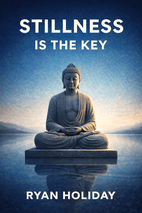
Ryan Holiday's Stillness Is the Key synthesizes ancient Stoic and Eastern wisdom to argue that cultivated inner calm is the foundation for excellence and resilience. It offers practical disciplines for the mind, spirit, and body, serving anyone feeling overwhelmed by modern noise and seeking purposeful focus.
Feature
Insta.Page
Blinkist
Shortform
Summary Depth
Full Chapter-by-Chapter
15-min overview
Section-by-section guides
Audio Narration
✓
✓
✓
Visual Mindmaps
✓
✕
✕
AI Q&A
✓
✕
✕
Quizzes
✓
✕
✕
PDF Downloads
✓
✕
✓
Price
$89.99/yr
$146/yr (PRO)
$199/yr
*Competitor data last verified July 2026.
1 Page Summary
In "Stillness Is the Key," Ryan Holiday argues that a state of inner peace and mental clarity—what he calls "stillness"—is the essential ingredient for excellence, resilience, and a meaningful life in our chaotic world. Drawing from Stoic philosophy, Buddhism, and a diverse range of thinkers and historical figures, Holiday defines stillness not as inactivity, but as a cultivated state of being: the ability to be steady, focused, and in command of one's mind and emotions regardless of external circumstances. He presents it as the common thread behind the achievements of individuals from Marcus Aurelius and Winston Churchill to Fred Rogers and Anne Frank, suggesting that this inner calm is the foundation for sound judgment, creativity, and strength.
The book is structured around three interconnected domains where stillness must be cultivated: the mind, the spirit, and the body. Holiday explores practices for taming the mind, such as limiting inputs, embracing silence, and journaling. For the spirit, he discusses the importance of purpose, virtue, and connection. For the body, he highlights the roles of rest, ritual, and physical discipline. Throughout, he weaves in historical context, showing how figures like John F. Kennedy during the Cuban Missile Crisis or the artist Marina Abramović used principles of stillness to navigate extreme pressure and produce their greatest work. This synthesis demonstrates that the pursuit of stillness is a timeless, cross-cultural endeavor, not a modern self-help trend.
The lasting impact of Holiday's work lies in its practical and accessible synthesis of ancient wisdom for a contemporary audience overwhelmed by noise and distraction. By framing stillness as an active discipline rather than a passive state, he provides a actionable antidote to anxiety and burnout. The book serves as a guide for reclaiming attention and agency, making the case that in a world of constant movement, the ultimate power and key to mastering any craft, relationship, or challenge is found in the deliberate cultivation of inner quiet.
Introduction
Overview
The introduction presents stillness not as a passive state, but as the essential, active core of excellence and fulfillment in a deafeningly busy world. It frames our modern crisis of constant distraction, overstimulation, and inner turmoil as a timeless human struggle. The chapter argues that stillness is the universal key to clear thinking, emotional mastery, and peak performance—a prize sought by every major philosophical tradition and attainable by anyone, from athletes and artists to parents and CEOs.
The Modern Din and a Timeless Problem
Our world is engineered for noise: digital notifications, endless news cycles, professional pressures, and personal anxieties create a cacophony that drowns out quiet thought. Yet, as Blaise Pascal observed centuries ago, the fundamental human challenge is the inability to sit quietly alone. This noise isn't just external; it's the internal civil war each person faces between their ambitions and principles, their good impulses and bad. The chapter posits that this inability to find quiet is the root of poor decisions, fractured relationships, and a pervasive sense of dissatisfaction.
Vicksburg: The Strategic Metaphor for Stillness
A pivotal historical analogy is drawn from Abraham Lincoln’s leadership during the American Civil War. Amid a flood of conflicting advice and panic, Lincoln quietly identified the fortified city of Vicksburg, Mississippi, as the single key to victory. His stillness—his ability to block out the noise, study the map with intense focus, and hold fast to his strategic insight—ultimately unlocked the entire war. This story transforms stillness from a soft concept into a critical strategic advantage. It is the quality that allows us to see the entire board, identify the true leverage point, and persevere with clarity amid chaos.
Defining the Indefinable Force
Stillness is presented as a palpable force we have all experienced, even if briefly. It is the deep concentration that births inspiration, the pride in a job fully done, the composure in a high-pressure performance, the awe in a moment of natural beauty, or the quiet contentment of a meaningful connection. The book clarifies that it is not about inactivity, but about inner peace and presence that can exist even amid action. It is the “full, complete” state where distraction falls away, allowing us to access our best thinking and truest selves.
The Path Forward: Mind, Body, Soul
The introduction concludes by outlining the book’s practical blueprint. Achieving stillness is a disciplined pursuit, requiring cultivation across three interconnected domains: the mind (to direct our thoughts), the body (to master our physical vessel), and the soul (to process our emotions and connect to something larger). By reducing disturbances in each of these areas, we can cease our inner and outer wars, unlock our potential, and radiate a sense of calm into the world. The promise is that this stillness is already within us, waiting to be reclaimed.
Key Takeaways
Stillness is the foundational skill for clarity, emotional resilience, and excellence in any field, not a mystical retreat from life.
The endless distractions of the modern world amplify a timeless human struggle against internal and external noise.
Strategic clarity emerges from stillness, as exemplified by Lincoln’s focused insight that won a war.
You have already experienced stillness; it is the state of full presence and engagement where you perform and feel at your best.
Cultivating it requires intentional work across three domains: the mind, the body, and the soul.
Key concepts: Introduction
1. Introduction
The Nature and Value of Stillness
Stillness is an active, essential core of excellence and fulfillment, not a passive state.
It is the universal key to clear thinking, emotional mastery, and peak performance.
Accessible to anyone, from athletes and CEOs to parents and artists.
A state of full presence and engagement where distraction falls away.
The Crisis of Noise: Modern and Timeless
Modern life is engineered for external noise (notifications, news cycles, pressures).
The fundamental human challenge is the inability to sit quietly alone (Pascal's observation).
Internal noise is a civil war between ambitions, principles, and impulses.
This noise is the root of poor decisions, fractured relationships, and dissatisfaction.
Stillness as Strategic Power
Exemplified by Lincoln's focused insight on Vicksburg as the key to Civil War victory.
Transforms stillness from a soft concept into a critical strategic advantage.
Allows one to see the entire board, identify the true leverage point, and persevere with clarity.
The quality that enables strategic clarity to emerge amid chaos and conflicting advice.
Defining the Experience of Stillness
A palpable force experienced in moments of deep concentration, composure, or awe.
Not about inactivity, but about inner peace and presence that can exist amid action.
The state where we access our best thinking and truest selves.
Manifests as inspiration, pride in work, performance under pressure, or quiet contentment.
The Blueprint for Cultivating Stillness
A disciplined pursuit requiring cultivation across three interconnected domains.
The Mind: to direct our thoughts and reduce mental disturbances.
The Body: to master our physical vessel.
The Soul: to process emotions and connect to something larger.
The promise: stillness is already within us, waiting to be reclaimed through intentional work.
💡 Try clicking the AI chat button to ask questions about this book!
Part I: Mind
Overview
Overview
This opening section establishes the mind as the foundational domain where true self-mastery begins. Drawing inspiration from the ancient wisdom of the Bhagavad Gita, it acknowledges the mind's inherent restlessness and the significant challenge of training it. The journey outlined here is not about suppression, but about cultivating a disciplined, clear, and resilient inner landscape through a series of intentional practices. From the initial step of becoming present to the final act of letting go, each piece builds towards a more tranquil and commanding perspective.
The Restless Domain
The chapter begins by framing the mind as the primary battleground for our peace and effectiveness. It’s portrayed as a wild, untamed force that, left unchecked, dictates our reactions and clouds our judgment. The central premise is that before we can engage with the world, we must first establish order within this internal domain. This sets the stage for all subsequent practices, emphasizing that every external action is preceded by an internal decision.
Cultivating Present-Moment Awareness
The first practical step is to anchor oneself in the here and now. This involves a conscious effort to pull attention away from the clutter of past regrets and future anxieties. The practice is simple but profound: repeatedly returning your focus to your immediate sensory experience and current task. This creates a base of calm from which all other mental disciplines can grow, slowing the chaotic rush of thoughts.
Curating Your Mental Inputs
In a world of constant noise, the chapter advocates for a radical selectivity of what we allow into our minds. This means intentionally limiting exposure to news, social media, gossip, and other forms of distracting or negative information. The idea is that our minds are shaped by what we feed them; by choosing nutritious, purposeful input, we reduce mental clutter and create space for deeper thought.
The Practice of Mental Emptying
Closely linked to limiting inputs is the active process of emptying the mind. This isn’t about achieving a blank state, but about developing a reliable system to offload worries, ideas, and tasks. By externalizing these thoughts—often through the very act of writing them down—we prevent them from swirling in an endless loop, freeing up cognitive resources for what truly matters.
Embracing Deliberate Thought
Speed is the enemy of depth. This section champions the lost art of slow, concentrated thinking. It encourages setting aside dedicated time to ponder important questions, work through complex problems, or simply reflect without the pressure of an immediate answer. This deliberate pace allows for insights that hurried, reactive thinking can never achieve.
The Transformative Habit of Journaling
Presented as one of the most powerful tools for self-mastery, journaling is framed as a daily dialogue with oneself. It’s a practice for processing emotions, tracking progress, reinforcing lessons, and holding oneself accountable. The physical act of writing slows down thought, providing clarity and creating a tangible record of one’s inner journey.
The Power of Silence
Silence is explored not merely as the absence of sound, but as a positive space for rejuvenation and insight. It involves seeking out quiet moments, whether through meditation, solitary walks, or simply turning off devices. In these pauses, the mind can integrate experiences, listen to intuition, and recover from the overstimulation of daily life.
The Pursuit of Timeless Wisdom
True confidence and guidance are found not in fleeting trends, but in perennial wisdom. The chapter encourages actively seeking out the great thinkers and timeless principles from philosophy, literature, and history. This ongoing study provides a sturdy framework for navigating life’s challenges, offering perspectives that are tested by time rather than amplified by the moment.
Navigating Confidence and Ego
Here, a crucial distinction is drawn. Healthy confidence is built on competence, self-awareness, and a focus on the work itself. It is quiet and assured. Ego, in contrast, is a fragile identity built on comparison, recognition, and superiority. The practice involves consistently choosing the path of genuine confidence by humbly focusing on your craft, while vigilantly avoiding the traps of pride and external validation.
The Art of Release
The culmination of this mental training is the ability to let go. This means releasing attachment to specific outcomes, past mistakes, grudges, and the need to control every variable. It is an acceptance of what is, coupled with a steadfast commitment to doing your best with what you have. This mental release creates lightness and adaptability, allowing you to move forward without being weighed down.
Key Takeaways
The mind is the primary domain of control; mastering its restless nature is the first and most critical step.
Presence is the foundation, achieved by continually anchoring your attention in the current moment.
Proactively curating the information you consume is essential for maintaining mental clarity and peace.
Externalizing thoughts through journaling is a practical method for emptying mental clutter and gaining perspective.
Deep, slow thinking and regular silence are non-negotiable practices for insight and resilience.
True confidence is built inwardly through work and wisdom, while ego, focused outwardly on validation, must be avoided.
Ultimately, mental strength is demonstrated in the graceful act of letting go of what you cannot control.
Key concepts: Part I: Mind
2. Part I: Mind
The Restless Domain
The mind is the primary battleground for peace and effectiveness
An untamed mind dictates reactions and clouds judgment
Establishing internal order precedes all external action
Cultivating Present-Moment Awareness
Anchor attention in the here and now
Pull focus from past regrets and future anxieties
Return repeatedly to immediate sensory experience
Create a base of calm for other mental disciplines
Curating Mental Inputs
Practice radical selectivity of information consumption
Limit exposure to news, social media, and gossip
Choose purposeful input to reduce mental clutter
Shape the mind through intentional feeding
Mental Emptying and Externalization
Develop systems to offload worries and tasks
Externalize thoughts through writing to prevent mental loops
Free cognitive resources for what truly matters
Create space for deeper thinking
Deliberate and Deep Thinking
Champion slow, concentrated thinking over speed
Set aside dedicated time for pondering important questions
Allow insights that hurried thinking cannot achieve
Practice reflection without pressure for immediate answers
Transformative Journaling
Maintain a daily dialogue with oneself
Process emotions and track progress
Reinforce lessons and maintain accountability
Use writing to slow thought and gain clarity
The Power of Silence
Seek quiet moments for rejuvenation and insight
Use meditation and solitary walks for integration
Allow intuition to surface in pauses
Recover from daily overstimulation
Pursuing Timeless Wisdom
Seek guidance from perennial principles and great thinkers
Study philosophy, literature, and history
Build a sturdy framework for navigating challenges
Rely on perspectives tested by time rather than trends
Navigating Confidence and Ego
Build healthy confidence on competence and self-awareness
Distinguish between quiet confidence and fragile ego
Focus on craft rather than comparison and recognition
Avoid traps of pride and external validation
The Art of Release
Let go of attachment to specific outcomes
Release past mistakes, grudges, and need for control
Accept what is while committing to doing your best
Create lightness and adaptability through mental release
The Domain of the Mind
Overview
The chapter establishes the pursuit of inner stillness—an unshakable mental peace and clarity—as a foundational virtue across the world's wisdom traditions, from Stoicism to Buddhism. It then powerfully illustrates this ancient ideal through a modern historical crisis, demonstrating how mastering one's own mind is the critical prerequisite for effective leadership and navigating life's greatest challenges.
The Universal Quest for Stillness
The chapter opens not with theory, but with a vivid, relatable scene: the philosopher Seneca, besieged by the deafening noise of ancient Rome and immense personal political danger, yet managing to produce profound, timeless work. His secret was cultivating an internal fortress, a state the Stoics called apatheia (freedom from disturbing passions). This state of imperturbability is revealed not as a niche Stoic goal, but as a universal human aspiration. The text lists its many names across cultures: upekkha in Buddhism, ataraxia in Epicureanism, aequanimitas in Christianity, samatvam in the Bhagavad Gita. This convergence suggests stillness is not a cultural preference, but a fundamental key to performance and happiness.
Kennedy's Ultimate Test
The narrative then catapults forward to October 1962, placing President John F. Kennedy in a situation where the theoretical need for stillness becomes a practical necessity for survival. Faced with the discovery of Soviet nuclear missiles in Cuba, Kennedy is pressured by advisors to respond with immediate, overwhelming military force—a path likely leading to global nuclear war. His personal history—a privileged yet combative upbringing, recent failures like the Bay of Pigs, and perceived weakness by his Soviet counterpart—compounded the immense external pressure.
The Discipline of Clear Thinking
Rather than reacting, Kennedy intentionally slowed the decision-making process. He created space for deliberation, influenced by his reading of history which cautioned against rushed, irreversible steps into war. His private notes reveal a mind striving for focus, repeating key words like "Consensus" and clarifying the core objective: "We are demanding withdrawal of the missiles." He consciously employed empathy, urging his team to consider the crisis from the Soviet perspective to understand their motivations, which revealed desperation rather than pure strength.
Cultivating the Still Mind in Crisis
Kennedy actively nurtured the conditions for stillness amid the chaos. He removed himself from meetings to allow his team to debate freely, sought solitude in the White House Rose Garden, and used swims and his rocking chair to manage physical pain and maintain mental clarity. He consulted widely with rivals and predecessors, rejecting ego. When tensions peaked with a downed American plane and Soviet ships testing the blockade, he remained focused on the escalatory ladder, fearing not the first step but the fourth or fifth that would leave no one alive to take the sixth.
The Fruit of Stillness
This cultivated stillness allowed Kennedy to choose a strategic, less aggressive response—a naval "quarantine"—that gave Khrushchev time and a path to retreat without utter humiliation. The resolution involved secret, face-saving compromises. The chapter frames Kennedy’s success not as a triumph of brute force, but of "calm and rational leadership," patience, empathy, and supreme mental discipline. It argues that while our personal crises may have lower global stakes, they demand the same mental resources: presence, an open mind, deliberate reflection, and the clarity to see through metaphorical "muddied water."
Key Takeaways
Stillness is the Antidote to Chaos: It is the cultivated ability to access clarity and calm internally, regardless of external turmoil, and is celebrated as the highest good across virtually all philosophical and religious systems.
Stillness Precedes Correct Action: Effective leadership and decision-making, especially in crisis, do not come from frantic reaction or following the first instinct. They require the deliberate discipline to pause, create space for thought, and see the full picture.
Stillness is a Practical Discipline: It is built through specific, accessible habits: seeking solitude for reflection, practicing empathy to understand other perspectives, managing physical and emotional distractions, and consulting wise counsel without ego.
Stillness is a Learned Skill: Figures like Kennedy were not born with equanimity; they cultivated it through study, reflection, and conscious practice, meaning it is a domain anyone can work to master.
Key concepts: The Domain of the Mind
3. The Domain of the Mind
The Universal Quest for Stillness
Stillness as a universal human aspiration across wisdom traditions (Stoicism, Buddhism, Epicureanism, etc.)
Cultivating an internal fortress of mental peace and clarity amid external chaos
Stillness as a fundamental key to performance and happiness, not just a cultural preference
Kennedy's Ultimate Test: The Cuban Missile Crisis
A historical crisis where theoretical need for stillness became a practical necessity for survival
Immense pressure from advisors for immediate military response risking nuclear war
Compounding factors: personal history, recent failures, and perceived weakness
The Discipline of Clear Thinking in Crisis
Intentional slowing of decision-making process to create space for deliberation
Use of historical perspective to avoid rushed, irreversible steps into war
Conscious employment of empathy to understand Soviet motivations and perspective
Cultivating the Still Mind Amid Chaos
Active creation of conditions for stillness: removing oneself from debates, seeking solitude
Managing physical pain and distractions to maintain mental clarity
Consulting widely with rivals and predecessors while rejecting ego-driven decisions
The Fruit of Stillness: Strategic Resolution
Choosing a measured response (naval quarantine) that provided time and retreat options
Utilizing secret, face-saving compromises rather than demanding total surrender
Triumph of calm, rational leadership over brute force or reactive aggression
Core Principles of Mental Mastery
Stillness as the antidote to chaos: accessing internal calm regardless of external turmoil
Stillness precedes correct action: pausing before reacting to see the full picture
Stillness as a practical discipline built through specific, accessible habits
Stillness as a learned skill that can be cultivated through study and conscious practice
Become Present
Overview
Overview
The chapter explores the profound difficulty and transformative power of true presence, using Marina Abramovic's monumental performance art piece as a central parable. It contrasts the intense, singular focus required to be genuinely "in the moment" with our habitual state of distracted living, where our minds are tethered to past regrets and future anxieties. The narrative argues that excellence, clarity, and even love are only accessible when we fully occupy the present.
The Spectacle of Singular Focus
Marina Abramovic's performance, The Artist Is Present, serves as an extreme experiment in presence. For 750 hours over 79 days, she sat motionless and silent, offering her complete attention to each stranger who sat across from her. This act demanded monk-like discipline to ignore pain, fatigue, and distraction. The experience was described as near-religious for participants, who felt truly seen, highlighting how rare it is to receive or give undivided attention. The piece proves that being present is not a passive state but an active, all-consuming effort—"the hardest thing."
Our Daily Absence
In stark contrast to Abramovic's focus, our daily lives are characterized by a frantic avoidance of the present. Whether giving a speech, facing a crisis, or watching a sunset, our minds are elsewhere—worrying about perception, lamenting unfairness, or documenting rather than experiencing. We fill every potential void of "now" with activity, technology, and mental chatter, effectively missing our own lives. The chapter poignantly notes that even the visitors waiting in line for Abramovic’s exhibit illustrated this, fidgeting and planning, thus missing the "ordinary wonderfulness" around them.
The Elastic Nature of "Now"
The present moment is defined not by a clock but by conscious choice. It is the span of time in which we successfully suspend preoccupation with the past and future. This "now" could be a few seconds of focused breath or an entire morning of immersed work. The core truth is that everything of value—greatness, insight, happiness, peace—exists only in this chosen present. As Laura Ingalls Wilder noted, "now is now. It can never be anything else."
The Path to Artistic Engagement
To reclaim presence is to see the world like an artist: with engaged, curious attention to the details others overlook. This stillness and focus is the source of brilliance. The chapter reframes the present as a gift (the present) to be fully lived, whether it contains difficulty or beauty. Excellence emerges from making the most of what is directly in front of us, not wishing for a different moment. Practical wisdom from meditation (focus on the breath) and sports (focus on "the process") is cited, teaching that optimal performance is impossible when the mind is elsewhere.
Key Takeaways
Presence is an Act of Will: True presence is not passive relaxation; it is the demanding, active work of directing all your energy and attention to the current moment and task.
Distraction is the Default: Our minds habitually flee the present through worry, memory, and planning, causing us to miss the reality of our experiences and diminish our performance.
Value Exists Only in the Now: Greatness, love, clarity, and happiness are not future rewards; they are states that can only be accessed and experienced in the present.
Reclaim the Artist’s Eye: Cultivate the ability to observe the world with fresh, engaged attention, setting aside thoughts of past and future to fully appreciate the details of your current experience.
The Present Offers Endless Chances: Every new moment is an opportunity to begin again, to put aside distraction and choose to be fully where your feet are.
Key concepts: Become Present
4. Become Present
The Spectacle of Singular Focus
Marina Abramovic's performance demonstrates presence as an active, all-consuming effort
True presence requires monk-like discipline to ignore pain, fatigue, and distraction
Undivided attention creates near-religious experiences of being truly seen
Being present is described as 'the hardest thing' rather than a passive state
Our Daily Absence
Modern life is characterized by frantic avoidance of the present moment
We fill voids with activity, technology, and mental chatter, missing our own lives
Even in meaningful moments, our minds are elsewhere—worrying or documenting rather than experiencing
We often miss the 'ordinary wonderfulness' around us while planning for future experiences
The Elastic Nature of 'Now'
The present is defined by conscious choice rather than clock time
It's the span where we successfully suspend preoccupation with past and future
Everything of value—greatness, insight, happiness, peace—exists only in this chosen present
As Laura Ingalls Wilder noted: 'now is now. It can never be anything else'
The Path to Artistic Engagement
Reclaiming presence means seeing the world like an artist with engaged, curious attention
Stillness and focus are the source of brilliance and excellence
The present should be reframed as a gift to be fully lived, regardless of its content
Practical wisdom from meditation and sports teaches that optimal performance requires present focus
Core Principles of Presence
Presence is an active act of will requiring directed energy and attention
Distraction is our default state, causing us to miss reality and diminish performance
All value exists only in the now—greatness, love, and happiness are not future rewards
Every new moment offers endless chances to begin again and choose full engagement
You've reached the end of the free chapters
Next chapter: “Limit Your Inputs” is locked
Keep reading Stillness Is the Key — and unlock all 600+ book summaries with audio, mindmaps and AI Q&A.
$0.00 due today · 7 days free, then $89.99/year ($7.49/mo) · Cancel anytime before day 7
Ryan Holiday is a modern Stoic philosopher and bestselling author known for books like "The Obstacle Is the Way" and "The Daily Stoic," which apply ancient Stoic principles to contemporary life and business. A former marketing director for American Apparel, he is a prominent media strategist and writes extensively on strategy, perception, and resilience.
📚 Explore Our Book Summary Library
Discover more insightful book summaries from our collection