Stillness Is the Key Key Takeaways

by Ryan Holiday
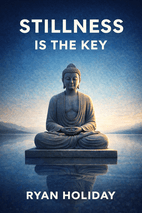
Stillness Is the Key by Ryan Holiday Book Cover

5 Main Takeaways from Stillness Is the Key

Stillness is a practical skill for clarity and excellence.

It's not about retreating from life but cultivating inner calm to navigate chaos. Examples from Lincoln and Kennedy show how pausing for reflection leads to better decisions.

Cultivate stillness across mind, body, and soul.

True peace requires holistic integration. This means managing thoughts, caring for the body, and nurturing the spirit through virtues and relationships.

Limit inputs and embrace silence to hear your inner voice.

In a noisy world, selectively consuming information and creating quiet spaces are essential for deep thinking and insight, as shown by practices like journaling and walking.

Let go of ego and desire to find contentment.

Ego and unchecked desires disrupt stillness; confidence comes from self-awareness and detachment. The concept of 'enough' from Heller and Mill emphasizes satisfaction over endless pursuit.

Action and routine build the foundation for stillness.

Discipline through routines, saying no, and engaging in hobbies provides structure that frees mental energy for presence and creativity.

Executive Analysis

The five takeaways form the book's central thesis: stillness is a holistic discipline essential for navigating modern chaos. By integrating practices across the mind, body, and soul—such as limiting inputs, cultivating virtue, and establishing routines—we can access the clarity and calm that precede excellent action, as exemplified by leaders from Lincoln to Kennedy.

This book matters because it translates timeless philosophical wisdom into a practical, actionable system for personal mastery. In the crowded self-help genre, it stands out by emphasizing that inner peace is not a luxury but a prerequisite for resilience, creativity, and lasting success in any field.

Chapter-by-Chapter Key Takeaways

Introduction (Introduction)

  • Stillness is the foundational skill for clarity, emotional resilience, and excellence in any field, not a mystical retreat from life.

  • The endless distractions of the modern world amplify a timeless human struggle against internal and external noise.

  • Strategic clarity emerges from stillness, as exemplified by Lincoln’s focused insight that won a war.

  • You have already experienced stillness; it is the state of full presence and engagement where you perform and feel at your best.

  • Cultivating it requires intentional work across three domains: the mind, the body, and the soul.

Try this: Recognize that stillness is a skill you can develop by working on your mind, body, and soul to achieve clarity and resilience.

Part I: Mind (Chapter 1)

  • The mind is the primary domain of control; mastering its restless nature is the first and most critical step.

  • Presence is the foundation, achieved by continually anchoring your attention in the current moment.

  • Proactively curating the information you consume is essential for maintaining mental clarity and peace.

  • Externalizing thoughts through journaling is a practical method for emptying mental clutter and gaining perspective.

  • Deep, slow thinking and regular silence are non-negotiable practices for insight and resilience.

  • True confidence is built inwardly through work and wisdom, while ego, focused outwardly on validation, must be avoided.

  • Ultimately, mental strength is demonstrated in the graceful act of letting go of what you cannot control.

Try this: Master your mind by practicing presence, curating inputs, journaling, and letting go of what you cannot control.

The Domain of the Mind (Chapter 2)

  • Stillness is the Antidote to Chaos: It is the cultivated ability to access clarity and calm internally, regardless of external turmoil, and is celebrated as the highest good across virtually all philosophical and religious systems.

  • Stillness Precedes Correct Action: Effective leadership and decision-making, especially in crisis, do not come from frantic reaction or following the first instinct. They require the deliberate discipline to pause, create space for thought, and see the full picture.

  • Stillness is a Practical Discipline: It is built through specific, accessible habits: seeking solitude for reflection, practicing empathy to understand other perspectives, managing physical and emotional distractions, and consulting wise counsel without ego.

  • Stillness is a Learned Skill: Figures like Kennedy were not born with equanimity; they cultivated it through study, reflection, and conscious practice, meaning it is a domain anyone can work to master.

Try this: Cultivate stillness as a disciplined habit to access calm and clarity, especially before making decisions.

Become Present (Chapter 3)

  • Presence is an Act of Will: True presence is not passive relaxation; it is the demanding, active work of directing all your energy and attention to the current moment and task.

  • Distraction is the Default: Our minds habitually flee the present through worry, memory, and planning, causing us to miss the reality of our experiences and diminish our performance.

  • Value Exists Only in the Now: Greatness, love, clarity, and happiness are not future rewards; they are states that can only be accessed and experienced in the present.

  • Reclaim the Artist’s Eye: Cultivate the ability to observe the world with fresh, engaged attention, setting aside thoughts of past and future to fully appreciate the details of your current experience.

  • The Present Offers Endless Chances: Every new moment is an opportunity to begin again, to put aside distraction and choose to be fully where your feet are.

Try this: Actively direct your attention to the present moment, appreciating details and seizing each new chance to engage fully.

Limit Your Inputs (Chapter 4)

  • Selective Focus is Strategic: Like Napoleon and Eisenhower, intentionally delay or delegate non-essential information to preserve mental bandwidth for critical decisions.

  • Modern Noise is a Choice: The constant influx of news and notifications is often self-imposed; recognizing the ego's role in "staying informed" is the first step to freedom.

  • Philosophy Over Reactivity: Adopt a long-term, philosophical view of events rather than consuming them in real time, as advocated by thinkers from Epictetus to Thich Nhat Hanh.

  • Design for Stillness: Actively build barriers against interruptions—both digital and interpersonal—to protect periods of deep work and reflection.

  • Silence is Essential: Confronting and valuing silence is necessary to hear our inner voice and act with conviction, rather than being perpetually driven by external demands.

Try this: Strategically limit your consumption of news and notifications to protect mental bandwidth and create space for reflection.

Slow Down, Think Deeply (Chapter 5)

  • Look Past the Surface: Essential truths are often invisible to a rushed or superficial glance. Train yourself to see what "doesn't meet the eye."

  • Balance Emptying with Engaging: Mental clarity is not an end in itself. Use the space created by emptying your mind to engage in deep, deliberate thinking about what truly matters.

  • Cultivate Patient Insight: Breakthroughs in understanding (satori) come from sustained, focused contemplation on difficult questions, not from frantic mental activity.

  • Practice Purposeful Stillness: Regularly schedule time for quiet, unstructured mental wandering. This "quietness without loneliness" is fertile ground for uncovering hidden truths and creative solutions.

  • React Less, Discern More: Much of our error and distress stems from reacting to initial impressions. Slow down to test your impressions and discern the deeper reality.

Try this: Slow down your thinking to see beyond surface impressions, engaging in deep contemplation for breakthrough insights.

Start Journaling (Chapter 6)

  • Journaling is a timeless tool for resilience: From Anne Frank in hiding to Stoic philosophers, people have used journals to cope with uncertainty, fear, and overwhelming emotion by providing a patient, private outlet.

  • Its primary value is self-examination: The practice serves as a framework for asking tough questions, reviewing behavior, and gaining objectivity on one’s own thoughts, separating harmful patterns from genuine insight.

  • There is no single “right” way: The benefits come from the act of reflection itself, not from adhering to a strict protocol. It can be done in the morning, evening, or whenever needed to create stillness.

  • It is a practice for everyone: The diverse historical examples demonstrate that journaling is not for writers or philosophers alone, but a universal habit that aids clarity, memory, and peace for anyone willing to try.

  • Start (or restart) without pressure: The key is to simply begin, carving out small spaces for reflection. The journal’s purpose is to serve you, making it perhaps the most important, personal thing you do all day.

Try this: Start journaling regularly to externalize thoughts, gain self-awareness, and build resilience against uncertainty.

Cultivate Silence (Chapter 7)

  • Silence is active listening: True silence isn't the absence of sound but the intentional act of listening to the world and oneself without adding more noise.

  • Revelation requires room: Breakthroughs in thought and creativity depend on stepping away from constant distraction and stimulation to make space for insight.

  • Quiet is a recharge: For individuals in cognitively demanding roles, periods of voice-free activity are not idle but essential for mental restoration and clarity.

  • Cultivate it deliberately: The rarity of true quiet in modern life signals its high value. We must proactively seek and create moments of silence, treating them as sacred opportunities to hear what is otherwise drowned out.

Try this: Intentionally seek silence to listen to your inner voice and recharge your mental faculties.

Seek Wisdom (Chapter 8)

  • True wisdom begins with intellectual humility—acknowledging what you don’t know, as Socrates demonstrated.

  • Diverse philosophical traditions universally emphasize continuous learning, questioning, and reflection as paths to wisdom.

  • Reading deeply and openly, without arrogance or bias, is vital for engaging with history’s greatest thinkers.

  • Mentors and teachers provide invaluable guidance, helping us overcome personal limitations and advance our understanding.

  • Direct experience, challenges, and experimentation are essential for transforming knowledge into practical insight.

  • The journey to wisdom often involves discomfort and doubt, but embracing these leads to deeper truth and clarity.

Try this: Pursue wisdom with humility, continuously learning from diverse sources and embracing challenging experiences.

Find Confidence, Avoid Ego (Chapter 9)

  • Ego is fragile, confidence is resilient. Ego ties your self-worth to your position, so any failure crushes you. Confidence is rooted in proven capability and self-knowledge, allowing you to endure setbacks.

  • Confidence is earned through experience and self-awareness. It is not a loud belief in your infallibility, but a quiet trust in your ability to handle challenges, learned through real trials and an honest understanding of what you can and cannot do.

  • The opposite of ego is not insecurity, but confidence. Ego and imposter syndrome are two sides of the same unstable coin—both are overly preoccupied with the self and how one is perceived. Confidence moves the focus outward to the task at hand.

  • Stillness requires the strength of confidence. A calm, clear mind is impossible when you are defending a fragile self-image or consumed by doubt. Confidence settles internal conflict, making room for focus and peace.

  • Cultivate confidence by focusing on action, not identity. Like Grant solving his poverty problem, confidence grows by engaging directly with challenges without personalizing the struggle. Your worth is not on the line with every outcome.

Try this: Build confidence through proven capability and self-awareness, while avoiding ego's need for external validation.

Let Go (Chapter 10)

  • Embrace Process Over Outcomes: Focusing intensely on rewards or specific results can undermine performance; instead, immerse yourself in the practice itself.

  • Cultivate Detachment: Letting go of "willful will" and ego allows for greater flexibility, learning, and creativity in any pursuit.

  • Seek Stillness: A calm, present mind—achieved through patience and surrender—enables superior control and problem-solving.

  • Balance Engagement and Release: Like the lotus flower, be fully involved in your work while maintaining serenity and openness to the journey.

Try this: Focus on the process rather than outcomes, practicing detachment to maintain serenity and creativity.

On to What’s Next . . . (Chapter 11)

  • Stillness is a fleeting reward, not a permanent state. It can be accessed by deliberately shutting out noise but is quickly undermined by our own internal cravings and habits.

  • Lasting peace requires internal harmony. The mind, heart, and body must be aligned; when they are at war, consistent focus and wisdom are unattainable.

  • The work is holistic and deep. Superficial fixes are insufficient. We must commit to a thorough self-examination and "pacify" our inner domains to build a foundation for growth.

  • Inner peace precedes powerhouse performance. The chapter frames the resolution of internal conflict as the critical prerequisite for achieving our highest potential, just as peace enables a postwar boom.

Try this: Work holistically to align your mind, heart, and body, as inner harmony is prerequisite for peak performance.

Part II: Spirit (Chapter 12)

  • We possess a critical double standard: treating physical numbness as an emergency while ignoring the slow, accepted numbness of the soul.

  • Spiritual numbness is a pervasive but often unnoticed condition characterized by diminished passion, curiosity, and connection.

  • Modern life, with its distractions and busyness, actively promotes this inner anesthesia.

  • Caring for the spirit must become a conscious, disciplined practice, afforded the same priority as caring for the body.

Try this: Treat spiritual numbness as seriously as physical pain, making conscious efforts to reignite passion and connection.

The Domain of the Soul (Chapter 13)

  • Stillness is holistic: Authentic stillness cannot exist solely in one’s professional craft while the personal life is in chaos; the soul and mind must be integrated.

  • “Enough” is essential: The unchecked, insatiable pursuit of more—whether victories, wealth, or pleasure—leads to spiritual bankruptcy and eventual collapse.

  • Childhood lessons shape the soul: The psychological and moral frameworks installed in childhood, often by parents, dictate adult patterns of behavior and happiness.

  • Mastery requires inner work: Conquering the external world is a lesser achievement than taming one’s own inner “wild bull” of emotion, desire, and past trauma.

  • Character sustains success: Traits like integrity, gratitude, self-awareness, and the capacity for genuine relationship are not just moral virtues; they are the non-negotiable foundations of lasting peace and the ability to enjoy one’s accomplishments.

Try this: Integrate all aspects of your life, define 'enough' for yourself, and master inner emotions to sustain success.

Choose Virtue (Chapter 14)

  • Virtue is the cornerstone of stillness: A self-chosen, clear moral code provides inner peace, reduces decision fatigue, and grants strength during stress.

  • Virtue is universal wisdom: It is championed as the highest good across diverse philosophical traditions, from Stoicism to Confucianism, for its practical life benefits.

  • Virtue must be actively chosen and embodied: It is not enough to understand virtue intellectually; it must be lived consistently, as shown by Seneca’s tragic contradictions.

  • Virtue is the ultimate security: Unlike external validations like fame or wealth, your virtue is impervious to outside interference and is the only true foundation for sustainable success and self-respect.

  • Define your epithets: Proactively select and internalize key virtues to serve as mantras and guides for specific challenges you face in life.

Try this: Choose and live by a clear moral code to reduce decision fatigue and anchor yourself during stress.

Heal the Inner Child (Chapter 15)

  • Childhood experiences, especially involving rejection or trauma, deeply influence adult behaviors, often manifesting as a search for validation or defensive reactions.

  • Recognizing the inner child—the emotional residue of early wounds—is the first step toward healing, allowing us to address the root causes of our suffering.

  • Mindfulness and self-compassion are essential tools for soothing these wounds, helping us respond from a place of maturity rather than childhood pain.

  • Breaking generational cycles of suffering involves consciously giving the love and acceptance we missed, transforming personal history into positive action.

  • Achieving stillness requires de-escalating childhood-based emotional responses, empowering the adult self to navigate life with greater clarity and calm.

Try this: Acknowledge and soothe childhood wounds through mindfulness to respond from maturity rather than past pain.

Beware Desire (Chapter 16)

  • Desire is an enemy of stillness: Whether lust, envy, or greed, unchecked desires cloud judgment, destroy peace, and enslave us to our impulses.

  • Pleasure is often an illusion: The momentary thrill of getting what we want is frequently followed by disappointment or negative consequences. True pleasure is the freedom from the agitation of craving.

  • Interrogate every urge: Ask what will truly happen if you satisfy a desire. Visualizing the aftermath weakens its irrational power.

  • Envy is joyless misery: Coveting what others have traps you in a cycle of perpetual dissatisfaction, as you ignore the full price they paid and the value of your own life.

  • Strength is built through resistance: Developing stillness requires tools like journaling to create accountability and the disciplined practice of observing desires without acting on them, building a stable and secure inner life.

Try this: Interrogate every desire by visualizing its consequences, building strength by resisting impulsive cravings.

Enough (Chapter 17)

  • “Enough” is a state of internal stillness and satisfaction, best exemplified by Joseph Heller’s quiet confidence, not by the ceaseless acquisition of external markers.

  • The relentless pursuit of “more” often leads to a hollow crisis, as John Stuart Mill discovered, where achieving goals fails to deliver the expected happiness.

  • Eastern philosophy offers a direct path to contentment by valuing what one already has, while Western thought often grapples with the balance between ambition and satisfaction.

  • External accomplishments cannot solve spiritual poverty. Trophies, money, and fame are inert objects that cannot fill an inner void and may come at a severe cost to relationships and personal peace.

  • Contentment is a source of power, not complacency. Stepping off the treadmill of insecure ambition allows for purer, more productive, and more impactful work, as shown by the later careers of Heller and Mill.

  • What we truly want more of are intangible states: more presence, clarity, insight, truth, and stillness—the feelings that come from knowing we are already enough.

Try this: Define 'enough' for yourself, focusing on internal satisfaction rather than external accumulation for true contentment.

Bathe in Beauty (Chapter 18)

  • Beauty is a Constant Source of Stillness: It surrounds us perpetually, offering peace and perspective if we choose to notice it.

  • It is Found in All Scales: From sweeping vistas to tiny, ordinary details, beauty exists everywhere, not just in conventionally "beautiful" places.

  • Active Observation is Required: We must cultivate a "poet's eye" or a philosophical mindset to see wonder in the commonplace and the imperfect.

  • It Provides Therapeutic Relief: Engaging with beauty is a form of therapy that can heal stress, grief, and overstimulation, as evidenced by historical examples and practices like shinrin-yoku.

  • Immersion is Key: To fully benefit, we must actively "bathe" in beauty—slow down, step outside, and immerse our senses deliberately in the natural and everyday world.

Try this: Actively seek beauty in everyday details to find therapeutic relief and perspective.

Accept a Higher Power (Chapter 19)

  • The core of the step is surrender, not religion. The fundamental barrier is ego, not atheism. Accepting a higher power means relinquishing the illusion of total control.

  • "Higher power" is a personal and flexible concept. It can be defined as any force greater than the individual self—from God to nature, fate, or the universe itself—allowing it to be inclusive of many belief systems.

  • Stillness is the prize. The practical benefit of this acceptance is liberation from the noise of self-obsession, leading to inner peace and resilience.

  • Faith is a historical anchor. Across cultures and eras, a belief in something greater has been a common thread among those who endured great adversity and contributed great good.

  • The invitation is always open. You don’t have to have all the answers or a fully formed belief to begin. The step is a waiting tool for restoring sanity when one is ready to let go.

Try this: Surrender the illusion of total control by accepting a higher power, whatever that means to you, to find peace.

Enter Relationships (Chapter 20)

  • Stillness is Relational: The chapter argues decisively that inner peace and purpose are not found in isolated detachment but are cultivated and experienced through deep, committed relationships.

  • Relationships Require Virtue: Maintaining good relationships is intensely difficult work that demands empathy, generosity, and self-sacrifice, but this very challenge is what catalyzes personal growth and transformation.

  • Love Complements Ambition: The idea that family and partnership are obstacles to success is a myth. History and contemporary examples show that a supportive, complementary partner is a tremendous asset to professional achievement and personal stability.

  • Connection Provides Ultimate Anchoring: In life's most turbulent moments—from daily stresses to final breaths—the love and commitment we share with others provide a profound, unshakeable stillness that solitary accomplishment never can.

  • Purpose is Other-Centered: A life focused solely on personal accumulation and achievement is ultimately empty and fragile. True meaning and stillness are derived from being part of something larger than oneself—from loving and being loved.

Try this: Invest in deep, virtuous relationships that challenge you and provide anchoring love and purpose.

Conquer Your Anger (Chapter 21)

  • Anger often masquerades as motivational fuel but ultimately undermines happiness, health, and harmonious relationships.

  • Historical and personal examples, such as Michael Jordan and Richard Nixon, reveal how nurtured resentments can poison achievements and lead to self-sabotage.

  • Sustainable success and leadership are better rooted in positive drives like love, compassion, and mastery, rather than rage.

  • Effective anger management involves practical techniques: pausing before reacting, avoiding triggers, and reframing slights as unimportant.

  • Achieving inner stillness requires actively choosing gratitude and purpose over anger, leading to a more peaceful and impactful life.

Try this: Manage anger by pausing before reacting, avoiding triggers, and choosing gratitude and positive drives.

All Is One (Chapter 22)

  • The realization that “all is one” is a transformative perspective that dissolves selfishness and fosters profound peace and compassion.

  • This interconnectedness (sympatheia) means every person has a necessary and original role; practicing mitfreude and forgiveness are ways to honor this.

  • We are linked to all people, past and present, through our shared capacity for deep love and common experience of suffering.

  • Finding the universal within your personal story is the key to meaningful creativity, leadership, and a centered life.

  • True peace comes from expanding our circle of concern beyond humanity to all living beings, recognizing our place within a vast, interdependent ecosystem.

Try this: Practice seeing interconnectedness with all beings to foster compassion and dissolve selfishness.

Part III: Body (Chapter 23)

  • You Are the Artist and the Art: Your physical self is the primary medium through which you create and experience your life.

  • Integration is Key: True well-being and purpose arise from aligning the body with the mind and spirit, not treating it as a separate machine.

  • Self-Care as Sacred Practice: Daily habits of nutrition, movement, and rest are the practical, loving actions of self-sculpting, transforming maintenance into a creative and spiritual endeavor.

  • Foundation for Expression: A cared-for body provides the stability, energy, and resilience necessary to pursue the ideas of the mind and the callings of the spirit.

Try this: Treat your body as a sacred medium, aligning its care with your mental and spiritual goals.

The Domain of the Body (Chapter 24)

  • Conserve to Persevere: Strategic rest and energy conservation are not indulgences but prerequisites for sustained high performance and resilience.

  • Routine Enables Freedom: A disciplined daily structure creates the space for creativity, focus, and calm amidst chaos.

  • Hobbies are Essential Infrastructure: Active, hands-on hobbies that engage different faculties are critical for mental recovery, joy, and maintaining perspective.

  • Solitude Prepares for Action: Periods of exile or forced inactivity can be transformative seasons of preparation and "psychic dynamite" creation if approached with discipline.

  • The Trinity of Self: Achieving stillness requires the integration of body, mind, and spirit. We cannot think or pray our way to peace alone; we must live our way there through physical habits, rituals, and self-care.

Try this: Conserve energy through strategic rest, establish routines, and engage in hobbies for mental recovery.

Say No (Chapter 25)

  • Strategic inaction is a strength. Delaying engagement, as Fabius did, can be a superior strategy to rushed action, allowing opponents or problems to weaken themselves.

  • Mastery requires wu wei. In any field, from sports to arts to leadership, the highest performance comes from the disciplined ability to wait, observe, and act only with precision.

  • Busyness is often a trap. An overloaded schedule can be a sign of fear or servitude, not success. Stillness is necessary for clarity and sustainable achievement.

  • Time is your finite life. Every commitment spends a piece of your irreplaceable time. Treat it with the seriousness it deserves.

  • Saying no is saying yes to what matters. The power to decline requests, opportunities, and impulses is what preserves your energy for your true priorities and enables genuine contribution.

Try this: Practice strategic inaction by saying no to non-essentials, preserving time and energy for true priorities.

Take a Walk (Chapter 26)

  • Walking is a profound tool for mental clarity, creative breakthrough, and emotional resilience, practiced by some of history's most influential minds.

  • The repetitive, deliberate motion of a walk can induce a unique state of active stillness, different from but complementary to seated meditation.

  • To gain the full benefit, a walk must be undertaken with mindful presence, a spirit of exploration, and a detachment from daily distractions.

  • Scientific studies corroborate that walking enhances cerebral blood flow, boosts creativity, and can significantly improve mental health.

  • When faced with stress, creative blocks, or emotional turmoil, the most effective and accessible first response is often simply to go for a walk.

Try this: Take mindful walks to clear your mind, boost creativity, and handle stress effectively.

Build a Routine (Chapter 27)

  • Routine is a Foundation, Not a Cage: A well-crafted routine provides the stability and order necessary for creative, excellent, and focused work.

  • Discipline Equals Freedom: Self-imposed structure is the prerequisite for true power and autonomy, preventing chaos and complacency.

  • Ritual is Routine Sanctified: When performed with sincerity and consistency, routine transcends habit and becomes a meaningful ritual that prepares the mind and body.

  • Automate to Elevate: By making virtuous choices and trivial tasks automatic, we conserve mental energy for high-level thinking and problem-solving.

  • Order Your Surroundings to Order Your Mind: External order, whether in a locker room, on a desk, or in a daily schedule, directly contributes to internal clarity and calm.

Try this: Build a disciplined daily routine to automate virtuous choices and create order for mental clarity.

Get Rid of Your Stuff (Chapter 28)

  • Detachment breeds freedom: Letting go of attachments to possessions reduces fear and anxiety, as shown by Epictetus's lamp.

  • Ownership is a two-way street: We risk becoming servants to our things, losing mental independence in the process.

  • Minimalism has practical limits: While extremes like Diogenes aren't necessary, regularly questioning what we own can prevent clutter from controlling us.

  • Modern comforts can enslave: "Comfort creep" and luxury dependencies create vulnerability and exhaust us, masking true needs.

  • Action leads to peace: Decluttering physical space clears mental space, fostering stillness and richer relationships by prioritizing experiences over objects.

Try this: Regularly declutter possessions to reduce mental baggage and prioritize experiences over things.

Seek Solitude (Chapter 29)

  • Solitude must be actively sought, not found. In a crowded life, it is a discipline we cultivate from within, not a distant destination we stumble upon.

  • It is essential for clarity and genius. Reflection and breakthrough thinking are products of silence and aloneness, impossible amidst constant reaction and noise.

  • Purposeful solitude is hard, generative work. As demonstrated by Merton and Gates, it is a vigorous practice of deep focus that yields strategic insight and personal renewal.

  • Internal solitude is the ultimate goal. We can learn to carry a core of quiet within us, accessing it even in busy environments.

  • Integrate it through "pockets" of stillness. Seize the small, daily opportunities for quiet—early mornings, stolen minutes—and defend them as essential to a balanced, insightful life.

Try this: Actively seek solitude through daily pockets of quiet for reflection and strategic insight.

Be a Human Being (Chapter 30)

  • Unchecked dedication becomes self-destruction: A virtue like hard work, taken to an extreme without balance, transforms into a vice that can destroy your health, relationships, and life.

  • Pacing is paramount for longevity: Life is a marathon, not a sprint. Preserving your physical and mental reserves through moderation, like strategic athletes do, is essential for sustained achievement and well-being.

  • The pressure is often self-inflicted: The "urgent" demands that fuel overwork are frequently internal. It is not only okay but necessary to say no, to set boundaries, and to protect your time for rest and reflection.

  • Protect your inner life: Constant doing leaves no space for thinking, creativity, or joy. Burnout strip-mines the soul. Maintaining an interior life and presence is crucial to avoiding becoming merely a "beast of burden."

  • Your body and mind are a gift: The most fundamental responsibility is to not work this gift to death. Moderation, self-awareness, and setting limits are acts of preservation, not negligence.

Try this: Balance hard work with moderation to preserve health and avoid burnout, setting boundaries to protect your inner life.

Go to Sleep (Chapter 31)

  • Sleep deprivation is a catastrophic impairment: It degrades cognitive function and judgment as severely as intoxication, guaranteeing poor decisions.

  • Sacrificing sleep is a failed strategy: The "I'll sleep when I'm dead" mentality creates a self-destructive cycle where overwork begets more crisis and worse performance.

  • Sleep is a foundational practice for excellence: It is not a luxury but the essential source of health, energy, clarity, and creativity. The highest achievers protect their sleep ruthlessly.

  • Stillness requires a rested body: Peace of mind, happiness, and the ability to appreciate solitude are impossible for an exhausted person. To find peace and be your best, you must prioritize sleep.

Try this: Prioritize sleep as a non-negotiable foundation for cognitive function, health, and stillness.

Find a Hobby (Chapter 32)

  • Leisure is active, not passive: True hobbies involve engaged participation that replenishes the mind and soul, distinct from idle lounging.

  • Historical roots matter: From Greek scholé to modern examples, leisure has long been seen as essential for intellectual and spiritual well-being.

  • Personal and diverse: Hobbies can range from physical activities like tree-chopping to creative pursuits like painting, each offering unique peace.

  • Intrinsic motivation is key: Leisure must be done for its own sake, without external justification, to avoid becoming another source of stress.

  • Discipline enables balance: Making time for hobbies requires effort, but it’s a vital investment in stillness and personal fulfillment, counteracting workaholism.

Try this: Engage in active hobbies for their own sake to replenish your mind and soul without external justification.

Beware Escapism (Chapter 33)

  • Escapism is defined by intention: It is the use of activity or substance not for restoration, but to numb or flee from internal pain and necessary work.

  • Physical escape is an illusion: You cannot run from problems rooted in your mind and soul; they will follow you anywhere.

  • Deferral compounds debt: Avoiding issues through escapism allows "interest" to accumulate, making the ultimate confrontation harder and more costly.

  • The solution is inward, not outward: Peace and clarity are found through introspection, solitude, and stillness—by "sticking fast" and examining the self you have, not seeking to be someone else somewhere else.

  • The ultimate goal is integration: Build a life you do not feel the need to escape from. True freedom comes from facing yourself and your circumstances, not from fleeing them.

Try this: Distinguish between restorative leisure and escapism, facing internal issues through introspection rather than flight.

Act Bravely (Chapter 34)

  • Action Defines Character: Your self-perception is meaningless if it contradicts your deeds in moments of moral testing.

  • Virtue is Practical: Human flourishing (eudaimonia) comes from daily acts of service and bravery, both large and small.

  • Stillness is Earned: Inner peace is not found in withdrawal, but is the direct result of a life spent courageously doing good.

  • Inaction Has a Cost: Choosing convenience over courage leads to a haunted, insecure life, as we must live with the knowledge of our own failure to act.

  • Fail Forward: When you fall short, let it instruct you, then recommit to service; action is the script for a better future.

Try this: Act bravely in daily moral tests, as courage in action builds character and earns inner peace.

Afterword (Afterword)

  • Wisdom Emerges from Action: The deepest understanding of philosophical principles often occurs not during their study, but in the moments when we are fully immersed in simple, demanding tasks.

  • The Body Informs the Mind: Physical labor and engagement with the tangible world can quiet mental noise, creating the empty space necessary for insight and peace.

  • Patience as Practical Strategy: Confronting obstacles—whether a bull or a broader challenge—often requires a strategy of subtle guidance over forceful confrontation, avoiding the greater damage caused by impatience.

  • Presence is a Sanctuary: Deliberate removal from the "outrage factory" of modern media and digital connectivity is not an escape, but a necessary return to a state where one can breathe, perceive, and integrate learning.

Try this: Engage in simple, demanding tasks to quiet mental noise and integrate philosophical insights through physical presence.

What’s Next? (Chapter 36)

  • The end of the book is the beginning of practice; true philosophy is integrated into daily life.

  • Community and shared routine are powerful tools for maintaining discipline and perspective.

  • Continuous learning is essential, and wisdom is built from engaging with challenging, time-tested ideas.

  • The author provides direct links to his daily meditations (DailyStoic.com/email) and a curated reading list (RyanHoliday.net/reading-list) as practical next steps for the reader’s journey.

Try this: Integrate the book's lessons into daily life through community, continuous learning, and practical resources.

Continue Exploring