Stillness Is the Key — Interactive Mindmaps

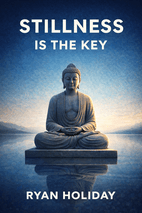
Stillness Is the Key by Ryan Holiday Book Cover

by Ryan Holiday

Ryan Holiday's Stillness Is the Key synthesizes ancient Stoic and Eastern wisdom to argue that cultivated inner calm is the foundation for excellence and resilience. It offers practical disciplines for the mind, spirit, and body, serving anyone feeling overwhelmed by modern noise and seeking purposeful focus.

On Insta.page you also get an Apply This Book tool that lets you combine insights from up to 3 books to solve your specific situation.

Chapter mindmaps

Free preview: chapters 1–4 are fully interactive. Click any node to expand or collapse. Subscribe to unlock the rest.

Chapter 1: Introduction

Key concepts: Introduction

1. Introduction

The Nature and Value of Stillness

  • Stillness is an active, essential core of excellence and fulfillment, not a passive state.
  • It is the universal key to clear thinking, emotional mastery, and peak performance.
  • Accessible to anyone, from athletes and CEOs to parents and artists.
  • A state of full presence and engagement where distraction falls away.

The Crisis of Noise: Modern and Timeless

  • Modern life is engineered for external noise (notifications, news cycles, pressures).
  • The fundamental human challenge is the inability to sit quietly alone (Pascal's observation).
  • Internal noise is a civil war between ambitions, principles, and impulses.
  • This noise is the root of poor decisions, fractured relationships, and dissatisfaction.

Stillness as Strategic Power

  • Exemplified by Lincoln's focused insight on Vicksburg as the key to Civil War victory.
  • Transforms stillness from a soft concept into a critical strategic advantage.
  • Allows one to see the entire board, identify the true leverage point, and persevere with clarity.
  • The quality that enables strategic clarity to emerge amid chaos and conflicting advice.

Defining the Experience of Stillness

  • A palpable force experienced in moments of deep concentration, composure, or awe.
  • Not about inactivity, but about inner peace and presence that can exist amid action.
  • The state where we access our best thinking and truest selves.
  • Manifests as inspiration, pride in work, performance under pressure, or quiet contentment.

The Blueprint for Cultivating Stillness

  • A disciplined pursuit requiring cultivation across three interconnected domains.
  • The Mind: to direct our thoughts and reduce mental disturbances.
  • The Body: to master our physical vessel.
  • The Soul: to process emotions and connect to something larger.
  • The promise: stillness is already within us, waiting to be reclaimed through intentional work.

Chapter 2: Part I: Mind

Key concepts: Part I: Mind

2. Part I: Mind

The Restless Domain

  • The mind is the primary battleground for peace and effectiveness
  • An untamed mind dictates reactions and clouds judgment
  • Establishing internal order precedes all external action

Cultivating Present-Moment Awareness

  • Anchor attention in the here and now
  • Pull focus from past regrets and future anxieties
  • Return repeatedly to immediate sensory experience
  • Create a base of calm for other mental disciplines

Curating Mental Inputs

  • Practice radical selectivity of information consumption
  • Limit exposure to news, social media, and gossip
  • Choose purposeful input to reduce mental clutter
  • Shape the mind through intentional feeding

Mental Emptying and Externalization

  • Develop systems to offload worries and tasks
  • Externalize thoughts through writing to prevent mental loops
  • Free cognitive resources for what truly matters
  • Create space for deeper thinking

Deliberate and Deep Thinking

  • Champion slow, concentrated thinking over speed
  • Set aside dedicated time for pondering important questions
  • Allow insights that hurried thinking cannot achieve
  • Practice reflection without pressure for immediate answers

Transformative Journaling

  • Maintain a daily dialogue with oneself
  • Process emotions and track progress
  • Reinforce lessons and maintain accountability
  • Use writing to slow thought and gain clarity

The Power of Silence

  • Seek quiet moments for rejuvenation and insight
  • Use meditation and solitary walks for integration
  • Allow intuition to surface in pauses
  • Recover from daily overstimulation

Pursuing Timeless Wisdom

  • Seek guidance from perennial principles and great thinkers
  • Study philosophy, literature, and history
  • Build a sturdy framework for navigating challenges
  • Rely on perspectives tested by time rather than trends

Navigating Confidence and Ego

  • Build healthy confidence on competence and self-awareness
  • Distinguish between quiet confidence and fragile ego
  • Focus on craft rather than comparison and recognition
  • Avoid traps of pride and external validation

The Art of Release

  • Let go of attachment to specific outcomes
  • Release past mistakes, grudges, and need for control
  • Accept what is while committing to doing your best
  • Create lightness and adaptability through mental release

Chapter 3: The Domain of the Mind

Key concepts: The Domain of the Mind

3. The Domain of the Mind

The Universal Quest for Stillness

  • Stillness as a universal human aspiration across wisdom traditions (Stoicism, Buddhism, Epicureanism, etc.)
  • Cultivating an internal fortress of mental peace and clarity amid external chaos
  • Stillness as a fundamental key to performance and happiness, not just a cultural preference

Kennedy's Ultimate Test: The Cuban Missile Crisis

  • A historical crisis where theoretical need for stillness became a practical necessity for survival
  • Immense pressure from advisors for immediate military response risking nuclear war
  • Compounding factors: personal history, recent failures, and perceived weakness

The Discipline of Clear Thinking in Crisis

  • Intentional slowing of decision-making process to create space for deliberation
  • Use of historical perspective to avoid rushed, irreversible steps into war
  • Conscious employment of empathy to understand Soviet motivations and perspective

Cultivating the Still Mind Amid Chaos

  • Active creation of conditions for stillness: removing oneself from debates, seeking solitude
  • Managing physical pain and distractions to maintain mental clarity
  • Consulting widely with rivals and predecessors while rejecting ego-driven decisions

The Fruit of Stillness: Strategic Resolution

  • Choosing a measured response (naval quarantine) that provided time and retreat options
  • Utilizing secret, face-saving compromises rather than demanding total surrender
  • Triumph of calm, rational leadership over brute force or reactive aggression

Core Principles of Mental Mastery

  • Stillness as the antidote to chaos: accessing internal calm regardless of external turmoil
  • Stillness precedes correct action: pausing before reacting to see the full picture
  • Stillness as a practical discipline built through specific, accessible habits
  • Stillness as a learned skill that can be cultivated through study and conscious practice

Chapter 4: Become Present

Key concepts: Become Present

4. Become Present

The Spectacle of Singular Focus

  • Marina Abramovic's performance demonstrates presence as an active, all-consuming effort
  • True presence requires monk-like discipline to ignore pain, fatigue, and distraction
  • Undivided attention creates near-religious experiences of being truly seen
  • Being present is described as 'the hardest thing' rather than a passive state

Our Daily Absence

  • Modern life is characterized by frantic avoidance of the present moment
  • We fill voids with activity, technology, and mental chatter, missing our own lives
  • Even in meaningful moments, our minds are elsewhere—worrying or documenting rather than experiencing
  • We often miss the 'ordinary wonderfulness' around us while planning for future experiences

The Elastic Nature of 'Now'

  • The present is defined by conscious choice rather than clock time
  • It's the span where we successfully suspend preoccupation with past and future
  • Everything of value—greatness, insight, happiness, peace—exists only in this chosen present
  • As Laura Ingalls Wilder noted: 'now is now. It can never be anything else'

The Path to Artistic Engagement

  • Reclaiming presence means seeing the world like an artist with engaged, curious attention
  • Stillness and focus are the source of brilliance and excellence
  • The present should be reframed as a gift to be fully lived, regardless of its content
  • Practical wisdom from meditation and sports teaches that optimal performance requires present focus

Core Principles of Presence

  • Presence is an active act of will requiring directed energy and attention
  • Distraction is our default state, causing us to miss reality and diminish performance
  • All value exists only in the now—greatness, love, and happiness are not future rewards
  • Every new moment offers endless chances to begin again and choose full engagement

Continue exploring Stillness Is the Key