The Founder's Mindset Summary: Chapter-by-Chapter Breakdown (Free + Audio)

The Founder's Mindset

Foreword

Chapter 1 of 4
0:000:00
EN
1x
Voice
PDF

The Founder's Mindset

by Gary S. Michel

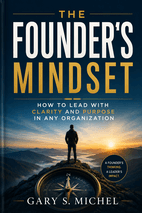
The Founder's Mindset book cover

What is the book The Founder's Mindset about?

Gary S. Michel's The Founder's Mindset provides a framework for leaders at any level to combat organizational complexity by designing clarity into systems and leading with ownership, not title. It's for anyone frustrated by busywork who wants to scale belief and purpose alongside growth.

FeatureInsta.PageBlinkist
Summary DepthFull Chapter-by-Chapter15-min overview
Audio Narration✓ (AI narration)
Visual Mindmaps
AI Q&A✓ Voice AI
Quizzes
PDF Downloads
Price$59.99/yr$146/yr (PRO)
*Competitor data last verified February 2026.

About the Author

Gary S. Michel

Gary S. Michel is an expert in leadership, culture change, and organizational transformation, drawing on decades of experience as a former executive at companies like IBM and Best Buy. He is the author of "Culture Built My Brand: A Proven System for Scaling Your Culture from Day One," which offers a practical framework for aligning company culture with business strategy. Michel also co-founded the consulting firm Human-Centered Leadership to help leaders build high-performance, purpose-driven organizations.

1 Page Summary

You are a professional librarian and book reviewer. Your task is to generate a concise 3-paragraph summary of the book 'The Founder's Mindset: How to Lead with Clarity and Purpose in Any Organization' by Gary S. Michel, published by Tempest.

At its core, this book argues that the primary obstacle to organizational success is not a lack of effort or talent, but the slow, corrosive force of complexity that emerges when clarity is not actively protected. The author identifies a pattern called innovation entropy, where creative energy drifts into disorder, and outlines how organizations often mistake motion for momentum, adding more structure and speed which only accelerates the problem. The central thesis is that what’s missing is a particular mindset—the Founder’s Mindset—which is defined by two actionable principles: designing clarity directly into organizational systems, and leading with a sense of ownership and personal accountability regardless of one’s title.

What makes this book distinctive is its reframing of leadership as a deliberate, repeatable practice rather than a matter of heroic effort or position. The author illustrates that clarity is not a one-time declaration or a mission statement, but an "operating system" that must be intentionally embedded into how an organization sets priorities, makes decisions, and measures work. Through detailed examples, the book shows how this mindset turns employees into trusted partners who can lead from their own positions, contrasting "compliance cultures" that wait for permission with "commitment cultures" that follow principles and context. The distinction between forward-looking "ownership" and backward-looking "accountability" is a key concept, with the author insisting that ownership cannot exist without clarity of purpose.

The intended audience is broad, encompassing leaders in ten-person teams, global enterprises, and social ventures, as well as anyone who has ever felt the frustration of working harder but feeling less ownership over outcomes. Readers will gain a framework for diagnosing and overcoming the organizational drift that leads to missed opportunities and burnout, learning how to scale belief alongside head count. Ultimately, the book challenges leaders to ensure that the clarity they hold personally becomes durable—translated into stories, principles, and systems that outlast any single leader, so that complexity serves purpose rather than obscuring it.

Chapter 1: Foreword

Overview

The Foreword introduces two core principles that define the Founder's Mindset, framing them not as abstract ideals but as actionable design choices. The first principle—Design Clarity into the System—insists that clarity cannot be a byproduct of heroic effort or a single founding moment. Instead, it must be intentionally embedded into how an organization sets priorities, makes decisions, measures work, and resolves trade-offs. When clarity is built into the system itself, it becomes repeatable, surviving changes in leadership and market conditions.

The second principle—Lead like a Founder, Even When You Are Not—shifts the focus from title to behavior. Founder-minded leaders operate with a sense of ownership rather than entitlement. They treat outcomes as personally meaningful, connect their daily work to a larger purpose, and take responsibility before they have formal authority. They don’t wait for permission because they recognize that proactive accountability is the real engine of impact. These two principles together reframe leadership as a deliberate practice of clarity and ownership, available to anyone willing to adopt the mindset.

Key Takeaways
  • Clarity must be systematically designed into processes, not left to individual heroics.
  • Founder-minded leadership is defined by ownership and personal accountability, not by position.
  • Taking responsibility before you have authority is a hallmark of this mindset—waiting for permission is optional.

Key concepts: Foreword

1. Foreword

Design Clarity into the System

  • Clarity must be intentionally embedded into processes
  • It cannot rely on heroic effort or single moments
  • Embed clarity in priorities, decisions, and trade-offs
  • Systematic clarity survives leadership and market changes

Lead like a Founder, Even When Not One

  • Focus on ownership, not entitlement or title
  • Treat outcomes as personally meaningful
  • Connect daily work to a larger purpose
  • Take responsibility before having formal authority

Reframing Leadership as Deliberate Practice

  • Clarity and ownership are actionable design choices
  • Proactive accountability drives real impact
  • This mindset is available to anyone willing to adopt it
  • Waiting for permission is optional

💡 Try clicking the AI chat button to ask questions about this book!

Chapter 2: Introduction

Overview

In earlier work, I noticed this pattern first in sprawling, mature companies—organizations so tangled that their biggest obstacle wasn't competitors but their own internal friction. Over time, I was surprised to find the exact same dynamic playing out inside the smallest, fastest-moving teams. Complexity doesn't wait for scale. It begins the moment clarity stops being actively protected. When clarity fades, innovation stalls—not because ideas dry up, but because no one knows which ones truly matter. Operations start optimizing locally and failing globally. Functions retreat into silos, each efficiently moving in its own direction while the organization as a whole drifts. People work harder but feel less ownership. Meetings churn out action plans instead of decisions, and accountability grows fuzzy. The organization becomes masterful at activity and terrible at progress.

We often misdiagnose this moment, pointing fingers at markets, competitors, or other outside forces. Trying to right the ship, we instinctively reach for speed, add more structure, and layer on new oversight frameworks. But deploying these tactics without clear direction only accelerates the problem. What's missing isn't effort. It's a mindset.

Key Takeaways
  • Complexity arises not from size but from neglecting to protect clarity.
  • Common symptoms of lost clarity: local optimization, silos, blurred accountability, activity without progress.
  • Typical responses (more structure, speed, oversight) worsen the issue without a guiding mindset.
  • The core gap is not a lack of effort—it's a missing founder's mindset.

Key concepts: Introduction

2. Introduction

The Real Source of Complexity

  • Complexity begins when clarity stops being protected
  • It affects both large and small organizations
  • Local optimization leads to global failure
  • Silos and fuzzy accountability are common symptoms

Misdiagnosing the Problem

  • We blame markets, competitors, or external forces
  • Typical fixes like speed and structure backfire
  • Effort is not the missing ingredient

The Core Solution

  • What's missing is a founder's mindset
  • Clarity must be actively protected
  • Direction precedes structure and speed

⚡ You're 2 chapters in and clearly committed to learning

Why stop now? Finish this book today and explore our entire library. Try it free for 7 days.

Chapter 3: 1. Why We Need the Founder’s Mindset

Overview

Brilliant, well-intentioned organizations—whether startups, enterprises, or nonprofits—routinely lose their edge not because of bad ideas or weak talent, but because of a creeping, almost invisible force. The author identifies a pattern he calls innovation entropy: the tendency for creative energy to drift toward disorder unless it's deliberately contained. He poses a series of sharp questions that any leader has felt: Why does decision-making slow down when speed matters most? Why does adding people reduce momentum? How do you scale belief, not just head count? The answer lies in recognizing that complexity is not a byproduct of growth—it’s born the moment we mistake building for adding.

The author illustrates this with a case study of a leader named Sarah, whose team lost its way not because of effort or intelligence, but because they confused movement with momentum. They scaled activity faster than purpose. They weren’t scaling innovation; they were scaling entropy. The real culprit, time and again, is complexity introduced with good intentions and left unmanaged. When everything becomes important, nothing truly is. Clarity cannot be assumed—it must be defended.

The Math of Entropy

The mechanics of this pattern are deceptively simple. Friction compounds faster than focus. Every extra meeting, every additional metric, every new layer of approval adds weight to the system. The author drives home a critical insight: complexity doesn’t wait for scale. It begins the moment a team or company stops actively protecting simplicity. This is why the founder’s mindset matters—not as nostalgia for early days, but as a deliberate practice of cutting away what doesn’t serve the core mission.

Key Takeaways
  • Innovation entropy is predictable: creative energy drifts toward disorder unless intentionally contained.
  • Activity is not momentum; adding features, people, or dashboards can mask a loss of clarity.
  • The root cause of stalled initiatives is often unmanaged complexity, not market timing or technology.
  • Clarity must be actively defended—it cannot be assumed as an organization grows.
  • Friction accumulates quietly; the founder’s mindset is a discipline of simplicity and purpose.

Key concepts: 1. Why We Need the Founder’s Mindset

3. 1. Why We Need the Founder’s Mindset

The Problem of Innovation Entropy

  • Creative energy drifts toward disorder unless contained
  • Complexity introduced with good intentions left unmanaged
  • Activity masks loss of momentum and clarity

Symptoms of Lost Focus

  • Decision-making slows when speed matters most
  • Adding people reduces momentum
  • Scaling activity faster than purpose

The Math of Entropy

  • Friction compounds faster than focus
  • Every extra meeting adds weight to the system
  • Complexity begins when simplicity is not protected

The Founder's Mindset as Discipline

  • Not nostalgia for early days but deliberate practice
  • Cutting away what doesn't serve the core mission
  • Actively defending clarity and simplicity

Key Insight: Building vs. Adding

  • Mistaking building for adding creates complexity
  • Scaling belief, not just head count
  • Clarity cannot be assumed—it must be defended

Chapter 4: 2. What Is the Founder’s Mindset?

Overview

The Founder’s Mindset isn’t reserved for startup founders alone. It scales across ten-person teams, global enterprises, and social ventures. At its core, it means people stop waiting for permission to improve things—once clarity is shared, leadership becomes a default behavior, not a delegated privilege.

Ownership Without Authority

Accountability and ownership are not the same. Accountability looks backward, asking who is responsible for what already happened. Ownership looks forward: it’s caring about what happens next. The catch is that ownership cannot exist without clarity. People can’t take responsibility for what they don’t understand. When purpose is fuzzy, decisions stall and energy scatters. Clarity gives ownership direction—it defines what matters most, sets boundaries for confident action, and supplies the meaning that makes those actions worthwhile. When people grasp the why, they can figure out the what without needing step-by-step instructions.

From Direction to DNA

Early on, clarity often lives entirely in the founder’s head. They don’t need to write it down—they breathe it. A walk through the shop floor, a customer call, a sketch on a whiteboard, and everyone instantly sees what “right” looks like. But that implicit clarity doesn’t scale. What was once instinct must become intentional; what was once charisma must become culture.

Clarity becomes culture when it shapes how people treat each other, how decisions get made, and how success is defined. When purpose is baked into those everyday choices, it moves from an idea to an instinct. In founder-minded organizations, employees don’t just understand what matters—they feel responsible for protecting it as a corporate asset. Clarity is no longer spoken; it is shared. Microsoft under Satya Nadella illustrates this: he didn’t reinvent strategy; he reinvented culture. He shifted the company from being the “smartest in the room” to the “most curious,” moving from a know-it-all culture to a learn-it-all one.

Clarity Governs Speed

A persistent myth is that speed is the ultimate competitive advantage. Actually, organizations that scale sustainably aren’t necessarily the fastest—they’re the clearest. When clarity leads, speed follows. Purpose and simplicity make execution feel effortless. Clarity doesn’t compete with velocity; it governs it.

Key Takeaways
  • Ownership is proactive, accountability reactive. Clarity enables ownership by making purpose and boundaries understandable.
  • Culture must codify clarity. Implicit founder intuition must become explicit team instinct as the organization grows.
  • Sustainable speed comes from clarity, not haste. Organizations that scale well prioritize shared understanding over raw velocity.

Key concepts: 2. What Is the Founder’s Mindset?

4. 2. What Is the Founder’s Mindset?

Core Definition

  • Not limited to startup founders
  • Applies to teams, enterprises, and social ventures
  • Stop waiting for permission to improve things
  • Leadership becomes default behavior, not delegated privilege

Ownership vs. Accountability

  • Accountability looks backward at past responsibility
  • Ownership looks forward, caring about what happens next
  • Ownership requires clarity to exist
  • Clarity defines purpose, boundaries, and meaning

From Direction to Culture

  • Founder's clarity is implicit and instinctive
  • Implicit clarity doesn't scale with growth
  • Clarity becomes culture through everyday choices
  • Example: Microsoft shifted from know-it-all to learn-it-all

Clarity Governs Speed

  • Speed is not the ultimate advantage
  • Sustainable organizations are clearest, not fastest
  • Clarity leads, then speed follows
  • Purpose and simplicity make execution effortless

Key Takeaways

  • Ownership is proactive, accountability reactive
  • Culture must codify clarity as organization grows
  • Sustainable speed comes from clarity, not haste
You've reached the end of the free chapters

Next chapter: “The Illusion of Growth” is locked

Keep reading The Founder's Mindset — and unlock all 450+ book summaries with audio, mindmaps and AI Q&A.

$0.00 due today · 7 days free, then $59.99/year ($4.99/mo) · Cancel anytime before day 7

Frequently Asked Questions about The Founder's Mindset

What is The Founder's Mindset about?
The book introduces the Founder's Mindset as a leadership philosophy centered on two core principles: designing clarity into organizational systems and leading with ownership regardless of title. It explains how complexity and innovation entropy arise when clarity is neglected, and provides actionable frameworks for scaling clarity, executing with focus, and embedding purpose into culture, customer relationships, and investor dynamics. The core argument is that clarity must be intentionally protected and embedded to prevent organizations from mistaking activity for progress.
Who is the author of The Founder's Mindset?
Gary S. Michel is the author, a leadership expert who identified the pattern of innovation entropy across both sprawling enterprises and fast-moving startup teams. His work draws on real-world case studies and observations of leaders who successfully translated clarity from instinct into intentional systems. Michel reframes leadership not as a position but as a deliberate practice of ownership and accountability available to anyone.
Is The Founder's Mindset worth reading?
Yes, the book offers a timely antidote to the common organizational trap of mistaking activity for momentum. It provides concrete, research-backed principles that help leaders tame complexity without adding bureaucracy, using vivid examples from companies like Mayo Clinic, SpaceX, and Netflix. For anyone frustrated by stalled execution or fuzzy priorities, this book delivers a practical, mindset-driven path to making clarity the operating system of their team or organization.
What are the key lessons from The Founder's Mindset?
The most important lesson is that clarity must be systematically designed into processes, not left to heroic individuals—it's the antidote to control and the foundation for ownership. Founder-minded leaders take ownership before they have authority, looking forward to what outcomes they can create rather than backward at blame. True speed comes from reducing friction (process debt), not from rushing, and focus is a force multiplier that requires saying no to good ideas. Finally, the mindset only becomes legacy when clarity is embedded into stories, principles, and systems that outlast any single leader.

📚 Explore Our Book Summary Library

Discover more insightful book summaries from our collection

BusinessRelated(105 books)

The Founder's Mindset by Gary S. Michel - Book Summary
The Founder's Mindset

Gary S. Michel

Contagious by Jonah Berger - Book Summary
Contagious

Jonah Berger

Click Here by Alex Schultz - Book Summary
Click Here

Alex Schultz

The AI-Driven Leader by Geoff Woods - Book Summary
The AI-Driven Leader

Geoff Woods

A Work Life Worth Living by Jeffrey Westphal - Book Summary
A Work Life Worth Living

Jeffrey Westphal

The Last Human Marketer by Josh Porter - Book Summary
The Last Human Marketer

Josh Porter

AI MARKETING FOR SMALL BUSINESS by BOBBE ANN MILES - Book Summary
AI MARKETING FOR SMALL BUSINESS

BOBBE ANN MILES

The 10X Rule by Grant Cardone - Book Summary
The 10X Rule

Grant Cardone

Life at the Speed of Play by Mark Pincus - Book Summary
Life at the Speed of Play

Mark Pincus

The Accidental CMO by Darrell Noe - Book Summary
The Accidental CMO

Darrell Noe

The Emergent Leader by Don Gregori - Book Summary
The Emergent Leader

Don Gregori

Build by Tony Fadell - Book Summary
Build

Tony Fadell

Close That Sale! by Brian Tracy - Book Summary
Close That Sale!

Brian Tracy

Entrepreneurship by Brian Tracy - Book Summary
Entrepreneurship

Brian Tracy

Traffic Secrets by Russell Brunson - Book Summary
Traffic Secrets

Russell Brunson

Expert Secrets by Russell Brunson - Book Summary
Expert Secrets

Russell Brunson

Dotcom Secrets by Russell Brunson - Book Summary
Dotcom Secrets

Russell Brunson

The Greater Game by Dan Sullivan - Book Summary
The Greater Game

Dan Sullivan

The Freedom-Based Business Method by Natalie Ellis - Book Summary
The Freedom-Based Business Method

Natalie Ellis

Incorruptible by Eric Ries - Book Summary
Incorruptible

Eric Ries

Superteams by Ron Friedman - Book Summary
Superteams

Ron Friedman

How Great Ideas Happen by George Newman - Book Summary
How Great Ideas Happen

George Newman

The AI Handbook for Sales Professionals by JD Miller - Book Summary
The AI Handbook for Sales Professionals

JD Miller

Connect to Close by Amy Reczek - Book Summary
Connect to Close

Amy Reczek

PREEMINENCE by Jay Abraham - Book Summary
PREEMINENCE

Jay Abraham

The Efficient Frontier of Teaming by Bryan Powell - Book Summary
The Efficient Frontier of Teaming

Bryan Powell

Maximizing LinkedIn for Business Growth, Updated and Expanded by Neal Schaffer - Book Summary
Maximizing LinkedIn for Business Growth, Updated and Expanded

Neal Schaffer

Copywriting for Marketers by Kaitlin Terry - Book Summary
Copywriting for Marketers

Kaitlin Terry

Bootstrap Empire by Natalie Holloway - Book Summary
Bootstrap Empire

Natalie Holloway

Headhunter Confidential by Katharine Day Bremer - Book Summary
Headhunter Confidential

Katharine Day Bremer

Slam Dunk Job Search by David Allen Parker Jr. - Book Summary
Slam Dunk Job Search

David Allen Parker Jr.

LLC Essential Guide by Nelson Grant - Book Summary
LLC Essential Guide

Nelson Grant

Genius at Scale by Linda A. Hill - Book Summary
Genius at Scale

Linda A. Hill

Open to Work by Ryan Roslansky - Book Summary
Open to Work

Ryan Roslansky

Billion Dollar Lessons by Paul B. Carroll - Book Summary
Billion Dollar Lessons

Paul B. Carroll

The Science of Scaling by Mark Roberge - Book Summary
The Science of Scaling

Mark Roberge

Streetwise by Lloyd Blankfein - Book Summary
Streetwise

Lloyd Blankfein

The Infinity Machine by Sebastian Mallaby - Book Summary
The Infinity Machine

Sebastian Mallaby

The Scaling Curve by Claude St. John - Book Summary
The Scaling Curve

Claude St. John

Turn Words Into Wealth by Aurora Winter - Book Summary
Turn Words Into Wealth

Aurora Winter

Apple in China by Patrick McGee - Book Summary
Apple in China

Patrick McGee

The SaaS Playbook by Rob Walling - Book Summary
The SaaS Playbook

Rob Walling

The Growth Engine by Piyush Sachdeva - Book Summary
The Growth Engine

Piyush Sachdeva

Scale Solo by Pia Silva - Book Summary
Scale Solo

Pia Silva

Visionary by Mark C. Winters - Book Summary
Visionary

Mark C. Winters

Ding Dong by Jamie Siminoff - Book Summary
Ding Dong

Jamie Siminoff

Runnin' Down a Dream by Bill Gurley - Book Summary
Runnin' Down a Dream

Bill Gurley

Six Months to Six Figures by Josh Coats - Book Summary
Six Months to Six Figures

Josh Coats

The Curious Mind of Elon Musk by Charles Steel - Book Summary
The Curious Mind of Elon Musk

Charles Steel

Pineapple and Profits: Why You're Not Your Business by Kelly Townsend - Book Summary
Pineapple and Profits: Why You're Not Your Business

Kelly Townsend

Big Trust by Shadé Zahrai - Book Summary
Big Trust

Shadé Zahrai

Obviously Awesome by April Dunford - Book Summary
Obviously Awesome

April Dunford

Crisis and Renewal by S. Steven Pan - Book Summary
Crisis and Renewal

S. Steven Pan

Get Found by Matt Diamante - Book Summary
Get Found

Matt Diamante

Video Authority by Aleric Heck - Book Summary
Video Authority

Aleric Heck

One Venture, Ten MBAs by Ksenia Yudina - Book Summary
One Venture, Ten MBAs

Ksenia Yudina

BEATING GOLIATH WITH AI by Gal S. Borenstein - Book Summary
BEATING GOLIATH WITH AI

Gal S. Borenstein

Digital Marketing Made Simple by Barry Knowles - Book Summary
Digital Marketing Made Simple

Barry Knowles

The She Approach To Starting A Money-Making Blog by Ana Skyes - Book Summary
The She Approach To Starting A Money-Making Blog

Ana Skyes

The Blog Startup by Meera Kothand - Book Summary
The Blog Startup

Meera Kothand

How to Grow Your Small Business by Donald Miller - Book Summary
How to Grow Your Small Business

Donald Miller

Email Storyselling Playbook by Jim Hamilton - Book Summary
Email Storyselling Playbook

Jim Hamilton

Simple Marketing For Smart People by Billy Broas - Book Summary
Simple Marketing For Smart People

Billy Broas

The Hard Thing About Hard Things by Ben Horowitz - Book Summary
The Hard Thing About Hard Things

Ben Horowitz

Good to Great by Jim Collins - Book Summary
Good to Great

Jim Collins

The Lean Startup by Eric Ries - Book Summary
The Lean Startup

Eric Ries

The Black Swan by Nassim Nicholas Taleb - Book Summary
The Black Swan

Nassim Nicholas Taleb

Building a StoryBrand 2.0 by Donald Miller - Book Summary
Building a StoryBrand 2.0

Donald Miller

How To Get To The Top of Google: The Plain English Guide to SEO by Tim Cameron-Kitchen - Book Summary
How To Get To The Top of Google: The Plain English Guide to SEO

Tim Cameron-Kitchen

Great by Choice: 5 by Jim Collins - Book Summary
Great by Choice: 5

Jim Collins

How the Mighty Fall: 4 by Jim Collins - Book Summary
How the Mighty Fall: 4

Jim Collins

Built to Last: 2 by Jim Collins - Book Summary
Built to Last: 2

Jim Collins

Social Media Marketing Decoded by Morgan Hayes - Book Summary
Social Media Marketing Decoded

Morgan Hayes

Start with Why 15th Anniversary Edition by Simon Sinek - Book Summary
Start with Why 15th Anniversary Edition

Simon Sinek

3 Months to No.1 by Will Coombe - Book Summary
3 Months to No.1

Will Coombe

Think Big by Donald J. Trump - Book Summary
Think Big

Donald J. Trump

Zero to One by Peter Thiel - Book Summary
Zero to One

Peter Thiel

Who Moved My Cheese? by Spencer Johnson - Book Summary
Who Moved My Cheese?

Spencer Johnson

SEO 2026: Learn search engine optimization with smart internet marketing strategies by Adam Clarke - Book Summary
SEO 2026: Learn search engine optimization with smart internet marketing strategies

Adam Clarke

University of Berkshire Hathaway by Daniel Pecaut - Book Summary
University of Berkshire Hathaway

Daniel Pecaut

Rapid Google Ads Success: And how to achieve it in 7 simple steps by Claire Jarrett - Book Summary
Rapid Google Ads Success: And how to achieve it in 7 simple steps

Claire Jarrett

3 Months to No.1 by Will Coombe - Book Summary
3 Months to No.1

Will Coombe

How To Get To The Top of Google: The Plain English Guide to SEO by Tim Cameron-Kitchen - Book Summary
How To Get To The Top of Google: The Plain English Guide to SEO

Tim Cameron-Kitchen

Unscripted by MJ DeMarco - Book Summary
Unscripted

MJ DeMarco

The Millionaire Fastlane by MJ DeMarco - Book Summary
The Millionaire Fastlane

MJ DeMarco

Great by Choice by Jim Collins - Book Summary
Great by Choice

Jim Collins

Abundance by Ezra Klein - Book Summary
Abundance

Ezra Klein

How the Mighty Fall by Jim Collins - Book Summary
How the Mighty Fall

Jim Collins

Built to Last by Jim Collins - Book Summary
Built to Last

Jim Collins

Give and Take by Adam Grant - Book Summary
Give and Take

Adam Grant

Fooled by Randomness by Nassim Nicholas Taleb - Book Summary
Fooled by Randomness

Nassim Nicholas Taleb

Skin in the Game by Nassim Nicholas Taleb - Book Summary
Skin in the Game

Nassim Nicholas Taleb

Antifragile by Nassim Nicholas Taleb - Book Summary
Antifragile

Nassim Nicholas Taleb

The Infinite Game by Simon Sinek - Book Summary
The Infinite Game

Simon Sinek

The Innovator's Dilemma by Clayton M. Christensen - Book Summary
The Innovator's Dilemma

Clayton M. Christensen

The Diary of a CEO by Steven Bartlett - Book Summary
The Diary of a CEO

Steven Bartlett

The Tipping Point by Malcolm Gladwell - Book Summary
The Tipping Point

Malcolm Gladwell

Million Dollar Weekend by Noah Kagan - Book Summary
Million Dollar Weekend

Noah Kagan

The Laws of Human Nature by Robert Greene - Book Summary
The Laws of Human Nature

Robert Greene

Hustle Harder, Hustle Smarter by 50 Cent - Book Summary
Hustle Harder, Hustle Smarter

50 Cent

Start with Why by Simon Sinek - Book Summary
Start with Why

Simon Sinek

MONEY Master the Game: 7 Simple Steps to Financial Freedom by Tony Robbins - Book Summary
MONEY Master the Game: 7 Simple Steps to Financial Freedom

Tony Robbins

Lean Marketing: More leads. More profit. Less marketing. by Allan Dib - Book Summary
Lean Marketing: More leads. More profit. Less marketing.

Allan Dib

Poor Charlie's Almanack by Charles T. Munger - Book Summary
Poor Charlie's Almanack

Charles T. Munger

Beyond Entrepreneurship 2.0 by Jim Collins - Book Summary
Beyond Entrepreneurship 2.0

Jim Collins

Self-Help(59 books)

Health(46 books)

Memoir(58 books)

Business/Money(1 books)

Business/Entrepreneurship/Career/Success(1 books)

History(1 books)

Money/Finance(1 books)

Motivation/Entrepreneurship(1 books)

Lifestyle/Health/Career/Success(3 books)

Psychology/Health(1 books)

Career/Success/Communication(2 books)

Psychology/Other(1 books)

Career/Success/Self-Help(1 books)

Career/Success/Psychology(1 books)

0