The Founder's Mindset Quotes
by Gary S. Michel
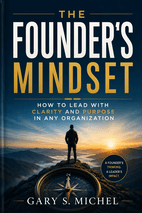
This collection brings together some of the most impactful lines from Gary S. Michel's book on the Founder's Mindset. You will find sharp observations about clarity, ownership, and the hidden costs of complexity. Each quote captures a truth that many leaders sense but struggle to articulate.
What makes this book so quotable is its ability to condense deep organizational wisdom into simple, memorable statements. Michel avoids vague theory and instead offers concrete contrasts that force reflection. These are lines you will want to share, discuss, and revisit because they point directly to the mindset shifts that separate thriving companies from those that stall.
Top Quotes from The Founder's Mindset
“Founder-minded leaders act with ownership, not entitlement.”
From Founder's Mindset Principle #3 on leading like a founder.
It captures a pivotal mindset shift from passive expectation to active responsibility, a principle that resonates with anyone striving to take initiative.
“What's missing isn't effort. It's a mindset.”
This is the concluding insight after explaining how misdiagnosed problems lead to ineffective fixes.
The simple contrast between effort and mindset delivers the core thesis of the book, challenging leaders to look beyond surface-level solutions for real change.
“When everything is important, nothing truly is.”
The author makes a concise statement about the danger of lacking prioritization.
This aphorism is a powerful reminder that focus is lost when everything is treated as equally important. It resonates for its simplicity and truth.
“What was once instinct must become intentional. What was once charisma must become culture.”
From the 'From Direction to DNA' section, discussing the scaling challenge.
It poetically contrasts the ephemeral nature of a founder's personal influence with the enduring power of culture. This line inspires leaders to institutionalize values rather than rely on charisma.
“True speed is not the acceleration of activity but the reduction of friction.”
The author contrasts common misconceptions of speed with its true definition.
This reframes speed as efficiency through alignment, not mere busyness, which resonates with anyone seeking sustainable progress.
“People don’t perform for approval. They perform for purpose.”
The author concludes a discussion on how systems reward alignment rather than approval-seeking.
It captures a deep insight into human motivation, reminding leaders that purpose-driven work outperforms approval-driven work.
“Protect lifetime trust over short- term optics.”
A division head replaced a layer of sign-offs with this principle to guide credit decisions.
It succinctly captures a fundamental trade-off in business decisions between long-term relationships and short-term appearances.
Themes Behind the Quotes
A central theme across these quotes is the primacy of clarity. Michel argues that clarity must be intentionally designed and actively maintained, not assumed from a founding vision or a charismatic leader. Complexity emerges not just at scale but the moment clarity stops being protected. Organizations that prioritize being clear over being fast ultimately move faster because they reduce friction and false activity.
Another recurring theme is the shift from entitlement to ownership and from compliance to commitment. Founder minded leaders act with a sense of responsibility rather than waiting for permission or approval. The book calls for replacing control with coherence, intensity with intent, and short term optics with long term trust. This mindset transforms how teams operate, allowing them to self organize around purpose rather than follow procedures out of obligation.
Quotes by Chapter
Foreword
“Clarity cannot depend on heroic leaders or founding moments.”
From Founder's Mindset Principle #2 about designing clarity into the system.
It challenges the romanticized notion of heroic leadership and argues for sustainable, systemic solutions instead.
“When clarity is designed, it becomes repeatable.”
Following the idea that clarity must be built into the operating system.
This line underscores the power of intentional design to create consistency and scalability, making success less dependent on individual effort.
Introduction
“Complexity doesn’t wait for scale. It begins the moment clarity stops being actively protected.”
The author observes that complexity emerges in both large and small organizations when clarity is neglected.
This line reframes complexity as a symptom of lost clarity rather than size, making it a powerful reminder that founders must actively guard focus from the start.
“The organization becomes very good at activity and very poor at progress.”
The author describes a common dysfunction where busyness replaces meaningful advancement.
It succinctly captures a frustrating paradox that many teams recognize, serving as a sharp warning against mistaking motion for momentum.
1. Why We Need the Founder’s Mindset
“Brilliant people with visionary ideas, strong intentions, and real opportunity slowly lose the thread of simplicity as they chase growth, funding, or validation.”
The author describes a common pattern in organizations where initial clarity fades during growth.
This line captures the tragic irony of growth—how good intentions lead to complexity. It resonates because many leaders recognize this pattern in their own experience.
“I call this pattern innovation entropy: the natural tendency for creative energy to drift toward disorder unless it's deliberately contained.”
The author introduces the concept of 'innovation entropy' to explain why organizations stall.
This definition provides a memorable framework for why organizations get stuck. It resonates because it names a phenomenon many have felt but couldn't articulate.
“Complexity doesn’t wait for scale. It is born the moment a company or team mistakes building for adding.”
The author explains how complexity arises early when teams confuse real progress with mere accumulation.
This line offers a sharp distinction between genuine progress and mere accumulation. It resonates because it challenges the instinct to equate activity with achievement.
2. What Is the Founder’s Mindset?
“When teams adopt the Founder's Mindset, they stop waiting for permission to improve things.”
From the section explaining how the Founder's Mindset transforms team behavior.
It captures the shift from passive waiting to proactive improvement, which resonates with anyone tired of bureaucratic barriers. The line empowers individuals to take initiative without formal authority.
“Organizations that scale sustainably aren't necessarily the fastest. They’re the clearest.”
At the end of the chapter, contrasting speed with clarity.
It overturns the common belief that speed is paramount, offering a counterintuitive insight that clarity is the true driver of sustainable growth. The simple juxtaposition makes it memorable.
“Because clarity doesn’t compete with velocity—it governs it.”
The concluding line of the chapter.
It succinctly defines the relationship between clarity and velocity, positioning clarity as the governing principle. The metaphor of governance versus competition is both elegant and actionable.
4. The Illusion of Growth
“False speed feels productive in the moment, but it quietly accumulates structural liabilities.”
The chapter introduces the concept of process debt caused by rushing decisions.
It captures the deceptive nature of hasty action and the hidden long-term costs, making leaders rethink the value of speed.
“Clarity, not competition, is what converts motion into momentum.”
The chapter explains that clarity is the driver of meaningful growth.
It elegantly shifts the focus from external rivalry to internal focus, a powerful reminder for leaders seeking genuine forward motion.
“Speed is not something you chase; it is something you earn through alignment.”
The chapter discusses the founder's advantage of clarity before speed.
This inversion of common wisdom—that speed is earned, not pursued—challenges readers to prioritize alignment over acceleration.
5. Designing for Clarity
“When teams understand how and why decisions are made, they feel respected, not ruled.”
Opening line of the chapter, explaining the effect of transparency.
It encapsulates the core trade-off between control and respect, making a compelling case for clarity as a form of empowerment.
“In a great company, clarity replaces control, enabling employees to lead from where they are, confident that their decisions reinforce the greater purpose.”
Further explanation of how clarity transforms organizational dynamics.
This line reframes leadership not as top-down authority but as distributed responsibility anchored in shared understanding.
“If you can’t describe your success clearly, you can’t build it deliberately.”
From the section introducing the future press release exercise.
It serves as a sharp, actionable truth that forces leaders to move from vague ambition to precise, intentional execution.
“Strategy is not just a plan; it is a story you choose to write together.”
Concluding thought on the future press release exercise.
This metaphor humanizes strategy, making it feel collaborative and narrative-driven rather than mechanical and top-down.
6. Scaling Clarity
“Founder-minded leaders know that systems teach louder than statements.”
The author explains how organizational culture is shaped by what leaders reward and allow.
It expresses a fundamental truth about leadership: actions and systems communicate more powerfully than any verbal declaration.
“Clarity cultures don’t rely on control but on coherence.”
The author contrasts Netflix's approach with traditional management after describing their 'freedom and responsibility' culture.
This crisp distinction reframes clarity as alignment rather than enforcement, making it both memorable and actionable for leaders.
“Sustaining clarity is an act of continual renewal.”
The author introduces the concept of the 'renewal loop' as a leadership discipline.
This succinctly shifts clarity from a one-time event to an ongoing practice, making it a powerful principle for scaling organizations.
7. Leading Like a Founder, Even When You’re Not
“The difference is not intensity; it is intent.”
This line contrasts compliance cultures with commitment cultures in organizations.
Memorable and concise, it reframes motivation from mere effort to purpose-driven action.
“People in compliance cultures follow procedures while waiting for permission. People in commitment cultures follow principles while asking context.”
Describing two distinct cultural approaches under pressure.
The vivid contrast resonates with anyone who has experienced bureaucratic red tape versus empowered decision-making.
“Strong purpose fuels self-organization, while weak purpose invites paralysis.”
This distinction emerges when analyzing how teams behave during crises.
It powerfully links clarity of mission to organizational agility and decisiveness.