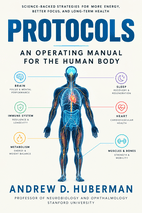
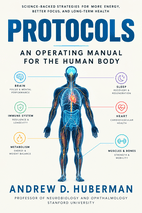
Andrew D. Huberman's Protocols: An Operating Manual for the Human Body organizes sleep, exercise, stress, nutrition, light, focus, and personal growth into concrete levers with specific timings and dosages. Written for readers who accept that these pillars matter but find standard advice has not closed the gap between knowing and doing.
Feature
Insta.Page
Blinkist
Shortform
Summary Depth
Full Chapter-by-Chapter
15-min overview
Section-by-section guides
Audio Narration
✓
✓
✓
Visual Mindmaps
✓
✕
✕
AI Q&A
✓
✕
✕
Quizzes
✓
✕
✕
PDF Downloads
✓
✕
✓
Price
$89.99/yr
$146/yr (PRO)
$199/yr
*Competitor data last verified July 2026.
1 Page Summary
Andrew D. Huberman's Protocols: An Operating Manual for the Human Body rests on the premise that the body and mind are governed by identifiable biological levers that, once understood, can be deliberately adjusted. The book organizes its chapters around sleep, exercise, stress control, nutrition, light, focus and learning, and personal growth, treating each area as a system with concrete inputs and predictable outputs. Sleep is framed as foundational, with the aim of sleeping well on 90 to 95 percent of nights, and presented through mechanisms like the suprachiasmatic nucleus and intrinsically photosensitive retinal ganglion cells that link morning light exposure to the body's master clock. The exercise protocols, drawn partly from Mike Mentzer's ten rules, emphasize quality over volume, full range of motion, training to failure, and scheduled rest. Stress is reframed not as a "fight or flight" holdover but as a single, uniform response to urgency, addressed through a "seesaw model" balancing parasympathetic calm against sympathetic arousal and the goal of raising one's stress threshold. Nutrition settles the calorie question while warning that careless weight loss costs muscle, and light is treated as a healing or harmful lever on par with sleep, exercise, and food. Throughout, Huberman leans on named researchers and historical figures—Ignacio Provencio, Susruta, Glen Jeffery, Niels Finsen, Jennifer Groh, James Hollis—to ground his claims.
What distinguishes the book is its insistence on actionable procedure over abstract advice. Huberman repeatedly notes that conventional guidance contradicts itself so thoroughly that beginners cannot tell what is true, and he positions his protocols as a remedy: specific timings, dosages, and sequences rather than general principles. The focus and learning chapter is explicit that action precedes motivation, that the agitated feeling at the start of concentration is normal and necessary, and that self-directed brain change follows six ordered steps—get alert, get and stay focused, keep urgency, make real attempts and embrace errors, rest, repeat. He also corrects popular misconceptions, noting that not every experience rewires the brain and that plasticity reshapes existing circuits rather than adding new neurons. The final chapter extends beyond biology to the inner life, using Groh's account of thought as simulation and the concept of attractor states to argue that thoughts sit downstream of perception and are therefore controllable. The unifying thread is that motivation, focus, and even self-talk are states with real brain and hormone components that can be accessed on purpose rather than waited for.
The book is written for readers who already accept that sleep, exercise, and diet matter but find that the usual advice has not closed the gap between knowing and doing. It assumes an audience willing to engage with mechanism—circadian clocks, cortisol and adrenaline, GLP-1, ipRGCs—without demanding a scientific background, and it treats skepticism toward competing prescriptions as reasonable rather than a failure. Readers who follow the protocols stand to gain a structured, repeatable framework for making restful sleep reliable instead of occasional, for training strength and consistency over years, for responding when stress is inevitable, for eating without demanding perfection, and for accessing focus and motivation on demand. The closing chapter promises something beyond optimization: a way to address emotional life, relationships, and self-regard, on the premise that one can tune every biological pillar and still feel something essential missing. What the book offers, in sum, is not inspiration but an operating manual—an ordered set of levers for the body and the inner life alike, presented with enough specificity to be tested and enough restraint to avoid promising perfection.
Chapter 1: Protocols for Sleep
Overview
Most people now accept that sleep is essential, yet many wake unsatisfied and the usual advice has not closed the gap. What would it take to make restful sleep reliable instead of occasional?
Sleep as the foundation
Sleep shapes mental health, physical health and performance, so the aim is to sleep well 90 to 95 percent of nights. According to the book, chronic sleep deprivation is linked to heart disease, stroke, hormonal imbalances and type 2 diabetes, among other harms. Chronotype, the genetically determined preference for early or late sleep, is distinct from sleep need, which is seven to eight hours for most adults.
Sleep Protocol 1
View morning sunlight within thirty to sixty minutes of waking, for five to ten minutes, unfiltered by window glass, sunglasses or a hat brim. The light sets the suprachiasmatic nucleus, the master circadian clock that coordinates every cell's twenty-four-hour rhythm.
The eye-to-clock circuit
Melanopsin-containing retinal cells, identified by Ignacio Provencio in 1998, are both photoreceptive and ganglion cells. These intrinsically photosensitive RGCs (ipRGCs) signal the suprachiasmatic nucleus directly, responding not to images but to sustained bright light and wavelength contrast, the signature of low solar angle sunlight. The circuit needs no learning and works from birth.
How morning light builds energy
Cortisol is a wakefulness-promoting hormone, not merely a stress hormone. Morning light raises energy through three mechanisms:
Residual melatonin is shut off via the SCN and the pineal gland.
Adenosine falls, preventing circadian drift, or phase delay.
The morning cortisol rise is amplified by as much as 50 percent, peaking about an hour after waking.
Late afternoon light
Ten to fifteen minutes of ambient daylight before sunset, ideally facing west, delays the clock and offsets morning light. Two SCN oscillators, tuned to sunrise and sunset, keep the clock steady. Afternoon light also quiets retinal circuits, so night screens harm melatonin less.
Night light
Dim the lights after sundown.
Switch to amber or red bulbs.
Wear glasses that block UV, blue, and green when using screens.
Candlelight works too.
According to the book, bright light at night activates the perihabenula, raising cortisol, lowering dopamine, and causing next-day anxiety and learning deficits. Guard the six hours before your temperature minimum, roughly two hours before you usually wake.
Chronotype
Kenneth Wright's campers slept around sunset after a week with only sunlight and campfires.
Sunlight alignment
Camping light was four times more intense than daily life, and a single weekend shifted people toward earlier sleep, a shift that persisted. The study was small, but artificial light masks many people's preference for a rhythm tied to the sun.
Determining your chronotype
Try a week of getting into bed by 8:30 or 9:00 p.m., lights out by 9:30. About a third of people do best sleeping 10:30 p.m. to midnight, another third 8:30 to 10:00 p.m., and the last third are night owls, awake until 12:30 or 3:00 a.m.
Sleep architecture
Sleep cycles run about ninety minutes through N1, N2, N3 and REM. N3 releases growth hormone and flushes the brain of waste; REM consolidates skills and unloads emotion.
Health costs
One small study linked each 1 percent drop in REM to a 9 percent higher dementia risk.
Sleep across the lifespan
Puberty shifts the circadian clock later, so sixteen-year-olds stay up until 11:00 p.m. while needing nine hours. School start times of 8:30 a.m. or later improved grades and cut teen car crashes. Over 70 percent of adolescents fall short.
Quieting a busy mind
Counting sheep makes falling asleep harder, Allison Harvey found, and suppressing an intrusive thought only makes it more preoccupying. A mental walk or slow eye movements work.
Temperature protocols
Protocol 5: keep the bedroom between 65 and 68°F, warm the extremities before bed, and leave hands and feet exposed rather than socked.
Protocol 6: raise the room temperature one to three degrees in the last hour or two before waking, which lengthens REM.
Napping
Naps run twenty minutes for an energy boost, up to ninety to process emotion.
Adenosine and sleep pressure
Sleep has two drivers: the circadian clock behind most protocols so far, and sleep pressure, built by adenosine. Adenosine, leftover from burned ATP, accumulates with daily activity and exercise, easing sleep onset and deepening slow-wave sleep. Naps reduce adenosine, so people who struggle to fall asleep at night should skip them.
Protocol 8: non-sleep deep rest
NSDR is a form of "self-directed relaxation," not meditation, breathwork, or a nap. Long exhales push the autonomic nervous system toward a parasympathetic state while attention moves systematically through the body and away again, keeping the mind alert in a deeply relaxed body.
Protocol 9: supplements
Behavioral tools come first. Over-the-counter options include:
Magnesium L-threonate or bisglycinate
Apigenin
Theanine
Melatonin at 0.5 to 1.5 mg
Try one at a time.
Supplement timing and brands
Take sleep supplements thirty minutes before bed; theanine is the exception, pairing with caffeine to offset jitters. Choose NSF- or USP-certified brands.
Protocol 10: prescription sleep drugs
Talk to a doctor first. Prescription sleep aids are a last resort. Classes include:
Benzodiazepines
Non-benzodiazepine hypnotics like Ambien
Antidepressants
Melatonin receptor agonists
Anticonvulsants and dopamine agonists
DORAs
Ambien may harm sleep architecture and glymphatic clearance. Cognitive behavioral therapy has shown efficacy for lasting sleep disturbance.
Protocol 11: adjust your caffeine schedule
Skip caffeine eight to ten hours before bed, twelve if you are sensitive. Caffeine is an adenosine antagonist that masks accumulated fatigue.
Protocol 12: avoid alcohol
Keep alcohol out of the eight hours before sleep. It speeds sleep onset but suppresses deep and REM sleep.
Alcohol frequency
Frequency matters: nightly or weekly drinking disrupts sleep; monthly is low risk. Alcohol type doesn't change sleep effects.
Protocol 13: cannabis
Do not use cannabis for sleep. According to the book, THC potently reduces REM sleep. CBD may help sleep by lowering anxiety; high doses (160 mg+) are sedative.
Protocol 14: screens
Avoid screens in the bedroom and for an hour before bed. Dim screens or wear blue and green blocking glasses. A 2011 poll found 90% used screens before bed, and difficulty falling asleep rose with device use.
Protocol 15: jet lag
Circadian clock shifts with:
Light
Temperature
Meal times
Exercise
Social factors
Prepare by waking earlier, getting early light, caffeine, and exercise. On arrival, eat like a local and time light relative to your temperature minimum.
Key Takeaways
Treat your chronotype as genetically set rather than a habit to force, and test an early bedtime for a week if you are unsure; if you are a teenager, a late clock is biological, so push for later school start times.
Get bright outdoor light within an hour of waking and again before sunset, because this sets your master clock and reduces the harm of evening screen light; when you travel, use timed light along with local meals and exercise to reset to the new time zone.
Protect the hours before bed by keeping caffeine, alcohol, and cannabis out of them and removing screens from the bedroom; alcohol and cannabis cut deep and REM sleep, and Huberman reports that for every 1 percent reduction in REM sleep, dementia risk rises by 9 percent.
If you lie awake at night, skip naps and use non-sleep deep rest instead; for a busy mind, try a mental walk or slow eye movements instead of counting sheep.
Cool your bedroom for sleep, warm your hands and feet, and let the room warm slightly before you wake; if you try magnesium, apigenin, theanine, or low-dose melatonin, test one at a time, and treat prescription sleep aids as a doctor-guided last resort.
Key concepts: Chapter 1: Protocols for Sleep
Chapter 1: Protocols for Sleep
Sleep as Foundation
Sleep shapes mental health, physical health, and performance.
Aim to sleep well 90-95% of nights.
Chronic sleep deprivation linked to heart disease, stroke, diabetes.
Chronotype is genetic; sleep need is 7-8 hours for most adults.
Morning Light Protocol
View sunlight within 30-60 minutes of waking, 5-10 minutes.
Light must be unfiltered by glass, sunglasses, or hat brim.
Sets the suprachiasmatic nucleus, the master circadian clock.
Melanopsin-containing ipRGCs detect low solar angle sunlight.
Light and Energy
Morning light shuts off residual melatonin via SCN and pineal gland.
Adenosine falls, preventing circadian drift.
Morning cortisol rise amplified by up to 50%, peaking after waking.
Late afternoon light delays clock and offsets morning light.
Night Light and Chronotype
Dim lights after sundown; use amber/red bulbs or blue-blocking glasses.
Bright light at night raises cortisol, lowers dopamine, causes anxiety.
Guard six hours before temperature minimum (about 2 hours before waking).
Camping study: sunlight shifts sleep earlier, persisting after weekend.
Sleep Architecture and Health
Sleep cycles ~90 minutes through N1, N2, N3, REM.
N3 releases growth hormone and flushes brain waste.
REM consolidates skills and unloads emotion.
Each 1% drop in REM linked to 9% higher dementia risk.
Take 30 minutes before bed; theanine pairs with caffeine.
Prescription sleep aids are last resort; CBT has lasting efficacy.
💡 Try clicking the AI chat button to ask questions about this book!
Chapter 2: Protocols for Exercise
Overview
Exercise advice contradicts itself so completely that a beginner cannot tell what is true. Getting stronger, leaner, or simply consistent over years seems to require knowing which of dozens of competing prescriptions to trust, and no one selling them agrees.
Skateboarding injuries led to a small weight room suggested by physical education teacher Bob Peters, and eventually to Mike Mentzer's ten rules, which prize quality over volume. Cap sessions at sixty to seventy-five minutes. Use full range of motion and control the weight. Feel the target muscle, or use pre-exhaustion. Beginners learn movements over one to three weeks, while the experienced take a week off first. Intensity means a weight that allows six to twelve good-form repetitions. Train three times weekly, gaining strength in rest and sleep, with a week off every ten to sixteen weeks. Add weight once ten to twelve repetitions come easily, and keep notes. Take work sets to failure. Enjoy hard training and skip socializing. Ignore most gym advice.
There are three types of exercise: resistance training, cardiovascular exercise, and mobility and flexibility. An Indian physician named Susruta prescribed daily exercise around 600 BCE.
Exercise is the stimulus, and the adaptations it triggers are the response. A 2011 University of Pittsburgh trial randomized 120 older adults to cardiovascular exercise or stretching. Over a year, the cardio group's hippocampus grew roughly 2 percent while the stretching group's shrank 1.4 percent. Brain-derived neurotrophic factor opens a window for learning for hours afterward. Ralph Paffenbarger's 1986 study of nearly 17,000 adults found activity tracked linearly with lower risk of death from heart disease, regardless of smoking, weight or family history. One analysis of thirteen studies found regular exercisers lived 3.7 years longer on average.
A Swedish study of 2,205 middle-aged men found that taking up exercise between fifty and sixty yielded the same longevity benefit as training for a lifetime. People who began resistance training in their sixties, seventies or eighties gained muscle mass and strength comparable to those who had exercised for decades.
Five protocols, customizable to age, fitness, goals and schedule, make up the program. Walking comes first because it is bedrock rather than an add-on. Seven thousand steps daily is a good target, 10,000 better, and the total need not come at once. Walking is tied to lower risk of heart disease and dementia.
Three resistance sessions weekly follow a seven-day template: lower body, then torso, then shoulders and arms.
Keep resistance sessions to roughly 60 minutes, plus or minus 20, including rest. Past 80 minutes, fatigue outpaces recovery and focus fades. A five-minute whole-body warm-up precedes one to three warm-up sets, at about 40 percent, then 65 percent, of the first work-set weight, none near failure.
Do four to nine work sets per muscle group, spread across two to three exercises. Two to three sets per exercise, usually two. Each muscle group needs at least one compound movement plus one isolation movement. Quick-responding muscle groups need fewer sets.
Soreness is not the goal. Treat resistance sessions as practice rather than performance, and track every set to drive progressive overload.
Barbell squats are a terrific compound movement for the quadriceps, glutes, lower back and core, but they are not mandatory. If hip, shoulder or knee mechanics make them painful, front squats, hack squats, leg presses, lunges and goblet squats can substitute. Training alone, use a spotter, dumbbells, or a rack with safety pins.
Research from Brad Schoenfeld's lab at Lehman College found work sets of five to thirty reps produce similar muscle growth, provided they reach failure. Compound exercises: five to twelve reps, occasionally three to five. Isolation exercises: eight to fifteen. Sharp or dull joint pain means the exercise or the form is wrong. Stop for the day.
Andy Galpin finds that people typically overestimate their own activity, rating themselves "very active" when they are merely moderately active. He suggests choosing the category below the one you think fits if weight loss is the goal. Eating 300 to 500 fewer calories than you burn is the best approach, and resistance training plus plenty of protein spares lean muscle so fat comes off instead. Counting calories needn't be daily or permanent.
A week away from resistance training every three to four months, roughly twelve to sixteen weeks, resets joints and mind, lets slower-adapting tissues catch up, and restores motivation. Planned or forced, it is not a setback.
Nothing is required, but creatine monohydrate and whey protein are the two with evidence for strength and muscle growth.
The third weekly cardio session is max heart rate training. A five-to-ten-minute warm-up, then near-all-out bursts at 90 to 95 percent of max heart rate alternating with recovery, for six to sixteen minutes of hard effort. Work-to-rest ratios vary, from the Norwegian 4x4 to a best-mile-time test that Steve Magness calls a strong VO2 max correlate.
Cardio improves the heart's blood delivery, grows capillaries, boosts mitochondria and stress hormones, and builds metabolic flexibility. Intense sessions need longer recovery than moderate ones, so the two belong together. Interference with resistance training stays minimal when they fall on separate days.
Exercise Protocol 4 adds four movements, ten minutes, two to four times weekly. Full-range lifting with a controlled lowering phase can rival static stretching.
Three progressions rebuild shoulder extension, each held ten seconds before advancing. Push up into reverse tabletop from a seated position, palms down behind the hips. Repeat with the feet flat and knees bent to 90 degrees. Scoot forward with hands fixed behind you, fingers back, until the biceps and shoulders stretch. Work through them over months, painlessly but deliberately. Desk work and phone posture cause much of the loss, and shoulder tightness tracks with neck and back pain. Face pulls and neck training help.
Chiropractor Eric Goodman's Founder pose is said to decompress the spine and train the posterior and lateral chains: hamstrings, glutes, back and thoracic muscles. Hinge at the hips roughly a third of the way toward sitting, knees slightly bent, thumbs rotated outward, arms lifting until the lower back and hamstrings stretch. Hold five seconds, repeat once or twice.
Keep resistance sessions to about an hour, rest included, log every set, and treat the session as rehearsal rather than a test measured by soreness. Give every muscle group one compound and one isolation movement, push work sets to failure, and swap in front squats, leg presses, lunges or goblet squats when barbell squats hurt. Walk at least 7,000 steps daily, and schedule a brief interval session at 90 to 95 percent of max heart rate on a day that does not sit next to lifting. Plan a full week away from resistance work every twelve to sixteen weeks, and start at any age: a beginning at fifty or later still yields gains on par with decades of training. Devote ten minutes, two to four times weekly, to the shoulder extension progressions and the Founder pose, holding each position for ten seconds and advancing only when it stays painless.
Key Takeaways
Train with quality over volume: keep resistance sessions to about an hour, use full range of motion, and take work sets to failure.
Walk at least 7,000 steps daily, and add one short interval session per week at 90 to 95 percent of max heart rate.
Give each muscle group one compound and one isolation movement, and swap in front squats, leg presses, lunges or goblet squats when barbell squats hurt.
Take a full week off from resistance training every twelve to sixteen weeks to reset joints, let tissues catch up, and restore motivation.
It is never too late to start: beginning at fifty or later still yields gains on par with decades of training.
Key concepts: Chapter 2: Protocols for Exercise
Chapter 2: Protocols for Exercise
Mentzer's Ten Rules
Cap sessions at 60–75 minutes; quality over volume.
Use full range of motion and control the weight.
Intensity: 6–12 good-form reps; take work sets to failure.
Cardio: max heart rate training, 6–16 minutes hard effort.
Mobility: 4 movements, 10 minutes, 2–4 times weekly.
Resistance Training Details
Keep sessions ~60 minutes; past 80, fatigue outpaces recovery.
Warm-up: 5-min whole-body, then 1–3 sets at 40% and 65%.
4–9 work sets per muscle group across 2–3 exercises.
Each muscle group: at least one compound and one isolation.
Exercise Selection & Safety
Barbell squats are great but not mandatory; substitutes exist.
Train alone with spotter, dumbbells, or rack with safety pins.
5–30 reps produce similar growth if taken to failure.
Sharp or dull joint pain means stop for the day.
Recovery & Supplements
Take a week off every 12–16 weeks to reset joints and mind.
Creatine monohydrate and whey protein have evidence for strength.
Intense cardio needs longer recovery; separate from resistance days.
Chapter 3: Protocols for Stress Control
Overview
Stress accompanies ambition and ordinary life alike, yet the usual ways of thinking about it leave people less equipped to meet it. The familiar explanations sound scientific without offering anything usable when the response takes hold. That leaves a practical problem: how to respond when stress is inevitable.
Stress as One Solution
Stress is part of life and accompanies ambition. The familiar "fight or flight" framing misleads: the response is no evolutionary holdover, and according to the book the beliefs we hold about stress shape how it affects our health. Stress is nature's attempt at a single solution to everything urgent, so the architecture is the same whatever the stressor. Cortisol, adrenaline, norepinephrine and dopamine flood the system, narrowing attention and the visual field while time seems to slow.
The Twofold Goal
The aim is to adjust intensity and duration in the moment, and to raise the stress threshold, the point at which events trigger large adrenaline release.
The Seesaw Model
The seesaw model places parasympathetic calm at one end and sympathetic arousal at the other, running from deep sleep through alert-but-calm to full-blown panic. Lowering stress means loading the parasympathetic side, unloading the sympathetic side, or both. Breathing is the only autonomic function under direct conscious control, and it is the lever: inhales reduce parasympathetic activity, exhales increase it.
Resilience as Control
Resilience is not tolerating or eliminating stress but reducing its intensity quickly, in real time, so you can keep moving. It also means deliberately raising the stress threshold, so minor stressors stop hijacking mind and body. Adrenaline cannot be out-thought.
Stress Control Protocol 1: Physiological Sighs
Inhale deeply through the nose until the lungs are full.
Add a sharp second inhale through the nose.
Exhale slowly through the mouth until empty.
Repeat up to three times. The double inhale reinflates stuck alveoli, and the long exhale slows the heart and restores the oxygen-to-carbon-dioxide ratio. Five minutes of cyclic sighing daily beat box breathing, cyclic hyperventilation and meditation on mood in a 108-person study with David Spiegel.
Stress Control Protocol 2: Deliberate Cold Exposure
Three to seven sessions a week in water cold enough to trigger the urge to get out, usually 40 to 50 degrees Fahrenheit, for one to three minutes or a chosen number of adrenaline walls. Wait six hours after resistance training.
Arousal Is Contextual
The prefrontal cortex assesses whether you chose the situation, control its duration and intensity, and benefit from it. Work from Alia Crum's lab at Stanford showed that people taught the real advantages of stress arousal got them, while those taught its real harms got those. A known endpoint you control tips arousal toward good.
Cross Adaptation
Cold exposure counts as eustress because you elect it, time it and know it helps. Cross adaptation means one stressor preconditions you for another: two weeks of morning breathwork plus cold showers gave 86 people more control over daily irritations than either alone.
The Post-Cold State
According to the book, an hour of immersion near 57 degrees Fahrenheit raised norepinephrine more than fivefold and kept dopamine elevated for hours, a focused, motivated state. Never combine cold immersion with deliberate hyperventilation.
Protocol 3: NSDR
Ten to thirty minutes of scripted non-sleep deep rest buffers acute and chronic stress. It is not a nap, hypnosis or meditation but self-directed relaxation.
NSDR works any time.
Protocol 4
Five minutes in bed after waking builds resilience, not a clear mind. A 2019 NYU study by Wendy Suzuki found eight weeks of thirteen-minute daily meditation notably lowered anxiety. Richard Davidson's lab saw anxiety rise in the first week, because meditation raises stress threshold. It teaches observing autonomic arousal rather than acting on it. Sit or lie still, breathe slowly through the nose, and redirect wandering attention.
Protocol 5
Stack three to four triggers:
bright light
hydration with caffeine
morning exercise
cold exposure
According to the book, light boosts the morning cortisol peak by 50 percent. Caffeine is 100-400 mg. Cold exposure can be replaced by cyclic hyperventilation, never near water. Cortisol is not just a stress hormone. It mobilizes glucose and supports immune function, mood, memory, and metabolism. Morning cortisol should be high and nighttime cortisol low. Evening light, stress, or intense exercise can flatten the rhythm, causing anxiety and insomnia. Wind down, dim lights, and avoid caffeine for eight to ten hours before bed.
Grapefruit and Licorice Root
Grapefruit and licorice root extract lengthen the morning cortisol peak. Grapefruit slows cortisol's conversion and the liver's metabolism of it. Licorice root's glycyrrhizin blocks the same enzyme. According to the book, glycyrrhizin raises blood pressure and affects drug and potassium metabolism, so check interactions with a doctor, never use it at night, and avoid it with high blood pressure.
Researchers call the link between morning cortisol and later stress the CAR anticipation hypothesis: a large morning peak prepares the body for stressors ahead.
Stress Control Protocol 6
Supplements can help during severe or prolonged stress, though behavior and sleep come first. A 2021 review of seven trials in 491 stressed adults found ashwagandha reduced anxiety versus placebo. Try one at a time.
Ashwagandha: 200-300 mg, afternoon or evening only, up to 600 mg daily for no more than a couple of weeks
L-theanine: 100 to 200 mg, one to three times daily, with caffeine if you use it
Phosphatidylserine: 400-800 mg, once daily after 4:00 p.m.
Rhodiola rosea: 200 mg, once or twice daily
Rhodiola Rosea Dosing
Rhodiola rosea covers two situations. Ahead of an event that demands intense, prolonged effort, take 120 to 240 milligrams, matching the standard protocol in most peer-reviewed studies of the herb for physical exertion. During chronic stress, when sleep falls short or output runs higher than usual, take 100 to 120 milligrams three times daily, morning, afternoon and evening, with or without food.
Chronic-stress stretches look like final exam week, the long hours before a vacation, or a vacation with in-laws to coordinate.
The Cycle Limit
Do not exceed three to four weeks of the three-times-daily dose without a break of at least two weeks. Every biological pathway Rhodiola is known to affect is subject to feedback loops and downregulation, according to the book, so higher daily doses work as a short-term tool against stress and burnout rather than a supplement-regimen mainstay.
Behavioral tools for reducing stress now exist. Those are the ones to use, not a growing pile of supplements.
Key Takeaways
Reach for the physiological sigh the moment stress spikes: fill the lungs through the nose, sneak in a second short inhale on top, then exhale slowly through the mouth, up to three rounds.
Set aside ten to thirty minutes for non-sleep deep rest when you can, and take five quiet minutes in bed after waking; the aim is to watch arousal rise and fall without acting on it, not to empty your mind.
Elect your stressors instead of merely enduring them: control when they start, how long they run and how intense they get, and keep in view what they buy you, because arousal you chose reads as useful while arousal imposed on you reads as threat.
Pair morning breathing with cold showers and let that general tolerance carry over, then build the full morning stack of bright light, caffeine, exercise and cold so your cortisol peaks early, and keep evenings dim, calm and caffeine-free so it drops at night.
Treat supplements as a short-term tool for severe or drawn-out stress, tried one at a time: ashwagandha in the afternoon or evening only, phosphoserine late in the day, and rhodiola at the three-times-daily dose for no more than three to four weeks before a break of at least two weeks.
Key concepts: Chapter 3: Protocols for Stress Control
Chapter 3: Protocols for Stress Control
Stress as One Solution
Stress is nature's single solution to everything urgent
Same architecture regardless of stressor
Cortisol, adrenaline, norepinephrine, dopamine flood system
Narrows attention and visual field, time seems to slow
The Seesaw Model
Parasympathetic calm vs. sympathetic arousal
Lower stress by loading parasympathetic or unloading sympathetic
Breathing is the only autonomic function under conscious control
Inhales reduce parasympathetic activity; exhales increase it
Resilience as Control
Resilience is reducing stress intensity quickly in real time
Deliberately raise stress threshold to stop minor stressors hijacking
Adrenaline cannot be out-thought
Prefrontal cortex assesses choice, control, and benefit
Physiological Sighs
Inhale deeply through nose, add sharp second inhale, exhale slowly through mouth
Repeat up to three times
Double inhale reinflates stuck alveoli; long exhale slows heart
Five minutes daily beats box breathing and meditation on mood
Deliberate Cold Exposure
Three to seven sessions weekly at 40-50°F for one to three minutes
Wait six hours after resistance training
Counts as eustress because you elect it and know it helps
Cross adaptation: one stressor preconditions you for another
NSDR and Meditation
NSDR: 10-30 minutes of scripted non-sleep deep rest buffers stress
Five minutes in bed after waking builds resilience
Meditation raises stress threshold; anxiety may rise first week
Teaches observing autonomic arousal rather than acting on it
Morning Routine and Supplements
Stack bright light, hydration with caffeine, morning exercise, cold exposure
Light boosts morning cortisol peak by 50 percent
Ashwagandha, L-theanine, phosphatidylserine, rhodiola rosea for severe stress
Grapefruit and licorice root lengthen morning cortisol peak
Chapter 4: Protocols for Nutrition
Overview
Most popular diets are either too strict or too complicated to stick with, and the advice keeps changing. People end up confused about what to eat for a healthy body and brain. What's needed is a simple path that doesn't demand perfection.
The Calorie Question, Settled
Nutrition advice contradicts itself all the time. Dietary fat and body fat share a name, which pushed millions of people away from fats that would have helped them. Low-fat labels, the 40-30-30 ratio, keto, and time-restricted eating all had their moment.
The Gila monster eats only three or four times a year. A peptide in its saliva, called exendin-4, suppresses appetite. Humans make something similar called GLP-1, and drugs that mimic it at a thousand times the strength built a trillion-dollar industry. The bottom line: for body weight, what matters is calories eaten versus calories burned.
Body Composition, Not Just Weight
Losing weight carelessly costs muscle, which slows metabolism and makes regain more likely. The fix is resistance training plus maintenance calories, or 300 to 500 below if cutting, and 300 to 500 above if gaining.
The Clean Omnivore Diet
This approach centers on foods with a high ratio of complete protein to calories. Chicken gives you 28 grams of complete protein per 150 calories. Beans and rice give you 6.
No carbohydrate is essential, though cells run on glucose. The body burns carbs first, then fats, then protein. Starches dissolve in the mouth, and four things drive overeating them: too little protein alongside, added sugar, added fat, or both.
Starch should generally stay under a third of daily calories, scaled to activity. Hard training calls for clean starch, fruit, and 30 to 75 grams of high-protein food. Skipping it brings sleep trouble, headaches, and brain fog.
Fiber should come from vegetables, not starches. Sugar is not poison. Fruit, vegetables, and full-fat dairy should supply about 95 percent of intake. Refined sugar, capped near 5 percent or one weekly serving, changes the sweet-taste threshold, but that reverses.
Fats
Fat supplies nine calories per gram, against four for carbs and protein. Saturated fats are best kept moderate. Excess raises systemic inflammation, and sugar makes it worse. Unsaturated fats are liquid, and come from fish, seeds, olives, and avocados. Cook with olive or avocado oil.
Three Frameworks
Low-carb or keto. Pure vegan. Animal-based.
Animal-Based Diets
Total calories and saturated fat still count. In some people, LDL climbs sharply, a pattern tied to heart disease and stroke from arterial plaque. Get a calcium CT scan of the heart before starting and again a year later, since plaque responses vary independently of LDL.
Calories In, Calories Out
Calories in and calories out decide whether weight changes. Protein yields closer to three usable calories per gram than four. Resting metabolism barely shifts after twenty-five unless muscle mass changes, and everyday movement can burn over 1,000 calories daily.
Sugar and the Gut-Brain Axis
Whole, minimally processed foods belong at the center of meals. Added sugar hides in packaged mac-and-cheese, pasta sauce, and chips. Processed foods are tied to obesity, high blood pressure, heart disease, gastrointestinal disorders, and cancer. Sugar prompts gut neuropod cells to signal the brain through the vagus nerve, releasing dopamine that outlasts the flavor and sustains the craving.
Nutrition Protocol 2: Stay Hydrated
Drink 18 to 24 ounces of water upon waking, before coffee or anything else. Aim for about 80 ounces across the first ten hours of the day. During exercise, take your body weight in pounds, divide by 30, and that gives you ounces per 15 to 20 minutes.
That last one is the Galpin Equation, Andy Galpin's calculation from Parker University. Mild dehydration dulls concentration, alertness, and mood.
Nutrition Protocol 3: High-Protein Foods
Aim for 30 to 50 grams of high-protein foods at each meal or snack. Best sources: poultry, lean red meat, fish, shellfish, whey, plain full-fat Greek yogurt, cottage cheese. Plant options: beans with rice, lentils, soy, seitan. Eat the protein first if you tend to overeat.
Amino Acids and Leucine
Twenty amino acids build human protein. Nine come only from food, and complete proteins carry all nine. Leucine triggers mTOR signaling to build muscle.
Nutrition Protocol 4: Fibrous Vegetables and Some Fruit
Vegetables and fruit supply micronutrients and fiber. Fiber comes in three forms. Insoluble, in root vegetables and seeded fruits, for stool formation. Soluble, in avocados, carrots, and Brussels sprouts, for clearing waste. Prebiotic, in apples, asparagus, onions, and garlic, to feed gut bacteria.
Men need 35 grams of fiber daily, women 25, and fruit should stop at three servings.
Nutrition Protocol 5: Healthy Fats
Prioritize unsaturated fats from olives, avocados and their oils, and omega-3s from fatty fish. Keep saturated fat at 10 percent of calories or less and total fat at 30 to 35 percent. Industrial trans fats left the US food supply in 2018.
Nutrition Protocol 6: Fermented Foods
Have two to four daily servings of sauerkraut, kimchi, brined pickles, kefir, low-sugar kombucha, miso, or natto to support the gut microbiome.
Histamine Response
Fermented foods can trigger a histamine response. The enzyme diamine oxidase, or DAO, taken before meals can help.
Omega-3 Protocol
Eat fatty cold-water fish once or twice weekly: salmon with skin, sardines, mackerel, herring. Take fish oil or krill oil, or algae oil if vegan. Aim for 1,000 milligrams of EPA daily. Some people benefit from 2 to 3 grams. Lovaza, a prescription omega-3 at 465 milligrams per capsule, is purified and generic.
Omega-3s are polyunsaturated fats the body cannot make. Evidence links them to memory, cognition, mental health, heart health, and depression relief.
A study randomized sixty people with major depressive disorder to 1,000 milligrams of EPA, 20 milligrams of fluoxetine, or both for eight weeks. Among forty-eight who completed at least four weeks, EPA and fluoxetine were equally effective. The combination was better.
Liquid fish oil is cost-effective but must be refrigerated. Krill oil can cause an itchy rash. These fish have the highest mercury: king mackerel, swordfish, bigeye tuna. Sardines and herring are low-mercury.
Key Takeaways
Set protein near a gram per pound of body weight daily from high-protein foods like poultry, fish, shellfish, whey, and plain Greek yogurt. Eat it before the starches if you tend to overeat, and pair it with resistance training at maintenance calories, or 300 to 500 below to cut and 300 to 500 above to gain.
Hold starches to roughly a third of your daily calories or less. Take fiber mainly from vegetables at 35 grams a day for men and 25 for women. Let fruit, vegetables, and full-fat dairy cover about 95 percent of your sugar intake, with refined sugar limited to roughly one weekly serving.
Build meals around olive oil, avocado, nuts, seeds, and fatty cold-water fish. Keep saturated fat at or below 10 percent of calories. Add two to four daily servings of sauerkraut, kimchi, kefir, or miso, and take DAO before meals if fermented foods trigger a histamine reaction.
Drink 18 to 24 ounces of water on waking and about 80 ounces across the first ten hours. Use the Galpin Equation during training: body weight in pounds divided by 30 gives ounces per 15 to 20 minutes. Get 1,000 milligrams of EPA daily from salmon, sardines, mackerel, herring, or a supplement.
If you try an animal-based approach, keep tracking total calories and saturated fat. Have a calcium CT scan of the heart before starting and again a year later, since plaque can shift independently of LDL.
Andrew D. Huberman is a neuroscientist and tenured professor in the Department of Neurobiology at Stanford University School of Medicine, where he studies brain development, neural plasticity, and the visual system. He is best known for his popular science podcast Huberman Lab, through which he translates neuroscience research into practical guidance on sleep, focus, stress, and performance. He received his PhD in neuroscience from UC Davis and completed postdoctoral training at Stanford before joining the faculty.
Frequently Asked Questions about Protocols
What is Protocols about?
This book covers practical, evidence-based strategies for optimizing sleep, exercise, stress, nutrition, light exposure, focus, motivation, learning, and personal growth. It explains the underlying biology, such as circadian rhythms, stress hormones, and brain plasticity, and offers step-by-step routines to apply in daily life. The aim is to make restful sleep, effective training, stress control, and mental performance more reliable and less dependent on guesswork.
Who is the author of Protocols?
The author is Andrew D. Huberman. The work presents a range of evidence-based routines for physical and mental health, drawing on studies and historical figures cited throughout the chapters.
Is Protocols worth reading?
Yes, it is worth reading because it offers clear, actionable steps that can be applied immediately, from morning sunlight exposure to resistance training and stress management techniques. The book avoids vague advice and instead provides specific durations, frequencies, and methods, making it useful for anyone seeking to improve their health, focus, and overall well-being.
What are the key lessons from Protocols?
Key lessons include that sleep is foundational and can be improved by viewing morning sunlight to set the circadian clock, that stress can be managed by raising your threshold and balancing the nervous system, and that focus and motivation are states you can deliberately access rather than wait for. The book also emphasizes that body composition matters more than just weight, that light exposure profoundly affects health and mood, and that consistent, quality-driven exercise with rest is essential for long-term progress. Personal growth involves understanding your thoughts and social connections as part of overall well-being. Additionally, brain plasticity requires focused effort, errors, and rest to reshape existing circuits.
📚 Explore Our Book Summary Library
Discover more insightful book summaries from our collection