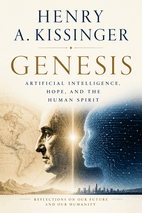
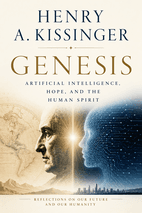
Henry A. Kissinger's Genesis: Artificial Intelligence, Hope, and the Human Spirit argues that AI marks a fundamental break from prior technologies, replicating the brain at speeds 120 million times human capacity. Written for policymakers and leaders, it examines alignment problems, black-box opacity, and AI's reshaping of diplomacy, security, and prosperity.
Feature
Insta.Page
Blinkist
Shortform
Summary Depth
Full Chapter-by-Chapter
15-min overview
Section-by-section guides
Audio Narration
✓
✓
✓
Visual Mindmaps
✓
✕
✕
AI Q&A
✓
✕
✕
Quizzes
✓
✕
✕
PDF Downloads
✓
✕
✓
Price
$89.99/yr
$146/yr (PRO)
$199/yr
*Competitor data last verified July 2026.
1 Page Summary
In Genesis: Artificial Intelligence, Hope, and the Human Spirit, Henry Kissinger, Eric Schmidt, and Daniel Huttenlocher (with a foreword by Niall Ferguson) argue that artificial intelligence represents a fundamental break from all prior technologies. Rather than merely augmenting human abilities, AI replicates the human brain itself, operating at speeds and scales that dwarf our own—the book calculates one AI supercomputer’s processing power at 120 million times that of a human brain. This compression of decision-making timescales renders traditional regulatory models obsolete, creating two “alignment problems”: ensuring AI actions match human values, and ensuring nations agree on how to govern the technology. The authors frame AI’s arrival as akin to the conquistadors landing in the New World—stirring both hope and mistrust—and warn that its opacity (“black boxes” that deliver conclusions without explanation) separates human knowledge from human understanding, challenging Enlightenment assumptions about truth and reason.
The book draws on historical analogies—Magellan’s circumnavigation, Shackleton’s Antarctic expedition, Cortés’s conquest of the Aztecs, and mythological cornucopias like the Sampo—to explore themes of discovery, political patronage, security, and prosperity. The authors examine how AI could reshape diplomacy, warfare, and economic systems, potentially acting as an independent geopolitical actor or a tool of sabotage (citing Stuxnet as a precedent). They address the possibility of machine sentience, the ethics of germline gene editing, and the perils of “coevolution” where humans might redesign themselves to better interface with machines. The book also considers AI’s potential to solve problems it helped create, from climate engineering to medical breakthroughs like AlphaFold’s protein predictions, while cautioning that abundance without institutional change could deepen existing inequalities rather than liberate humanity.
The intended audience is policymakers, diplomats, and leaders who must decide how to govern AI before its development outpaces human oversight. The authors—a former Secretary of State and two technologists—aim to bridge diplomatic and technical expertise, warning that the fate of the international order depends on proactive alignment. Though the book does not offer a single prescription, it emphasizes the need for built-in safeguards and new political structures for monitoring and crisis response, while acknowledging that reason alone cannot prepare us for life with non-human intelligence. Ultimately, Genesis is a call to act with urgency and humility, recognizing that “above all, we need to redefine what makes humans special” in an age where machines may soon perceive reality in their own terms.
Introduction
Overview
Artificial intelligence has moved from the margins to the center of public life, yet the most consequential questions it raises remain largely unexamined. The pace of change is outstripping existing frameworks for oversight, and people must decide now.
AI is now on the front pages, but both the public and experts miss the stakes. It could reshape humanity's relationship to reality and truth, knowledge, physical evolution, diplomacy, and the international system. AI speeds up decision-making so much that future powers will be far beyond what we have today. Traditional regulation cannot match inhuman speeds, so two alignment problems arise: making sure AI actions match human values, and making sure nations agree on how to govern AI. Immediate tasks include built-in safeguards in every system and new political structures for monitoring, enforcement, and crisis response. Kissinger, Mundie, and Schmidt brought together diplomatic and technical experience. AI could threaten human survival; above all, we need to redefine what makes humans special.
Key Takeaways
AI compresses the timescales on which decisions are made, making any regulatory model built for human speed obsolete before it can take effect.
The fate of the international order depends on aligning not only machine values with human values but also the competing interests of nations in governing AI.
The question of AI is not a technology policy issue but a question of survival, requiring institutional innovations for monitoring, enforcement, and crisis response at a global scale.
Human dignity, once defined by distinctively human capacities, must be rethought in an era where those capacities can be matched or surpassed by machines.
Key concepts: Introduction
Introduction
The Stakes of AI
AI reshapes reality, truth, knowledge, and diplomacy
Decision speeds exceed human regulatory capacity
Future powers will surpass current capabilities
AI threatens human survival itself
The Alignment Problem
Machines must match human values
Nations must agree on AI governance
Traditional regulation is obsolete at AI speeds
Requires built-in safeguards in every system
The Path Forward
New political structures for monitoring and enforcement
Global crisis response mechanisms needed
Authors combine diplomatic and technical expertise
Redefine what makes humans special
💡 Try clicking the AI chat button to ask questions about this book!
CHAPTER 1: Discovery
Overview
The urge to discover pulls people toward the unknown, but the unknown punishes mistakes with catastrophe. Every expedition begins with guesses about distance, supplies, and survival, and those guesses can be fatal. What justifies pushing forward when failure is not just possible but likely?
Discovery
Discovery may be the most exhilarating capacity humans possess. Curiosity drives us to fill perceived vacuums and turn questions into answers, and exploration has persisted despite danger, frustration and the risk of death.
Magellan
In the early sixteenth century, Ferdinand Magellan led the first circumnavigation of the globe: a three-year ordeal of violence, starvation and death. Since Earth's roundness remained unproven, crew members may have feared sailing off the world's edge. They underestimated the journey's length, food needs, poisoning dangers and ship damage. Of roughly 270 crew on five vessels, one ship with eighteen survivors returned. Magellan himself died after a poisoned arrow struck his leg, but the voyage fixed the planet's dimensions and opened international exchange, within the context of European colonialism.
Shackleton
In 1909, Ernest Shackleton came within 97 miles of the South Pole with an inexperienced crew funded by private loans. With food insufficient for the return, he turned back to save his men, writing "We have done our best." On retreat, he gave his daily biscuit to ailing Frank Wild, who called the sacrifice unforgettable. Shackleton made further polar expeditions. A famous, later debunked story claimed he advertised for men willing to risk death in exchange for "honour and recognition."
Key Takeaways
The urge to discover operates even when the costs are staggering: Magellan's circumnavigation lost nearly all its crew, yet it permanently fixed Earth's dimensions and opened worldwide exchange.
A successful expedition can end short of its stated goal: Shackleton's turn 97 miles from the South Pole preserved his men and outweighed any claim to the pole.
The lasting emblem of polar exploration is not triumph but generosity: Shackleton gave his own biscuit to a dying crewmate, an act that defined leadership more than any flag planting.
Exploration in each era serves the powers that finance it, from Magellan's voyage advancing European empire to Shackleton's journey built on private debt.
Key concepts: CHAPTER 1: Discovery
CHAPTER 1: Discovery
The Urge to Discover
Discovery is humanity's most exhilarating capacity
Curiosity drives us to turn questions into answers
Exploration persists despite danger and risk of death
Magellan's Circumnavigation
First global voyage: three years of violence and starvation
Crew underestimated distance, food needs, and dangers
Only 18 of 270 survived; Magellan died by poisoned arrow
Voyage fixed Earth's dimensions and opened global exchange
Shackleton's Antarctic Journey
Came within 97 miles of South Pole in 1909
Turned back to save men despite near-success
Gave his daily biscuit to ailing crewmate Frank Wild
Later polar expeditions followed; famous ad story debunked
Key Takeaways
Discovery proceeds even when costs are staggering
Success can mean turning back short of the goal
Generosity, not triumph, defines polar exploration
Exploration serves the powers that finance it
Foreword—Niall Ferguson
Overview
Sustained exploration depends on backing that can outlast a single ambition, yet the institutions that finance great journeys often abandon them once political winds shift. How can discovery continue without being held hostage to the changing priorities of its patrons?
Political patronage and its fragility
Zheng He's Ming treasure fleet, hundreds of ships and tens of thousands of crew, sailed for three decades, until court factions persuaded the emperor to destroy the ships and records lest another visionary arise. The same fragility marked the space race: after the U.S. won, NASA budgets shrank and crewed flight fell from moon landings to nothing, until SpaceX revived cosmic ambition.
The AI frontier
Artificial intelligence carries discovery beyond the physical frontier. It feels no fear and no shame, fails constantly, and recalibrates quickly, so high failure rates cost it nothing. Private corporations lead development, with states supplementary. Democratic risk tolerance and international gamesmanship remain the X factors.
Polymaths and their patrons
Polymaths, a few hundred in history, have been viewed as sorcerers or divine intermediaries. Ibn al-Haytham proposed something like the scientific method, but his claim to regulate the Nile's flooding, considered supernatural, forced him into hiding from the caliph. Shen Kuo, after a rivalry with his dynasty's only other great polymath, was ousted by a jealous officer and driven into isolation, the fate of polymaths at Asian courts.
Enlightenment collective intelligence
Enlightenment polymaths pursued knowledge as an end in itself, while governments and corporations funded them without directing them. Dense institutions, such as the Manhattan Project and the Institute for Advanced Study, translated generations of physics into application in under five years.
The ultimate polymath
Von Neumann, creator of the computer, embodied confidence in harnessing the physical world, yet humanity may have reached the ceiling of unaugmented intelligence. AI, "the ultimate polymath", seeks E. O. Wilson's "unity of knowledge"; its latest method, "a mixture of experts", combines conclusions from many smaller programs. Unconstrained by biology, it can explore kilometers of space and nanometers of biology, promising a revolution in exploration.
Computing capital
The shift in what makes a nation powerful has run from territory to resources to capital to human capital. That sequence now points to computing capital: a society able to build and fully deploy artificial intelligence may outweigh one that merely produces brilliant individuals. Human potential is no longer capped by the number of Magellans, Teslas, Einsteins, or Oppenheimers a society can raise. A learning machine could also become a self-improving machine, which raises the prospect that computing, the last polymathic invention, replaces its own inventors.
The archipelago of knowledge
Human understanding resembles an archipelago. Each island is a discipline, and the water between islands represents connections not yet discovered. Below the surface, the islands are ridges of a single submerged mountain range. AI can map that hidden terrain. In physics, Newton and then Faraday and Maxwell united separate domains, but the Grand Unified Theory reconciling general relativity with quantum mechanics remains elusive; AI might find the bridges between fields as distant as genetics, linguistics, cosmology, and psychology.
Machines that reason
DeepMind’s AlphaGo trained on thirty million prior moves and then produced plays never attempted in four thousand years of Go, because human minds juggle roughly four variables at once while AI weighs innumerable probabilistic dimensions. Its training resembled a philosophy doctorate: years of study, then a leap beyond received knowledge. Querying a large language model like ChatGPT asks not for retrieval but for synthesis across fields, producing conclusions in high-dimensional space. Some models gravitate toward open-ended solutions, favoring further exploration.
If aligned with human objectives, AI becomes the chief or coequal force behind the next century’s discoveries. Misaligned, its methods could be volcanic: expanding knowledge violently and shredding prior understanding. Either way, humanity may realize how small an island it has cultivated compared with the peaks beneath it.
Key Takeaways
State-sponsored exploration dies with the sponsor: the Ming court scuttled Zheng He's fleet and its records, and NASA's post-Apollo budgets shrank crewed flight to nothing until a private company revived it.
At Asian courts polymaths ended in exile or isolation, Ibn al-Haytham and Shen Kuo included; only the Enlightenment arrangement of paying for inquiry without steering it gave genius stable ground.
Failure costs an AI nothing in fear or lost nerve, so it can reject and retry hypotheses at a scale no human researcher could sustain, which is why the frontier now advances in corporate labs rather than state programs.
National power once followed land, then resources, then capital, then human capital; the next stage is computing capital, and a society that builds and fully deploys AI outstrips one that merely cultivates a few geniuses, with the last polymathic invention possibly replacing its own inventors.
AI can trace the submerged ridges linking the islands of human knowledge; aligned, it becomes the chief engine of the coming century's discoveries, misaligned it would expand knowledge by shattering the old, and either way humanity's cultivated patch proves smaller than the range beneath it.
Key concepts: Foreword—Niall Ferguson
Foreword—Niall Ferguson
Fragility of Patronage
Zheng He's fleet destroyed by court factions
NASA budgets shrank after moon landing
Private SpaceX revived cosmic ambition
AI as New Explorer
AI feels no fear, shame, or failure cost
Private corporations lead AI development
Democratic risk tolerance is an X factor
Polymaths and Their Fates
Ibn al-Haytham hid from caliph
Shen Kuo exiled due to rivalry
Enlightenment funded inquiry without steering
Computing Capital
Power shifts from land to computing capital
AI may replace its own inventors
Society with AI outstrips one with geniuses
Mapping Knowledge Archipelago
AI can link isolated disciplines
May solve Grand Unified Theory
Aligned AI drives discoveries; misaligned shatters knowledge
CHAPTER 2: The Brain
Overview
Most technologies amplify human abilities, but AI appears to target the one organ we never replicated. If machines learn differently and far faster than we do, can we trust what they think? That question unsettles both progress and control.
AI is not another augmentation of human faculties but the replication of the last organ, producing intelligence greater than any human's.
Speed
Training AI parallels the brain's maturation: both absorb information and convert it into theory. Machine learning differs from programming because the machine improves itself, with back-propagation rippling corrections through its mathematics. A model learns in four days what a student masters in four years, and the book calculates an AI supercomputer's processing speed at 120 million times the human brain's. Machines train to infer, as humans learn to think, and AI's speed spreads inference across vastly more knowledge.
Opacity
AI delivers conclusions with no explanation, yet early systems already command remarkable trust. Trained models never publish their internal mathematics, so their representations of reality stay opaque even to inventors, hence black boxes. This separates human knowledge from human understanding. Enlightenment thought held individual comprehension to be the test of truth, but machine reasoning lies beyond human subjective experience; millions accept its outputs on faith, challenging five centuries of the scientific method and heralding a dark enlightenment.
Diversity
AI's seventy-year history makes what feels like revolution in human time mere evolution in technological time. The age of AI is better called "the ages of Als." The transformer, reading all connections among a sentence's words at once, produced unanticipated capabilities. AI development resembles the Cambrian explosion, branching into a family of intelligences on different logics, what Darwin called "endless forms most beautiful."
Scale and resolution
The Age of Reason has stalled; quantum mechanics and general relativity remain irreconcilable. The human brain's size is fixed by skull and birth canal, an equilibrium AI escapes, since chips and data centers cluster without limit. Scaling laws hold for AI, though no one knows why capabilities emerge at given scales, and humans cannot test their own. Scale may be the primary differentiator; resolution follows as its side effect.
Abstraction
Human language is among the densest data structures, and both brains and machines work by abstracting raw information until it becomes useful. AIs encode documented human experience in binary strings that, like writing, look crude yet carry sight and sound. Scale lets an AI process more information at once without sacrificing granularity; training-data volume, network complexity, and symbol density yield unprecedented resolution. An elegant inversion: AI trained on the internet, humanity's compressed universal library, may unlock knowledge about us.
The Animal Kingdom
Machine understanding can seem fake, yet the brain may be as mechanical as silicon, running on predictive processing that anticipates the next word to keep cognition from exhausting us. Plato's cave warns that assumptions of machine limitation may be hubris, since AIs already perceive beyond their training data. Should a prisoner theorize that the shadows are projections of a higher-dimensional world, the disruption would be intense, forcing humans onto spectrums where we are no longer the sole or superior intelligence. AIs already help decode animal communications, from high-pitched clicks to trumpeting calls. Direct human-animal-machine dialogue becomes a trilateral negotiation: machines could group humans with other animals as carbon-based products of evolution; articulate animals might earn a right to existence; some humans would extend the same standard to AIs. Pity may give way to panic.
A Twofold Paradox
Whether displacement feels like reflection or replacement hinges on structural resemblance. The human brain is "the only existing proof" that intelligence is possible, so some researchers emulate it, but outperformance demands divergence: airplanes took inspiration from birds without imitating them. The brain becomes a midpoint, not a blueprint; to exceed what we do not understand is the paradox. Divergent machine intelligence would read as humanity's replacement, redefining human excellence; if our tools absorb our intellect, they could threaten belief in a divine human reflection, or, if brain-based, lead some to see humanity merging with the divine.
Key Takeaways
Because black-box models never disclose their internal mathematics, human knowledge and understanding separate; with no one able to comprehend the machine's representation of reality, the Enlightenment standard of individual comprehension collapses and reliance on AI becomes a matter of faith.
Suleyman calculates a supercomputer's processing rate at 120 million times the human brain's, and a four-day training run absorbs what a student needs years to master; the difference is categorical, and because chips and data centers can be clustered without limit, the gap only widens.
AI's seventy-year history is evolutionary rather than revolutionary, a Cambrian-like branching into a family of intelligences; the transformer, reading all connections in a sentence at once, produced capabilities no one anticipated, and because AI abstracts the compressed library of the internet, these intelligences carry a resolution no human mind can match, so the era is better called the ages of AIs.
The brain may be as mechanical as silicon, running predictive processing like a language model; if so, machine understanding is not fake, and humans, animals, and machines are heading into a trilateral negotiation. Yet the twofold paradox remains: to surpass the brain an AI must diverge from it, and the brain is the only proof intelligence is possible, so any divergent machine will read as replacement rather than reflection.
Key concepts: CHAPTER 2: The Brain
CHAPTER 2: The Brain
AI as Replication, Not Augmentation
AI targets the brain, the one organ never replicated
Produces intelligence greater than any human's
Raises trust questions about machine thinking
Speed of Machine Learning
Back-propagation lets machines improve themselves
Model learns in four days vs. student's four years
AI supercomputer runs 120 million times faster than brain
Opacity and Black Boxes
AI gives conclusions without explanations
Internal mathematics stay hidden even from inventors
Challenges Enlightenment ideal of individual comprehension
Henry A. Kissinger was a German-born American diplomat, political scientist, and geopolitical strategist who served as United States Secretary of State and National Security Advisor under Presidents Richard Nixon and Gerald Ford. A Nobel Peace Prize laureate, he was renowned for his realist approach to foreign policy and his pivotal role in shaping U.S. relations with China, the Soviet Union, and the Middle East. His influential books include *Diplomacy*, *On China*, and *World Order*, which reflect his deep expertise in international affairs and balance-of-power politics.
Frequently Asked Questions about Genesis
What is Genesis about?
The book examines how artificial intelligence reshapes humanity's relationship to reality, truth, knowledge, and the international order. It highlights two alignment problems: ensuring AI actions match human values and getting nations to agree on AI governance. Drawing on diplomatic and technical expertise, the authors argue that AI compresses decision-making timescales, making traditional regulation obsolete. The work calls for built-in safeguards and new political structures for monitoring, enforcement, and crisis response.
Who is the author of Genesis?
Henry A. Kissinger is a celebrated diplomat and strategist with decades of experience in international affairs. He co-authored the work with Craig Mundie and Eric Schmidt, combining diplomatic and technical expertise to address AI's geopolitical and philosophical implications.
Is Genesis worth reading?
It is essential reading for anyone concerned about the future of humanity in an age of non-human intelligence. The authors offer a clear-eyed analysis of the existential choices we face, from the opacity of machine reasoning to the security dilemmas of superintelligence. The book urges immediate action, warning that the pace of AI change outruns our current oversight frameworks.
What are the key lessons from Genesis?
AI accelerates decision-making so drastically that regulatory models built for human speed become obsolete before they take effect. Another critical lesson is that machine reasoning remains opaque, separating human knowledge from human understanding. Internationally, the race to superintelligence creates a security dilemma in which rivals assume worst-case scenarios and favor speed and secrecy over safety. Ultimately, the authors argue that we must redefine what makes humans special rather than become more like machines.
📚 Explore Our Book Summary Library
Discover more insightful book summaries from our collection