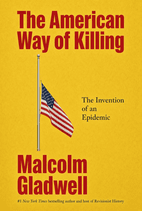
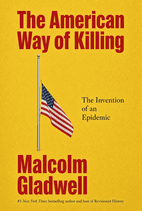
What is the book The American Way of Killing about?
Malcolm Gladwell's The American Way of Killing argues that the United States suffers lethal violence unmatched by its wealthy peers, tracing this gap through history, trauma care, and programs like Chicago's BAM. Written for general readers willing to reconsider assumptions about crime, guns, policing, and race in America.
Feature
Insta.Page
Blinkist
Shortform
Summary Depth
Full Chapter-by-Chapter
15-min overview
Section-by-section guides
Audio Narration
✓
✓
✓
Visual Mindmaps
✓
✕
✕
AI Q&A
✓
✕
✕
Quizzes
✓
✕
✕
PDF Downloads
✓
✕
✓
Price
$89.99/yr
$146/yr (PRO)
$199/yr
*Competitor data last verified July 2026.
1 Page Summary
Malcolm Gladwell's The American Way of Killing: The Invention of an Epidemic argues that the United States suffers lethal violence on a scale unmatched by its wealthy peers, and that this gap persists because the problem is widely misread—even by those with the evidence in front of them. Through figures like Dr. Abdullah Pratt, who lost fifteen close friends to murder while growing up in Chicago, and the juxtaposition of American cities against London, Toronto, Paris, and Berlin, Gladwell shows that the odds of dying by another person's hand vary wildly between places that look almost identical. He traces this disparity across history and geography, from the Stono Rebellion of 1739 and the racial fears it entrenched to the lethal triad of trauma care that determines who survives a gunshot wound, insisting that the usual explanations leave prevention stuck.
What distinguishes the book is Gladwell's method of interrogating the premises beneath America's entrenched debates. He examines the gun argument and finds it dishonest not because anyone lies but because the two sides proceed on false premises, and he challenges the widespread belief that the country is over-policed by noting that Berlin employs twice as many officers as the LAPD for a nearly identical population. He profiles the University of Chicago Crime Lab, founded after the National Academy of Sciences concluded that nobody knew how to prevent gun violence, and the "Becoming a Man" program on Chicago's West Side, which targets the moments before violence erupts rather than emotions alone. He also revisits the case of Sir John Knight, showing that a law which worked for a century was struck down for reasons unrelated to its effectiveness, and closes with a footnote recording the 1994 killing of seventeen-year-old Jay Brandon Young III, whose hour-long ambulance ride illustrates how luck and distance decide who dies.
The book is written for general readers willing to reconsider their assumptions about crime, guns, policing, and race in America, and it draws on Gladwell's signature blend of narrative reporting, historical anecdote, and counterintuitive data. By moving between a shooting range outside Raleigh, a trauma bay at Johns Hopkins, a Chicago classroom, and a Dodge City reenactment where tourists cheer eight staged bodies in the street, he offers readers a framework for understanding why the country's enormous wealth and expertise have not closed the violence gap—and where intervention might actually begin.
INTRODUCTION: Fifteen Funerals
Overview
In one wealthy country, a young person can lose much of a close circle to murder by early adulthood. In a nearby country, a childhood can pass without a single firsthand encounter with lethal violence. The two places can look almost identical, yet the odds of dying by another person's hand are wildly different. That gap is the problem.
Abdullah Pratt is a physician at the University of Chicago Medical Center. He returned to practice in the same struggling neighborhood where he grew up. He wanted to be a doctor from childhood and trained in programs where he was often the only African American, learning he could compete. Asked how many people from his childhood have died, he counts thirty or forty acquaintances, then narrows to close friends: fifteen. His older brother Rashad, his best friend and protector, was killed trying to stop some kids from stealing a car. His closest friend was murdered. Three close teammates from one high school team were murdered, along with young people he mentored. Many died in the trauma bay. Some he pronounced himself and then told their families. About five times in three years he has delivered that news, and only once did it force him to stop working the shift.
The Canada of His Childhood
Growing up in rural Canada in the 1970s, Gladwell learned about America from Life magazine: rich, enormous, and above all dangerous. In 1975, Canada recorded 701 murders among 23 million people. New York City alone recorded 1,645 homicides. The American murder rate remains nearly three times Canada's and five times higher than the United Kingdom and much of Western Europe. The gap has fluctuated. US rates peaked in the 1980s and early 1990s at roughly 10 per 100,000, then as much as ten times Europe's. Today they are back to 1960 levels and three to six times Western Europe's.
The puzzle is that two countries with the same cars, television, music, food, and God can differ so much. Buffalo and Toronto, Seattle and Vancouver, are nearly indistinguishable. Yet one boy grows up with no firsthand lethal violence while another buries more than a dozen close friends by thirty. Why?
The Elephant and Its Parts
The book addresses that question. The book has three parts:
Part One concerns the fundamentally dishonest way Americans talk about gun violence.
Part Two concerns how Americans misdiagnose the nature of the violence plaguing their streets.
Part Three concerns how reckless the country's chosen path has become.
It is not a criminology textbook but a series of stories about people, places, and moments. The parable of the blind men and the elephant captures the problem: each touches a different part and calls the elephant a snake, a tree, or a spear. Everyone seizes on a different statistic or fact. The book offers chapters on the trunk, the leg, and the tusk, hoping that seeing all the parts reveals the whole elephant and shows the problem can be solved.
A, B, C
Pratt was about to leave for a training session at Parkway Gardens, which he calls the Wick, or Old Block, the most notorious housing project in his city. His audience was a group of fourth-graders. He begins with a question: how many have lost a father, mother, or brother to gun violence? At that school every hand goes up, which is rare. Usually it is 50 or 60 percent, already high. The children name their brother, sister, father, both uncles. Asked who would have helped if they knew how, every hand goes up again. He teaches them to be first responders with three steps:
A is alert 911: call, say what happened, give the location, and note the shooter has left.
B is bleeding: find the wound, even if it means ripping open clothing, because pressure in the wrong place can cause more harm.
C is compress the wound: without gauze, use a tampon, maxi pad, or absorptive pad to pack it and buy time.
He hands out trauma kits. The goal is not to make trauma surgeons. It is to give kids confidence to act, call early, and stay with the victim while 911 walks them through it. That summer a student used her kit when someone was shot outside her house. A doctor who has buried fifteen close friends and his older brother spends an afternoon off teaching fourth-graders to stabilize a gunshot wound. No other developed country does this. The question is why.
Key Takeaways
A country that shares its cars, music, food, and religion with its neighbor can still be many times more lethal. American violence is a homegrown problem, not a permanent fact of modern life.
Any explanation built on a single statistic describes only one part of the problem. The country will keep failing at prevention until the parts are assembled into a whole.
The failures come in three mutually reinforcing kinds: dishonest public language about guns, a misdiagnosis of what drives street violence, and a path the country has chosen that is morally reckless.
Teaching fourth-graders to save a classmate's life shows how much has been lost, not a solution, since no other developed country requires it of its children.
Gladwell puts the American homicide rate at three to six times Western Europe's, back near its 1960 level after a peak in the 1980s and 1990s. The country is living with a lasting problem, not a temporary crisis.
Key concepts: INTRODUCTION: Fifteen Funerals
INTRODUCTION: Fifteen Funerals
The Lethal Gap
US murder rate 3-6 times Western Europe's, back to 1960 levels
Similar countries differ wildly in lethal violence odds
American violence is homegrown, not a permanent fact
Abdullah Pratt's Loss
Physician returned to practice in his struggling childhood neighborhood
Fifteen close friends and brother Rashad murdered
Delivered death news to families about five times in three years
The Elephant Problem
Single statistics describe only one part of the problem
Book has three parts: dishonest gun talk, misdiagnosis, reckless path
Seeing all parts reveals the whole and shows solvability
Every hand rises for lost family; no other developed country does this
Shows how much has been lost, not a solution
Three Interlocking Failures
Dishonest public language about guns
Misdiagnosis of what drives street violence
A morally reckless path the country has chosen
💡 Try clicking the AI chat button to ask questions about this book!
CHAPTER ONE: A Shooting Lesson
Overview
The American argument over guns has run for generations without either side convincing the other. Sincerity is not the missing ingredient. The harder question is whether the two sides are even arguing about the same thing.
A Lesson at the Range
Outside Raleigh, North Carolina, Greg Wallace, a law professor and competitive shooter, handed over a custom-built AR-15 and set up targets shaped like a human head and torso. The first shots missed: feet wrong, eye off the target, unprepared for the recoil. After corrections, a neat hole appeared in the torso, a shot Wallace judged would have put a man down.
A Conversation on False Premises
No other country has such an array of firearms owned by so large a share of its people. The fight over whether guns cause America's ills or merely signal them has turned dishonest, not because anyone lies, but because a conversation can proceed on false premises, treat something as consequential when it is not, or dodge a hard conclusion through laziness and indifference. Ask which of London, Toronto, Chicago, New York and Paris leads in homicide and intuition lands roughly right: Chicago, New York, Toronto, Paris, London. Ask about robbery and it fails, since the order nearly reverses: Paris, London, Chicago, New York, Toronto. Robbery is a crime; homicide is violence. Franklin Zimring and Gordon Hawkins drew that line in their mid-1990s book Crime Is Not the Problem, comparing Los Angeles with Sydney, where crime matched and violence did not. America's problem is violence.
What a Bullet Does
Babak Sarani, who runs the trauma center at George Washington University Hospital, described a nine-millimeter round hitting a liver as a hole with a blast effect around it, like Swiss cheese. A .44 turns the organ to pulp, so the patient bleeds faster and time runs out sooner. A rifle round takes the tissue away, like a cliff edge bleeding like a waterfall.
The Presidents and the Ban
Reagan was the first president to speak out against assault rifles; in 1994 he joined Carter and Ford in backing a ban that Clinton signed and that expired in 2004. Obama could not restore it after Aurora in 2012 and Biden could not after Buffalo and Uvalde, where ten people were killed in a grocery store and nineteen children and two teachers died at a school, in spring 2022.
The LEGO of Modern Rifles
Developed in the 1950s and named for ArmaLite Rifle, the AR-15 is lighter than a World War II rifle, with less recoil, less flash and lighter ammunition. Wallace called it "the LEGO of modern rifles": a platform rather than one gun, taking an optic, a trigger, a bolt carrier, a suppressor, a pistol grip, a forward grip, an adjustable stock and detachable magazines, up to a hundred-round drum.
Sugarmann's Word
Josh Sugarmann of the Violence Policy Center popularized the term assault weapon for civilian versions of military firearms, and his 1988 report counted on public confusion between machine guns, banned for civilian use for a century, and semiautomatics, which fire once per trigger pull. Wallace emptied a thirty-round magazine in 6.5 seconds; a military version held down would have fired at least a hundred in the same span.
What the Ban Actually Bans
The Senate bill introduced in 2025 targets parts rather than a class of rifle:
Pistol grip and forward grip
Folding, telescoping or detachable stock
Grenade launcher
Barrel shroud
Threaded barrel
Eight pages of banned models follow, then a ninety-six-page Appendix A of semiautomatic rifles that cost, weigh, handle and fire the same but lack the cosmetic features. This is gun control theater.
What the Evidence Shows
A 2025 University of Colorado study of mass shootings from August 1966 to November 2023 found 7.1 percent involved an assault weapon alone; handguns appeared in 78 percent. Sarani and ten colleagues read 232 autopsy reports from twenty-three mass shootings: rifles hit more victims, but handgun victims were more likely to die.
Why Handguns Kill More
Sarani's answer was proximity. A handgun lets a shooter close the distance unseen, and once he is on top of a victim with multiple magazines, he can fire many rounds from close range, where accuracy climbs, putting bullets into the chest, the belly, possibly the head. A rifle announces itself: the victim generally sees the shooter coming and may run. A rifle's high velocity also tends to drive the victim to the ground, dropping the shooter's accuracy for a second hit. So people were less likely to be struck multiple times by a rifle than by a handgun.
The damage a gun does in the real world, Sarani argued, is not only a function of its capacity to inflict harm. How it is used, and the situations the shooter finds himself in, matter just as much. The single-minded focus on assault rifles made no sense to him. Waving a magic wand to make every assault weapon in the United States disappear would not solve mass shootings. The problem is not assault rifles. The problem is guns.
The Scale of the Problem
The University of Colorado study counted every mass shooting in the United States across the more than half a century from 1966 to 2023: 184 incidents and 1,342 deaths. No other country comes close to a fraction of that. Yet the same fifty-seven-year span saw about 2 million gun-related deaths in the United States. In a typical month, firearms kill more Americans than mass shootings have killed in the past half century.
The Magazine Question
One frequent argument against assault rifles is that detachable magazines let a shooter swap in an extra-large magazine holding thirty or forty bullets, firing dozens without pausing to reload. At the range, Wallace showed why he considered the whole issue a red herring. Holding the gun with one hand, he reached for a spare magazine on his belt and replaced the empty one in a single fluid motion, a couple of seconds. His point: firing twenty times from one big magazine differs very little in practice from firing ten, changing magazines, and firing ten more. A couple of seconds would not give a bystander time to subdue the shooter.
A more persuasive case comes from the criminologist Gary Kleck, who combed through a large sample of some of the worst mass shootings and found that most take a very long time from start to finish. The shortest incidents run three to four minutes, and some drag on for over an hour. Throughout, shooters tend to fire at a leisurely pace, anywhere from one shot every 2.4 seconds to one shot every 15.8 seconds. Large magazines are an advantage precisely because they let someone fire many bullets in a very short period, but the evidence says mass shooters prefer to take their time.
A Dishonest Conversation
A conversation turns dishonest when either side pretends something is consequential when it is not, avoids the right conclusion just because it is difficult, or through laziness or indifference blinds itself to the truth. That is the conversation about guns in America.
Key Takeaways
America's gun problem is a violence problem rather than a crime problem: homicide separates this country from its peers while robbery and other offenses do not, so policies aimed at crime in general will not reach it.
The Senate bill regulates silhouette rather than capability, and its own lengthy appendix of rifles that match the banned models in price, weight and operation undercuts the case for it more effectively than any opponent could.
In a mass shooting the handgun is the more lethal instrument, since it can be carried in close and fired over and over from a range where nearly every round lands.
Magazine restrictions promise very little: shooters stretch their attacks across minutes or hours and fire at a measured pace, giving up only a couple of seconds to reload.
Removing every assault weapon from the country would leave the toll largely where it is, since the University of Colorado count of 1,342 mass-shooting deaths across fifty-seven years sits beside roughly two million gun deaths in the same period; firearms as a whole are the target.
Key concepts: CHAPTER ONE: A Shooting Lesson
CHAPTER ONE: A Shooting Lesson
The Shooting Lesson
Greg Wallace teaches shooting with a custom AR-15
Human-shaped targets; first shots miss due to stance and recoil
Corrected shot hits torso, judged lethal
False Premises in the Gun Debate
US has unique firearm ownership; debate is dishonest via false premises
Crime vs. violence: Zimring and Hawkins distinguish the two
America's problem is violence, not crime
What Bullets Do to Bodies
9mm liver wound: hole with blast effect like Swiss cheese
.44 turns organ to pulp; rifle takes tissue away
Rifle wounds bleed like a waterfall, time runs out faster
Assault Weapons Ban History
Reagan, Carter, Ford backed 1994 ban; Clinton signed; expired 2004
Obama and Biden failed to restore after Aurora, Buffalo, Uvalde
Uvalde: 19 children and 2 teachers killed in spring 2022
The AR-15 Platform
Developed in 1950s; lighter, less recoil, less flash than WWII rifles
Wallace: 'LEGO of modern rifles'—a platform, not one gun
Sugarmann popularized 'assault weapon' by conflating machine guns and semiautos
2025 Senate bill bans parts: pistol grip, folding stock, grenade launcher, etc.
96-page appendix lists functionally identical rifles lacking cosmetic features
Evidence and the Real Problem
Assault weapons in 7.1% of mass shootings; handguns in 78%
Handguns kill more due to proximity and accuracy; rifles announce themselves
2 million gun deaths in 57 years; monthly gun deaths exceed mass shooting toll
CHAPTER TWO: The Slave Owner’s Lament
Overview
In early September 1739, about two dozen enslaved men, many fresh from Angola and Kongo, were digging canals off the Stono River in South Carolina. Rice profits were so high that planters sometimes found it cheaper to work slaves to death and buy replacements than to keep them alive. Sunday rest was suspended because the ditches were urgent. Their overseer left early. At day's end they crossed to Hutchenson's store, broke in, and killed two men. Jemmy emerged as leader. They looted rifles, ammunition, and alcohol, then marched with drums and cries of "Liberty." Other enslaved people joined. They spared owners they judged kind and burned the houses of those they did not. By morning they were over a hundred strong. Lieutenant Governor William Bull spotted them; he had warned that South Carolina's slaves, the colony's chief support, might become its enemies or masters. A companion rounded up men at Willtown Presbyterian. The rebels were defeated at Pons Pons Road near Jacksonboro.
Every white planter knew of the Stono Rebellion. In South Carolina, slaves were over 70 percent of the population; along the Stono River, the ratio of Black to white on plantations reached ten to one or even fifteen to one. The historian Peter Charles Hoffer described the planter as a man who acted the good father but remained anxious.
Mexico is the only major country besides the United States with a constitutional right to bear arms. Its Article 10, written in 1917, is clear: inhabitants may keep arms at home for protection and legitimate defense, except those prohibited by federal law or reserved for the military. Federal law sets the cases, conditions, requirements, and places for carrying weapons.
The U.S. Second Amendment, written in the late eighteenth century, is a puzzle. It opens with a clause about a well-regulated militia being necessary to a free state, then adds a clause protecting the right of the people to keep and bear arms. The two parts have different subjects, which is why the sentence sounds so awkward. That changed in 2008 with District of Columbia v. Heller. Dick Heller, a DC police officer, wanted to keep a handgun at home, but DC law forbade it. If the U.S. had an Article 10, the case would have been easy. Instead, the justices had to be grammarians.
At oral argument on March 18, 2008, Walter Dellinger argued the amendment was militia-related. Chief Justice John Roberts asked why it says "the right of the people" if limited to state militias. Dellinger said the people and the militia were synonymous. Anthony Kennedy said the two parts could be separated, with one reaffirming the militia and the other guaranteeing a personal right. Antonin Scalia saw no contradiction. The court became a grammar class.
James Madison wrote the Second Amendment. He was precise, almost persnickety, about language. To understand him, one can search massive databases of digitized historical documents. The Australian linguist Kari Sullivan analyzed four such databases spanning 650 years. She found 1,363 sentences with being clauses. In the past hundred years, opening being clauses whose main clause has a different subject have become extremely rare. Madison used being clauses constantly: Sullivan found 976 examples. Then she asked whether Madison ever used a being clause as a separate thought from the clause it modified. Never. No one in the late eighteenth century did. That construction became ungrammatical over a hundred years before the Second Amendment; people stopped writing it in the 1760s. So the Second Amendment means: the right to keep and bear arms shall not be infringed because militias are necessary to a free state. It is about militias.
Madison was from Virginia, the largest slave-owning state. He grew up on a plantation; his father owned one hundred slaves, and his grandfather was allegedly poisoned by three slaves. Madison knew of the Stono Rebellion and was as petrified as any white planter. For such planters, militias were of special importance. Militias were an English invention, rooted in the medieval posse comitatus, a community force. This was long before modern police departments. The historian Sally Hadden, author of Slave Patrols: Law and Violence in Virginia and the Carolinas, traces the militia to the sheriff. In every county and shire, the sheriff had no troops and no staff, only himself. For a kidnapping or a stolen horse, he issued a hue and cry, summoning every able-bodied person nearby to chase the accused. That informal protection grew into the militia, an organized local force for emergencies, carried to the New World and used against Native American attacks.
In the South the patrol added a second job. Enslaved people were hardest to control at night, slipping away to visit friends on other properties; a curfew had to be enforced with passes, and violators were whipped. All able-bodied men took turns patrolling mapped routes under rules of engagement, and the man on patrol was the guy next door, well placed to know who might run.
A South Carolina planter named Samuel McGowan wrote to his governor that the state relied on nothing but its own citizens organized into roughly forty thousand citizen soldiers, and that slavery required the patrol to be kept up because it was intimately connected with and based on the militia system. Everyone remembered Stono, where a patrol ran from Willtown Presbyterian Church to confront Jemmy's band on Pons Pons Road; the men at church carried weapons because able-bodied South Carolinians were expected to serve even on a Sunday. Planters responded by doubling patrols along the Stono River and persuading the legislature to bar slaves from growing food, learning to read, earning money, or gathering in groups.
In spring 1775 Virginia's royal governor, John Murray, Earl of Dunmore, promised freedom to any slave who joined the British. Planters panicked; by Hadden's best estimate as many as fifty thousand slaves took the offer and fled. British ships attacked Savannah, then Charleston, opening gunports in harbors the Americans could not defend. Madison, whose governor Dunmore was, wrote that Dunmore had been tampering with the slaves and meant to use them in a civil war, and that this was the colony's one vulnerability: subdued, it would fall like Achilles by the hand of one who knew that secret.
In June 1788 Virginia's delegates met at the Richmond Theatre to decide whether to ratify the Constitution; nine states were needed, and without Virginia the federal project would likely die. Madison led the Federalists, who feared chaos without a strong central government. Patrick Henry led the Anti-Federalists. The debate ran twenty-five days before packed galleries, and Carl Bogus, who found that historians had paid the convention little or no attention, calls it one of the most dramatic events in the nation's formation, rare for leaving a good transcript.
Henry warned that Congress's control over the states' "last and best defence" was unlimited: if Congress refused to arm or discipline the militia, the states could do nothing, and their situation would be deplorable. He was speaking to planters anxious about wives and children back home. Facing a mutiny, Madison wrote an amendment his fellow Virginians could decode: the right of the people of states like Virginia and South Carolina to keep and bear arms would not be infringed, because a well regulated militia was necessary to the security of slaveowners. Bogus reads it as reassurance that the Constitution was not giving the North a tool to undermine slavery.
Gun rights activists read the amendment differently, ignoring Richmond, planter anxiety over owning people, and eighteenth-century grammar. Heller called Madison's opening clause merely "prefatory," there to resolve an ambiguity in the main clause, and said such a clause neither limits nor expands that clause's scope. That is not an honest reading of the evidence, which would mean acknowledging a grubby compromise meant to perpetuate the darkest chapter of American history. People on both sides avoid that truth because it is too hard to face. Say the Second Amendment with your eyes closed, Bogus suggests, and most people picture the minuteman's musket at Lexington or Concord. The correct image is the musket in the hands of the slave patrollers of the South.
Madison's first draft is plainer about the motive: it protected the people's right to keep and bear arms, called a well armed and well regulated militia the best security of a free country, and excused anyone religiously scrupulous about bearing arms from serving in person.
Key Takeaways
The Stono Rebellion of 1739 terrified white planters in South Carolina, where enslaved people outnumbered them by as much as ten to one, and it shaped how they thought about armed militias.
Mexico's Article 10 shows how a right to bear arms can be written clearly; the U.S. Second Amendment is confusing because it joins two clauses with different subjects.
The linguist Kari Sullivan found that Madison's "being clause" construction was already outdated when he wrote it, and her analysis shows the amendment is about militias, not an individual right.
Madison wrote the amendment to reassure slaveholding states like Virginia that the new Constitution would not let the North undermine slavery.
The Supreme Court's Heller decision ignored this history and grammar, treating the militia clause as mere preface, when the real image behind the amendment is the slave patroller, not the minuteman.
Key concepts: CHAPTER TWO: The Slave Owner’s Lament
CHAPTER TWO: The Slave Owner’s Lament
The Stono Rebellion
Enslaved men from Angola and Kongo dug canals off Stono River.
They killed two men, looted arms, and marched crying 'Liberty'.
Over 100 strong by morning; defeated at Pons Pons Road.
Lieutenant Governor Bull had warned slaves might become masters.
Planter Anxiety and Demographics
Slaves over 70% of South Carolina population.
Along Stono River, Black-to-white ratio reached 10:1 or 15:1.
Historian Hoffer: planter acted good father but remained anxious.
Rice profits made working slaves to death cheaper than keeping them.
Militia Origins and Slave Patrols
Militia rooted in medieval posse comitatus and sheriff's hue and cry.
In South, patrol added job of controlling enslaved people at night.
All able-bodied men took turns patrolling mapped routes.
Samuel McGowan: slavery required patrol, based on militia system.
Second Amendment Grammar and Heller
Second Amendment has two clauses with different subjects.
2008 Heller case: justices debated if right is militia-related or personal.
Roberts, Kennedy, Scalia argued over 'the people' vs. militia.
If U.S. had Mexico's Article 10, Heller would have been easy.
Madison's Linguistic Precision
Madison used being clauses constantly, 976 examples found.
He never used a being clause as a separate thought.
That construction became ungrammatical in the 1760s.
Second Amendment means: right protected because militias necessary.
Madison's Slaveholding Background
From Virginia, largest slave-owning state; father owned 100 slaves.
Grandfather allegedly poisoned by three slaves.
Madison knew of Stono Rebellion and was petrified.
For planters, militias were of special importance.
Aftermath and Repression
Planters doubled patrols along Stono River.
Legislature barred slaves from growing food, reading, earning money.
Slaves forbidden from gathering in groups.
Militia and patrol intimately connected in white memory.
CHAPTER THREE: The Cornwell Effect
Overview
A surgeon facing a patient bleeding out cannot simply try harder, and the skills that save such a patient are not evenly distributed. The distance between knowing what to do and having done it before is not closed by intention.
The Case Cornwell Calls His Most Interesting
At Howard University Hospital in Washington, DC, the trauma surgeon Edward E. Cornwell III presents the case he calls the most interesting of his career. In 2004, while running the trauma center at Johns Hopkins in Baltimore, he treated a twenty-five-year-old man with four gunshot wounds: right chest, left chest, thigh, scrotum. His blood pressure was very low, his pulse very high, and he was slipping out of consciousness from blood loss, not brain injury.
Losing that much blood makes a patient acidotic, which degrades clotting, and Cornwell calls the resulting spiral the lethal triad: cold, coagulopathic, acidotic. Refrigerated blood from the bank replaces what was lost while every incision oozes. Twenty-eight minutes of resuscitation followed, an IV into a groin vein, a transfusion, chest tubes, a bladder catheter to track the patient's urine.
Cornwell went into the right chest, because that was where the money was. Blood pH must stay between 7.35 and 7.45; his was 7.03. Bicarbonate was plummeting, and hemoglobin, usually around ten, fell as low as three, numbers Cornwell called "starting to become incompatible with life."
An Iron Law and Its Exception
One of the iron laws of medicine is that treating a condition makes you better at curing it: skills sharpen and variations get anticipated. Penetrating trauma resists that law. When a gunman killed seventeen people and wounded fifteen at a primary school in Dunblane, Scotland, in 1996, the survivors were taken to a local hospital whose surgeons may never have seen a gunshot wound. Scotland averaged barely more than a dozen gunshot murders a year, and its emergency rooms saw blunt force trauma, not the penetrating kind.
American surgeons get the practice. Cornwell's career ran from South Central Los Angeles during a wave of gang violence to East Baltimore at one of the most violent moments in its history. At a weekly mortality and morbidity meeting soon after he arrived at Hopkins, he showed five consecutive days on which a twenty-year-old died, a different surgeon each day:
a gunshot to the chest, dead on arrival
a second gunshot to the chest, dead on arrival
a stab wound to the chest, the chest opened and the patient declared dead in the emergency department
Over thirty-five years in three of America's most dangerous cities, at roughly eight gunshot patients a month, he estimated his career total at about 3,440.
The Third Kind of Dishonesty
American dishonesty takes several forms. A ban on assault rifles is gun control theater, pretending to be what it is not. The most consequential form is a conversation in which either side, through laziness or indifference, blinds itself to the truth, and the culprit here is the American medical profession, whose expertise has made gun violence easier to live with.
Counting Bullets Rather Than Bodies
A decade ago, researchers with a US Department of Justice grant set out to measure how serious gun violence was in St. Louis, Detroit, Indianapolis, and Milwaukee. Homicide statistics cannot answer that question. They fold in killings by knives, blunt instruments, and beatings, and they count only deaths, so a victim shot in the arm and a victim shot in the heart look like different levels of safety when they are not.
Natalie Hipple, the Indiana University criminologist who led the Indianapolis portion, wanted what she called a holistic number of shootings: people killed by criminal intent plus those shot and survived. That meant counting every instance of a bullet touching skin, a statistic no federal agency keeps, which required sorting thousands of aggravated assault and homicide cases from 2015 to 2019, separating shootings from stabbings and fistfights, and finding detectives to fix coding errors. Indianapolis, the sixteenth largest city at about 800,000 people, had three times as many non-fatal shootings as fatal ones.
A Rare Wound and an Old Study
The bullet had destroyed a young man's testicles, a wound Cornwell almost never saw. A colleague remembered a study he had read long before, which found that castrated male rats recovered from hemorrhagic shock far better than rats left intact. That raised the possibility that testosterone itself makes a traumatic loss of blood harder to survive. If so, women ought to withstand gunshots better than men, since they carry only a fraction of the hormone.
The National Pediatric Trauma Registry
Cornwell went to the National Pediatric Trauma Registry, which holds every traumatic injury to a young person in the United States, tens of thousands of cases. He asked what the mortality difference between girls and boys looks like after puberty. The gap is enormous, and girls survive at significantly better odds, according to the book. Cornwell's reading of it is evolutionary: female fertility is defined by cyclical hemorrhage, and the survival of a species depends on that fertility, so it should not surprise anyone that women tolerate bleeding better.
A trauma surgeon facing a young man in massive hemorrhagic shock could give him a testosterone blocker, the class of drug already used routinely in prostate cancer, temporarily castrating him in order to hand him a young woman's odds of living. It is a distinctly American insight, because seeing it requires being a genuine gunshot wound expert, and only America generates enough gunshots to produce them.
Why the Insight Comes From Here
What produced the leap was an unlikely pairing of a common injury with an exceedingly rare one. To notice such combinations, a physician needs exposure to an enormous number of cases, and only America has them. For the insight to be usable, the physician also has to work somewhere that young men routinely arrive in massive hemorrhagic shock, and only America has cities where that is an everyday event.
The Great Paradox of American Gun Violence
If the approach becomes standard practice in trauma centers, young men who would otherwise have died will walk out alive, and the people outside the hospital will misread why. They will see the young man survive and the homicide rate in their city fall, and they will believe their world has grown safer. It has not. The better American trauma surgeons become at saving gunshot victims, the easier it is for the rest of the country to shrug and look away.
Footnotes
Andy Murray was a pupil at the Dunblane elementary school during the attack there, and grew up to be the best British tennis player of his generation.
Garfield's death: doctors called in Alexander Graham Bell to devise a way of locating the bullet, but the metal springs of the bed frame defeated the attempt. Probing a wound in 1881 meant fingers carrying horse manure. The president, who weighed more than two hundred pounds, was shot in June and died in September, sepsis having impaired his digestion until infection and malnutrition killed him.
A University of Tennessee hospital study found that local firearm homicide data rose 118 percent between 2010 and 2016, even as the death rate from gunshots fell. The study credited improved trauma systems and noted that a rise in nonfatal shootings dilutes overall mortality, while wounds appearing in multiple body regions pointed to more effective weaponry, including larger magazines.
Key Takeaways
A falling homicide rate is not proof that a city has become safer; it can be proof that its surgeons have grown better at keeping gunshot victims alive.
Counting only deaths understates gun violence, because surviving a shooting and dying from one are the same event separated by luck, and Indianapolis recorded roughly three nonfatal shootings for every fatal one.
Testosterone makes hemorrhagic shock harder to survive, so Cornwell's finding that girls outlive boys after puberty points toward androgen blockers as a treatment for young men bleeding out.
The expertise needed to spot such a treatment can only be produced where gunshot trauma is routine, which makes the country with the most gun violence the only one positioned to generate its medical advances.
Key concepts: CHAPTER THREE: The Cornwell Effect
CHAPTER THREE: The Cornwell Effect
The Lethal Triad and Surgical Skill
Trauma surgeon Edward Cornwell treats a 25-year-old with four gunshot wounds.
Blood loss causes acidosis, hypothermia, and coagulopathy—the lethal triad.
Skills to save such patients are not evenly distributed; intention alone is insufficient.
Penetrating Trauma: An Exception to Medical Law
Treating a condition usually sharpens skills, but penetrating trauma resists this law.
Scotland's Dunblane shooting exposed surgeons with no gunshot wound experience.
Cornwell's career in violent US cities gave him ~3,440 gunshot cases.
American Dishonesty and Gun Violence
Assault rifle bans are 'gun control theater'—pretending to be what they are not.
The medical profession blinds itself to truth, making gun violence easier to live with.
This is the third kind of dishonesty: laziness or indifference to facts.
Counting Shootings, Not Just Homicides
Homicide stats miss non-fatal shootings and mix in other weapons.
Natalie Hipple sought a holistic count: fatal plus non-fatal shootings.
Indianapolis had three times as many non-fatal as fatal shootings (2015–2019).
Testosterone and Hemorrhagic Shock
A rare wound (destroyed testicles) sparked a memory of a rat study.
Castrated male rats survived hemorrhagic shock better than intact ones.
Hypothesis: testosterone makes blood loss harder to survive; women have better odds.
The National Pediatric Trauma Registry
Cornwell used the registry to compare mortality between girls and boys after puberty.
Girls survive traumatic bleeding at significantly better odds.
Evolutionary explanation: female fertility depends on tolerating cyclical hemorrhage.
A Distinctly American Insight
Testosterone blockers could give young men a woman's odds of surviving shock.
The insight requires being a genuine gunshot wound expert.
Only America generates enough gunshots to produce such experts.
You've reached the end of the free chapters
Next chapter: “The Quarrel Was about a Very Trivial Thing” is locked
Keep reading The American Way of Killing — and unlock all 600+ book summaries with audio, mindmaps and AI Q&A.
$0.00 due today · 7 days free, then $89.99/year ($7.49/mo) · Cancel anytime before day 7
Malcolm Gladwell is a renowned journalist and bestselling author celebrated for his unique ability to explore the hidden forces that shape human behavior. His groundbreaking books, including *The Tipping Point*, *Blink*, and *Outliers*, have sold millions of copies worldwide and have profoundly influenced public discourse on topics ranging from social epidemics to success and decision-making. A staff writer for *The New Yorker*, Gladwell's work masterfully synthesizes sociology, psychology, and history to challenge conventional wisdom. His insightful analyses and compelling storytelling have established him as a leading thinker in non-fiction. All of his acclaimed books are available for purchase on Amazon.
Frequently Asked Questions about The American Way of Killing
What is The American Way of Killing about?
This book examines why the United States suffers lethal violence at rates far beyond its wealthy peers, despite decades of attention and enormous resources. Through stories such as a Chicago doctor who has lost fifteen close friends, the Stono Rebellion, trauma surgery, the Chicago Crime Lab, and a police staffing comparison between Los Angeles and Berlin, it explores guns, history, policing, and community intervention. It argues that the problem is widely misread and that prevention depends on understanding the specific mechanics and contexts of violence.
Who is the author of The American Way of Killing?
Malcolm Gladwell is the author of this book. The chapters show him combining deep reporting, historical narrative, and social science to investigate American violence and the policies meant to address it.
Is The American Way of Killing worth reading?
It is worth reading for its vivid, human-scale reporting and its challenge to common assumptions about guns, policing, and violence. Readers will come away with a more nuanced understanding of why lethal violence persists and what interventions might actually reduce it.
What are the key lessons from The American Way of Killing?
One key lesson is that American gun violence is exceptional among wealthy nations and cannot be explained by simple slogans about guns or policing. The book shows that violence is often highly localized and shaped by history, opportunity, and systems like trauma care and community programs such as Becoming a Man. It distinguishes instrumental from expressive violence and highlights how factors like ambulance response time can determine who lives or dies. Another takeaway is that even effective laws may be struck down for reasons unrelated to their success, and misperceptions about policing and crime hinder progress.
📚 Explore Our Book Summary Library
Discover more insightful book summaries from our collection