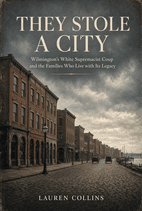
They Stole a City Summary by Lauren Collins (Free)

Prologue: Wilmington, North Carolina, springtime, 1993

Chapter 1 of 4
0:000:00
EN
1x
Voice
PDF

They Stole a City

by Lauren Collins

They Stole a City book cover

What is the book They Stole a City about?

Lauren Collins's They Stole a City reconstructs the 1898 Wilmington coup as a planned insurrection, tracing its legacy through generations of families down to January 6, 2021, for readers of American racial and Southern history.

FeatureInsta.PageBlinkist
Summary DepthFull Chapter-by-Chapter15-min overview
Audio Narration
Visual Mindmaps
AI Q&A
Quizzes
PDF Downloads
Price$89.99/yr$146/yr (PRO)
*Competitor data last verified July 2026.

1 Page Summary

Lauren Collins's They Stole a City argues that the 1898 Wilmington coup—in which white supremacists murdered Black residents, overthrew a lawfully elected mixed-race government, and installed white rule—was not a spontaneous riot but a planned insurrection whose consequences echo into the present. The book traces this through the intertwined histories of families like the Howes, whose ancestor Anthony Walker Howe was kidnapped from present-day Nigeria and whose descendants built much of Wilmington's Black economic life; the Halseys, whose murder and persecution after the coup are reconstructed from scant records; and the Bellamys, Moores, and Waddells, who built fortunes on slavery and turned violence into lasting law. Collins follows this legacy through disenfranchisement, resegregation, the Wilmington Ten, the bombing of The Wilmington Journal, and battles over monuments, pardons, and reparations, ultimately connecting 1898 to January 6, 2021.

What makes the book distinctive is its method: Collins builds her account from family papers, memoirs, census schedules, newspapers, and oral tradition, treating enslaved and freed people's lives as knowable through "science, memory, and common sense" even when documents are scarce. She structures the narrative around individual families across generations—Cynthia Brown's family history, Sallie Halsey's struggle for survival, the Bellamys' determination to remember only what flattered them—showing how perpetrators, victims, and their descendants have carried the coup's legacy differently. She also uses analytical concepts like Michael Rothberg's "implicated subject," Robert Bellah's "dangerous memories," and Isabel Wilkerson's understanding of caste to explain how a community can live atop a founding crime while denying it happened.

The intended audience is readers interested in American racial history, Southern history, and the long afterlife of Reconstruction's collapse, as well as those seeking to understand contemporary debates over Confederate memory and reparations. Readers will gain a detailed, family-centered account of how the only successful coup in American history worked—armed intimidation, rigged trials, legalized disenfranchisement, and controlled memory—and why its damage has never been repaired. They will also come away with a clear sense that official apologies and monuments are not the same as repayment, and that the past, as Collins shows, remains a matter most have been taught to consider settled.

Prologue: Wilmington, North Carolina, springtime, 1993

Overview

Cynthia Brown left Wilmington, North Carolina, and stayed away for years. She didn't know the full story of her own family or why so much of her community's history had been erased. This is about what it took to find both.

In spring 1993, Cynthia Brown returned to Wilmington as the city's first director of human resources. Her former fifth-grade teacher invited her to lunch at a stranger's house. There, a distant cousin handed her a memoir called "A History of the Howe Family," written by Nada McDonald Cotton.

The booklet traced her family line through her father James Brown, her grandmother Louise Brown McCoy, and her great-grandmother Athalia Howe Whitfield, all the way back to William C. Howe. William was the illegitimate son of Alfred "Fred" Howe. Fred and his brothers Pompey and Anthony built much of Wilmington's Black economic life. Their father, Anthony Walker Howe, had been kidnapped from present-day Nigeria and sold into slavery.

The memoir also told the story of November 10, 1898, when white supremacists killed Black citizens and took over the city government. Athalia lived through it. Afterward, she cooked for Walter Parsley, one of the men who had planned the attack. Near the end of her life, she told the young Brown to run if it ever happened again. Wilmington's Black population dropped from 56 percent in 1898 to 34 percent by 1990.

The memoir reached Cynthia Brown through a family connection. It shows how one family's private history is bound up with a city's public violence. Before 1898, Wilmington had a thriving Black economic elite. They were descendants of an ancestor kidnapped from Africa into slavery, and they built their success under a system designed to keep Black people down. The events of November 1898 were a coup and a massacre, not a spontaneous race riot. White supremacist forces murdered Black residents and installed themselves in power. After 1898, the city's Black community was transformed, and that transformation lasted. Athalia's dying warning carried that history forward as a threat that could happen again.

Key concepts: Prologue: Wilmington, North Carolina, springtime, 1993

Prologue: Wilmington, North Carolina, springtime, 1993

Cynthia Brown's Return and Discovery

  • Returned to Wilmington in 1993 as first HR director
  • Lunch with former teacher led to family memoir
  • Memoir revealed erased family and community history

Family Lineage and Ancestry

  • Traced through James Brown, Louise McCoy, Athalia Whitfield
  • Great-great-grandfather William C. Howe, son of Fred Howe
  • Fred and brothers Pompey and Anthony built Black economic life
  • Their father Anthony Walker Howe kidnapped from Nigeria

The 1898 Wilmington Coup and Massacre

  • White supremacists killed Black citizens and seized government
  • A coup and massacre, not a spontaneous race riot
  • Athalia survived and later cooked for planner Walter Parsley
  • Her dying warning: 'Run if it ever happens again'

Demographic and Economic Transformation

  • Black population dropped from 56% in 1898 to 34% by 1990
  • Before 1898, thriving Black economic elite existed
  • Success built under system designed to keep Black people down
  • After 1898, Black community transformed and that lasted

Private History and Public Violence

  • One family's private history bound to city's public violence
  • Memoir reached Brown through a distant cousin
  • Athalia's warning carried history forward as ongoing threat
💡 Try clicking the AI chat button to ask questions about this book!

Chapter 1: The Howes Arise

Overview

Anthony was an Igbo boy taken from Calabar. In the 1770s, he repaired his storm-damaged cabin at Howe's Point. Robert Howe moved him from field work to fixing barns, storehouses, and the big house, then hired him out to others. Anthony wanted to marry Tenah, a Tuscarora child who had been separated from her parents after a raid. He asked to buy her as his wife. The Howes refused until a scandal involving a nephew forced them to agree. Anthony and Tenah had seven children, five of whom survived. Family stories say Robert Howe meant to free Anthony, but records show the family remained enslaved, possibly with some practical freedom, until legal freedom came in the mid-nineteenth century.

Wilmington

By 1820, Anthony was a carpenter in Wilmington. It was a port town with a thriving free Black community in the building trades. In 1835, E. C. Bettencourt, a relative of Anthony's former enslavers, gave him a half-acre lot on Queen Street between Third and Fourth. It was his for life, then it passed to his descendants.

David Walker

David Walker was born in Wilmington around 1785. His mother was free and his father was enslaved. In 1829, he published An Appeal to the Colored Citizens of the World. He sent bundles to Wilmington. Authorities there seized 200 pamphlets. In Savannah, they seized 60. The pamphlet led to laws banning seditious literature. Georgia offered a ten-thousand-dollar bounty. Walker died ten months later in Boston. The official cause was consumption, but some suspected poisoning. Some historians wonder if Anthony was his father. The dates don't quite line up, but both men shared a defiant spirit. Anthony died in 1837, a prosperous patriarch.

Key Takeaways

The Howe family controlled Anthony's marriage, labor, and manumission to suit their own needs and reputation.

Anthony's carpentry and hired-out work earned him property and respect in Wilmington. But legal freedom stayed out of reach until the mid-nineteenth century. He could build a life and still not own it.

Free Black artisans in Wilmington's building trades gave Anthony his start. They also built the network that carried antislavery writing southward. Early Black politics was strongest in Southern Black communities.

After Walker's Appeal, southern authorities cracked down hard. They passed sedition laws and Georgia offered a bounty. They saw Black print as a direct threat and moved fast to stop it.

Whether or not Walker was Anthony's son, both lives show a defiance that was passed down and rooted in their own communities, not borrowed from faraway abolitionists.

Key concepts: Chapter 1: The Howes Arise

Chapter 1: The Howes Arise

Anthony's Enslavement and Family

  • Igbo boy from Calabar, taken to Howe's Point in 1770s
  • Repaired cabin, then moved to skilled labor and hired out
  • Married Tenah after Howes initially refused permission
  • Had seven children; family remained enslaved until mid-1800s

Life in Wilmington

  • By 1820, Anthony was a carpenter in thriving port town
  • Free Black community dominated building trades
  • Received half-acre lot on Queen Street in 1835
  • Property passed to descendants after his death in 1837

David Walker and the Appeal

  • Born free in Wilmington around 1785; father enslaved
  • Published An Appeal in 1829, sent bundles to Wilmington
  • Authorities seized 200 pamphlets there, 60 in Savannah
  • Georgia offered $10,000 bounty; Walker died in 1830

Control and Resistance

  • Howes controlled marriage, labor, and manumission for reputation
  • Anthony gained property and respect but not legal freedom
  • Free Black artisans built networks spreading antislavery writing
  • Southern authorities cracked down with sedition laws

Legacy of Defiance

  • Possible father-son link between Anthony and Walker debated
  • Both showed defiance rooted in their own communities
  • Anthony died prosperous patriarch; Walker died a fugitive author
  • Their lives illustrate persistent struggle for freedom

Chapter 2: Those Pestiferous Moores

Overview

A family can build a fortune through violence and slavery, then pass the name to an heir who has no fortune of his own. As the country that rewarded that family begins to split, what will he do to hold onto his place?

A Dynasty Built on Enslavement

The Moores reached South Carolina around 1675. James Moore got rich by raiding Native peoples and selling them as slaves. His sons moved north in the 1720s. They seized more than eighty thousand acres along the Lower Cape Fear and brought over a thousand enslaved people with them. Six of the region's ten biggest slaveholders were their relatives. When they fought the Stamp Act, King George III called them "those pestiferous Moores."

The Heir

Alfred Moore Waddell was born at Moorefields in 1834. He was descended from a Supreme Court justice and two generals. He moved to Wilmington in 1856. By 1860, he claimed no assets of value.

Key Takeaways
  • The Moores built their fortune by turning captive Native people and imported Africans into land, power, and political influence. They didn't just farm.
  • A small web of relatives controlled most of the region's biggest slave operations along the Lower Cape Fear. That gave them power over much of public life.
  • Fighting the Stamp Act earned them the king's scorn, but it didn't loosen their grip at home. Wealthy colonists who resisted British rule and wealthy slaveholders were often the same people.
  • Alfred Moore Waddell carried his family's name into the years before the Civil War. He moved to Wilmington with no declared assets, which showed that a famous name and the right connections could matter more than money people could see.

Key concepts: Chapter 2: Those Pestiferous Moores

Chapter 2: Those Pestiferous Moores

A Dynasty Built on Enslavement

  • Moores reached South Carolina around 1675
  • James Moore got rich by raiding Native peoples and selling them as slaves
  • Sons seized over 80,000 acres along Lower Cape Fear
  • Brought over 1,000 enslaved people; relatives were top slaveholders

The Heir

  • Alfred Moore Waddell born at Moorefields in 1834
  • Descended from a Supreme Court justice and two generals
  • Moved to Wilmington in 1856
  • By 1860, claimed no assets of value

Key Takeaways

  • Moores built fortune by turning captives into land, power, influence
  • Small web of relatives controlled most slave operations
  • Fighting Stamp Act earned king's scorn but didn't loosen grip
  • Waddell carried family name with no declared assets

Chapter 3: The Bellamys Build

Overview

John Dillard Bellamy built the finest house in Wilmington: 10,000 square feet, five levels, twenty-two rooms, Corinthian columns, porches, and a rooftop lookout. He was a man of plain habits, and nobody asked what paid for it. The harder question is what a family passes down, and what it chooses to remember about where its money came from.

Fortune

The family moved in in 1861 with eight children. Bellamy made his fortune from pine-forest plantations where enslaved people made turpentine and raised crops. By 1860 he enslaved 113 people across three counties. He ran the Bank of the Cape Fear and was the largest shareholder in the Wilmington and Weldon Railroad. According to the book, only 0.5 percent of North Carolinians owned more land, and only 0.3 percent enslaved more people. The house was built and paid for by slavery.

Politics

Bellamy broke with relatives who stayed out of politics and became chairman of the New Hanover Democratic Association. He pushed hard for secession and alienated Wilmington's older Whig families. After a fatal duel, he lived under a cloud, and the mansion became his way of proving himself. He named his ninth child Chesley Calhoun for John C. Calhoun. When South Carolina seceded in December 1860, he lined Front and Market with tar barrels, lit a bonfire, and led a torchlit parade.

Kuners

At a Taylor family holiday dinner, the Kuners performed: enslaved men in bright rags, buckram masks, and Spanish moss beards. Their skits sometimes mocked white greed, but the Bellamys remembered them fondly. After dinner they admired the nearly finished house and its two-story quarters for nine enslaved people. The house cost a third more than the First Presbyterian Church, yet only one year's profit at Grist.

Key Takeaways
  • The Bellamy mansion was more than a home. It was a public show of wealth and power, and it was built on the forced labor of enslaved people in the turpentine and farming economy.
  • Bellamy's radical secessionist politics put him against Wilmington's established Whig families. After a fatal duel damaged his reputation, his lavish home became an attempt to prove his importance.
  • The Kuners' performances sometimes made fun of white greed, yet the Bellamys remembered them with affection. This shows how slaveholding families could take in and enjoy the cultural expressions of the people they owned.
  • The house cost more than a prominent church, yet amounted to only one year's profit from a single enterprise. That reveals how slavery produced fortunes big enough to pay for extraordinary private luxury.

Key concepts: Chapter 3: The Bellamys Build

Chapter 3: The Bellamys Build

The Bellamy Mansion

  • 10,000 sq ft, five levels, 22 rooms, Corinthian columns
  • Built and paid for by slavery
  • Public show of wealth and power

Source of Fortune

  • Pine-forest plantations: turpentine and crops
  • Enslaved 113 people across three counties by 1860
  • Bank of Cape Fear; largest shareholder in railroad

Secessionist Politics

  • Chairman of New Hanover Democratic Association
  • Pushed hard for secession; alienated Whigs
  • After fatal duel, mansion proved his importance

The Kuners

  • Enslaved performers in rags, masks, moss beards
  • Skits mocked white greed; Bellamys remembered fondly
  • Shows slaveholders enjoying owned people's culture

Cost and Profit

  • House cost a third more than First Presbyterian Church
  • Only one year's profit at Grist
  • Slavery produced fortunes for extraordinary luxury
You've reached the end of the free chapters

Next chapter: “The Halseys Enter the Record” is locked

Keep reading They Stole a City — and unlock all 500+ book summaries with audio, mindmaps and AI Q&A.

$0.00 due today · 7 days free, then $89.99/year ($7.49/mo) · Cancel anytime before day 7

About the Author

Lauren Collins

Lauren Collins is an American journalist and author who has been a staff writer at The New Yorker since 2008, covering culture, language, and European society. She is best known for her 2016 book When in French: Love in a Second Language, a memoir exploring how learning French reshaped her life and identity after she moved to Paris and married a Frenchman. Before joining The New Yorker, she worked as a reporter and editor at The New York Times and has also written for publications including The New Republic and Vanity Fair.

Frequently Asked Questions about They Stole a City

What is They Stole a City about?
It chronicles the November 10, 1898, white supremacist massacre and coup in Wilmington, North Carolina, when armed men killed Black residents, drove out the legally elected biracial government, and installed an all-white board, mayor, and police chief. The story unfolds through families on both sides — the Howes and Halseys, who built and rebuilt Black Wilmington, and the Bellamys, Waddells, and Moores, who profited from slavery and then from its violent restoration. From there it traces more than a century of consequences: disenfranchisement, resegregation, the Wilmington Ten convictions, contested monuments, and unanswered calls for reparations. The narrative rests on family papers, memoirs, newspapers, census schedules, and the testimony of descendants.
Who is the author of They Stole a City?
Lauren Collins is the author of this account of Wilmington's 1898 massacre and coup, and the book reads as narrative history driven by archival evidence rather than outside commentary. It is grounded in family papers and memoirs — including the Bellamy memoirs, Ellen Bellamy's Back with the Tide, and Alfred Moore Waddell's recollections — alongside Wilmington newspapers, census schedules, and the recollections of descendants. That layered source base lets the book move between the people who seized power and the families who survived them.
Is They Stole a City worth reading?
Yes — it is a gripping, meticulously sourced narrative that turns a long-suppressed event into something like an origin story for modern racial politics, from voter ID fights to January 6. Its power lies in following real families across generations, so readers see how a single day in 1898 shaped schools, jobs, wealth, and public memory in one American city for over a hundred years. Anyone interested in Reconstruction, the Jim Crow South, or how history gets written and rewritten will find it difficult to put down.
What are the key lessons from They Stole a City?
The central lesson is that the 1898 violence was not a riot but a planned coup: armed men removed a lawfully elected government and replaced it, while the law stood aside. A second takeaway is that legal tools — literacy tests, grandfather clauses, rezoned neighborhood schools — can finish what violence begins, quietly narrowing who holds power. The book also shows how memory is contested, as perpetrators renamed the massacre a 'revolution,' textbooks softened it, and descendants like Cynthia Brown and the Wilmington Ten pushed to tell the truth anyway. Finally, it argues that a government report recommending payment is not payment, and that only the government which created the injustice can settle the debt.
0