They Stole a City Interactive Mindmaps for They Stole a City (Free)

They Stole a City — Interactive Mindmaps

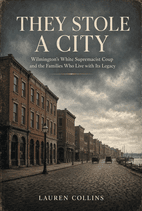
They Stole a City by Lauren Collins Book Cover

by Lauren Collins

Lauren Collins's They Stole a City reconstructs the 1898 Wilmington coup as a planned insurrection, tracing its legacy through generations of families down to January 6, 2021, for readers of American racial and Southern history.

On Insta.page you also get an Apply This Book tool that lets you combine insights from up to 3 books to solve your specific situation.

Chapter mindmaps

Free preview: chapters 1–4 are fully interactive. Click any node to expand or collapse. Subscribe to unlock the rest.

Chapter 1: Prologue: Wilmington, North Carolina, springtime, 1993

Key concepts: Prologue: Wilmington, North Carolina, springtime, 1993

Prologue: Wilmington, North Carolina, springtime, 1993

Cynthia Brown's Return and Discovery

  • Returned to Wilmington in 1993 as first HR director
  • Lunch with former teacher led to family memoir
  • Memoir revealed erased family and community history

Family Lineage and Ancestry

  • Traced through James Brown, Louise McCoy, Athalia Whitfield
  • Great-great-grandfather William C. Howe, son of Fred Howe
  • Fred and brothers Pompey and Anthony built Black economic life
  • Their father Anthony Walker Howe kidnapped from Nigeria

The 1898 Wilmington Coup and Massacre

  • White supremacists killed Black citizens and seized government
  • A coup and massacre, not a spontaneous race riot
  • Athalia survived and later cooked for planner Walter Parsley
  • Her dying warning: 'Run if it ever happens again'

Demographic and Economic Transformation

  • Black population dropped from 56% in 1898 to 34% by 1990
  • Before 1898, thriving Black economic elite existed
  • Success built under system designed to keep Black people down
  • After 1898, Black community transformed and that lasted

Private History and Public Violence

  • One family's private history bound to city's public violence
  • Memoir reached Brown through a distant cousin
  • Athalia's warning carried history forward as ongoing threat

Chapter 1: The Howes Arise

Key concepts: Chapter 1: The Howes Arise

Chapter 1: The Howes Arise

Anthony's Enslavement and Family

  • Igbo boy from Calabar, taken to Howe's Point in 1770s
  • Repaired cabin, then moved to skilled labor and hired out
  • Married Tenah after Howes initially refused permission
  • Had seven children; family remained enslaved until mid-1800s

Life in Wilmington

  • By 1820, Anthony was a carpenter in thriving port town
  • Free Black community dominated building trades
  • Received half-acre lot on Queen Street in 1835
  • Property passed to descendants after his death in 1837

David Walker and the Appeal

  • Born free in Wilmington around 1785; father enslaved
  • Published An Appeal in 1829, sent bundles to Wilmington
  • Authorities seized 200 pamphlets there, 60 in Savannah
  • Georgia offered $10,000 bounty; Walker died in 1830

Control and Resistance

  • Howes controlled marriage, labor, and manumission for reputation
  • Anthony gained property and respect but not legal freedom
  • Free Black artisans built networks spreading antislavery writing
  • Southern authorities cracked down with sedition laws

Legacy of Defiance

  • Possible father-son link between Anthony and Walker debated
  • Both showed defiance rooted in their own communities
  • Anthony died prosperous patriarch; Walker died a fugitive author
  • Their lives illustrate persistent struggle for freedom

Chapter 2: Those Pestiferous Moores

Key concepts: Chapter 2: Those Pestiferous Moores

Chapter 2: Those Pestiferous Moores

A Dynasty Built on Enslavement

  • Moores reached South Carolina around 1675
  • James Moore got rich by raiding Native peoples and selling them as slaves
  • Sons seized over 80,000 acres along Lower Cape Fear
  • Brought over 1,000 enslaved people; relatives were top slaveholders

The Heir

  • Alfred Moore Waddell born at Moorefields in 1834
  • Descended from a Supreme Court justice and two generals
  • Moved to Wilmington in 1856
  • By 1860, claimed no assets of value

Key Takeaways

  • Moores built fortune by turning captives into land, power, influence
  • Small web of relatives controlled most slave operations
  • Fighting Stamp Act earned king's scorn but didn't loosen grip
  • Waddell carried family name with no declared assets

Chapter 3: The Bellamys Build

Key concepts: Chapter 3: The Bellamys Build

Chapter 3: The Bellamys Build

The Bellamy Mansion

  • 10,000 sq ft, five levels, 22 rooms, Corinthian columns
  • Built and paid for by slavery
  • Public show of wealth and power

Source of Fortune

  • Pine-forest plantations: turpentine and crops
  • Enslaved 113 people across three counties by 1860
  • Bank of Cape Fear; largest shareholder in railroad

Secessionist Politics

  • Chairman of New Hanover Democratic Association
  • Pushed hard for secession; alienated Whigs
  • After fatal duel, mansion proved his importance

The Kuners

  • Enslaved performers in rags, masks, moss beards
  • Skits mocked white greed; Bellamys remembered fondly
  • Shows slaveholders enjoying owned people's culture

Cost and Profit

  • House cost a third more than First Presbyterian Church
  • Only one year's profit at Grist
  • Slavery produced fortunes for extraordinary luxury
You've reached the end of the free mindmaps

Next chapter: “Chapter 4: The Halseys Enter the Record” is locked

See every chapter of They Stole a City as an interactive mindmap — and unlock all 500+ book summaries with audio and AI Q&A.

$0.00 due today · 7 days free, then $89.99/year ($7.49/mo) · Cancel anytime before day 7

Continue exploring They Stole a City