They Stole a City Quotes
by Lauren Collins
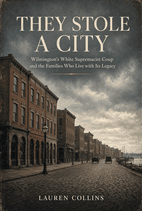
This collection gathers lines from Lauren Collins's book about Wilmington, family history, and the long shadow of 1898. You will find passages on violence and memory, on wealth built from slavery, and on people who insisted on love, community, and dignity anyway.
What makes the book so quotable is its plain, cutting language. Collins can turn a historical detail into a moral judgment without sounding preachy, and she lets contradictions speak for themselves. The result is a set of lines that are easy to share and hard to forget.
Top Quotes from They Stole a City
“We were saved from being slaughtered and our home was left intact. Many, many Negroes were killed, marched out of town, and their life-savings taken from them. This outrage, which resulted in rule by white supremacy, is called the Wilmington riot. It was really the Wilmington massacre.”
Nada McDonald Cotton's family memoir describes the 1898 violence that Brown receives at the luncheon.
It names the euphemism "Wilmington riot" and corrects it to "massacre," preserving the scale and theft of Black lives.
“One Calabar cargo included 11,400 yams and 134 human beings, treated alike as perishables. Fewer than ninety African people were still alive when the ship arrived in Barbados.”
The chapter describes the Middle Passage from Calabar, where Anthony's people were trafficked.
Treating yams and people alike as perishables makes the slave trade's dehumanization viscerally clear.
“The Bellamys spoke airily of a patrimony of culture and wealth, but what they legally inherited were hundreds of human beings, living and yet to be conceived, or even conceived of.”
It comes after detailing how the Bellamys framed their inheritance as culture and wealth.
It powerfully reframes inheritance as human ownership, exposing the moral bankruptcy beneath the family’s pride.
“Forbidden by law to marry, they were husband and wife nonetheless.”
Joshua Halsey's parents were enslaved and legally forbidden to marry.
It compresses slavery’s cruelty and the resilience of family bonds into a single defiant sentence. The line resonates because it asserts a marriage that the law refused to recognize.
“So they paid a Black woman to do the work that they otherwise insisted Black women were born to do for free.”
The Bellamys hired free Black nursemaid Aunt Betsy Kedar for their New York trip rather than risk an enslaved nurse escaping.
It exposes the family's hypocrisy: they paid a Black woman for work they claimed Black women were naturally suited to do unpaid. The line condenses racial exploitation and self-interest.
“The end of the world would have been better, in this view, than one in which Black people walked the streets freely.”
After Union troops occupy Wilmington, Alfred Moore Waddell recounts an elderly white citizen's horror at seeing freed Black people and Black soldiers.
It starkly captures the racist apocalyptic reaction of Wilmington's old guard to emancipation and defeat.
“The Bellamys believed that they had lost much because they were rich, not because they were wrong or weak.”
The narrator explains the Bellamys’ response to losing their wealth and enslaved labor.
It compresses their entire worldview into one devastating sentence. Their suffering, in their minds, is proof of persecution rather than consequence.
Themes Behind the Quotes
The quotes keep circling how power is built and protected. Wilmington's white elite used violence, law, and story to take a city and then control how that taking was remembered. Family wealth and respectable architecture rest on enslaved people, seized labor, and carefully edited history. The past is never just past here. It shapes who gets to speak, who gets to stay, and whose version of events becomes official.
Another theme is survival and refusal. Enslaved and free Black people made families without legal protection, built churches, kept records, and imagined futures beyond the world white supremacy wanted. Even as the Bellamys and their class rewrite their losses as unfair misfortune, the book shows the human cost of their entitlement. Memory becomes a battleground, and ordinary people become historians of their own lives.
Quotes by Chapter
Prologue: Wilmington, North Carolina, springtime, 1993
“Looking out the front window of her house, Athalia witnessed a white man kill a Black man in the street. She ran with her mother and young sister to Pine Forest Cemetery, huddling with other refugees in the freezing rain.”
Brown learns what her great-grandmother Athalia experienced during the 1898 massacre.
It turns a historical atrocity into a concrete family memory, showing the terror and flight survived by Brown's ancestor.
“At the time, material regarding 1898 was literally kept under lock and key. White librarians meted out access sparingly, denying anyone they thought might “make a stink.””
Brown recalls trying to research 1898 as a high school junior at the county library.
It captures how history can be physically and socially suppressed, making access to truth a form of power.
“In Wilmington, as Brown later wrote, memories of 1898 tended to be “quietly kept and held by family historians.””
The chapter describes how the massacre was remembered in Wilmington's Black community.
It honors the private, familial labor of preserving truths that public histories denied or omitted.
Chapter 1: The Howes Arise
“The September storm that wrecked Anthony's cabin meant work on top of work, but he approached the mess as an opportunity, building things up when he might have wanted to burn them down.”
After a hurricane damages Anthony's cabin, he repairs it and other enslaved people's quarters at Howe's Point.
It captures how Anthony turned catastrophe into leadership, building rather than burning under bondage.
“Walker was no one's beast of burden. Neither was Anthony. Brought to North Carolina enslaved and alone, he died in 1837 a prospering patriarch.”
The narrator contrasts Walker's defiance with Anthony's life after enslavement.
It affirms that both men refused to be reduced to property, one through leadership and one through words.
“The foundation that he laid for the first American generation of his family, which would go on to build a dynasty, was as solid as that of a house.”
The chapter's closing lines summarize Anthony's legacy.
It imagines Anthony's endurance as a structural inheritance, making family and freedom feel built to last.
Chapter 2: Those Pestiferous Moores
“The family was so vocal in its opposition to the crown that King George III is said to have referred to them as “those pestiferous Moores.””
The chapter explains how the Moore family earned King George III's ire.
It captures the family's rebellious reputation in a single royal insult and gives the chapter its title.
“Conquest and luxury were natural companions, the master class's twinned pursuits.”
The narrator describes the ethos embodied by Orton and the Moore plantation elite.
It distills the book's critique of how violence and refinement were intertwined in slaveholding society.
“The Moores brought more than a thousand enslaved people to the Lower Cape Fear; six of the area's ten leading enslavers were their kin.”
The narrator summarizes the Moores' dominance in the Lower Cape Fear.
It makes the family's power concrete by measuring it in enslaved lives and landholding control.
“A lot was never enough for Waddell. Whereas his voracious ancestors amassed land, possessions, and wealth, he heaped exaggeration upon overstatement, trying to inhabit the sense of superiority his lineage presumed.”
The narrator introduces Alfred Moore Waddell's inherited sense of superiority.
It sharply characterizes Waddell as a man trying to live up to a brutal family legend through self-mythology.
Chapter 3: The Bellamys Build
“The unacknowledged foundation of the family’s “splendid heritage” was, in fact, chattel slavery.”
It follows the revelation that the Bellamy boys inherited enslaved people by name and all their future children.
It names the brutal truth beneath the family’s genteel self-image.
“The larger his family grew, the more land John Dillard acquired. The more land he acquired, the more people he enslaved.”
It describes how John Dillard’s expanding family and landholdings increased the number of people he enslaved.
The parallel structure makes the logic of slavery and accumulation chillingly clear.
“The Bellamy Mansion was a secesh house—a house by slavery and for slavery; a prime example, with its idealized facade and internal contradictions, of what one scholar later called the “architecture of Southern nationalism.””
It follows a description of the mansion’s design and its ties to the Bellamys’ pro-slavery politics.
It turns the house into a political statement and a monument to slavery, not just a grand residence.
Chapter 4: The Halseys Enter the Record
“As Sallie’s adult enslavers indulged themselves, she endured premature lessons in self-control, weighing her desires against the dangers to which they exposed her.”
The line reflects on Sallie’s childhood impulse to cut fabric for herself and the restraint she had to learn.
It turns a small act of defiance into a profound statement about enslaved women’s constrained agency. The contrast between indulgence and self-control gives the sentence its lasting force.
“In the absence of beeswax seals and fancy signatures, certain details about the Halseys have endured as marvels of individuation, as substantial as they are slight, because they were recorded and kept alive by people who loved them.”
The chapter describes how family memory preserved details that official records ignored.
It argues that love and memory can be as authoritative as archives. It resonates with anyone whose family history survives outside written records.
“The personal record, transmitted from generation to generation, says that Joshua was the “standout personality of his family”; that Sallie, the doer of “little devilish things,” was getting an education to match her daring, just as the contours of their world were about to change.”
The chapter contrasts the sparse paper record of Joshua and Sallie with the vivid family stories about them.
It captures the whole book’s method: ordinary people become legible through the records kept by those who loved them. The line is both elegiac and defiant.
Chapter 5: Breakaway
“John Dillard's slavery-financed castle was built on the same foundation of white supremacy. Nonetheless, he wanted the best labor he could get, and the best labor in Wilmington happened to be Black labor.”
The chapter describes John Dillard Bellamy's mansion as a product of slavery and Black skill.
It names the central contradiction of the Bellamy project: white supremacist wealth built by the Black labor it demeaned. The contrast is blunt and memorable.
“The sense of escalating vulnerability was acute enough to lead several free Black North Carolinians to petition the legislature for permission to reenter bondage, “that they might select masters and become slaves.””
After repressive laws targeted free Black people, some petitioned the North Carolina legislature to reenter slavery.
It shows how desperate and dangerous the political climate had become for free Black North Carolinians. The phrase is a devastating measure of their vulnerability.
“Whatever Fred was doing in Haiti, his choice to undertake the journey makes it clear that he was willing to take on significant risk for a chance at disrupting the status quo.”
The chapter closes on Fred Howe's mysterious voyage to Haiti and return to America.
It frames his journey as an act of courage and resistance rather than mere travel. The line leaves readers with the sense that ordinary choices could challenge an unjust order.
Chapter 6: Deliver Us from Evil
“The new church, designed in the Gothic Revival style, would take years to erect, but its founders, like so many Black Wilmingtonians, remained zealously committed to the task of building community and defining possibility on their own terms.”
Black church members in postwar Wilmington build St. Stephen African Methodist Episcopal Church after seceding from Front Street Methodist.
It ends the chapter on Black self-determination and community building, turning freedom into a durable act of construction.
Chapter 7: Closer to Freedom
“The particularities of the scene are immaterial to the larger point: For a brief, astounding moment, the Bellamys' urban plantation became a palace of the people.”
The narrator describes the fleeting reversal when freed people gathered at the Bellamy Mansion.
It captures how emancipation momentarily inverted the social order. The phrase “palace of the people” makes that reversal vivid and unforgettable.
“The Bellamys said they were asking for pardon, but they sought something closer to expungement—an erasure of the entire conflict and its precipitating causes, so that everything could go back to the way it always had been.”
The narrator explains what the Bellamys wanted after Confederate defeat.
It names the deeper demand behind their appeals for mercy: not forgiveness but historical erasure. That impulse echoes through later battles over memory and Reconstruction.
“The problem, in their thinking, wasn't that they'd lost a war and that the victors and their ideas would now prevail; it was that the Hawleys were uncouth.”
The narrator analyzes how the Bellamys dodged the larger meaning of their defeat.
It exposes how personal snobbery can shield people from political and moral reckoning. The line is sharp, ironic, and deeply revealing.