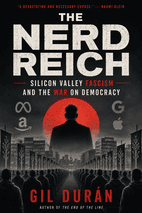
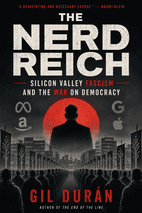
Gil Durán's The Nerd Reich traces how a network of tech billionaires, led by Peter Thiel, transformed fringe anti-democratic ideology into Trump-era policy, from The Sovereign Individual's prophecy to crypto's capture of the White House. An investigative narrative for readers concerned about American democracy's future.
Feature
Insta.Page
Blinkist
Shortform
The Nerd Reich
✓
✕
✕
Summary Depth
Full Chapter-by-Chapter
15-min overview
Section-by-section guides
Audio Narration
✓
✓
✓
Visual Mindmaps
✓
✕
✕
AI Q&A
✓
✕
✕
Quizzes
✓
✕
✕
PDF Downloads
✓
✕
✓
Price
$89.99/yr
$146/yr (PRO)
$199/yr
*Competitor data last verified July 2026.
1 Page Summary
In The Nerd Reich, Gil Durán argues that a small network of technology billionaires, led by Peter Thiel, has operationalized a fringe, anti-democratic ideology into the governing philosophy of the Trump administration. The book traces this movement's intellectual roots to the 1997 manifesto The Sovereign Individual, which predicted that technology would destroy nation-states and empower a new class of "sovereign individuals." Durán connects this prophecy through key figures and moments: Balaji Srinivasan's 2013 "exit" pitch at Y Combinator, Curtis Yarvin's obscure blog advocating for dismantling government, and Marc Andreessen's pandemic-era manifestos. He documents how these ideas—once dismissed as unserious—were systematically funded and promoted by Thiel, who used his billions, his surveillance firm Palantir, and his mentorship of figures like JD Vance and Elon Musk to bring them into the highest levels of American power. The book culminates in the crypto industry's capture of the White House, the venture capital engine rewarding this coup, and Thiel's own quasi-religious warnings about the Antichrist, which Durán suggests is a fitting description of the tech oligarchs themselves.
Durán's approach is investigative and narrative-driven, blending intellectual history with political journalism. He draws on his experience as an editorial page editor at The Sacramento Bee to frame the story, and he uses specific, documented episodes—from Thiel's 1999 speech forecasting encrypted currencies to Vance's public greeting of Yarvin at an inauguration party—to demonstrate how this ideology moved from blogs to the halls of power. The book is distinctive for its focus on the personal and financial networks that connected these figures, showing how Thiel "created" JD Vance, funded Yarvin's access to elite circles, and engineered the crypto industry's buyout of political influence. Durán also emphasizes the fragility of the project, noting that even Yarvin has called the Trump regime a failure and that Thiel has purchased property in Argentina as a "backup country," while warning that the greater danger lies in liberal politicians abandoning democracy without a fight.
The intended audience is readers concerned about the state of American democracy and the concentration of power in the hands of a few ultra-wealthy tech owners. Durán offers a clear-eyed, critical analysis of how Silicon Valley's radical anti-democratic ideas became operational policy, and he provides a framework for understanding the threats this poses. Readers will gain a comprehensive understanding of the ideological movement behind recent political developments, including the specific arguments of thinkers like Yarvin and Srinivasan, the financial mechanisms of crypto's political capture, and the interlocking personal relationships that enabled this transformation. The book ultimately challenges readers to recognize that the warnings of Biden's final address were not rhetorical flourish but a response to a concrete, twenty-five-year-old movement, and it calls on them to imagine alternatives before the project of democratic liquidation is complete.
Introduction
Overview
A small network of technology billionaires now operates the machinery of American government, and their radical anti-democratic ideas have moved from obscure blogs to the halls of power. How did a fringe fantasy become the governing philosophy of the most powerful nation on earth?
Joe Biden's final Oval Office address on January 15, 2025 warned that a dangerous concentration of power in the hands of a few ultra-wealthy tech owners threatened American democracy. The roots of that warning lie in the 1997 apocalyptic book The Sovereign Individual, whose prophecy of collapsing nations and a stateless high-tech oligarchy steered Stanford graduate Peter Thiel toward funding a network of anti-democracy thinkers, including Curtis Yarvin and Balaji Srinivasan. Their ideas, once dismissed as fringe, now serve as operating principles for the Trump administration, with the vice president counted among their own. The project extends globally, betting that accelerated collapse lets Silicon Valley remake the world.
Key Takeaways
Biden’s farewell warning about tech billionaires was not a rhetorical flourish but a response to a concrete ideological movement with a twenty-five-year pedigree.
The Sovereign Individual supplied the founding prophecy that transformed Silicon Valley fortunes into a political project aimed at rendering the nation-state obsolete.
The same intellectual lineage that produced Thiel’s network has now migrated from the fringe to the operational core of the executive branch, with the vice presidency itself inside the fold.
The movement’s strategy is deliberately accelerative: it treats collapse as the mechanism through which a stateless elite can seize the ruins and rebuild governance from scratch.
Key concepts: Introduction
Introduction
The Rise of Tech Oligarchy
Biden's farewell warned of concentrated tech billionaire power
Small network now operates American government machinery
Anti-democratic ideas moved from blogs to power
The Sovereign Individual's Influence
1997 book prophesied collapsing nations and stateless oligarchy
Prophecy steered Peter Thiel toward funding anti-democracy thinkers
Ideas from Yarvin and Srinivasan now guide Trump administration
The Accelerationist Strategy
Movement treats collapse as mechanism for elite takeover
Project extends globally to let Silicon Valley remake world
Vice presidency itself is inside the ideological fold
💡 Try clicking the AI chat button to ask questions about this book!
Chapter 1: The Sovereign Individual
Overview
A fringe vision of post-democratic rule by a technological elite has moved from the margins to the center of American politics. Understanding how that happened requires examining the intellectual origins of a movement whose radical ideas once seemed unserious.
The book
Understanding Silicon Valley's rightward turn requires understanding Peter Thiel, and understanding Thiel requires The Sovereign Individual, James Dale Davidson and William Rees-Mogg's 1997 manifesto predicting technology would destroy nation-states. They argued that microprocessing would collapse democratic governments, that "cybercurrency" would let wealthy elites escape taxation and regulation, and that a superior class of sovereign individuals would rise from the wreckage.
The speech
Thiel absorbed it. In an October 1999 speech to the libertarian Independent Institute, the Confinity CEO behind PayPal forecast that encrypted private currencies would replace government-backed money and that Washington could not stop it. Years before the iPhone and Bitcoin, he was sketching a future where tech's wealth ruled and democracy did not. The vision seemed eccentric, but Thiel's billions, his surveillance firm Palantir, and his influence over Elon Musk, Donald Trump, Sam Altman, and JD Vance have carried it into the highest levels of American power. Camouflaged as libertarianism, it has merged with MAGA into Silicon Valley fascism.
Origins
The book capped a long lineage. Its cognitive elite concept came from The Bell Curve, denounced as pseudoscientific racism, and echoed the eugenics championed by Stanford president David Starr Jordan and the 1930s technocracy movement. Ayn Rand made selfish genius the moral hero. Cypherpunks like Timothy C. May built encryption tools against state power, while Wired magazine and John Perry Barlow's "Declaration of the Independence of Cyberspace" celebrated a newly sovereign digital world. In 1997, Langdon Winner named this blend cyberlibertarianism. Davidson and Rees-Mogg turned it into investment advice for betting on catastrophe.
The book exploited the millennial dread that had surrounded 2000 for a generation, from Prince's 1982 hit "1999" to far-right visions of black-helmeted federal agents. The authors quoted Matthew 10:26 and called the work apocalyptic in the root sense of unveiling.
The tech-libertarian milieu
Paulina Borsook's 2000 book Cyberselfish dissected the subcultures The Sovereign Individual spoke to: Cato partisans, cypherpunks, anarcho-capitalists, and extropians, who pushed cryonics and uploading human minds to computers. She dismissed bionomics, a 1990 movement treating markets as natural ecosystems and regulation as parasite, as fake science. The book added concrete collapse predictions to this culture's abstractions.
Doom's advantage
Y2K passed without catastrophe, but Bush v. Gore's 537-vote Florida margin in 2000, September 11, and mounting climate evidence kept doom credible. Norman Cohn's history of medieval millenarian sects found their promised salvation always:
collective
terrestrial
imminent
total
miraculous
Davidson and Rees-Mogg followed the template: their cognitive elite were the chosen few whose technology would purge liberal democracy.
The authors
Davidson founded the National Taxpayers Union in 1969; Rees-Mogg edited The Times of London and entered the House of Lords under Thatcher. They met at Oxford in 1982 and built Strategic Investment, an Agora newsletter selling gold-backed hard money advice and doom forecasts.
Blood in the Streets (1987) and The Great Reckoning (1994) led to their Clinton conspiracy theories, including the false claim that aide Vince Foster's suicide was murder. Their worst miss: predicting China's obsolescence.
Prescriptions and endorsement
The book closed with thirty implications and strategies for financial independence in the Information Age. Citizenship, the authors held, was obsolete: readers should leave the United States for New Zealand, Chile, or Argentina, hire private security, seek walled enclaves, shelter assets offshore, and await "cybercash." Some erroneously call this crypto's inspiration.
Rees-Mogg died in December 2012; obituarists wrote off their conspiracy books as an embarrassing sideline. Thiel gave the book its afterlife. He sent admiring fan mail and prefaced a new edition in February 2020, casting AI and crypto as opposing poles: AI, the Chinese Communist Party's favored technology, could solve the calculation problem via central control; strong cryptography promised a decentralized world.
Stanford formation
At Stanford, Thiel cofounded The Stanford Review with David Sacks; their 1995 book The Diversity Myth attacked campus diversity efforts and dismissed date-rape claims as "belated regret." René Girard, his mentor, taught that desire is mimetic and societies cohere through scapegoats.
The book's program in practice
After mediocrity as a lawyer, derivatives trader, and hedge fund manager, Thiel cofounded Confinity with Max Levchin; its PalmPilot payment app became PayPal, an early version of the book's digital currency. After eBay's acquisition, he cofounded Palantir with CIA venture funding and invested $500,000 in Facebook in 2004, making him a billionaire at its 2012 IPO.
Wealth deepened his pessimism. "The Straussian Moment" judged liberal democracy unequal to the century's threats; "The Education of a Libertarian" declared freedom and democracy incompatible, blamed welfare beneficiaries and women's suffrage, and proposed three escape routes:
cyberspace
outer space
the oceans
Seasteading
Seasteading, self-governing settlements built at sea, traces to Jules Verne's "Propeller Island," a century-old tale of wealthy Pacific island-ship dwellers. Earlier attempts had failed, including:
Marshall Savage's Aquarius Project, aimed at colonizing the universe
Michael Oliver's Republic of Minerva, dredged from shallow Tongan waters
the Freedom Ship, a mile-long floating country costing $10 billion
Patri Friedman, grandson of Nobel laureate Milton Friedman, revived the idea in a blog; Thiel gave him $500,000 to start the nonprofit Seasteading Institute. Seasteading was PayPal's rule-skirting made physical: enact policies without winning elections. Friedman framed government as an industry with absurdly high entry costs and citizenship akin to customer service. NPR's Mike Pesca mocked the floating-capsule fantasy.
The Cato backlash
Thiel's Cato essay drew such criticism that he appended a clarification: no one should be disenfranchised, but voting would not help, so energy belonged with peaceful, "utopian" projects.
Curtis Yarvin, blogging as Mencius Moldbug, defended the essay as factual. He and Thiel met in San Francisco and exchanged confiding letters described by Ava Kofman in a 2025 New Yorker piece. Yarvin's emails were homilies from pickup-artist blogs; Thiel's were terse. Both assumed America was communist, journalists played the part of the Stasi, and tech CEOs were prey. The Sovereign Individual seeded Thiel's pessimism, and heeding it made him a billionaire. Yarvin supplied the post-democratic blueprint; Thiel's money and influence carried it from internet fringe to mortal threat.
Key Takeaways
The Sovereign Individual is the ideological source code for the alliance between Silicon Valley wealth and post-democratic politics, not a marginal oddity.
The book's pedigree runs from eugenics and Ayn Rand to cypherpunk cryptography, and its prophecy of a sovereign elite follows the five-part millenarian template Norman Cohn found in medieval sects.
Thiel's career converts the book's prescriptions into practice: PayPal as cybercash, Palantir as private intelligence, and seasteading as an attempt to make government a customer-service industry you can exit.
The seasteading project and Thiel's other escape routes share a single premise: democracy is not worth winning, only leaving.
The convergence of cyberlibertarianism with MAGA is not a misreading of Thiel's ideas but their political realization.
Merged libertarianism with MAGA into Silicon Valley fascism
Intellectual Lineage
Cognitive elite concept from The Bell Curve
Echoed eugenics and 1930s technocracy movement
Ayn Rand made selfish genius the moral hero
Cypherpunks and Barlow's cyberspace declaration
Millenarian Framework
Exploited Y2K and millennial dread
Apocalyptic in root sense of unveiling
Followed medieval millenarian template
Cognitive elite as chosen few purging democracy
Authors and Track Record
Davidson founded National Taxpayers Union
Rees-Mogg edited The Times, entered Lords
Built Strategic Investment on doom forecasts
Promoted Clinton conspiracy theories, missed China
Prescriptions for Survival
Citizenship obsolete; leave the US
Move to New Zealand, Chile, or Argentina
Hire private security, seek walled enclaves
Shelter assets offshore, await cybercash
Thiel's Program in Practice
PayPal as early digital currency experiment
Palantir with CIA venture funding
Facebook investment made him billionaire
Declared freedom and democracy incompatible
Chapter 2: The Acid Story
Overview
An obscure blogger with a vision of dismantling democracy has become an honored guest at presidential inauguration parties. How did ideas once confined to the internet's margins gain traction among the wealthy and powerful?
Two days before Donald Trump's second inauguration, vice president-elect JD Vance spotted Curtis Yarvin at a Thiel party in Washington and called out, "Yarvin, you reactionary fascist." Yarvin, a blogger, was an honored guest; Thiel had carried his ideas from obscurity into the highest levels of American power. Understanding him exposes tech fascism's flimsy framework.
Roots and Provocation
He wants to dismantle government, yet both parents worked for it. His father joined the State Department after failing to get tenure; his mother taught her sons to read at age two. A math prodigy who skipped three grades, Yarvin entered Johns Hopkins' study of precocious youth, then Brown. Younger than classmates, he was a "weird, threatening, disturbing alien" with no social life.
On Usenet forums like talk.bizarre he became an aggressive troll. There he met Meredith Tanner, who moved to California after he mailed her MDMA; she saw him as a solipsist. On his twenty-fourth birthday, June 25, 1997, with his start-up failing, he dropped acid and watched John Woo's Face/Off, insisting such experiences "should be as intense and disturbing as possible."
In 2002 he cashed out from Unwired Planet and settled in San Francisco. On April 24, 2007, he launched the blog Unqualified Reservations under the name Mencius Moldbug. His first post announced a new ideology because existing political camps had failed; influences included Hans-Hermann Hoppe, whose 2001 book praised monarchy.
The Cathedral
His essay "Patchwork: A Political System for the 21st Century" imagined San Francisco ruled by Friscorp, a corporation with the power to execute residents; he joked about rendering the unproductive into biodiesel. He proposed a spiderweb of corporate mini-countries whose residents have no say and may only leave. Patchwork is a philosophy of "exit."
Yarvin explained democracy's persistence with a conspiracy: the Cathedral, a plain-sight network of universities, media, foundations, think tanks, and agencies that controls public opinion. Voters are manipulated, so elections change nothing. The theory is unfalsifiable: rejection by historians and journalists only confirms the Cathedral's grip.
In 2008's "An Open Letter to Open-Minded Progressives" he called for lustration: firing nearly all federal employees after regime change, modeled on denazification. He also wrote that some races are better suited to slavery, denied being a white supremacist, and said he was not "exactly allergic" to the label.
The Reactionary Toolkit
Yarvin drew on an older anti-democratic lineage:
Thomas Carlyle, monarchist
Vilfredo Pareto, elite theorist
Robert Michels, oligarchy theorist
Carl Schmitt, Nazi jurist
James Burnham, managerial-elite theorist
A self-described Rothbardian, he repackaged them for the tech age. His blog brought him Peter Thiel's friendship by 2009; once his identity leaked he wrote under his own name. Urbit, his internet rebuild as "digital feudalism," went open source in 2010.
The Two Gospels
On October 15, 2010, Thiel told the Libertopia conference that technology was an "incredible alternative to politics" that could overturn the monetary system, a vision Bitcoin (published two years earlier by Satoshi Nakamoto) now embodied. He called government's evil tantamount to the devil and said sovereignty meant becoming "as close to God as is possible for anybody on this planet."
In 2012, at BIL, Yarvin called American democracy a failing corporation whose operating system "needs to be destroyed." His program, RAGE ("Retire All Government Employees"), meant purging federal workers and installing a dictator, since a national CEO "is what's called a dictator."
That year Nick Land, godfather of accelerationism, crowned Yarvin "supreme Sith Lord of the neo-reactionaries" and lead thinker of the "Dark Enlightenment." Land, wrecked by amphetamine abuse after leaving his Warwick professorship, endorsed Yarvin's plan to turn the democratic state into a corporation run by an appointed CEO.
Money and Blowback
In 2013 Yarvin cofounded Tlon; Founders Fund and Andreessen Horowitz led a $1.1 million seed round, according to the book. Critics took notice:
TechCrunch ran "Geeks for Monarchy."
A Telegraph researcher called it fast-growing neo-fascism.
The Baffler's Corey Pein called it "total corporate despotism."
David Brin mocked him as a sycophant auditioning for billionaire patrons; Yarvin got the job.
In March 2014 Google engineer Justine Tunney petitioned the White House:
Retire all government employees with full pensions.
Transfer administrative authority to the tech industry.
Appoint Eric Schmidt CEO of America.
She had been reading Mencius Moldbug. Strange Loop rescinded his 2015 invitation; LambdaConf's 2016 booking lost sponsors. Thiel asked Yarvin how dangerous the linkage was.
Yarvin had modernized fascism, but his defenses of slavery and calls for dictatorship made him radioactive; mainstreaming his ideas required separating them from him.
Key Takeaways
Yarvin's politics are the rationalized biography of an outsider: the grade-skipping prodigy, the relentless Usenet troll, and the founder who dropped acid as his start-up collapsed, prizing the experience for being maximally disturbing.
The Cathedral is an unfalsifiable conspiracy by design: since every denial from universities, think tanks, or the press is taken as further proof of its hold, no evidence could ever count against it.
Beneath the rhetoric of exit and voluntary association sits an authoritarian program: corporate city-states whose residents have no vote and only the freedom to leave, wholesale dismissal of federal employees, and a national CEO who is frankly called a dictator.
Neo-reaction's arsenal was secondhand: Carlyle's monarchism, Pareto's elite theory, Schmitt's jurisprudence, and Burnham's managerial thesis reappeared, repackaged for a blog-reading tech audience.
The movement's ascent ran on capital and patronage, not argument: the author reports that Founders Fund and Andreessen Horowitz led a $1.1 million round in Yarvin's company, and once his pro-slavery and dictatorial writings went public, the strategy was to decouple the ideology from its author's face.
Key concepts: Chapter 2: The Acid Story
Chapter 2: The Acid Story
Yarvin's Rise to Power
Obscure blogger becomes honored guest at inauguration parties
JD Vance calls him out at Thiel party
Thiel carried his ideas into highest power levels
Roots and Provocation
Math prodigy, skipped three grades, social outcast
Aggressive troll on Usenet forums
Dropped acid on 24th birthday, watched Face/Off
Launched Unqualified Reservations blog in 2007
The Cathedral Theory
Democracy controlled by network of institutions
Universities, media, foundations manipulate public opinion
Unfalsifiable theory: rejection confirms its grip
Elections change nothing under Cathedral control
Patchwork and Corporate Rule
Friscorp imagined as corporate city-state
Spiderweb of corporate mini-countries with no voting
Philosophy of exit, not voice
Residents have no say, may only leave
Reactionary Toolkit
Drew on Carlyle, Pareto, Michels, Schmitt, Burnham
Self-described Rothbardian repackaged for tech age
Urbit: internet rebuild as digital feudalism
Blog brought Peter Thiel's friendship by 2009
The Two Gospels
Thiel: technology as alternative to politics
Yarvin's RAGE: retire all government employees
Install dictator as national CEO
Nick Land crowned him supreme Sith Lord
Money and Blowback
Tlon raised $1.1M from Founders Fund, Andreessen
Critics called it neo-fascism, corporate despotism
Google engineer petitioned for tech industry rule
Mainstreaming required separating ideas from Yarvin
Chapter 3: Exit
Overview
A fringe political vision can only spread if it is stripped of its most toxic elements. The question is how to sell radical rejection of democratic governance as a fresh startup opportunity, without letting the audience recognize the old ideology underneath.
On October 19, 2013, at Y Combinator's Startup School, Balaji Srinivasan pitched founding countries instead of companies. His talk, "Silicon Valley's Ultimate Exit," cast the United States as "the Microsoft of nations": obsolete code propped up by fear, built for rich enterprise customers. Democracy was outdated software, and the fix was not reform but exit, the way Google rose from a garage to challenge Microsoft.
Drawing on Albert O. Hirschman, he framed the choice as voice versus exit: change a declining system from within, or leave to build a new one. America's history was a string of exits, from the Puritans to Saigon. Technology now threatened the Paper Belt, the power centers of Washington, New York, Boston, and Hollywood; Uber, Airbnb, and Bitcoin eroded federal control. He warned of a "Paper Jam," a backlash blaming tech for economic pain that voice alone could not stop. He proposed demonstrating a Silicon Valley-run society rather than fighting a government that has aircraft carriers, citing Thiel's seasteading and Musk's Mars colony as early tests.
Secession talk and its roots
The press read the speech as a secession call. Farhad Manjoo of the Wall Street Journal dismissed it as Silicon Valley "superiority complex," noting Srinivasan could name no concrete harms that justified exit. The ideas were not new: the talk merged The Sovereign Individual with Curtis Yarvin's "patchwork" plan for corporate-run governments.
In November 2013, Srinivasan published a Wired essay recasting the idea as cloud communities. The same day, TechCrunch's "Geeks for Monarchy" exposed the speech as an outgrowth of Yarvin's pro-monarchy ideology. On a text chain later obtained by Wired, Srinivasan called the piece "extraordinarily dangerous" and weighed a counterattack; Yarvin advised him to control the frame and play a long game. The controversy faded, and in December 2013 Srinivasan became a partner at Andreessen Horowitz.
The contested childhood
Born in 1980 on Long Island to Indian immigrant physicians, Srinivasan claims a childhood of racist taunts and prison-like schooling; classmates recall arrogance instead. After Stanford, he cofounded Counsyl, acquired by Myriad Genetics in 2018. Thiel, an early backer, also recommended The Sovereign Individual.
The venture capital machine
Andreessen Horowitz, founded in 2009, built its early success on law-flouting startups: Airbnb violated housing rules; Lyft ran as an unlicensed taxi service. The VC model, shaped by the 1995 Netscape IPO, rewards rule-breaking: most startups fail, but one billion-dollar "unicorn" makes a fund lucrative. According to the book, a16z grew from a $300 million debut fund to over $90 billion in assets by 2026.
Bitcoin, created in early 2009, rewarded computers for solving pointless math puzzles, burning electricity to create a scarcity backed only by collective belief. The book argues this made it structurally like a Ponzi scheme, useful for crime, terrorism, and speculative betting. Srinivasan had founded 21e6, a mining-chip startup named for the 21 million coin cap, backed by Thiel, Andreessen, Horowitz, Ravikant and the Winklevoss twins. It raised over $70 million. Bitcoin climbed from $13 to $266 in early 2013 and to $1,200 by year's end. When hackers stole over $460 million from the Mt. Gox exchange in early 2014, the price plummeted and 21e6 fell into deep debt. In a 2018 essay on "The Turnaround," he wrote of the failing company as if it were not his own brainchild, describing a pivot to embedding mining chips in phone chargers.
The FDA gambit
At the 2016 RNC, Thiel cast the government as a broken product and urged a vote for Donald Trump. Thiel then pressed Trump to appoint Srinivasan FDA commissioner. He had tweeted in favor of replacing the FDA with a "Yelp for drugs," and deleted his entire account at the prospect of the nomination, only publicizing the archived posts. Ravikant, Ben Horowitz and Scott Adams lobbied publicly for him. Politico reported that he was out.
Earn.com and Coinbase
21e6 rebranded as Earn.com, paying users for answering emails, then sold to Coinbase in 2018 for a reported $120 million. Insiders said the real price was far lower. One engineer called the deal a way for a16z "to liquidate its dog of a startup." Srinivasan joined as CTO of Coinbase, already a $1.6 billion unicorn. He gained a reputation as a Machiavellian "first brilliant jerk," leading by fear and money, edging out president Asiff Hirji, and cashing out after one year and one day.
Troll and pandemic prophet
He became a Twitter troll, promoting Bitcoin as a tool for tech sovereignty. In October 2019, he predicted a realignment:
Land v Cloud
State v Network
Centralized v Decentralized
Nationalists/Socialists v International Capitalists
Hamilton v Satoshi
MMT v BTC
On January 30, 2020, he warned that the new coronavirus would become a global pandemic accelerating remote work, border closures, and distrust of government. The warning proved prescient and earned him the title "The Man Who Called COVID" from CoinDesk. The pandemic killed 7 million people and, the book argues, hardened his conviction that global government needed remaking.
Key Takeaways
Srinivasan's exit pitch was a rehash of Yarvin's patchwork, with seasteading and Mars as test runs for corporate-run governments.
The a16z venture machine profits from law-defying startups, so its celebration of exit conveniently legitimizes the industry's own rule-breaking.
Bitcoin functions like a Ponzi scheme, rewarding wasted computation to manufacture belief-backed scarcity, and the Mt. Gox collapse exposed its fragility.
The attempt to install Srinivasan as FDA commissioner reveals that the exit movement's leaders actually sought to seize federal power.
Srinivasan's prescient COVID warning was repurposed to argue that the pandemic proved governments must be dismantled.
Key concepts: Chapter 3: Exit
Chapter 3: Exit
The Exit Pitch
Balaji pitches founding countries at Startup School 2013
US framed as 'Microsoft of nations' with obsolete code
Democracy as outdated software needing exit, not reform
Voice vs exit: leave to build new systems
Secession Roots and Backlash
Press read speech as secession call
Ideas merged Sovereign Individual with Yarvin's patchwork
Gil Durán is a Spanish author and communication expert known for his works on personal development and narrative nonfiction. He is the author of "El poder de la comunicación" and "Historias que transforman," focusing on the practical application of storytelling in leadership and professional growth. With a background in journalism and corporate consulting, Durán brings a real-world perspective to his writing on effective communication.
Frequently Asked Questions about The Nerd Reich
What is The Nerd Reich about?
The book investigates how a small network of technology billionaires, inspired by the apocalyptic 1997 book The Sovereign Individual, transformed fringe anti-democratic ideas into operating principles of American government. It traces the rise of figures like Peter Thiel, Curtis Yarvin, and Balaji Srinivasan, and their influence on the Trump administration and JD Vance. The narrative covers crypto's capture of the presidency, media manipulation, and the broader project to replace democracy with rule by a tech elite. Ultimately, it asks whether anything can stop this concentrated power from dismantling democratic rule.
Who is the author of The Nerd Reich?
Gil Durán is a journalist and former editorial page editor of The Sacramento Bee, as indicated in the book's first-hand account. His background gives him a professional perspective on the intersection of media, politics, and power.
Is The Nerd Reich worth reading?
This book is essential for understanding how tech billionaires have moved from building products to reshaping the political order. It connects obscure ideology to concrete power, documenting specific events and figures with journalistic rigor. Readers will come away with a clearer picture of the threat to democracy and the mechanisms behind it.
What are the key lessons from The Nerd Reich?
The key lesson is that concentrated tech wealth is not merely a corporate power issue but an organized political project against democratic governance. Ideas dismissed as fringe, such as those in The Sovereign Individual, can become real when backed by billions and strategic placement of allies. The book shows how crypto was used to buy political influence and how media capture silences opposition, making democratic backsliding possible without a conventional coup. It warns that the greatest danger may be liberal leaders who abandon democratic principles without a fight.
📚 Explore Our Book Summary Library
Discover more insightful book summaries from our collection