As an Amazon Associate, we earn from qualifying purchases.
What is the book Organizing Your Own about?
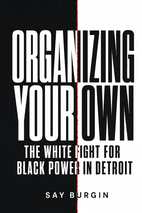
Say Burgin's Organizing Your Own: The White Fight for Black Power in Detroit challenges the myth that Black Power expelled white activists, tracing four Detroit organizations—People Against Racism, the Detroit Industrial Mission, the Ad-Hoc Action Group, and the Motor City Labor League—to show how Black Power advocates directed white supporters into "racially parallel organizing" within their own communities. For scholars, students, and organizers grappling with solidarity and accountability.
Feature
Insta.Page
Blinkist
Shortform
Summary Depth
Full Chapter-by-Chapter
15-min overview
Section-by-section guides
Audio Narration
✓
✓
✓
Full access to all 700+ summaries
✓
✓
✓
Visual Mindmaps
✓
✕
✕
AI Q&A
✓
✕
✕
Missing a book? Request it, usually live within 48h
✓
✕
✕
Quizzes
✓
✕
✕
PDF Downloads
✓
✕
✓
Send to Kindle
✓
✓
✓
Price
$89.99/yr
$146/yr (PRO)
$199/yr
*Competitor data last verified July 2026.
1 Page Summary
Say Burgin's Organizing Your Own: The White Fight for Black Power in Detroit challenges the widely held assumption that Black Power pushed white activists out of the freedom struggle. Drawing on the history of four Detroit-area organizations—People Against Racism, the Detroit Industrial Mission, the Ad-Hoc Action Group, and the Motor City Labor League—Burgin shows that Black Power advocates did not expel white supporters but instead directed them to organize their own communities against racism through what she terms "racially parallel organizing." The book traces this strategy from its origins in the Northern Student Movement's Michigan Project and the 1969 White Organizers Conference at Highlander Folk School through the varied work of each organization: PAR's efforts to disorient white people from inherited racial assumptions, DIM's inside-the-institution approach to affirmative action consulting, Ad-Hoc's white cop-watch teams that functioned "like body cameras," and MCLL's political education projects organized under the guidance of the League of Revolutionary Black Workers. Throughout, Burgin dismantles four myths—that SNCC expelled whites, that Black separatism replaced integration, that rejected allies quit politics, and that whites were unwelcome in Black self-determination—arguing that both white participation and Black self-determination occurred simultaneously.
What makes the book distinctive is its ground-level recovery of how racially parallel organizing actually developed—not as national policy but from local integrated civil rights work, as interracial organizing hit setbacks, white resistance persisted, and state repression mounted. Burgin examines the genuine dilemmas white activists faced: how to act in solidarity without speaking for or over Black-led communities, whether to confront institutions from outside or work within them, and how to reach white working-class neighborhoods whose residents might recoil from the politics motivating the outreach. The book situates these questions within the NYU Press Black Power Series edited by Ibram X. Kendi and Ashley D. Farmer, and positions itself against both early journalistic framings of Black Power as separatist retreat and subsequent scholarship that, while unsettling other clichés, left the "white purge" narrative intact.
The book is intended for scholars and students of the civil rights and Black Power eras, as well as activists and organizers grappling with questions of solidarity, accountability, and cross-racial coalition-building that remain unresolved today. Readers will gain a more accurate picture of the era—one in which Black activists asked white supporters to stay active and redirect their energies rather than leave the struggle—and a concrete historical framework for understanding what solidarity demands when old arrangements no longer hold, including the ongoing challenge of building a white base for racial justice without recentering the struggle around white participants.
Half Title
Overview
White activists who wanted to support Black Power faced a bind: joining Black-led movements looked like solidarity, while turning to other white people risked recentering the struggle around them. What their own work was for, and who it answered to, remained unsettled.
The Series and Its Editors
Organizing Your Own appears in the NYU Press series of the same name, edited by Ibram X. Kendi and Ashley D. Farmer. Other books in the series cover:
Clarence Taylor on police brutality in New York City
Joshua M. Myers on Howard University's 1989 student protest
Quito Swan's Pasifika Black
Brian Jones on the Tuskegee student uprising
Marc Arsell Robinson on Black Power in the Pacific Northwest
The Detroit Volume
Say Burgin's Organizing Your Own: The White Fight for Black Power in Detroit, published in 2024 and dedicated to Cindy and Jay Burgin, looks at white organizing in Detroit through People Against Racism, the Detroit Industrial Mission, the Ad-Hoc Action Group and the Motor City Labor League. Burgin opens by rethinking how Black Power related to white people, and closes by making the case for white organizers building their own base. An appendix lists groups that organized white people, and the opening pages spell out the abbreviations for every organization and initiative cited.
Key Takeaways
The series treats racial justice history as a run of concrete local campaigns, and the Detroit book is meant to be read alongside the others, not on its own.
Burgin argues that white participation in Black Power era politics worked best when white organizers made other white people their constituency, not when they tried to join Black-led groups.
The appendix and the list of abbreviations show the book works as a map of who organized with whom, not just as a story you follow start to finish.
Key concepts: Half Title
Half Title
The White Activist's Dilemma
Joining Black-led movements signaled solidarity but risked white self-effacement.
Organizing other white people risked recentering the struggle around white concerns.
The purpose and accountability of white antiracist work remained unsettled.
The Organizing Your Own Series
Edited by Ibram X. Kendi and Ashley D. Farmer for NYU Press.
Features local racial justice histories, including Taylor on NYC police brutality.
Includes Myers on Howard University's 1989 protest and Swan's Pasifika Black.
Also covers Jones on Tuskegee and Robinson on Black Power in the Pacific Northwest.
Burgin's Detroit Volume
Examines white organizing in Detroit through People Against Racism and other groups.
Argues white organizers should build their own base rather than join Black-led groups.
Includes an appendix of groups that organized white people and a list of abbreviations.
Published in 2024 and dedicated to Cindy and Jay Burgin.
💡 Try clicking the AI chat button to ask questions about this book!
Introduction: Rethinking Black Power’s Relationship to White People
Overview
White activists were being told to organize their own communities against racism, yet the movement that issued the call had long been wary of white participation. At Highlander Folk School from March 7 to 9, 1969, about fifty activists gathered for the White Organizers Conference. More and more voices were urging white people to fight racism in white suburbs, workplaces, and institutions. Highlander had long been a key training and strategy site for the Black freedom movement. People Against Racism sent eight delegates, far more than any other group. They came from Detroit, Grand Rapids, Ann Arbor, and New York, along with two national staffers and one at-large member. That showing reflected nearly four years of organizing white people against racism. National director Frank Joyce gave the opening address, "Why White Organizing?" Since 1966, SNCC had told white staff and supporters to leave Black community organizing to Black activists and work in white areas. In 1967, Stokely Carmichael and Charles Hamilton published Black Power.
Key Takeaways
Black Power's call for white activists to leave Black-led organizations wasn't a push out of the freedom struggle. It redirected them toward white communities.
Organizing white people against racism was already going strong well before the 1969 Highlander conference. It wasn't a sudden reaction to Black Power.
The size of the People Against Racism delegation showed the work had built strong organizations with national reach and experienced staff.
The question of what role white people should play got answered on the ground, by organizers making strategic choices, not just in published arguments by movement leaders.
Key concepts: Introduction: Rethinking Black Power’s Relationship to White People
Introduction: Rethinking Black Power’s Relationship to White People
Black Power's Strategic Redirection
SNCC urged white activists to leave Black organizing and work in white communities.
This was not expulsion but redirection toward confronting racism among white people.
Carmichael and Hamilton's Black Power articulated this shift in 1967.
Highlander Conference and White Organizing
1969 White Organizers Conference gathered fifty activists to strategize.
People Against Racism sent eight delegates, showing strong national reach.
Frank Joyce's opening address framed the case for white organizing.
Grassroots Agency Over Published Debate
White organizing against racism predated Black Power by years.
Role of white people was settled by organizers' strategic choices on the ground.
Organizing white communities was already strong before 1969.
Series Page
Overview
White people who want to support Black self-determination have to figure out their role and whether they have the right to play it: how to act in solidarity without speaking for or over the communities they claim to back. Their presence can look like control, but staying away leaves the work undone.
The Black Power Series
Organizing Your Own: The White Fight for Black Power in Detroit, by Say Burgin, came out from NYU Press in 2024 in the Black Power Series edited by Ibram X. Kendi and Ashley D. Farmer. The series also includes Clarence Taylor's Fight the Power, on police brutality in New York City; Joshua M. Myers's We Are Worth Fighting For, on Howard University's 1989 student protest; Quito Swan's Pasifika Black; Brian Jones's The Tuskegee Student Uprising; and Marc Arsell Robinson's Washington State Rising, on Black Power on campuses in the Pacific Northwest.
Two Flanks of a Movement
Detroit's Black Power movement ran on two fronts. One, led by Black people, worked to build political and economic power in Black communities. The other, led by white people and often following guidance from Black groups, worked to build support for Black self-determination in white communities. Burgin calls this racially parallel organizing and treats it as a core part of Black Power politics, not a side tactic.
The directive came from Black organizers. At the September 1965 meeting that created People Against Racism, Frank Joyce told his white comrades in the Northern Student Movement that real change required both a strong, independent Black movement focused on gaining power and white people building power in a parallel movement. PAR spent five years building that parallel movement in Detroit, and its example kept one alive there into the mid-1970s. Dorothy Dewberry, who directed the city's SNCC office, laid out the task in May 1966: white people had to do the jobs Black people could not, which meant working in their own communities.
From Suggestion to Mandate
Bayard Rustin floated the idea to young SNCC supporters in the early 1960s, and SNCC tested it in its 1963-1964 White Folks' Project, which became the basis for the Southern Student Organizing Committee, the first formalized group of the era built on racially parallel practice and focused on white college students in the South. Students for a Democratic Society and Friends of SNCC chapters debated it too. The Northern Student Movement, based in New York with a strong Detroit presence, may have done more than any group outside the South to promote it.
NSM began interracially under a white director, Peter Countryman, and moved toward becoming all-Black in 1965 under Bill Strickland, who explained that autonomy meant Black activists no longer wanted to exist at the mercy of whites. More than a year before white media reported a purge of white activists from SNCC, NSM drafted a Michigan Project putting Black organizers in charge of Black neighborhoods and assigning white members to grow white support. The project was dropped, but NSM still tasked its Detroit white members with forming an autonomous group. In September 1965 they created the pilot Friends of NSM, soon renamed People Against Racism, which billed itself as the first group in the country to support Black Power and confront racism in white communities at the same time, its own members included.
A Strategy Apart
Racially parallel organizing treated Black communities as rich in assets, prized racial unity, and pursued self-determination, overlapping with nationalist strains reaching back to Martin Delany and Garveyism. It differed from US, the early Committee for Unified Newark, the Republic of New Afrika and the Nation of Islam by imagining a future built on shared racial consciousness rather than a Black state. The aim was to change the state through bottom-up pressure from a multiracial base, which set the strategy apart from both liberal and some Black separatist approaches.
Detroit's White Organizations
Douglass Fitch, a former CORE activist and Black minister, told the all-white Detroit Industrial Mission after the July 1967 rebellion to shift its staff from advocating for unemployed Black men toward confronting white executives about racist policies and work culture; the result was "new white consciousness," affirmative action training, and support for the League of Revolutionary Black Workers. When the Poor People's Campaign asked a young white Detroiter, Sheila Murphy, to mount a visible white response to police violence against its visiting contingent, she built the Ad-Hoc Action Group, made up of white housewives, students and clergy who watched police encounters with the public as watchdogs. Two years later the League asked white people it trusted from PAR, DIM and Ad-Hoc to organize a white parallel, and they formed the Motor City Labor League, building the white side of the socialist revolution the League sought to lead.
Racialized Ignorance
White activists treated racialized ignorance as a foundation of racial hierarchy. They pushed curricula to include Black history and the sociology of race, ran suburban Freedom Schools for high school and college students at the urging of Dewberry and Stokely Carmichael, and produced talks, newspaper ads, political education classes, reading groups, pamphlets and Robert Terry's book For Whites Only. Their claims were consistent: US history is the history of white power over people of color, Black history is a vital lens on the present, and whiteness works as a set of norms that benefit white people. Charles Mills's "epistemology of ignorance" names what they faced: not missing information but a shared agreement to misread the world.
Policing
The near-all-white Detroit Police Department raided, ticketed, arrested and assaulted activists, spied on them, and ran a surveillance and decoy unit responsible for killing dozens, with courts supplying legal cover. Ad-Hoc described policing as the most open, most felt arm of institutional racism. PAR, Ad-Hoc and the Motor City Labor League all began partly in response to that repression. White groups gathered data and testimony to refute the claim that brutality was a myth; by the late 1960s PAR had built a base of white city and suburban residents alarmed by the "law and order" turn, which Ad-Hoc turned into patrols, and what they learned fed the citywide multiracial campaign from 1971 to abolish the STRESS unit.
Against the "Antiwhite" Myth
Popular culture, from the 1999 miniseries The 60s to Lee Daniels's 2013 film The Butler to the 2018 documentary King in the Wilderness, reduces Black Power to a hate-fueled threat to white society. Scholars have taken apart the "evil twin" framing. What persists is a legend that SNCC's 1966 and 1967 decisions to limit white roles amounted to a purge of white people from the movement.
Key Takeaways
Black Power in Detroit is best understood as a two-front politics: Black-led groups pursued community power while white organizers, under Black direction, worked to weaken white resistance and build white support.
The test of white activism was whether it confronted white institutions and constituencies, from corporate executives to suburban students to police encounters, not whether it expressed sympathy for Black suffering.
Racialized ignorance counted as an active structure that white institutions reproduced, which is why political education, Black history curricula, and publications for white audiences were real organizing work.
Repression by a near-all-white police force did not just suppress the movement; it gave white organizers a concrete issue, a moral vocabulary, and a multiracial coalition that eventually targeted STRESS.
The "antiwhite" legend and the purge story misread the period: Black organizations set the terms of white participation, and limiting white roles was a strategic reallocation, not proof that Black Power defined itself by hostility to white people.
Key concepts: Series Page
Series Page
The White Ally's Dilemma
White supporters must find a role without speaking for Black communities
Their presence can look like control; absence leaves work undone
Solidarity requires navigating the right to participate
The Black Power Series
Edited by Ibram X. Kendi and Ashley D. Farmer at NYU Press
Includes Burgin's Organizing Your Own on Detroit's white fight
Features works on police brutality, Howard 1989, and campus movements
Two Flanks of a Movement
Black-led front built political and economic power in Black communities
White-led front built support for self-determination in white communities
Burgin calls this racially parallel organizing, a core Black Power politics
From Suggestion to Mandate
Rustin floated the idea; SNCC tested it in the 1963-64 White Folks' Project
NSM moved toward all-Black leadership under Bill Strickland in 1965
Detroit white members formed People Against Racism in September 1965
A Strategy Apart
Treated Black communities as asset-rich and prized racial unity
Imagined shared racial consciousness rather than a separate Black state
Sought change through bottom-up multiracial pressure on the state
Detroit's White Organizations
Douglass Fitch pushed Detroit Industrial Mission toward confronting white executives
Sheila Murphy built the Ad-Hoc Action Group to watchdog police violence
Motor City Labor League formed as the white parallel to the League
Racialized Ignorance and Policing
Activists treated racialized ignorance as a foundation of racial hierarchy
Ran Freedom Schools, curricula, and Robert Terry's For Whites Only
Charles Mills's epistemology of ignorance: a shared agreement to misread the world
List of Abbreviations
Overview
Black Power is often remembered as the moment white activists were pushed out of the freedom struggle, turning allies into outsiders. Yet how activists actually organized together in those years leaves that account unsettled. What did Black activists ask of white supporters, and what did those supporters do?
The antiwhite reading of Black Power descends from the media war that began when Black Power became nationally prominent in 1966. Journalists framed it as a break from civil rights, a retreat into separatism or Black nationalism, and early histories repeated those frames. Local studies by Charles Payne and John Dittmer showed instead how liberal failures and lethal danger to activists helped create Black Power. Recent scholarship has unsettled other clichés but not the claim that Black Power purged white people. Veterans have done more to reject that story.
SNCC is the hinge because it is treated as the moment interracialism supposedly collapsed. Charles Payne calls the alleged white expulsion a watershed. But Black activists did not simply tell white supporters to leave. They told them to stay active and redirect their energies to different audiences. A purge did not occur as commonly portrayed. SNCC and other groups set a new direction for white comrades, and many white activists took it seriously. Racially parallel organizing was a strategy, not dogma, and following it shows white activists accepting Black leadership.
The myth also hides continued Black and white collaboration. In Detroit, Black activists asked white comrades to build white-led groups, raise consciousness among other white people, and organize white liberals or working-class Detroiters. They remained comrades, friends, and sometimes partners, and they supported Black-led actions such as the August 1967 People's Tribunal over police killings of three young Black men. The result was not distance but a different kind of shared work.
The Northern Student Movement
The SNCC-centered story also crowds out the Northern Student Movement. NSM and SNCC operated as sister entities in Detroit in the early 1960s, but NSM's focus was northern racism. Its debates over white paternalism, Black leadership, and interracial dating preceded SNCC's. Two years before SNCC restricted white labor, NSM director Bill Strickland issued a "no more white women in the ghetto" instruction. NSM then adopted Black Power language and built racially parallel organizing into plans for a 1965 Michigan Freedom Summer modeled on Mississippi. The project was aborted, but the planning led to People Against Racism.
Process, Not Ideology
The shift came through process, not ideology. It followed years of struggle in North and South, police and government repression of civil rights workers, and repeated liberal failures. Detroit Mayor Jerome Cavanagh preferred symbolic appearances with Martin Luther King Jr. to open housing or police reform, signaling that liberalism would not deliver Black freedom. Racially parallel organizing promised a buffer for Black-led groups, a way around liberal leaders, relief from interracial organizing's problems, and a means to break white resistance. Anne Braden and Weatherman are usually treated as exceptions, which obscures the strategy's wider uptake in groups like Chicago's Rainbow Coalition.
Detroit Before the Shift
According to the book, Detroit's Black Power movement grew from a broad civil rights campaign against northern segregation in housing, schools, jobs, and policing. Racial liberalism denied structural racism while offering symbols. Restrictive covenants, redlining, and homeowners' associations kept suburbs white. Urban renewal displaced more than forty thousand Detroiters, most Black, and destroyed Black Bottom. By the mid-1960s more than a dozen suburbs had no Black homeowner, and 85 percent of Black elementary students attended Black-majority schools. By the mid-1960s over 90 percent of Detroit's police force was white.
Policing and the Road to 1967
For decades Detroit's police acted, in bookstore owner Ed Vaughn's phrase, as "an army of occupation" that came down on Black residents almost nightly. The local NAACP and Urban League documented dozens of police killings from the 1920s through the 1960s, and NAACP head Arthur Johnson charged that the Free Press and the News had a standing agreement to keep brutality cases out of print while concentrating crime coverage on offenses attributed to African Americans. A 1960-1961 crash program pulled thousands of young Black men into custody, scaling up the routine investigative arrest that let police hold people for hours without charges. Officials praised the department and denied the pattern. Then a mass arrest of Black Detroiters celebrating the homecoming of Vietnam veterans set off the July 1967 uprising, and the city's "model" race relations reputation collapsed.
1963: Advance and Fracture
Two months before the March on Washington, 250,000 Detroiters walked down Woodward Avenue in the June 1963 Great Walk to Freedom, which the Reverend C. L. Franklin called a warning that the past was no longer acceptable to Black Detroit. Within two weeks an officer killed Cynthia Scott, a well-known sex worker, and when the Wayne County prosecutor refused as usual to indict, the community protested at scale. That November the movement's camps diverged in public. Franklin's Detroit Council for Human Rights cooperated on a Northern Christian Leadership Conference meant to build a northern counterpart to King's Southern Christian Leadership Conference, while the Reverend Cleage's GOAL wanted Black nationalists and leftists included and mounted a rival Northern Negro Grass Roots Leadership Conference the same weekend, where Malcolm X delivered "Message to the Grassroots." Rosa Parks attended both.
The Mandate Spreads
By 1965 younger organizers had taken over the Motor City movement, with NSM, Friends of SNCC, SDS, and CORE often working beside the WCO, GOAL, DCHR, and Uhuru, and most had concluded that community control and Black self-determination were the only routes forward. White comrades arrived at the same verdict. Five initiatives stand for the ordinary white citizens who answered the call:
People Against Racism
the Ad-Hoc Action Group
the Detroit Industrial Mission
the Motor City Labor League
its offshoot, the Control, Conflict, Change Book Club
The League at the Center
White organizers who flocked to Detroit by the late 1960s expected the Panthers to be the defining Black left presence, Sheila Murphy Cockrel recalled; here it was the League of Revolutionary Black Workers, whose leaders set direction for white radicals for years before Mike Hamlin asked his white counterparts to build a parallel in 1971. The Motor City Labor League carried that work furthest into factory organizing, then splintered into competing factions and, by 1974, dropped the mandate entirely. Agreement on racially parallel work was broad but never total: the Republic of New Afrika refused it outright, and the League itself split in 1971 partly over how much to invest in white coalitions. The experiment left questions open:
which white communities to organize
whether to organize from inside the city or out in the suburbs
whether to push for reform or revolution
when solidarity with Black struggles becomes sycophancy
whether white people had to learn about racial oppression before acting, or could learn while building the movement
Key Takeaways
The idea that Black Power drove white supporters away is a distortion produced by 1960s press framing; Black organizers typically asked white comrades to keep working in different arenas, not to leave.
Organizing along racial lines was a strategy for protecting Black-led groups, bypassing liberal gatekeepers, and breaking white resistance, not a doctrine of exclusion; white activists who adopted it were following Black direction.
The Northern Student Movement's Detroit work on white paternalism and Black leadership predated and shaped SNCC's better-known debates, so a SNCC-only account misses how northern racism generated the shift.
Detroit's turn grew out of housing, school, employment, and police struggles against a liberalism that offered symbolism instead of structural reform; the 1967 uprising exposed the failure of the city's model race-relations reputation.
The move toward race-specific work came through years of repression, liberal disappointment, and organizing practice rather than ideological conversion, and it left unresolved whether white radicals should organize suburbs or cities, reform or revolution, and how to avoid sycophancy.
Key concepts: List of Abbreviations
List of Abbreviations
Reexamining Black Power and White Activists
Black Power often misremembered as pushing white activists out.
Black activists asked white supporters to redirect energies, not leave.
Racially parallel organizing was a strategy, not dogma.
White activists accepted Black leadership and remained comrades.
SNCC and the Myth of White Expulsion
SNCC seen as hinge of interracialism's collapse.
No purge occurred as commonly portrayed.
Black activists set new direction for white comrades.
Many white activists took the new direction seriously.
Continued Collaboration in Detroit
Black activists asked white comrades to build white-led groups.
White activists raised consciousness among white people.
They supported Black-led actions like the 1967 People's Tribunal.
Result was different kind of shared work, not distance.
Northern Student Movement
NSM and SNCC were sister entities in early 1960s Detroit.
NSM focused on northern racism and debated white paternalism.
Bill Strickland issued 'no more white women in the ghetto' instruction.
NSM adopted Black Power language and planned 1965 Michigan Freedom Summer.
Process, Not Ideology
Shift came through years of struggle and liberal failures.
Detroit Mayor Cavanagh preferred symbols over reform.
Racially parallel organizing promised buffer for Black-led groups.
Strategy had wider uptake beyond exceptions like Anne Braden.
Detroit Before the Shift
Black Power grew from broad civil rights campaign against northern segregation.
Racial liberalism denied structural racism while offering symbols.
Urban renewal displaced over 40,000 Detroiters, mostly Black.
By mid-1960s, over 90% of police force was white.
Policing and the Road to 1967
Police acted as 'army of occupation' with routine brutality.
NAACP documented dozens of police killings from 1920s-1960s.
1960-1961 crash program and investigative arrests targeted Black men.
Mass arrest of Black veterans celebrating homecoming set off July 1967 uprising.
You've reached the end of the free chapters
Next chapter: ““To begin to work in their own communities”: Creating the Strategy of Racially Parallel Organizing” is locked
Keep reading Organizing Your Own — and unlock all 700+ book summaries with audio, mindmaps and AI Q&A.
$0.00 due today · 7 days free, then $89.99/year ($7.49/mo) · Cancel anytime before day 7
Say Burgin is a historian and associate professor of history at Dickinson College, where her research focuses on African American history, social movements, and the politics of race and gender. She is the author of Organizing Your Own: The White Fight for Black Power in Detroit, which examines white activists' roles in the Black Power movement. Her scholarship has appeared in journals including the Journal of Civil and Human Rights and American Studies.
Frequently Asked Questions about Organizing Your Own
What is Organizing Your Own about?
It examines how white activists in Detroit organized in support of Black Power through groups including People Against Racism, the Detroit Industrial Mission, the Ad-Hoc Action Group, and the Motor City Labor League. The book rethinks the common idea that Black Power pushed white people out, showing instead that Black activists often directed white supporters to organize their own communities against racism. It traces racially parallel organizing across suburbs, workplaces, institutions, police accountability work, and labor-related political education. It also challenges myths about Black Power and white participation while assessing the legacy of that organizing.
Who is the author of Organizing Your Own?
Say Burgin is the author of this 2024 NYU Press volume in the Black Power Series edited by Ibram X. Kendi and Ashley D. Farmer. The book is dedicated to Cindy and Jay Burgin.
Is Organizing Your Own worth reading?
It is worth reading for its detailed look at how white activists actually worked in support of Black self-determination rather than simply leaving the struggle. The book challenges the familiar claim that Black Power expelled white people and shows the tensions, strategies, and accountability questions faced by white organizers in Detroit. Readers interested in coalition politics, racial justice organizing, and the history of Black Power will find the local cases especially useful.
What are the key lessons from Organizing Your Own?
Black Power's call to white activists was often a redirection, not an expulsion: white supporters were told to stay active but organize in white communities and institutions. Racially parallel organizing grew from local civil rights work and aimed at racism’s perceived source in white people’s minds and actions. White groups had to navigate how to act in solidarity without speaking for or over Black-led movements, whether working inside mainstream institutions, watching police, or organizing white working-class neighborhoods. The book also shows that myths about SNCC expelling whites, Black separatism replacing integration, and rejected allies quitting politics have obscured the real organizing that took place.
📚 Explore Our Book Summary Library
Discover more insightful book summaries from our collection