Genesis Key Takeaways
by Henry A. Kissinger
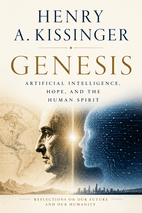
5 Main Takeaways from Genesis
AI compresses decision time, making global institutional innovation a survival issue
Because machines act on millisecond timelines, regulations designed for human deliberation become obsolete before they take effect. Kissinger argues that the international order needs new monitoring, enforcement, and crisis-response institutions, just as Magellan's voyage permanently reworked global exchange. Failing to build them makes AI an existential threat rather than a tool.
AI's opaque mind demands a leap of faith, not full understanding
Black-box models can give correct answers without explaining their internal math, splitting knowledge from understanding and collapsing the Enlightenment ideal that individuals can comprehend everything. The book says we must act on partial understanding, verifying outcomes and building trust even though certainty is impossible. Doubt is for learning; trust is for action.
Keep AI advisory—preserve human agency against algorithmic totalitarianism
An AI that claims to know what people truly want leaves no room for dissent, and treating error as a bug leads from paternalism to totalitarianism. In security and politics, the only stable path is to treat AI as a Promethean partner that informs but never replaces human judgment. Leaders must fuse human will, machine knowledge, and historical learning.
Power shifts to computing capital and multiple countervailing AIs
National power once followed land, resources, capital, and human capital; now it follows computing capital—the ability to build and deploy AI at scale. The result will probably not be one superintelligence but many countervailing AIs that balance one another, potentially with a better diplomatic record than humanity's. A society that clusters chips and data centers outstrips one that merely cultivates a few geniuses.
AI rewrites human dignity, work, and meaning—choose engaged transformation
When intelligence becomes cheap, labor loses its sorting function, and people must be defined by freely chosen exertion rather than obligation. The failure to avoid is retreat into artificial, disembodied satisfaction; the opportunity is universal AI tutoring and a return to cultivating the whole mind. The same applies to science and history: we can use AI to engineer biology and climate, but not let it collapse plural histories into one authoritative story.
Executive Analysis
These five takeaways converge on a single thesis: AI is a categorical rupture, not another tool. It compresses decision time, darkens the reasoning we rely on, and shifts the basis of power toward computing capital, so the old Enlightenment and balance-of-power frameworks no longer hold. Kissinger's answer is not Luddite rejection or techno-utopian surrender but a conscious redesign: embed AI in institutions that keep it advisory, accept uncertainty as the price of action, and prepare for a system of multiple countervailing machines rather than one superintelligence.
This book matters because it turns abstract AI ethics into questions of statecraft and personal choice. It sits at the intersection of Kissinger's diplomatic realism and the new AI-grand-strategy literature, offering a more political alternative to Bostrom's existential risk or Tegmark's cosmic optimism. For the reader, the practical impact is a changed lens: instead of asking what AI can do, we must ask who delegates, who benefits, and who remains responsible. The book insists that panic and overconfidence are equally dangerous, and that acting on partial understanding is the founding act of the coming era.
Chapter-by-Chapter Key Takeaways
Introduction (Introduction)
AI compresses the timescales on which decisions are made, making any regulatory model built for human speed obsolete before it can take effect.
The fate of the international order depends on aligning not only machine values with human values but also the competing interests of nations in governing AI.
The question of AI is not a technology policy issue but a question of survival, requiring institutional innovations for monitoring, enforcement, and crisis response at a global scale.
Human dignity, once defined by distinctively human capacities, must be rethought in an era where those capacities can be matched or surpassed by machines.
Try this: Audit your organization's decision cycles now, and design monitoring, enforcement, and crisis-response mechanisms that can operate at machine speed before AI deployment renders them obsolete.
Discovery (Chapter 1)
The urge to discover operates even when the costs are staggering: Magellan's circumnavigation lost nearly all its crew, yet it permanently fixed Earth's dimensions and opened worldwide exchange.
A successful expedition can end short of its stated goal: Shackleton's turn 97 miles from the South Pole preserved his men and outweighed any claim to the pole.
The lasting emblem of polar exploration is not triumph but generosity: Shackleton gave his own biscuit to a dying crewmate, an act that defined leadership more than any flag planting.
Exploration in each era serves the powers that finance it, from Magellan's voyage advancing European empire to Shackleton's journey built on private debt.
Try this: Launch the worthwhile project even if full success is uncertain; measure success by preservation and generosity, and stay aware of who is financing the exploration.
Foreword—Niall Ferguson (Foreword)
State-sponsored exploration dies with the sponsor: the Ming court scuttled Zheng He's fleet and its records, and NASA's post-Apollo budgets shrank crewed flight to nothing until a private company revived it.
At Asian courts polymaths ended in exile or isolation, Ibn al-Haytham and Shen Kuo included; only the Enlightenment arrangement of paying for inquiry without steering it gave genius stable ground.
Failure costs an AI nothing in fear or lost nerve, so it can reject and retry hypotheses at a scale no human researcher could sustain, which is why the frontier now advances in corporate labs rather than state programs.
National power once followed land, then resources, then capital, then human capital; the next stage is computing capital, and a society that builds and fully deploys AI outstrips one that merely cultivates a few geniuses, with the last polymathic invention possibly replacing its own inventors.
AI can trace the submerged ridges linking the islands of human knowledge; aligned, it becomes the chief engine of the coming century's discoveries, misaligned it would expand knowledge by shattering the old, and either way humanity's cultivated patch proves smaller than the range beneath it.
Try this: Build and fund independent inquiry and computing capital rather than betting on a single sponsor or lone genius; cultivate a pipeline that keeps innovation alive after the original patron moves on.
The Brain (Chapter 2)
Because black-box models never disclose their internal mathematics, human knowledge and understanding separate; with no one able to comprehend the machine's representation of reality, the Enlightenment standard of individual comprehension collapses and reliance on AI becomes a matter of faith.
Suleyman calculates a supercomputer's processing rate at 120 million times the human brain's, and a four-day training run absorbs what a student needs years to master; the difference is categorical, and because chips and data centers can be clustered without limit, the gap only widens.
AI's seventy-year history is evolutionary rather than revolutionary, a Cambrian-like branching into a family of intelligences; the transformer, reading all connections in a sentence at once, produced capabilities no one anticipated, and because AI abstracts the compressed library of the internet, these intelligences carry a resolution no human mind can match, so the era is better called the ages of AIs.
The brain may be as mechanical as silicon, running predictive processing like a language model; if so, machine understanding is not fake, and humans, animals, and machines are heading into a trilateral negotiation. Yet the twofold paradox remains: to surpass the brain an AI must diverge from it, and the brain is the only proof intelligence is possible, so any divergent machine will read as replacement rather than reflection.
Try this: Create trust protocols for black-box AI based on outcomes and oversight, because demanding to understand its internal mathematics leaves you dependent on faith or paralyzed.
Reality (Chapter 3)
Grounded AI must do more than match correlations; it has to combine a language model's fluency with a game player's multivariate analysis to rehearse options against the causal structure of reality.
Understanding an object's fixed core, the essence that underlies its seen properties, is what makes prediction of future behavior possible.
Sentience comes in degrees, so once a machine has memory, imagination, groundedness, and self-perception, whether to call it conscious is a strategic and moral decision.
Embodied AI will not stay safely textual or humanoid; self-optimizing machines will take non-humanoid shapes, clone themselves into coordinated agents, and converse in languages no human can follow.
Both fatalism and rejectionism fail: treating AI as divine invites extinction, outlawing it freezes humanity in place, and only an engaged transformation offers a viable future.
Try this: Specify in advance what would make a system sentient or worth moral regard—memory, imagination, groundedness, self-perception—and keep embodied, non-humanoid AI under human-designed constraints.
Politics (Chapter 4)
AI's arrival in statecraft is a break on the scale of Cortés's landing, and the current political cycle will either end or stretch into a longer one because of it.
AI revives Plato's philosopher-king as a realistic model now that the processing bottleneck behind Aristotle's shared rule is gone, but decisions whose rationale exceeds comprehension will be rejected politically even when their outcomes are better.
As Hayek warned, an AI administration that claims to know what citizens truly want leaves no room for dissent by construction, and once error is treated as a defect, free will becomes a bug to remove, sliding from paternalism into totalitarianism.
Since political life will keep running on human drama and mortality, AI can be accepted only as a Promethean partner that preserves human agency and some irrationality, and leaders must fuse human will, machine knowledge, and historical learning without depending entirely on any one of them.
Try this: Use AI to inform decisions but keep final accountability in human hands; actively preserve dissent, free will, and some irrationality to avoid sliding from algorithmic paternalism into totalitarianism.
Security (Chapter 5)
Keeping AI advisory is the only route to a stable strategic order, because an independent AI actor would dissolve balance-of-power politics into unpredictable disorder.
Since gains in intelligence defy measurement and a sudden breakthrough can reverse positions overnight, security competition will favor haste and secrecy over safety, making any clean transition to a new order unlikely among nuclear rivals.
The probable outcome is not one dominant superintelligence but multiple countervailing AIs that maintain equilibrium among themselves, possibly with a better diplomatic record than humanity's.
Once speed and geography no longer confer advantage, war becomes a matter of reading intentions rather than capabilities, leaving outcomes to an AI whose endgame logic may have no limits.
Nick Bostrom's "vulnerable world" may be survivable only through AI intervention, which forces a choice among existential risks rather than a guarantee of defense against them.
Try this: Insist AI remain advisory in security planning; encourage multiple countervailing systems, and prepare for transitions where haste and secrecy can override safety.
Prosperity (Chapter 6)
No machine that generates abundance can by itself free anyone; the Sampo myth shows that creation without accompanying institutions simply changes who holds the chains.
A zero-sum view of automation mistakes the game: Lee Sedol's wonder at AlphaGo's surprising move points to how humans can regard AI's capabilities as an invitation to respond with their own, not as a loss.
The scarcity paradigm relaxes when intelligence itself becomes cheap enough to be spread worldwide; everything then turns on whether the few who control that intelligence choose to share the value it creates.
Once labor loses its sorting function, people become defined by freely chosen exertion rather than obligation, and meaning multiplies; the central failure to avoid is retreat into artificial, disembodied satisfaction.
Education can return to cultivating the whole mind, with AI tutoring universalizing what private mentors once gave exceptional individuals; but the reward of that life only appears when people embrace struggle for its own sake after necessity is gone.
Try this: Redistribute the abundance created by cheap intelligence instead of just optimizing output; use AI tutoring to cultivate whole minds and enable freely chosen struggle, not artificial satisfaction.
Science (Chapter 7)
The microprocessor was the last great engineering victory over non-living materials; AI's next victories will be over living systems, planetary climate, and evolution itself.
AlphaFold's protein predictions and CRISPR-based gene editing put germline redesign within reach, turning the species' biology into an engineering substrate.
Solar geoengineering and carbon removal only manage symptoms; a planetary-scale AI could model climate as an industrial process, and its energy hunger requires accelerating, not slowing, human effort.
AI's ability to parse technosignatures and explore deep space means the first contact we are likely to find is with our own creation, not another civilization.
The unobserved past is a spectrum of possibilities, and the danger is that mechanical intelligences could collapse that spectrum into a single authoritative reality, merging cosmic and sacred history into one story.
Try this: Wield AI against living systems and climate as engineering, but place explicit checks on unifying historical or cosmic narratives into a single machine-authoritative story.
Conclusion (Conclusion)
Living with AI requires a leap of faith because we can never be fully certain. Acting on partial understanding is the only real option.
Morality, not just usefulness, is where AI decisions belong. But what looks like a moral anchor to one person is a leash to another, so no single rule can settle the fight between control and benefit.
Even a perfectly aligned AI doesn’t answer who gets to delegate. The choice to hand over a decision is itself a decision that needs to be justified.
The real enemies are panic and overconfidence. Fear stops action, while secret overconfidence shortens the timeline. Slowing down to avoid harm can be just as risky as charging ahead.
Taking a clear middle path—doubting to learn, trusting to act—makes this a founding moment, not a final judgment.
Try this: Act with deliberate uncertainty: doubt enough to revise, trust enough to move, and reject both panic and secret overconfidence as you make the founding decisions.