As an Amazon Associate, we earn from qualifying purchases.
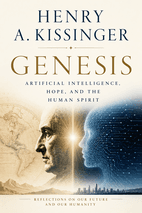
Henry A. Kissinger's Genesis: Artificial Intelligence, Hope, and the Human Spirit argues that AI marks a fundamental break from prior technologies, replicating the brain at speeds 120 million times human capacity. Written for policymakers and leaders, it examines alignment problems, black-box opacity, and AI's reshaping of diplomacy, security, and prosperity.
On Insta.page you also get an Apply This Book tool that lets you combine insights from up to 3 books to solve your specific situation.
Chapter mindmaps
Free preview: chapters 1–4 are fully interactive. Click any node to expand or collapse. Subscribe to unlock the rest.
Chapter 1: Introduction
Key concepts: Introduction
Introduction
The Stakes of AI
AI reshapes reality, truth, knowledge, and diplomacy
Decision speeds exceed human regulatory capacity
Future powers will surpass current capabilities
AI threatens human survival itself
The Alignment Problem
Machines must match human values
Nations must agree on AI governance
Traditional regulation is obsolete at AI speeds
Requires built-in safeguards in every system
The Path Forward
New political structures for monitoring and enforcement
Global crisis response mechanisms needed
Authors combine diplomatic and technical expertise
Redefine what makes humans special
CHAPTER 1: Discovery
Key concepts: CHAPTER 1: Discovery
CHAPTER 1: Discovery
The Urge to Discover
Discovery is humanity's most exhilarating capacity
Curiosity drives us to turn questions into answers
Exploration persists despite danger and risk of death
Magellan's Circumnavigation
First global voyage: three years of violence and starvation
Crew underestimated distance, food needs, and dangers
Only 18 of 270 survived; Magellan died by poisoned arrow
Voyage fixed Earth's dimensions and opened global exchange
Shackleton's Antarctic Journey
Came within 97 miles of South Pole in 1909
Turned back to save men despite near-success
Gave his daily biscuit to ailing crewmate Frank Wild
Later polar expeditions followed; famous ad story debunked
Key Takeaways
Discovery proceeds even when costs are staggering
Success can mean turning back short of the goal
Generosity, not triumph, defines polar exploration
Exploration serves the powers that finance it
Chapter 3: Foreword—Niall Ferguson
Key concepts: Foreword—Niall Ferguson
Foreword—Niall Ferguson
Fragility of Patronage
Zheng He's fleet destroyed by court factions
NASA budgets shrank after moon landing
Private SpaceX revived cosmic ambition
AI as New Explorer
AI feels no fear, shame, or failure cost
Private corporations lead AI development
Democratic risk tolerance is an X factor
Polymaths and Their Fates
Ibn al-Haytham hid from caliph
Shen Kuo exiled due to rivalry
Enlightenment funded inquiry without steering
Computing Capital
Power shifts from land to computing capital
AI may replace its own inventors
Society with AI outstrips one with geniuses
Mapping Knowledge Archipelago
AI can link isolated disciplines
May solve Grand Unified Theory
Aligned AI drives discoveries; misaligned shatters knowledge
CHAPTER 2: The Brain
Key concepts: CHAPTER 2: The Brain
CHAPTER 2: The Brain
AI as Replication, Not Augmentation
AI targets the brain, the one organ never replicated
Produces intelligence greater than any human's
Raises trust questions about machine thinking
Speed of Machine Learning
Back-propagation lets machines improve themselves
Model learns in four days vs. student's four years
AI supercomputer runs 120 million times faster than brain
Opacity and Black Boxes
AI gives conclusions without explanations
Internal mathematics stay hidden even from inventors
Challenges Enlightenment ideal of individual comprehension