How to Rule the World Key Takeaways

by Theo Baker
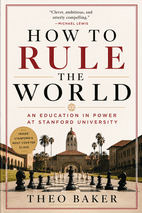
How to Rule the World by Theo Baker Book Cover

5 Main Takeaways from How to Rule the World

Elite networks thrive on exclusivity and controlled mystique

Justin's class wasn't a real course but a curated club of high-potential students, using selective invitation and secrecy to attract the most ambitious and connected. This deliberate mystique creates a self-reinforcing cycle where membership itself signals power, a pattern that extends from Stanford to Silicon Valley's inner circles.

Institutions often sacrifice safety for reputation management

Stanford's crackdown on drinking backfired, making students more dangerous, while the administration ignored a known predator to avoid bad press. The university's corporate transformation under Tessier-Lavigne prioritized risk mitigation over protecting students, a cautionary tale of how brand loyalty can overshadow core missions.

Student journalism can crack major institutional fraud

The author's investigation into Tessier-Lavigne's fabricated research data, confirmed by multiple Genentech insiders, won a George Polk Award — the first ever for a student newspaper. Meticulous sourcing, legal vetting, and willingness to risk personal backlash proved that even a college reporter can hold a university president accountable.

The dropout genius myth hides the real path to success

Justin's Rule class preached that ends justify means and manipulation is rational, but data shows most successful founders are graduate students, not dropouts. Venture capitalists' love of hype attracts the wrong people and repels true talent, while ethical innovation models like Lean LaunchPad focus on customer needs rather than value extraction.

Personal well-being is fragile when challenging power structures

The author's investigation cost him relationships, academic deadlines, and nearly his life — a single Narcan dose and three minutes of terror were all that stood between survival and overdose. Stanford's culture of 'duck syndrome' forces students to fake calm while drowning, and mental health resources remain woefully inadequate even after multiple suicides.

Executive Analysis

These five takeaways converge on a central argument: that the mechanisms of power at elite institutions like Stanford — secrecy, selective morality, and manufactured mystique — create a system that rewards manipulation and punishes transparency. The book shows how the same tactics used to build a startup or climb the social ladder also enable fraud and cover-ups, while the few who try to expose the truth pay a severe personal price. Yet the author's own journey proves that meticulous, ethical reporting can still break through, even in the face of institutional hostility.

This book matters because it is both a gripping investigative memoir and a sharp critique of Silicon Valley's culture of unchecked ambition. For readers — whether students, journalists, entrepreneurs, or leaders — it offers a raw look at the hidden costs of 'rule the world' thinking, and a practical blueprint for how to pursue truth without losing yourself. It sits at the intersection of campus exposé, tech industry anthropology, and personal narrative, joining works like The Smartest Guys in the Room and Bad Blood while bringing a uniquely vulnerable, insider perspective.

Chapter-by-Chapter Key Takeaways

Fear the Tree (Prologue)

  • Justin's class was not an official Stanford course but a curated network of high-potential students.

  • The selection process itself revealed the most connected and ambitious applicants.

  • The mystique and exclusivity were deliberate tactics to attract the aspiring tech elite.

  • "How to Rule the World" was less about education and more about building a relational foundation for future influence.

Try this: When building a network, focus on genuine value and trust rather than manufactured exclusivity — Justin's curated class may attract elite ambition, but lasting influence requires substance, not just mystique.

Drafted to the War on Fun (Chapter 1)

  • The administration's crackdown on drinking backfired, increasing dangerous behaviors like rapid hard-liquor consumption and off-campus bingeing.

  • Sustainability advocates and first responders were aligned with students in condemning the policies as counterproductive.

  • Stanford's corporate transformation under President Tessier-Lavigne prioritized risk management and reputation over the vibrant, explorative culture that made the university legendary.

  • The author's reporting process revealed a climate of fear and retaliation within the administration, with staff warned against speaking to the press despite no official policy.

  • The War on Fun was not a minor issue—it was a symptom of a deeper loss of identity, and it made campus life less safe, not more.

Try this: Instead of imposing top-down restrictions that backfire, engage directly with the community to understand root causes of risky behavior, just as Stanford's War on Fun ignored student input and made drinking more dangerous.

The Impostor (Chapter 2)

  • Stanford repeatedly failed to protect students from Curry, even refusing to issue a safety alert about a known threat.

  • Curry’s removal was triggered not by harassment but by stealing a dorm TV—a crime, not a safety concern.

  • National media coverage forced Stanford to acknowledge “gaps,” but the university framed the failure as Curry’s unique ability to ingratiate himself.

  • The impostor’s behavior echoed a broader campus culture of dishonesty: cheating, rumor-mongering, and leveraging tech for harm.

  • Fizz, a platform fueling misinformation, exposed users’ private data and legally threatened whistleblowers.

  • The Daily’s reporting earned national credibility, but the true mark of belonging—a staff T-shirt—remained conditional on continued work.

Try this: If you discover a threat in your organization, prioritize safety over reputation — unlike Stanford's refusal to issue a safety alert about the impostor, a transparent response builds long-term credibility and protects people.

Binary Bomb (Chapter 4)

  • Tessier-Lavigne had known about image manipulation concerns since 2015 and had not corrected them.

  • The university’s defense—that the alterations “do not affect the data”—was contradicted by independent experts.

  • The investigation required balancing academic demands, personal relationships, and the intense pressure of a high-stakes story.

  • Student journalism can break major institutional stories, but it requires meticulous sourcing, legal vetting, and a willingness to risk personal backlash.

Try this: When you uncover evidence of wrongdoing, gather multiple independent sources and legal vetting before publishing — the Tessier-Lavigne investigation succeeded only because the author secured multiple on-record confirmations from insiders.

Rule (Chapter 6)

  • Justin’s Rule class taught that the ends justify the means, with manipulation and value extraction framed as rational.

  • Janet’s rise shows how reputation, connections, and a willingness to cut corners can propel someone into the startup elite, regardless of actual skill.

  • Contrasting approaches like Lean LaunchPad emphasize customer-focused, ethical innovation over hype.

  • The myth of the dropout genius is contradicted by data; most successful founders are graduate students, not undergrads.

  • VCs enable the cycle by chasing hype, creating a culture where the wrong signals attract the wrong people—and true talent grows skeptical.

Try this: Reject the myth that ends justify means; instead, build your career on ethical innovation and customer-focused problem-solving, as demonstrated by Lean LaunchPad versus Justin's Rule class of manipulation.

Duck Syndrome (Chapter 7)

  • The illusion of effortless success is Stanford’s defining cultural pathology—students learn to project calm while drowning, and the institution often refuses to acknowledge the chasm between appearance and reality.

  • Personal loss compounds professional pressure. The death of Blake Hounshell, combined with the breakup with Lily and the stalling investigation, created a perfect storm of grief, guilt, and isolation.

  • Public opinion is fickle. The same campus that celebrated my reporting turned on me when the story made Stanford look bad—a reminder that institutional loyalty often trumps journalistic truth.

  • Mental health resources are insufficient. Despite multiple student suicides, Stanford’s counseling remained inaccessible and limited, leaving vulnerable students without support.

  • Kindness matters. The surprise birthday party from Daily staffers was a small gesture that meant the world in a moment of profound darkness.

Try this: Acknowledge the gap between appearance and reality in your own life and workplace — speak up about mental health struggles and demand better resources rather than perpetuating 'duck syndrome' like Stanford's culture of pretend calm.

Harriet the Spy (Chapter 8)

  • Silicon Valley's obsession with secrecy is selectively applied: NDAs for half-baked ideas, but candid admissions of misconduct flow freely among insiders.

  • The line between reporting and participating blurred as the TreeHacks team used the Daily House newsroom to plot sponsor deals—a collision of two worlds.

  • Vedant's comment ("I thought you were the best of all the interviews") reveals the tension between being a good teammate and being a good journalist.

  • The accidental encounter with Tessier-Lavigne right before the Genentech interview introduced a strange feeling of paranoia that ultimately led to a breakthrough: "jackpot."

Try this: Maintain clear boundaries between your professional and personal roles; when the TreeHacks team used the newsroom for sponsor deals, the blurred lines nearly compromised journalistic integrity.

[[Not for Distribution]] (Chapter 9)

  • Marc Tessier-Lavigne’s 2009 Nature paper on Alzheimer’s was based on fabricated data, as confirmed by Genentech’s internal review committee.

  • The paper was never retracted, allowing Tessier-Lavigne to build a career worth over $500 million while the truth stayed buried.

  • Four senior Genentech sources independently confirmed the fraud to the author, despite NDAs and fear of retaliation.

  • The author’s investigation consumed his personal life, causing missed deadlines, strained friendships, and a broken relationship.

  • The story reached a breaking point when Tessier-Lavigne refused to answer questions, leaving the author to publish without his response.

Try this: When you have irrefutable evidence but sources are afraid to speak, be patient and build trust over time — the Genentech insiders provided independent confirmations only after months of careful relationship-building.

The Good Paper (Chapter 10)

  • A cautious second statement from Genentech, admitting records might be incomplete, provided the final confidence to publish.

  • Won a George Polk Award for the investigation, the first ever given to a student newspaper, adding institutional backing at a critical moment.

  • The actual publication process was meticulous: extensive legal review, careful headline wording to avoid risk, and a multimedia package to support the 5,500-word story.

  • Sam’s decision to publish despite his own reluctance cemented a lasting bond between editor and reporter. The choice to “spring for the good paper” reflected a commitment to quality and finality.

Try this: Before publishing a major expose, invest in thorough legal review and precise language — the careful headline wording and multimedia package in the Tessier-Lavigne story turned a risk into a landmark award.

TreeHacks (Chapter 11)

  • The chapter captures the impossible juggling act of launching a bombshell investigation while running a massive event, highlighting the cost of prioritizing the story over a normal college experience.

  • MTL's aggressive denial—claiming he'd never heard of fraud allegations—contradicted multiple insider sources and set the stage for a prolonged battle over the validity of the reporting.

  • TreeHacks became both a distraction and a lifeline: tangible problems that could be solved, a team that trusted each other, and a reminder of what made Stanford feel like college, even as the university's administration turned hostile.

  • The physical and mental toll of the investigation culminated in a collapse during TreeHacks, a stark reminder that even the most driven journalist has limits, and that missteps in a moment of vulnerability could jeopardize everything.

Try this: Accept that pursuing a high-stakes mission will exact a personal cost; plan for it by building a support system and scheduling recovery time, just as the author's collapse during TreeHacks reminded him of his limits.

Solve for People (Chapter 12)

  • Scheller’s statement provided the sole on-the-record backing for Tessier-Lavigne from someone who was there, but its carefully qualified language (“I do not recall”) left plenty of room for doubt.

  • The pattern of denials now included Tessier-Lavigne, Nikolaev, Genentech, and Scheller—but the lack of a forceful, detailed rebuttal from anyone kept the story alive.

  • Tessier-Lavigne’s near-total absence from his office after the investigation raised an unspoken question: was he hiding, strategizing, or simply waiting for the storm to pass?

Try this: When a powerful figure issues a vague denial, don't assume it closes the case; look for careful qualifiers like 'I do not recall' that leave room for doubt, as Scheller's statement did for Tessier-Lavigne.

Free to Speak (Chapter 13)

  • Robbins denies all allegations of misconduct, but denial alone doesn’t resolve the fallout.

  • Avastin remains approved and effective for several cancers, even as its original colon-cancer approval has been scrutinized.

  • The story warns against blanket judgments—both for people and for drugs—when evidence is more nuanced than headlines suggest.

Try this: Avoid blanket judgments based on headlines — as the Avastin story shows, a drug can be effective for some cancers even if its original approval was scrutinized, so evaluate each case with nuance.

No Room for Error (Chapter 14)

  • Grief can pile up faster than any support system can handle, especially when you’re a young person under public scrutiny.

  • Student journalists often bear impossible burdens alone, with no peer group that truly understands their pressures.

  • The line between coping and self-destruction can be terrifyingly thin, especially when opioids offer a false promise of silence.

  • Sometimes survival comes down to a single dose of Narcan and three minutes of terrifying uncertainty.

  • True strength isn’t just winning awards; it’s throwing away the pills the next morning and deciding to stay alive.

Try this: If you feel overwhelmed, reach out for help immediately before turning to dangerous coping mechanisms — the author's decision to throw away the pills the morning after an overdose is a reminder that survival starts with a single, conscious choice.

Money Is a Rush (Chapter 15)

  • Drell’s resignation, combined with Moler’s, was a clear sign that MTL’s leadership was crumbling, and the board limited his power to appoint a successor.

  • Silicon Valley’s unapologetic worship of money and “high agency” permeates Stanford’s inner circles, from VC partners to student hustlers who plagiarize without consequence.

  • The contrast between S.H.I.T.’s scrappy, joy-driven community and TreeHacks’ lavish, ethically flexible machine captures the two souls of Stanford.

  • MTL refused all direct engagement, leaving basic questions about his research misconduct unanswered, while the university dealt with a cascade of crises.

Try this: When you witness unethical behavior in a culture that worships money and 'high agency', resist the pressure to normalize it; instead, build or join communities that value joy and ethics over hype, like S.H.I.T. compared to TreeHacks.

Continue Exploring