Kids, Wait Till You Hear This! Quotes
by Liza Minnelli
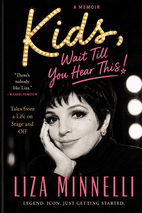
These quotes come straight from Liza Minnelli's memoir, a book that's part showbiz confessional and part life survival guide. You'll find lines that are brutally honest, deeply funny, and sometimes heartbreaking. They capture the voice of someone who lived through incredible highs and crushing lows.
What makes this book so quotable is Liza's ability to turn raw experience into sharp, memorable wisdom. She doesn't hold back on the hard stuff, but she always finds a way to land on a laugh or a defiant punchline. The quotes here feel like advice from a friend who's been through it all and lived to tell the tale.
Top Quotes from Kids, Wait Till You Hear This!
“Mama loved me passionately, and to this day I love her just as much.”
Liza Minnelli responding to cruel press stories about her mother Judy Garland.
This line powerfully affirms unconditional love despite public criticism and personal flaws.
“The only way to get through it all, she said, is to power through with a great sense of humor and an even greater sense of purpose. Never let up. Never give up. And never stop laughing.”
Liza recalling her mother Judy Garland's advice on surviving life's hardships.
It serves as an inspiring mantra for resilience, blending humor and determination in the face of adversity.
“I've often said that I became an adult too early and a child much too late.”
Liza Minnelli reflects on the impact of her upbringing in Holmby Hills.
This line powerfully encapsulates the loss of innocence and premature responsibility many children of troubled parents face.
“You gotta play the comedy for all it's worth and leave ‘em laughing. Even when your heart is breaking.”
Liza Minnelli reflects on the lesson she learned after her mother missed her opening night of Best Foot Forward.
This line encapsulates the performer's creed of resilience and showmanship, turning personal pain into a powerful, universal truth about masking heartbreak with a joyful facade.
“I decided in that moment to never bring anything negative onstage. It was the first time I turned my personal pain into energy and power.”
After being devastated by her mother's absence on opening night, Liza resolves to channel her emotions into her performance.
It captures a pivotal moment of personal transformation, showing how adversity can be transmuted into artistic strength—a lesson that resonates beyond the stage.
“Don’t You Worry, Fellas, I'm Gonna Be Great!”
The author, after landing the role of Sally Bowles, sits on the floor and says this to the film's producers.
An iconic moment of fierce self-confidence and determination, encapsulating the author's fearless spirit and the boldness that defined her career.
“I’m Liza. Knock me down seven times, baby, and I'll get up eight.”
Liza Minnelli tells the press, asserting her resilience after health struggles.
This line encapsulates her defiant spirit and refusal to stay down, making it an instantly memorable declaration of perseverance.
Themes Behind the Quotes
A central theme is resilience in the face of relentless hardship. Liza repeatedly describes being knocked down by betrayal, addiction, loss, and public scrutiny, yet she always finds a way to rise again. This is paired with a deep examination of the gap between public persona and private pain, where the cheerful entertainer often masked a terrified or grieving soul.
Another thread is the complex love and burden of family, especially her role as her mother's caretaker and her enduring devotion despite everything. The quotes also tackle the illusions of fame, the emptiness of addiction, and the slow theft of youth by time. Underneath it all is a fierce insistence on truth, both onstage and off, and a refusal to sugarcoat the messiness of being human.
Quotes by Chapter
Chapter 1 Growing Up in the Jaws of the MGM Lion
“I have only one trigger for trauma. And that’s a horror of screaming voices.”
Liza reflecting on the lasting impact of her mother's angry outburst when she accidentally kicked her.
It captures a lifelong psychological scar with stark simplicity, making readers understand the deep cost of instability.
“It was warm and dark and safe in there. I could have lived there forever.”
Liza describing rare moments when her parents put her in bed between them and held hands over her.
This evokes a universal longing for childhood security and contrast with the chaos that surrounded her family.
Chapter 2 Memories of Mama
“I was my mother's caretaker—a nurse, doctor, pharmacologist, and psychiatrist rolled into one.”
Liza describes the role she played at age thirteen while looking after Judy Garland.
It vividly illustrates the overwhelming burden placed on a child, making the reader feel the weight of her reality.
“Watch me, and when I get upset or depressed, when I get disillusioned, learn from it. I'm the best example of what I don’t want you to do. Don't make my mistakes.”
Judy Garland's advice to her daughter Liza during one of her difficult periods.
This raw, self-aware plea reveals Judy's desire for her daughter to avoid her own destructive path, blending love and warning.
“If you want to make God laugh, tell him your plans.”
Liza recalls the naive financial optimism of her mother and stepfather Sid Luft before A Star Is Born.
A universal, aphoristic truth that resonates with anyone who has faced unexpected setbacks, adding dark humor to the narrative.
Chapter 3 “Harold, Get Her Off My Fucking Stage”
“Yes, I had famous parents. But in New York, that wouldn’t even get me a free subway ride.”
Liza describes the reality of making it on her own despite her famous lineage.
This blunt, relatable statement strips away privilege and underscores the universal struggle for independence, making it a memorable underdog sentiment.
“Mama showed them what cutting-edge TV could be, and the network stabbed her in the back.”
Liza describes how CBS executives undermined her mother's groundbreaking television show.
It captures the tragic irony of a pioneering artist being betrayed by the very industry she elevated. The line starkly contrasts innovation with corporate treachery.
Chapter 4 When It All Comes True, and Then…
“I was like a person in the desert looking for water and finding a well. It was up to me to grab hold of the moment and them.”
Liza describes her first meeting with songwriters John Kander and Fred Ebb, who would become lifelong collaborators.
The desert-and-well imagery powerfully conveys the desperate need for artistic kinship and the decisive action required to seize a life-changing opportunity.
“Abbott, who was backstage—and probably didn't realize his voice could be heard—said in a loud, booming voice: “Well this is going to be a waste of time!””
During Liza's audition for 'Flora the Red Menace,' director George Abbott dismisses her before she even begins.
This moment of public humiliation transforms into a testament to resilience, as Liza refuses to be rattled and ultimately wins the role through sheer determination.
“He showed me that I had to be absolutely truthful as an artist, because you must never lie to an audience. Just as important, I had to face truths in my personal life, however uncomfortable.”
Liza recalls the wisdom imparted by Charles Aznavour during their intimate friendship and creative partnership.
This dual lesson about artistic integrity and personal honesty resonates universally, reminding readers that authenticity on stage and in life are deeply intertwined.
“My center of gravity crumbled. My mind was spinning. This was a betrayal of our marital intimacy, our deepest trust in each other, and at first I couldn't process it.”
Liza describes her immediate reaction upon walking in on her husband Peter having sex with a man.
The visceral imagery of a crumbling center of gravity captures the shock and devastation of betrayal in a way that feels universally relatable.
Chapter 5 Cabaret and Liza with a “Z”
“THE DEATH OF A PARENT CHANGES YOU FOR THE REST OF YOUR LIFE. EVEN AS TIME PASSES, THE SADNESS CAN BE UNENDING.”
Opening of the chapter, reflecting on the author's grief after her mother died.
A universal, raw truth about loss that resonates deeply with anyone who has experienced the death of a parent, capturing the enduring nature of grief.
“Each of us must be held accountable for the survival of democracy. Or its death.”
From the author's commentary on the political message of the film Cabaret.
A stark, urgent reminder of civic responsibility that remains powerfully relevant in any era, challenging readers to recognize their role in protecting democracy.
“Although people kid themselves, I can tell you there's no such thing as a happy divorce.”
The author reflecting on her painful separation from Peter.
A bluntly honest and relatable observation that cuts through romanticized notions of divorce, acknowledging the deep failure and sadness involved.
Chapter 6 “One Day It’s Kicks, Then It’s Kicks in the Shins”
“I realized that people, way too many people, believed there was no line, no difference at all, between who I really was and the characters I brought to film and stage. Ridiculous.”
Liza Minnelli reflects on how fame blurred her identity with her roles.
It captures the painful loss of self that comes with celebrity, a universal struggle for public figures.
“The world saw me, a new young star, at the top of her game. They didn’t know, couldn't know, that I was experiencing waves of anxiety every day. Truth be told, I was a nervous wreck.”
Liza describes the hidden turmoil beneath her glamorous public image.
This stark contrast between appearance and reality resonates deeply in an era obsessed with curated perfection.
“No matter how many times I was called beautiful, the “ugly” question never went away. It reminded me how a woman can be treated like a princess one day and totally trashed the next.”
Liza recalls a journalist asking how it felt to be called ugly, and the lasting sting of that moment.
It speaks to the fickle, often cruel nature of public opinion and the lasting wounds of critical words.
“Only the people closest to me began to wonder what was wrong. For those who didn’t know me, the sad songs I sang—the torch songs—were my “act.” The happy, upbeat songs were my “real life.” In fact, it was exactly the opposite.”
Liza reveals the truth behind her stage persona during her struggles with substance use.
This ironic reversal of perception is a haunting reminder that performers' art often masks their deepest pain.
Chapter 8 “Pick Yourself Up—and Start All Over Again”
“At some point, all you want is a good script, damn it. It's the best defense against Hollywood's dreaded Rule of Three: Make three unsuccessful films in a row, and you're finished—if not forever, then for a very long time.”
Liza Minnelli reflects on Hollywood's harsh realities after her own career setbacks.
This line distills a universal truth about resilience in creative industries, and its blunt, sardonic tone makes it both memorable and relatable.
“As 1984 ended, I'd be singing a very different tune: “I Am My Own Best (and Worst) Friend.””
Liza contrasts the empowering song 'My Own Best Friend' from Chicago with her own self-destructive behavior.
The twist on a familiar lyric captures the painful irony of being both one's greatest ally and greatest enemy, resonating with anyone who has struggled with self-sabotage.
“We were on a runaway train. Nothing good could come of it.”
Liza describes her whirlwind romance with Martin Scorsese combined with escalating cocaine use during the making of New York, New York.
This vivid metaphor perfectly encapsulates the feeling of losing control in a relationship or addiction, making it instantly powerful and haunting.
“Cocaine is evil. At first you feel an incredible high, a burst of good feeling and confidence. When it wears off, you crave some more. Until it’s gone. Coming down is wretched. Until you get some more. The cycle goes on and on.”
Liza candidly describes the grip of cocaine addiction during the filming of New York, New York.
The stark, repetitive rhythm of the sentences mirrors the addictive cycle itself, offering an unflinching and truthful look at substance abuse.
Chapter 9 Reality Is Something You Rise Above
“Age sneaks up on you like a thief and begins stealing your youth, until one day you've fallen to the floor and can’t get up without help.”
Liza reflects on the physical toll of aging and her own health decline.
The vivid metaphor of age as a thief makes the universal experience of growing older feel sudden and poignant, resonating with anyone confronting mortality.