Click Here Quotes
by Alex Schultz
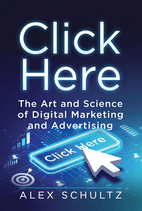
Here you'll find the most memorable lines from Alex Schultz's 'Click Here'. They cut straight to the heart of digital marketing and growth strategy. Each quote packs a punch, often turning conventional wisdom on its head. You'll encounter bold statements on prioritization, the real role of creativity, and why metrics need to serve your goals, not the other way around.
What makes this book so quotable is Schultz's ability to distill complex ideas into sharp, unforgettable phrases. He doesn't mince words. His insights feel both timeless and immediately actionable, whether you're running a startup or a multinational. These are the lines you'll want to scribble on a sticky note or share with your team.
Top Quotes from Click Here
“Digital marketing didn’t just level the playing field, it created a new one — an egalitarian pitch where almost anyone could figure out a way to reach their intended audience, no matter how broad or niche, allowing niche businesses to exist that couldn't otherwise.”
The author describes how digital marketing empowers small and niche businesses.
This metaphor of a new, egalitarian playing field powerfully illustrates the democratizing effect of digital marketing, inspiring readers with the possibility of reaching any audience.
“It isn’t prioritization if it doesn’t hurt.”
Former colleague Deb Liu says this about the tradeoffs inherent in great goals.
This line resonates because it captures the painful reality of real prioritization—true focus requires sacrificing good options, not just choosing among easy ones.
“Mediocre marketing with a great conversion flow is way better than brilliant marketing with a broken one.”
The author argues that conversion mechanics outweigh flashy marketing.
It flips conventional wisdom and forces marketers to prioritize the technical and user experience details over creative spectacle.
“Behavioural targeting beats demographic targeting every day.”
The author states a core principle of his marketing philosophy.
This bold, declarative sentence challenges conventional demographic-based marketing and emphasizes the superior effectiveness of behavioral data, making it a memorable thesis.
“David Ogilvy said, ‘If it doesn’t sell, it isn’t creative,’ and I couldn't agree more.”
The author quotes David Ogilvy to emphasize that creative must drive results.
This line succinctly captures the results-driven philosophy of marketing creative, reminding readers that effectiveness matters more than aesthetics.
“Not everything that matters can be measured, and not everything that can be measured matters.”
Opening line of the chapter, stated by the author as a core belief about measurement.
It captures a timeless truth that balances the value of data with the limits of quantification, prompting readers to think critically about what they prioritize.
“If you need a data scientist and a microscope to determine if your marketing had an impact, well then, it didn't.”
The author warns against overcomplicating measurement in marketing.
The vivid, almost sarcastic imagery makes the point unforgettable: real impact should be visible without tortured analysis.
Themes Behind the Quotes
One major theme is a relentless focus on results and practical action. Schultz argues that marketing's job is to drive real outcomes, not to be artistic or clever. He champions incremental improvements and clear prioritization, even when it hurts. The conversion funnel is central: you must make the path from click to action as smooth and short as possible. Creativity is a tool with a job, not an end in itself.
Another theme is understanding human behavior over abstract labels. Behavioral targeting consistently beats demographic targeting. Personalization is powerful, but only when it delivers genuine relevance. At the same time, Schultz warns against over-reliance on metrics. Not everything important can be measured, and if you need complex analysis to see impact, you probably didn't have much. Finding channel market fit and sticking with what works is also key.
Quotes by Chapter
Introduction
“When summed up across a whole economy, growth improves lives, lifting people out of poverty, providing jobs and funding services through taxes and charity.”
The author argues that economic growth has broad societal benefits.
This line succinctly captures the positive, tangible outcomes of growth, making a compelling case for its value beyond just business metrics.
“The second guiding principle is that incremental results are everything.”
The author introduces the second guiding principle for the book.
This blunt statement cuts to the heart of effective marketing—proving that actions actually cause outcomes—and challenges readers to focus on real impact rather than vanity metrics.
“The internet has spawned a new golden age of marketing tools to help you reach your maximum growth potential.”
The author describes the transformative impact of digital marketing on businesses.
This line captures the empowering promise of the internet, inspiring readers with the possibility of unprecedented growth.
1. THE BASICS
“Throughout my career, every time I have zoomed in from high-level strategy and grounded myself in the basics, two great things have always taken place: I've delivered better results with my team, and I've found inspiration that has helped me move that larger strategy forward.”
The author reflects on the personal benefits of refocusing on fundamentals.
It connects tactical discipline with both tangible outcomes and creative renewal, making the case that basics are not boring but transformative.
“Implementing best practices across a thousand people is hard, and if we were to do everything outlined in this part of the book alone, we'd get materially better at what we do.”
The author acknowledges the difficulty of scaling best practices while emphasizing their payoff.
It validates the struggle of large‑team execution while offering a hopeful, concrete promise that even partial adoption yields measurable improvement.
“Note, goals are not metrics — metrics describe goals.”
The author gives a succinct rule for marketing measurement.
This crisp distinction cuts through confusion, reminding readers to define purpose before choosing numbers to track.
Chapter 1: The North Star
“The greatest threat to your North Star is your number two goal.”
The author explains why splitting focus between two goals undermines the primary objective.
It is a memorable warning that even worthwhile secondary goals can derail progress, forcing readers to guard against distraction.
“With a clear North Star of connecting the world and a simple metric that properly described it with MAU, we were able to move fast and stay aligned with what our leadership wanted us to deliver, without endless meetings, reviews and escalations.”
The author reflects on how Facebook’s focused goal and metric streamlined decision-making.
This passage encapsulates the ultimate benefit of a well-defined North Star: speed and alignment, which is a powerful aspirational model for any team.
Chapter 2: The Marketing Funnel
“Humans are imperfect and unpredictable, and so are models of their individual behaviour.”
The author discusses the limitations of the funnel model in predicting individual behavior.
This line resonates because it honestly acknowledges the unpredictability of humans, making the model relatable rather than dogmatic.
“Having a mental model of how the masses, or just a large group of people you're targeting, might behave as a whole is super-valuable for producing the right campaign at the right time in the existence of your product.”
The author explains how the funnel model helps in strategic campaign planning.
It highlights the practical value of mental models for targeting, which is a key insight for marketers.
“I'll be the first to admit that the funnel is far from perfect; a model that perfectly captures all human behaviour is a nirvana or holy grail no one has ever, or will ever, achieve.”
The author admits the funnel's imperfection while defending its use.
The humility and realism of this statement make it memorable, as it avoids overpromising while still advocating for the tool.
“It doesn’t matter if you are a massive company with four billion people using your services or a bed and breakfast in North Norfolk with twelve rooms to fill - the principle is the same, and the funnel works.”
The author illustrates the universal applicability of the funnel across business sizes.
This quote is inclusive and powerful, showing that the funnel works for any business, which encourages small businesses to apply the concept.
Chapter 3: Conversion – Understand It, Log It, Optimize It
“The journey from click to conversion should be as short as possible but no shorter.”
The author states a key principle of conversion optimization.
This pithy, memorable line captures the critical balance between reducing friction and preserving essential steps in the user journey.
“A truly great digital direct response marketer cares about the details and fights for every inch when trying to get conversion.”
The author concludes a deep dive into tracking and conversion flow analysis.
It inspires and sets a high standard, emphasizing that success comes from obsessive attention to every small element in the conversion process.
“If you don’t have clarity of priority order, and which one has true primacy, you will get a form or flow designed by committee and politics that will be mediocre at best.”
The author warns about the danger of multiple teams co-opting a conversion flow without clear priorities.
It vividly captures how organizational politics and lack of prioritization can ruin user experience, a truth many professionals recognize in their own work.
Chapter 4: Targeting – How Do We Target the People We Want?
“Targeting, when done right, is a win-win-win-win: people get better experiences, companies get better ROI more business is stimulated, growing the economy and providing jobs, and the ad companies make more money to fund building products people love.”
The author summarizes the benefits of effective targeting.
This line encapsulates the ideal outcome of targeted advertising, presenting it as a mutually beneficial system that improves user experience, business performance, and economic growth.
“People prefer more personalized ads that are more relevant to them to the sort of generic ads that work when targeting is taken away.”
The author defends behavioral targeting against criticisms of overreach.
It reframes the debate around personalization, arguing that consumers actually want relevance, which makes the case for targeting from the user's perspective rather than the advertiser's.
“Even though it may be somewhat limiting for how marketers can use data without expressed permission, it is easier to do business with a clear set of rules and a level playing field between advertisers, if not platforms.”
The author discusses the trade-offs of platform restrictions and regulations on data usage.
This line captures the pragmatic benefit of regulatory clarity, resonating with marketers who value predictability over unfettered access.
Chapter 5: Channels – Which Channels Will Be Most Effective?
“Channel market fit’ is real and you should not take it for granted when you find it!”
The author shares a concept from venture capitalist Harry Stebbings.
This quote emphasizes the critical importance of recognizing and fully exploiting a winning channel. Its urgency and specificity resonate with anyone who has struggled to achieve traction in a crowded landscape.
“Big channels generally work better for a reason, so start with the more established ones.”
The author advises businesses to prioritize large, proven channels over niche alternatives.
This practical advice counters the temptation to chase novelty and provides a clear, actionable strategy. It's grounded in the author's experience that scale and reliability often trump the allure of untested platforms.
2. THE INFRASTRUCTURE
“Focus on the results and the awards follow.”
Tom Markham, leader of the author's creative team, stated this.
It reinforces that awards are byproducts of great work, not the goal itself, which is a powerful mindset for marketers.
“Too often, people mistake creative for being a piece of art rather than a tool that has a job to do — that job is to get people to take action.”
The author explains a common misconception about creative in direct response marketing.
It powerfully reframes creative as functional and purposeful, challenging the notion that ads are merely artistic expressions.
“I have found that if you are going to show people ads, en masse, nothing will annoy them more than irrelevant, un-personalized, generic ads.”
The author discusses the importance of personalization in advertising.
This resonates deeply with readers who experience ad fatigue and highlights the negative impact of ignoring personalization.