The Four Agreements — Interactive Mindmaps

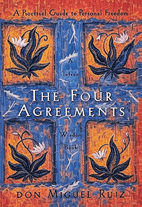
The Four Agreements by Don Miguel Ruiz Book Cover

by Don Miguel Ruiz

Don Miguel Ruiz's The Four Agreements distills ancient Toltec wisdom into a practical code for personal freedom, offering four simple principles to break self-limiting beliefs. This enduring guide is for anyone seeking greater authenticity and inner peace.

On Insta.page you also get an Apply This Book tool that lets you combine insights from up to 3 books to solve your specific situation.

Chapter mindmaps

Free preview: chapters 1–4 are fully interactive. Click any node to expand or collapse. Subscribe to unlock the rest.

Chapter 1: 1 Domestication and the Dream of the Planet

Key concepts: 1 Domestication and the Dream of the Planet

1 Domestication and the Dream of the Planet

The Collective Dream of Reality

  • Reality is a shared construct shaped by societal norms and beliefs.
  • From birth, humans are conditioned into this 'dream of the planet.'
  • The dream dictates perceptions of self and the world, often distorting authenticity.

The Process of Domestication

  • Society implants beliefs through language, rituals, and institutions.
  • Children conform to external expectations to gain approval, creating an internal 'Book of Law.'
  • Domestication operates on punishment and reward, fostering fear of rejection and craving for validation.
  • Over time, individuals self-enforce these conditioned rules.

The Judge and the Victim

  • The 'Judge' evaluates actions against the internalized Book of Law.
  • The 'Victim' absorbs blame and shame, perpetuating feelings of inadequacy.
  • This dynamic fuels self-abuse, guilt, and endless replaying of past mistakes.
  • 95% of these beliefs are inherited 'lies,' creating a fog of illusion (mitote).

The Nightmare of Societal Conditioning

  • The collective dream is a global nightmare ruled by fear, violence, and injustice.
  • Personal dreams mirror this dysfunction as anxiety, anger, and self-rejection.
  • Toxic agreements provide illusory safety while perpetuating suffering.
  • Fear of authenticity traps people in roles and masks.

Breaking Free from Domestication

  • Liberation requires dismantling fear-based agreements and reclaiming personal power.
  • Recognizing the falseness of inherited beliefs is the first step.
  • Self-love and acceptance counteract the Judge-Victim cycle.
  • Challenging the Book of Law dissolves the illusion of perfection.

Chapter 2: 2 The First Agreement: Be Impeccable with Your Word

Key concepts: 2 The First Agreement: Be Impeccable with Your Word

2 The First Agreement: Be Impeccable with Your Word

The Power of the Word

  • Words are like seeds that shape reality, relationships, and self-perception.
  • Speech is a unique human gift with divine creative potential.
  • Words can be weaponized for harm (e.g., Hitler’s fear-based rhetoric).

The Double-Edged Sword of Language

  • Words can create 'heaven on earth' or fuel a 'living hell.'
  • Misused words (gossip, self-criticism) act as 'black magic.'
  • Impeccability transforms language into 'white magic' for connection.

The Meaning of Impeccability

  • Impeccability means never using the word against yourself or others.
  • Sin is redefined as rejecting self-love through judgment or blame.
  • Requires directing energy toward truth, not emotional poison.

Gossip as Emotional Poison

  • Gossip is a cultural virus that corrupts minds and relationships.
  • Spreading hearsay (e.g., 'the teacher is a jerk') distorts reality.
  • Perpetuates collective fear and the 'dream of hell.'

Practicing Impeccability

  • Replace self-criticism ('I’m unworthy') with affirmations ('I am enough').
  • Break toxic agreements (e.g., inherited beliefs like 'I’m stupid').
  • Forgiveness is key—many harm unconsciously due to conditioned language.

Key Takeaways

  • Words manifest reality—choose them consciously.
  • Impeccability = self-love through non-judgmental speech.
  • Avoid gossip to stop spreading emotional poison.
  • Rewrite toxic beliefs with truth and affirmation.
  • Impeccability builds immunity to negativity, fostering inner peace.

Chapter 3: 3 The Second Agreement: Don’t Take Anything Personally

Key concepts: 3 The Second Agreement: Don’t Take Anything Personally

3 The Second Agreement: Don’t Take Anything Personally

The Root of Taking Things Personally

  • Stems from 'personal importance'—the ego-driven belief that everything revolves around us
  • Childhood domestication teaches us to see ourselves as the center of others' actions
  • Others' words reflect their insecurities, not your worth
  • Taking things personally means agreeing with their distorted reality

The Trap of Emotional Predators

  • Internalizing judgments makes you prey for 'black magicians' projecting their pain
  • Gossip, criticism, or praise can hook you if you rely on external validation
  • Absorbing others' 'emotional garbage' fuels inner conflict
  • No opinion—even self-doubt—is an absolute truth
  • Intrusive thoughts are often echoes of external conditioning

The Chaos of the Inner Mitote

  • The mind is like a chaotic marketplace (mitote) with conflicting voices
  • Internal noise creates self-doubt as different 'parts' of the mind compete
  • Resolving chaos requires auditing beliefs and choosing supportive agreements
  • Refusing to take things personally quiets the mitote and aligns with self-trust

Practical Freedom Through Detachment

  • Detachment isn’t indifference—it’s clarity about others' projections
  • Poor treatment reflects the other person's fears, not your value
  • See others as they are: a liar is often lying to themselves first
  • Walking away from toxicity is an act of self-respect
  • Focusing on your truth dissolves anger, jealousy, and sadness

Key Takeaways

  • Others’ actions mirror their inner world, not yours
  • Personal importance is a trap that fuels suffering
  • Immunity comes from rejecting emotional poison
  • Audit conflicting beliefs to tame the mind’s chaos
  • Practice detachment to prioritize inner truth over external validation

Continue exploring The Four Agreements