12 Rules for Life Key Takeaways
by Jordan B. Peterson
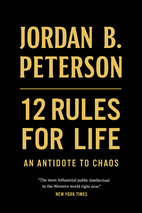
5 Main Takeaways from 12 Rules for Life
Clean up your own chaos before attempting to fix the world.
Peterson argues that societal criticism is meaningless if your personal life is in disarray. Start by addressing tangible responsibilities like health, relationships, and integrity—symbolized by 'cleaning your room'—to build resilience against life's inevitable tragedies without adding self-inflicted strife.
Seek profound meaning through honest speech and sacrificial action.
Instead of opting for short-term gains, pursue what is meaningful by telling the truth and making sacrifices. Like Socrates and Christ, rejecting expedient escapes in favor of responsibility aligns your actions with eternal values, fostering trust and reducing long-term suffering.
Build resilience by facing suffering and celebrating small joys.
Life involves unavoidable chaos, but you can strengthen yourself by standing tall against oppression and finding micro-moments of beauty, like petting a cat. This combination of courage and appreciation helps you bear essential suffering without falling into despair.
Surround yourself with people who challenge you to grow.
Your environment shapes your potential; choose friends who aim upward and avoid those content with failure. By listening to others as if they might know something you don't, you open yourself to learning and reinforce accountability, protecting your trajectory toward improvement.
Guide children with firm love to foster social competence.
Parents must discipline children early to prevent resentment and teach social viability, balancing boundaries with mercy. Similarly, allow risk-taking activities like skateboarding to develop resilience, as overprotection breeds fragility and undermines independence.
Executive Analysis
The five takeaways collectively form Peterson's thesis that individual accountability is the foundation for a meaningful life. By first ordering one's own chaos through discipline and truth-telling, a person builds the resilience needed to confront suffering without despair. This internal fortitude enables the pursuit of profound meaning through sacrifice and honest relationships, while wisely chosen social environments and guided child-rearing perpetuate these values across generations. Ultimately, Peterson posits that societal improvement begins with personal transformation, as each individual's commitment to integrity reduces collective evil.
"12 Rules for Life" matters because it provides actionable strategies for finding purpose amid life's inherent struggles. It bridges the gap between abstract philosophical concepts and daily practicalities, making it a standout in the self-help genre for its depth and psychological rigor. For readers, it offers a blueprint for developing character, improving relationships, and contributing to a more harmonious world, emphasizing that small, consistent actions rooted in truth can lead to significant personal and social change.
Chapter-by-Chapter Key Takeaways
RULE 1 / Stand up straight with your shoulders back (Chapter 1)
Harness righteous anger: Set boundaries early to deter oppression.
Embrace your capacity for aggression: It fuels self-respect and resistance.
Posture alters reality: Standing tall rewires your brain and social dynamics.
Carry the burden of Being: Voluntarily facing chaos builds meaning and resilience.
Transform habitually: Replace defeatist habits with embodied courage to unlock cascading rewards.
Try this: Adopt a confident posture today to physically embody resilience and signal your readiness to face life's challenges.
RULE 2 / Treat yourself like someone you are responsible for helping (Chapter 2)
Self-Consciousness as Burden: Awareness of vulnerability and moral failure fuels self-contempt, explaining why we neglect self-care while aiding others.
Chaos Is Inescapable: Evil arises internally ("the snake in our souls"), making walls against external threats futile.
Competence Over Protection: Shielding others (or ourselves) from challenge breeds infantilism; strength comes from navigating chaos.
Eden’s Banishment as Human Condition: Labor, foresight, and shame define existence—but self-worth must be actively claimed, not passively granted.
Embrace Dual Nature: Acknowledge your capacity for evil and your divine potential to create order.
Respect Your Resilience: The daily heroism of ordinary people (yourself included) merits profound gratitude.
Care Consciously: Self-care isn’t selfish—it’s a moral obligation. Nurture your body, mind, and goals as you would a loved one’s.
Choose Direction: Define your values, set meaningful objectives, and let purpose ("Why") empower you through adversity.
Reject Tyranny: Refuse to be victimized—by others or your self-contempt. Advocate for yourself with vigor.
Try this: Actively care for your body, mind, and goals with the same vigor you would for a loved one, by defining your values and setting meaningful objectives.
RULE 3 / Make friends with people who want the best for you (Chapter 3)
Environment shapes vulnerability: Isolation and hardship amplify reliance on friends, making choice critical.
Potential ≠ destiny: Intelligence without supportive relationships can fuel self-destruction (e.g., Chris’s wasted talent).
Escaping past identities: Physical relocation enables personal reinvention among those "aiming upward."
Repetition compulsion: Unaddressed self-contempt drives people to recreate toxic dynamics.
Rescue ≠ virtue: Attempts to "save" others often mask narcissism, worsening their plight.
Vice spreads easier than virtue: Dysfunction corrupts groups faster than excellence elevates them.
Distinguish compassion from enabling: True help requires honest assessment, not self-serving pity.
Choose friends who challenge your cynicism: They reinforce accountability and celebrate growth.
Protect your trajectory: Withdraw from those content with failure; their gravitational pull diminishes your potential.
Lead by example: Sometimes the noblest act is refining your own life first.
Try this: Audit your social circle and consciously distance yourself from those who drag you down, while seeking out friends who celebrate your growth.
RULE 4 / Compare yourself to who you were yesterday, not to who someone else is today (Chapter 4)
Faith as Action: Choose to act as if Being is good—a bulwark against nihilism.
Micro-Fixes: Identify small, actionable irritants daily. Start absurdly small (e.g., 1 minute).
Honest Motivation: Use rewards without shame; acknowledge your limits.
Anti-Totalitarianism: Pursue “better” without rigid definitions—align with truth, not dogma.
Present + Eternal: Tackle today’s tasks after dedicating yourself to the Highest Good.
The Core Metric: Measure progress only against your past self.
Try this: Identify one small, actionable improvement you can make today compared to yesterday, and commit to it without shame.
RULE 5 / Do not let your children do anything that makes you dislike them (Chapter 5)
Correct Early: Tolerating bad behavior breeds resentment and impedes a child’s autonomy.
Beware Evolutionary Biases: Son preference, rooted in reproductive logic, risks fostering destructive entitlement.
Neglect Has Consequences: Emotional starvation cripples development as severely as overt abuse.
Quantify Conflict: Daily struggles accumulate into relationship-breaking resentment.
Reject Romantic Myths: Children require disciplined socialization; their inherent complexity includes both light and darkness.
Prioritize Respect: Parents must risk temporary dislike to fulfill their irreplaceable role as guides.
Discipline is proactive love: It combines mercy with boundaries to prepare children for reality.
Aggression must be guided: Innate violence in children demands correction to teach social viability.
Balance tools: Use rewards and consequences; sheltering children from negative emotions breeds fragility.
Authority is non-negotiable: Parental guidance prevents harsher societal punishments later.
Socialization by age four is non-negotiable for lifelong well-being.
Discipline must adapt to a child’s temperament using "minimum necessary force."
Essential rules focus on non-violence, respect, and social reciprocity.
Physical intervention is contextually valid for immediate dangers or defiance.
Parents in pairs mitigate exhaustion-driven overreactions.
The primary goal is raising socially desirable children, not avoiding conflict.
Try this: Establish clear, consistent rules for children focusing on non-violence and respect, using the minimum necessary force to correct behavior early.
RULE 6 / Set your house in perfect order before you criticize the world (Chapter 6)
Nihilism as vengeance: Mass murderers reject existence itself, echoing Mephistopheles’ creed of negation.
Transformative resilience: Suffering can breed destruction or inspire profound good (Solzhenitsyn, abused parents breaking cycles).
Self-blame as power: Interpreting distress as a personal failing enables agency ("If it’s my fault, I can fix it").
Order before critique: Clean your room first—neglecting tangible responsibilities (family, health, integrity) invalidates broader societal criticism.
By committing to personal order, you eliminate unnecessary self-inflicted struggles, confronting only life's inevitable tragedies without the added layers of bitterness and deceit. This process forges a stronger, less corrupted soul capable of bearing essential suffering—keeping it tragic rather than allowing it to spiral into hellish despair. Gradually, destructive emotions like anxiety, resentment, and anger recede, making space for a profound shift: recognizing your existence as inherently valuable, worthy of celebration despite inherent vulnerability.
This inner transformation positions you as a catalyst for peace and goodness. If universally embraced, such individual accountability could cease the world's descent into evil, then transcend tragedy altogether. The text closes with a visionary reflection: What utopia might emerge if humanity collectively pursued this truth-purified ideal? The rule is reiterated as both anchor and aspiration: Set your house in perfect order before you criticize the world.
Resilience Through Order: Eliminating self-imposed chaos builds strength to endure unavoidable suffering without compounding it.
Emotional Liberation: Bitterness and anger diminish when confronting core tragedies honestly, freeing the soul to find meaning.
Celebration of Existence: Personal integrity allows vulnerability to coexist with profound self-worth.
Collective Potential: Individual responsibility is the foundation for global change—from reducing evil to transcending tragedy.
Aspirational Imperative: The rule underscores that societal critique is meaningless without first mastering one’s own domain.
Try this: Start by cleaning your physical space and addressing one neglected personal responsibility to build strength against suffering.
RULE 7 / Pursue what is meaningful (not what is expedient) (Chapter 7)
Suffering invites expedient shortcuts, but ancient myths reveal sacrifice as a counterintuitive path to meaning.
Work and sacrifice are uniquely human acts that discovered time, causality, and social trust through delayed gratification.
Reputation emerged as the "currency" of sacrifice, transforming survival into moral principles.
The scale of sacrifice correlates with its impact—posing the question: What ultimate offering could redeem existence itself?
Evil as a Choice: Suffering from life’s constraints is inevitable, but evil emerges when rejected effort festers into vengeful malice (Cain’s spiral).
Confronting Darkness: Christ’s desert ordeal symbolizes the necessity of facing evil—within and around us—to achieve enlightenment ("roots reach down to Hell").
Meaning Over Expediency: Socrates and Christ alike rejected easy escapes (exile, magical solutions) to uphold truth and responsibility, proving that profound meaning fortifies against life’s worst trials.
Expedient power corrupts: Earthly dominance amplifies humanity’s capacity for cruelty and distracts from transcendent meaning.
Christianity’s dual legacy: It championed individual worth and curbed barbarism but overlooked material suffering, catalyzing science’s rise.
Critique and collapse: Nietzsche exposed Christianity’s failure to address earthly life, leading to a void filled by nihilism and totalitarianism.
Dogma’s role: Restraints foster true freedom; their absence risks ideological extremism.
The irreducible self: Values cannot be invented; they must be discovered through honest engagement with our nature.
Evil is tangible: Deliberate infliction of suffering (e.g., torture, dehumanization) is universally wrong—a truth undimmed by ideology or denial.
Ideas demand discernment: Treat ideas as dynamic forces; sacrifice harmful ones early rather than becoming their martyr.
Suffering as moral bedrock: The commitment to alleviate pain is non-negotiable—rooted in humility and self-awareness.
Expedience enslaves: Short-term gains propagate suffering and erode integrity.
Meaning redeems: It emerges from daily acts of truth, responsibility, and repair—aligning present actions with eternal harmony.
Try this: Choose one difficult but meaningful task over an easy shortcut today, recognizing that sacrifice builds trust and aligns with eternal values.
RULE 8 / Tell the truth—or, at least, don’t lie (Chapter 8)
Lies compound, enabling oppression and societal decay.
Totalitarianism arises when reason idolizes its own infallibility.
Hell is a present state for those enslaved by deceit.
Truth requires aiming at goals while accepting their potential error.
Personal transformation hinges on sacrificing certainty for growth.
Conflict precedes growth: Initial discord from truthfulness matures into wisdom and stronger relationships.
Faith fuels courage: Trusting truth requires risking the unknown but corrects existential errors.
Lies corrupt exponentially: Small falsehoods escalate into systemic evil, breeding resentment and chaos.
Truth builds reality: Honest speech orders chaos, creating stability, trust, and abundance.
Personal truth is paramount: Your unique experience demands articulation—this protects and enriches life.
Try this: In your next conversation, consciously avoid even a small lie and articulate your genuine perspective to build trust.
RULE 9 / Assume that the person you are listening to might know something you don’t (Chapter 9)
Listening enables self-discovery: Silence and genuine feedback help others uncover subconscious patterns.
Restate to understand: Use Rogers’ technique to validate speakers, distill insights, and argue fairly.
Avoid dominance dialogues: Jockeying for status or pushing ideologies stifles growth.
Conversations organize minds: Social feedback maintains psychological integrity—without it, we "clutter."
Embrace mutual exploration: Prioritize learning over winning by welcoming transformative ideas.
Growth through vulnerability: Shedding preconceptions in dialogue allows renewal, placing you where "souls connect."
Wisdom ≠ knowledge: Insight flows from perpetual curiosity, exemplified by Socrates’ humility.
Speak to unite: In public settings, focus on individuals—not the crowd—to dissolve fear and foster genuine connection.
Rule embodied: Assuming others hold undiscovered insight transforms every conversation into fertile ground for discovery.
Try this: Listen actively in your next discussion by restating the other person's points without judgment to open yourself to insights.
RULE 10 / Be precise in your speech (Chapter 10)
Reality is relational: Objects (like laptops) depend on invisible networks.
Perception is functional: We see utility (tools/obstacles), not objective "things."
Selfhood is fluid: Identity extends to tools, people, and groups.
Crises reveal chaos: Breakdowns unmask the complexity our minds filter out.
Precision is survival: Naming ignored truths prevents chaos from consuming us.
Define problems exactly to prevent conversations from collapsing into chaos.
Specify your current position and desired destination to enable purposeful movement.
Embrace action and error-correction as tools for self-discovery.
Anchor understanding in physical experience, as demonstrated by AI’s evolution.
Confront ambiguity directly—silence transforms issues into insurmountable threats.
Try this: When facing a problem, define it exactly by specifying your current situation and desired outcome to prevent chaos.
RULE 11 / Do not bother children when they are skateboarding (Chapter 11)
Risk as Growth Catalyst: Competence develops through voluntary risk-taking, not overprotection.
Hidden Motivations: Actions framed as virtuous (e.g., installing skatestoppers) may stem from envy or resentment.
Resentment’s Toll: Guilt and self-loathing, as seen in Chris, can manifest as anti-human destructiveness.
Human Potential: Despite environmental challenges, humanity’s capacity for achievement remains boundless and worthy of optimism.
Extreme sports exemplify courage, contrasting sharply with dehumanizing ideologies.
Boys face systemic educational disadvantages rooted in biological traits clashing with obedience-focused institutions.
University gender imbalances harm both sexes, limiting women’s relationship options and men’s educational access.
Framing Western culture as solely oppressive ignores historical realities and male contributions to women’s liberation.
Marxist/postmodern academic theories carry real-world consequences, including totalitarian violence.
Ideological Blind Spots: Western intellectuals rationalized Soviet atrocities by shifting Marxism’s focus from wealth to "power," ignoring evidence of communism’s brutality.
Postmodern Perils: Derrida’s "nothing outside the text" enables dangerous activism by dismissing facts, biology, and competence as oppression.
Equity’s Impossible Math: Forcing equal outcomes across infinite identity groups ignores individuality and demands unsustainable social engineering.
Biological Realities: Aggression isn’t merely learned; it’s an evolved trait that, when properly channeled, drives achievement and protection.
Academic Accountability: Taxpayer-funded institutions must not teach ideologically driven falsehoods as truth, especially those undermining societal foundations.
Resentment often signals self-betrayal; address exploitation through prepared, evidence-based confrontation.
Overprotection ("Oedipal mothering") devours independence, symbolized by archetypal monsters in myth and media.
Male-dominated groups test members via conflict to enforce codes of resilience, reciprocity, and anti-dependency.
Healthy aggression—when disciplined—builds character, averting both victimhood and tyranny.
Transformative Resilience: Confronting weakness through action (e.g., Mac’s journey) builds societal value.
Anti-Dependency Imperative: Women reject men who evade maturity; independence is foundational to partnership.
Risk as Crucible: Dangerous play tests competence, authority, and resilience—preventing antisocial outcomes.
Backlash to Suppression: Forced feminization fuels fascist ideologies and far-right movements.
Equality Through Strength: Women desire partners who challenge them; interference in development harms all progress.
Weakness as Threat: Undeveloped men pose greater dangers than toughened ones. Non-interference is essential.
Try this: Allow children and yourself to engage in supervised risk-taking activities that build competence, and challenge ideologies that pathologize healthy aggression.
RULE 12 / Pet a cat when you encounter one on the street (Chapter 12)
Embrace Micro-Joys: Actively notice and engage with small, unexpected beauties (like petting a cat) to counter life’s suffering.
Crisis Management: Contain overwhelming stress through structured problem-solving, protecting sleep, and focusing on daily actions.
Resilience Through Presence: When long-term planning falters, recalibrate to immediate tasks—repair what you can, moment by moment.
Hope in Uncertainty: Even in bleakest times, remain open to unforeseen relief, as Mikhaila’s recovery underscores life’s capacity for redemption.
Try this: Intentionally notice and engage with a small, beautiful moment today to counterbalance life's stresses and cultivate hope.
Coda (Chapter 13)
Mortality as motivation: Life’s transience demands active appreciation, not passive regret.
Self-repair precedes world repair: Presuming to "fix" others without addressing personal flaws compounds suffering.
Hell is self-made: Eternal torment stems from unaddressed betrayal, cowardice, or willful blindness.
Character is actionable: Truth-telling, bodily integrity, and principled courage forge reliability.
Legacy through illumination: Sharing hard-won wisdom—your "broken truths"—lights paths for others.
Try this: Reflect on one personal flaw you can address through truth-telling and courageous action to repair your character.
Continue Exploring
- Read the full chapter-by-chapter summary →
- Best quotes from 12 Rules for Life → (coming soon)
- Explore more book summaries →