How Change Really Works Key Takeaways
by Julia Dhar
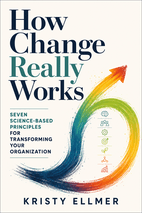
5 Main Takeaways from How Change Really Works
Design Environments That Support New Behaviors
Change fails not because people lack knowledge, but because their surroundings don't enable the new actions. Julia Dhar argues that leaders must systematically remove barriers, create rituals, and offer genuine agency to make change stick. For example, Pandora’s turnaround succeeded only after the team agreed on a single metric and built processes around it, not just a vision.
Secure True Agreement, Not False Alignment
False alignment—where people nod but don’t commit—leads to paralysis or hyperactivity. Use a five-step process: set clear parameters, provoke early debate, hold quality debate, reach a formal verdict, and send a unified message. When Pandora’s leadership focused on a few agreed priorities, they turned a paper turnaround into reality.
Give People Real Ownership, Not Just a Voice
True agency means granting decision power and financial co-ownership, even symbolically. The IKEA effect proves that effort invested increases perceived value. Scalable agency offers decision-making for a few, influence for many, and representation for everyone—transforming involvement into commitment.
Remove Barriers to Adoption Instead of Blaming Individuals
Take-up is earned, not automatic. Leaders must identify and dismantle seven common barriers: knowledge, skills, time, resources, permission, perceived lack of gain, and perceived risk of loss. Follow a five-step removal process: define who, specify behavior, identify barriers, act, and measure. This shifts blame into action.
Sustain Momentum with Rituals, Stories, and Fresh Starts
Momentum is lost predictably; plan for dips early. Use rituals that never cancel, stories and symbols that energize, and fresh-start dates to reset struggling teams. Delta’s VELVET program shows that investing in people through symbols and stories creates a virtuous cycle of service and profit.
Executive Analysis
These five takeaways collectively argue that successful change is not about persuasion or charisma, but about systematically redesigning environments, agreements, ownership, barriers, and momentum around how people actually behave. Dhar’s central thesis is that leaders must stop blaming resistance and instead treat change as a design problem—one that requires real agreement (not fake consent), genuine agency (not token involvement), active barrier removal (not lectures), and emotionally resonant rituals and stories that sustain energy over time. The five principles are interconnected: without true agreement, barriers remain hidden; without agency, take-up falters; without rituals, momentum dies.
This book matters because it moves beyond generic change management advice into a practical, phase-based playbook grounded in behavioral science and real-world case studies. For leaders frustrated by failed initiatives, Dhar offers specific tactics (e.g., the five-step agreement process, the seven barrier checklist, scalable agency models) that can be applied immediately. It sits at the intersection of organizational psychology, leadership development, and execution strategy—more actionable than Kotter’s eight steps and more grounded in human behavior than typical business fables. The book’s core insight—that change is a choice to redesign systems, not just message people—makes it essential for anyone leading transformation today.
Chapter-by-Chapter Key Takeaways
The Distance between Us (and Them) (Introduction)
Change fails not because people don't know what to do, but because the environment isn't designed to support new behaviors.
Seven principles address common leadership mistakes: true agreement, agency, earning take-up, emotional feedback, ritualized processes, stories and symbols, and sustained momentum.
Success comes from understanding real human behavior—our capabilities, emotions, and decision-making limits—and building systems around them.
The book offers a practical five-phase playbook for planning, executing, and persisting through change, with tactics for every stage of the journey.
Try this: Audit your organization’s environment for barriers to the new behavior you want to see, rather than assuming people know what to do or just need a memo.
1 Get True Agreement, Not False Alignment (Chapter 1)
False alignment (behaving as if agreed when not) leads to paralysis, hyperactivity, or tunnel vision.
The five-step process to reach true agreement: set clear parameters, provoke early exchange, have quality debate, come to formal verdict, send unified message.
If disagreement remains, try again, subtract/defer, offer an exit, or (as last resort) proceed with a plan to win over dissenters.
Pandora’s success shows that focusing on a few clear, agreed priorities, a single metric, and a shared purpose can turn a turnaround from paper to reality.
Try this: Before launching a change, lead your team through a five-step process: set clear parameters, provoke early exchange, debate, vote, and send a unified message to secure true agreement and avoid false alignment.
2 Increase Agency, Not Just Involvement (Chapter 2)
Genuine agency means giving people real decision power and ownership, not just a voice.
Financial co-ownership, even symbolic, creates powerful incentives for adoption and commitment.
The IKEA effect applies to organizational change: effort invested increases perceived value.
Scalable agency requires offering different experiences: decision-making for a few, influence for many, and representation for everyone.
Try this: Give people real decision power and co-ownership—even symbolic financial stakes—to trigger the IKEA effect and boost commitment; design scalable agency where a few decide, many influence, and everyone is represented.
3 Expect Take Up to Be Earned, Not Automatic (Chapter 3)
Take up isn't automatic—leaders must actively remove barriers rather than blame individuals.
Seven common barriers block adoption: knowledge, skills, time, resources, permission, perceived lack of gain, and perceived risk of loss.
A five-step removal process transforms intentions into action: define who, specify behavior, identify barriers, act, measure.
Try this: Identify which of the seven common barriers (knowledge, skills, time, resources, permission, gain, risk) is blocking your target behavior, then follow the five-step removal process: define who, specify behavior, identify barriers, act, and measure.
5 Use a Process with Rituals, Not Reactions (Chapter 5)
Never cancel transformation meetings, even during crises. Instead, adapt the agenda to address the urgent while preserving the ritual.
Rituals drive consistency and speed. They force a
Try this: Never cancel transformation meetings, even during crises; instead adapt the agenda to address the urgent while preserving the ritual that drives consistency and speed.
6 Share Stories and Symbols, Not Just Dollars (Chapter 6)
Symbols activate the imagery system, which processes more than just words—tapping into visuals, sounds, textures, tastes, and memories.
Effective symbols are both challenging and charming; they push people beyond comfort zones while energizing them.
Use three types of symbols in your transformation: symbolic objects (things people experience or own), symbolic actions (things people do), and symbolic events (gatherings of people for a purpose).
The VELVET program at Delta proves that investing in stories and symbols creates a virtuous cycle: invest in people, they serve customers, shareholders benefit—and the culture sustains itself.
Try this: Create symbolic objects, actions, or events that are both challenging and charming to activate the imagery system and build a virtuous cycle of investment, service, and self-sustaining culture.
7 Create Momentum Throughout, Not Just at the Start (Chapter 7)
For teams that overdeliver, set new stretch targets or higher process standards—but only after celebrating their original wins.
For struggling teams, engineer a fresh start on a meaningful date, reset metrics, and focus only on future goals.
Momentum loss is usually predictable; plan for dips during early transformation design.
Real-world examples like Aetna show that sustained momentum comes from a cycle of belief, wins, fresh challenges, and resets—not just a strong start.
Try this: After celebrating wins with overdelivering teams, set new stretch targets; for struggling teams, engineer a fresh start on a meaningful date, reset metrics, and focus only on future goals to predict and counter momentum loss.
PART TWO: PUTTING THE PRINCIPLES TO WORK (Chapter 8)
Two essential shifts: flip the pyramid (serve employees as customers of change) and redesign the cockpit (create an infrastructure that enables new behaviors).
Five phases with distinct time frames and executive time commitments – from deciding through planning, starting, persisting, and ending.
Scale the guidance: apply the phase structure to any transformation, large or small, by adjusting workstreams, offices, and timelines.
Resist the urge to skip the basics: consistent execution of small, fundamental actions is what powers major transformations.
When you must deviate, do so knowingly and plan to return to the recommendations when circumstances permit.
Try this: Flip the pyramid by treating employees as customers of change, redesign the cockpit to enable new behaviors, and resist skipping the basics of consistent execution across all five phases.
8 Deciding to Change (Chapter 9)
Change is a choice: you must decide to fundamentally alter your company’s trajectory.
Deciding on the Why, What, and How typically takes one to six months.
Four tactics for successful deciders: reflect on your own emotions and anticipate personal challenges; solicit employees’ views; define specific behavioral goals for the organization; and get agreement on how your leadership team will lead.
Try this: Before deciding to change, reflect on your own emotions, solicit employees’ views, define specific behavioral goals, and get leadership agreement on how you will lead together.
9 Planning for Change (Chapter 10)
Why plan? It lets you move faster, create certainty, prevent backsliding, and anticipate challenges.
Time frame – One to two months, depending on your situation.
Six tactics – Design rituals; craft and teach your change story; set up financial incentives; measure employee emotions; predict momentum; and renew executive agreement before going public.
Practice ahead of time – Use the small planning group to build new behaviors into habits.
Try this: During the planning phase, design rituals, craft and teach your change story, set up financial incentives, measure employee emotions, predict momentum dips, and renew executive agreement before going public.
10 Starting Change (Chapter 11)
The rationale: Starting Change makes the transformation everyone’s business. Momentum and focus spread across the organization, with responsibility delegated and early wins delivered.
The time frame: Four to six months, including kickoffs, bottom-up planning, early wins, and the beginning of full execution for another two to three months.
The five tactics: Hold big, memorable kickoffs; select Initiative Owners with care (DARES); teach and enforce rituals rigidly; make take up obsessive; demonstrate early progress relentlessly.
Try this: At start, hold big memorable kickoffs, select Initiative Owners using the DARES criteria, teach rituals rigidly, obsess over removing barriers, and relentlessly demonstrate early progress to make transformation everyone’s business.
11 Persisting with Change (Chapter 12)
Rituals need novelty: Add small surprises to keep engagement high without breaking the structure that works.
Hold executives accountable: Start with empathy, then escalate – public scorecards, deadlines, and, if needed, removal.
Enforce only as a last resort: After all other persuasion fails, turn recommendations into rules and apply consequences consistently.
Retain key leaders: Use individualized retention plans to prevent burnout and disengagement among your transformation’s champions.
Expect the unexpected: Solve urgent problems immediately, let others wait, and always fall back on the guiding principles.
Try this: To persist, add small surprises to rituals for novelty, hold executives accountable with scorecards and escalation, use enforcement only as a last resort, retain key leaders with individualized plans, and solve urgent problems immediately while falling back on principles.
12 Ending Change (Chapter 13)
The rationale: Deliberately ending a transformation creates closure, letting people process unresolved experiences and redirect focus. Without this, future changes feel like chaos.
The time frame: Planning the end can take months; the Ending Change phase itself lasts one to two months. After that, a two-to-four-week break is vital before starting another round.
The three tactics: Consolidate and close out the work, celebrate, and reflect, recharge, and resolve. These steps ensure the ending feels like a genuine milestone, not just a checkbox.
Try this: Deliberately close your transformation by consolidating work, celebrating achievements, and holding reflection sessions to provide closure—then take a two-to-four-week break before the next change to prevent fatigue.
Change Is a Choice (Afterword)
Habit formation takes time—plan for 66 days on average, but expect variation.
Blameless postmortems accelerate learning by removing fear of failure.
Addressing uncertainty is the single most effective way to reduce resistance to change.
Decision fatigue is real; conserve mental energy through standardized rituals and routines.
Small wins are powerful motivators because they provide visible proof of progress.
Timing change initiatives to coincide with natural "fresh starts" increases buy-in and follow-through.
Endings matter as much as beginnings. The peak-end rule means the final moments of a change effort color the entire memory. Design closing rituals that honor the past and signal a clean break.
Closure is a psychological necessity. People need to feel a sense of completion before they can fully commit to what comes next. Without it, change fatigue sets in.
Gratitude is a performance multiplier. Simple, sincere appreciation during transitions boosts engagement and resilience—backed by experimental evidence.
Time is a lever, not a constraint. Deadlines, fresh-start dates, and stage-gate milestones are behavioral design elements. Use them to create focus and momentum.
The choice is always yours. No matter how chaotic the external environment, you can choose how you show up, how you frame the change, and how you lead others through it.
Try this: Apply blameless postmortems to accelerate learning, time initiatives with natural fresh starts, use the peak-end rule to design memorable closing rituals, and conserve decision energy through standardized routines.
Continue Exploring
- Read the full chapter-by-chapter summary →
- Best quotes from How Change Really Works → (coming soon)
- Explore more book summaries →