Zero to One — Interactive Mindmaps

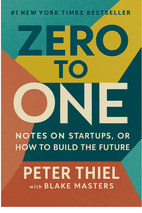
Zero to One by Peter Thiel Book Cover

by Peter Thiel

Peter Thiel's Zero to One advocates for creating monopolies through breakthrough innovation, arguing that true progress comes from building something entirely new. It provides a contrarian philosophy for founders and entrepreneurs seeking to build valuable, transformative companies.

On Insta.page you also get an Apply This Book tool that lets you combine insights from up to 3 books to solve your specific situation.

Chapter mindmaps

Free preview: chapters 1–4 are fully interactive. Click any node to expand or collapse. Subscribe to unlock the rest.

Chapter 1: Title Page

Key concepts: Title Page

1. Title Page

Book Positioning and Purpose

  • Presents as practical guide rather than abstract theory
  • Focuses on actionable insights from innovation front lines
  • Frames subject as building the future with ambitious tone

Author Collaboration Significance

  • Dual authorship combines iconic founder and protégé perspective
  • Blends proven experience with fresh contemporary application
  • Signals content filtered through both expertise levels

Content Approach and Style

  • Structured as notes rather than formal academic text
  • Emphasizes tangible process of venture creation
  • Sets transformative tone for the entire work

Chapter 2: Copyright

Key concepts: Copyright

2. Copyright

Copyright Ownership and Publication

  • Copyright held by Peter Thiel since 2014
  • Published by Currency (Crown Publishing Group/Penguin Random House)
  • Dual publication format with both print and ebook ISBNs
  • Multiple contributors involved in production and design

Legal Protection Framework

  • Protected under United States intellectual property law
  • Includes Library of Congress cataloging data (HD62.5.7525 2014)
  • Standardized subject classifications for library discoverability
  • Covers original content across all publication formats

Bibliographic Classification

  • Subject headings include New Business Enterprises and Entrepreneurship
  • Classification covers New Products and Diffusion of Innovations
  • Formal cataloging enables systematic library organization
  • Supports academic and research accessibility

Chapter 3: Contents

Key concepts: Contents

3. Contents

The Setup: Questioning Conventional Wisdom

  • Establishes the fundamental contrarian question framework
  • Critiques prevailing mindsets of globalization and competition
  • Sets foundation for distinguishing horizontal vs vertical progress

The Blueprint for Value Creation

  • Details principles for building durable monopoly businesses
  • Emphasizes last mover advantage and definite optimism
  • Highlights importance of network effects and strong founding culture

Execution and Practical Implementation

  • Covers team building and product distribution strategies
  • Addresses navigating specific industry challenges like cleantech
  • Explores founder psychology and avoiding common startup pitfalls

The Ultimate Stakes and Future Vision

  • Frames innovation as choice between stagnation or transformation
  • Posits business success as driver of human progress
  • Connects individual ventures to broader societal advancement

Chapter 4: Preface: Zero to One

Key concepts: Preface: Zero to One

4. Preface: Zero to One

The Fundamental Dichotomy of Progress

  • Horizontal progress (1 to n): copying existing successes and scaling what works
  • Vertical progress (0 to 1): creating something entirely new and unprecedented
  • True innovation comes from creating new markets rather than competing in existing ones

The Futility of Imitation

  • Copying successful entrepreneurs is not learning but participating in crowded imitation
  • Moving from 1 to n involves adding more of something familiar but leads to dead ends
  • Reliance on today's best practices and fine-tuning old models will lead to future crises

Technology as Humanity's Creative Miracle

  • Technology defined as any new and better way of doing things with less resources
  • Humanity's unique capacity to rewrite the world's plan distinguishes us from other species
  • Technology represents our ability to perform miracles of creation and build better futures

The Philosophy of Innovation

  • No formula exists for innovation because true innovation is by definition unique and new
  • Thinking from first principles means questioning fundamental assumptions to find value
  • Success requires bold belief in one's ability to create miracles rather than following formulas

The Book's Purpose and Approach

  • Provides patterns and mindset rather than step-by-step formulas for innovation
  • Based on author's direct experience as founder of PayPal/Palantir and investor
  • Originated from Stanford course to help students see beyond specialization to create their future

Continue exploring Zero to One