The Art of Laziness — Interactive Mindmaps

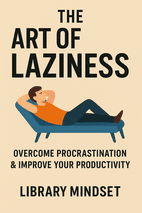
The Art of Laziness by Library Mindset Book Cover

by Library Mindset

Library Mindset's The Art of Laziness reframes procrastination as a signal to prioritize, teaching strategic inaction through concepts like the lazy check to automate, delegate, and batch work. It's for anyone seeking sustainable productivity by working with their natural energy, not against it.

On Insta.page you also get an Apply This Book tool that lets you combine insights from up to 3 books to solve your specific situation.

Chapter mindmaps

Free preview: chapters 1–4 are fully interactive. Click any node to expand or collapse. Subscribe to unlock the rest.

Chapter 1: Introduction

Key concepts: Introduction

1. Introduction

The Core Choice: Two Paths

  • Life presents a daily choice between an easy, routine path and a harder, purposeful one
  • Meaningful achievement requires consistently choosing the difficult 'road less traveled'
  • True aspirations demand deliberate effort, time, and focus

Reframing Time: Life Is Not Short

  • The common lament 'life is short' is challenged by Stoic wisdom
  • Life is long enough for great accomplishments, but we waste it through luxury and carelessness
  • Time scarcity is self-imposed through lack of purposeful investment

The Regret Minimization Framework

  • Jeff Bezos's decision-making model projects oneself to old age
  • Choose the option you would least regret not attempting
  • Shift focus from immediate safety to long-term fulfillment and potential regret

Consequences of Inaction: Future Regrets

  • Common regrets include not pursuing passions and wasting time in laziness
  • Regrets highlight neglecting family, health, and meaningful experiences
  • The pain of future inaction contrasts with present-day excuses for staying on the easy path

The Imperative for Action

  • Replace excuse-making with solution-oriented questions
  • Shift from 'Why can't I?' to 'How can I?' to engage problem-solving
  • The perfect moment is a myth; the only time for action is now

Chapter 2: What Is Procrastination?

Key concepts: What Is Procrastination?

2. What Is Procrastination?

Core Definition of Procrastination

  • Delaying necessary tasks in favor of short-term comfort
  • Theft of the present moment through deceptive promises of tomorrow
  • Conflict between knowing what to do and actual behavior
  • Choosing instant gratification over long-term satisfaction

Panic as a Flawed Antidote

  • Only triggered by looming deadlines or severe consequences
  • Produces frenzied, last-minute effort with mediocre results
  • Exclusively tied to urgency, not importance
  • Fails to address meaningful but non-urgent life aspects
  • Teaches reliance on emergency alarms before acting

The Paradox of Time

  • Intellectual acknowledgment of time as precious vs. behavioral waste
  • Operating under the illusion of endless time supply
  • Gap between knowledge and action regarding mortality
  • Requires decisive shift to act on important matters now

The Productivity Mask

  • Active avoidance disguised as productivity
  • Busying with trivial tasks while avoiding priority work
  • Creates illusion of motion without real progress
  • More insidious than plain procrastination
  • Maintains unproductive patterns while feeling accomplished

Chapter 3: Life Is Short

Key concepts: Life Is Short

3. Life Is Short

The Whispers of Mortality: Memento Mori

  • Ancient Roman practice of a slave whispering 'remember you must die' to victorious generals
  • Designed to instill humility and prevent hubris by emphasizing human fragility
  • Serves as a historical foundation for using mortality as a tool for perspective

A Modern Echo: Steve Jobs on Death

  • Jobs used awareness of death as his most important tool for making life choices
  • Fear of failure, expectations, and pride dissolve when facing mortality
  • Liberates us to follow our hearts because we have 'nothing to lose'

Visualizing the Finite: The Death Calendar

  • Grid of circles representing months in an 80-year lifespan
  • Filling in passed months makes time's passage tangible and visceral
  • Creates psychological urgency by showing limited remaining time

The Unpredictable Hour

  • List of notable figures who died young (van Gogh at 37, MLK at 39, Alexander at 32)
  • Life is not only short but often unexpectedly shorter than assumed
  • Challenges complacency with the question: 'How can you be lazy? How can you procrastinate?'

The Call to Immediate Action

  • Procrastination results from pursuing society's desires rather than genuine wants
  • The only rational response to certain death and uncertain timing is to act now
  • The 'best time' for meaningful pursuits is always the present moment

Core Principles and Applications

  • Memento Mori is a practical mindset for clarity, not morbid fixation
  • Visual tools make abstract time concrete to combat wastefulness
  • Procrastination is a foolish gamble against life's uncertainty

Chapter 4: 100% Responsibility

Key concepts: 100% Responsibility

4. 100% Responsibility

The Core Principle: 100% Responsibility

  • True empowerment comes from embracing full accountability for your life
  • Stop making excuses and blaming external factors for failures
  • Your future is shaped by your present choices and actions
  • Blaming others surrenders your personal power

Perception Shapes Reality

  • Your outlook and attitude define your experience of the world
  • Life largely reflects how you choose to engage with situations
  • Approaching situations with negativity yields negative experiences
  • You have the power to shape reality through your perspective

The Illusion of External Rescue

  • No one is coming to save you - it's entirely your responsibility
  • Others don't care about your laziness or procrastination
  • Giving up hope for a rescuer is the first step toward self-reliance
  • Complaining achieves nothing; only action can change circumstances

Reframing Mistakes as Growth

  • View mistakes as natural and valuable parts of learning
  • Errors are opportunities to commit to doing better
  • Stagnation is worse than temporary failure
  • Success means avoiding repeat mistakes, not never stumbling

Focusing on What Matters

  • Prioritize energy on things within your control
  • Avoid wasting energy on others' opinions and external judgments
  • Channel attention inward toward your own concerns and goals
  • Let go of what belongs to others to prevent distractions

The Persistence Spectrum

  • Most people never start, waiting for something good to happen
  • Many begin but quit when challenges arise, leaving regret
  • The successful persist through hardships as part of the journey
  • Life requires marathon-like stamina and perseverance

Actionable Mindset Shifts

  • Replace excuses with initiative and effort
  • View obstacles as part of the journey rather than reasons to quit
  • Concentrate on controllable factors while ignoring distractions
  • Embody the mindset of the top one percent who never give up

Continue exploring The Art of Laziness