The Art of War Sun Tzu - Complete Edition: The New Modern English Translation Key Takeaways
by Sun Tzu
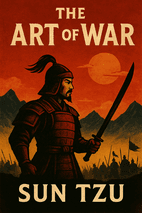
5 Main Takeaways from The Art of War Sun Tzu - Complete Edition: The New Modern English Translation
Win by Outthinking Your Opponent, Not Outfighting Them
Sun Tzu elevates strategy over brute force, teaching that the highest victory subdues the enemy without battle through deception, psychological insight, and attacking plans first. This minimizes cost and preserves resources, as seen in the principles of 'attack by stratagem' and avoiding protracted war.
Know Yourself and Your Enemy to Ensure Invincibility
The foundational imperative 'know yourself and know your enemy' is the bedrock of all strategy, preventing self-inflicted defeat. By continuously evaluating the Five Constants—moral law, environment, terrain, leadership, and method—you can forecast outcomes and engage only from a position of strength.
Adapt Like Water to Overcome Any Obstacle
Success requires fluidity and flexibility, changing tactics according to terrain, situation, and enemy movements. Like water flowing around barriers, a skilled strategist seeks the path of least resistance, accumulates power through patience, and transforms any circumstance into an opportunity.
Use Deception to Control the Enemy's Perceptions and Actions
Strategic victory hinges on shaping the enemy's reality through secrecy, feints, and misdirection. By hiding your true form and intentions, you manipulate adversaries into predictable mistakes, such as dividing their forces or moving into vulnerable positions, making their strength irrelevant.
Achieve Victory Swiftly and Efficiently to Preserve Resources
Prolonged conflict drains a state's wealth and morale, so the goal is a decisive, economical win. This demands meticulous preparation, leveraging enemy supplies, and striking with overwhelming momentum at the perfect moment, as emphasized in the logistics of 'waging war' and 'tactical dispositions'.
Executive Analysis
Sun Tzu's 'The Art of War' presents a complete philosophical system where victory is achieved not through chaos or force, but through disciplined alignment of knowledge, adaptability, and ethical leadership. These five takeaways form a coherent argument: success in any conflict requires superior intelligence gathering and self-awareness, which enables strategic deception and fluid adaptation, all directed toward efficient, decisive outcomes that preserve resources and honor.
The book's enduring relevance lies in its practical translation of ancient military wisdom into universal principles for modern competition. It sits as the foundational text in strategic thinking, offering actionable insights for leaders in business, diplomacy, and personal development who seek to overcome challenges with minimal conflict and maximal foresight.
Chapter-by-Chapter Key Takeaways
Introduction (Introduction)
Timeless Strategy: The Art of War is a philosophical guide to strategic thinking that remains relevant because it addresses fundamental truths about human nature, competition, and achieving goals with efficiency and minimal conflict.
Wisdom Over Force: Sun Tzu’s core teaching elevates preparation, intelligence, adaptability, and psychological insight above brute strength, advocating for victory through superior strategy rather than direct, costly confrontation.
Ethical Dimension: The text incorporates a moral framework, emphasizing restraint, the preservation of resources, and the responsible use of power, making it a guide for honorable success.
Universal Application: Its principles have proven adaptable far beyond warfare, offering valuable insights for business, diplomacy, leadership, and personal development.
A Living Text: This edition enhances understanding through annotations and modern interpretations, specifically designed to help contemporary readers apply Sun Tzu’s ancient strategies to their own challenges.
Try this: Approach all challenges as a strategist by applying timeless principles of preparation, intelligence, and ethics to modern problems.
Laying Plans (Chapter 1)
War is a Grave Responsibility: It is a state-altering endeavor that must never be approached lightly or without profound study.
Plan with the Five Constants: All strategic thinking must be rooted in the continuous evaluation of The Moral Law, Heaven, Earth, The Commander, and Method.
Victory is Determined Before Battle: By comparing your mastery of the Five Factors against your enemy’s, you can forecast the outcome. Superior planning and calculation lead to victory.
Deception is Fundamental: Never allow the enemy to accurately perceive your strength, intentions, or disposition. Shape their perceptions to create exploitable weaknesses.
Adapt and Avoid Strength: The cleverest strategy avoids protracted, head-on clashes with a strong foe. Instead, use indirect methods, such as dividing alliances and attacking unprepared targets, to secure victory with minimal cost.
Try this: Before acting, meticulously evaluate the five constants—moral law, heaven, earth, commander, and method—to build an invincible plan.
Analysis of Chapter 1 (Chapter 2)
War is a Grave State Matter: It is a last resort of supreme importance, demanding the most serious study and preparation, as it determines survival or ruin.
Success Rests on Five Pillars: Analyze every situation through the lens of Dao, Tian, Di, Jiang, and Fa (Morale, Environment, Terrain, Leadership, and Organization).
Deception is Fundamental: Strategy relies on creating false appearances to manipulate the enemy's perceptions and reactions.
Knowledge is Supreme Victory: The dictum "Know yourself and know your enemy" is presented as the essential formula for ensuring victory in any engagement.
Efficiency Over Protraction: A swift, decisive campaign is preferable; a prolonged war is corrosive and dangerous.
The Acme of Skill: The greatest triumph is to overcome the enemy strategically without ever having to fight a physical battle.
Try this: Internalize that true success comes from mastering fundamentals and knowing yourself and your opponent, making victory inevitable.
Waging War (Chapter 3)
Preparation is Paramount: Ensure complete logistical, financial, and personnel readiness before engaging in conflict.
Speed is Strategic: Avoid prolonged campaigns to prevent economic drain, morale collapse, and reputational damage.
Economy of Force: Sustain your army by leveraging enemy resources, disrupting their logistics, and capturing supplies.
Integrate Captures: Wisely use captured equipment and treat prisoners well to bolster your own strength and morale.
Decisive Victory: Aim for swift, conclusive wins that protect the state, enhance its glory, and secure long-term prosperity.
Try this: Ensure your resources and logistics are fully prepared, and aim for swift, decisive action to avoid the drain of prolonged conflict.
Analysis of Chapter 2 (Chapter 4)
War is an Economic Endeavor: Success is dictated by supply chains and resource management as much as by tactics.
Speed is Strategic: A prolonged war is a failing strategy that drains the state and should be avoided at all costs.
Sustain Yourself from the Enemy: The most efficient logistics system leverages captured enemy resources.
Morale is a Tactical Asset: Rewarding troops and humanely treating prisoners builds a stronger, more motivated force and psychologically weakens the adversary.
The Goal is Political Stability: The true objective is a decisive outcome that brings lasting peace, not endless combat. The general bears the direct responsibility for achieving this without crippling his own nation.
Try this: Recognize that conflict is an economic endeavor; sustain your forces by leveraging opponent resources and maintaining morale.
Attack by Stratagem (Chapter 5)
The highest form of victory is to break the enemy's strategy and will without engaging in combat, thereby preserving resources and securing an intact victory.
There is a clear moral and strategic hierarchy in warfare: first attack plans, then alliances, then the army, with siege warfare as a costly last resort.
A commander must tailor his tactics to the precise ratio of force, from envelopment to avoidance.
The general is a sovereign's most critical appointment and must be granted full operational autonomy to succeed.
Ultimate success rests on the foundational principle of profound knowledge: knowing oneself and knowing the enemy completely.
Try this: Prioritize subduing the enemy's strategy and will without fighting, and grant autonomy to adapt to circumstances.
Analysis of Chapter 3 (Chapter 6)
The supreme excellence in warfare is to subdue the enemy without battle, preserving resources and lives on both sides.
Always target the enemy's strategy and alliances first; direct combat is a less efficient and more costly alternative.
Siege warfare should be avoided due to its high cost and demoralizing effect; if unavoidable, it demands exhaustive preparation and speed.
Effective leadership requires autonomy, adaptability, and the ability to make decisive decisions free from rigid, top-down control.
Victory is built on a foundation of knowing your own capabilities and limitations as thoroughly as you study the enemy's.
Try this: Cultivate the ability to win without battle by targeting the enemy's plans and alliances, and avoid costly direct confrontations.
Tactical Dispositions (Chapter 7)
True defense is active preparation: Invincibility is built through your own actions, making defeat a choice you avoid.
Victory is a patient harvest: It comes from capitalizing on enemy mistakes, not just from your own strength.
The greatest battle is fought before the fight: Superior strategy and preparation make victory seem effortless and inevitable.
War is a science of comparison: Use the five elements (space, quantities, calculation, comparison, victory) to methodically assess and ensure success.
Strike with overwhelming momentum: When you move, do so with total force and without interruption until the objective is completely secured.
Try this: Build invincibility through patient preparation and strike only when you can deliver a decisive, overwhelming blow.
Analysis of Chapter 4 (Chapter 8)
Victory is Cultivated, Not Captured: Success is determined in the preparation phase through planning, positioning, and analysis, making the actual conflict a mere formality.
Master Both Postures: Defense (wisdom/patience) and Attack (strength/opportunity) are complementary strategic tools to be used as conditions dictate.
Let Timing Dictate Action: Exercise patience and only engage when the situation is advantageous, allowing the enemy to make the first mistake.
Pursue Flawless Execution: Focus on eliminating your own errors while being ready to exploit any opening presented by the opponent.
Win with Humility and Momentum: Recognize that a well-earned victory needs no boasting, and when the time comes to strike, do so with decisive, unstoppable force.
Try this: Focus on eliminating your own errors while waiting for the enemy to make mistakes, and strike with humility and momentum.
Energy (Chapter 9)
Organization is force multiplier: Perfect structure and knowing your people are more critical than raw numbers.
Victory comes from the indirect: Use direct engagement to set up the decisive, unexpected indirect strike.
Cultivate momentum, not just strength: Power is in the timing, flow, and psychological pressure, like a poised crossbow or rolling boulder.
Shape circumstances, not just commands: Create situations where your troops feel protected and the enemy feels compelled to act against their own interest.
The enemy is a object to be managed: The peak of strategic energy is making the adversary move predictably to your design with minimal effort on your part.
Try this: Organize your team to multiply their effectiveness, and use indirect approaches to create unstoppable momentum.
Analysis of Chapter 5 (Chapter 10)
Victory is a product of directed energy and momentum (shih), not raw power or relentless effort.
Strategic genius lies in the creative combination of basic elements—direct (cheng) and indirect (ch'i) forces—to create infinite tactical possibilities.
Effective leadership is scalable through organization, structure, and knowing the strengths of one's officers.
The supreme skill is to control and manipulate the enemy’s actions, leading them into traps of their own making.
A commander’s calm authority is the essential foundation for generating and harnessing the tremendous forces of war.
Try this: Harness strategic energy by combining direct and indirect forces, and control the enemy's actions through deception.
Weak Points and Strong (Chapter 11)
Strategic Foresight is Paramount: The choice of camp location and the ability to influence where the enemy camps are foundational to controlling the terms of engagement.
Manipulate, Don't Just React: The highest art is to make the enemy willingly move into positions of your advantage, through the careful offering of bait and the removal of perceived obstacles.
Strike Weakness, Avoid Strength: Always target undefended or vulnerable points, and never engage a fortified position or a strong defense directly.
Concentrate Your Force, Divide the Enemy: Keep your own forces united and supportable, while forcing the enemy to split theirs. Engage with overwhelming strength at a decisive local point.
Secrecy and Unpredictability are Force Multipliers: The enemy must never know your true plans, formations, or intended battlefield. Master the art of formlessness.
Adaptability is Supreme: Like water flowing over terrain, an army must remain fluid, adapting its shape and tactics to the specific circumstances, led by a commander who can transform any situation into an opportunity.
Try this: Always attack the enemy's weaknesses while avoiding their strengths, and keep your plans secret to remain unpredictable.
Analysis of Chapter 6 (Chapter 12)
Strategic Positioning is Decisive: The right ground provides inherent advantage and controls enemy options.
Deception Controls the Enemy: Use false appearances to lure and mislead; use secrecy to remain unpredictable.
Strike Weakness, Avoid Strength: Engage only where you hold an advantage and the enemy is vulnerable.
Concentration of Force: Defeat a dispersed enemy by focusing your power on one point at a time.
Timing is a Weapon: Patient observation reveals the perfect moment to act for maximum effect.
Adapt Like Water: Flexibility and responsiveness to terrain and circumstance are superior to rigid plans.
Awareness Grants Control: Knowing the enemy’s movements allows you to shape the battle on your terms.
Leadership Determines Form: The army’s effectiveness is a direct reflection of the commander’s skill and adaptability.
Try this: Use terrain to your advantage, concentrate your forces on key points, and adapt fluidly like water.
Maneuvering (Chapter 13)
Perception is a Weapon: Victory is engineered by manipulating the enemy’s understanding of your location, readiness, and intentions.
Movement is Strategy: The calculus of distance, speed, and timing determines outcomes before armies ever clash.
Selective Engagement: Avoid all fights except those you are certain to win; never commit to a major battle out of obligation or impulse.
Foundations Determine Fortune: Success is built on a secure camp, flawless logistics, political savvy, and intimate knowledge of terrain.
Exploit Rhythms of Weakness: Attack the enemy’s spirit, mind, and body at their lowest ebb while your own forces are at their peak.
Never Trigger Desperation: A cornered enemy fights hardest; always provide a seeming alternative to a final stand.
Try this: Manipulate the enemy's perceptions through movement and deception, and engage only when victory is certain.
Analysis of Chapter 7 (Chapter 14)
Victory is forged before the battle through meticulous preparation, ensuring army unity, discipline, and supply.
Deception is the strategist’s primary tool; always act contrary to enemy expectations and favor indirect, unexpected approaches.
Success hinges on opportunistic timing, attacking only at the moment of maximum enemy vulnerability and avoiding strength.
An army’s morale and clear communication are operational necessities, enabling complex maneuvers and sustained effort.
Avoid forcing an enemy into total desperation, as a cornered foe becomes unpredictably dangerous.
Try this: Prepare thoroughly before conflict, use deception to mislead, and attack at the moment of enemy vulnerability.
Variation in Tactics (Chapter 15)
Adaptability is Supreme: Success depends on varying tactics according to circumstances, not on rigid plans.
Terrain Dictates Action: Leave disadvantageous ground swiftly; fight desperately only in "places of death."
Calculate Costs: Weigh the value of every advantage against its potential losses.
Command Autonomy: Act decisively without waiting for orders when the situation demands it.
Undermine the Enemy: Use cunning, deception, and psychological tactics to create internal discord and weakness.
Avoid the Five Dangers: Guard against reckless bravery, excessive caution, hasty anger, misguided honor, and overindulgence in compassion.
The General's Character: Lead with a balance of wisdom, courage, and flexibility, always preparing for the worst while seeking to create difficulties for the adversary.
Try this: Adapt your tactics to changing circumstances, avoid rigid plans, and guard against internal flaws like recklessness or anger.
Analysis of Chapter 8 (Chapter 16)
Rigidity is a fatal vulnerability. Success belongs to those who treat plans as starting points, not scripts, and who prioritize real-time assessment over preconceived notions.
Leadership is an internal discipline. The most dangerous threats often come from within—a general must conquer their own reckless bravery, excessive caution, anger, pride, and misplaced compassion before they can conquer an enemy.
Strategy is proactive shaping. True adaptability includes actively deceiving and unsettling the opponent, using psychological means to gain a material advantage.
Wisdom lies in discernment. The "nine changes" represent the cultivated ability to read a situation and know, almost reflexively, which tactical principle to apply.
Try this: Remain flexible in your strategies, conquer your own emotional biases, and actively shape the opponent's psychology.
The Army on the March (Chapter 17)
Terrain is Tactical: Camp selection is a strategic decision, not a logistical afterthought. Each terrain type demands specific, counter-intuitive rules to turn geography into an ally.
Observation is Intelligence: Every sensory clue—sight, sound, even animal behavior—is vital intelligence. The battlefield constantly communicates; a successful general is its most attentive listener.
Morale is a Material Factor: The internal state of both armies is as important as their physical position. Discipline, trust, and spirit are tangible forces that decide battles before the first clash.
Vigilance is Dual-Focused: A commander must watch the enemy with a telescope and his own camp with a microscope. Neglect of internal discipline is as fatal as ignorance of the enemy's plans.
Authority is Paramount: Ultimate success rests on the general's unshakable authority, maintained through consistent, fair discipline and an intimate awareness of his army's condition. Numbers are meaningless without this command.
Try this: Select positions strategically based on terrain, and use keen observation to gather intelligence from the environment.
Analysis of Chapter 9 (Chapter 18)
Terrain is Tactical: The environment is an active component of strategy. Optimal positioning—taking high ground, avoiding hazardous areas, and using natural features—provides a decisive advantage.
Details Are Data: The battlefield constantly communicates through dust, wildlife, sounds, and enemy behavior. Acute observation turns these details into actionable intelligence.
Internal Order is Essential: Victory requires a disciplined, cohesive force. A commander must monitor and maintain troop morale as diligently as they scout the enemy.
Anticipation Over Reaction: The core lesson is proactive strategy. Success comes from anticipating problems through careful positioning, vigilant observation, and disciplined management, not merely reacting to enemy moves.
Try this: Turn terrain into an ally by positioning advantageously, and maintain internal discipline through vigilant command.
Terrain (Chapter 19)
Terrain is Tactical: Ground is not neutral; it must be actively categorized as advantageous or dangerous, and secured or avoided with deliberate strategy.
Speed and Patience are Allies: In contested areas, speed in movement is key, but patience from a secure vantage point allows for informed engagement.
Self-Knowledge Precedes Victory: A general's first duty is to study their own forces, the enemy, and the terrain exhaustively; ignorance in any area invites deception and defeat.
Balance Leadership: Army cohesion depends on balanced courage between officers and soldiers, and leadership must mix genuine care with unwavering discipline.
Holistic Awareness Wins: Certain victory requires integrating knowledge of enemy posture, your own readiness, and every terrain detail—knowing yourself, your enemy, and the ground makes triumph assured.
Try this: Categorize ground as advantageous or dangerous, and balance leadership with care and discipline to ensure cohesion.
Analysis of Chapter 10 (Chapter 20)
Terrain is Tactical: Master the details of your environment; seek advantageous positions and avoid those that limit your options or expose you to risk.
Leadership is Balance: Command with decisive authority and genuine care, knowing when to push forward and when to step back.
Deception is a Lever: Use misdirection and psychological plays to gain an upper hand, but remain vigilant against the same tactics.
Success is Holistic: True victory depends on the synergistic understanding of yourself, your opponent, and the ground upon which you meet.
Try this: Integrate knowledge of yourself, your enemy, and the terrain to secure victory, and use deception wisely.
The Nine Situations (Chapter 21)
Terrain Dictates Strategy: The nine situations are defined by their psychological impact on troops as much as their physical layout. Success requires recognizing the type of terrain and applying the correct, adaptive response.
Unity is Non-Negotiable: The paramount rule, especially in enemy territory, is to keep your forces concentrated and mutually supportive, like the mythical serpent that defends itself as one body.
Secrecy is Supreme: A general’s plans must be inscrutable, hidden from both the enemy and their own troops to maintain an aura of command and flexibility.
Morale is a Weapon: Leadership involves actively managing the army’s spirit—lifting it from despair, hardening it through controlled difficulty, and understanding the soldiers’ motivations.
Create Desperation to Generate Courage: An army with no escape route fights with a tenacity that can overturn numerical disadvantages. A skilled general deliberately creates this “do or die” resolve to unlock their troops’ full potential.
The Objective is the Commander: The essence of military operations is not to slaughter rank-and-file soldiers but to strike at the enemy’s leadership, crippling their ability to coordinate and fight.
Try this: Adapt your strategy to the psychological impact of terrain, keep your forces united, and manage morale deliberately.
Analysis of Chapter 11 (Chapter 22)
Adaptation is Paramount: Strategy must be fluid and responsive to the specific type of terrain and situation; there are no universal rules.
Forge Unbreakable Unity: An army should function as a cohesive, interdependent unit where discipline and mutual support are paramount.
Guard Your Secrets: Operational secrecy is a strategic asset that prevents the enemy from anticipating your moves.
Act with Conviction: Decisiveness in opportunity and in crisis is critical to maintaining initiative and momentum.
Nurture Fighting Spirit: Effective leadership requires actively managing morale through purpose, reward, and situational awareness.
Command the Environment: Proactively control key tactical points and supply lines to shape the battle to your favor.
Try this: Maintain operational secrecy, act decisively in critical moments, and proactively control key tactical points.
The Attack by Fire (Chapter 23)
Fire attack is a precise science requiring detailed preparation, correct materials, and perfect timing based on weather and wind.
Strategy must adapt dynamically to how the fire behaves; patience or swift action is dictated by the situation.
Always attack from the windward side when using fire; fighting against the wind is disastrous.
Victory must be consolidated by fairly rewarding those who contributed to it.
War is a supreme evil; it must only be waged when absolutely necessary, never from a place of anger or a desire for revenge.
The commander’s ultimate responsibility is the preservation of the state and its army, not the satisfaction of personal emotion.
Try this: Use powerful tools with precise timing and preparation, and always lead with rational decision-making, not emotion.
Analysis of Chapter 12 (Chapter 24)
Strategy Over Destruction: Fire is a tool, not an end. Its value lies in calculated application to achieve specific strategic objectives, not in wanton destruction.
Preparation Precedes Power: Success with any powerful tool depends on meticulous advance planning of materials, conditions, and timing.
Masterful Timing is Everything: Patience and acute observation are critical; act only when all factors align perfectly for maximum effect.
Motivation is Strategic: Recognizing and rewarding contribution is not just kindness—it is a strategic imperative to maintain morale and ensure future success.
Lead with Reason, Not Emotion: Anger and pride are fatal flaws in a commander. Rational decision-making, focused on the long-term welfare of the state, must always prevail.
The Solemn Purpose of Force: War is a grave undertaking with heavy costs. It should only be resorted to when necessary, and its purpose must always be the preservation and security of the greater community.
Try this: Apply destructive means strategically for specific objectives, and reward contributions to maintain morale and future success.
The Use of Spies (Chapter 25)
War is Economically Catastrophic: Protracted warfare drains a state’s resources and fractures its society, making a swift, intelligent victory imperative.
Knowledge Supersedes Force: The supreme art of war is to subdue the enemy without fighting, which is only possible through superior intelligence.
Spies are the Best Investment: Money spent on espionage yields a higher return than money spent on armies, as it enables victory through maneuver and subversion.
Victory Through Dissension: The core strategic objective is to systematically create five types of division within the enemy’s ranks, territory, and leadership.
The General’s Dual Nature: Effective command requires a paradoxical blend of deep suspicion and apparent openness, extreme secrecy and visible calm.
Ruthless Secrecy is Mandatory: Protecting plans may require extreme measures, including the preemptive elimination of security risks.
Turn Enemy Assets: Captured enemy spies are more valuable alive and turned than dead.
The Ultimate Metaphor: An army without a spy network is as blind and deaf as a man without eyes or ears. Espionage is not a supporting act; it is the essential sensory organ of command.
Try this: Invest in intelligence gathering to subdue the enemy without fighting, and use spies to sow discord and gain advantage.
Analysis of Chapter 13 (Chapter 26)
Intelligence is the highest form of strategic capital. Investing in spies and information is more valuable than maintaining a large, idle army.
A sophisticated intelligence network employs multiple agent types, each with a specific role, from local informants to double agents and sacrificial pawns.
Espionage is an active weapon for psychological warfare, used to sow discord, breed paranoia, and dismantle the enemy from within.
Mastering deception requires a leader of exceptional subtlety and discipline. Mishandling these tools risks self-destruction.
The ultimate purpose of deep knowledge is to achieve victory without direct, costly battle, fulfilling the supreme art of war.
Try this: Treat intelligence as your most valuable asset, employing a network of agents to achieve victory without direct battle.
Conclusion (Conclusion)
A System, Not a Tactic: Sun Tzu’s teachings form a complete philosophical system for strategic thinking, integrating cosmology, morality, psychology, and logistics.
Victory Through Alignment: Success is achieved by aligning your actions with the natural order (Dao), understanding the environment (Tian, Di), and maintaining internal balance (Yin and Yang).
The Primacy of Knowledge: The imperative to "know yourself and know your enemy" is the non-negotiable foundation for all effective strategy, preventing self-inflicted defeat.
Adaptability as Strength: Like water, effective strategy is fluid, seeks the path of least resistance, and accumulates power through flexibility and patience.
Ethical and Unified Leadership: A leader’s moral integrity (Jiang) and the harmony of their team are more decisive than material advantages. Cohesion, symbolized by the Shuai Jian snake, is paramount.
Preparation Over Force: Meticulous planning, positioning, and discipline—making your defense like a hidden depth and your offense like a strike from the ninth heaven—are preferable to prolonged conflict.
Wisdom for Modern Life: These principles are directly applicable to contemporary challenges in business, leadership, and personal growth, emphasizing strategic foresight, resource management, and psychological insight.
Try this: Apply Sun Tzu's holistic system by aligning actions with natural principles, fostering ethical leadership, and prioritizing preparation over force.
Continue Exploring
- Read the full chapter-by-chapter summary →
- Best quotes from The Art of War Sun Tzu - Complete Edition: The New Modern English Translation → (coming soon)
- Explore more book summaries →