Mattering Quotes
by Jennifer Breheny Wallace
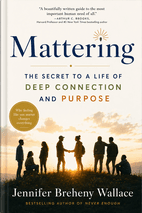
This collection gathers the most striking lines from Jennifer Breheny Wallace's "Mattering" — a book that explores our deep need to feel seen, valued, and connected. You'll find reflections on attention, recognition, and the quiet ways we hold each other up. Wallace has a gift for turning everyday moments into universal truths, which is why these quotes stick with you long after you read them. Whether you're looking for a relatable reminder or a fresh perspective on belonging, these lines offer both comfort and a gentle challenge. They're the kind of words you want to underline, send to a friend, or return to when you need to remember your own worth.
Top Quotes from Mattering
“Do you see me? Do you hear me? Do I matter?”
The author summarizes the fundamental human questions the young man was begging the world to answer.
These three simple questions powerfully distill the essence of mattering—the universal need to be recognized and valued.
“Mattering is like gravity: unseen but essential. It holds us in place. It steadies us.”
The author explains the importance of mattering in human life.
The gravity metaphor makes an abstract concept instantly tangible, emphasizing how vital yet invisible mattering is to our stability.
“The worst sin towards our fellow creatures is not to hate them, but to be indifferent to them: that's the essence of inhumanity.”
The author quotes George Bernard Shaw to highlight the harm caused by ignoring others.
This timeless quote underscores that failing to make people feel seen is more damaging than outright hostility, calling readers to active care.
“The deepest principle in Human Nature is the craving to be appreciated.”
William James's quote follows Greg's 'I'm telling' initiative, underscoring the psychological need behind recognition.
This compact, authoritative statement validates a fundamental truth about human motivation, reinforcing why appreciation is essential for well-being.
“Recognition is a way of saying, I see the good in you. In moments like this, people remember who they are and why they matter.”
The author reflects on the power of telling someone how their impact fits into a larger whole.
It offers a simple, actionable insight that transforms recognition from a polite gesture into a profound affirmation of identity and purpose.
“Attention is the rarest and purest form of generosity.”
A quote from philosopher Simone Weil, placed in the chapter on attunement.
It encapsulates the core message of the chapter in a single, memorable line, elevating attention as the ultimate gift we can give.
“Being heard is so close to being loved that for the average person, they are almost indistinguishable.”
A quote from David W. Augsburger, reflecting on the power of listening.
It powerfully equates the simple act of being heard with the profound experience of love, underscoring why attunement matters so much.
Themes Behind the Quotes
A central theme is the human craving to matter — to be noticed, heard, and appreciated. The quotes repeatedly emphasize that feeling invisible or indifferent is a kind of quiet harm, while simple acts of attention can transform relationships. Another thread is the idea that our worth isn't tied to productivity or sacrifice; burning out or taking on too much doesn't prove our value. Instead, true mattering comes from being seen as a whole person, not just a function. The book also explores resilience and interdependence, showing how we save each other through small gestures and steady presence. Finally, it confronts the pain of transition and loss, asking how we can find new ways to matter when old roles disappear. These themes weave together a powerful reminder that connection is both fragile and essential.
Quotes by Chapter
Introduction: The Mattering Core
“The man on the train wasn’t just lashing out. He was reaching out.”
The author reflects on the young man's angry outburst on the train, which a conductor defused with compassion.
This line reframes aggressive behavior as a desperate plea for connection, making readers reconsider the needs behind difficult actions.
Chapter 1: Connect to Your Impact
“We all want to know that what we do, what we say, and who we are matters.... Every argument is really about, Do you see me? Do you see me? Does what I say mean anything to you? Do I matter to you?”
Oprah Winfrey's quote appears in a paragraph reflecting on the universal human need for recognition and connection.
This line distills the core of mattering into a simple, visceral question, making readers feel seen and understood in their deepest insecurities.
“You're trailing a bright pathway that you don’t even know about.”
From a paraphrase of Scottish poet Donna Ashworth, illustrating the unseen impact we have on others.
This line beautifully captures the idea that our everyday actions create a lasting, often invisible influence, leaving readers with a sense of wonder and purpose.
Chapter 2: The Good Kind of Weight
“I'm not sure you know how meaningful that is to you until it is no longer there.”
Julie reflects on the loss of her caregiving role after her mother's death.
This line captures the profound realization that we often take the sense of being needed for granted until it disappears, making it deeply relatable for anyone who has experienced loss or transition.
“Stop looking at the mirror for an hour a week.”
Julie gives advice to someone feeling adrift after a loss.
This simple, counterintuitive instruction challenges self-absorption and suggests that turning outward to help others is the path to healing and purpose.
“The heavier the burden, the closer our lives come to the earth, the more real and truthful they become.”
The author quotes Milan Kundera to contrast weight and lightness in life.
This poetic metaphor reframes responsibility as grounding and authentic, offering a powerful antidote to the modern fear of being weighed down.
“The worst thing that could possibly happen to anybody would be to not be used for anything by anybody.”
The author quotes Kurt Vonnegut to emphasize the importance of being needed.
This stark, memorable statement underscores that feeling useless is a deeper tragedy than hardship, resonating with anyone who has felt unseen or dispensable.
Chapter 3: Mattering Too Much
“Martyrdom was normalized,” she later reflected. “Staying late, working sick, and burning out were badges of honor.”
Danna, a kindergarten teacher, reflects on the culture of overwork in her profession.
This line starkly captures how systemic neglect is internalized as personal virtue, revealing the toxic normalization of self-sacrifice.
“When a system depends on you to care for everyone else but doesn't care for you, the work feels important but you don’t.”
Samantha, a mother of two, describes the paradox of caregiver overwhelm.
It distills the core tension of distorted mattering—being essential yet unseen—into a single, unforgettable sentence.
“It's as if my parenting depends on me going for a walk.” Her therapist responded gently, “Yeah, because it does.”
A UK psychotherapist confesses her reliance on daily walks to cope with parenting overwhelm.
This exchange validates radical self-prioritization as necessary, not selfish, and reframes self-care as a foundational act of love for others.
“I have always felt that a human being could only be saved by another human being. Iam aware that we do not save each other very often. But I am also aware that we save each other some of the time.”
The author quotes James Baldwin to conclude the chapter on mutual priority.
It offers a poignant, honest hope that imperfect human connection is the only true antidote to feeling unimportant.
Chapter 4: Everyone Needs (To Be) a Cornerman
“A good cornerman,” Rehan said, “is the difference between giving up and finding that extra push to keep going.”
Rehan, in his winter commencement speech at the University of Maryland, explains the role of a cornerman using his boxing experience.
This line perfectly encapsulates the central metaphor of the chapter—that a supportive figure can be the crucial factor between perseverance and surrender. It is memorable because it transforms a sports concept into a universal truth about human connection.
“A champion is someone who gets back up,” he said. “We are champions because we pick each other up.”
Rehan concludes his commencement speech with this call to mutual support.
This quote reframes success as a collective act, emphasizing that resilience is not solitary but sustained by others. Its rhythmic structure and inclusive language make it both inspiring and quotable.
“You're blowing it, son. You're blowing it!”
Angelo Dundee, legendary cornerman, says this urgently to Sugar Ray Leonard during a critical moment in his 1981 fight against Tommy Hearns.
This line demonstrates that true investment sometimes requires delivering hard truths, not just encouragement. It shows how a cornerman’s honest feedback can jolt a fighter back to their potential.
“When we need help, we tend to overestimate human selfishness and underestimate the innate generosity that is wired within us.”
The author explains the phenomenon of 'miscalibrated expectation' regarding seeking help.
It challenges our assumptions about others' willingness to help and reminds us of inherent human generosity.
Chapter 5: Tuning In
“Attunement is like salt in a Thanksgiving dinner, a subtle but transformative ingredient.”
The author explains the role of attunement in building a sense of mattering.
This vivid metaphor makes an abstract concept instantly relatable, showing how attunement enhances every other effort to make someone feel valued.
“I think it's knowing someone is always happy to see you.”
A teenage girl in Peggy's Wednesday Breakfast Club explains what the mornings mean to her.
This simple, heartfelt statement reveals the universal human need for unconditional welcome, making the abstract concept of mattering tangible and relatable.
Chapter 6: When the Rug Gets Pulled: Coping with Life’s Transitions
“No one warns you that starting over can feel so much like disappearing.”
Daniel, a recent college graduate, says this after moving to Singapore for his dream job and feeling the loss of his previous identity.
This line captures the profound, often unspoken loneliness of beginning again in a new place, making readers feel seen in their own struggles with reinvention.
“The challenge wasn’t to cling to what was; it was to ask, Where and how can I matter next?”
The author reflects on the recurring pattern in transition stories she heard during her reporting.
It reframes a painful loss as an opportunity for growth, offering a forward-looking question that empowers readers to rebuild their sense of purpose.
“Life is in the transitions. We can’t ignore these central times of life; we can’t wish or will them away. We have to accept them, name them, mark them, share them, and eventually convert them into fuel for remaking our life stories.”
Author Bruce Feiler is quoted by the chapter to emphasize the importance of embracing change.
This poetic, actionable statement normalizes life's disruptions and provides a clear, hopeful path from struggle to transformation.
“These feelings are personal but not unique.”
The author shares a saying from her friend John to reassure readers that their transition struggles are shared.
It validates individual pain while simultaneously relieving the loneliness of thinking you are the only one suffering, building connection and hope.
Chapter 7: How We Spend Our Days: Mattering at Work
“How we spend our days is, of course, how we spend our lives.”
The author reflects on Annie Dillard's words while listening to workers describe feeling invisible and expendable.
This line distills the central existential stakes of the chapter: if work dominates our days, then feeling that we don't matter at work makes our whole lives feel meaningless.
“We've built entire systems on the assumption that humans are machines. Replaceable. Optimizable. Unemotional. Always on. And now, we're cracking.”
Irish social entrepreneur Dale Whelehan argues that workplace disengagement is the predictable outcome of dehumanizing systems.
The staccato rhythm and stark diagnosis capture exactly how modern work culture treats people as cogs, making the inevitable burnout feel both tragic and unsurprising.