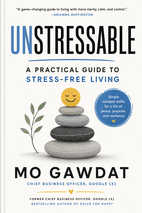
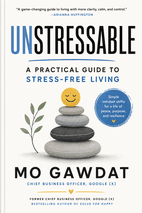
Mo Gawdat's Unstressable reframes chronic stress as a biological mismatch and provides practical tools—including the TONN framework and three-L model—for managing modern life's pressures. Written for anyone overwhelmed by daily stressors, from emails to deeper traumas.
Feature
Insta.Page
Blinkist
Shortform
Summary Depth
Full Chapter-by-Chapter
15-min overview
Detailed analysis
Audio Narration
✓ (AI narration)
✓
✓
Visual Mindmaps
✓
✕
✕
AI Q&A
✓ Voice AI
✕
✕
Quizzes
✓
✕
✕
PDF Downloads
✓
✕
✓
Price
$59.99/yr
$146/yr (PRO)
$199/yr
*Competitor data last verified February 2026.
About the Author
Mo Gawdat
Mo Gawdat is the former Chief Business Officer at Google X and a bestselling author known for his expertise in artificial intelligence, business, and happiness. He wrote *Solve for Happy: Engineer Your Path to Joy*, which draws from his engineering background to explore the science of well-being, and *Scary Smart: The Future of Artificial Intelligence and You*, a critical look at AI's impact on humanity. His work combines technical insight with philosophical reflections on life and technology.
1 Page Summary
In Unstressable: A Practical Guide to Stress-Free Living, Mo Gawdat and co-author Alice Law reframe chronic stress not as a personal failure but as a biological mismatch. The book opens by explaining that the human stress response—a turbocharged survival system driven by cortisol—was designed for split-second physical threats, yet modern life triggers it with thoughts, memories, and worries that never resolve, creating a self-perpetuating "swirl pool" of anxiety. The core insight is that resilience depends not on the force of a stressor but on the "surface area" you have to absorb it, which can be expanded through skills, perspective, and practical frameworks.
The book's distinctive approach is its systematic deconstruction of stress into manageable parts. It introduces the TONN of Stress (Trauma, Obsessions, Nuisances, Noise) to categorize every stressor by origin and intensity, revealing that micro-stressors accumulate like weight on a stalled car. The authors combine hard science (the HPA axis, cortisol damage, post-traumatic growth statistics) with emotional and spiritual dimensions—addressing how the body "keeps the score" through physical aches, how unprocessed feelings create "spiritual stress," and how true calm requires listening to your heart, body, and soul. Practical tools include morning and evening routines, digital limits, and the critical practice of "feeling to heal" rather than suppressing emotions.
The intended audience is anyone feeling overwhelmed by the constant pressure of modern life, from emails and commutes to deeper traumas and obsessions. Readers will gain a clear framework for distinguishing between stressors they can limit and those they must accept, along with the three-L model (Limit, Listen, Learn) and seven habits of calm, happy people identified through research. Ultimately, the book promises not a life free of challenges, but the skills to engage fully without the chronic breakdown that typical stress inflicts—making stress a manageable signal rather than a permanent state.
The human body’s stress response is a turbocharged survival system designed for split-second threats. It starts with the amygdala triggering a domino effect through the HPA axis: hypothalamus, pituitary, and adrenal glands release hormones, ending with cortisol, which turns you into a superhuman machine. In nature, this system has a perfect off-switch: once danger passes, the brain detects cortisol levels and restores calm via a negative feedback loop.
But modern stressors aren’t physical—they’re thoughts, emotions, and ghosts. A worrying thought triggers the same panic, but there’s no foe to fight, so the loop never completes. This creates a swirl pool: your hypervigilant brain scans for threats, fueling more stress, which fuels more scanning. You re‑trigger the same anger circuit every 90 seconds by replaying the same thought.
When cortisol doesn’t clear, chronic stress wreaks havoc. Prolonged high cortisol breaks down muscle, hoards visceral fat, damages the gut, hollows bones, and shrinks brain regions for memory and calming down. Yet most people recover from trauma—resilience isn’t about the force of the stressor but the surface area you have to absorb it. Stress follows a physics equation: force divided by area. Build more skills, resources, and perspective, and you distribute life’s blows across a larger coping area. The same principle explains elasticity—the ability to bounce back and grow stronger. But when stress exceeds capacity, humans break from a single blow (trauma) or from fatigue—tiny, repeated daily pressures that cause micro‑cracks until something gives. That’s burnout, following a predictable formula involving the number, intensity, duration, and frequency of challenges divided by your ability to stay strong.
Before cracks form, we pre‑stress about what might happen. Fear and its derivatives—worry, panic, anxiety—are future‑focused. Worry is about probability; fear about the gap between current and future safety; panic about imminence; and anxiety about your perceived inability to cope. Each has a specific lever, usually fact‑checking or questioning your brain’s predictions.
So where does that leave you? With three accountabilities: reduce the number of stressors, reduce their intensity, and invest in your ability to handle them. These translate into three daily habits: Limit (make conscious lifestyle changes), Learn (develop skills through repeated practice), and Listen (tune into the four languages of your being—mind, heart, body, and soul—each sending distinct stress signals that, if ignored, lead to breakdown). Becoming unstressable isn’t about avoiding life; it’s about taking ownership of your response, building surface area to absorb whatever comes, and repeating the three Ls until they become second nature. Stress doesn’t come from events—it comes from how you deal with them.
The Stress Cycle: From Trigger to Turbocharger
Stress is a full‑body symphony. It starts with a threat your body detects instantly—your amygdala sounds the alarm before your conscious mind notices. This triggers the sympathetic nervous system, demanding fight, flight, or freeze.
The HPA Axis: Chemical Chain Reaction
From the amygdala’s panic, the HPA axis takes over: hypothalamus releases CRH, pituitary secretes ACTH, and adrenal glands release cortisol. Cortisol is a workhorse that regulates blood sugar, metabolism, inflammation, and more. Under threat, it orders fat cells to release fat, the liver to release glucose, and muscles to burn only fat—so all sugar stays in the blood for your brain. This is eustress—good stress that enhances your abilities.
The Negative Feedback Loop: How Stress Ends
When cortisol levels are high, receptors in the hypothalamus and hippocampus sense it. If they find no threat, they shut off the response. Cortisol clears, and you’re calm. Simple.
When the Machine Breaks: Modern Stressors
Today’s stressors are thoughts, emotions, and ghosts. A thought about the economy triggers stress with no physical danger, so the loop can’t complete. Emotions like loneliness feel like threats and create endless loops. The irony: having time to stress about a thought proves there’s no nearby physical danger.
The Swirl Pool: When Feedback Loops Reinforce Stress
The 90‑Second Rule: from a stress‑triggering thought to the physiology running its course is under 90 seconds. But we stay angry for days by rethinking the same thought. This creates a swirl pool—more stress leads to more searching for threats, which leads to more stress.
Silent Killer: Chronic Cortisol
Prolonged high cortisol breaks down muscle, hoards visceral fat, slows metabolism, and damages the gut lining, leading to leaky gut. It hollows bones, confuses the immune system, and shrinks the frontal lobe and hippocampus—critical for memory and calming down. Sustained high cortisol is linked to depression and Alzheimer’s.
Why Most Recover
Most people don’t crumble. After 9/11, PTSD diagnoses dropped by 90% within six months. The difference isn’t the trauma—it’s how people deal with it. We can learn to rightsize our reactions.
A Physics Lesson for Stress
Stress equals force divided by area. The more skills, resources, and perspective you have, the larger your coping area. A harsh comment is the same trigger, but one person turns it into a fight, another into an apology. Perception is a skill. The equation: Stress = (Sum of challenges) / (Ability to perceive and deal with them).
Building Elasticity
Elastic objects bounce back. Humans with flexibility do the same. Stress can leave permanent positive change—post‑traumatic growth—making you better equipped for next time.
When We Break
Objects break from a sudden excessive force (trauma) or from repeated small forces causing micro‑cracks (fatigue). Humans break the same way. Trauma is a one‑punch stressor that overwhelms capacity. But this book is about the relentless daily stress that drives the modern stress pandemic.
The Fatigue of Everyday Life
Burnout follows a predictable equation: Burnout = (Number of Challenges × Intensity × Duration × Frequency) / (Ability to stay strong). You avoid burnout by reducing the left side and increasing the right side.
Fear and All Its Derivatives
Worry is about probability. Gather facts to see if the threat is real.
Fear is about the gap between current and future safety. Ask how bad it could really be.
Panic is about imminence. Verify if the threat is truly imminent, then act.
Anxiety is about your perceived ability to cope. Question your brain’s claim that you can’t handle it, and build skills.
Your Three Accountabilities
Reduce the number of stressors.
Reduce the intensity of each stressor.
Invest in your ability to handle stress.
You always have choices. The New York commute example: walking instead of taking a taxi turned a thirty‑six‑minute rush into a forty‑two‑minute joy.
The Three Ls
Limit: Make conscious lifestyle changes to reduce exposure to triggers.
Learn: Every manageable stressor is a chance to develop new skills through repeated practice.
Listen: Tune into the four languages of your being—mind, heart, body, and soul. Each sends distinct stress signals that, if ignored, lead to breakdown.
Commitment and Accountability
Becoming unstressable means repeating the three Ls daily until they become second nature. Stress comes not from events, but from how you deal with them. The next step is to recognize the specific stressors modern life generates so you can reduce, remove, and eventually exit the machine.
Key Takeaways
Practice builds skill, not just reading advice—commit to the exercises.
The third L, Listen, means learning the languages of your mind, heart, body, and soul.
Each part of you communicates stress differently; misinterpreting or ignoring them leads to burnout.
Repeat the three Ls (Limit, Learn, Listen) until they become habitual.
Ultimately, it’s your accountability: stress comes from your response, not from life’s events.
Key concepts: 1. Welcome to the Machine
1. Welcome to the Machine
The Stress Response System
Amygdala triggers HPA axis for survival
Cortisol turns body into superhuman machine
Negative feedback loop shuts stress off naturally
System designed for physical, not mental threats
Modern Stressors and the Broken Loop
Thoughts and emotions trigger same panic response
No physical danger means loop never completes
Hypervigilant brain scans for threats endlessly
Replaying thoughts re-triggers anger every 90 seconds
The Swirl Pool Effect
Stress fuels more threat scanning
More scanning creates more stress
90-second physiology extended by rumination
Self-reinforcing cycle of chronic activation
Chronic Cortisol Damage
Breaks down muscle and hoards visceral fat
Damages gut lining and hollows bones
Shrinks frontal lobe and hippocampus
Linked to depression and Alzheimer's
Resilience Physics: Force vs. Area
Stress = force divided by coping area
More skills and resources increase surface area
Perception determines reaction to same trigger
Most people recover from trauma naturally
Elasticity and Breaking Points
Elasticity allows bouncing back stronger
Single blow causes trauma when capacity exceeded
Fatigue from tiny pressures causes burnout
Burnout formula: challenges divided by ability
Three Daily Habits for Unstressability
Limit: make conscious lifestyle changes
Learn: develop skills through repeated practice
Listen: tune into mind, heart, body, soul
Stress comes from response, not events
If you like this summary, you probably also like these summaries...
💡 Try clicking the AI chat button to ask questions about this book!
Chapter 2: 2. Trigger (Un)Happy
Overview
Modern life has built a machine that cranks out stress like a factory product, conditioning people to accept anxiety as normal before their feet even hit the floor—starting with an aggressive alarm clock and a morning dose of bad news. To untangle this chaos, the chapter introduces the TONN of Stress, a simple framework that sorts every stressor into four quadrants based on origin (external vs. internal) and intensity (macro vs. micro): Trauma, Obsessions, Nuisances, and Noise. The crucial realization is that small stressors don't stay small—they accumulate like force on a stalled car until the combined weight becomes crushing.
At the top of the external-macro corner sits Trauma—the big, blindsiding events like death, accident, or betrayal that shatter your faith in the world. A heartbreaking personal story of losing a son and watching graves fill with other people's children drives home that hardship is a universal fate. Yet trauma is the anomaly, not the baseline; health and safety are the norm. Statistically, 91% of people recover even from PTSD-inducing events, and the real damage comes from the years spent fearing the memory rather than accepting it.
On the internal-macro side live Obsessions—monsters built from thought loops that start small and spiral out of control. A friend's offhand comment morphs into a conviction about never being loved; a business failure becomes a paralyzing fear for the family's future. The chapter shares stories of jealousy and guilt to show that it’s not what life hands you that breaks you, but the way you think about what life hands you. Obsessions create imaginary demons that feel truer than reality itself.
Then come the everyday external micro-stressors: Nuisances. Traffic, rude emails, broken printers—a death by a thousand cuts. Most people insist they’re “fine,” but fine is just a polite way of saying “not broken yet, but not happy either.” The pressure of dozens of minor irritations adds up to a net force that can snap a person, and ignoring them only lets the load grow heavier.
Finally, the most persistent threat comes from inside your own head: Noise. These are the micro internal stressors—the remembered criticism, the replayed awkward moment, the nagging self-doubt. Unlike nuisances, noise is purely self-generated, and it’s both selective and negatively biased. Your brain gives Velcro-like stickiness to negative experiences and Teflon-like slipperiness to positive ones. The language you use internally matters, too: telling yourself “I need to go to the gym more” serves you, while “I’m a mess and unreliable” is needlessly harsh, often echoing the harshest critic you had growing up. The good news is that neuroplasticity allows you to rewire those default patterns—what you can’t control externally, you can regulate internally.
Each quadrant hurts differently: Trauma breaks you instantly; Obsessions wear you down like dragging a concrete block; Nuisances sap joy daily; Noise mounts subtly into worthlessness and regret. Few could survive all four at once, but with the exception of trauma’s trigger event, every quadrant is within your span of control. The path forward involves the three Ls—limit, learn, and listen—to make life feel manageable again.
The Machine of Modern Stress
The chapter opens with a stark metaphor: Pink Floyd's "machine" represents how modern life molds us, selling us thoughts, beliefs, and desires until we accept stress as normal. The first stressor hits before we're even awake—an aggressive alarm clock we snooze instead of replacing, followed by a morning injection of negative headlines. Most of this is preventable, but only if we learn to recognize it. The authors argue that we've become so accustomed to stress that we let it slip into every corner of our lives, from rushed mornings to exhausted evenings filled with numb consumption.
To make sense of the chaos, they introduce a simple framework: the TONN of Stress. All stressors fall into four quadrants defined by two dimensions—origin (external vs. internal) and intensity (macro vs. micro). The four types are:
The key insight: even small stressors accumulate. A single nuisance won't break you, but dozens of them throughout a day can create a crushing load. Understanding each quadrant helps you spot the stressors before they take over.
Trauma—When Life Knocks You Flat
Trauma is the big external event that blindsides you: a loved one's death, a serious accident, a betrayal. It shakes your faith in life itself. The authors share a personal story—Mo losing his son Ali and visiting his grave daily, watching new graves appear, realizing that everyone lying there was someone's child. Hardship is a fate we all share.
But here's the hopeful counterpoint: trauma is the anomaly, not the norm. Health, safety, and ease are the baseline. Sickness and disaster are the interruptions. And statistically, 91% of people bounce back from even PTSD-inducing events. The real damage comes not from the event itself but from the years we spend fearing it and letting it linger. Acceptance isn't despair—it's recognizing that billions have survived the same, and you will too.
Obsessions—The Monsters We Build in Our Heads
Obsessions are internal macro stressors—intense, damaging, but born from our own thoughts, not external events. They start small: a friend's offhand comment about Instagram beauty morphs into "I'll never find love." A business failure triggers "I can't leave my family in this mess." The thought loops on repeat, growing larger than the original trigger.
Mo illustrates this with his ex-girlfriend's jealousy: past betrayals made her obsess that he would cheat, so she created the very conflict she feared. Alice shares her father's story—he lost his business and became consumed with guilt and fear for his family's future, even though his children were thriving. His obsession, not the financial loss, ultimately destroyed him.
The critical lesson: we don't get depressed because of what the world gives us. We get depressed because of the way we think about what the world gives us. Obsessions create imaginary demons far scarier than reality, and without intervention, they only grow stronger. They feel more true than the truth itself.
Nuisances—The Death by a Thousand Cuts
The chapter then pivots to the smaller external stressors—the nuisances. These are the daily irritations that individually feel manageable: traffic, a rude email, a broken printer, a rushed lunch. But here's the physics analogy: force adds up. One person pushing a car may not be enough, but three friends together can get it moving. Similarly, dozens of minor pressures throughout your day create a net force that can break you.
The authors call out the lie we tell ourselves: "I'm fine." It's the most common daily falsehood. Fine means "not broken yet, but not happy either." It's a state of meh that we accept because we can't be bothered to check in with ourselves. The real question: why are you letting this be your life? Nuisances get their power from their numbers, and ignoring them only lets the load grow heavier.
From external stress, we turn inward—where the most persistent threats actually live. After learning to limit nuisances, it's time to confront a far more insidious source of stress: the noise inside your own head.
These "micro internal stressors" aren't big enough to break us on their own. Rather, they nibble away like termites: a remembered criticism, a replayed awkward moment, a nagging self-doubt. Unlike nuisances—which are real events happening to you—noise is purely self-generated. You can be comfortably at home and still feel stress by dreading tomorrow's commute. Your brain creates thoughts that irritate you hundreds of times a day, far exceeding the handful of external annoyances life throws your way.
Noise is both selective and negatively biased. It zeroes in on the one unkind comment your partner made while ignoring twenty loving ones. It magnifies flaws that others don't see. Mo's story is a perfect example: he spent years convinced he wasn't attractive, despite evidence to the contrary—until his daughter's comment and later experiences forced him to recognize his own lack of objectivity. The moment he changed his conviction, the noise stopped.
The language we use internally matters just as much as accuracy. Telling yourself "I need to go to the gym more" is constructive. Telling yourself "I'm a mess and unreliable" is needlessly harsh—and usually mimics the harshest critic you had growing up. If you wouldn't speak that way to someone you love, don't speak it to yourself.
Our brains are wired for negativity. Neuroscientist Rick Hanson describes them as Velcro for negative experiences and Teflon for the positive. But here's the good news: neuroplasticity means you can build new pathways. What you can't control externally, you can regulate internally.
Where It Hurts
Most people experience one quadrant of stress on any given day, and few could survive all four at once:
Trauma breaks you almost instantly—shock, depleted energy, lost passion. It persists untreated as post-traumatic stress.
Obsessions wear you out slowly like dragging
Key concepts: 2. Trigger (Un)Happy
2. Trigger (Un)Happy
The Machine of Modern Stress
Modern life conditions us to accept stress as normal
First stressors hit before waking: alarm clock and bad news
Stress accumulates like force on a stalled car
Most daily stress is preventable with awareness
TONN of Stress Framework
Four quadrants: Trauma, Obsessions, Nuisances, Noise
Divided by origin (external vs internal) and intensity (macro vs micro)
Small stressors don't stay small—they compound
Understanding quadrants helps spot stressors before they overwhelm
Trauma—External Macro Stressors
Big blindsiding events: death, accident, betrayal
Shatters faith in life itself
91% recover even from PTSD-inducing events
Real damage comes from years fearing the memory
Obsessions—Internal Macro Stressors
Thought loops that start small and spiral out of control
Offhand comment becomes conviction of never being loved
It's not events but thinking about events that breaks you
Imaginary demons feel truer than reality
Nuisances—External Micro Stressors
Death by a thousand cuts: traffic, rude emails, broken printers
Most people say 'fine' but aren't truly happy
Ignoring nuisances lets the load grow heavier
Combined weight of minor irritations can snap a person
Brain gives Velcro to negative, Teflon to positive experiences
Harsh internal language echoes childhood critics
Neuroplasticity allows rewiring default patterns
The Path Forward: Limit, Learn, Listen
Each quadrant hurts differently but most are within your control
Trauma breaks instantly; obsessions wear down like concrete
Nuisances sap joy daily; noise mounts into worthlessness
Three Ls make life manageable again
⚡ You're 2 chapters in and clearly committed to learning
Why stop now? Finish this book today and explore our entire library. Try it free for 7 days.
Chapter 3: 3. Carrying That TONN
Overview
The hardest parts of life don’t ask for permission—they simply arrive. Trauma is too overwhelming to face alone, but the first step isn’t fighting or fixing, but committed acceptance. Resisting what’s uncontrollable only adds suffering, while accepting the new reality clears a foundation for meaningful action. That pivot from loss to purpose is illustrated through a personal story of turning grief into a global mission, backed by research on post-traumatic growth, which shows people can emerge with deeper appreciation, empathy, and clarity. The full cycle of recovery moves from accept to commit to allow, transforming trauma into strength.
But the real epidemic isn’t just big traumas—it’s the accumulation of micro stressors. A bad commute, a rude comment, a jarring alarm: each is trivial alone, but stacked together they push people toward overwhelm. The first responsibility is limiting—ruthlessly deleting unnecessary stressors, refusing to let minor annoyances live rent-free in your mind, and building habits that prevent them from landing. A morning routine, an evening routine, and limits in the digital world serve as concrete practices for keeping the noise out. Digital addiction is framed as a four-step model of Intention, Awareness, Assistance, and Alternatives.
Yet limiting alone isn’t enough. Knowledge about stress management doesn’t make you unstressable unless practiced into skill. That’s where the four modalities of stress—mental, emotional, physical, and spiritual, or MEPS—come in. Stress ripples through every layer of your being, each speaking its own language. The mind exaggerates, the heart blends emotions, the body signals clearly but gets ignored, and the soul whispers in intuition. To truly resolve stress, you have to become fluent in all four tongues. The key takeaway is that becoming unstressable isn’t about avoiding stress—it’s about carrying it differently, with acceptance, action, and fluency across every part of who you are.
Committed Acceptance
Trauma is too overwhelming to handle alone—professional help is essential. But when you’re ready, the starting point is committed acceptance. This means recognizing that some events are beyond your control: traffic jams, annoying bosses, illness, death. Resisting them only adds suffering. Acceptance isn’t resignation; it’s the foundation for action. Once you accept the new reality, you commit to small, meaningful steps that make your life and others’ better despite the pain. Mo shares his story after losing Ali—he couldn’t bring him back, but committed to sharing what Ali taught him, turning loss into purpose.
Post-Traumatic Growth
Hard times don’t just break us—they can make us stronger. Psychologists coined post-traumatic growth (PTG) to describe this transformation. People who navigate trauma often develop new appreciation for life, personal strength, deeper empathy, and clearer priorities. The process can be accelerated through five practices: education about trauma, emotional regulation, open disclosure, crafting an authentic narrative, and serving others. These skills don’t erase the past but build a resilient mindset.
The Full Cycle of Trauma Recovery
Trauma isn’t the end—it’s the beginning of a cycle. Those who thrive move through three stages: accept the uncontrollable reality, commit to small forward actions, and allow the experience to foster growth. Avoid getting stuck in blame or helplessness. Seek professional help, uncover limiting beliefs, regulate emotions, share your story, and help others. This cycle has been lived by millions—you can live it too.
The Accumulation of Micro Stressors
While trauma is intense but rare, the real epidemic comes from everyday micro stressors. Alice illustrates with Harry’s typical morning: jarring alarm, checking phone immediately, disturbing news, angry email, social media comparisons, a minor cut while shaving. Within forty-five minutes, Harry has absorbed fifteen separate hits of stress. Alone, each is trivial; together, they push him toward his breaking point. Most of us live like Harry, piling on micro stressors without noticing.
Limiting: The First Responsibility
To break the cycle, the first responsibility is limiting: remove every unnecessary stressor you can, reduce the intensity of those you can’t, and build habits that keep them out. Start by listing stressors you’re allowing in—both external (too many meetings, device time) and internal (negative self-talk, comparisons). Awareness is half the battle. Delete the needless stress—stop watching the news if it frustrates you, choose not to scroll social media first thing. Harry’s day is a series of choices—and so is yours.
Don't Sweat the Little Things
A ten-minute commute with a difficult driver? That’s ten minutes of your life. Why spend another ten minutes stewing over it? Most micro-stressors don’t deserve a second of your mental real estate. You can’t always remove the trigger, but you can choose to let it go. Stuck in traffic? Enjoy a podcast. Partner irritable? Offer a hug instead of a complaint. The stressor lasts seconds; the noise you create around it can last hours.
Create Healthy Habits
The only lasting solution is to build habits that prevent nuisances from landing in the first place.
Simple Morning Routine (15–20 Minutes)
Wake up twenty minutes earlier. Keep your phone on airplane mode. Use a soothing alarm. Think one intentionally good thought. Make your favorite drink, journal for five minutes, write five things you’re grateful for, set an intention, meditate for five minutes, and center yourself.
Easy Evening Routine (10–15 Minutes)
Turn your phone to airplane mode an hour before bed. Journal three things that brought you joy, something you handled well, and three things you’re grateful for. Breathe deeply for five minutes. Repeat a positive mantra.
Limits in the Digital World
The average person spends nearly seven hours daily on screens. Constant checkers are 20% more stressed. Six hours or more on screens doubles the risk of anxiety and depression. The solution is IAAA: Intention (set a clear goal), Awareness (measure usage), Assistance (turn off notifications, use grayscale, set phone-free zones), and Alternatives (meditate, connect with others, pick up a hobby, read a paper book, spend time in nature).
Abilities, Resources, and Skills
Knowledge alone won’t make you unstressable. You can read every page, but unless you practice, you’ll never truly equip yourself. Turning information into skill takes repetition and real-world application. Stress speaks to you in its own tongues, and you need to learn how to listen and respond.
The Four Modalities of Stress (MEPS)
Stress lands in four layers—mental, emotional, physical, and spiritual. When a trigger sets off stress, it manifests in one layer and ripples outward. If you only address the mental layer, emotional or physical residue remains. To become unstressable, you have to work on all four. Each layer speaks its own language:
Mental: Your mind exaggerates, filters, and makes up stories.
Emotional: The heart speaks in blended feelings—you must break them down.
Physical: Your body signals clearly but gets ignored until it screams.
Spiritual: The soul whispers in intuition, which we’ve learned to distrust.
The Language Course Ahead
The rest of this book is a language course. You’ll learn to speak fluently in each of these four tongues. Almost all modern stress starts with a thought—we create a story and choose to let it stress us. That’s why we begin with the mind.
Key Takeaways
Skills require practice, not just intellectual understanding—knowledge alone won’t make you unstressable.
Stress manifests in four layers: mental, emotional, physical, and spiritual (MEPS). Ignoring any one leaves residual stress that reinfects the others.
Each layer speaks its own language: mind exaggerates, heart blends emotions, body signals clearly but gets ignored, soul whispers in intuition.
To truly resolve stress, you must learn to listen and respond in all four languages—not just analyze your thoughts.
The journey starts with the mind, where most modern stress originates, and then moves through the other layers.
Key concepts: 3. Carrying That TONN
3. Carrying That TONN
Committed Acceptance
Trauma is too overwhelming to face alone
Acceptance is not resignation, but a foundation for action
Resisting uncontrollable events only adds suffering
Turn loss into purpose through small meaningful steps
Post-Traumatic Growth (PTG)
Hard times can make us stronger, not just break us
Develops deeper appreciation, empathy, and clearer priorities
Accelerated through education, regulation, and serving others
Builds a resilient mindset without erasing the past
The Full Cycle of Recovery
Move through accept, commit, and allow stages
Avoid getting stuck in blame or helplessness
Seek professional help and uncover limiting beliefs
Share your story and help others to foster growth
Micro Stressors Accumulation
Everyday micro stressors are the real epidemic
Alone trivial, together they push toward breaking point
Bad commute, rude comment, jarring alarm stack up
Most people pile on micro stressors without noticing
Limiting: The First Responsibility
Remove every unnecessary stressor you can
List both external and internal stressors you allow in
Delete needless stress like news or social media
Awareness is half the battle in breaking the cycle
Don't Sweat the Little Things
Most micro-stressors don't deserve mental real estate
Choose to let go instead of stewing over triggers
Stuck in traffic? Enjoy a podcast instead
Stressor lasts seconds; noise around it lasts hours
Healthy Habits to Prevent Stress
Build morning routine: wake early, no phone, journal
Evening routine: airplane mode, gratitude, deep breathing
Digital addiction model: Intention, Awareness, Assistance
Habits prevent nuisances from landing in the first place
Chapter 4: 4. It’s in Your Head
Overview
The chapter opens with a painfully familiar scene: you’re jolted awake at 3:00 AM, and your brain immediately serves up a “helpful” reminder like “Remember to ask Alex to call Rob.” From there, the spiral accelerates—what if you forget? Why didn’t you call last night? What’s wrong with you? Is it because you wear black? Should you work out more? That little bastard wins every time. And it’s not just productivity; the same loop can spin far darker themes—partner infidelity, nuclear war, past regrets. The more you replay events, the bigger they feel, until the world seems to be ending when really, the drama exists only inside your head.
This repetitive, high-energy thinking is called incessant thought—background chatter that cycles through six stages: flashback to the past, attempts to comprehend, loops of “I should have,” flash-forwards to disaster, waves of “I should,” and endless “What if?” scenarios. It’s the Netflix of unhappiness—unhappiness on demand. You select the most dramatic horror stories from your life and click play again and again.
Thinking, it turns out, is a survival mechanism. Every thought exists to analyze the environment, assess safety, and plot actions. When you’re calm, thoughts are deliberate; when stressed, they become reactive and defensive, exaggerating threats like stockpiling pasta for a one-day blizzard. But here’s the bombshell: that little voice in your head is not you. If the voice were you, why would it need to talk? You’d already know. Your brain is an organ with a biological function—just like your heart pumps blood, your brain observes the world to keep you safe. You are not your thoughts any more than you are the urine from your kidneys.
Your brain’s internal chatter sounds like perfect truth, but it’s riddled with errors: it communicates beliefs before verifying validity, repeats what others told it without debating credibility, and exaggerates to capture your attention—because as a survival mechanism, it prefers false alarms over missed threats. That’s a design feature, not a bug. Understanding these three speech impediments is like taking a language course for your own mind.
Think of your brain in stressful moments as exactly like a fire alarm—noisy, intrusive, often wrong about the level of danger, but ultimately there to keep you safe. When a fire alarm goes off, you don’t sit and listen to the siren for hours. You walk outside, verify if there’s a real fire, and act accordingly. Yet when your brain screams stressful thoughts, you stay put, listen to the noise, torture yourself, and sometimes relight the sensor yourself—just to play the horror story one more time.
The three anchors offer a rescue plan. The first: Is it true? When your brain offers a toxic narrative—like “She doesn’t love you anymore” after an argument—confront it with evidence. If no proof exists, drop it. The second: What can I do to fix it? If the thought is true, treat it like a signal for action. Move toward a solution, and the fire subsides. The third: Can I accept it and still make life better? This is the Jedi Master level—committed acceptance. You accept what you can’t change, then commit to building something new around the brokenness, like the Japanese art of kintsugi, repairing broken pottery with gold to make cracks beautiful.
But why wait for the fire? The deal is a preventative agreement with your brain: only two types of thoughts are allowed—useful thoughts and joyful thoughts. Everything else—incessant complaining, repetitive worry, useless rumination—gets cut off. You are the boss. When negativity arises, simply say, “Bring me a better thought.” Useful thoughts include problem-solving and planning; joyful thoughts are pure positivity. Interrupt useless chatter by ruthlessly evaluating whether the thought is making anything better. After losing his son Ali, the author’s brain kept looping “You should have driven him to another hospital.” He finally yelled, “Bring me a thought I can act upon.” That simple instruction transformed grief into purposeful action. And when a problem has no solution, command your brain: Bring me a joyful thought. Instead of “Ali died,” answer with “But before he left, Ali lived.”
Cyclical stress tied to calendar dates—collective stress (like the festive season), phantom stress (invented by outside narratives, like “Blue Monday”), and personal highlighters (anniversaries of loss)—can be managed with the P³ method: Perspective (identify the cycle), Preparation (know your triggers and plan ahead), and Prioritize (focus on well-being before the season hits).
Calmness does not come from a silent mind. Your brain will never stop thinking—it’s a biological function. In meditation, you don’t stop thinking; you switch from incessant chatter to observing the world as it is. Calm is the absence of negative thoughts, not all thoughts. Use your brain like a gym: build the muscles of useful, joyful, positive thoughts. Upgrade your own hardware every time you choose a better thought.
Gratitude is the direct antidote to the brain’s negativity bias. Force your brain to look for the good. Keep a gratitude journal, and when a negative thought pops up, immediately ask for a positive one to balance it. Yielding means learning to let minor annoyances pass without letting them take over. If something is irreparable, accept it. If it’s just a minor nuisance, smile at the silliness and move on. Meditation isn’t about achieving silence; it’s resistance training for your brain—each time you pull your focus back from distraction, you strengthen the neural network for calm. Mindfulness is the lifestyle that extends beyond the meditation cushion. Simple games help: when walking, take one picture of something beautiful; when driving, make music a focused experience; put your cutlery down between bites; look people in the eyes and listen without distraction.
Worthwhile also is scheduling a regular meeting with your brain, two to three times a week for twenty-five minutes. Listen attentively, acknowledge every thought, and never let a thought repeat. After ten to fifteen minutes, your brain runs out of material, and genuine silence arrives. Review your notes to see how ridiculous many thoughts are, then scratch them out. For important ones you’ve ignored, make a plan to address them.
Make believe—mental visualization—works because your brain doesn’t distinguish much between a real event and a vividly imagined one. The trick is to visualize not just the problem but the solution, all the way to a positive outcome. Debra Searle, who rowed solo across the Atlantic, trained her brain by imagining every catastrophe and then visualizing herself handling it. That’s the method: expect the best, not just survive the worst. And mind your own business—most of what stresses you, especially from the news and social media, lies outside your circle of influence. The world has never been safer, but our horizon of awareness has exploded. If you can’t change it, why let it consume your mind? Schedule your anxiety—give yourself thirty minutes a day for toxicity, then switch it off.
Finally, connect to mother nature. For 300,000 years, humans felt part of wild nature. The separation we feel today is a trauma. Reconnection happens through small, consistent acts: walking, observing a leaf or an insect, learning the habits of birds outside your window. You don’t need to move to a jungle—just pause in the flower aisle at the supermarket or watch a nature documentary. As you reconnect, you’ll remember that most of the illusions we chase in civilization don’t really matter. There’s deep peace in finding your rhythm with the natural world.
Key Takeaways
Visualize solutions, not just problems. Practice scenarios all the way to a positive outcome, training your brain to feel capable and prepared.
Limit media consumption. Most news is outside your control; focus your attention on your Circle of Influence to reduce stress.
Reconnect with nature regularly. Even small daily acts—observing a flower, listening to birds—restore a sense of belonging and calm that modern life disrupts.
Key concepts: 4. It’s in Your Head
4. It’s in Your Head
The Nature of Incessant Thought
Background chatter cycles through six stages of negativity
It's the Netflix of unhappiness—unhappiness on demand
Thinking is a survival mechanism that exaggerates threats
The voice in your head is not you
Your Brain's Three Speech Impediments
Believes before verifying validity of information
Repeats others' words without debating credibility
Exaggerates to capture attention as a survival feature
The Fire Alarm Analogy
Stressful thoughts are like a noisy, often wrong fire alarm
Don't sit and listen to the siren for hours
Verify if there's a real fire, then act accordingly
Stop relighting the sensor by replaying horror stories
The Three Anchors Rescue Plan
Is it true? Confront toxic narratives with evidence
What can I do to fix it? Treat truth as action signal
Can I accept it and still make life better? Committed acceptance
The Deal: Useful and Joyful Thoughts Only
Only two thought types allowed: useful and joyful
Cut off incessant complaining, worry, and rumination
Command 'Bring me a better thought' when negativity arises
Transform grief into purposeful action with this instruction
Managing Cyclical Stress with P³ Method
Perspective: Identify the cycle causing stress
Preparation: Know triggers and plan ahead
Prioritize: Focus on well-being before the season hits
Calmness Through Thought Training
Calm is absence of negative thoughts, not all thoughts
Use your brain like a gym to build positive thought muscles
Upgrade your hardware by choosing better thoughts
Frequently Asked Questions about Unstressable
What is Unstressable about?
This book explores how modern life triggers the body's ancient stress response through thoughts and emotions rather than physical threats, creating chronic stress loops that damage health. It introduces the TONN of Stress framework to categorize stressors as trauma, obsessions, nuisances, or noise, and emphasizes that tiny annoyances accumulate into overwhelming force. The solution involves a three-step model: limit avoidable stressors, listen to signals from mind, heart, body, and soul, and learn from each stressful moment to build resilience. Ultimately, it guides readers toward becoming 'unstressable' by engaging fully with life while sidestepping chronic wear and tear.
Who is the author of Unstressable?
Mo Gawdat is the author, a former Chief Business Officer at Google X who shares deeply personal experiences throughout the book, including the loss of his son. His writing blends practical frameworks with emotional honesty, drawing from his own journey through grief and recovery to develop stress management strategies. The book reflects his expertise in systems thinking and his commitment to helping others navigate life's challenges with greater calm.
Is Unstressable worth reading?
Absolutely—this book offers a rare combination of scientific explanation, emotional depth, and actionable steps that go beyond surface-level stress tips. It doesn't just tell you to relax; it explains why you're stressed and gives you a clear system (limit, listen, learn) to regain control. The author's personal stories make the concepts relatable, while research-backed insights on post-traumatic growth and emotional intelligence provide genuine tools for transformation.
What are the key lessons from Unstressable?
Stress follows a physics equation: force divided by surface area—build more skills, resources, and perspective to distribute life's blows. The TONN of Stress framework helps you sort every stressor into trauma, obsessions, nuisances, or noise, revealing that small annoyances pile up dangerously if ignored. Recovery requires committed acceptance of what you can't control, followed by action on what you can, while emotional intelligence lets you use feelings as signals rather than suppress them. The ultimate habits of stress-proof people include ruthlessly reducing nuisances, scheduling joy before work, and listening to your body's physical whispers before they become shouts.
📚 Explore Our Book Summary Library
Discover more insightful book summaries from our collection