Introduction: The Hidden Ingredient of High-Performing Teams
Chapter 1/4
Lang
1x
Voice
PDF
0:00
0:00
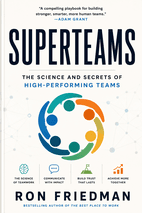
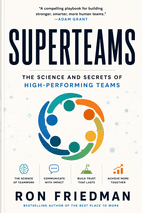
Superteams
by Ron Friedman · Summary updated
What is the book Superteams about?
Ron Friedman's Superteams reveals the science behind high-performing teams, showing how to build a culture of focus, trust, and growth that makes work so rewarding members look forward to Monday. For any team member seeking a practical playbook to transform a group into a cohesive, resilient unit.
Feature
Insta.Page
Blinkist
Shortform
Summary Depth
Full Chapter-by-Chapter
15-min overview
Detailed analysis
Audio Narration
✓ (AI narration)
✓
✓
Visual Mindmaps
✓
✕
✕
AI Q&A
✓ Voice AI
✕
✕
Quizzes
✓
✕
✕
PDF Downloads
✓
✕
✓
Price
$59.99/yr
$146/yr (PRO)
$199/yr
*Competitor data last verified February 2026.
About the Author
Ron Friedman
Ron Friedman is an award-winning social psychologist and author known for his work on motivation and workplace excellence. He wrote the bestseller *The Best Place to Work: The Art and Science of Creating an Extraordinary Workplace*. Friedman has also contributed to publications like *Harvard Business Review* and *Psychology Today*, drawing on his research and experience in organizational behavior.
1 Page Summary
Based solely on the provided chapter summaries, Ron Friedman’s Superteams: The Science and Secrets of High-Performing Teams argues that extraordinary teams are defined not by individual talent or perks, but by how members collaborate. The book’s central thesis is that high-performing teams—or "Superteams"—structurally manage focus, trust, and relationships to create an environment so rewarding that members look forward to Monday. Key concepts include "Collaborative Focus" (managing attention collectively rather than as a personal issue), the seven strategies to eliminate "meeting sprawl," and the three pillars of trust (competence, benevolence, integrity). The book also emphasizes the power of turning colleagues into friends (via proximity, similarity, and self-disclosure) and the necessity of a "culture of growth" built on psychological safety and honest feedback.
The author’s approach is distinctive for its blend of rigorous research and vivid, often counterintuitive, stories. Friedman grounds his advice in data—such as Superteams enjoying 38% longer stretches of uninterrupted work or 77% of members prioritizing helping a teammate over personal chores—while using memorable anecdotes from groups like ABBA, Guns N’ Roses, Saturday Night Live, and the Supreme Court to illustrate his points. The book methodically deconstructs common workplace myths, such as the idea that longer hours yield better results or that talent alone guarantees success, replacing them with practical, evidence-based strategies like time-blocking, the "Sunday Night Test," and deliberate downtime.
The intended audience is anyone who works in a team, from entry-level employees to executives, who wants to improve their team’s performance and satisfaction. Readers will gain a concrete playbook for transforming a collection of individuals into a cohesive unit that is more productive, resilient, and fulfilling to belong to. Ultimately, the book promises a framework for building a team that is not just effective but so rewarding that members—even those who win the lottery—would choose to stay.
Chapter 1: Introduction: The Hidden Ingredient of High-Performing Teams
Overview
Imagine your office burns down—everyone’s safe, but the building is gone. You’re put in charge of building a new one. Where do you start? The furniture? The floor plan? The location? Most people would focus on the physical stuff, but this chapter makes a compelling case that the real magic of a workplace isn’t the walls or the desks. It’s the people. And more than that, it’s how they work together.
The chapter opens with a striking clue about what separates average teams from extraordinary ones: the Sunday Night Test. You know the dreaded “Sunday Scaries”—that creeping dread that makes weekend joy evaporate. It turns out 67% of people on average teams dread Sunday night, while 51% of those on high-performing teams actually look forward to Monday morning. That’s a massive gap, and it’s not about salary or perks. It’s about feeling like you’re a key player on a team that clicks.
The Three Essentials of Any Real Team
You might think any group that works together is a team. Not so fast. The author argues that without three core ingredients, you’ve just got a collection of people sharing office space. Here’s what makes a team a team:
A shared goal – The group must care about the same outcome. That sounds obvious, but in practice, teams often suffer from invisible agendas: some people are chasing promotions, others are protecting their turf, and nobody’s rowing in the same direction. Without genuine buy-in, there’s no team.
Role clarity – Everyone needs to know what they own, and what their teammates own. When roles blur, collaboration becomes a mess of missed deadlines, friction, and turf wars. Clear boundaries prevent that collision.
Interdependence – You have to need your teammates to succeed. It’s not enough to share a goal and know your job; you must believe you can’t do it alone. The strongest interdependence happens when people bring complementary skills, not identical ones. A restaurant run by two chefs may struggle, but one chef plus a hospitality expert? That’s a formula for success.
Why These Three Are Only the Beginning
Here’s the twist: those three essentials are necessary, but they aren’t enough. They’re like the dough, sauce, and cheese for a pizza. Without them, you can’t make a pizza at all. But having them alone won’t make you a world-class pizzeria. The chapter sets up the book’s central promise: this isn’t about the basics. It’s about the hidden techniques, systems, and patterns that elevate a functional team into a SuperTeam—one that gets more done, makes each other better, and improves over time.
The rest of the book will explore those next-level ingredients. But first, we have to understand the foundation. Without shared goals, clear roles, and real interdependence, Superteams can’t exist. With them, you’ve got a solid base—and now the real work begins.
Key Takeaways
The Sunday Scaries are a real metric: Superteam members are twice as likely to look forward to Monday as average team members.
A group isn’t a team unless it has three essentials: a shared goal, role clarity, and interdependence.
Interdependence thrives on complementary skills, not just similarity—you need teammates because their strengths fill your gaps.
These three ingredients are necessary but not sufficient. They’re just the foundation; the real performance gains come from the hidden patterns this book will uncover.
Key concepts: Introduction: The Hidden Ingredient of High-Performing Teams
1. Introduction: The Hidden Ingredient of High-Performing Teams
The Sunday Night Test
67% of average team members dread Sunday night
51% of high-performing team members look forward to Monday
The gap is about team dynamics, not salary or perks
Three Essentials of a Real Team
Shared goal: everyone cares about the same outcome
Role clarity: everyone knows their own and others' responsibilities
Interdependence: you need teammates to succeed
Interdependence Requires Complementary Skills
Strongest teams have complementary, not identical, skills
Two chefs may struggle; chef plus hospitality expert thrives
Teammates fill each other's gaps
Essentials Are Necessary but Not Sufficient
Three essentials are like dough, sauce, and cheese for pizza
They create a foundation, not a world-class team
Real performance gains come from hidden patterns
The Promise of SuperTeams
Book explores hidden techniques beyond basics
SuperTeams get more done and improve over time
Without foundation, SuperTeams cannot exist
If you like this summary, you probably also like these summaries...
💡 Try clicking the AI chat button to ask questions about this book!
Chapter 2: Chapter 1: The Secret Playbook Top Teams Use to Stay Focused
Overview
The story of Charles Benoit—a teacher who quit to write copy, only to find himself hiding in a soundproof booth with a flashlight—is painfully familiar. His search for quiet highlights a crisis that’s only gotten worse: workplace distractions have exploded, with constant email checks and meetings devouring hours and leaving attention residue that makes deep thinking nearly impossible. Worse, we’ve trained our brains to crave interruptions.
Location alone isn’t the answer. Remote work offers a buffer but also blurs boundaries and slows communication. High-performing teams, or Superteams, can emerge anywhere. Common productivity fixes like headphones or email batching often sabotage team coordination, eroding trust and slowing decisions. The real magic happens when teams stop treating focus as a personal issue and manage it collectively.
That’s Collaborative Focus. Borrowing from legendary duos like ABBA and Rodgers and Hammerstein—who knew creative breakthroughs need solitary incubation before group collaboration—Superteams deliberately structure their time. They designate focus blocks, schedule meeting-free days, and build systems (documented procedures, task boards, clear communication protocols) that make constant check-ins unnecessary. Leaders give explicit permission to protect that time, even canceling recurring meetings that have outlived their purpose.
The payoff: Superteams enjoy 38% longer stretches of uninterrupted work without sacrificing collaboration. Focus and teamwork aren’t opposites—they’re partners, when designed intentionally.
Why You Can't Think at Work Anymore
Charles’s struggle is universal. We spend over three hours a day on email, checking 77 times. Meetings consume 18 hours a week—70% of workers say they block important tasks, and 92% call them unproductive. The real villain is constant switching. Each switch leaves attention residue, and after an interruption, it takes 25 minutes to regain focus. We also self-sabotage: repeated interruptions hook our brains on stimulation, so we start hunting for distractions, draining energy and accelerating burnout.
Where We Do Our Best Work
Location matters less than how we work. Remote work strips away chatter and commutes, and people reinvest 40% of saved time into work. But it also brings delayed feedback, lower trust, and blurred boundaries. Studies on remote productivity are mixed. The deeper truth: Superteams emerge in any setting. What matters is how a team works, not where.
The Dark Side of Personal Productivity
Productivity hacks like headphones, silencing notifications, or batching emails may help individuals but hurt team coordination. They stall conversations, slow decisions, and erode trust. A 2023 Stanford experiment at Amazon and Asana had employees stop using collaboration tools for two weeks—they felt helpless and exhausted. Most productivity advice comes from solo entrepreneurs; it’s great for individuals, disastrous for teams. Meanwhile, Superteams actually respond faster to colleagues.
What the Best Collaborators Do Differently
In 1980, ABBA’s Benny Andersson and Björn Ulvaeus escaped to a Swedish island cabin to write one more song. Their process: play individual riffs separately, fit them together, then bring in session players. The result was “The Winner Takes It All.” Fleetwood Mac used a similar cycle—Stevie Nicks wrote “Dreams” alone. Rodgers and Hammerstein worked in different states, sharing ideas by mail. Their collaboration became legendary because of the distance.
What Happens When Great Teams Split Up
Psychologist Graham Wallas’s 1926 model explains why solitude fuels breakthroughs. Creativity unfolds in four stages: preparation, incubation (step away so your unconscious works), illumination (the “aha” moment), and verification. The critical middle stages rarely happen in groups. Constant communication kills them.
What Superteams Know About Focus
Superteams balance focused individual work with purposeful collaboration using Collaborative Focus. First, they designate time for focused work. They are 55% more likely to schedule focus blocks and 40% more likely to plan meeting-free days. A 2022 study of 76 companies that adopted meeting-free days found productivity jumped 71%, stress dropped 57%, and employee satisfaction rose 52%. The sweet spot: two days for meetings, three days for distraction-free work.
Key Takeaways
Constant communication and task-switching deplete mental energy through “attention residue”
Where a team works matters less than how it works—Superteams emerge in any setting
Personal productivity hacks often hurt team coordination, trust, and speed
Creative breakthroughs require solitude for incubation and illumination
Collaborative Focus balances focused individual time with purposeful collaboration
Meeting-free days boost productivity by 71% and cut stress by more than half
Cutting Down the Noise: How Superteams Reduce Constant Communication
Superteams design constant check-ins out of their workflow. Three practices: First, documented procedures that spell out “who does what and when.” Second, task management systems like Asana or Monday—team members check a dashboard instead of interrupting. Third, explicit rules for which communication channels to use for urgent versus non-urgent messages. Superteams are 26% more likely to have these guidelines.
Leaders Who Give Permission to Protect Time
Superteams have bosses who actively encourage single-tasking, letting teammates know when they need uninterrupted time, and canceling recurring meetings that no longer add value. Shopify banned all recurring meetings in 2023, freeing 322,000 work hours and cutting meeting time by 33%. After a cooling-off period, employees could reinstate only the ones they truly needed. Most didn’t come back.
The Payoff: 38% More Uninterrupted Focus
Average teams get about 77 minutes of uninterrupted work. Superteams get 106 minutes—a 38% longer stretch. They also report fewer interruptions and less distracting offices. They don’t have to choose between focusing and collaborating.
Action Items for Putting This Into Practice
For managers: Co-create a collaborative focus plan with your team. Designate a space for focused work. Let people develop ideas privately before group sessions—brainstorming alone produces more original ideas.
For teammates: Ask colleagues about their ideal focus schedule, then propose a trial run. Keep a notepad for stray thoughts. For recurring meetings, schedule a few sessions with a built-in reassessment rather than a blanket “no meetings” rule.
Key Takeaways
Superteams reduce constant communication through documented procedures, task management systems, and clear channel protocols
Great leaders empower teams to protect time by canceling unnecessary meetings and encouraging single-tasking
The result is 38% longer uninterrupted focus, letting teams collaborate and concentrate without trade-offs
Roll out focus initiatives as a collaborative experiment, not a top-down mandate
Key concepts: Chapter 1: The Secret Playbook Top Teams Use to Stay Focused
2. Chapter 1: The Secret Playbook Top Teams Use to Stay Focused
The Crisis of Workplace Distraction
Constant email checks and meetings devour hours
Attention residue makes deep thinking nearly impossible
We've trained our brains to crave interruptions
It takes 25 minutes to regain focus after interruption
Location Is Not the Answer
Remote work strips chatter but blurs boundaries
Superteams emerge in any setting
What matters is how a team works, not where
The Dark Side of Personal Productivity Hacks
Headphones and email batching hurt team coordination
They stall conversations and erode trust
Most productivity advice is for solo entrepreneurs, not teams
Superteams actually respond faster to colleagues
Creative Breakthroughs Need Solitude
ABBA wrote separately before fitting ideas together
Fleetwood Mac's Stevie Nicks wrote 'Dreams' alone
Rodgers and Hammerstein worked in different states
Incubation and illumination rarely happen in groups
Collaborative Focus: The Superteam Playbook
Balance focused individual work with purposeful collaboration
Schedule focus blocks and meeting-free days
Design constant check-ins out of the workflow
Leaders give explicit permission to protect time
Systems That Reduce Constant Communication
Documented procedures for who does what and when
Task boards replace interruptions with dashboard checks
Explicit rules for urgent vs. non-urgent channels
Superteams are 26% more likely to have these guidelines
The Measurable Payoff
Superteams enjoy 38% longer stretches of uninterrupted work
Meeting-free days boost productivity by 71%
Stress drops 57% and satisfaction rises 52%
Shopify cut meeting time by 33% by banning recurring meetings
⚡ You're 2 chapters in and clearly committed to learning
Why stop now? Finish this book today and explore our entire library. Try it free for 7 days.
Chapter 3: Chapter 2: How Superteams Avoid Useless Meetings
Overview
The opening story of Gabriella Marquez—whose small check-in zoomed out into a forty-person spectacle—captures the essence of meeting sprawl, a productivity-killing habit that costs organizations over a trillion dollars annually. But the real damage runs deeper than the hour spent in a room. Pre-distraction saps focus before a meeting even starts, boredom drains the finite resource of self-control, and attention residue leaves people foggy for up to forty-five minutes afterward—what one veteran accountant called “meeting recovery syndrome,” forcing her to use sick days just to get her real work done.
Superteams, however, have cracked the code with seven distinct strategies. They make meetings a last resort by adopting rules like “no decision, no meeting.” They limit invitations ruthlessly—no spectators allowed—and send thoughtful pre-meeting emails that respect colleagues’ time while still asking for input. They require pre-work and craft agendas that frame topics as questions, co-created with attendees, prioritizing the most consequential items first. They share leadership so that conversational turn-taking becomes equal, a hallmark of collective intelligence. They set guardrails—a designated drift-spotter and a “parking lot” for off-topic ideas. They transform status updates into a solutions incubator by asking “What are you stuck on?” And they don’t just collaborate—they connect, starting meetings with celebrations and laughter, which 87% of superteams report doing often.
Yet even well-structured meetings can make teams dumber. Groups default to common knowledge, burying unique insights under a desire to fit in, uncertainty, and overconfidence. Superteams counter this with four deliberate practices: they use a checklist (like Buffett’s four-question filter or Bezos’s consequentiality rubric); they assign subject matter experts to surface hidden information; leaders withhold their opinion until others have spoken; and they stress-test decisions through devil’s advocates, red teaming, and pre-mortems—a technique that improves anticipation of challenges by 30%. These moves transform meetings from time-sinks into decision accelerators. But great meetings are only half the battle; the next chapter explores how superteams structure their entire workday.
It starts with a story that feels painfully familiar: Gabriella Marquez schedules a small Zoom meeting with her CFO and two colleagues, only to find forty faces staring back at her. Her invitation had been forwarded without her knowledge, turning a focused check-in into an international conference. This is meeting sprawl in action—a condition born from an organization's well-intentioned push for consensus and inclusion, but one that quietly chews up focus and productivity.
You've probably felt the symptoms yourself. Maybe your inbox is always full of calendar invites, or nearly every meeting turns into a group discussion. Perhaps you're double-booked regularly, or you sit through meetings where half the attendees barely speak. If three or more of these ring true, the data suggests you're spending far too much time in meetings. Two-thirds of workers say meetings keep them from completing important work. Polls rank meetings as the single biggest time sink, ahead of email, fixing others' mistakes, and office politics. The financial toll? $1.4 trillion in lost productivity each year.
Some companies, like Shopify, have tried to make the cost tangible by embedding "cost calculators" into their calendar tools. When you schedule a meeting, an algorithm estimates the combined hourly rate of everyone invited and displays the total price right on the invite. The idea is to make people think twice. But the truth is, knowing the price tag probably won't stop someone who genuinely believes the meeting will move a project forward. And it might even backfire: frustrated employees could pile on more attendees just to "stick it to the man." Still, even the most alarming estimates are too conservative, because the real cost of a bad meeting goes far beyond the hour you spend in it.
Why Bad Meetings Are Worse Than Useless
Take Lidiya Bratslavsky, a twenty-year accounting veteran. When COVID hit, her calendar exploded. She was drowning in invitations, leaving her with no time for her actual work until after 10 p.m.—and even then, she had meeting notes to catch up on from sessions she'd missed while double-booked. Her solution? Calling in sick. Not to avoid work, but to finally do it, using sick days as quiet focus time. She's not alone.
The hidden costs of excessive meetings pile up in ways that are hard to calculate:
Pre-distraction – Just knowing a meeting is coming up makes you less productive beforehand. Your attention splits between preparing for the meeting and doing your current task, and the hard stop makes you hesitate to start anything challenging.
Boredom drains energy – Bad meetings force you to use self-control to pull your mind back when it drifts. That self-control is a finite resource. Use it up in meetings, and you have less left for the work that matters.
Attention residue – Every meeting creates a period of divided attention when it ends. Switch tasks enough times, and you get "meeting recovery syndrome"—a fog that can leave you useless for up to 45 minutes after a Zoom call.
Then there's the loss of control. When we feel forced to attend meetings, we multitask to reclaim our time, making the meetings even less productive. Leaders suffer more: they get invited to more meetings as they rise in the ranks, and studies show executives are just as frustrated about unproductive meetings blocking deep work.
But not everyone feels this way. On Superteams, the vast majority of workers say most of their team's meetings are "a good use of time." So what are they doing differently? The research points to seven distinct strategies.
Seven Superteam Secrets to Better Meetings
1) Make Meetings a Last Resort
The first move is to call fewer meetings in the first place. It sounds obvious, but scheduling a meeting is deceptively rewarding—it feels productive, signals you're on top of things, and lets you delay decisions without looking stalled. It's a procrastinator's dream.
The fix: establish team guidelines that define when a meeting is truly necessary. Most meetings fall into four buckets—status updates, planning sessions, brainstorms, and decision making. But not all require a live meeting. Superteams are 50% more likely to avoid meetings unless absolutely necessary and 72% more likely to send updates via email or recorded video instead of gathering people. Planning sessions can often be handled by sharing timelines over email, reserving live time for points of disagreement. Brainstorms and decision making work better when people generate ideas individually first, then compare notes.
One simple rule that works: no decision, no meeting. If there's nothing to decide, send a message instead. Meetings become a last resort, never the default.
2) Limit Invitations
Superteams are smart about who's in the room. Adding people who can't contribute doesn't just waste their time—it makes the meeting less productive for everyone else. More voices mean longer conversations, less focus, and slower progress. A Bain study found that for every person beyond seven, decision quality drops by 10%.
But how do you leave someone off an invite without offending them? The trick is to distinguish between required attendance and nice-to-have input. Instead of inviting someone, send an email like this one from organizational psychologist Steven Rogelberg:
Hi Joe,
Next week, I'm meeting with the executive team to talk about ideas for improving our vendor procurement processes. I know you've had some good experience with this and I'd welcome any input you have on the following questions: What ideas do you have for improving the process? Are there any potential issues we should consider? I know you're very busy so you may not have time to respond, but I truly value your input. If you could share your thoughts by the end of the week, I'd appreciate it. Thanks in advance. I'm also happy to loop back after the meeting on what was discussed.
Best, Ron
This email gives the colleague a chance to contribute without attending. It shows respect for their time and trust in their ability to add value outside the meeting. A simple rule from the software company Percolate sums it up: No spectators. If the chances of a meaningful contribution are slim, they don't need to be there.
3) Require Pre-work
Well-run meetings rarely happen by accident. Superteams are 25% more likely to use agendas and 39% more likely to require pre-work. But be warned: agendas themselves don't improve satisfaction—bad agendas do. The right approach uses three best practices:
Frame discussion topics as questions. This ensures there's actually a decision to be made and primes participants to think of solutions beforehand.
Co-create the agenda by inviting attendees to suggest additional topics. This builds ownership and ensures nothing vital is missed.
Prioritize topics by importance. Decision fatigue is real, so tackle the most consequential decisions first.
Only include topics that affect all attendees. Anything else should be handled offline.
Pre-work—like reading a short article or forming an opinion before the meeting—gets people thinking ahead. If your culture allows ignoring pre-work, borrow from Amazon: start the meeting with silent reading of a pre-read document. No homework required, everyone arrives equally prepared.
4) Share Leadership
One of the easiest ways to spot a high-performing team is to watch who talks in a meeting. Superteams are 74% more likely
Key concepts: Chapter 2: How Superteams Avoid Useless Meetings
3. Chapter 2: How Superteams Avoid Useless Meetings
The Hidden Costs of Bad Meetings
Pre-distraction saps focus before meetings start
Boredom drains finite self-control resources
Attention residue causes fog for up to 45 minutes
Meeting recovery syndrome forces sick days for real work
Meeting Sprawl and Its Impact
Invitations forwarded without consent create sprawl
Two-thirds of workers blocked from important work
$1.4 trillion lost productivity annually
Executives suffer most from excessive meetings
Seven Strategies of Superteams
Make meetings a last resort with 'no decision, no meeting'
Limit invitations ruthlessly, no spectators allowed
Require pre-work and co-created question-based agendas
Share leadership for equal conversational turn-taking
Guardrails and Connection
Designate a drift-spotter and use parking lot
Transform status updates into solutions incubator
Start with celebrations and laughter (87% do this)
Connect before collaborating to build trust
Avoiding Common Knowledge Traps
Groups default to common knowledge, burying insights
Uncertainty and overconfidence hide unique information
Use checklists like Buffett's four-question filter
Assign subject matter experts to surface hidden data
Decision-Making Practices
Leaders withhold opinion until others speak first
Stress-test decisions with devil's advocates
Use red teaming and pre-mortems
Pre-mortems improve challenge anticipation by 30%
From Time-Sinks to Accelerators
Great meetings transform into decision accelerators
Superteams report most meetings are good use of time
Cost calculators like Shopify's make waste tangible
Next chapter explores structuring the entire workday
Chapter 4: Chapter 3: The Daily Habits That Set Top Performers Apart
Overview
The chapter begins by asking how wealthy you are, but flips the script: it’s not about money but time affluence versus time poverty. Psychologist Ashley Whillans’ research shows that people who feel they have enough time are healthier and more productive, while chronic time pressure is worse for happiness than unemployment. Top performers on Superteams are far more likely to feel time-rich, proactive, and accomplished at day’s end. This sets the stage for Stephen Covey’s classic insight: if you don’t schedule your “big rocks” first, the gravel of urgent clutter fills every inch of your day. That principle—put first things first—is the bedrock of how high achievers structure their work.
The chapter then lays out three concrete practices to own your workday. Look forward means time blocking: scheduling specific tasks into defined slots, like Shonda Rhimes reserving her mornings for writing or Bill Gates using five-minute blocks. It forces intention, prevents tasks from ballooning, and protects against tired, impulsive decisions. Look back is the review habit: tracking your time to spot hidden patterns and actively reflecting on what made a day good or bad—turning every day into a learning cycle. Stay present borrows mise en place from chef Auguste Escoffier: batching similar tasks, documenting procedures, and creating replicable processes reduces cognitive switching and frees people from constant guesswork. Chipotle’s four pillars of throughput are a perfect example of simple guidelines that make a complex system hum.
All three habits come together in NFL coach Andy Reid, who plans ahead with his laminated play card, dissects game film afterward, and uses his prepared responses to stay calm in chaos. That laminated sheet is a philosophy: frontload the thinking so the right call is obvious when pressure hits. The chapter closes with practical action items for managers and teammates alike—build a living playbook, make strategic thinking a team norm, lead toward fewer distractions, time block relentlessly, and batch similar tasks. The core lesson is that a good day starts with being proactive, deciding what matters most, and building systems that turn chaos into a reliable rhythm. Top performers don’t just work harder—they work smarter, one habit at a time.
Time Affluence vs. Time Poverty
The chapter opens with a deceptively simple question: how wealthy are you? Most of us think of money, but Harvard Business School psychologist Ashley Whillans argues that time is just as crucial. Her research on "time affluence" shows that people who feel like they have enough time are healthier, happier, and more productive—regardless of their actual wealth. Conversely, "time poverty" is a silent epidemic. It raises blood pressure, destroys creativity, and has a stronger negative effect on happiness than being unemployed. A Gallup poll found that over 80% of workers constantly feel pressed for time. Yet people on Superteams are the exception. They're 32% more likely to feel like they have "plenty of time," 94% more likely to be proactive rather than reactive, and 48% more likely to leave work with a sense of accomplishment.
The Godfather and the Bucket
Stephen Covey’s most relevant insight for daily work is Habit #3: Put First Things First. The central idea is simple: if you don’t schedule your most important tasks (your "big rocks") first, the urgent clutter (the "gravel") will fill your bucket and leave no room for what matters. That principle, decades old, is the foundation of how Superteams structure their days.
How to Own Your Workday Step One: Look Forward
Shonda Rhimes, the powerhouse behind Grey’s Anatomy and Bridgerton, describes her work as laying down track for an oncoming train. Her survival trick? Every morning from 8 a.m. to noon, her calendar is blocked for writing—no exceptions. This is "time blocking" or "time boxing." Members of Superteams are 32% more likely to schedule specific tasks into defined time slots on their calendar. The benefits are huge: it forces intention, prevents tasks from ballooning, breaks projects into manageable actions, and protects you from making poor "instant gratification" decisions when you're tired. Bill Gates uses five-minute blocks; LinkedIn's Jeff Weiner uses 60-to-90-minute windows for thinking. And Superteams are 68% more likely to block out time purely for thinking and strategy.
How to Own Your Workday Step Two: Look Back
Even the best plans unravel. That's why Superteams don't just plan; they review. Two habits stood out: time tracking and active reflection. Superteams are 50% more likely to track their time, even for a few days, to spot hidden patterns. They're also 33% more likely to reflect after good or bad days, mining their experience for lessons. Instead of forgetting about work the moment they leave, they ask: "What made today good? How can I repeat it? What made it bad? How can I avoid it?" This turns every day into a learning cycle.
How to Own Your Workday Step Three: Stay Present
The third strategy comes from French chef Auguste Escoffier, who brought military precision to the kitchen. His invention of mise en place—"everything in its place"—means prepping ingredients before cooking. Its power is in reducing mental switches. Each time you shift tasks, you pay a cognitive toll. Superteams apply this by batching similar tasks (37% more likely), grouping emails, meetings, or admin work into focused blocks. They also document procedures (16% more likely) and create replicable processes (20% more likely). This frees people from constant guesswork. Chipotle's four "pillars of great throughput" are a perfect example—simple guidelines that anyone can follow in minutes, yet they make the whole system hum.
An NFL Coach's Guide to Top Performance
Andy Reid, the legendary Kansas City Chiefs coach, embodies all three steps. Before each game, he plans ahead (look forward). Afterward, he and his staff dissect film to learn (look back). During the game, he carries a laminated sheet with hundreds of plays organized by situation—his personal mise en place for split-second decisions. The sheet helps him stay present amid chaos, turning overwhelming complexity into a manageable set of prepared responses. These three daily habits—look forward, look back, stay present—are the system that lets Superteams do their best work without burning out.
The Lessons of a Well-Planned Day
Andy Reid’s laminated play card isn’t just a piece of plastic—it’s a philosophy in physical form. The idea is simple: frontload the thinking so that when the pressure hits, the right call is already there. That’s how top performers turn chaos into a reliable rhythm.
Action Items for Managers
Build a playbook that simplifies complex tasks. Documenting how things get done saves time, improves reliability, and frees up your best people for bigger challenges.
Make strategic thinking a team norm. The best teams plan ahead and reflect on their experiences. Invite your team to reserve time on their calendars for weekly planning.
Lead your team to fewer distractions. Have everyone log their time for a few days, then gather as a group to share what you learned. It reveals where time actually goes and uncovers distractions.
Action Items for Teammates
Time block relentlessly. Top performers schedule key tasks too—boosting the odds they’ll actually get done. Time blocking also helps you make smarter choices.
Minimize transition points. Batch similar tasks—meetings together, errands together. Fewer transitions mean more flow and less friction.
The core lesson? A good day starts with being proactive. Superteams are nearly twice as likely to feel that way—and it comes from deciding what matters most and carving out time for it. The real satisfaction comes from devoting time to challenging work that moves your career forward.
Key Takeaways
Frontload decisions: plan ahead so the right choice is obvious when emotions run high.
Document processes and revisit them—a living playbook saves time and builds reliability.
Time block key tasks, not just meetings, to protect what matters most.
Batch similar tasks to reduce transition costs and stay in the flow.
Make strategic thinking a regular team habit, not a luxury.
Key concepts: Chapter 3: The Daily Habits That Set Top Performers Apart
4. Chapter 3: The Daily Habits That Set Top Performers Apart
Time Affluence vs. Time Poverty
Time wealth is key to health and productivity
Time poverty harms happiness more than unemployment
Superteams feel time-rich and proactive
Put First Things First
Schedule big rocks before gravel fills the day
Covey's principle is foundation for high achievers
Protect time for what truly matters
Look Forward: Time Blocking
Block specific tasks into defined time slots
Forces intention and prevents task ballooning
Protects against tired, impulsive decisions
Superteams block time for thinking and strategy
Look Back: Review and Reflect
Track time to spot hidden patterns
Reflect on what made days good or bad
Turn every day into a learning cycle
Stay Present: Mise en Place
Batch similar tasks to reduce cognitive switching
Document procedures for replicable processes
Create simple guidelines for complex systems
Andy Reid's Laminated Play Card
Plan ahead with prepared responses
Dissect past performance like game film
Frontload thinking for calm under pressure
Action Items for Teams
Build a living playbook of best practices
Make strategic thinking a team norm
Lead toward fewer distractions and batch tasks
Frequently Asked Questions about Superteams
What is Superteams about?
This book explores the science behind high-performing teams and provides actionable strategies to transform any group into a 'Superteam.' It covers essential elements like collaborative focus, eliminating wasteful meetings, building trust and friendship, and fostering a culture of continuous improvement. The book reveals that the real magic of a workplace isn't the physical environment but how people work together, citing research such as the Sunday Night Test—where 51% of high-performing team members look forward to Monday versus only 33% on average teams.
Who is the author of Superteams?
Ron Friedman is an award-winning social psychologist and author who specializes in the science of human motivation and peak performance. He has written for Harvard Business Review, Psychology Today, and other major outlets, drawing on decades of research to help organizations build better teams.
Is Superteams worth reading?
Absolutely. This book offers a rare combination of rigorous research and practical, immediately applicable advice for leaders and team members alike. It debunks common myths about productivity and teamwork, providing clear frameworks—like the seven meeting strategies and the three pillars of trust—that can dramatically improve team dynamics and output. Whether you're leading a startup or a department in a large company, the insights will help you create a team that no one wants to leave.
What are the key lessons from Superteams?
Superteams prioritize collaborative focus by designating uninterrupted work blocks and reducing unnecessary meetings—strategies that yield 38% longer stretches of deep work. They build psychological safety, allowing team members to take risks and admit failures without punishment, which is the top predictor of team success according to Google's research. Trust is built on competence, reliability, and sincerity, and it must be actively maintained because it erodes quickly. Finally, great teams deliberately foster friendships through proximity, similarity, and mutual self-disclosure, leading to higher engagement and smarter decision-making.
📚 Explore Our Book Summary Library
Discover more insightful book summaries from our collection