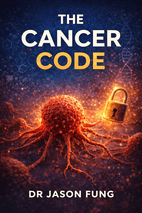
Dr. Jason Fung's The Cancer Code reframes cancer as an ancient metabolic disease, challenging the dominant genetic mutation theory by highlighting the role of diet and insulin. It offers a paradigm for prevention through dietary strategies like intermittent fasting, aimed at patients and health-conscious readers seeking a deeper understanding.
Feature
Insta.Page
Blinkist
Shortform
The Cancer Code
✓
✕
✓
Summary Depth
Full Chapter-by-Chapter
15-min overview
Section-by-section guides
Audio Narration
✓
✓
✓
Visual Mindmaps
✓
✕
✕
AI Q&A
✓
✕
✕
Quizzes
✓
✕
✕
PDF Downloads
✓
✕
✓
Price
$89.99/yr
$146/yr (PRO)
$199/yr
*Competitor data last verified July 2026.
1 Page Summary
Dr. Jason Fung's The Cancer Code challenges conventional wisdom by framing cancer not as a modern disease but as an ancient metabolic one, deeply rooted in our evolutionary past. He argues that the prevailing "somatic mutation theory"—which views cancer as primarily caused by genetic mutations from carcinogens or inheritance—is incomplete. Instead, Fung synthesizes this with the older "tissue injury theory" and a modern "metabolic theory," proposing that damaged cellular metabolism, particularly involving mitochondria and fueled by persistent hyperinsulinemia from modern diets, is the critical enabling condition for cancer's development.
Historically, Fung traces the understanding of cancer from Hippocrates, who named it after the crab (karkinos), through the 19th-century observations of Otto Warburg on how cancer cells ferment glucose even in the presence of oxygen (the Warburg effect). He positions the 20th century's near-exclusive focus on genetic mutations as a detour that, while yielding valuable targeted therapies, has failed to deliver a broad cure. The book places the current epidemic within the context of dietary changes and rising obesity, suggesting that our processed, high-sugar diets create the persistent hormonal signals (especially insulin and IGF-1) that promote uncontrolled cell growth.
The lasting impact of Fung's thesis is a paradigm shift toward prevention and adjunctive therapy. By identifying hyperinsulinemia as a key driver, The Cancer Code advocates for dietary interventions—specifically low-carbohydrate and intermittent fasting regimens—to lower insulin levels and potentially suppress cancer's metabolic engine. This approach reframes cancer management from a solely targeted, genetic battlefield to also include the body's systemic metabolic environment, offering a compelling, actionable strategy for reducing risk that empowers individuals alongside conventional treatments.
Chapter 1: Trench Warfare
Overview
The opening chapter introduces the central theme of the book through a powerful metaphor: the decades-long "war on cancer" has not been a series of brilliant advances but a grim stalemate, reminiscent of the futile trench warfare of World War I. Dr. Fung argues that a major obstacle to progress in medicine—specifically in obesity, type 2 diabetes, and cancer—is a systemic unwillingness within the medical and research establishment to admit that current paradigms and treatments are failing. True advancement, he contends, requires first acknowledging that "the emperor has no clothes."
The Problem with Complacency
Dr. Fung begins with a personal anecdote from a hospital meeting, where a poorly performing program was celebrated without criticism. He extrapolates this culture of uncritical acceptance to public health at large, where dissenting opinions are often silenced. This tendency to protect prevailing narratives, he suggests, actively hinders scientific progress and costs lives.
Obesity: Despite an unprecedented global epidemic, the standard "eat less, move more" and calorie-counting advice has proven ineffective. Fung states that the first step to a solution is admitting this failure and shifting the paradigm to understand obesity as a hormonal, rather than a purely caloric, imbalance.
Type 2 Diabetes: Similarly, the standard treatment protocol of prescribing glucose-lowering medications like insulin, which often requires ever-increasing doses, fails to address the root cause. Fung points out that weight loss consistently improves the condition, yet the medical community clings to the narrative that type 2 diabetes is inevitably "chronic and progressive."
The Stagnant War on Cancer
The chapter then turns its full focus to cancer, detailing the history of disappointment in the fight against it.
High Hopes, Poor Results: After early success with screening for cervical cancer, President Nixon declared a "war on cancer" in 1971, fueled by optimism from other scientific triumphs like the moon landing. Predictions of a cure by 1976 proved wildly optimistic.
A Voice in the Wilderness: By the mid-1980s, insider Dr. John Bailar III published stark data showing cancer death rates had increased by 25% from 1962 to 1982, while deaths from other causes fell. His conclusion—that decades of effort had made no overall progress—was met with intense criticism and personal attacks from the cancer establishment, which refused to acknowledge the failure.
The Genetic False Dawn: The discovery of genetics offered renewed hope, leading to massive projects like the Human Genome Project (2003) and The Cancer Genome Atlas. While these were scientific achievements, they did not translate into the expected breakthroughs in curbing cancer mortality.
The Trench Warfare Reality: Fung presents data contrasting the dramatic decline in heart disease deaths with the steep rise in cancer deaths from 1969 to 2014, illustrating the stalemate. He scrutinizes the meaning of "breakthroughs," noting that most new cancer drugs from 1990-2002 were approved based on their ability to shrink tumors (partial response), a metric largely irrelevant to survival for metastatic disease, which is what makes cancer deadly.
A Glimmer of Change
The chapter ends on a note of cautious optimism. After peaking in the early 1990s, age-adjusted cancer death rates have begun a steady decline. Fung attributes this partly to smoking cessation but primarily to a slow revolution in our fundamental understanding of what cancer is. He previews the book's journey through three paradigms of cancer: as a disease of excessive growth, then as a genetic disease, and finally as a transformative new understanding that views cancer as an alien species derived from our own cells—a perspective that is finally yielding more promising treatments.
Key Takeaways
Progress in complex medical fields like obesity, diabetes, and cancer is often paralyzed by an institutional reluctance to acknowledge the failure of current theories and treatments.
The "war on cancer," despite immense funding and effort, resulted in a long period of stagnation where mortality rates climbed, a fact that was openly dismissed by the research establishment.
Many celebrated cancer "breakthroughs" and drug approvals have been based on surrogate markers (like tumor shrinkage) that do not reliably translate into extended patient survival.
A recent, sustained decline in cancer mortality suggests that a fundamental shift in how we understand cancer's nature—moving beyond the genetic paradigm—is beginning to yield more effective strategies.
Key concepts: Chapter 1: Trench Warfare
1. Chapter 1: Trench Warfare
The Trench Warfare Metaphor
The 'war on cancer' is likened to the futile stalemate of WWI trench warfare.
Progress is hindered by systemic unwillingness to admit current paradigms are failing.
True advancement requires acknowledging fundamental failures in approach.
Culture of Complacency in Medicine
Institutional culture often celebrates poor performance without criticism.
Dissenting opinions on public health are frequently silenced.
Protecting prevailing narratives actively hinders scientific progress and costs lives.
Type 2 Diabetes: Standard treatments (like insulin) fail to address root causes.
Medical community clings to narrative of diabetes as 'chronic and progressive' despite evidence.
History of Disappointment in Cancer War
1971 declaration of 'war on cancer' followed early optimism from other scientific triumphs.
Predictions of a cure by 1976 proved wildly optimistic.
By mid-1980s, data showed cancer death rates had increased 25% while other causes fell.
Criticism of these findings was met with intense backlash from the cancer establishment.
False Dawns and Misleading Metrics
Genetic discoveries (Human Genome Project) failed to translate into mortality breakthroughs.
Many 'breakthrough' cancer drugs approved based on tumor shrinkage, not survival benefit.
Surrogate markers often don't translate to extended survival in metastatic disease.
Evidence of Stagnation and Recent Change
Data shows dramatic rise in cancer deaths versus decline in heart disease (1969-2014).
Age-adjusted cancer death rates peaked in early 1990s, then began steady decline.
Decline attributed partly to smoking cessation but primarily to new understanding of cancer's nature.
New Paradigm for Progress
Book traces evolution from cancer as growth disease to genetic disease to new understanding.
Transformative view: cancer as alien species derived from our own cells.
This new perspective is finally yielding more promising treatment strategies.
💡 Try clicking the AI chat button to ask questions about this book!
Chapter 2: The History of Cancer
Overview
Overview
Cancer is a disease with roots stretching back to the dawn of humanity, evidenced by ancient Egyptian papyri and fossil records. This chapter traces the long journey of human understanding, from early descriptions by Hippocrates and Galen to the development of surgery, radiation, and chemotherapy. It highlights how our perception of cancer evolved from mystical humoral imbalances to a cellular disease of uncontrolled growth, setting the stage for modern oncology.
Ancient Recognition and Naming
Cancer's presence is etched into human history long before modern medicine. The Edwin Smith Papyrus, dating back to 2625 BC, documents a breast tumor described as cool and hard, a stark contrast to warm, painful infections. Ancient Greeks like Hippocrates coined the term "karkinos," meaning crab, for the disease's tenacious, spreading nature. Galen later used "oncos" for swelling, giving us oncology. These early observers, though lacking microscopes, captured cancer's essence through astute clinical observations.
Evolving Theories: From Humors to Cells
For centuries, cancer was shrouded in mystery. The Greeks believed it stemmed from an excess of black bile, a systemic imbalance treated with bloodletting and purges. By the 1700s, this gave way to the lymph theory, which saw cancer as degenerate lymph. Both theories, while incorrect, hinted at truths: cancer is systemic and derives from the body's own cells. The real leap came with microscopes in the 1830s, when Johannes Miller and others identified cancer as a cellular disease, birthing the idea of uncontrolled growth.
The Rise of Surgical Intervention
Surgery for cancer began tentatively in ancient times, but without anesthesia or antiseptics, it was often a death sentence. The 19th century brought safer techniques, leading to radical approaches like William Halsted's mastectomies, which removed extensive tissue to eradicate every trace of cancer. Over time, lessons emerged: surgery works best when cancer is localized, and less invasive methods can be equally effective. Today, precision and early detection make surgery a cornerstone of cancer care, but only when timed right.
Harnessing Radiation: A New Weapon
The discovery of X-rays by Wilhelm Réntgen in 1895 opened a new frontier. Early radiation treatments were crude, often causing severe burns, but by the 1920s, fractionated radiotherapy delivering smaller doses over time proved safer and more effective. This approach exploits cancer cells' greater sensitivity to radiation, sparing normal tissue. Funded by initiatives like Nixon's war on cancer, radiation evolved into a precise tool for targeting tumors without widespread damage.
Systemic Poisons: The Birth of Chemotherapy
When cancer spread beyond local reach, a systemic solution was needed. The breakthrough came from an unlikely source: mustard gas from World War I, which selectively destroyed white blood cells. In 1942, researchers used it to shrink lymphoma tumors, marking chemotherapy's birth. Later, drugs like folic acid blockers and combinations of poisons led to remarkable remissions in leukemias and lymphomas. Chemotherapy, though harsh, became a lifeline for metastatic cancer, proving that chemicals could hunt down cancer cells throughout the body.
Cancer Paradigm 1.0: The Growth-Killing Approach
By mid-20th century, a coherent paradigm emerged: cancer is essentially unregulated cell growth. The logical response was to kill it with surgery (cutting), radiation (burning), or chemotherapy (poisoning). This "cancer paradigm 1.0" drove medical advances, curing some cancers and extending lives. Yet, it left a core question unanswered: what triggers this runaway growth? Understanding that would require looking deeper into cancer's origins, beyond mere destruction.
Key Takeaways
Cancer is an ancient disease, with evidence dating back millions of years, showing it has always been part of the human condition.
Early medical theories, from humoral to lymph, were flawed but contained insights about cancer's systemic and cellular nature.
The development of surgery, radiation, and chemotherapy revolutionized treatment, but their effectiveness depends on cancer's stage and type.
Cancer paradigm 1.0 frames cancer as uncontrolled growth, leading to targeted killing strategies that save lives but don't address root causes.
This historical journey sets the foundation for exploring what fundamentally causes cancer, the focus of subsequent chapters.
Key concepts: Chapter 2: The History of Cancer
2. Chapter 2: The History of Cancer
Ancient Recognition and Naming
Evidence of cancer dates to ancient Egypt (Edwin Smith Papyrus, 2625 BC) describing breast tumors.
Hippocrates coined the term 'karkinos' (crab) to describe cancer's tenacious, spreading nature.
Galen used 'oncos' (swelling), giving us the term oncology.
Early clinical observations captured cancer's essence without microscopes.
Evolving Theories of Cancer's Nature
Greek humoral theory attributed cancer to an excess of black bile, treated with bloodletting and purges.
18th-century lymph theory viewed cancer as degenerate lymph.
Both flawed theories hinted at truths: cancer is systemic and originates from the body's own cells.
Microscopes in the 1830s (Johannes Miller) identified cancer as a cellular disease of uncontrolled growth.
The Rise of Surgical Intervention
Early surgery was dangerous without anesthesia or antiseptics.
19th-century advances led to radical approaches like Halsted's mastectomy to remove all traces of cancer.
Key lesson: Surgery is most effective when cancer is localized.
Modern surgery emphasizes precision, early detection, and less invasive methods.
Harnessing Radiation as a Treatment
Discovery of X-rays (Wilhelm Röntgen, 1895) opened a new treatment frontier.
Early radiation was crude and damaging; fractionated radiotherapy (1920s) proved safer and more effective.
Exploits cancer cells' greater sensitivity to radiation to spare normal tissue.
Evolved into a precise tool for targeting tumors, aided by funding like Nixon's war on cancer.
The Birth of Chemotherapy
Originated from the observation that mustard gas (WWI) selectively destroyed white blood cells.
First use in 1942 to shrink lymphoma tumors marked chemotherapy's birth.
Development of folic acid blockers and combination drug therapies led to remissions in leukemias and lymphomas.
Provided a systemic solution for metastatic cancer, proving chemicals could target cancer cells throughout the body.
Cancer Paradigm 1.0: The Growth-Killing Approach
Mid-20th-century paradigm defined cancer as unregulated cell growth.
Logical treatment response: kill it via surgery (cut), radiation (burn), or chemotherapy (poison).
Drove medical advances and cured some cancers, but left the root cause of runaway growth unanswered.
Set the foundation for exploring cancer's fundamental origins in subsequent chapters.
Chapter 3: What Is Cancer?
Overview
This chapter tackles the fundamental question of cancer's identity by reframing it not as a single disease but as a collection of diseases unified by a set of core biological capabilities. It introduces the "lumper-splitter" problem from scientific classification to illustrate how viewing cancer through the lens of common traits, rather than solely by its tissue of origin, provides a transformative understanding of its nature.
Splitters vs. Lumpers: Classifying the Disease
Traditionally, cancer biology has been dominated by "splitters," categorizing over a hundred distinct cancers based on their cell of origin (e.g., breast, prostate, leukemia). This approach is clinically useful, as different cancers behave and are treated uniquely. However, it obscures the underlying commonalities. In a pivotal shift, researchers Hanahan and Weinberg adopted a "lumper" perspective, seeking the universal principles that define all cancers, leading to their landmark "Hallmarks of Cancer" framework.
The Eight Hallmarks of Cancer
The framework identifies eight biological capabilities that most cancers acquire to survive and thrive.
Sustaining Proliferative Signaling: Cancer cells hijack the body's growth signals. Normal cell division is tightly controlled by a balance between proto-oncogenes (accelerators) and tumor suppressor genes (brakes). Cancer cells mutate these pathways, stepping permanently on the gas pedal or disabling the brakes to fuel relentless, unplanned growth.
Evading Growth Suppressors: Cancer cells inactivate the genes and mechanisms that normally halt excessive cell division. Key tumor suppressor genes like p53, BRCA1, and BRCA2, when mutated, remove crucial restraints on growth.
Resisting Cell Death: Cells have a programmed self-destruct sequence called apoptosis, which disposes of old or damaged cells in an orderly fashion. Cancer cells develop strategies to evade this programmed death, tipping the balance toward accumulation and tumor growth.
Enabling Replicative Immortality: Normal human cells have a finite lifespan, known as the Hayflick limit, governed by the shortening of telomeres (protective caps on chromosomes) with each division. Cancer cells activate an enzyme called telomerase to rebuild their telomeres, granting them the ability to divide indefinitely, akin to the immortal HeLa cell line.
Inducing Angiogenesis: To grow beyond a tiny size, a tumor must stimulate the growth of new blood vessels (angiogenesis) to supply oxygen and nutrients and remove waste. Cancer cells master the signals needed to build this supportive vascular network.
Activating Invasion and Metastasis: This hallmark is responsible for the vast majority of cancer deaths. Cancer cells acquire the ability to break away from the primary tumor, invade surrounding tissues, enter the bloodstream, survive the journey, and establish new colonies in distant organs. While this was once thought to be a late event, evidence suggests microscopic spread may occur early.
Deregulating Cellular Energetics (The Warburg Effect): In a paradoxical shift, cancer cells predominantly use glycolysis (a less efficient way to burn glucose) for energy even when oxygen is plentiful. This "Warburg effect" requires cancer cells to consume massive amounts of glucose, a trait exploited by medical imaging like PET scans. The reasons for this inefficient metabolic choice remain a key area of research.
Evading Immune Destruction: The immune system constantly patrols for and eliminates abnormal cells. To survive, cancers must develop mechanisms to avoid detection and destruction by immune cells, hiding in plain sight or actively suppressing the immune response.
Enabling Characteristics and a Simplified View
The chapter notes two "enabling characteristics" that help cancers acquire the hallmarks: genome instability (which increases mutation rates) and tumor-promoting inflammation.
Ultimately, the eight hallmarks can be conceptually simplified into four core traits that define cancer: it grows uncontrollably, it is immortal, it moves and spreads, and it uses the unique Warburg effect for metabolism.
Key Takeaways
Cancer is best understood as a family of diseases united by a set of shared biological capabilities, not just as many separate illnesses defined by their tissue of origin.
The Hallmarks of Cancer framework provides a foundational model for understanding what fundamentally makes a cell cancerous, focusing on how cancers sustain growth, evade limits, achieve immortality, build a blood supply, spread, alter their metabolism, and avoid the immune system.
This "lumper" perspective shifts the focus from the countless differences between cancer types to their critical similarities, offering a unified way to study causes and develop treatments.
The Warburg effect represents a profound and nearly universal metabolic paradox in cancer that demands explanation.
Defining cancer by its hallmarks is a crucial first step, but it immediately leads to the next questions: how do these hallmarks arise, and why?
Key concepts: Chapter 3: What Is Cancer?
3. Chapter 3: What Is Cancer?
The Classification Problem: Splitters vs. Lumpers
Traditional 'splitter' approach categorizes over 100 cancers by tissue of origin (e.g., breast, prostate, leukemia).
The 'lumper' perspective, championed by Hanahan and Weinberg, seeks universal principles defining all cancers.
This shift led to the transformative 'Hallmarks of Cancer' framework, focusing on common traits rather than differences.
The Hallmarks of Cancer Framework
Sustaining Proliferative Signaling: Cancer cells hijack growth signals, mutating proto-oncogenes (accelerators) and tumor suppressor genes (brakes).
Evading Growth Suppressors: Inactivation of genes like p53, BRCA1, and BRCA2 removes crucial restraints on cell division.
Resisting Cell Death: Cancer cells develop strategies to evade programmed cell death (apoptosis), leading to accumulation.
Enabling Replicative Immortality: Activation of telomerase allows indefinite division by rebuilding telomeres, bypassing the Hayflick limit.
Inducing Angiogenesis: Tumors stimulate new blood vessel growth to supply oxygen and nutrients for expansion.
Activating Invasion and Metastasis: Ability to break away, invade, travel, and establish colonies in distant organs; responsible for most cancer deaths.
Deregulating Cellular Energetics (Warburg Effect): Cancer cells predominantly use inefficient glycolysis for energy even with oxygen available.
Evading Immune Destruction: Cancers develop mechanisms to avoid detection and destruction by the immune system.
Enabling Characteristics and Core Traits
Two enabling characteristics help cancers acquire the hallmarks: genome instability (increased mutation rates) and tumor-promoting inflammation.
The eight hallmarks can be conceptually simplified into four core defining traits: uncontrollable growth, immortality, ability to move/spread, and the Warburg effect metabolism.
Key Takeaways and Implications
Cancer is a family of diseases united by shared biological capabilities, not just many separate illnesses.
The Hallmarks framework provides a foundational model for understanding what fundamentally makes a cell cancerous.
The 'lumper' perspective shifts focus from differences between cancer types to their critical similarities.
The Warburg effect represents a profound and nearly universal metabolic paradox in cancer.
Defining cancer by its hallmarks leads to next questions: how do these hallmarks arise, and why?
Chapter 4: Carcinogens
Overview
This chapter challenges the common misconception that cancer is primarily caused by genetic mutations, arguing instead that mutations are often the mechanism through which carcinogens—external agents like chemicals and radiation—trigger the disease. It traces the historical discovery of carcinogens, from early observations of tobacco and soot to modern understandings of asbestos and radiation, highlighting how human exposure to these substances has shaped cancer epidemics. The narrative weaves together poignant stories of victims, from child chimney sweeps to Radium Girls, to illustrate the devastating impact of ignoring environmental dangers, while also examining the slow, often resisted, progress in public health recognition.
The Early Recognition of Chemical Carcinogens
The journey into understanding carcinogens begins in the 18th century with astute physicians who connected unusual cancer clusters to specific substances. Dr. John Hill's 1761 description of nasal "polypusses" in snuff users marked the first documented link between tobacco and cancer, though it was Sir Percivall Pott's 1775 work that provided clearer evidence. Pott identified soot as the cause of scrotal cancer among London's child chimney sweeps, who endured horrific working conditions. Their plight, stemming from hazardous chimneys and minimal protection, revealed how chronic irritation from benzopyrene in coal tar could initiate cancer, leading to early labor reforms and fading the disease once protections were implemented.
Asbestos: A Modern Industrial Curse
Asbestos emerged as a quintessential industrial-age material, prized for its fireproof and insulating properties, yet it harbored a deadly secret. Used since ancient times, its dangers were noted historically but ignored as demand soared during the Industrial Revolution and World War II. By the early 20th century, lung diseases and cancers like pleural mesothelioma were linked to asbestos, but corporations like Johns-Manville suppressed research, such as Dr. Leroy Gardner's 1940s mouse studies showing high cancer rates. This cover-up allowed widespread exposure in homes and workplaces, leading to a dramatic rise in mesothelioma cases—from 1-2 per million to 15,000 per million by 1976. Only through lawsuits in the 1970s did the truth emerge, resulting in massive tort actions and eventual recognition by bodies like the WHO, though far too late for many victims.
Radiation: From Scientific Wonder to Silent Killer
The discovery of radioactivity brought both Nobel Prizes and tragedy, exemplifying how beneficial advancements can carry hidden risks. Marie Curie's pioneering work with polonium and radium led to widespread enthusiasm for radium-laced products, such as glow-in-the-dark watches. The "Radium Girls," who painted these dials and ingested radium by moistening brushes, suffered horrific fates like "radium jaw" and sarcomas, highlighting chronic radiation's carcinogenic effects. Curie herself died from aplastic anemia due to exposure. Interestingly, studies on atomic bomb survivors from Hiroshima and Nagasaki showed that while cancer rates increased, the risk was less catastrophic than feared—often by less than 5 percent—underscoring the body's resilience through mechanisms like apoptosis, even as ionizing radiation remains a definitive group 1 carcinogen.
Categorizing the Causes of Cancer
The chapter concludes by framing carcinogens within a broader classification system, notably the International Agency for Research on Cancer (IARC) groups, which list over 120 agents as definitively carcinogenic to humans (Group 1), compared to only one "probably not" (Group 4). This imbalance underscores the pervasive nature of cancer-causing substances, from chemicals like arsenic and aflatoxin to physical agents like radiation. The narrative sets the stage for further exploration by hinting at viral causes of cancer, reminding us that understanding carcinogens is not just about identifying hazards but also about recognizing the complex interplay between external triggers and biological mechanisms.
Key Takeaways
Cancer is fundamentally caused by carcinogens—external agents like chemicals and radiation—with genetic mutations serving as the mechanism through which these agents act, rather than the root cause itself.
Historical cases, such as scrotal cancer in chimney sweeps and mesothelioma from asbestos, demonstrate how occupational and environmental exposures can lead to preventable epidemics when risks are ignored or suppressed.
Radiation, while a powerful tool in science and medicine, is a potent carcinogen, as seen in the tragedies of the Radium Girls and the Curie family, though acute exposures like atomic bombs may have less severe long-term effects than often assumed.
The IARC classification system highlights that many substances, both natural and man-made, are known or suspected carcinogens, emphasizing the need for vigilance in public health and corporate accountability.
The chapter sets the foundation for exploring viral causes of cancer, suggesting that the search for carcinogens is an evolving field critical to prevention and understanding.
Key concepts: Chapter 4: Carcinogens
4. Chapter 4: Carcinogens
The Central Argument: Carcinogens as Root Cause
Challenges the misconception that cancer is primarily caused by genetic mutations
Posits that mutations are often the mechanism through which external carcinogens trigger disease
Emphasizes that cancer epidemics are shaped by human exposure to environmental agents
Historical Discovery of Chemical Carcinogens
18th century physicians first linked specific substances to cancer clusters
Dr. John Hill (1761) documented the link between nasal polyps and snuff (tobacco)
Sir Percivall Pott (1775) identified soot as the cause of scrotal cancer in child chimney sweeps
Chronic irritation from benzopyrene in coal tar was revealed as a cancer initiator
Early labor reforms showed the disease could fade with proper protections
Asbestos: Industrial Suppression and Consequences
Prized for fireproofing but harbored deadly fibers causing lung diseases and mesothelioma
Corporations like Johns-Manville suppressed research (e.g., Dr. Leroy Gardner's 1940s mouse studies)
Cover-up led to widespread exposure in homes and workplaces
Mesothelioma rates skyrocketed (from 1-2/million to 15,000/million by 1976)
Truth emerged through 1970s lawsuits, leading to massive tort actions and WHO recognition
Radiation: Dual Nature of Scientific Advancement
Marie Curie's work led to enthusiasm for radium-laced products (e.g., glow-in-the-dark watches)