Growing Better Not Older Quotes
by Sean O'Mara
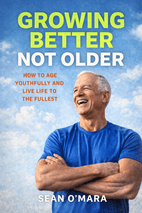
This page brings together some of the most memorable lines from Sean O'Mara's Growing Better Not Older. You will find bold declarations about taking control of your health, sharp critiques of conventional medicine, and powerful images that make complex ideas easy to grasp.
What makes this book so quotable is the way it cuts through the noise. O'Mara does not shy away from strong opinions or vivid language. His words challenge you to rethink everything you thought you knew about aging and disease. Whether he is describing visceral fat as an enemy or pointing out your body as your only real asset, each line packs a punch.
Top Quotes from Growing Better Not Older
“You will be freed from our current health system's insanity by bucking the status quo.”
The author, Dr. Ana Claudia Rosa, describes the transformative power of reading the book and adopting Dr. Sean's strategies.
This line reframes healthcare as a personal rebellion against systemic failure, empowering readers to take control of their own health.
“Your body is your major asset, your only real asset.”
The author emphasizes the irreplaceable value of the human body while inviting readers to honor and respect it.
This simple, striking statement reframes health as the ultimate investment, making the pursuit of wellness feel urgent and non-negotiable.
“What actually optimizes your health and reduces or prevents chronic disease is the opposite of what you've been told.”
Dr. Sean O'Mara states this early in the chapter to challenge readers' existing health beliefs.
This line flips conventional medical advice on its head, instantly grabbing attention and sparking curiosity. It resonates because many people feel let down by standard recommendations and are hungry for a fresh, contrarian approach.
“Imagine walking into that appointment feeling excited to see how your health has improved and the look of astonishment on your doctor's face!”
Dr. O'Mara paints a picture of the ultimate success of his health optimization strategies.
This creates a powerful, joyful image of triumph over the typical dread of medical visits. It motivates readers by transforming a feared scenario into one of pride and validation, making the goal feel real and exhilarating.
“It's difficult to fight an enemy you can’t see. Not impossible. Time is ticking—I have to show you the enemy before it is too late.”
The author concludes the chapter with an urgent call to action.
The metaphor of an invisible enemy combined with the ticking clock creates a sense of urgency and determination, inspiring readers to take action against a silent threat.
“No amount of wealth or material possessions can rival the value of your body and its state of health.”
The author explains the first principle of health optimization.
It powerfully asserts that health surpasses all material wealth, motivating readers to prioritize their physical well-being.
“A healthy person has many wishes, but the sick person has only one.”
The chapter opens with this Indian proverb.
It succinctly captures the universal truth that health is the foundation for all other desires, making it a powerful reminder of what truly matters.
Themes Behind the Quotes
One central theme is radical personal responsibility. O'Mara insists that your body is your most valuable asset and that you must take charge of your own health instead of trusting a broken system. This means questioning standard advice, making hard choices about diet, and committing to lifestyle changes that prioritize long-term wellness over short-term convenience.
Another theme is the battle against hidden threats, especially visceral fat. O'Mara uses vivid language to turn this invisible danger into a tangible enemy you can fight. The book also emphasizes that aging does not have to mean inevitable decline. With the right knowledge and actions, you can grow better instead of older. The quotes repeatedly call for action, persistence, and a shift in mindset away from passive acceptance.
Quotes by Chapter
Foreword
“I can guarantee that Dr. Sean's strategies will breathe a quality of life into them that verges on the unbelievable.”
The author speaks directly to the reader about the number of days they have left and the impact of the strategies.
It offers a bold, hopeful promise that transcends mere longevity and focuses on the richness of daily living, inspiring trust and commitment.
“You are the owner of your body, the choices are yours to make, and health is yours for the taking.”
Near the end of the foreword, the author urges readers to take ownership of their health journey.
It reinforces personal agency and accountability, turning the reader from a passive patient into an active architect of their own vitality.
1. Introduction: An Open Letter to Health Seekers
“You can revolutionize your health and take control of a more vibrant and exciting future, in which you feel more energized to enjoy the life you thought you were losing.”
Dr. O'Mara offers this promise to readers who feel their vitality slipping away.
It provides a vivid, hopeful vision of renewal that directly addresses the deep-seated fear of age-related decline. The personal language makes the possibility feel attainable, inspiring readers to believe change is within reach.
“This journey is not an impossible one, you just have to be the one holding the wheel.”
Near the end, Dr. O'Mara underscores the need for personal agency in health optimization.
The metaphor of driving the wheel simplifies the overwhelming task of changing one's health into a manageable act of taking control. It empowers readers by shifting responsibility from external factors back to themselves, reducing intimidation and building confidence.
2. The Ticking Time Bomb Inside
“Nothing motivates my clients more than a mug shot of the enemy lurking within their own bodies.”
The author describes how showing patients MRI images of their visceral fat is a powerful motivator for change.
This line emphasizes the profound impact of visual evidence in driving behavior change, making an abstract health threat concrete and personal.
“I felt like I had cracked the code for visceral fat elimination and biological health optimization!”
The author recounts the moment after his own MRI revealed he was 'obscenely healthy'.
It captures the triumphant breakthrough that transformed his personal health journey into a mission to help others, resonating with anyone striving for optimal health.
“It dawned on me that visceral fat, this invisible yet potent threat, was contributing significantly to chronic disease, and it was going largely unnoticed.”
The author reflects on the realization after seeing the contrast between his own health and that of his patients.
This line highlights the hidden nature of visceral fat and its role in chronic illness, awakening readers to a danger they may not have considered.
3. Mug Shot MRIs
“Seeing your own MRI is like looking the enemy square in the eye.”
The author describes the experience of viewing one's own MRI scan.
It creates a visceral, confrontational image that empowers the reader to take action against internal health threats.
“It is a factory that sits next to your heart and organs, churning out toxic chemicals 24/7 and 365 days of the year that are killing you.”
The author describes the constant danger posed by visceral fat.
The metaphor of a factory producing poison emphasizes the relentless, hidden damage of visceral fat, making it more tangible and urgent.
“I want everyone to see the demon in their gut and exorcize that sucker!”
The author expresses a passionate call to action for readers to confront visceral fat.
The forceful language and exclamation injects energy and determination, motivating readers to confront their health issues head-on.
“Stopping here would be surrendering your future health to what has been described as the “inevitable” decline of the average human, because it has become normal to decay and die from several chronic and debilitating diseases... and we are buried in coffins with the spare tires that kill us.”
The author warns readers against quitting the book early, near the end of the chapter.
The vivid imagery of being buried with 'spare tires' (visceral fat) is haunting and drives home the consequence of inaction, making it a memorable challenge to the reader.
4. The TEN Principles of Health Optimization
“The most difficult thing is the decision to act, the rest is merely tenacity.”
Quoted from Amelia Earhart in the chapter's opening.
This quote highlights the importance of initiating action, which is often the hardest step, and encourages perseverance.
“If you know the way broadly, you will see it in everything.”
The tenth principle, attributed to Miyamoto Musashi.
It encapsulates the idea that understanding a universal principle allows one to apply it across all life situations, fostering holistic growth.
“Internalization of the principles means growing better, not older.”
The author summarizes the book's core message.
It succinctly captures the essence of the book's philosophy—aging can be transformed into continuous improvement.
5. Your Body: The Most Important Physical Asset that you will Ever Own
“Chronic pain is like walking on broken glass. Every step is agonizing, and you sure as heck don’t want to make any sudden vigorous movements!”
The author describes his own experience with chronic back pain.
This vivid metaphor makes the abstract concept of chronic pain tangible and relatable, evoking empathy and understanding from readers who may have experienced similar suffering.
“You are not doomed to stagger and limp along the path of broken glass and shattered dreams for the rest of your life!”
The author offers hope after describing his painful condition.
This line delivers a powerful message of hope and empowerment, inspiring readers to believe that change is possible and that they are not trapped in their current suffering.
“If you accept the fact that the body, your most precious and important asset, should be optimally healthy, you will reject this chronic illness state as well.”
The author argues that believing in the body's value leads to rejecting chronic illness.
This statement reframes health as a choice and a mindset, encouraging readers to take ownership of their well-being and reject the acceptance of poor health.
6. What to Eat: Eating for Nutrition Not Pleasure
“It's time to break free of processed foods and adopt a lifestyle that focuses on only eating the highest quality foods for nutrition, not pleasure.”
The author concludes a section critiquing modern food design and its addictive properties, calling for a radical shift in eating habits.
This sentence delivers a clear, actionable call to action that summarizes the chapter's central argument. Its directness empowers readers to make a decisive change toward health optimization.
“My diet was a testament to convenience over quality. Pasta and pizza were not just meals, they were symbols of a lifestyle that prioritized speed and taste over health.”
The author reflects on his own past eating habits before his health transformation, describing how his diet mirrored standard American fare.
This line vividly captures the emotional and cultural weight of unhealthy eating patterns, making it relatable to anyone who has prioritized convenience. It turns mundane foods into powerful symbols, encouraging self-reflection.
“The microbes in fermented foods are living, which means they are sensitive to light.”
The author explains the nature of fermented foods and how to store them properly.
This line emphasizes the living quality of fermented foods, reminding readers that proper handling preserves their health benefits.
“1 do not recommend my clients waste their money on probiotic pills, powders, or drinks. I've found them to be less effective and more costly.”
The author advises against commercial probiotic supplements.
It challenges the common reliance on supplements and redirects focus to whole fermented foods, which are often more potent and economical.
7. Fasting: Unlock your Body’s Super Power
“This is the exact opposite of how most people would assume I'd feel.”
The author describes feeling invincible after a 72-hour fast, contradicting common expectations.
It challenges widespread assumptions about fasting and energy, making readers reconsider what their bodies are capable of.
“Your body actually NEEDS to fast.”
The author emphasizes that fasting is not optional but a biological necessity.
This declarative statement cuts through confusion and positions fasting as a fundamental health practice, not a fad.