Growing Better Not Older Key Takeaways

by Sean O'Mara
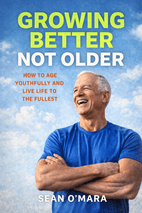
Growing Better Not Older by Sean O'Mara Book Cover

5 Main Takeaways from Growing Better Not Older

Visceral fat is the primary driver of chronic disease and must be targeted directly.

This deep abdominal fat surrounds organs, causes systemic inflammation, and is a root cause of conditions like heart disease and diabetes. Conventional medicine often misses it, but through diet and lifestyle changes, you can reduce it and reverse biological age.

Health optimization requires a principle-based, holistic system, not just a diet.

The book's TEN principles guide you to invest in your body as an asset, use beneficial stress (hormesis), and personalize strategies through self-experimentation. This approach ensures sustainable transformation beyond temporary fixes.

Short, intense exercise bursts are more effective than prolonged cardio for fat loss.

Training fast-twitch muscle fibers through sprinting or similar high-intensity workouts for just five minutes a day optimizes metabolism, improves insulin sensitivity, and aggressively burns visceral fat.

Fasting and dietary simplicity unlock the body's innate healing powers.

Intermittent and extended fasting trigger autophagy and metabolic reset, while eliminating processed foods and sugary drinks directly attacks visceral fat. This combination restores vitality and reduces inflammation.

Sustainable health transformation depends on community support and environmental design.

Building a supportive tribe provides accountability and shared wisdom, while optimizing your environment with natural materials and circadian alignment compounds the benefits of nutrition and exercise for long-term success.

Executive Analysis

The five key takeaways interconnect to form a compelling thesis: reversing biological age and achieving optimal health requires directly attacking visceral fat through a multi-faceted, principle-driven lifestyle system. This system integrates targeted nutrition, intense exercise, strategic fasting, and hormetic stressors, all grounded in the understanding that the body is an asset to be optimized, not just maintained.

This book matters because it moves beyond generic health advice to provide an actionable, science-backed framework for root-cause healing. In a genre crowded with diet fads, it stands out by focusing on visceral fat as a central villain and offering a holistic protocol that empowers readers to take control of their vitality and transform their aging process.

Chapter-by-Chapter Key Takeaways

Foreword (Foreword)

  • Personal Testimony Over Promises: The foreword’s credibility is built on the profound personal and professional transformation of its author, a skeptical medical doctor.

  • Visceral Fat as the Overlooked Enemy: It identifies visceral fat as a critical, yet commonly ignored, root cause of chronic disease and declining vitality that conventional medicine often misses.

  • More Than a Diet Book: Dr. O'Mara's work is presented as a holistic, lifelong system for transformation of body and mind, driven by compassion and rigorous science.

  • Commitment is Non-Negotiable: Partial effort yields no results; true change requires a full-hearted, daily commitment to stepping out of one's comfort zone.

  • Community and Guidance: The journey is framed as one best taken with the support of a guide (Dr. Sean) and a community (the Alpha Group), which provide accountability and partnership.

  • Reclaiming Agency: The core message is about seizing control of your health to honor your body, thereby transforming your future from one of managed decline to one of abundant vitality and purpose.

Try this: Commit wholeheartedly to a transformative health journey with expert guidance, understanding that visceral fat is a critical but overlooked threat.

1. Introduction: An Open Letter to Health Seekers (Chapter 1)

  • Biological age can be reversed: You are not bound by your chronological age; the function and vitality of youth can be renewed.

  • Conventional wisdom is challenged: Optimal health strategies may fundamentally contradict what you’ve been told.

  • Health is the ultimate asset: Like financial wealth, stable, optimized health is the foundation for enjoying and winning at life.

  • Symptom treatment is a trap: Lasting change requires moving beyond managing symptoms to address root causes and optimize biology from the inside out.

  • Reclaim control: Your health journey requires you to take the wheel, steering away from passive fear and toward proactive, strategic action.

Try this: Reject conventional symptom-focused health advice and proactively seize control of your biology to reverse aging and optimize vitality.

2. The Ticking Time Bomb Inside (Chapter 2)

  • Visceral fat is a critical hidden health threat: It's not regular body fat; it surrounds organs, causes inflammation, and is a key factor in chronic pain and disease, often going undiagnosed.

  • Appearance is deceptive: A person can have a normal BMI or look fit while harboring dangerous levels of visceral fat internally.

  • Imaging technology is a transformative tool: MRI scans can visually expose visceral fat, providing powerful motivation for change that blood tests or scales cannot match.

  • This discovery reshaped a medical practice: The author's personal health journey and professional observations led to a mission focused on prevention, awareness, and combating this widespread, under-recognized hazard.

Try this: Schedule an MRI scan to visually assess your visceral fat levels, since external fitness can mask internal health risks.

3. Mug Shot MRIs (Chapter 3)

  • Visualization is Power: Seeing your visceral fat via an MRI is a transformative, motivational tool that makes the invisible enemy visible and trackable.

  • Visceral Fat is the Root Enemy: This deep abdominal fat is a primary driver of systemic inflammation and chronic disease, more dangerous than cholesterol or subcutaneous fat.

  • Diet is the Most Powerful Tool: Eliminating processed and ultra-processed foods is the single most effective strategy for rapidly reducing visceral fat, sometimes yielding dramatic results without exercise.

  • The Damage is Systemic: Visceral fat correlates with harmful fat around the heart (pericardial fat), within muscles (causing weakness and sarcopenia), and in the vascular system.

  • Traditional Medicine Often Misses It: Standard care frequently overlooks visceral fat, focusing on treating downstream symptoms rather than this root cause.

  • Optimization is the Goal: The objective is not merely to be "average" or disease-free, but to achieve biologically optimized health characterized by minimal visceral fat and high-quality muscle mass.

Try this: Use MRI images as a motivational tool to drive dietary changes, eliminating processed foods to rapidly reduce visceral fat.

4. The TEN Principles of Health Optimization (Chapter 4)

  • Health is a philosophical journey guided by principles, not a rigid checklist. Flexibility and understanding trump blind adherence to a protocol.

  • Your body is your fundamental asset; all choices should invest in its long-term vitality.

  • Beneficial stress (hormesis) and a healthy microbiome are non-negotiable pillars of biological optimization.

  • True willpower and freedom are built by consistently choosing long-term “better” over short-term “pleasure” and by mastering, not being mastered by, your senses.

  • You are your own best experiment. Personalized self-knowledge (n=1) is the ultimate tool for optimization.

  • The goal is to internalize these principles so completely that they become your lens for viewing the world, enabling you to adapt and thrive no matter what you encounter.

Try this: Internalize the TEN principles of health optimization, using hormetic stressors and personal experimentation to guide your daily choices.

5. Your Body: The Most Important Physical Asset that you will Ever Own (Chapter 5)

  • Personal Proof: The author’s journey from chronically ill physician to health advocate proves that radical lifestyle change, not just conventional medicine, is often necessary for healing.

  • Asset Mindset: Your body is your most critical physical asset; without its health, all other possessions and achievements are diminished.

  • Systemic Failure: Modern “sick care” manages symptoms but fuels a cycle of chronic disease, creating economic strain and reduced human vitality.

  • Measure What Matters: Progress is tracked using Key Biological Indicators (KBIs)—meaningful metrics that cut through the “noise” of conventional, volatile blood tests.

  • A Strategic Hierarchy: Health optimization follows a specific order of operations, beginning with nutrition (what and when you eat) and culminating in foundational supports like sleep and environment.

Try this: Adopt an asset mindset towards your body, tracking Key Biological Indicators like visceral fat and muscle mass instead of volatile blood tests.

6. What to Eat: Eating for Nutrition Not Pleasure (Chapter 6)

  • Incorporate a variety of fermented vegetables into every meal, chewing them with meat to boost microbiome diversity and resilience.

  • Prioritize naturally fermented, live-culture foods stored properly to avoid light exposure, and avoid cooking them to preserve benefits.

  • Steer clear of probiotic supplements and commercially sweetened kombucha; opt for small-batch or homemade ferments to avoid potential toxins.

  • Choose dairy that is fermented and raw, like kefir and certain cheeses, to minimize sugar and maximize microbial benefits.

  • Always read labels carefully to avoid processed ingredients, and consider making your own fermented foods and dairy for quality assurance.

  • Negative reactions to fermented foods may stem from production methods, so experimenting with local, small-batch options can yield better results.

Try this: Add a variety of naturally fermented vegetables to each meal, chewing them thoroughly with protein to enhance your gut microbiome.

7. Fasting: Unlock your Body’s Super Power (Chapter 7)

  • Fasting is a natural, accessible practice that offers profound benefits like enhanced autophagy, improved metabolic health, and reduced inflammation.

  • Start gradually with intermittent fasting and build up to a weekly 72-hour fast over several months, using distractions to manage hunger.

  • Track progress through physical indicators such as skin health, hair thickness, and energy levels, rather than relying solely on traditional biomarkers.

  • Address challenges like electrolyte imbalances or visceral fat by adjusting how you break fasts and incorporating mineral supplements.

  • Maximize results by stacking fasting with quality sleep, exercise, sun exposure, and other lifestyle strategies.

  • Document visual changes and use "living water" to support gut health, making fasting a sustainable and transformative part of your health optimization journey.

Try this: Begin with intermittent fasting and gradually progress to a weekly 72-hour fast, monitoring improvements in skin, hair, and energy levels.

8. What to Drink and What Not to Drink (Chapter 8)

  • The path to reducing visceral fat involves drastically simplifying your beverage choices.

  • Eliminate the "Big Four": fruit juice, sugary soda, diet soda, and alcohol.

  • Avoid tap water; invest in a whole-house filter and a reverse osmosis system for drinking water, always remineralizing RO or distilled water.

  • Your primary drinks should be remineralized water, "living water" (with fermented brine or ACV), and high-quality coffee if desired.

  • Complex, calorie-heavy drinks like smoothies and protein shakes are unnecessary and can hinder optimization.

Try this: Immediately cut out fruit juice, soda, diet soda, and alcohol, replacing them with remineralized water and 'living water' with fermented brine.

9. Sprinting and Fighting: Maximum Intensity Exercise (Chapter 9)

  • Maximum Intensity Over Marathon Sessions: Short, all-out bursts of exercise are more effective for health and fat loss than prolonged, moderate cardio.

  • Fast-Twitch Fibers Are Key: Training these muscle fibers through sprinting and similar activities optimizes metabolism, improves insulin sensitivity, and aggressively targets visceral fat.

  • The Five-Minus Workout: An effective, life-optimizing workout can be completed in five minutes or less, requiring minimal or no equipment.

  • Train for Real Life: This style of exercise prepares your body for real-world physical emergencies, making you a potential rescuer rather than someone who needs rescue.

  • Start with a Sprint Challenge: A 30-day daily sprinting challenge is a powerful tool to build the habit. Use the F.A.S.T. method and seek community support for success.

Try this: Start a 30-day daily sprinting challenge, using all-out bursts of exercise for five minutes or less to optimize metabolism and target visceral fat.

10. Good Stress vs. Bad Stress (Chapter 10)

  • Stress is not inherently bad; it's the chronic, unrelenting nature of modern stress that becomes harmful, while acute, purposeful stress can be beneficial.

  • The goal is to reduce "bad" stress (chronic, cortisol-spiking) and intentionally incorporate "good" stress through hormetic practices.

  • Stress hormesis is the principle that mild, controlled stressors—like heat, cold, metabolic challenge, or temporary deprivation—trigger adaptive responses that improve health and resilience.

  • Practical hormetic tools include regular use of a Finnish sauna, cold exposure, blood flow restriction training, blood donation, and fasting.

  • Incorporating these practices can lead to improved cardiovascular health, better mood, enhanced cellular repair, reduced inflammation, and stronger metabolic function.

Try this: Intentionally add hormetic stressors like Finnish sauna sessions and cold exposure to your routine to improve cardiovascular health and reduce inflammation.

12. Optimizing your Environment (Chapter 12)

  • You are the composer: Your environment is a health symphony you can deliberately design.

  • Audit and edit: Use the "Review, Reduce, Repeat" method to systematically replace synthetic, dissonant items with natural, harmonious ones.

  • Reconnect with nature: Prioritize time outdoors, practice grounding, and seek morning sunlight to regulate circadian rhythms and reduce stress.

  • Mind your materials: Choose 100% natural fabrics for clothing and bedding, and opt for minimalist, natural footwear.

  • Wage war on plastics: Actively reduce exposure by swapping plastic items for glass, stainless steel, wood, and other natural materials.

  • Clean your air naturally: Use specific air-purifying houseplants to detoxify indoor spaces and boost well-being.

  • Stack for success: Combine these environmental strategies (e.g., morning sunlight + grounding + natural materials) with previous pillars like nutrition and exercise for compounded benefits.

Try this: Conduct a 'Review, Reduce, Repeat' audit of your home, swapping plastics for natural materials and prioritizing daily time outdoors in sunlight.

13. Optimizing your Sleep (Chapter 13)

  • Sleep is a non-negotiable health investment, not a luxury, and is foundational to all other optimization efforts.

  • Synchronize your daily habits with your circadian rhythm by seeking morning sunlight, avoiding evening blue light, and timing meals to daylight hours.

  • Consistency in sleep schedule and a personalized bedtime routine are critical for quality rest.

  • Several natural supplements, such as Apigenin and specific forms of Magnesium, can safely support sleep, especially during stress or fasting, and should be explored before considering sleep medication.

  • Optimizing sleep creates a virtuous cycle: better sleep enables better daily choices, and those choices, in turn, lead to even better sleep.

Try this: Align your daily habits with your circadian rhythm by seeking morning sunlight, avoiding evening blue light, and establishing a consistent sleep schedule.

14. Track it To Attack It (Chapter 14)

  • Progress over mood: Prioritize consistent action based on who you want to become, not how you feel in the moment.

  • Focus on the vital few: Apply the 80/20 rule to concentrate on the few key strategies (like fasting and exercise) that most aggressively target visceral fat.

  • Systematize success: Build effortless infrastructure for healthy actions and tracking, using digital tools to create a central, frictionless repository for your health data and insights.

  • Write to clarify and commit: Regular journaling solidifies learnings and maintains motivation, creating a valuable record of your journey.

  • Learn broadly: Actively gather knowledge and skills as a "specialized generalist" to better innovate and solve personal health challenges.

  • Define actionable commitments: Use "user stories" to translate health goals into specific, trackable daily and monthly habits.

  • Journey together: Engage a community for support, accountability, and accelerated learning, ensuring you have help to persevere through struggles.

Try this: Create a centralized digital system to track your health metrics and journal regularly, focusing on the vital few actions that target visceral fat.

15. The Importance of Community (Chapter 15)

  • Health is Communal: Sustainable wellness is achieved not in isolation, but within a supportive community that provides shared wisdom, encouragement, and accountability.

  • Social Circles Shape Biology and Behavior: The people we surround ourselves with influence our habits and, through microbial exchange, our physical well-being, making community choice a health strategy.

  • Efficiency Enriches Connection: Time-saving health strategies are valuable because they free up more time to invest in nourishing relationships, which are foundational to a fulfilling life.

  • Redefine Aging Through Community: Seek out and learn from older individuals who model vitality to combat negative societal narratives and to provide a blueprint for your own healthy longevity.

  • Build Your Support System Proactively: A dedicated “tribe” is essential for navigating the inevitable challenges of long-term health optimization, making the deliberate formation of such a group a critical step for success.

Try this: Proactively seek out or form a community of like-minded individuals to provide encouragement, accountability, and modeling for healthy aging.

16. Putting it All Together—How to Get Started (Chapter 16)

  • Initiate with Intensity: Commit to a 90-day sprint, applying stacked strategies like diet, fasting, and exercise to create immediate momentum.

  • Document Visually: Use MRIs for internal benchmarks and consistent photography to make progress tangible and fuel motivation.

  • Grow Through Giving: Share your knowledge with others; teaching reinforces your habits and builds a supportive community.

  • Seek Tailored Guidance: Consider personalized coaching for a clear baseline and customized plan, accelerating your results.

  • Start Now: The optimal time to begin is today—take the first step, whether it's booking a scan, taking a photo, or choosing a healthier meal.

Try this: Kickstart your transformation with a 90-day focused effort, documenting progress with photos and MRIs, and teaching others to reinforce your habits.

17. How to Get More Help (Chapter 17)

  • Support is Available: The strategies are supported by actionable resources, including detailed video guides, product recommendations, and access to a remote coaching team for accountability.

  • Real-World Validation: The documented testimonials provide compelling evidence that the protocols can address and reverse serious, chronic health conditions, extending far beyond simple weight loss.

  • Holistic Impact: Success stories highlight profound systemic benefits, including neurological repair, autoimmune symptom remission, and unexpected improvements in skin, dental health, and emotional well-being.

  • The Path is Demonstrated: The collective experiences of these individuals illustrate a clear, if demanding, path to health optimization that requires commitment but delivers transformative, measurable results.

Try this: Leverage the book's resources, such as video tutorials and remote coaching, to personalize your plan and learn from others' success stories.

Continue Exploring