Chapter 1. ODOG

Chapter 1 of 4
0:000:00
EN
1x
Voice
PDF

Dark Wire

by Joseph Cox

Buy on Amazon

As an Amazon Associate, we earn from qualifying purchases.

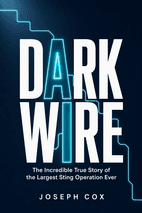
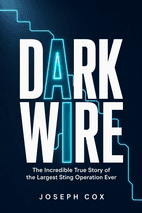
Dark Wire book cover

What is the book Dark Wire about?

Joseph Cox's Dark Wire chronicles Operation Trojan Shield, the FBI's audacious scheme to build and operate its own encrypted phone company, Anom, then sell it to the world's criminals. Cox reconstructs the sting from prosecutors, analysts, foreign police, and the criminals themselves, tracing how encrypted communications became both a shield for organized crime and the most powerful window into it. Aimed at true crime and investigative journalism readers, and anyone interested in technology, privacy, and law enforcement.

FeatureInsta.PageBlinkist
Summary DepthFull Chapter-by-Chapter15-min overview
Audio Narration✓✓
Full access to all 800+ summaries✓✓
Visual Mindmaps✓✕
AI Q&A✓✕
Missing a book? Request it, usually live within 48h✓✕
Quizzes✓✕
PDF Downloads✓✕
Send to Kindle✓✓
Price$89.99/yr$146/yr (PRO)
*Competitor data last verified July 2026.

1 Page Summary

Joseph Cox's Dark Wire chronicles the origins and execution of Operation Trojan Shield, the FBI's audacious scheme to build and operate its own encrypted phone company, Anom, and then sell it to the world's criminals. The book's central thesis is that in a world where organized crime depends on secure communication, the most effective surveillance tool is not a wiretap or a seized device but a network the criminals believe is theirs alone. Cox traces this idea from its predecessors—Phantom Secure's closed network, the RCMP's exploitation of BlackBerry Messenger's single global key, and the takedowns of EncroChat and Sky—showing how each seizure of an encrypted phone company yielded intelligence but also pushed users toward the next provider. The Anom operation, conceived as a tool for corporate message archiving and secretly built by unwitting developers in a rushed patchwork of code, became the ultimate version of this strategy: a phone network designed from the start so that its operators could read everything, marketed to criminals through a chain of resellers like Domenico Catanzariti and figures such as Hakan Ayik and the trafficker known as Microsoft, and ultimately used to coordinate the largest synchronized police action in history.

What makes the book distinctive is Cox's reconstruction of the operation from multiple vantage points—the prosecutors like Andrew Young and Ben Katz who fought internal resistance and fears of another Fast and Furious, the FBI analysts decoding "Batman"-stamped cocaine shipments from room 2415, the foreign police in Sweden and the Netherlands racing to act on intelligence before murders could be carried out, and the criminals themselves, from Vincent Ramos's gun-dealer rationalizations to the hawaladar Abdullah Eizuldeen moving value across borders without a single wire transfer. Cox does not treat the operation as a simple triumph. He documents its unwieldy growth—Anom outgrowing the FBI, message volume rising from five million to twenty-two million, thirty new syndicates joining every other day—and the ethical and legal tightrope of watching crimes unfold without always being able to stop them, as with the Stockholm murder that access came too late to prevent. The narrative is built from the granular texture of the operation: the vouch systems and wipes, the Nijmegen factory's Bladerunner and Ripsaw machines, the token-based cash handoffs, and the June 7, 2021 raids that followed the sun across continents.

The book is aimed at readers of true crime and investigative journalism, but also at anyone interested in the intersection of technology, privacy, and law enforcement—those who want to understand how encrypted communications became both a shield for organized crime and, paradoxically, the most powerful window into it. Readers will come away with a detailed understanding of how a sting of this scale is conceived, sold, legally justified, and executed, and with Cox's sobering conclusion in the epilogue: that breaking up a network is not the same as defeating it. The arrests, seizures, and convictions are real—more than 10,000 arrests across EncroChat, Sky, and Anom, over 200 tons of drugs, more than €700 million in cash—yet the people at the top often remain untouched, replaceable, or beyond the law, and the demand for secure phones simply migrates to whatever comes next.

Chapter 1. ODOG

Overview

Running a hidden business means you can't trust anyone. Every new introduction could be a trap. Every channel could be watched. The normal ways of checking someone's identity are exactly what gets you caught.

Owen Hanson drove to a golf game on September 9, 2015. He carried a Louis Vuitton bag with gambling cash and three phones for his two businesses — gambling and drugs. After the 2008 financial crisis he ran BetODog, an illegal sportsbook covering everything from the NBA to the NFL. A client tied to the Sinaloa cartel pulled him into moving cartel cash around San Diego and Los Angeles. That led to wholesale trafficking. From 2012 he shipped cocaine to Australia, where a kilogram sold for eight times its US price. His partner for the day, Al Wilson, was supposed to buy five kilograms of methamphetamine.

Phantom Secure's closed network

Hanson's Sinaloa contact required an encrypted Phantom Secure phone. The Vancouver company sold phones through referrals and resellers, including Michael Gamboa, known as Chino, in Los Angeles. When Wilson showed up, Hanson asked Chino to verify him. Chino remotely shut down Wilson's device, then confirmed Wilson's crew had been referred by a San Francisco marijuana gang. Hanson then had Wilson buy new phones for his network and sent five kilograms of cocaine to Wilson at a Del Mar hotel for $90,000.

The arrest and the wipe race

El Jefe warned Hanson by encrypted message that he was about to meet DEA agents. Hanson went anyway, and FBI agents arrested him. Mick Mullally of New South Wales organized crime, who had investigated Hanson for four years, watched it happen. Hanson realized Wilson was a setup. Phantom Secure could remotely wipe phones, and a crew member ordered a wipe. The FBI put Hanson's phone in a Faraday bag, blocking the command, and reached its secure facility first. The phone still had its default passcode, which Hanson had never changed after replacing an earlier device. Agents got in and opened his messages. At interrogation, Mullally's accent gave away the Australian angle; Hanson asked for his lawyer and said nothing more.

Key Takeaways
  • A single person vouching for you can open or close a whole crew before any deal happens.
  • After an arrest, everything comes down to a race between a remote wipe command and agents trying to block it.
  • Shipping cocaine across the Pacific made sense because the market there paid many times the American rate.
  • The phone was cracked the ordinary way, not through breaking encryption. An unchanged factory passcode, a Faraday bag, and a head start to a secure facility opened a phone the company thought it could erase at will.
  • A buyer working with police at the handoff did more damage than any attack on the encryption itself.

Key concepts: Chapter 1. ODOG

Chapter 1. ODOG

Owen Hanson's Criminal Operations

  • Ran illegal sportsbook BetODog after 2008 financial crisis
  • Moved Sinaloa cartel cash, leading to wholesale drug trafficking
  • Shipped cocaine to Australia from 2012, where prices were 8x higher

Phantom Secure's Closed Network

  • Required encrypted Phantom Secure phones for cartel communications
  • Sold through referrals and resellers like Michael Gamboa (Chino)
  • Chino remotely verified Al Wilson by shutting down his device

The Arrest and Wipe Race

  • El Jefe warned Hanson of DEA agents; FBI arrested him anyway
  • Phantom Secure could remotely wipe phones; FBI used Faraday bag to block
  • Phone had default passcode, allowing agents to access messages

Key Takeaways

  • A single vouching person can open or close a whole crew
  • After arrest, it's a race between remote wipe and agents blocking it
  • Unchanged factory passcode and Faraday bag cracked the phone
  • A buyer working with police did more damage than attacking encryption
💡 Try clicking the AI chat button to ask questions about this book!

Chapter 2. The First Window

Overview

An arrest closes nothing. A seized encrypted phone yields thousands of messages, and the prosecutors must turn that raw pile into a full picture of the operation and everyone in it. Access is not the same as understanding.

Andrew Young, a San Diego prosecutor, inherited an unwanted gambling case against Owen Hanson, a former USC football player whose betting operation used violence to collect debts and who was suspected of drug smuggling. An encrypted phone kept the drug side partly beyond wiretaps. When the narcotics prosecutor left for another trial, Young watched that piece, learned drug law from scratch, and asked to keep the entire case.

At the Tipsy Crow, a San Diego sports bar, Young watched a New England Patriots game with Ben Katz, another prosecutor and fellow New Hampshire native. Katz knew sports odds and bet only low-stakes legal amounts. Stuck in a border-crimes unit, Katz wanted work that mattered and said, "I'm in."

Two Monitors

The pair worked from two monitors. The FBI had archived Hanson's Phantom Secure phone by photographing each message. Young read a few hundred nightly. A contact called "Candy Store" led to a chocolate import company owned by brothers Nathan and Andrew, one of whom had attended USC with Hanson. Young identified at least half of a 15-to-20-person network from the messages. Katz cross-referenced encrypted texts with an earlier wiretap and built an Excel timeline.

The messages exposed thousands of kilograms of cocaine from California to Chicago, hundreds to Australia, plus heroin. Trafficking was Hanson's main business. The chats named quantities, drop addresses and bank accounts. Above Hanson stood an unidentified supplier, El Jefe, more careful and less flashy.

The Raid and the Bigger Target

On January 27, 2016, more than two dozen FBI agents raided crew member Zack's home. A new indictment charged Hanson and nearly two dozen others. The phone showed more than 100 kilograms moved from Los Angeles to Canada over one Labor Day weekend, and hundreds monthly for years. Mark Pletcher urged the team to target Phantom Secure itself. After Dutch police obtained Ennetcom users' messages in April 2016, the team saw a larger prize: all Phantom Secure users' messages, not just one reckless gangster.

Key Takeaways
  • A prosecutor who volunteers to absorb an unfamiliar part of a case and then asks to keep the whole matter can turn an unwanted file into a far broader prosecution.
  • Pairing a lawyer who understood sports odds with one willing to learn narcotics law gave the team complementary ways into the same evidence.
  • The decisive progress came from reconstructing thousands of archived messages and matching them against earlier intercepted traffic, not from a single informant's tip.
  • Hanson's messages show an enterprise whose core was industrial-scale cocaine and heroin distribution, with gambling, violence and a more cautious supplier around the edges.
  • The raid and indictment marked a stage rather than an ending: the evidence pointed past the crew to the communications service, and Dutch access to another platform's messages showed how one user's archive could expose an entire market.

Key concepts: Chapter 2. The First Window

Chapter 2. The First Window

The Unwanted Case

  • Andrew Young inherited a gambling case against Owen Hanson.
  • Hanson's operation used violence and was suspected of drug smuggling.
  • Young learned drug law and asked to keep the entire case.

A Prosecutor Partnership

  • Ben Katz, a sports-savvy prosecutor, joined the team.
  • Katz cross-referenced encrypted texts with wiretap data.
  • Together they built an Excel timeline from messages.

Decoding the Messages

  • FBI archived Hanson's Phantom Secure phone messages.
  • Young identified half of a 15-to-20-person network.
  • Messages revealed industrial-scale cocaine and heroin trafficking.

The Raid and Indictment

  • FBI raided crew member Zack's home on January 27, 2016.
  • New indictment charged Hanson and nearly two dozen others.
  • Phone showed over 100 kg moved to Canada in one weekend.

Beyond the Crew

  • Team targeted Phantom Secure itself after Dutch access to Ennetcom.
  • Saw potential to expose all Phantom Secure users' messages.
  • Evidence pointed past Hanson to the communications service.

Chapter 3. Boxes of Phantoms

Overview

Police can seize a phone and still learn nothing from it. The device sits in evidence, intact and unreadable, while the conversations that matter stay out of reach. Investigators keep hitting the same wall: having the phone doesn't mean getting what's on it.

A Box of Locked Phones

In 2009 Shafik Punja, a Calgary Police Service examiner, received a cardboard box of encrypted BlackBerries. He cataloged the phones and checked each device's state. A sticker under the battery showing a company had modified the phone often meant investigators were locked out. Encryption made things hard in two ways: police couldn't wiretap messages, and encryption on the device kept seized messages unreadable.

The BBM Key

BlackBerry Messenger became organized crime's favorite chat service. According to the book, starting in 2010 the RCMP accessed more than one million BlackBerry messages and used them to investigate two Italian organized crime groups in Canada, though prosecutors later dropped charges. Consumer BBM relied on a single global encryption key, which the RCMP obtained without disclosing its source. BlackBerry then counted over eighteen million US users, according to the book.

beStealth and Phantom Secure

Smarter criminals distrusted mainstream firms. Nathanael "Nat" Lineham's beStealth sold BlackBerries with its own BlackBerry Enterprise Server, so beStealth held the decryption key. Punja warned forensic experts in 2009 not to expect beStealth's help. US authorities charged Lineham in September 2008 with conspiracy to distribute MDMA. He pleaded guilty, and beStealth ended. Phantom Secure built on that model by storing keys on users' own devices, so seizing its servers might not reveal messages without the owner's cooperation. Hakan Ayik later helped make Phantom Secure wildly popular in the criminal world.

Key Takeaways
  • Catching messages in transit and cracking a seized phone are two separate problems. Encryption that hides messages while they travel does nothing for you once a handset sits on an examiner's bench. And a phone that gives up its contents tells you nothing about conversations still in the air.
  • When a service protects every customer with one shared key, one leak exposes everyone. Whoever holds that key can read a million conversations at once.
  • Once a reseller runs its own enterprise server, investigators have to go through the company, not the device. If the company gets indicted or shuts down, the evidence may not exist at all.
  • Keeping keys on the handset instead of the server means seizing the infrastructure no longer gets you the content. That design choice let Phantom Secure surpass the model it grew out of.
  • The secure phone trade kept evolving: one provider gets taken down, the next one learns exactly where to move the keys.

Key concepts: Chapter 3. Boxes of Phantoms

Chapter 3. Boxes of Phantoms

The Core Problem: Seized Phones Stay Unreadable

  • Police can seize a phone but still learn nothing from it.
  • Encryption creates two separate problems: wiretapping and device forensics.
  • Having the phone doesn't mean getting what's on it.

Early Encryption Challenges: BlackBerry and BBM

  • 2009: Calgary examiner received a box of encrypted BlackBerries.
  • BBM used a single global encryption key, obtained by RCMP.
  • RCMP accessed over one million messages, but charges were later dropped.

beStealth: Reseller-Controlled Encryption

  • beStealth ran its own BlackBerry Enterprise Server, holding decryption keys.
  • Investigators had to go through the company, not the device.
  • Lineham charged in 2008; beStealth ended, leaving evidence inaccessible.

Phantom Secure: Keys on the Device

  • Stored keys on users' devices, so seizing servers didn't reveal messages.
  • Hakan Ayik helped make Phantom Secure popular in criminal circles.
  • Design choice let Phantom Secure surpass the beStealth model.

Evolution of the Secure Phone Trade

  • One provider gets taken down; the next learns where to move the keys.
  • Shared keys mean one leak exposes everyone.
  • Keeping keys on the handset defeats infrastructure seizures.

Chapter 4. The Facebook Gangster

Overview

A wanted man on the run still has to coordinate partners, shipments, and money, yet every call or message can become the thread that leads back to him. The hard part isn't running. It's staying in touch with his network without letting his pursuers stay in touch with him.

Hakan Ayik, one of Australia's most wanted drug traffickers, tried to cross from the Turkish-occupied north of Cyprus into the Republic of Cyprus in October 2010. A warrant tied him to 175 kilograms of heroin worth more than $50 million, shipped from Bangkok to Sydney's Port Botany. Border officials studied his passport. He darted back, and officials reportedly fired as his car sped away. On December 20 police found him in a Kyrenia hotel with steroid-making equipment, a laptop and eight phones. A court granted bail but confiscated his passport and barred him from leaving. He vanished anyway, reportedly by ship to Dubai and later Istanbul. His flashy Facebook posts, including a taunt to police, had earned him the nickname the Facebook Gangster.

The Comancheros and a hand-off drug business

Ayik's school friend Dax Ngakuru became national president of the Comancheros, an outlaw motorcycle gang founded by Jock Ross in the late 1960s. Its violence included a 1984 tavern shootout with the Bandidos that left seven dead, among them a fourteen-year-old bystander. Mick Hawi took over and pushed the group toward professional drug trafficking. Ayik stayed close, planning meth production in Asia, smuggling the drug into Australia, and then using the Comancheros and other bikers to distribute it. He handed the final stage to willing gangs, the same way delivery companies hand packages to local drivers for the last stretch.

Phantom Secure

On the run, Ayik needed secure remote communication. SMS007 required users to agree on passwords beforehand and was cumbersome. He adopted Phantom Secure, which encrypted messages and stripped out unnecessary features, then distributed phones to his crew. A 2014 ABC News report linked the phones to Sydney underworld killings and quoted police saying they could not read them. The coverage became an advertisement. Phantom Secure took "uncrackable" as its catchphrase, and sales surged. The FBI says thousands of phones sold in Australia, and shell companies collected $19 million. Ayik had pulled Australia's biker gangs into the encrypted age, letting a trafficker run a global operation from a BlackBerry keyboard.

Key Takeaways
  • A trafficking operation grows by handing off each stage it can: production in one country, import into another, and distribution to local gangs that already have reach.
  • Outlaw biker gangs were less criminal masterminds than available delivery labor, doing their part in a bigger operation without running it.
  • Encryption sells when police publicly admit they can't read it. The admission doubles as proof of the product and as advertising.
  • A wanted man can run his whole operation from one keyboard. Getting away physically just means a short hop across a border the warrant can't cross.
  • The Facebook Gangster nickname showed a lasting shift: a criminal can post publicly for vanity and message in secret for business, both in the same career.

Key concepts: Chapter 4. The Facebook Gangster

Chapter 4. The Facebook Gangster

Hakan Ayik: The Facebook Gangster

  • Wanted for 175 kg heroin worth $50M shipped Bangkok to Sydney
  • Escaped Cyprus in 2010, fled to Dubai and Istanbul
  • Flashy Facebook posts and taunts earned nickname 'Facebook Gangster'

Comancheros and Hand-off Drug Business

  • School friend Dax Ngakuru became Comancheros president
  • Ayik planned meth production in Asia, smuggling, and distribution
  • Used biker gangs as local distributors, like delivery companies

Phantom Secure: Encrypted Communication

  • Adopted Phantom Secure for encrypted, feature-stripped phones
  • 2014 ABC report linked phones to killings; police couldn't read them
  • Coverage became advertisement; sales surged, $19M collected

Key Takeaways

  • Trafficking grows by handing off stages: production, import, distribution
  • Biker gangs served as available delivery labor, not masterminds
  • Encryption sells when police admit they can't read it
  • A wanted man can run operations remotely from one keyboard
You've reached the end of the free chapters

Next chapter: “Chapter 5. Ramos” is locked

Keep reading Dark Wire — and unlock all 800+ book summaries with audio, mindmaps and AI Q&A.

$0.00 due today · 7 days free, then $89.99/year ($7.49/mo) · Cancel anytime before day 7

plus sales tax where applicable

About the Author

Joseph Cox

Joseph Cox is an investigative journalist and senior writer at 404 Media, formerly a senior staff writer at Motherboard/VICE, where he reported extensively on hacking, cybersecurity, and the surveillance industry. He is the author of Dark Wire: The Incredible True Story of the Largest Sting Operation Ever, which chronicles the FBI's takedown of the encrypted phone network Anom. His expertise spans cybercrime, digital privacy, and the global trade in surveillance and hacking tools.

Frequently Asked Questions about Dark Wire

What is Dark Wire about?
This book traces how law enforcement turned the criminal underworld's own obsession with encrypted phones into its greatest vulnerability. It follows the rise and fall of Phantom Secure, Sky, and EncroChat before revealing the boldest move of all: the FBI secretly built and operated Anom, a phone network sold to criminals around the world while agents read every message. Woven through the narrative are the traffickers, cartel middlemen, and distributors — including fugitive kingpin Hakan Ayik — who sold and used those devices, and the investigators who had to decide which crimes to stop and which to let unfold. It culminates in the June 2021 coordinated raids across continents that produced hundreds of arrests and tons of seized drugs.
Who is the author of Dark Wire?
Joseph Cox is a journalist who specializes in cybercrime, hacking, and surveillance, and he built much of this story from years of reporting on the encrypted-phone industry and the investigations targeting it. His access to investigators, court records, and the strange subculture of encrypted-device resellers gives the narrative its granular, insider feel. The result reads like true-crime reportage grounded in documents and interviews rather than speculation.
Is Dark Wire worth reading?
It reads like a thriller but is built entirely from real investigations, court cases, and wiretap-style messages, which makes it both gripping and genuinely informative. Readers get a rare window into how global drug trafficking, money laundering, and even murder plots actually get organized over a phone — and how a single backdoor can unravel them. The moral tension is what elevates it: investigators had to watch crimes being planned while weighing when to intervene.
What are the key lessons from Dark Wire?
Criminals' need for secure communication is permanent, so taking down one encrypted network simply pushes users to the next one — a dynamic investigators learned to exploit by designing a replacement themselves. Covert access to millions of messages creates hard ethical and legal choices, from how to handle threats to life to worries about entrapment and prosecutorial risk. The operation also showed that modern criminal networks are loose, borderless webs run from phones rather than traditional hierarchies with a single kingpin. Ultimately, arrests and seizures make headlines, but the people at the top often remain untouched, replaceable, or beyond reach, and the infrastructure of crime rebuilds.
0