As an Amazon Associate, we earn from qualifying purchases.
What is the book Area 51 about?
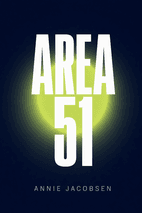
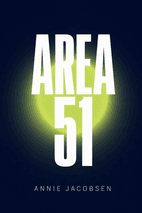
Annie Jacobsen's Area 51 traces the secret history of the Groom Lake installation seventy-five miles north of Las Vegas, from Atomic Energy Commission experiments and U-2 and Oxcart spy planes to captured MiGs, dirty-bomb tests, and drone warfare, drawing on seventy-four interviews. Written for general readers of military, intelligence, and Cold War aviation history drawn to declassified secrets.
Feature
Insta.Page
Blinkist
Shortform
Summary Depth
Full Chapter-by-Chapter
15-min overview
Section-by-section guides
Audio Narration
✓
✓
✓
Full access to all 700+ summaries
✓
✓
✓
Visual Mindmaps
✓
✕
✕
AI Q&A
✓
✕
✕
Missing a book? Request it, usually live within 48h
✓
✕
✕
Quizzes
✓
✕
✕
PDF Downloads
✓
✕
✓
Send to Kindle
✓
✓
✓
Price
$89.99/yr
$146/yr (PRO)
$199/yr
*Competitor data last verified July 2026.
1 Page Summary
Annie Jacobsen's Area 51: An Uncensored History of America's Top Secret Military Base centers on a facility the U.S. government has never acknowledged: a secret installation seventy-five miles north of Las Vegas at the Groom Lake dry lake bed, inside the Nevada Test and Training Range. Jacobsen argues that the base's real history is one of layered misdirection. The official story credits the CIA's selection of the site in 1955 for U-2 testing, but the book contends the base's first customer was the Atomic Energy Commission, which from 1951 ran secret aircraft and pilot experiments there—a controversial program tucked inside an unrelated classified agency precisely because that is the last place anyone would look. The book traces how Area 51 hosted spy-plane development (the U-2, the A-12 Oxcart, the D-21 drone), captured Soviet MiGs, dirty-bomb and plutonium-dispersal tests such as Project 57, astronaut training for lunar geology, and later drone and targeted-killing programs. Threaded throughout is the theme that secrecy built on compartmentalization cuts inward as well as outward: workers knew only their fragment of the mission, pilots flew under cover identities, and even presidents and Congress were kept in the dark.
Jacobsen's approach is investigative and interview-driven, drawing on seventy-four interviews, thirty-two of them with people who lived and worked at the base. She builds each chapter around a concrete problem or episode—Frank Wisner's off-the-books funding of the CIA's covert operations, the 1938 War of the Worlds broadcast as a case study in a convinced public acting on a fiction, the Gary Powers U-2 flight, the MiG-21 delivered to Israel and then to Area 51, the 1966 Palomares hydrogen-bomb accident—and uses them to show how black operations actually function. A distinctive feature is her treatment of the UFO phenomenon: she roots it in real aircraft, arguing that U-2 and Oxcart flights at extreme altitude generated sightings that the CIA analyzed while denying to Congress that it did so, and she examines how a genuine astronaut training ground in the Nevada desert later fed lunar-landing hoax legends. She also pursues unconventional threads, including a Roswell explanation tied to Stalin's reaction to Operation Crossroads and captured German technology.
The book is aimed at general readers of popular history, military and intelligence history, and Cold War aviation lore—people drawn to declassified secrets, spy planes, and the machinery of official secrecy. What they gain is a grounded, episode-by-episode account of how the most secret military installation on American soil was built, staffed, funded, and concealed, along with a sobering picture of the costs: contamination that outlasts institutions, families kept in the dark, pilots imprisoned for years, and public denials that later proved indefensible. Jacobsen does not resolve every mystery—her epilogue follows the trail of a reported craft to missing records and decades of silence—but she gives readers a framework for understanding how secrecy, misdirection, and real technology together produced the legends that surround Area 51.
Prologue: The Secret City
Overview
A facility the government has never admitted exists can be hidden behind fences and terrain. The harder problem is keeping a whole enterprise secret from the public, from Congress, and even from the president while thousands of people work on it.
Area 51 is the most secret military installation on American soil, seventy-five miles north of Las Vegas at the Groom Lake dry lake bed. Washington has never acknowledged it. The book draws on seventy-four interviews; thirty-two of the people interviewed lived and worked there. The base sits inside the Nevada Test and Training Range, a vast stretch of government land. The Nevada Test Site lies within that range. Starting in 1951 under President Harry Truman, the government set off more than a hundred nuclear weapons aboveground there and more than eight hundred underground. The last American soil test was September 23, 1992. The site holds more weapons-grade plutonium and uranium than any U.S. location outside a nuclear laboratory.
The Bomb Comes First
The atomic bomb set the pattern for black operations — projects hidden from Congress and the public. The Manhattan Project began in 1942. By its July 16, 1945 test at White Sands, the inflation-adjusted cost had reached $28 billion. It employed 200,000 people across eighty offices and dozens of plants, including a 60,000-acre Tennessee facility that drew more power than New York City. Congress learned of the bomb only when Hiroshima was struck. Truman, who had chaired a Senate oversight committee, found out after becoming president, from Vannevar Bush and Henry L. Stimson.
Secret From the Start
The Atomic Energy Act of 1946 created a separate system under the Atomic Energy Commission. That law established the idea that secrets can be classified from the moment they're created. Secrets could start in private research, and the commission could withhold them even from a president. The AEC oversaw tens of thousands of nuclear bombs in dozens of sizes and styles, and it was the first agency to run Area 51. In 1994, when President Clinton created an advisory committee on human radiation experiments, the government kept some Area 51 records from him. The book discloses two programs that are still classified. The U-2 was declassified in 1998 and the A-12 Oxcart in 2007, yet the site's name stays blacked out in thousands of pages.
Key Takeaways
Area 51's secrecy goes back to the atomic bomb, not to aviation or intelligence.
The 1946 atomic energy law made secrecy permanent under law, letting facts be classified the moment they were created and kept from a president.
Groom Lake can't be separated from the nuclear test range around it: weapons testing, plutonium storage, and covert aerospace work all happen on the same government land.
Declassifying the aircraft that flew from the dry lake bed did not declassify the base itself. The name outlasted the planes.
Key concepts: Prologue: The Secret City
Prologue: The Secret City
Area 51: The Most Secret Base
Located at Groom Lake, 75 miles north of Las Vegas
Never acknowledged by Washington
Based on 74 interviews, 32 with workers
Inside Nevada Test and Training Range
The Atomic Bomb Sets the Pattern
Manhattan Project began in 1942, cost $28 billion
Employed 200,000 people across 80 offices
Congress learned of bomb only after Hiroshima
Truman found out after becoming president
Secrecy Codified into Law
Atomic Energy Act of 1946 created AEC
Secrets can be classified from creation
AEC could withhold secrets even from president
AEC was first agency to run Area 51
Nuclear Testing at the Site
Over 100 aboveground and 800 underground tests
Testing began 1951 under Truman
Last U.S. soil test on September 23, 1992
Holds more weapons-grade plutonium than any other U.S. site
Enduring Secrecy
U-2 declassified 1998, A-12 Oxcart in 2007
Base name still blacked out in thousands of pages
Clinton denied some Area 51 records in 1994
Two programs remain classified today
💡 Try clicking the AI chat button to ask questions about this book!
Chapter 1: The Riddle of Area 51
Overview
For decades, spy planes and the agencies that ran them were the official explanation for the most famous secret base in America. But that story leaves the site's earliest years blank, and it doesn't explain why agencies with no obvious business there were involved at all. What was actually being hidden?
The Shell Game
Area 51 is a puzzle because its secrecy was built on misdirection. The base is usually dated to 1955, when CIA officers Richard Bissell and Herbert Miller chose it as the U-2's test site. What has never been disclosed is that its first customer was the Atomic Energy Commission, which from 1951 ran secret aircraft and pilot experiments there, kept hidden by its own rules, with no outside oversight or ethical checks. An agency built around nuclear bombs had no logical reason to be involved with airplanes, and that was the point: a controversial program tucked inside an unrelated classified agency is the last place anyone looks. For more than sixty years no one thought to check the AEC. Even after the CIA arrived in 1955, with the Air Force as partner, it briefed NACA, the Navy and the National Photographic Interpretation Center, and still no one looked.
Breaking the Silence
Secrecy held until November 1989, when Robert Scott Lazar, the only one of tens of thousands of Area 51 workers to break the oath publicly, appeared on Las Vegas's Eyewitness News with reporter George Knapp. Edward Teller had referred him to the contractor EG&G, and he flew out on the unmarked 737s known as Janet Airlines. He said he was shown nine flying saucers at a facility called S-4, then told his wife and friends.
The Scrutiny
A prime-time Japanese broadcast drew thirty million viewers, carrying Lazar's account worldwide. Press scrutiny found he had claimed an MIT degree the university had no record of, and Las Vegas arrested him on a pandering charge. He withdrew but never changed his story. In 1993 he sold film rights to New Line Cinema. Two polygraph tests were inconclusive, though the examiner said he appeared to believe what he said. Norio Hayakawa said Area 51 and Roswell merged in public memory.
Roswell's Hidden History
Stanton Friedman, a nuclear physicist turned ufologist, rated Roswell's 1978 significance at 0.01 on the UFO scale. In July 1947 rancher W. W. Brazel brought debris to Sheriff George Wilcox, who alerted Roswell Army Air Field. Press officer Walter Haut released a statement that the 509th Bomb Group had recovered a flying disc. A second release three hours later called it a weather balloon. The story went quiet for thirty years. In 1978 Friedman and Bill Moore interviewed sixty-two witnesses, whose accounts described child-size bodies and multiple crash sites. The 1980 book The Roswell Incident opened the floodgates. By 1986, ninety-two witnesses had come forward. Friedman dismissed Lazar as a fraud.
Key Takeaways
The AEC's early role at Area 51 stayed invisible for over sixty years because nobody expected a nuclear agency to be running aircraft tests.
Lazar's story spread worldwide fast, but the missing MIT records and inconclusive polygraphs left his saucer claims unproven.
Roswell sat forgotten for three decades until Friedman's 1978 interviews and the 1980 book turned a brief 1947 press release into a legend.
Once Roswell and Area 51 blurred together in retellings, the combined story took on a life the original records never supported.
Key concepts: Chapter 1: The Riddle of Area 51
Chapter 1: The Riddle of Area 51
The AEC's Hidden Role
First customer was Atomic Energy Commission, not CIA
From 1951, ran secret aircraft and pilot experiments
No outside oversight or ethical checks
Nuclear agency involvement was deliberate misdirection
Secrecy and Misdirection
Base secrecy built on misdirection
CIA arrived in 1955 for U-2 testing
Briefed NACA, Navy, and NPIC but no one checked AEC
AEC role hidden for over sixty years
Bob Lazar Breaks Silence
In 1989, only worker to publicly break oath
Claimed to see nine flying saucers at S-4
Appeared on Eyewitness News with George Knapp
Story spread worldwide via Japanese broadcast
Scrutiny of Lazar's Claims
No MIT records despite claimed degree
Arrested on pandering charge
Polygraphs inconclusive but examiner believed him
Never changed his story despite scrutiny
Roswell's Path to Legend
1947 press release about flying disc retracted as weather balloon
Story forgotten for thirty years
1978 interviews by Friedman and Moore revived it
1980 book The Roswell Incident opened floodgates
Chapter 2: Imagine a War of the Worlds
Overview
A convincing fake can push a public to take real, physical action as if the threat were true. That raises hard questions for an open society. When the same weakness looks like both a danger and an opening, how should institutions respond?
A Broadcast Taken as Fact
On Halloween eve in 1938, CBS Radio dramatized H. G. Wells's The War of the Worlds. Despite an opening disclaimer, thousands of listeners treated it as news. A reporter's voice broke as he described a cylinder at Grover's Mill, twenty-two miles north of Trenton. Martians came out. The Army mobilized. New York was evacuated. Phone switchboards were overwhelmed. Hospitals admitted people for shock. Families fled. The New York Times put the panic above the fold the next morning, and more than 12,500 news stories followed within a month. The FCC investigated but declined to penalize CBS on free-speech grounds.
Why It Landed
The fiction worked because the ground was ready. Hitler's troops had invaded Czechoslovakia two weeks earlier. Rapid scientific advances left Depression-era Americans anxious about the next war. Military listeners told the Associated Press the play mattered because of its emotional effect. They also said government would need radio's close cooperation in any future war. What they held back was that strategists were shaken by how easily a population could act on something entirely made up. Hitler cited the panic in a Berlin speech as evidence of democracy's decay.
Three Sets of Eyes
Curtis LeMay argued at Bikini for large numbers of atomic bombs and a bomber fleet to carry them. Stalin watched through a Radium Institute physicist and a spy posing as a Pravda correspondent. He read the tests as proof America was not finished with nuclear weapons, and he was building a weapon drawn almost directly from the radio hoax, meant to send panicked Americans into the streets.
A Rocket Over Juarez
On May 29, 1947, a captured V-2 renamed Hermes lifted from White Sands. Von Braun designed it. Steinhoff, its guidance designer, watched it reverse course and come down in Tepeyac Cemetery three miles south of Juarez, leaving a crater fifty feet wide and twenty-four feet deep. Nobody was killed.
The Disc With Cyrillic Letters
Weeks later, Signal Corps radar tracked craft that could hover, then accelerate beyond any Air Force design. After one crashed near Roswell, the Joint Chiefs recovered a round, tailless, wingless fuselage with a dome on top. Embossed inside was a ring of Cyrillic letters. The military concluded Stalin had better German engineers than von Braun and Steinhoff. Operation Harass sent hundreds of Counter Intelligence Corps officers across Germany hunting Walter and Reimar Horten, builders of Hitler's flying-wing aircraft.
What Ziegler Knew
A rocket specialist from von Braun's former BMW group, Ziegler stayed free while four hundred of his colleagues were wined and dined by Russian officers, then woken in the night and told to pack for a long trip. Wives, children, mistresses and livestock were all permitted. Refusal was not an option. The trains took the scientists and their families to a town outside Moscow, where they had worked ever since under Russian supervision on secret military projects in grim conditions. It was a Soviet version of Paperclip. Ziegler thought it plausible the Horten brothers were among them.
The Brothers Found
Nine months of Counter Intelligence Corps memos chased theories about where the Hortens were and what their craft were built for. On March 12, 1948, Major Earl S. Browning Jr. reported to the 970th CIC that American agencies had located and interrogated the brothers. Walter believed Russian troops had found blueprints for the Horten IX at the Gotha Railroad Car Factory, and that enough German flying-wing designs were in development when the Russians arrived for them to have produced a saucer. A March memo recorded Walter admitting contacts with the Russians. That was the last the declassified Operation Harass file said of either brother.
What Stayed Classified
Reimar is absent from the hundreds of pages released to Timothy Cooper under the Freedom of Information Act, as is anything he said about later Horten discs. A couple of memos mention a Horten X and a Horten 13 but say nothing more. The author's 2011 request went nowhere. The Roswell debris went to Wright-Patterson Air Force Base for about four years, then was moved west to a secret facility in the Nevada desert.
Key Takeaways
The 1938 broadcast was not just a one-off prank. It showed how much trust an anxious public will give a familiar medium once war news has already set the mood.
Soviet planners treated the hoax as a prototype for a weapon aimed at American nerves. Hitler used the panic as proof that democracy could be pushed around.
The Roswell debris and Cyrillic markings point to a Soviet engineering lead built on captured German flying-wing work. The American response was a manhunt for the Horten brothers, not a cover-up of aliens.
The forced relocation of German rocket specialists matters. The Soviet program copied Paperclip by moving whole families and refusing refusals, which made the Horten brothers' possible presence in Russia a real military concern.
Walter's admitted Russian contacts are where the record goes cold. Reimar's later disc work remains an open question, and the Nevada transfer does nothing to answer it.
Key concepts: Chapter 2: Imagine a War of the Worlds
Chapter 2: Imagine a War of the Worlds
The 1938 Broadcast Panic
War of the Worlds dramatization convinced thousands it was real news
Anxious public, primed by Hitler's invasion, fled and overwhelmed phone lines
FCC declined to penalize CBS on free-speech grounds
Showed how easily a familiar medium can trigger real action
Why the Hoax Landed
Hitler's Czechoslovakia invasion two weeks earlier set a war mood
Depression-era anxiety about science and the next war primed listeners
Military strategists were shaken by how easily populations acted on fiction
Hitler cited the panic as proof democracy could be pushed around
Soviet Weaponization of the Hoax
Stalin read Bikini tests as proof America still pursued nuclear weapons
Soviet planners treated the hoax as a prototype for a psychological weapon
Aim was to send panicked Americans into the streets
Soviet program copied Paperclip by relocating whole German families
Roswell and the Cyrillic Disc
Radar tracked craft that could hover and out-accelerate any Air Force design
Crashed disc bore Cyrillic letters, pointing to Soviet engineering
Military concluded Stalin had better German engineers than von Braun
Operation Harass hunted the Horten brothers across Germany
The Horten Brothers and the Cold Record
Walter believed Russians found Horten IX blueprints at Gotha factory
Walter admitted Russian contacts; record then goes cold
Reimar absent from declassified files; later disc work an open question
Roswell debris moved to secret Nevada facility, leaving questions unanswered
Chapter 3: The Secret Base
Overview
Secret intelligence work needs money and a way to see over a closed border. But the agencies that control both usually aren't built to approve that kind of thing. The real problem is finding a sponsor for a capability no existing branch wants to own, with funds that can't be requested through normal budgets.
In 1951 Frank Wisner showed up unannounced at Richard Bissell's Washington home. He asked Bissell to divert Marshall Plan money to the CIA's Office of Policy Coordination, the secret hub for covert and paramilitary operations. Bissell ran the plan's finances and knew little about the office beyond cocktail talk, but Wisner said Averell Harriman had approved. Bissell released the funds, creating a major source of early CIA secret funding that bypassed normal budgets.
Overhead Reconnaissance and the CIA
Colonel Richard Leghorn had argued since Operation Crossroads in 1946 that overflying the Soviet Union was urgent. Soviet MiGs, with a 45,000-foot ceiling, shot down American spy planes over Korea. Leghorn then proposed an aircraft able to fly above 60,000 feet. General Donald Putt rejected it because the Air Force did not build dual-purpose aircraft. Curtis LeMay walked out rather than consider it. Eisenhower's science advisers James Killian and Edwin Land recommended the CIA, which could tap presidential secret funds. Bissell joined the agency in 1954 and chose Groom Lake, which became Area 51, beside the Nevada Test Site, for the U-2 program, code-named Project Aquatone. Its 1955 budget was $22 million. Eisenhower wanted the effort hidden from Congress and flown by a CIA pilot so the government could deny any military involvement.
Eisenhower took the U-2 program off the CIA's organizational chart and made the Development Project Staff a self-contained unit. Bissell sent the president five-page monthly briefs and shut out congressional overseers. Bissell chose Lockheed over the Air Force as his partner, and by late 1955 dozens of Air Force men worked under him. Curtis LeMay objected, so in October 1955 Eisenhower ruled that the CIA would control Area 51 and the U-2, with the Air Force in support. The point was to keep the government's role deniable: a CIA pilot in civilian clothes could be disavowed, and a lost plane explained as weather research.
The Mount Charleston Crash
On November 16, 1955, a C-54 shuttle to Area 51 hit Mount Charleston and killed everyone aboard. Bob Murphy, a Lockheed engineer on the manifest, had overslept after a party. A colleague came to notify his family and found him alive. The CIA secured the crash site and issued a cover story. The Las Vegas Review Journal speculated that nuclear scientists had died in a secret weapons project. That false story protected the real secret, which stayed hidden until 2002.
Cover and Disinformation
Cover means making something true look false. Disinformation means making something false look true.
Public assumptions and press speculation could spread disinformation for the CIA. The Air Force lost its shuttle role. Lockheed flew the route for seventeen years, and around 1972 the Department of Defense hired EG&G to take over.
Key Takeaways
Secret programs are built to survive exposure by separating money, command, and personnel from the agencies that would otherwise have to answer for them. The U-2 moved forward because Eisenhower routed it around normal military procurement and congressional oversight, with the CIA as public sponsor and a private firm as operator. The Mount Charleston crash shows how a real secret can hide behind a fake one: the press guessed wrong, and the wrong guess kept the truth safe. Cover and disinformation work in opposite directions, and both can run through the same press. Air Force resistance was overcome not by winning the argument but by moving the project into an agency with presidential funds and no routine obligation to brief Congress.
Key concepts: Chapter 3: The Secret Base
Chapter 3: The Secret Base
Funding Secrets Off the Books
Wisner diverted Marshall Plan money to CIA covert operations in 1951
Bissell released funds, creating a source bypassing normal budgets
Secret work needs sponsors for capabilities no branch will own
Overhead Reconnaissance and the U-2
Leghorn urged high-altitude overflights after MiGs downed spy planes
Air Force rejected dual-purpose aircraft; LeMay walked out
Killian and Land recommended the CIA for presidential secret funds
Bissell chose Groom Lake (Area 51) for Project Aquatone, $22M in 1955
Deniability by Design
Eisenhower took the U-2 off the CIA org chart as a self-contained unit
Bissell briefed the president directly, shutting out congressional overseers
CIA controlled Area 51 and the U-2; Air Force relegated to support
A CIA pilot in civilian clothes could be disavowed if lost
The Mount Charleston Crash
A C-54 shuttle to Area 51 crashed on November 16, 1955, killing all aboard
A colleague found engineer Bob Murphy alive—he had overslept
CIA secured the site and issued a cover story
Press wrongly guessed nuclear scientists died; the false story protected the truth until 2002
Cover and Disinformation
Cover makes something true look false; disinformation makes something false look true
Press speculation can spread disinformation for the CIA
Lockheed flew the shuttle route for seventeen years; EG&G took over around 1972
Secret programs survive exposure by separating money, command, and personnel
You've reached the end of the free chapters
Next chapter: “The Seeds of a Conspiracy” is locked
Keep reading Area 51 — and unlock all 700+ book summaries with audio, mindmaps and AI Q&A.
$0.00 due today · 7 days free, then $89.99/year ($7.49/mo) · Cancel anytime before day 7
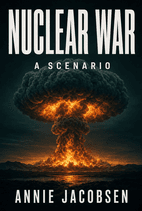
Annie Jacobsen is an American investigative journalist and author known for her meticulous, deeply researched works on national security, military history, and the defense establishment, including the Pulitzer Prize finalist *Area 51* and the bestselling *The Pentagon’s Brain*. A former defense industry journalist and a graduate of Princeton, she has also written *Operation Paperclip* and *Phenomena*, often uncovering classified histories and hidden government programs. Her most recent book, *Nuclear War: A Scenario*, was a finalist for the Pulitzer Prize and explores the chilling mechanics of a global atomic conflict.
Frequently Asked Questions about Area 51
What is Area 51 about?
It traces the hidden history of the most secret military installation on American soil, a facility seventy-five miles north of Las Vegas at the Groom Lake dry lake bed that Washington has never acknowledged. Drawing on seventy-four interviews, the narrative follows the base from its first customer, the Atomic Energy Commission, through U-2 spy flights, the titanium A-12 Oxcart, stealth research, captured Soviet MiG fighters, early drones, and astronaut geology training in the surrounding desert. Along the way it explains how real secret aircraft created the UFO sightings and cover stories that fueled decades of conspiracy theories.
Who is the author of Area 51?
Annie Jacobsen is an investigative journalist who built the account on seventy-four interviews, thirty-two of them with people who actually lived and worked at the base. Her reporting combines those firsthand accounts with declassified records to reconstruct programs the government never publicly confirmed.
Is Area 51 worth reading?
Yes — it replaces rumor with documented history, pairing audacious engineering with the human cost of life inside a secret city. The interviews with pilots, engineers, and security staff offer a rare inside view, and the narrative connects Cold War reconnaissance, UFO lore, and modern drone warfare into one continuous thread. Readers who want the real story behind the legends will find it far stranger and more concrete than the myths.
What are the key lessons from Area 51?
The atomic bomb established the template for black operations — enormous projects hidden from Congress and the public, beginning with the Manhattan Project. Secrecy at the site depended on misdirection, such as tucking controversial aircraft and pilot experiments inside a nuclear agency no one thought to question. Compartmentalization was absolute: pilots flew under pseudonyms, knew nothing beyond their mission, and were assured they could tell captors everything because they knew so little. Real aircraft such as the U-2 and Oxcart generated UFO reports, and officials sometimes let the confusion stand, while unaccountable testing like Project 57 left contamination that outlasted the institutions responsible.
📚 Explore Our Book Summary Library
Discover more insightful book summaries from our collection