As an Amazon Associate, we earn from qualifying purchases.
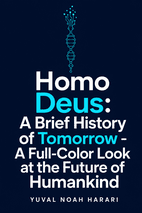
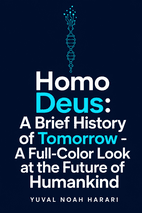
What is the book Homo Deus about?
Yuval Noah Harari's Homo Deus argues that humanity has conquered famine, plague, and war and now faces a new agenda of reshaping life itself, exploring the Anthropocene, the human soul, the Modern Covenant, Humanism, and Dataism. Written for general readers drawn to sweeping, provocative big-picture questions about technology and humanity's future.
Feature
Insta.Page
Blinkist
Shortform
Summary Depth
Full Chapter-by-Chapter
15-min overview
Section-by-section guides
Audio Narration
✓
✓
✓
Full access to all 800+ summaries
✓
✓
✓
Visual Mindmaps
✓
✕
✕
AI Q&A
✓
✕
✕
Missing a book? Request it, usually live within 48h
✓
✕
✕
Quizzes
✓
✕
✕
PDF Downloads
✓
✕
✓
Send to Kindle
✓
✓
✓
Price
$89.99/yr
$146/yr (PRO)
$199/yr
*Competitor data last verified July 2026.
1 Page Summary
In Homo Deus, Yuval Noah Harari argues that humanity has effectively conquered the three threats that organized life for millennia—famine, plague, and war—and now faces a new agenda: what to do with powers that have outgrown any clear purpose. Having taken on divine power over the planet, with humans and domesticated animals now making up more than 90 percent of the world's large animals, Homo sapiens must decide what comes next. Harari frames this moment through the Anthropocene and the Cognitive Revolution, exploring how shared stories about money, gods, nations, and corporations allowed humans to cooperate at scales far beyond any tribe. Along the way, he questions the human "spark" itself—examining the soul, free will, and whether the latest life sciences leave any room for a choosing self—and traces the Modern Covenant, the bargain in which humanity trades meaning for power, and the Humanist Revolution that filled the resulting void by locating meaning inside human experience.
Harari's approach is distinctive for its sweeping, interdisciplinary reach and its willingness to unsettle comfortable assumptions. He redefines familiar categories—arguing, for instance, that religion is not superstition or belief in gods but any total story that gives human laws and values an authority higher than human beings, a definition that includes communism and liberal humanism. He shows how science and myth are entangled rather than opposed, how the modern pursuit of power depends on credit and economic growth, and how techno-humanism and Dataism may replace humanist convictions with engineering projects and algorithmic processing. The book moves from the deep past to speculative futures, treating the laboratory and Silicon Valley as the likely sources of new religions while acknowledging how poorly understood the mind remains.
The intended audience is general readers interested in big-picture questions about technology, society, and the future of humanity—those who appreciated the sweep of Sapiens and want a similarly accessible, provocative survey. Readers will gain a framework for thinking about what comes after the old human agenda: the possibility that liberal institutions and individual choice could be undermined by developments that make most people economically and militarily unnecessary, that human minds could be deliberately redesigned, or that decisions once made by people could be handed to data flows no individual can grasp. Above all, the book invites readers to question the stories they live by and to consider what humanity should want now that it has the power to shape its own future.
1 The New Human Agenda
Overview
For thousands of years, people organized their lives around three threats: famine, plague and war. Now those threats no longer set the agenda. So what comes next? And what should we do with powers that have outgrown any clear purpose?
For most of recorded history, these three threats ruled the human agenda. Societies in ancient Egypt, medieval India and twentieth-century China prayed, built institutions and invented tools against them. Many concluded that famine, plague and war were part of a divine plan or just human nature. By the start of the twenty-first century, that assumption had collapsed. The threats were not gone, but they became manageable problems. When they slip out of control, we now ask what went wrong and promise to do better. We no longer just accept them.
The reversal shows in what kills people. More people die from eating too much than from eating too little. More die from old age than from infectious disease. More commit suicide than are killed by soldiers, terrorists and criminals combined. The average person in the early twenty-first century is more likely to die from a fast-food binge than from drought, Ebola or an al-Qaeda attack. With the old threats contained, a new question appears: what will occupy humanity next? It's like firefighters in a world without fire. Biotechnology and information technology make the question urgent, because they give humanity huge new power.
For thousands of years most people lived close to the edge of hunger, where malnutrition and starvation could kill. A ruined wheat harvest or a stolen goat herd could doom a family or a whole village. Drought in ancient Egypt or medieval India might kill 5 or 10 percent of the population. In April 1694 a French official at Beauvais described starving people eating cats, horse flesh from dung heaps, slaughterhouse blood, offal, nettles and weeds. The scale was huge. Between 1692 and 1694, about 2.8 million French people, 15 percent of the population, starved while Louis XIV stayed at Versailles. In 1695, famine killed a fifth of Estonia. In 1696, Finland lost between a quarter and a third of its people. Scotland between 1695 and 1698 saw some districts lose up to 20 percent of inhabitants.
Over the last century, technology, economic growth and politics created a safety net. Famine still happens, but it is rare and almost always caused by politics, not nature. Starvation in Syria, Sudan or Somalia comes from political decisions. Global trade turns a local drought or flood into a business opportunity and moves food fast. Private insurance, government agencies and international aid groups usually provide enough calories to keep a person alive even after job loss and extreme poverty. Hundreds of millions still go hungry, but few starve. In France, 6 million people, about 10 percent of the population, face food insecurity, yet they are not living through the famine of 1694.
China shows the same transformation. Tens of millions died in the Great Leap Forward, and the 1974 World Food Conference in Rome heard predictions that China could not feed its billion people. Instead, hundreds of millions were lifted out of poverty, and China is now free from famine for the first time in its recorded history. Overeating has become the bigger problem: according to the book, more than 2.1 billion people were overweight in 2014.
So the real question for this century isn't survival. It's what to do with the power that survival has released. Excess food, old age and suicide now claim more lives than hunger, infection and organized violence, and that changes the priorities of governments and individuals alike. Where starvation persists, it is usually a political failure, not a natural shortage. China's passage from mass famine to widespread overeating shows how quickly the food problem can flip. And biotechnology and information technology make the search for a new agenda urgent, because the disasters that remain will be shaped largely by human decisions, not by nature.
Key concepts: 1 The New Human Agenda
1 The New Human Agenda
The Old Human Agenda: Famine, Plague, and War
For thousands of years, these three threats dominated human life.
Societies built institutions and tools to combat them.
Many believed they were part of a divine plan or human nature.
The Collapse of the Old Agenda
By the 21st century, these threats became manageable problems.
When they slip, we ask what went wrong and promise to do better.
We no longer accept them as inevitable.
The Reversal of Mortality Causes
More people die from overeating than from hunger.
More die from old age than from infectious diseases.
More commit suicide than are killed by soldiers, terrorists, and criminals combined.
Famine: From Natural Disaster to Political Failure
Historical famines killed millions due to natural causes.
Modern famines are rare and almost always caused by politics.
Technology, trade, and aid provide safety nets against starvation.
The New Human Agenda: Power and Purpose
The question is no longer survival but what to do with our power.
Biotechnology and information technology give humanity huge new powers.
The remaining disasters will be shaped by human decisions, not nature.
💡 Try clicking the AI chat button to ask questions about this book!
2 The Anthropocene
Overview
A single species now reshapes the entire planet's ecology on a scale once reserved for planetary forces, yet the stories people tell still imagine other creatures as our equals. How can a power with no precedent be recognized before its consequences are understood?
In relation to other animals, people have effectively taken on divine power, though we rarely dwell on how unjust or unmerciful that power has been. Our stories still teem with lions, wolves and tigers, but the animals themselves are scarce. According to the book's figures, Germany has fewer than 100 wolves and 5 million domesticated dogs; worldwide there are 200,000 wild wolves against 400 million dogs, 40,000 lions against 600 million house cats, and 900,000 African buffalo against 1.5 billion cows. Wildlife numbers have fallen by half since 1970, and humans and domesticated animals now make up more than 90 percent of the world's large animals.
The human epoch
This is the Anthropocene: the last 70,000 years, in which Homo sapiens became the single most important force in global ecology. Since life arose about 4 billion years ago, no single species had changed the planet's ecology by itself; past mass extinctions came from climate change, tectonic movement, volcanoes or asteroids. Human impact is already comparable to ice ages and tectonic shifts, and within a century it may exceed that of the asteroid that killed the dinosaurs 65 million years ago. Earlier forces affected separate regions differently; humans made the planet one interconnected ecological system. Australia's ecology, for example, now depends on sheep, wheat, rats and flu viruses brought by people.
Stone Age ancestors had already caused extinctions before farming. As they spread from East Africa they wiped out:
all other human species
90 percent of Australia's large animals
75 percent of the large mammals of the Americas
about 50 percent of the planet's large land mammals
Large animals were vulnerable because they bred slowly. A few mammoth kills a year could outpace births, while rabbits reproduced fast enough to survive heavy hunting.
Feelings as algorithms
Human beings are algorithms, and so are pigs, baboons and chickens. An algorithm is a fixed sequence that can be followed repeatedly and embodied in a machine. A baboon weighing bananas against a nearby lion is solving a probability problem without pen and paper: hunger, fear and desire are the calculation. Natural selection tests these calculations, since timid and reckless baboons both leave fewer descendants. Attraction works similarly: a peahen or a woman reads cues and feels the result as desire, not arithmetic.
The mammalian bond
The mother-infant bond is the one emotion all mammals share, and the word mammal itself comes from the Latin for breast. Young mammals that fail to attach rarely survive. Twentieth-century behaviourists denied this. John Watson, a leading authority in the 1920s, told parents never to hug or kiss their children, and Infant Care in 1929 advised letting a hungry baby cry until the scheduled feeding hour. Harry Harlow's monkey experiments in the 1950s and 1960s overturned that view: infants chose a soft cloth dummy with no milk over a metal one that fed them, then grew neurotic without responsive care. The meat and dairy industries repeat Harlow's separation to billions of animals every year, taking piglets and calves from their mothers soon after birth.
The agricultural deal
Farmers knew they were subjugating animals, and theist religions supplied the justification. Animism had filled the cosmos with many actors; theism reduced it to humans and gods, with animals as scenery and humans as the central concern. The agricultural deal made gods responsible for rain, fertility and protection, while humans shared produce with them, both parties benefiting at the ecosystem's expense. Sacrifice was the visible payment. At Nepal's Gadhimai festival in 2009, 250,000 animals were killed. The deluge myth was read as proof of human supremacy, not animal value. Jainism and Buddhism extended non-violence further, but all agricultural religions, Hinduism included, still licensed human use of animals, especially milk and labour.
The farm as prototype
When the Nayaka of south India took up cattle herding, chicken keeping and tea cultivation, they kept a word for a being with a unique personality: mansan. Elephants, bears, deer and tigers are mansan; cows, which have to be led everywhere, are not, and neither are the tea bushes grown for sale. The demotion of animals into property rarely stopped with animals. In ancient Egypt, biblical Israel and medieval China people were enslaved, tortured and executed for trifling offences, and rulers no more asked peasants their opinion than farmers asked their cows. The farm became the prototype of a society with puffed-up masters, inferior races fit for exploitation, wild beasts ripe for extermination, and a God above blessing the whole arrangement.
The Garden of Woolsthorpe
Where farming silenced animals, science silenced the gods, leaving humans alone on stage with enormous powers and no obligations. The Newton myth inverts Eden: in Genesis humans are punished for curiosity, while in the garden at Woolsthorpe the apple falls by blind law, no one punishes Newton, and knowledge becomes the road to paradise. Newton, a devout Christian who studied the Bible far more than physics, ends up as the god of his own story. Humanist religions, liberalism, communism and Nazism among them, worship humanity instead, judging everything by its impact on Homo sapiens.
Industrial farming, and the question turned back on us
Scientific power made industrial farming feasible where ancient farmers could not have confined thousands of animals without epidemics wiping out the herd and the village. Vaccines, hormones, pesticides and automatic feeders now do what no priest could. The uncomfortable question is whether we will extend to superintelligent programs the concern we are suddenly showing for lower life forms, and if not, what spark exempts us.
Key Takeaways
Human dominance is not a recent industrial accident: the spread of Homo sapiens had already eliminated other human species and most large land mammals long before farming, so the Anthropocene begins with migration and hunting as much as with fossil fuels.
Feelings are evolved computation rather than irrational noise or trustworthy moral guidance; hunger, fear and desire are how animals calculate odds, and natural selection has tested those calculations.
The mammalian bond is a biological requirement, not cultural softness, so the behaviorist campaign against responsive care was a mistake whose logic survives in the routine separation of mothers and young on industrial farms.
The agricultural deal converted animals into property and supplied a model for subordinating humans as well, making the farm a prototype of hierarchy rather than merely a source of food.
Science replaced divine law with blind natural law and left humans alone with vast power and no built-in obligation; the unresolved question is whether moral concern can be extended beyond our own species to other minds, including artificial ones.
Key concepts: 2 The Anthropocene
2 The Anthropocene
The Anthropocene Defined
Last 70,000 years: Homo sapiens became the dominant global ecological force
First single species to reshape planetary ecology alone
Impact rivals ice ages and may exceed the dinosaur-killing asteroid
Humans unified the planet into one interconnected ecological system
Humanity's Divine Power
Humans wield unprecedented power over other animals, rarely acknowledged
Wildlife halved since 1970; humans and livestock exceed 90% of large animals
Stories still teem with wild animals that are now scarce in reality
Germany: under 100 wolves but 5 million dogs
Stone Age Extinctions
Pre-farming ancestors wiped out other human species and megafauna
90% of Australia's and 75% of the Americas' large animals lost
Slow-breeding large animals were vulnerable to even light hunting
Fast breeders like rabbits survived heavy hunting pressure
Feelings as Algorithms
Humans and animals alike are algorithms shaped by natural selection
Emotions like hunger and fear are calculations, not arithmetic
Baboons and peahens solve probability problems through feeling
Timid and reckless individuals both leave fewer descendants
The Mammalian Bond
Mother-infant attachment is the one emotion all mammals share
Harlow's experiments overturned behaviourist advice against affection
Infants chose soft comfort over food, thriving only with responsive care
Meat and dairy industries repeat Harlow's separation at massive scale
The Agricultural Deal
Theism reduced the cosmos to humans and gods, animals as scenery
Gods supplied rain and fertility; humans paid with sacrifice
Deluge myth read as proof of human supremacy over animals
Even non-violent religions licensed human use of animals
The Farm as Prototype
Nayaka 'mansan' marks beings with personality; cows and crops excluded
Demotion of animals to property extended to enslaving humans
Farm model: puffed-up masters, inferior races, beasts to exterminate
Science then silenced the gods, leaving humans alone with power and no obligations
3 The Human Spark
Overview
Humans assume their lives are worth more than any animal's, and that this difference comes from something unique and lasting inside them. The question is whether that holds up once humans are studied as living organisms rather than as exceptions.
People usually justify human superiority with a soul—an indivisible, unchanging, possibly eternal essence. We accept that American lives are valued above Afghan lives only because of an unfair geopolitical imbalance, yet we treat human lives as naturally above pig lives. The monotheist story says only Sapiens have eternal souls, so animal suffering matters less. Lab studies have found no soul in pigs and other animals, or in humans. The same experiments that deny souls to animals deny them to us. Evolution poses the deeper problem: natural selection builds complex things by gradually combining and splitting parts, and something with no parts cannot evolve step by step. The eye evolved over millions of years from simple light-sensitive cells. An ensouled first human is just as hard to explain, because a mutation can curve a cornea but cannot add an eternal essence to a baby born to soulless parents. DNA is the medium of mutation, not a seat of permanence.
Darwin's Threat
A 2012 Gallup survey found 15 percent of Americans credited natural selection alone, 32 percent thought God guided evolution, and 46 percent believed God created humans in their present form within the last 10,000 years. Education barely moved these views: 46 percent of BA graduates chose the biblical account, and 25 percent of MA and PhD holders did. Evolution angers people because it removes the soul. Relativity and quantum mechanics violate common sense without threatening identity.
The Mind Behind the Brain
Memories and thoughts are bursts of electrochemical activity across neurons, not traces in an immaterial field. No electron moves because of a feeling, so it's unclear what the mind adds that the brain does not. If nothing, why have a mind; if something, where? Fusing Homer Simpson with Bill Clinton's denial may mean a new synapse between two neurons, but that physical event does not explain why the fusion is experienced. No known algorithm contains a subjective experience. Google and Tesla autonomous cars make millions of calculations a second, model their own actions, and signal intentions to other vehicles without fear or consciousness, weakening the claim that self-modeling generates awareness. Pain is directly felt; an eternal soul is conjecture. Daniel Dennett and Stanislas Dehaene say brain activity answers every relevant question, yet torture and rape cannot be condemned on neurological grounds alone. The wrong lies in subjective experience.
Animal Minds and the Burden of Proof
Alan Turing's 1950 Turing Test examines only social convention. Turing, convicted of homosexual acts in 1952, knew that passing mattered more than being. Other minds remain unprovable. In 2012, the Cambridge Declaration on Consciousness shifted the burden of proof toward sceptics, and in 2015, New Zealand became the first country to recognize animals as sentient. A standard antidepressant screen places rats in water; they give up after fifteen minutes, while rats rescued at fourteen minutes then struggle for twenty, suggesting hope. Sceptics reply that rats run non-conscious algorithms and feel nothing.
The same burden-of-proof problem shadows the claim that animals lack self-consciousness. A dog distinguishes its own scent from a rival's. A squirrel caches nuts without remembering winter, yet scrub jays and parrots remember specific events and plan. In 2010 at Sweden's Furuvik Zoo, the chimpanzee Santino collected stones in the morning and hid them under straw to bombard visitors later. Sceptics can still call this a non-conscious algorithm. According to the book, a 2010 experiment found that a free rat freed a trapped companion and often shared chocolate with it. Sceptics said it merely wanted to stop the distress signals, a motive that can be ascribed to human charity too.
Clever Hans
Clever Hans, a German horse celebrated in the early 1900s, tapped out arithmetic answers by reading human posture and facial tension. Oskar Pfungst exposed the trick in 1907. The lesson is not that people overestimate animals but that humanising them can hide their real talents: Hans was no mathematician, yet he read strangers' bodies better than most humans.
Cooperation, Not Essence
What explains human dominance is not soul, consciousness, intelligence or toolmaking. Twenty thousand years ago humans had sharper minds and better tools than today's average but far less power. Brains are smaller now. The decisive ability is flexible cooperation among large numbers of people. Bees cooperate inflexibly. Chimpanzees and elephants cooperate only with known individuals. Humans cooperate with strangers. In 1917 Russia, 23,000 communists seized power from an elite of 3 million ruling 180 million peasants because they organised effectively.
Hijacked Revolutions
The crowds in Timisoara and Bucharest could not turn numbers into power in 1989. A self-proclaimed National Salvation Front, led by Ion Iliescu, claimed the revolution on air, then used its networks to seize the state and sell its assets cheaply to former communists. Egypt in 2011 repeated the pattern: Facebook and Twitter could put a hundred thousand people in Tahrir Square, but only the army and the Muslim Brotherhood were organised enough to fill the vacuum. Neither group was smarter; it cooperated better.
The Limits of Intimacy
Cooperation at that scale does not run on intimacy. Chimpanzees hunt only with familiars, and intimacy does not scale: no debt crisis is settled by a fistfight or an orgy. Research cited in the book caps personal acquaintance at about 150 people, which is why the Ultimatum Game misleads. Asked to split $100, most people offer $30 or $40 rather than a derisory dollar, and Frans de Waal's capuchins threw their cucumber at the experimenters when a neighbour got a grape. Yet Frederick II of Prussia watched 60,000 armed men, his enemies and better armed than his guard, tremble before him, and they never revolted.
Imagined Orders
Mass hierarchies rest on shared fictions. Money is neither objective nor merely subjective but shared belief, worthless once enough people refuse it. On 3 November 1985 Myanmar voided its 25, 50 and 100 kyat notes overnight, erasing lifetimes of savings, then issued 75-kyat bills honouring its dictator's birthday. The Soviet Union ended with a signature at Viskuli on 8 December 1991. Shared meaning holds only as long as people keep reinforcing it in one another, until belief feels like fact.
The Unraveling Web
A twelfth-century knight's certainty rested on everyone around him. Minstrels, priests, rival barons, the Pope and even the Muslims he fought all agreed that dying for Jerusalem meant Paradise, and that unanimity made disbelief unthinkable.
Then that shared belief fell apart. Crusade songs gave way to plays about tragic love, the castle burned and Grandpa Henry's sword vanished, church glass was replaced with a king's victory, the priest stopped calling the Pope "our holy father," and scholars dissected corpses and whispered that the soul might not exist.
On the same ground now stands a shopping mall and a cinema showing Monty Python and the Holy Grail. A teenager who announced he was going to liberate the Holy Land would be treated as psychotic; one who travelled to Syria to protect refugees would be called a hero, though in the Middle Ages that would have seemed insane.
History Versus Biology
Cats can picture a mouse they have smelled; they cannot picture a dollar, Google or the European Union. That gap explains why a banker who can file a lawsuit outranks the strongest lion, and why North and South Korea diverge despite shared genes and shared terrain: the north is ruled by different fictions.
Biology alone cannot yet explain the crusades or communism. During this century the border between the fields should blur not because biology will explain history, but because shared fictions will be written into genetic and electronic code, and shared belief will swallow objective reality.
Key Takeaways
Human uniqueness cannot rest on a partless, eternal essence, because gradual evolution can only assemble and modify divisible traits; whatever separates people from other animals must be a capacity that emerged in steps.
Subjective experience remains the missing piece in any purely neurological or computational account of mind, and it is also what makes cruelty wrong, so reducing pain to brain activity leaves the moral verdict unexplained.
The burden of proof should sit with those who deny animal awareness, but anthropomorphic stories can conceal an animal's actual skill; the Clever Hans case shows that reading human cues can be a genuine talent rather than proof of arithmetic.
Human dominance comes from organizing strangers in large numbers, not from sharper intellect or better tools; small disciplined groups can defeat much larger populations when they alone have a working structure.
The shared beliefs that make large-scale cooperation possible are historical and fragile, can be captured by organized minorities, and can dissolve when enough people stop reinforcing them, so social reality changes through belief as much as through biology.
Key concepts: 3 The Human Spark
3 The Human Spark
The Soul as Justification for Human Superiority
Humans claim unique value via an indivisible, eternal soul.
Experiments find no soul in animals or humans.
Evolution cannot build a partless essence step by step.
Darwin's Threat to Human Identity
Many Americans reject evolution because it removes the soul.
Education barely shifts biblical views on human origins.
Evolution threatens identity unlike physics or relativity.
The Mind-Brain Problem
Thoughts are neural activity, not immaterial traces.
No algorithm explains subjective experience.
Self-modeling machines lack fear or consciousness.
Animal Minds and Shifting Burden of Proof
Cambridge Declaration and New Zealand recognize animal sentience.
Rats show hope; jays plan; Santino hides stones.
Sceptics dismiss animal behavior as non-conscious algorithms.
Clever Hans and the Risk of Humanizing Animals
Hans tapped arithmetic by reading human posture.
Pfungst exposed the trick in 1907.
Humanizing animals can hide their real talents.
Flexible Cooperation as the Human Spark
Dominance comes from cooperation, not soul or intelligence.
Humans cooperate with strangers; animals only with known individuals.
23,000 communists organized to rule 180 million peasants.
Hijacked Revolutions and the Limits of Intimacy
Crowds in Timisoara and Bucharest could not convert numbers to power.
Organized groups like the army or Brotherhood fill power vacuums.
Social media mobilizes but cannot replace organized cooperation.
4 The Storytellers
Overview
Humans haven't changed much since the Stone Age, yet they now cooperate in masses far beyond any band or tribe. What made that scale possible, and why did the systems organizing it come to matter more than the physical world they were meant to manage?
People live in three layers of reality:
objective things
subjective feelings
stories about money, gods, nations and corporations
The third layer has increasingly shaped the other two. About 70,000 years ago the Cognitive Revolution let people talk about things that existed only in imagination, but for 60,000 years those stories stayed small and local. Farming, from about 12,000 years ago, gave cities and armies their physical footing, yet human memory still capped how many people could cooperate.
Gods as Brands, Pharaoh as Brand
In Sumer around 6,000 years ago, temple gods worked as legal persons: they owned fields and slaves, made loans and collected tithes, while priests did the administration. The gods looked more like modern corporations than Stone Age spirits. Because the stories said they never died or split an inheritance, their property and power piled up. Egypt went further, merging priest-king and god into pharaoh. The living man ate, slept and died; the pharaoh of story, served by thousands of scribes, ruled. No single person remembered all pharaoh's lands and taxes; the documents did. Writing and money, invented together about 5,000 years ago, broke the limit on what one brain could track and made taxes, bureaucracies and vast kingdoms possible.
The Algorithm of Bureaucracy
Writing turned society into a step-by-step machine, where each official is a small part and the system decides. Pharaohs Senusret III and Amenemhat III used such a network to dig a Fayum canal and create a lake holding 13 trillion gallons, larger than Lake Mead's 9 trillion. With stone and wood tools, no wheels or iron, literate officials recruited tens of thousands of laborers.
When Paper Wins
Writing also trained elites to experience reality through symbols. In 1940, Aristides de Sousa Mendes issued thousands of Portuguese visas against orders, and bureaucrats honored the papers, saving up to 30,000 Jews, by the book's count, in the largest single-person rescue of the Holocaust. Under Mao's Great Leap Forward, fake reports of a 50% grain surplus led China to export food and suffer a famine that killed tens of millions, according to the book. Julius Nyerere's Tanzanian collective farms existed mainly in documents; by 1979, 90% of farmers on them produced 5% of output. Bureaucracies can force reality to match their records.
Borders Drawn in Berlin
At Berlin in 1884, European powers divided Africa on paper while knowing little of its interior. They mapped coastlines and river mouths but not the inland Niger or Congo, nor the kingdoms and trade routes along them. The new lines split one people among several colonies and bundled rivals into one. Later invaders saw how poorly the borders fit geography, economy and ethnicity, but kept them to avoid renewed clashes. Independent African states accepted the colonial lines for fear that reopening them meant endless war.
The Yardstick of Marks
Precise marks are recent:
Hunter-gatherers were never marked for their achievements.
A medieval cobbler's apprentice was not graded on laces versus buckles.
An Oxford undergraduate in Shakespeare's day left with a degree or without one, not with a 74 or an 88.
Industrial mass schooling adopted numerical marks after factories and ministries grew used to thinking in numbers. Schools judged students by averages and teachers by their school's average. Marks began as a measure of education, but schools soon chased high marks instead, though exam skill is not the same as understanding literature, biology or mathematics.
Scriptures as Guidebooks
Holy scriptures took written authority furthest. Priests who once listed a god's property began recording its deeds and commandments, and scriptures claimed the whole of reality. The religious establishment pressed courts and governments to conform, so the book seemed confirmed everywhere: where scripture said women could not testify, courts rejected them and no women served as judges. The Bible treated drought or invasion as divine reward or punishment, ignoring ecology and Babylonian or Persian politics. Herodotus and Sima Qian explained events through political, social and economic causes, yet the biblical view spread because it supported wider cooperation.
The Test of Suffering
Fiction is necessary for large-scale cooperation, but it should stay a tool, not a goal or a yardstick. Each system can quote its own success:
A mullah counts 1.5 billion Muslims.
A principal cites a 7.3 percent rise in exam results.
An Egyptian official boasts of taxes and pyramids.
The better question is whether an entity can suffer. Zeus and the euro do not suffer; a wounded soldier and a hungry peasant do. Fictions can cause wars whose suffering is real, which is why telling story from reality matters more as biotechnology and algorithms create powerful virtual worlds.
Key Takeaways
Treat writing and money as technologies that let institutions outlive individual memory, and expect any organization built on them to defend its records before it defends the people those records describe.
Read official documents as claims that can reshape the world rather than as mirrors of it; a falsified harvest report or a border drawn on paper can save or kill people long after the facts on the ground have changed.
Recognize that grades, borders and administrative categories are recent inventions whose authority rests on people continuing to accept them, not on any natural fit to learning, geography or human communities.
Use suffering as the test that separates stories from reality: an institution, currency or deity cannot be harmed, so its success cannot settle whether the arrangement it organizes is good.
Hold that large-scale cooperation depends on shared fictions, which makes the task not escape from them but keep them subordinate to the concrete beings they claim to serve.
Key concepts: 4 The Storytellers
4 The Storytellers
Three Layers of Reality
Objective things, subjective feelings, and shared stories shape human life.
Stories about money, gods, nations, and corporations increasingly dominate.
Cognitive Revolution enabled imagination, but stories stayed local for 60,000 years.
Farming and cities set the stage for larger cooperation.
Gods as Brands, Pharaoh as Brand
Sumerian temple gods acted as legal persons owning property and collecting taxes.
Egypt merged priest-king and god into pharaoh, a living story.
Writing and money broke memory limits, enabling bureaucracies and vast kingdoms.
Documents, not individual memory, tracked pharaoh's lands and taxes.
The Algorithm of Bureaucracy
Writing turned society into a step-by-step machine with officials as parts.
Pharaohs used networks to mobilize tens of thousands for massive projects.
Bureaucracy enabled large-scale coordination without wheels or iron.
When Paper Wins
Writing trained elites to experience reality through symbols.
Bureaucrats honored visas, saving thousands in the Holocaust.
Fake reports under Mao led to famine by forcing reality to match records.
Tanzanian collective farms existed mainly on paper, producing little.
Borders Drawn in Berlin
European powers divided Africa on paper with little knowledge of interior.
New lines split peoples and bundled rivals, ignoring geography and ethnicity.
Independent states kept colonial borders to avoid endless war.
The Yardstick of Marks
Precise numerical marks are recent, adopted with industrial mass schooling.
Schools chase high marks, though exam skill differs from understanding.
Marks began as measures but became goals, distorting education.
Scriptures as Guidebooks
Holy scriptures claimed authority over all reality, pressing courts to conform.
Biblical views spread because they supported wider cooperation.
Scriptures ignored ecology and politics, yet shaped societies.
You've reached the end of the free chapters
Read less, remember more
Keep reading Homo Deus — and unlock all 800+ book summaries with audio, mindmaps and AI Q&A.
$0.00 due today · 7 days free, then $89.99/year ($7.49/mo) · Cancel anytime before day 7
Yuval Noah Harari, born in 1976, works as a historian and philosopher and has written bestselling titles including 'Sapiens', 'Homo Deus', '21 Lessons for the 21st Century', the 'Unstoppable Us' children's series and 'Nexus'. He earned a history doctorate at Oxford and serves as a Distinguished Research Fellow at Cambridge's Centre for the Study of Existential Risk. He and his husband, Itzik Yahav, started Sapienship, a social impact company focused on education and storytelling.
Frequently Asked Questions about Homo Deus
What is Homo Deus about?
The book explores what happens now that humanity has largely brought famine, plague and war under control, and asks what will replace them as the human agenda. It traces how Homo sapiens came to dominate the planet's ecology, how shared stories about gods, nations and money made mass cooperation possible, and how the modern bargain traded cosmic meaning for power. It then examines where the humanist revolution and the erosion of free will may lead, including the rise of techno-humanism and Dataism and the prospect of upgrading some humans into something beyond Homo sapiens.
Who is the author of Homo Deus?
The author is Yuval Noah Harari, a historian whose work spans the deep past and the imagined future of humankind. He builds his arguments from evolutionary biology, economics, religion and technology, weaving them into a single wide-ranging narrative. His writing is known for turning big historical questions into provocative claims about where society is heading.
Is Homo Deus worth reading?
It is worth reading for its ambitious sweep, connecting the Cognitive Revolution and the rise of farming to gene editing, brain-computer interfaces and algorithms that may outthink us. The chapters offer striking evidence and thought experiments that challenge comfortable assumptions about progress, free will and human uniqueness. Readers who want a framework for thinking about technology, meaning and the future will find plenty to argue with and plenty to remember.
What are the key lessons from Homo Deus?
The first lesson is that the three historic scourges of famine, plague and war have become manageable problems rather than fixed fate, so humanity's agenda is shifting toward new goals and new anxieties. Second, human dominance rests not only on physical power but on shared fictions, the stories about gods, money and nations that let millions cooperate, and those stories now shape reality as powerfully as the physical world. Third, modernity's bargain gave humans enormous power in exchange for abandoning a cosmic plan, with humanism stepping in to place meaning inside human experience while science quietly undermines the free will that liberalism depends on. Finally, techno-humanism and Dataism point toward a future in which algorithms may displace individual judgment, raising the possibility that most people become economically and militarily unnecessary while an upgraded elite pulls away.
📚 Explore Our Book Summary Library
Discover more insightful book summaries from our collection