As an Amazon Associate, we earn from qualifying purchases.
What is the book Situated about?
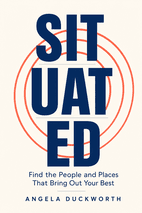
Angela Duckworth's Situated argues that grit is necessary but not sufficient for achievement, introducing a Three Boxes model of situation, thoughts, and response and four elements of situational agency—space, peers, mentors, and culture—for readers chasing difficult goals, parents, and leaders.
Feature
Insta.Page
Blinkist
Shortform
Summary Depth
Full Chapter-by-Chapter
15-min overview
Section-by-section guides
Audio Narration
✓
✓
✓
Full access to all 800+ summaries
✓
✓
✓
Visual Mindmaps
✓
✕
✕
AI Q&A
✓
✕
✕
Missing a book? Request it, usually live within 48h
✓
✕
✕
Quizzes
✓
✕
✕
PDF Downloads
✓
✕
✓
Send to Kindle
✓
✓
✓
Price
$89.99/yr
$146/yr (PRO)
$199/yr
*Competitor data last verified July 2026.
1 Page Summary
Angela Duckworth's Situated argues that grit—passion combined with perseverance—is necessary for achievement but not sufficient. Drawing on her own near-drowning experience off the Florida coast, where determination alone could not tow her mother back against a strong current, she contends that the same drive can produce either progress or peril depending on forces outside the individual. High achievers, she notes, rarely credit willpower alone; they describe work that feels interesting, important, doable, and improvable, and they are shaped by mentors, teammates, and physical settings. At West Point, rising completion rates reflected a cultural shift from weeding out cadets to building them up. Duckworth introduces the Three Boxes model—situation (the facts of place and people), thoughts (fast, often unconscious interpretations), and response (emotion and behavior)—and argues that intervening at the level of situation is more effective than suppressing feelings through willpower, which research treats as unreliable and easily depleted.
The book's distinctive approach is to reframe self-improvement as "situational agency" rather than a solo test of will. Duckworth shows that people have multiple "situational selves"—disciplined in one setting and unrecognizable in another—and treats personality traits as averages, like climate, rather than fixed rules. She identifies four essential elements of situational agency: setting up your space with systems that work outside the head (closing the intention-action gap that Jerry Seinfeld's Night Guy and Morning Guy illustrate), picking your peers (as Diana Nyad's successful Havana-to-Key West swim depended on a team), attracting mentors (who make deliberate practice more efficient and are linked to markedly higher odds of prize-winning work and college enrollment), and choosing your culture (as Taylor Swift's move to Nashville and the "Lost Einsteins" study of children growing up near inventors demonstrate). She extends the framework to parenting, leadership, and citizenship—situational parenting shapes conditions rather than correcting the child, situational leadership aims for high challenge with high support, and Maslow's needs are pursued in synchrony rather than as a strict pyramid—while acknowledging the courage required to accept help, as when Aaron Carroll finally tried antidepressants and GLP-1 drugs after treating extra effort as the only honorable option.
The intended audience is broad: readers chasing difficult goals, parents, leaders, and anyone who has blamed themselves for failures of willpower. What they will gain is a practical toolkit for changing situations rather than merely resolving to try harder—using visible systems, chosen peers, mentors, and cultures to make high performance normal instead of dependent on individual effort—along with two gifts Duckworth says come from taking the power of the situation seriously: humility and hope. Cody Coleman's story—from a jail birth to MIT and top PhD acceptances—illustrates grit compounded with support year after year rather than a straight line of solitary perseverance. The book closes on a personal note: Duckworth's mother, born in Nanjing in 1935, survived war, displacement, and immigration to win a full scholarship to an art program in Philadelphia, a reminder that a calling depends on the room it is given.
Prologue
Overview
People chasing difficult goals are told that effort is what matters, yet determination alone can fail against forces outside them. What separates the same drive producing progress from the same drive producing peril, and what can be done before it is too late?
A snorkeling trip off the Florida coast turns a near drowning into a demonstration that effort is necessary for achievement but not sufficient. The author, a psychologist who studies motivation and achievement and a capable swimmer in her fifties, had let her eighty-six-year-old, 107-pound mother enter a strong current after the boat captain assured them that the drive from Miami was the day's real danger. That choice was poor judgment, not merely bad luck. When her mother went face down and limp, the author could not tow her back against the water. What helped save her was noticing the situation, recognizing how strong the tide was, and then acting within it, changing tactics and signaling for help. A snorkeling instructor administered CPR, the boat raced to shore, and an ambulance reached an emergency room. Three months later she celebrated her eighty-seventh birthday after a full recovery. She is now ninety-one.
What Counts as a Situation
Situation means the objective physical and social circumstances a person inhabits. It includes spaces and company, visible objects, and cultural norms that steer behavior without awareness. It is the world around you, not what is inside your head, including how you interpret external events. Thoughts matter, but they are not the situation. Situations can amplify effort or diminish it, and people routinely overlook that power while insisting that mind can master matter. More than four centuries ago Michel de Montaigne said people are carried along by circumstance rather than going of their own accord. David Foster Wallace's 2005 Kenyon College commencement used two young fish who do not know what water is to make the same point: the most obvious things are the hardest to see.
Agency Within Circumstances
Recognizing situation does not cancel agency. Circumstances are not fixed, though some people have more freedom to alter them than others. Alongside what cannot be changed, there is almost always something that can:
Personal space can hold temptations or reminders of chosen goals.
Peers can be selected for accountability, inspiration, and mutual support.
Mentors can be attracted by seeking people who teach, believe, and open doors.
Work or home can be moved to a culture whose habits match the life one wants.
Helping someone else succeed by arranging a better situation is effective and ethical.
From Grit to Surroundings
A decade of studying high achievers produced Grit, which identified passion and perseverance for long-term goals as a common denominator. Another decade of research shifted attention from what goes on inside such people to the shared features of their situations. English has few words for this beyond background and backdrop. The payoff is practical: notice the water you swim in, then change what you can. Look around.
Key Takeaways
Effort is necessary for achievement but never sufficient: the same person can produce very different results depending on the conditions surrounding them.
What counts as a situation is the external world of places, people, objects and unwritten rules, not the private reading of it, and its influence operates whether or not anyone notices.
Accepting that circumstances constrain action does not cancel agency; it shifts the practical question to which parts of the environment can be rearranged.
The conditions surrounding high achievers explain as much as their internal drive does, and those conditions are worth studying in their own right.
Helping someone by improving their conditions is a legitimate and often more effective form of support than pressing them to try harder.
Key concepts: Prologue
Prologue
Effort Is Necessary but Not Sufficient
Determination alone can fail against external forces.
Same drive can produce progress or peril depending on conditions.
Snorkeling near-drowning shows effort without situational awareness fails.
Recognizing and acting within the situation saved a life.
Defining Situation
Situation is objective physical and social circumstances.
Includes spaces, people, objects, and cultural norms.
Not internal interpretations or thoughts.
Situations can amplify or diminish effort, often unnoticed.
Agency Within Circumstances
Recognizing situations does not cancel agency.
Some circumstances are fixed, but many can be altered.
Adjust personal space, peers, mentors, and environments.
Helping others by improving their situation is ethical and effective.
From Grit to Surroundings
Grit research identified passion and perseverance for long-term goals.
Later research shifted focus to shared features of situations.
English lacks precise words for situational influences.
Practical payoff: notice your water and change what you can.
Key Takeaways
Effort is necessary but never sufficient for achievement.
Situations are external and influence us whether noticed or not.
Agency means rearranging what can be changed.
Conditions explain as much as internal drive.
💡 Try clicking the AI chat button to ask questions about this book!
Chapter 1: Beyond Grit
Overview
Why do some people keep working when others stop? The same person can show relentless persistence in one setting and lose it in another. Drive alone doesn't explain that shift.
High achievers combine passion with perseverance, or grit, but grit is not the whole story. Gritty people work harder, longer, and more consistently, yet many say they are not grinding through misery by force of will. Olympic athletes, Nobel laureates, and CEOs rarely credit willpower alone. They describe an inner voice that finds the work interesting, important, doable, and improvable, with a clear next step.
At West Point, grittier cadets were more likely to complete the hardest training stages in any given year. Across years, completion rates rose from the 1970s onward without changes in admission or graduation standards. General Robert Caslen, a 1974 graduate and later superintendent, called it culture: the academy moved from weeding out weak cadets to building up every cadet. Mentors, teammates, and even physical setting shape how a person views goals and what they will do to reach them.
Michael Phelps shows the pattern. He retired at 31 with 28 Olympic medals, 23 gold. Bob Bowman first saw him at practice on May 5, 1997, when Phelps was 11 and younger than the other swimmers. Bowman noticed his talent, but credited his work ethic as the difference: Phelps trained 365 days a year without missing a practice, including weekends, holidays, and birthdays. Bowman built an "environment of excellence," planning practices in advance so that a swimmer who bought in was almost guaranteed to improve. Phelps said Bowman's belief gave him confidence. Luck, he said, had nothing to do with growing up ten minutes from the North Baltimore Aquatic Club. It had two 50-meter pools, year-round training, and a culture that recruited coaches like Bowman.
Léon Marchand shows that the situation is not fixed. At six, he glided about 15 feet off the wall, and his uncle urged his parents, former Olympic swimmers, to enroll him at Les Dauphins du TOEC, a century-old Toulouse club built around elite swimming. He quit for two years because the pool was cold, then returned. At 19 he placed sixth in the 400-meter individual medley at the Tokyo 2020 Olympics. Afterward he emailed Bowman, then at Arizona State, and moved from France in 2021 to train with him. He wanted Phelps's coach, faster teammates, and better facilities in a new culture. Within two years he won the 400 IM at the 2023 World Aquatics Championships and broke Phelps's last individual world record, cutting nearly nine seconds off his personal best. At Paris 2024 he won four golds, each in Olympic-record time. The lesson: seek mentors and peers, and choose spaces and cultures that inspire effort, rather than only commanding yourself to try harder.
Bowman says success comes from teams: family, other coaches, doctors, trainers, sports psychologists, and administrative staff the public never sees. Marchand agrees: "You're alone in the lane, but behind me, there are so many people." Ask not just who the hero is, but what outside forces helped them succeed.
When motivation dips, check four things: is the task absorbing, does it serve something you value, can you take the next step, and do you know how to get better at it? Treat the people and places around you as part of the work itself. Choose settings where high effort is normal and supported, and leave ones that make private willpower your only fuel. When you hit a plateau, look for a stronger coach, sharper peers, or better facilities before assuming you need more discipline. And count the trainers, family members, doctors, and administrators behind any achievement. Teams make success happen, even when the final test looks solitary.
Key concepts: Chapter 1: Beyond Grit
Chapter 1: Beyond Grit
Grit Is Not the Whole Story
High achievers combine passion with perseverance, but grit alone doesn't explain success.
Gritty people often find work interesting, important, doable, and improvable.
Willpower alone is rarely credited by Olympic athletes, Nobel laureates, and CEOs.
Environment and Culture Shape Persistence
West Point's completion rates rose due to a culture shift from weeding out to building up.
Mentors, teammates, and physical setting influence how people view goals.
Michael Phelps benefited from an 'environment of excellence' with year-round training and belief.
Seek Better Surroundings
Léon Marchand moved to train with Phelps's coach for faster teammates and better facilities.
Within two years, he broke Phelps's world record and won four Olympic golds.
Choose spaces and cultures that inspire effort rather than commanding yourself to try harder.
Teams Drive Success
Bowman credits success to teams: family, coaches, doctors, trainers, and staff.
Marchand: 'You're alone in the lane, but behind me, there are so many people.'
Ask what outside forces helped, not just who the hero is.
Practical Steps for Motivation
When motivation dips, check if the task is absorbing, valued, doable, and improvable.
Treat people and places as part of the work; choose settings where high effort is normal.
On a plateau, seek a stronger coach, sharper peers, or better facilities before more discipline.
Chapter 2: How Do We Change?
Overview
James Gross, a Stanford emotion researcher, came up with the Three Boxes Model. Box One is the situation: the facts of place and people. Box Two is your thoughts: your fast, often unconscious interpretation. Box Three is your response: the emotion and behavior that follow.
People assume feelings create thoughts, but thoughts come first. Willpower at Box Three, suppressing anger after it forms, works poorly. At Box Two, you can change your thoughts by shifting attention toward something pleasant or by seeing a relative's politics as just a different perspective. At Box One, you change the situation: sit away from the provoking brother-in-law or volunteer to wash dishes. Then thoughts and responses shift on their own.
Frog and Toad promise to stop eating cookies, take one last cookie, and keep going. National surveys of American adults find lack of willpower is the most cited barrier to behavior change. In lab studies, resisting cookies or holding a hand in ice water left people exhausted, as if willpower were a muscle that tires out. Just-do-it challenges, including rowing and handgrip squeezing, failed completely. They relied on motivation at the last moment and treated the situation as fixed.
Research by Gross and colleagues found willpower the worst approach. In a survey of nearly twenty thousand American high school students, those who said they "just forced" themselves to study studied less and scored lower on the SAT. Those who set a concrete schedule studied more and scored higher. The "Everyday Temptations" study found successful adults mostly avoided temptation rather than resisting it. To exercise, leave shorts and sneakers beside the bed.
In a study where people were randomly assigned, young adults named a weeklong goal and were put into one of three groups: situation change, willpower, or no treatment. The situation group learned to remove temptations from sight, such as moving candy a few feet away. The willpower group heard that self-control could be strengthened by resisting temptation, such as saying no to alcohol. After a week, the situation group was 19 percent more successful than no treatment and 16 percent more than the willpower group. They also felt 11 percent less temptation than no treatment and 13 percent less than the willpower group.
A study of more than a hundred adults writing about major life changes found failure stories framed change as willpower, while success stories described reshaping their surroundings. Among successful adults, 36 percent had moved to a new neighborhood or town, versus 13 percent of those who failed. Success stories also mentioned support and accountability. Viktor Frankl argued that when a situation cannot be changed, people can choose their attitude, but he also insisted that avoidable suffering should be removed rather than endured.
Redesign the setting before you rely on resolve: move the candy, stage the running shoes, and put study time on a calendar rather than waiting to feel disciplined. When an emotion spikes, look at how you're reading the facts; redirect attention or reframe the other person's stance, and the feeling will follow. If a change keeps stalling, stop testing your self-control against the same cue; alter the surroundings, add support, and build accountability instead. Keep willpower for what cannot be moved. When a situation is truly fixed, choose your attitude; when the suffering is avoidable, remove its source instead of enduring it.
Key Takeaways
Thoughts come before feelings, so changing how you interpret a situation changes the emotion that follows.
Willpower is the weakest approach to change; people who rely on forcing themselves tend to do worse than those who plan ahead.
Successful people mostly avoid temptation rather than resist it, by redesigning their surroundings.
In a randomized study, people who changed their situation were more successful and felt less temptation than those who relied on willpower.
Keep willpower for what truly can't be moved; when suffering is avoidable, remove its source instead of enduring it.
Key concepts: Chapter 2: How Do We Change?
Chapter 2: How Do We Change?
The Three Boxes Model
Box One: Situation – facts of place and people
Box Two: Thoughts – fast, often unconscious interpretation
Box Three: Response – emotion and behavior that follow
Thoughts precede feelings, not the reverse
Willpower Is the Weakest Approach
Suppressing emotions at Box Three works poorly
Willpower acts like a muscle that tires out
Just-do-it challenges fail completely
Students who forced themselves studied less and scored lower
Change the Situation First
Successful adults avoid temptation rather than resist it
Remove temptations from sight (e.g., move candy)
Stage cues for desired behavior (e.g., shoes by bed)
Situation change outperforms willpower in randomized studies
Reframe Thoughts to Shift Emotions
Redirect attention toward something pleasant
See another's stance as a different perspective
Changing interpretation changes the emotion that follows
When Situation Is Fixed, Choose Attitude
Keep willpower for what truly cannot be moved
Remove avoidable suffering rather than endure it
Add support and accountability for lasting change
Chapter 3: The Sweet Spot
Overview
We describe people as having fixed traits, yet the same person can be disciplined in one setting and unrecognizable in another. How can character, or self-control, be real if behavior shifts so much with context?
Situational Selves
In her parents’ house, Angela Duckworth becomes a television-watching teenager who waits to be called for lunch. In her own home she is industrious. Jason jokes that the house neutralizes her grit and that she has multiple personalities. Duckworth corrects the clinical term but turns the joke into a claim: everyone has multiple selves. Personality traits describe averages, like climate, not fixed rules. A generally optimistic person can become pessimistic under strain. Her father was a habitual worrier. Yet he spent thirty-five years as a DuPont chemist taking risks and inventing a car-paint additive that set an industry standard.
The Three Boxes
The Three Boxes model tracks how a situation triggers thoughts and then a response:
Situation
Thoughts
Response
The same person can shift from responsible parent to dependent child to professor depending on the people and place. Research on self-control finds large variation within individuals. In a Little League study, one coach praised players when winning, another encouraged them when losing. Situation matters at least as much as the person.
The Fundamental Attribution Error
Lee Ross defended his dissertation at Columbia in fall 1969. At Stanford, he noticed how a change in role changed how smart someone seemed. In his quiz bowl experiment, Stanford students were randomly assigned by coin flip to ask or answer ten difficult trivia questions. Contestants rated themselves less knowledgeable than questioners, and observers reached the same conclusion. Psychologists call this the fundamental attribution error: we blame a person’s character and overlook the situation. Brains prioritize the person over the background, like a camera in portrait mode.
Danny Southwick and Duckworth used sixteen years of NFL data to show the error in high-stakes decisions. Quarterback air yards persist across teams, yards after catch do not, yet both affect salaries and evaluator ratings. Tim Beck’s modes explain why: personality snaps from one mode to another as situations change, and flexibility is a marker of mental health. Inconsistency is the rule, not a bug.
Situational Agency
Situational agency means the people you spend time with and the places you choose are, to some degree, yours to decide. The practical moves are modest but consequential:
Apply to colleges where sustained effort is built into the culture.
Spend time with classmates you genuinely admire.
Go to office hours.
Sit in the front row.
Each choice shapes the setting that will in turn shape which self shows up.
The Two Wolves
A parable Beck favored shows why this matters. An old man tells his grandson that two wolves fight inside him. One is evil: anger, envy, sorrow, regret, greed, arrogance, self-pity, guilt, resentment, inferiority, lies, false pride, superiority, ego. The other is good: joy, peace, love, hope, serenity, humility, kindness, benevolence, empathy, generosity, truth, compassion, faith. The same fight occurs inside the boy and inside everyone else. When the grandson asks which wolf wins, the old man answers: “The one you feed.”
Key Takeaways
A person's traits are averages across situations, not rules that hold everywhere, so expect the same individual to behave differently depending on where they are and who is present.
When explaining someone's performance, give more weight to the setting than intuition does; people reliably overcredit character and undercredit circumstance, even when roles were assigned arbitrarily.
Your own conduct will shift with roles and company, and that flexibility is a mark of mental health rather than a failure of consistency.
The people and places you choose are part of your character, not merely its backdrop, because they help determine which version of you shows up.
Which impulse wins is decided by what gets repeated and reinforced, not by which impulse is stronger in the abstract.
Key concepts: Chapter 3: The Sweet Spot
Chapter 3: The Sweet Spot
Situational Selves
Traits are averages across situations, not fixed rules.
Same person can be disciplined in one setting, unrecognizable in another.
Personality shifts with context, like climate vs. weather.
The Three Boxes Model
Situation triggers thoughts, which lead to response.
Self-control varies greatly within individuals across contexts.
Situation matters at least as much as the person.
Fundamental Attribution Error
We overemphasize character and overlook situational factors.
Quiz bowl experiment: random roles led to perceived differences in knowledge.
NFL data shows error persists in high-stakes decisions.
Situational Agency
We can choose people and places to shape our behavior.
Practical moves: apply to colleges with effort culture, spend time with admired peers.
Small choices like office hours and front row seating influence which self emerges.
The Two Wolves
Parable: two wolves fight inside everyone—good and evil impulses.
Which wolf wins depends on which one you feed.
Repeated and reinforced impulses determine behavior, not abstract strength.
You've reached the end of the free chapters
Read less, remember more
Keep reading Situated — and unlock all 800+ book summaries with audio, mindmaps and AI Q&A.
$0.00 due today · 7 days free, then $89.99/year ($7.49/mo) · Cancel anytime before day 7
Angela Duckworth is an American psychologist and professor at the University of Pennsylvania, best known for her research on grit, self-control, and the psychology of achievement. She is the author of the bestselling book Grit: The Power of Passion and Perseverance (2016) and is a co-founder of Character Lab, a nonprofit focused on advancing character development in children. A recipient of the MacArthur Fellowship, she previously worked as a math and science teacher before earning her PhD in psychology from the University of Pennsylvania.
Frequently Asked Questions about Situated
What is Situated about?
This book explores why effort and willpower alone often fail and how the situations people inhabit shape what they do. Drawing on research and personal stories, it introduces the Three Boxes model—situation, thoughts, and response—and shows how changing the outer box can change everything that follows. It then lays out practical elements of situational agency, including setting up your space, picking peers, attracting mentors, choosing a culture, and applying these ideas to parenting, leadership, and citizenship.
Who is the author of Situated?
Angela Duckworth is a psychologist who studies motivation and achievement, with a particular focus on grit—the combination of passion and perseverance. She writes from both research and personal experience, including a near-drowning with her mother and her own shifts in behavior across different settings. Her work examines why drive alone is not enough and how context, mentors, and culture shape performance.
Is Situated worth reading?
Yes—it offers a grounded, practical alternative to the usual advice to simply try harder. The blend of behavioral science, vivid anecdotes, and actionable frameworks makes it useful for anyone stuck in the intention-action gap. Readers interested in habits, parenting, leadership, or personal change will find tools they can apply immediately.
What are the key lessons from Situated?
The central lesson is that willpower is unreliable and situations are powerful: changing the conditions around you—your space, peers, mentors, and culture—often works better than fighting your impulses. Good systems, visible cues, and supportive people close the gap between intention and action. High challenge paired with high support creates the sweet spot for sustained performance, while too much of one without the other leads to burnout or complacency. Finally, grit is real but not sufficient; support and environment compound over time, and taking situations seriously offers both humility and hope.
📚 Explore Our Book Summary Library
Discover more insightful book summaries from our collection