How We Got Here

Chapter 1 of 4
0:000:00
EN
1x
Voice
PDF

The Simple Path to Wealth

by J L Collins

Buy on Amazon

As an Amazon Associate, we earn from qualifying purchases.

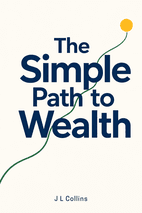
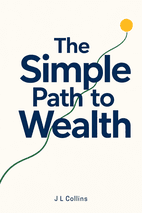
The Simple Path to Wealth book cover

What is the book The Simple Path to Wealth about?

J L Collins's The Simple Path to Wealth lays out a three-rule framework—spend less than you earn, invest the surplus, avoid debt—built around low-cost Vanguard index funds like VTSAX, with guidance on account types, withdrawal rates, and RMDs. Written for ordinary investors, especially young people and middle-class earners seeking financial independence.

FeatureInsta.PageBlinkist
Summary DepthFull Chapter-by-Chapter15-min overview
Audio Narration✓✓
Full access to all 800+ summaries✓✓
Visual Mindmaps✓✕
AI Q&A✓✕
Missing a book? Request it, usually live within 48h✓✕
Quizzes✓✕
PDF Downloads✓✕
Send to Kindle✓✓
Price$89.99/yr$146/yr (PRO)
*Competitor data last verified July 2026.

1 Page Summary

At its core, The Simple Path to Wealth argues that financial independence comes from three durable rules: spend less than you earn, invest the surplus, and avoid debt. J L Collins frames money as a tool whose most valuable purchase is freedom—what he calls "F-You Money"—the ability to choose, refuse, or wait rather than being held captive by a paycheck or debt. The book treats financial independence not as retirement but as options: the freedom to leave a job, change careers, travel, or step away without disaster. Collins is candid that complex investing mainly enriches its sellers while performing worse than simple approaches, and he repeatedly returns to the principle that when you control your money it works for you, and when you ignore it, it controls you.

The author's approach is deliberately simple, personal, and skeptical of the financial industry. Collins draws on his own history—saving on modest incomes, taking unpaid leave, leaving jobs, and building wealth through broad, low-cost index funds—and frames the book around his daughter's financial education, including a first-ten-years plan he wrote for her and a revised edition assembled with her. He recommends a concentrated approach built on Vanguard funds like VTSAX and VBTLX, one-fund target retirement funds, and an all-stock accumulation portfolio, while explaining why he avoids international funds, dollar cost averaging, investment advisors, stock picking, and market timing. He is equally direct about the mechanics that surround investing: buckets and account types, required minimum distributions, HSAs, withdrawal rates, Social Security timing, and charitable giving. Throughout, he stresses that markets rise over time but with violent swings that must be endured, that crashes are normal and panic-selling is the real danger, and that projections illustrate compounding rather than forecast the future.

The intended audience is ordinary investors—especially young people starting out, middle-class wage earners, and anyone who wants financial independence without spending a life thinking about money. The book promises that small, steady sums can grow substantially over time and that a high savings rate matters as much as income, while acknowledging that financial independence depends as much on keeping needs low as on what you have. Readers will gain a plain-language framework for getting out of debt, investing simply and cheaply, choosing accounts, drawing income in retirement, and avoiding the traps of complexity, advisors, and gurus. Collins is explicit that the path rests on capitalism and a free market of publicly traded stocks and low-cost index funds, that there is no such thing as complete safety, and that the only choice is which risk to carry—offering readers a roadmap aimed at a rich, free life rather than merely a wealthy one.

How We Got Here

Overview

Money is the most powerful tool for navigating the modern world, and almost nobody wants to spend a life thinking about it. That gap between what money demands and what people are willing to give it is where trouble starts. Closing that gap is harder than it looks, and the obvious answers rarely work.

Jessica, then a teenager, was the first audience: letters about money and investing she was not ready to hear became a blog, then this revised edition. She knew money mattered but did not want to spend her life thinking about it, and her reaction changed the approach. Money works for you when you control it; when you ignore it, it controls you. Most people have better things to do, which leaves them open to financial scammers who make investing complicated because complexity profits them and costs us. Complicated tools mainly enrich their creators and sellers while performing worse.

Three Rules

Three principles stay:

  1. Spend less than you earn.
  2. Invest the surplus.
  3. Avoid debt.

Follow them, Jessica was told, and you get rich in more than money.

Key Takeaways
  • Get your money into a state where it largely runs itself.
  • If a pitch makes investing sound complicated, it's priced for the seller's benefit. Prefer the plain approach you can explain to yourself over the clever one you cannot.
  • Treat the three rules as the whole framework, not a beginner's version of it.
  • Judge the result by what you become free to do rather than by the balance you build up; the point of getting this right is the life it opens up.

Key concepts: How We Got Here

How We Got Here

The Money Control Gap

  • Money is powerful, yet few want to think about it
  • Ignoring money lets it control you; control it instead
  • Complexity profits scammers and sellers, not investors
  • Prefer plain approaches you can explain to yourself

The Three Rules

  • Spend less than you earn
  • Invest the surplus
  • Avoid debt
  • Treat these as the whole framework, not a beginner version

Freedom as the Goal

  • Get money into a state where it runs itself
  • Judge results by freedom gained, not balance built
  • The point is the life it opens up
💡 Try clicking the AI chat button to ask questions about this book!

My Story: It Has Never Been About Retirement

Overview

If financial independence isn't an exit from work, then what's the money actually for? How much is enough when you don't want to stop working — you just want to be able to say no?

For him, financial independence was never about retirement. It was about options — the ability to refuse, the freedom that F-You Money provides. Work was mostly enjoyable, and being paid always was. Saving came naturally, and watching the balance grow felt thrilling. A promised red convertible at sixteen never arrived: his father's health failed, then his business, and the savings went to college. That taught him the world is financially risky. It's also how a middle-aged man ends up broke after twenty years on one job — he didn't manage his money.

The Term and the Point

The phrase, encountered in James Clavell's Noble House, gave a real goal a name he never forgot. In the novel a young woman seeks ten million to escape others' demands and control her time. For him, enough can be smaller: sometimes only enough to step aside for a while. He first had it at twenty-five with $5,000, saved over two years earning $10,000 a year, after two postcollege years of minimum-wage work. He wanted to travel.

Key Takeaways
  • Aim for the amount that lets you walk away from a bad situation, not the amount that lets you quit working forever. A few thousand dollars is often enough to buy yourself room to move.
  • Build that cushion during ordinary years, while the work is good and the paychecks arrive, so no employer or client ever holds your whole life in their hands.
  • Assume that promised help, family money and time on the job can disappear without warning. Arrange your finances so nothing you depend on sits outside your own control.
  • Treat a long working life with nothing set aside as a management failure you can still avoid, not a misfortune that just happens to people.
  • Give the goal a blunt name and a fixed figure. A vague wish stays a wish, but a labeled number gets saved toward.

Key concepts: My Story: It Has Never Been About Retirement

My Story: It Has Never Been About Retirement

Financial Independence as Options, Not Retirement

  • Money buys the ability to say no, not an exit from work.
  • Work was enjoyable; being paid always was.
  • Saving came naturally; watching the balance grow felt thrilling.

The Origin of F-You Money

  • Term from James Clavell's Noble House gave the goal a name.
  • In the novel, a woman seeks ten million to escape control.
  • For him, enough can be smaller: just enough to step aside.

First Taste of Freedom

  • At twenty-five, saved $5,000 over two years on $10,000 a year.
  • Followed two postcollege years of minimum-wage work.
  • The goal was to travel, not to retire.

Lessons from Financial Risk

  • A promised red convertible at sixteen never arrived.
  • Father's health failed, then his business; savings went to college.
  • Middle-aged broke after twenty years on one job is a management failure.

Practical Steps to Build Your Cushion

  • Aim for the amount that lets you walk away from a bad situation.
  • Build the cushion during ordinary years while paychecks arrive.
  • Assume promised help and family money can disappear without warning.
  • Give the goal a blunt name and a fixed figure.

Start Here

Overview

Most people treat a career as a single unbroken line. Stepping off it, even briefly, looks like a risk only the reckless or the wealthy can take. The real question is what makes leaving a job survivable instead of disastrous.

When a request for four months of unpaid leave was refused, he resigned and turned it into a negotiation: a six-week bicycle trip through Ireland and Wales, then a month of annual vacation that took him to Greece. F-You Money did more than fund travel; it gave him room to negotiate. He later left jobs four more times and was let go once, sitting out anywhere from three months to five years to change careers, pursue a business purchase, travel, or, in one case, with no plan. His daughter was born during one such unpaid stretch.

Family and Work

With money set aside, his wife left her job to stay home with their daughter. She had feared losing her sense of contribution, but being home with their daughter was worth more than any paycheck. It was the best purchase they made. During three years when neither worked, their net worth still grew, showing they had moved beyond F-You Money into financial independence.

The Three Things That Saved Them

A failed business search became consulting, then a client hired him at more than his old salary. At least one spouse working solved health insurance; in the early 1990s they bought a high-deductible catastrophic plan. Their investments stayed simple, with no cattle, gold, annuities, or crypto.

  • A steady 50% savings rate.
  • Avoiding debt, including never having a car payment.
  • Following the indexing lessons Jack Bogle, founder of Vanguard and inventor of index funds, perfected.

A $50,000 loss in Mariah International, a gold-mining penny stock, taught him stock picking is a losing pursuit. His only regret is all the time he wasted worrying.

Key Takeaways
  • Save enough that a refused leave request becomes a negotiation, then spend that leverage on the life you want: travel, caregiving, a career change, or an unplanned pause.
  • Settle health coverage and household roles before either partner stops earning, so one income can carry the family without turning caregiving into a financial emergency.
  • Build the plan on three simple pillars at once: a steep savings rate, no debt including car loans, and broad low-cost index funds; together, these let your wealth grow even when neither adult is working.
  • Skip stock picking; the loss hurts, but the worry and attention it consumes cost more over time.

Key concepts: Start Here

Start Here

F-You Money as Leverage

  • Savings turn a refused leave request into a negotiation
  • He left jobs five times, pausing three months to five years
  • Pauses funded travel, career changes, and caregiving
  • Money buys room to choose, not just time off

Family and Work Tradeoffs

  • Wife left her job to stay home with their daughter
  • Caregiving was worth more than any paycheck
  • Net worth grew during three years neither worked
  • They moved beyond F-You Money into financial independence

The Three Pillars That Saved Them

  • A steady 50% savings rate
  • Avoiding debt, including never having a car payment
  • Broad low-cost index funds following Jack Bogle's lessons

Settle Logistics Before Stopping Work

  • Secure health coverage before either partner stops earning
  • One income can carry the family without financial emergency
  • Define household roles so caregiving isn't a crisis
  • Consulting and a client hire replaced a failed business search

Skip Stock Picking

  • A $50,000 penny-stock loss proved picking is a losing pursuit
  • The worry and attention cost more than the money lost
  • His only regret is the time wasted worrying

Things Change; the Principles Remain

Overview

Every few years brings a new crisis, a new technology to fear, and a new way to speculate, and each time it feels like the old rules no longer apply. The real question is whether an approach built to last for decades can survive all that noise without changing.

The Daughter Test

The revision was put together with the author's daughter. Her financial education began with childhood conversations he worried had pushed her away from the subject entirely. She came around, and by her early thirties she was nearing financial independence herself. She teases that if she had listened as a child, there would have been no blog, no Chautauquas, no book, and no new edition.

The Principles Still Hold

Readers keep asking whether the approach survives the decade's disruptions: inflation coming back and higher interest rates, the first pandemic in a century and the crash that followed, Bitcoin and meme stocks, global warming, new wars. Every era feels unprecedented from the inside, and the details shift, but the uncertainty never goes away. From 1975 to 2025, the S&P 500 rose an average of 12.2% a year, according to the book.

Think in lifetimes, not market cycles: one lifetime following the path, then the same again for heirs. The author learned these lessons the hard way over many years. The letters, blog, and book exist to point out the pitfalls and save the reader part of that cost.

Key Takeaways
  • Treat each new crisis as a repeat with different details. The assets, the villains, and the headlines change, but living through something your plan never anticipated is the one thing you can count on, so expect the feeling rather than each instance.

  • Judge your strategy across seventy or eighty years, then across the same span again for whoever inherits it. Any shorter frame turns ordinary ups and downs into a reason to sell.

  • Expect the people you most want to teach, your own children included, to absorb the lessons on their own timetable and often decades later. Put the reasoning in writing instead of relying on one conversation.

  • Hold the principles and drop the predictions. Forecasts are tied to a moment that has already passed, while the principles were paid for over fifty years of trial and error.

Key concepts: Things Change; the Principles Remain

Things Change; the Principles Remain

The Daughter Test

  • Revision co-created with the author's daughter
  • Her financial education began with childhood conversations
  • By her early thirties she neared financial independence
  • Lessons absorbed on her own timetable, decades later

Principles Survive Disruption

  • Each decade brings new crises, technologies, and speculation
  • Inflation, pandemic, Bitcoin, meme stocks, wars all felt unprecedented
  • Details shift but uncertainty never goes away
  • S&P 500 averaged 12.2% a year from 1975 to 2025

Think in Lifetimes

  • Judge strategy across seventy or eighty years
  • Then repeat the same span for heirs
  • Shorter frames turn ordinary ups and downs into reasons to sell
  • Author learned these lessons the hard way over many years

Expect the Feeling, Not Each Instance

  • Treat each new crisis as a repeat with different details
  • Assets, villains, and headlines change; uncertainty stays
  • Living through the unanticipated is the one certainty
  • Expect the feeling rather than predicting each event

Hold Principles, Drop Predictions

  • Forecasts are tied to a moment already passed
  • Principles were paid for over fifty years of trial and error
  • Put reasoning in writing instead of relying on one conversation
  • Teach by written reasoning, not a single talk
You've reached the end of the free chapters

Read less, remember more

Keep reading The Simple Path to Wealth — and unlock all 800+ book summaries with audio, mindmaps and AI Q&A.

$0.00 due today · 7 days free, then $89.99/year ($7.49/mo) · Cancel anytime before day 7

plus sales tax where applicable

About the Author

J L Collins

J L Collins is an American financial author and blogger best known for his book The Simple Path to Wealth and his long-running blog Stock Series. A former early retiree, he has built a following for his straightforward, index-fund-focused approach to investing and financial independence. His writing draws on decades of personal investing experience aimed at helping ordinary readers achieve financial independence.

Frequently Asked Questions about The Simple Path to Wealth

What is The Simple Path to Wealth about?
It lays out a straightforward approach to money built on three rules: spend less than you earn, invest the surplus, and avoid debt. It covers debt, F-You Money, market crashes, low-cost index funds such as VTSAX and VBTLX, asset allocation, retirement accounts, HSAs, withdrawal rates, Social Security, and charitable giving. Throughout, it stresses financial independence as freedom and options rather than retirement, and argues that simple, low-cost investing beats complexity.
Who is the author of The Simple Path to Wealth?
J L Collins is the author, and the material grew out of letters about money and investing written to his daughter, Jessica. Those letters became a blog and later a revised edition, with his daughter helping with the revision. He writes from personal experience about financial independence, F-You Money, investing, and keeping money simple.
Is The Simple Path to Wealth worth reading?
It is worth reading for its clear rules and practical tools for ordinary investors, from getting out of debt to building a low-cost index-fund portfolio and planning withdrawals. The advice is deliberately simple, cost-conscious, and built for decades, with candid lessons about market crashes and investor behavior. It suits readers who want financial independence without watching the market constantly or paying for complicated products.
What are the key lessons from The Simple Path to Wealth?
The core habits are to spend less than you earn, invest the surplus, and avoid debt, with a high savings rate speeding the path to freedom. Investors should favor broad, low-cost index funds, keep costs low, and avoid market timing, stock picking, and fund-manager selection. Building F-You Money provides the freedom to refuse bad work situations and make choices on your own terms. Market drops are normal and should be endured or used as buying opportunities rather than reasons to panic-sell.
0