⚠️ READER ADVISORY: This is a deep-dive summary designed for those who want the full story. Contains spoilers.
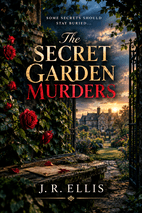
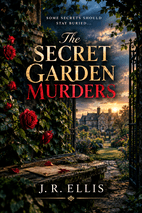
What is the book The Secret Garden Murders about?
J. R. Ellis's The Secret Garden Murders follows DCI Oldroyd as he investigates Clarissa Morden's strangling inside a Yorkshire walled garden locked from within, then a second body found in a river. A measured British police procedural for readers who love atmospheric village settings and methodical puzzles.
Feature
Insta.Page
Blinkist
Shortform
The Secret Garden Murders
✓
✕
✕
Summary Depth
Full Chapter-by-Chapter
15-min overview
Section-by-section guides
Audio Narration
✓
✓
✓
Visual Mindmaps
✓
✕
✕
AI Q&A
✓
✕
✕
Quizzes
✓
✕
✕
PDF Downloads
✓
✕
✓
Price
$89.99/yr
$146/yr (PRO)
$199/yr
*Competitor data last verified July 2026.
1 Page Summary
In the historic walled garden of a Yorkshire estate, a woman seeking privacy for a quiet meeting instead seals herself inside with a killer—and by the time the locked, bolted door is forced open, Clarissa Morden is dead on a bench, strangled with a ligature that was never left behind, her body arranged as though she were merely resting. DCI Oldroyd arrives to a scene that offers almost nothing to work with: no weapon, no traceable leads, and a door locked from within whose seal has already been broken by the gardeners who found the body. As he and his team begin piecing together Clarissa's connections, a second grim discovery at a quiet riverbank raises the chilling possibility that they are no longer hunting a single, isolated crime.
Oldroyd's inquiry unfolds against the rhythms of village life—the restored organic garden and its circle of volunteers, the upcoming Gardens Open event, and the small, human tensions that run beneath them—while the investigation reaches into old professional rivalries and buried grievances. A staff list produces a name tied to Clarissa's past at a Leeds accountancy firm, turning a background figure into a suspect and opening a history of accusation and resentment that the man has kept hidden from his own family. Alibis are offered and tested, witnesses surface with fragments of description, and the pressure of the case presses in on Oldroyd even as he tries to protect a fragile relationship with Deborah and the quiet rituals of his weekend.
Told with the measured pacing and procedural texture of a classic British police mystery, The Secret Garden Murders blends a seemingly impossible locked-garden killing with the slow untangling of motive and opportunity among people who all seem to be concealing something. Readers who savor atmospheric Yorkshire settings, methodical detective work, and puzzles built on secrets kept behind closed doors will find themselves drawn into Oldroyd's most quietly unsettling case yet.
Prologue
Clarissa Morden chooses the walled garden for a private meeting, a place she believes will keep her conversation away from prying eyes. Once inside, she locks herself in at the killer’s instruction. The walls that promised privacy now guarantee that no one can reach her.
The hooded, gloved killer has come to the garden with a single purpose, to end Clarissa’s life. There is no argument, no negotiation, only the ligature drawn tight. The killer strangles her on the bench, and the garden that was meant to shelter a quiet conversation becomes the place where she dies.
The killer doesn't want chaos. The killer wants calm. The killer takes Clarissa’s phone, her purse, and her key, then arranges her body on the bench so that she might appear to be resting rather than murdered. The door is bolted from the inside and then relocked. The killer manages every detail so the scene will hold its secret for as long as possible.
The killer’s final concern is escape without being seen. Rather than leaving through the door or climbing the walls, the killer departs by a secret way, a route kept hidden from anyone who might later try to reconstruct what happened. The garden is left locked with Clarissa inside.
The Locked Door
Richard Cooke and Jenny Brown arrive at the walled garden expecting to begin their work. Instead they find the lock blocked, a key inserted from the inside. The door will not open, and the ordinary start of a working day turns into a puzzle. Richard wants to raise the alarm and get inside. He shouts through the door, hoping for an answer, then pokes the inner key out through the lock. Even with the key displaced, the door still will not yield, because the bolt has been drawn.
Richard tries to make sense of what he is seeing. He checks with Fred Jenkins and with the manager, June Kendal, but neither can offer any explanation for why the garden should be locked from within. The questions multiply, and no answer comes.
Fred decides that waiting is no longer an option and forces entry. He saws through the bolt, and the group is able to push the door open and step into the garden.
The Figure on the Bench
Jenny is the one who wants to find out who is there, and she spots a figure on the bench. The group rushes over, and Richard and Jenny move to help the woman. What they find stops them: Clarissa’s body bears ligature marks, and her eyes are open. She is dead.
Richard needs to confirm what he already fears. He touches the cold body, and the truth of it settles over him. Jenny gasps, and the others turn away, unable to keep looking.
The discovery transforms everyone in the garden. The gardeners and staff who came to work are now witnesses to a murder scene, their routine morning shattered. The garden is no longer a place of quiet work. It is a place of death, and the locked door and hidden exit have made certain that whoever did this is already gone.
💡 Try clicking the AI chat button to ask questions about this book!
One
DCI Oldroyd stands in the walled garden, waiting for pathologist Tim Groves to finish with the body. What he wants first is the cause of death, and Groves gives it to him: the victim was strangled roughly eighteen hours earlier with a rope that was not left at the scene. Groves adds that she was most likely sitting unaware when the ligature was slipped around her neck. It is a murder method but not a forensic gift. There are no leads to pull, nothing left behind to trace.
Oldroyd leaves the garden to interview the witnesses, wanting to establish how the body was found. DC Hardiman tells him the gardeners discovered it. Richard Cooke and Jenny Brown then lay out the problem that will define the case: the garden door was locked and bolted from the inside, with the key still in the lock. A locked room, apparently sealed from within. Richard explains how they got in anyway. He pushed the key out with a stick, and Fred sawed the bolt in two. Oldroyd takes the keys, but the door is now compromised as evidence, its seal destroyed by the very men who found the body.
Oldroyd examines the door and the walls, wanting an escape route. He finds none. There are no other doors, no ladder, and nothing in the garden secure enough to anchor a rope. Then Richard reports that one of the three walled-garden keys is missing from the shed. The killer likely had a key. Jenny says they worked elsewhere yesterday and never visited the walled garden, which narrows the window in which that key could have been taken. Oldroyd learns the victim is Clarissa Morden, identified by hall staff and villagers, and decides he will visit her cottage later. He asks the gardeners about access to the keys and is told the location was no secret, which widens the suspect pool to staff and volunteers alike.
At the hall, Oldroyd questions manager June Kendal. She describes Clarissa as a harmless elderly village woman with no known enemies. Paul Nelson recalls selling her a ticket yesterday and says she seemed normal, establishing her last known movements before the murder. Oldroyd draws the conclusion the case now points toward: Clarissa came to meet someone, someone who gave her a key to the out-of-bounds garden. A planned meeting with her killer. June confirms the door was locked and bolted from the inside and that the bolt had to be sawn through, reinforcing the impossibility of the killer simply walking out.
Oldroyd arranges a CCTV review and an incident room, then calls DS Andy Carter to join the investigation. Then the ground shifts. Alone in the entrance hall, June Kendal phones someone. She says the police are there, but she can handle it. She says Clarissa is dead, and then she says, "it's all over." Whatever June knows, she is keeping it from Oldroyd.
Oldroyd and Andy return to the walled garden to inspect the crime scene themselves. They confirm that the only entrance was locked and bolted from the inside, deepening the mystery of how the killer got in and out. Oldroyd studies the walls, but they are too high and smooth to climb, and there are no ladder marks in the soft ground. The escape remains unexplained, and the impossibility of it nags at him.
Oldroyd organizes the investigation. He assigns Andy, Walsh, and Hardiman to search the garden thoroughly, and sends Newbold to search Clarissa Morden's house. He buys sandwiches for lunch, but as he moves through the village he is recognized, and he realizes news of the murder is spreading fast.
The Staffroom
Georgina Eliot informs the staffroom about the murder, and the teachers are shocked. A debate breaks out about what to tell the pupils. Laura Thornton wants to keep the school day normal, but she wonders whether the children will become too excited to concentrate if they hear about the murder.
Verifying the Account
Oldroyd and Andy check Paul Nelson's account against the CCTV, which confirms that Clarissa arrived alone and that no one climbed the garden walls. The search of Clarissa's cottage yields nothing significant, though the officers bag documents for further examination. Oldroyd arranges for Clarissa's two cats to go to a cat rescue rather than be separated.
Margaret Summerfield's Revelation
Margaret Summerfield asks to speak privately with Oldroyd and leads him into her house. She reveals that Clarissa accused her of helping her husband die and tried to extort money from her. Clarissa, she says, was a blackmailer who may have given half the village a motive to kill her. Oldroyd sees the blackmail lead opening many suspects, but he knows no one is likely to volunteer information.
The Shed
Andy reports on the garden search: no escape route, no ladder marks, no hiding places. Oldroyd inspects an outside shed Andy found, a potting-shed extension with no door into the walled garden, and the puzzle only deepens. To identify Clarissa's blackmail victims, Oldroyd decides to examine the recovered documents and assigns Sharon Warner to build a profile of the victim and the suspects.
Oldroyd and Andy want to find how the murderer left the walled garden, but their search of the shed and outer path turns up no evidence or escape route. The shed holds nothing useful, and the path beyond the wall offers no sign of a hurried exit. The impossibility of it nags at Oldroyd: someone got in, killed Clarissa Morden, and got out without leaving a trace.
Oldroyd wants to identify this impossible escaper, but DC Newbold's call interrupts him and redirects the investigation to Clarissa Morden's cottage. Whatever theory was forming has to wait. Newbold has found something, and the team's attention swings to the dead woman's home.
Austin wants to preserve his powerful public image and secret affairs, but news of Clarissa's murder makes him reflect uneasily on how much she may have learned about him. The man who cultivates control and discretion now has to wonder what a blackmailer knew, and who else might come to know it.
The Loft
Oldroyd and Andy want to see what Newbold found, and they climb into Clarissa's loft to discover her blackmailing headquarters. The space is given over entirely to her operation. Oldroyd wants to understand her methods, and he discovers her telescope with a night setting that gives a clear view of the whole village. From this perch she could watch the comings and goings of everyone below.
Newbold wants to show what was recovered, and the notebooks reveal Clarissa obsessively recorded the villagers' movements and routines. Every arrival, every departure, every habit is logged. Andy wants to search the old desk thoroughly, and he finds a hidden coded ledger recording dates, code names, and payments. Oldroyd wants to identify the blackmail victims, but the code blocks them. He decides to send the ledger to Harrogate and bring in Sharon to crack it.
Oldroyd wants a theory of the murder, and he decides it looks like an "OTM": a blackmailer killed by a victim who had had enough. The telescope, the notebooks, the ledger, all of it points to a village full of people with something to hide and a reason to want Clarissa silenced.
Aftermath
Paul wants to get through police questioning without revealing too much, and he is allowed to go home but remains shaken by Oldroyd's scrutiny. The interview leaves its mark. Paul wants to avoid further questions from his neighbour Don, and he deflects the conversation but agrees to go to darts to get out of the house. Laura wants to keep her private life and teaching career separate, and a message from her secret lover lifts her mood but shows how isolated she remains.
Oldroyd wants to relax after the case's difficulties, but Deborah reminds him he has promised to help with the village Gardens Open and plant stall. Oldroyd wants to avoid letting Deborah down, but he admits the case may force him to work that day, exposing the recurring conflict between his job and his personal life. Alison wants to reconnect with her brother and Deborah, and over tea she questions Oldroyd about his cooking and personal habits. Oldroyd wants to show he has made progress, but Deborah's story about his disastrous stir fry turns his attempt at domestic competence into a family joke.
Alison asks Oldroyd to cook without chili peppers next time, wanting playful banter. The exchange relieves his stressful day but changes nothing. She then asks where his case is, wanting connection, and discovers her old friend Margaret Summerfield lives next door to the victim. Alison decides to call Margaret tomorrow to support her grieving friend, deepening her personal stake in the murder.
Deborah explains the stages of illness denial, wanting to illuminate human behavior, and Oldroyd reflects on the case. He halts the heavy talk, wanting relief from death and frailty, and the conversation shifts to the Gardens Open. Silently, sparked by something said at dinner, Oldroyd begins piecing together a theory, wanting to solve the case.
Anne Lennon enters the pub claiming she knows who did it, wanting to prove her theory before going to police, shocking the group. Nathan challenges and mocks her, wanting to dismiss the claim, but Mark takes her seriously and asks if the killer is someone in the village. Anne refuses to reveal more, wanting to avoid false accusations, and the group learns nothing further.
Two
Richard takes the phone into the bathroom so his wife’s early call won’t disturb Adele, straining his morning routine to keep the conversation contained. Gabrielle wants extra money for the children’s shoes, their uniform, and Daniel’s geography trip, forcing Richard to confront the financial pressure he has been carrying. He tries to limit the cost, questioning why the school does not pay and how Gabrielle spends the maintenance money, but the demand comes to roughly two hundred pounds. Rather than risk an immediate row with Adele, Richard ends the call abruptly and postpones the money discussion until the evening. Adele wants to know who rang and whether more money is being demanded, and her questions only sharpen Richard’s anger and worry before he leaves for work.
The Walled Garden
Oldroyd wants background on the walled garden, so he questions June Kendal and learns it was built in the 1780s and later abandoned. June wants to explain the garden’s revival, so she describes Adam Burnage’s organic plan and the volunteers’ clearance work, revealing how recently the garden was restored. Oldroyd wants to understand the murder escape, so he asks about the outside lean-to shed and learns it has no door into the walled garden and no known purpose. Hoping for original plans, he asks about records, and June offers him access to the locked library and archive, opening a new line of inquiry. Oldroyd wants to know whether Clarissa Morden had links to the hall, but June’s answers reveal only that she was well known in the village and was seen by Paul Nelson at the entrance. Oldroyd wants more witnesses, so he asks about suspicious sightings on Wednesday, but June confirms no one else reported seeing Clarissa arrive.
Progress and Pressure
Walker wants to vent about Chief Constable Watkins’s business-efficiency consultants, delaying Oldroyd until Oldroyd redirects him with news of progress. Oldroyd wants to keep his boss supportive, so he reveals that Clarissa was a blackmailer and that a coded list of victims has been found, turning the case toward multiple suspects. Oldroyd wants to test Paul Nelson, so he orders Andy to press him again and to trace everyone present on Wednesday, widening the suspect pool. Oldroyd wants to solve the locked-garden escape, so he returns to the walled garden and questions Richard and Jenny about their work and length of service.
The School and the Village
Laura wants to get through the school day, but a text message and the head teacher’s announcement that Austin Lewis will speak about the murder unsettle the staffroom. Anne wants to prove her murder theory before going to the police, but Bill warns her that withholding information and investigating alone could put her in danger.
Richard leads Oldroyd out to the kitchen garden, determined to show him that everything there runs exactly as it should. He walks the inspector through the beds and the routines, presenting the garden as a place of ordinary, unremarkable work. For Oldroyd, the tour yields nothing incriminating at all, and he leaves it frustrated, no closer to an answer than when he arrived.
Still hunting for a lead, Oldroyd asks Richard and Jenny whether they have noticed anything unusual. Their denials come quickly, but the looks they exchange with each other do not escape him. The silent exchange changes nothing in the investigation, and Oldroyd is left with the sense that something is being held back without any way to prove it.
He goes back over the keys with Richard, wanting to confirm exactly who could have had access to the garden. Richard's answers only deepen the mystery: the door key was stolen. The locked garden becomes more puzzling rather than less, and Oldroyd departs with nothing but frustration and the nagging conviction that he is missing something he ought to see.
At reception, Andy interviews Paul, asking him to walk through Wednesday's events once more. Paul's account confirms what the police already suspect: Clarissa went off alone, out of sight of anyone who might have watched her. Andy then presses him on how well he really knew Clarissa, testing him, and Paul admits to only a slight acquaintance while seeming nervous under the questioning. Andy asks whether anyone followed Clarissa, hoping for a witness, but Paul says no. The interview ends with nothing new.
Margaret and Alison
Margaret works in her garden, turning over her broken friendship with Clarissa and trying to make sense of her death. The neglect next door weighs on her, and she feels the loss of both the woman and the connection they once had. Then Alison calls, wanting to offer comfort, and reveals that Oldroyd is her brother. The news gives Margaret a direct connection to the case, and she agrees to Alison's visit, wanting company and information both. She decides to use the connection to learn more about the murder.
The Hall
June sits at her desk trying to appear normal, but her hidden stake in the case makes her jumpy and unable to concentrate. Paul returns from Andy's grilling wanting sympathy and admits he was treated as a possible suspect or accomplice. June leaves to ask the detectives about reopening the hall, managing the place while privately carrying her secret worry.
Lesley and Paul discuss the murder, trading theories, and Paul argues that the crime was carefully planned and likely involved more than one person. Austin Lewis addresses the staff to reassure them, but Georgina dismisses his speech as pompous and pointless.
The Press Conference
Oldroyd holds a press conference, aiming to pressure the killers into a mistake. He reveals that Clarissa was a serial blackmailer, turning the case into a village scandal. He tells the reporters that more than one killer may be involved, hoping to prompt errors, and admits the police do not know how the killer escaped.
Afterward, Sharon shows Steph Clarissa's coded ledger, wanting help with the case. Oldroyd's request that she crack it makes the blackmail records the investigation's key turning point.
Steph doesn't soften her warning. She tells Sharon plainly that pride must not stop her from admitting defeat, and she presses until Sharon promises that if she cannot solve the case, she will pass it on. The promise costs Sharon something to give, but she gives it.
At the station, Andy reports to Oldroyd that Paul Nelson stuck to his story under questioning. Oldroyd accepts that Nelson is likely telling the truth, with one condition: unless Nelson's name turns up on the blackmail victims list. That list now carries the weight of the whole inquiry.
Oldroyd turns the walled garden over in his mind and reasons it through. Clarissa Morden followed instructions into the garden and locked herself in. The killers set a trap she never suspected. The old maps and the gardener interviews give him nothing new, but his attention keeps returning to the unexplained extension on the wall. He cannot say yet why it matters, only that it does.
He and Andy break for lunch at the pub, parking the case until DC Warner produces the blackmail victims. The investigation waits on that list.
Nathan teases Anne about her sleuthing and drives off, leaving her annoyed and determined to get the last word. The sting of it settles into a decision. Anne resolves to secretly investigate her suspect to prove her theory. If she is right, she humiliates Nathan. If she is wrong, she avoids her own humiliation. Either way, she needs proof before she speaks.
June Kendal arrives home stressed, and John comforts her with wine while she worries about the police investigation. June fears the police will learn she was one of Clarissa Morden's blackmail victims and suspect her. She regrets not telling them. John reassures her that the blackmailer's secret likely died with her, and he points to June's office alibi. She agrees to a day trip to York, letting the outing stand in for the reassurance she cannot quite feel.
Oldroyd, frustrated by the locked-garden puzzle, listens to Beethoven and falls asleep until Deborah wakes him. Deborah recruits him to unload the shopping, and they agree on a single glass of wine, with Deborah warning him about Parkrun. Then she offers to look for her father's old gardening books, a small kindness that might help him crack the walled garden mystery.
Anne stakes out a Harrogate restaurant in the cold and sees her suspect leave and drive off. The sight confirms her suspicions. She decides she now has the information she needs and considers going to the police soon, but resolves to wait.
Three
Oldroyd makes a deliberate choice to guard his weekend, and it costs the case precious time. Rather than pushing forward on the investigation, he protects his personal hours, and the trade-off preserves something fragile: his relationship with Deborah. The case waits. Deborah does not.
The Parkrun and the Pine Woods
Deborah and Oldroyd complete the Harrogate Parkrun together, then walk through the pine woods afterward. The outing costs them nothing but strengthens their bond, a quiet stretch of shared effort and easy company that stands in contrast to the pressure closing in on the case.
The RHS Shop and the Alliums
Deborah buys alliums at the RHS shop to enhance their garden display, a small purchase that commits her to the Gardens Open event. What begins as an aesthetic choice becomes an obligation, and the obligation pulls her deeper into the lives of the volunteers she is meant to coordinate.
Checking on the Volunteers
Deborah checks on the garden event participants and discovers that several volunteers are anxious and difficult. The mood among them is frayed, and she finds herself managing people as much as plants.
She reassures Mr James about his narcissus, resolving his worry about the open day. She confirms to Mrs Arthington that she need not admit visitors to her house or toilet, easing her fears. She advises Mr Anderton to put down lawn protectors, resolving his concern about his lawn. Each visit is a small crisis smoothed over, one nervous gardener at a time.
Beatrice Simpson and the Book
Deborah visits Beatrice Simpson, and together they discuss why the volunteers are so stressed. They conclude it comes down to pride, competition and obligation, the three pressures that turn a pleasant open day into a battlefield of expectations. Beatrice lends Deborah a book on walled kitchen gardens for Oldroyd, hoping it will inspire him.
Confronting the Workaholic
Deborah urges Oldroyd to get up and pursue hobbies, confronting his workaholism directly and warning him not to get too absorbed in work. The challenge lands. Oldroyd agrees to a walk up Beamsley Beacon, setting aside the borrowed book and choosing leisure over the case. For once, the investigation loses.
Roundhay Park
Steph and Andy take Jamie to Roundhay Park, rediscovering nature and reflecting on how parenthood changed them. The outing is a pause of its own, a family reconnecting with the outdoors while the world around them carries on.
Sharon and the Code
Sharon Warner struggles with the code all weekend, feeling the weight of responsibility to Oldroyd. The pressure is hers alone, and it does not let up. Then she discovers that the rhyme "I will pour / When me and you / Take tea" is a key to a three-stage shift code. The breakthrough opens the lock. Sharon cracks the code and reads the victims' names, messaging Oldroyd in triumph.
Mark Moorhouse at Rustic Furniture
Mark Moorhouse arrives at Rustic Furniture and is warned by Anne Lennon that she is closing in on her suspect. The warning unsettles him, and he leaves with the sense that the ground beneath him is shifting.
Harrogate Station
Oldroyd meets Sharon at Harrogate station and learns the code reveals June Kendal and a list of suspects, advancing the investigation sharply. What Sharon pulled from the rhyme over the weekend now has names attached.
Richard and Jenny
Richard and Jenny discuss the locked-garden murder while gardening, and Jenny refuses to work in the kitchen garden alone out of fear. The murder has reached into ordinary afternoons, and the kitchen garden, once a place of quiet labor, now feels like somewhere she will not go by herself.
Oldroyd and Andy want to decode Clarissa’s notebook, convinced it holds the key to her death. The decoded names give them a major lead but also expand the suspect list, turning a narrow inquiry into something far larger. Andy wants to prioritize the most recent blackmail victims, and Oldroyd agrees to start with June Kendal while Philip Newbold continues decoding in the background.
The Notebook and June Kendal
Oldroyd and Andy want to confront June with the notebook, and she admits Clarissa blackmailed her over her hidden first marriage. June wants to explain her past, and she reveals she forged her first husband’s death certificate to marry John. Oldroyd wants to establish the blackmail method, and June’s account shows Clarissa gained trust, researched secretly, bluffed, then demanded money. Oldroyd wants to test June’s alibi and knowledge of the murder scene, and she insists she was seen in the hall and knows nothing about the locked garden. The confrontation yields a confession of the secret but no confession of murder, leaving June exposed yet still standing.
Margaret and the Village
Alison wants to support Margaret and assess the village’s mood, and their conversation reveals Margaret’s composure but yields no direct case breakthrough. The village itself is tense, watching, and the talk between the two women shows how much the murder has unsettled everyone without offering Oldroyd anything he can use.
New Names, New Leads
Oldroyd and Andy want to narrow the suspect list, and the decoded notebook produces new names including Mark Moorhouse and Laura Thornton. Oldroyd wants to pursue the new leads, and he splits the investigation between the school and Rustic Furniture while warning the killer may be an older revenge case. Andy wants to confirm forensic limits, and the reports show Clarissa was strangled with a nylon cord and the garden door had no secret mechanism. The physical evidence closes off the locked-garden theory and points the inquiry back toward people.
Rustic Furniture and the Parish Council
Austin wants to appease Jeanette and inspect the table, and his visit to Rustic Furniture places him near the police inquiry without advancing the case. Nathan wants to mock the parish council’s importance, and Bill defends the council while the murder becomes a community crisis. Austin wants to insert himself into the investigation, and he name-drops his connections to Oldroyd but only makes himself look foolish. The village men bicker while the real inquiry moves on without them.
Mark Moorhouse
Oldroyd and Newbold want to question Mark Moorhouse, and Bill’s worried reaction shows Mark is known and vulnerable. Mark wants to deny guilt immediately, and Oldroyd confronts him with Clarissa’s blackmail over his criminal record. Mark wants to explain his past, and he admits he hid his theft conviction to start a new life, giving him a motive for murder. The interview leaves Mark exposed, his secret out, and the suspect list no shorter than before.
Mark Moorhouse sits in the interview room protecting the one thing he cannot afford to lose: his job. He admits he has been paying Clarissa Morden steadily for years to keep his conviction quiet, blackmail money that has been bleeding him dry. Oldroyd presses on motive and alibi, and Mark confirms he was working on Wednesday afternoon with witnesses present. The alibi holds, but it does not clear him. Oldroyd tells him plainly that he remains a suspect and cannot leave the area, a warning that lands hard on a man already watching his life come apart. When Oldroyd weighs Mark as a suspect, he concludes the man would have needed an accomplice and shows no sign of garden knowledge, leaving him in the frame but incomplete.
Laura Thornton at the School
Andy and DC Walsh arrive at the school to interview Laura Thornton, and their presence causes an immediate stir among the staff. Someone has to be found to cover her class while she is questioned. Laura tries to wave the whole thing away, dismissing the investigation as nonsense, but her composure collapses when Andy reveals they know about the blackmail payments and about her affair with Austin Lewis. Cornered, she admits the affair and concedes that Austin sat on her job interview panel, a detail that sharpens the conflict of interest. Andy pushes on motive, and Laura gives a callous admission: she is glad Clarissa is dead. The interview does not end there. Her alibi, a training course in York, must now be checked, and she is warned not to leave the area. She tries to keep Austin out of it, but Andy tells her Austin is a suspect too and will be questioned.
Comparing the Interviews
Oldroyd's team gathers to compare the suspect interviews, and the picture that emerges is frustratingly symmetrical. All three suspects were being blackmailed by Clarissa, and all three remain in the frame with no frontrunner. Oldroyd widens the investigation, setting the team to checking alibis and tracing older victims who moved away from the area.
The River Ure
Anne Lennon sees an opportunity in Clarissa's death. She intends to step into the dead woman's shoes and take over the blackmail herself, and to that end she arranges a meeting with the murderer near the River Ure. She wants the meeting to happen safely in public, but her caution is undone when she stops for a stumbling figure in the road. The two assailants move to silence her. They bind her, hood her, and push her off the bridge into the river, and Anne is gone. Within four minutes the killers reach their concealed vehicle and drive away unseen.
You've reached the end of the free chapters
Next chapter: “Four” is locked
Keep reading The Secret Garden Murders — and unlock all 700+ book summaries with audio, mindmaps and AI Q&A.
$0.00 due today · 7 days free, then $89.99/year ($7.49/mo) · Cancel anytime before day 7
J. R. Ellis is a British author best known for his Yorkshire Murder Mysteries series, including The Body in the Dales and The Quartet Murders, featuring DI Oldroyd. A former teacher and school inspector, he writes traditional detective fiction set in the north of England, drawing on his deep knowledge of the region's landscapes and communities.
Frequently Asked Questions about The Secret Garden Murders
What is The Secret Garden Murders about?
When Clarissa Morden is found strangled on a bench inside a walled garden that was locked and bolted from within, DCI Oldroyd is handed a puzzle with almost nothing to work with: no weapon, no witnesses, and a scene carefully arranged to look like rest rather than murder. As he and pathologist Tim Groves dig into the victim's past, the inquiry widens when a second body is pulled from the river, bound, hooded and gagged. The stakes rise as Oldroyd must work out whether the deaths are connected while the volunteers restoring the old garden, and the people closest to the case, carry secrets of their own.
Who is the author of The Secret Garden Murders?
J. R. Ellis writes traditional British detective fiction, and this is a DCI Oldroyd mystery in that series. The books follow a Yorkshire-based investigating team through carefully constructed, puzzle-driven cases rather than fast-paced thrillers. Readers who enjoy classic procedural mysteries with a strong sense of place will recognise the style.
Is The Secret Garden Murders worth reading?
It is a satisfying read for anyone who loves a genuine locked-room puzzle, with a sealed garden, a staged body and a killer who has thought through every detail. Oldroyd is an appealing, methodical detective, and the supporting cast of pathologists, detectives and garden volunteers gives the investigation plenty of texture. The Yorkshire setting and the restoration of the walled garden add atmosphere to a case that keeps producing new threads.
What are the main themes in The Secret Garden Murders?
The novel circles around concealment: a garden built for privacy becomes a trap, and nearly everyone connected to the case is hiding something, from an old workplace grievance to quiet financial strain at home. Deception and staging matter too, since the killer arranges the scene to buy time and slips away by a route no one is meant to find. Alongside the puzzle runs a thread about relationships and trust, including the cost of protecting a personal life while a murder inquiry demands everything. Community and restoration also shape the story, as volunteers pour effort into reviving an abandoned garden while the violence around them pulls it apart.
📚 Explore Our Book Summary Library
Discover more insightful book summaries from our collection