The Secret Garden Murders Book Club Questions
by J. R. Ellis
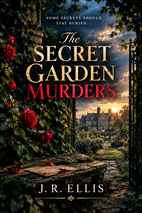
These questions assume everyone has finished the book and contain spoilers, including the ending.
This novel gives book clubs plenty to argue about: hidden motives, blackmail, loyalty, and how ordinary people justify bad choices. The garden setting and the notebook clues also invite readers to compare what they noticed and when, without making the discussion feel like a quiz.
Use these questions as a menu rather than a checklist. Pick the ones that fit your group's energy, give people a minute to gather their thoughts, and let disagreements breathe. If your group is spoiler-sensitive, agree before the meeting how much plot detail is fair game.
Puzzles, Clues, and the Secret Garden
- 1.How satisfying did you find the solution to the locked walled garden? Oldroyd only realizes the method after reading Beatrice Simpson's book and examining the wall extension, coal chute, and removable cold-frame panel, so did the clues feel fairly planted or too dependent on that late discovery?
- 2.The walled garden is repeatedly called the 'secret garden' and is described as both a shelter and a trap, while Andy's bath-time conversation with Steph about The Secret Garden gives him a vague thought about a hidden door. How effectively did the novel connect that garden imagery to the hidden lives and blackmail records in Clarissa's notebook?
- 3.Sharon Warner cracks Clarissa's three-stage shift code and Steph warns her not to let pride stop her admitting defeat, while Oldroyd praises Sharon's work. How did this code-breaking subplot affect the investigation for you, and did it make the blackmail ledger feel like a credible engine for the plot?
Secrets, Blackmail, and Hidden Motives
- 4.June Kendal's private phone call, 'She's dead. It's all over,' makes her look suspicious early on, but she later admits Clarissa Morden was blackmailing her over Kenneth Mason and the forged death certificate. How did that revelation change your view of June, and did you sympathize with her decision to conceal her past?
- 5.Margaret Summerfield first presents herself as someone who refused Clarissa Morden's blackmail, then is exposed as a payer who removed the last page from Clarissa's coded notebook and later blackmailed Richard Cooke. Did you see Margaret as a victim, an opportunist, or both, and how did that affect your trust in her earlier information?
- 6.Laura Thornton is blackmailed over her affair with Austin Lewis and a job-panel conflict, and Oldroyd suggests Clarissa targeted Laura because she was the more vulnerable person. How convincing did you find Laura's path from blackmail victim to killer, especially once Austin coldly ends their relationship?
- 7.Richard Cooke's motive turns on Clarissa blackmailing him over not completing his horticultural course, while he is also under financial pressure from Gabrielle and worried about Adele. Did the notes make his decision to conspire with Laura and murder Clarissa believable, and how did you respond to Oldroyd's comment that people fearful of losing something do things that make them lose everything?
- 8.Paul Nelson conceals that he once worked with Clarissa Morden at Wilson and Charters until Oldroyd confronts him, and he claims she framed him for embezzlement. How did his omission affect the way you read his earlier evidence about selling Clarissa a ticket, and did you believe his account by the end?
- 9.Alison calls Clarissa Morden 'the plague-bearer' and says evil can spread like a disease, and the plot shows Anne Lennon trying to replace Clarissa as a blackmailer while Margaret Summerfield blackmails Richard. Did the novel convince you that blackmail corrupts more than just its victims, or did that theme feel overstated?
Suspects, Alliances, and Culpability
- 10.Anne Lennon claims she knows who killed Clarissa Morden but refuses to go to police until she is sure, then plans to blackmail the suspect and is murdered by Laura and Richard. Did you agree with Bill Hughes's warning that she should be careful, and how did Anne's desire to score against Nathan Maxwell complicate your sympathy for her?
- 11.Oldroyd says having a partner urges killers on and shares the guilt, and Laura describes herself and Richard as a team. How does the Laura-Richard partnership change the nature of the crime compared with a sole killer, and which of the two did you find more culpable?
- 12.Austin Lewis spends much of the novel protecting his reputation, from trying to end his relationship with Laura in stages to hiding details from Jeanette, while Jeanette reveals her own affair with Roger and insists they stay together for appearances. How did Austin's self-preservation contribute to the disaster around him, and did you agree with Jeanette's choice to maintain the marriage for image and the children?
Consequences, Charges, and the Final Tone
- 13.Richard Cooke attacks Margaret Summerfield with a cord and is caught by DC Newbold, but Margaret is later charged with making demands with menaces and removing property from Clarissa's house. Did you agree with Oldroyd's decision to charge Margaret, and did the ending give you a sense of justice for all the harm caused by the blackmail chain?
- 14.The novel ends with the Gardens Open, Oldroyd returning Beatrice Simpson's book, joking about building a hot wall for peaches, and Deborah chasing him with a bamboo cane after weeks of murder and suspicion. Did this lighter ending feel like a satisfying return to ordinary community life, or did it sit awkwardly beside the deaths of Clarissa, Anne, and Richard's attempted murder of Margaret?