As an Amazon Associate, we earn from qualifying purchases.
⚠️ READER ADVISORY: This is a deep-dive summary designed for those who want the full story. Contains spoilers.
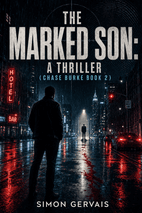
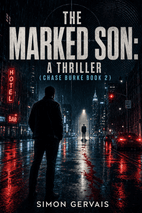
What is the book The Marked Son about?
Simon Gervais's The Marked Son follows Chase Burke as the stalled FATHOM investigation pushes his father Michael toward an illegal shortcut while a Newark arms deal and a quadruple homicide splinter the case in every direction. A relentless thriller of family loyalty and impossible choices for readers who love high-velocity suspense.
Feature
Insta.Page
Blinkist
Shortform
The Marked Son
✓
✕
✕
Summary Depth
Full Chapter-by-Chapter
15-min overview
Section-by-section guides
Audio Narration
✓
✓
✓
Full access to all 800+ summaries
✓
✓
✓
Visual Mindmaps
✓
✕
✕
AI Q&A
✓
✕
✕
Missing a book? Request it, usually live within 48h
✓
✕
✕
Quizzes
✓
✕
✕
PDF Downloads
✓
✕
✓
Send to Kindle
✓
✓
✓
Price
$89.99/yr
$146/yr (PRO)
$199/yr
*Competitor data last verified July 2026.
1 Page Summary
Chase Burke is grinding through the stalled FATHOM investigation, watching a dead-end surveillance target while his colleague Alice Doyle works undercover from the inside—both channels yielding nothing but frustration. When his father, Michael, proposes an illegal shortcut to revive the case, the Burke family's willingness to bend the rules sets the tone for a story where lawful procedure and urgent action pull in opposite directions. Meanwhile, in a Newark freight yard, a desperate man named Jacob Johnstone oversees an arms deal he can't afford to walk away from, trading man-portable missiles to buyers whose money matters more to him than his misgivings—especially with a child on the way.
The investigation splinters in every direction at once. Doyle is pulled back toward task-force work by a quadruple homicide tied to two longshoremen, and the discrepancies she and Sergeant Russo uncover—mismatched container seals, a weight gap running to hundreds of kilos, a second SUV the initial report missed—suggest the official narrative is a cover rather than an explanation. Chase and his allies chase leads through surveilled streets and cloned phones, hunting a storage unit and a man named Ghorbani, while Michael tails a subject who photographs the Financial District skyline and pays for his curiosity with a brutal ambush. Trust frays as threats arrive, alliances break, and the group's only solid lead slips away, leaving Chase and Tanya regrouping in a hotel room with nothing but each other and a shrinking window.
The stakes escalate from evidence to lives as a missile locks onto a helicopter carrying the vice president, forcing Chase into a split-second choice between stealth and a desperate tackle, and a hostage discovered bound inside a garage raises the terrible possibility that every move he makes is walking into a trap. With hours ticking down and a smoking gun needed to stop a coming war, Chase must decide how far he'll go—and who he can still trust—before the clock runs out. Readers who love relentless, high-velocity thrillers built on family loyalty, uneasy alliances, and impossible choices will find exactly what they came for.
Part 1 - Chapters 1 to 4
Chase Burke sits on surveillance of Johnny Beretti’s building, watching for any movement that might crack open the FATHOM investigation. The operation yields nothing. It is a dead-end lead, and the frustration settles into him as the hours pass with no result. He has committed the time and the attention, and the night gives back only stillness, no movement, no contact, no thread to pull. The dead end matters because it leaves the investigation exactly where it was, burning resources without producing evidence.
Alice Doyle takes the inside approach, monitoring Beretti at Level. Her cover holds, but all it confirms is that Beretti is relaxed and unsuspecting. He gives nothing away, and the night produces no leverage. Her position inside is secure, yet security without information is its own kind of failure. The surveillance confirms only that Beretti feels safe, and that confirmation does nothing to advance the case.
Michael Burke proposes bugging BKT Hospitality’s offices without a warrant. The investigation has stalled, and he bets the break-in can revive it. The motive is the stall itself: with the lawful channels producing nothing, Michael reaches for the unlawful one, wagering that a single break-in can restart a case that has gone quiet. Chase’s priority is different: he wants Michael to get in safely. Chase’s surveillance code does exactly that, getting Michael inside, and with that the operation shifts from planning into an active burglary. The consequence is a threshold crossed: what was a proposal becomes a crime in progress, and Chase’s contribution to it is the thing that makes it possible.
Once inside, Michael works to place Wallflowers throughout the office. The installations succeed, giving the team a possible surveillance foothold. The success matters because it is the first real gain of the operation, a set of devices in place that could, if everything else holds, turn the office into a source. Then comes the harder target: Michael wants to plant the Canary in Beretti’s private office. As he works, the laptop wakes and throws up a “Trust this device?” prompt, a small screen message with the power to expose everything. The prompt is the first crack in the operation, a machine asking a question whose wrong answer ends the entire plan.
Chase wants to warn Michael that Beretti is moving. His alert lands: Beretti and two armed men are rushing upstairs. The warning arrives with the worst possible content, and it converts a quiet installation into an emergency. Michael wants to escape the office before Beretti arrives, but he is trapped, and the radio goes silent. The silence is the consequence the recap points at: with Michael trapped and off the radio, the team above him can no longer tell whether he is hiding, captured, or already lost.
Chase wants to rescue Michael. He abandons the Escalade and sprints into the building despite Michael’s warning not to come. The motive is rescue, and the consequence is that Chase puts himself inside the same danger he was meant to manage from outside. Doyle wants to back up Chase, and she joins him on the stairwell with her pistol drawn. Her motive is to cover him, and the consequence is that two armed operatives are now moving through a stairwell toward armed men. Chase wants confirmation that Michael is alive, but repeated radio calls get only silence, and every unanswered call raises the risk of a gunfight in a stairwell with armed men above. The silence does not just withhold information; it pushes the rescuers toward the assumption that force may be the only way through.
Then Michael answers. He wants to avoid capture, and he reveals he escaped through a window to the roof. The answer releases the pressure: Michael is alive, and the rescue turns into an extraction. The consequence is that the operation changes shape again, from a confrontation to a retrieval, and the team’s task becomes getting everyone out rather than getting everyone in.
Chase and Doyle want to leave without suspicion, but Beretti’s armed thug confronts them on the stairwell. Doyle wants to bluff past him, but his disbelief forces Chase to act: he knocks the gun aside and beats the man unconscious. The motive is escape without a firefight, and the consequence is violence that cannot be undone, a man down on the stairwell and a story that now has to hold. Chase wants to get Doyle out, and they reach the Escalade without further contact. The extraction succeeds, but the success is narrow and loud in its implications.
The raid is supposed to justify the investigation, but the failed bugging leaves Chase doubting that FATHOM can ever be proven. The consequence the recap points at is doubt: the operation that was meant to revive the case instead leaves Chase questioning whether the case can be made at all, with the failed bugging standing as evidence that the team’s best unlawful effort produced risk without proof.
Khatib wants a progress report on Project XIII. Reza delivers it: the American asset’s rising popularity exceeds expectations. The report is good news, and that is precisely what makes the meeting dangerous for Reza, because good news invites a superior to spend it.
Reza opens by pressing Khatib to let Project XIII proceed without further pressure on Hemsworth, but Khatib refuses to be managed. He orders Reza to introduce legislation condemning Israel, a demand that hands the timeline to Khatib and strips Reza of control over when and how the operation moves forward. The motive behind the demand is Khatib’s insistence on setting the pace, and the consequence is that Reza leaves the meeting with his authority checked and his project exposed to a political calendar he cannot dictate. The operation is no longer his to time; it now moves to a schedule set by someone else.
Reza does not accept the loss of control. He signals Davani, and Davani kills Khatib's driver, turning what was a political meeting into an assassination. The move is meant to preserve Project XIII by removing the man who would have redirected it, but it immediately raises the question of witnesses. Reza answers that question by killing Davani too, silencing the one person who carried out the act and could connect it back to him. The cost is immediate: he loses his loyal bodyguard and deepens his isolation, left with fewer people he can trust and more blood on his own hands. The double killing solves the witness problem and creates a new one, because the man who could testify is gone and so is the man who protected him.
To avoid suspicion, Reza stages the gun in Khatib's hands and leaves with the exiting crowd. The scene is engineered so that what happened reads as something other than what it was, and the assassination becomes an unresolved disappearance rather than a clear killing. Reza walks out among ordinary people, his exposure reduced but his position now dependent on a lie holding. The consequence is that his safety rests on a story, and a story can be checked.
Tanya's attention is on the draft proposal, where hidden digital-dollar language has been slipped in. She wants it blocked, so she challenges it on the record, putting her opposition into the legislative fight rather than letting it pass quietly. The motive is to stop the language before it becomes law, and the consequence is that the move commits her publicly to a position she will have to defend. She has made herself a visible opponent, and visibility cuts both ways.
Her political focus is then disrupted by a missed Signal call from Esme. The interruption pulls at her schedule and her attention at a moment when she needs both. She wants to avoid distraction before the Foreign Affairs working group, yet she takes Esme's call anyway and learns that Esme urgently needs to see her. The urgency is not explained in detail, but it is enough to force a decision. The consequence is that Tanya’s attention is split at the worst moment, and the call plants a demand she cannot simply file away.
Tanya wants to balance campaign demands with Esme's request, so she agrees to move things around and meet in New York by Sunday. The commitment is risky: it costs her time she does not have and ties her schedule to a person she barely knows. The motive is to answer the urgency without abandoning her campaign, and the consequence is a schedule bent around a near stranger, with the cost paid in time she cannot recover.
Tanya wants a break from campaigning in Antalya, so she talks with Esme at the hotel bar. What begins as a chance conversation starts a connection that pulls her into a larger political world. She wants to understand Esme, so she questions her about art dealing and politics, discovering that Esme's focus is on artifacts from volatile regions. The detail unsettles and interests her at once. The motive is curiosity, and the consequence is that Tanya is drawn toward exactly the kind of world she has been trying to understand from a distance.
She wants Esme's view on Iran and Israel, and Esme warns that fear and pride could keep the conflict escalating. The answer deepens Tanya's unease rather than resolving it. The consequence is that the conversation does not settle her; it gives her a frame that makes the danger feel larger and closer. She wants to continue the evening, so she accepts Esme's dinner invitation, turning the chance meeting into an intimate political and personal bond. The motive is to keep talking, and the consequence is that a bar conversation becomes a relationship with stakes.
Tanya wants to explain her political motives, so she tells Esme about her NYPD past and her reform ambitions, revealing the idealism that drives her candidacy. The motive is to be understood, and the consequence is that she hands Esme the personal material that makes her legible and, therefore, usable. Esme wants to draw Tanya out, so she listens closely and questions her choices, learning personal details Tanya had not planned to share. The consequence is that Esme gains a portrait of Tanya that Tanya did not intend to give. Tanya wants to define her own judgment, so she debates whether she is idealistic or naive, exposing her uncertainty about the campaign ahead. The consequence is that her own doubt is spoken aloud in front of someone who is listening for exactly that. She wants to enjoy the dinner without campaign pressure, so she keeps talking with Esme about art, travel, and her former life, and the connection between them strengthens. The motive is relief from pressure, and the consequence is a bond built in the space where the campaign is not.
Esme wants to build intimacy with Tanya by revealing her Tehran birth, a confidence that deepens Tanya's trust in her. The shared origin, a piece of herself Esme offers deliberately, draws the two women closer and makes Tanya feel seen. The motive is to create closeness, and the consequence is that Tanya’s trust grows on a foundation Esme chose and placed.
That growing closeness carries them into a decision: Tanya and Esme choose to travel together during their vacation, turning what began as a chance meeting into a close partnership. What might have ended as a holiday acquaintance becomes something more deliberate, two women choosing each other's company. The consequence is that the relationship now has structure and time, and time is what turns an acquaintance into an influence.
Esme then seeks reassurance about her London relationship, revealing an uncertainty that makes her seem more vulnerable to Tanya. The doubt softens her, and Tanya reads the hesitation as honesty rather than strategy. The motive is reassurance, and the consequence is that Tanya’s guard lowers further, because vulnerability is hard to suspect.
At Ephesus, Esme guides Tanya through the ruins with expert knowledge, impressing her and strengthening Tanya's belief in Esme's sincerity. The competence and passion Esme displays make the friendship feel genuine, and Tanya's guard lowers further. The consequence is that expertise becomes evidence of authenticity in Tanya’s mind, and the friendship settles into something Tanya trusts.
In the hammam, Esme asks Tanya about her fears and hopes, drawing out Tanya's commitment to peace. The intimate setting loosens Tanya's reserve, and she speaks openly about what she wants for the world, revealing the convictions that will soon be tested. The motive is intimacy, and the consequence is that Tanya’s deepest commitments are now known to the person who will test them.
On the final night, Esme wants to confess the truth and reveals that their meeting was engineered. The confession shatters the holiday's warmth. Tanya confronts her, realizing Esme is a spy and that their friendship may have been a recruitment operation from the start. The trust built across the trip collapses into suspicion. The consequence is that every earlier moment is reread, and the closeness that felt real becomes evidence of a plan.
Esme wants Tanya to help prevent war and proposes supplying intelligence without asking for classified secrets in return. She frames the request as a way to serve peace, offering a path that asks less of Tanya than outright betrayal.
💡 Try clicking the AI chat button to ask questions about this book!
Part 2 - Chapters 5 to 7
Jacob Johnstone stands in a Newark freight yard with Clive Wetherby, waiting to oversee an arms deal. The money matters more than the misgivings gnawing at him: his child is coming, and this job pays. Wetherby launches a drone to scout the area and confirms the suppliers' van is approaching. Johnstone turns to the Persian buyers, Farhad and Javeed, and tells them to stick to the plan.
The Exchange
Johnstone and Wetherby take their positions. Johnstone waits on the ground with a pistol and a flashlight; Wetherby settles into overwatch with a sniper rifle. The van rolls in.
Johnstone confronts the suppliers, Erik and Tony, then signals the buyers to come out and complete the exchange. Javeed opens a crate and reveals RBS 70 man-portable air-defense missiles. Farhad waves off the other crates, trusting Johnstone's word rather than inspecting them himself.
Farhad pays with ten blockchain wallet devices. Tony verifies one of them, then accepts the payment and hands over the van. Erik arranges to resell the buyers' Lexus instead of torching it, and the suppliers drive away. Farhad and Javeed leave with the missiles.
Johnstone is left with his guilt over trading weapons while his partner's due date closes in. He cannot shake the sense that the consequences of this deal will find him.
Chrysalis After Hours
Across the city, Chase Burke sits alone in his restaurant, Chrysalis, after service has ended. His mind drifts to FATHOM, the investigation he walked away from three weeks earlier, stalled and going nowhere. He thinks too about the partnership with his brother Michael, and how unequal it has always been.
Chase finishes his wine, orders a rideshare, and rides home through the rain.
The Crooked Notepad
At his apartment door, Chase notices his magnetic notepad is crooked. Something is wrong. Suspecting an intruder, he draws his weapon and enters cautiously.
Tanya Hemsworth ambushes him in the dark and kisses him. She has surprised him with a visit.
After they make love, Tanya admits she missed him. Chase gets up to pour them both some wine.
Chase wants the evening to feel normal, so he reaches for the wine and the corkscrew, trying to bridge the distance that has settled between him and Tanya. But his attention is split, his mind still circling whatever she is carrying, and the small task defeats him. The corkscrew slips, the moment fumbles, and his composure goes with it. It is a tiny failure, but it sets the tone: he is not fully in the room, and neither is she.
He decides to stop pretending. Chase asks Tanya directly what is troubling her, his voice gentle but insistent. The push does not land the way he hopes. Tanya deflects, turning the question aside with a defensive edge, unwilling to open the door he is knocking on. The warmth of the evening curdles into something guarded.
Tanya wants to finish her text to Marina. She keeps her attention on the phone, fingers moving, and the delay stretches. What was intimate becomes tense. Chase watches her choose the screen over the conversation, and the silence between them fills with everything neither of them is saying.
Chase tries again, softer this time, offering his support without demand. For a moment it works. Tanya admits she does not know what to do, and the confession costs Chase his casual tone. He cannot keep it light anymore. Whatever this is, it is serious, and his voice changes to match it.
But Tanya will not explain. She stays evasive, circling the truth without landing on it, and her refusal wears Chase's patience down to nothing. He is trying to be an ally, and she is treating him like an obstacle.
Then she asks something unexpected: she wants Chase to meet her contact. The request itself is a concession, an opening, but it comes with a price. By asking him to come, she surrenders the ability to keep the contact's identity hidden. Chase seizes on the gap. Why is she being so cagey? He questions her, pressing on the secrecy, and when he guesses that the contact is more than a source, Tanya's composure cracks.
She names the contact as Esme, calling her a friend. The name lands badly. Chase has never heard of her, not once, and the omission undermines everything Tanya is asking him to believe. A friend she never mentioned is not a friend; she is a secret.
Chase wants reassurance, and he challenges her on it. The challenge costs Tanya the chance to answer instantly. She hesitates, and in that hesitation the truth slips out: she is not sure she trusts Esme. It is an admission that undercuts her own request, and it hands Chase the upper hand in the conversation.
Tanya tries to reframe it. She wants Chase to come not as a skeptic but as a judge of character, someone who can read Esme and tell her what he sees. But the admission has already cost her control. She is no longer steering the conversation; she is reacting to it.
Chase presses for a straight answer, and the pressure finally breaks her calm. Tanya admits she is afraid, afraid that telling him the truth will drastically change their lives. The fear is not abstract. It is the fear of a door that cannot be closed once opened.
So she opens it. Esme is Iranian, she reveals, and the disclosure costs her Chase's immediate trust. His guard goes up. Iran is not a neutral word in his world, and the revelation recasts everything she has said.
Chase wants to contain the risk. He warns her about Tehran, about the danger of where this leads, and the warning lands as a betrayal. Tanya loses the feeling that he is on her side. He is managing her now, not standing with her.
He suggests looping in Connor Williams, a reasonable move from a man who wants backup. Tanya refuses sharply. The refusal costs Chase his first option, and he tries again, offering Michael or Alice instead, his usual allies. She refuses them too. Each no narrows his room to maneuver until he has none of his familiar tools left.
Tanya tries to explain the danger, to make him understand why the circle must stay small. She reveals that Esme works for the Institute for Peace and Cultural Dialogue, and the name costs Chase his composure. He knows what that means. He wants to identify the threat, and he names it: the Institute is an Iranian intelligence front. The recognition strips away Tanya's last concealment. She admits she works for them too. The ground between them is gone.
The Longshoremen
Johnstone wants to follow orders, but the new instruction unsettles him. He is told to eliminate the longshoremen, and the order costs him his confidence in the mission. This is no longer the operation he thought he signed on for.
He wants to remove the witnesses, and the motel confrontation delivers it. Tony, Erik, and two women are killed. The scene is quick and total, and it leaves nothing behind but bodies and the need for cleanup.
Johnstone wants to recover the payment, and the cleanup order follows. He is told to erase the traces, and the instruction costs him any illusion that the operation is clean. Whatever this is, it is now a thing that requires scrubbing.
He wants to know the next task, and the portal message gives it to him. He is ordered to kill an Iranian intelligence officer in New York. The instruction costs him his rest. There is no going back from here, and no sleep waiting on the other side of it.
Part 3 - Chapters 8 to 15
Alice Doyle had planned to take Ava on an outing, a quiet day away from the weight of everything. That plan dissolves when Sergeant Tommy Russo calls. He wants her to look into a quadruple homicide involving two longshoremen, and the request pulls her straight back toward JTTF work whether she wants it or not. The quiet day is gone. The call matters because Russo is handing her a case she cannot easily refuse, and because the case itself reaches back into the world she has been trying to step away from. Whatever distance she hoped to put between herself and the task force, the phone call closes it. The outing with Ava becomes the thing she gives up, and the investigation becomes the thing she picks up instead.
The Motel Murders Pull Her In
Alice wants to learn more about the motel murders, and the impulse changes her plans entirely. She decides to investigate discreetly rather than wait, and the decision prompts her to call Michael. The day that began as an outing with Ava now bends toward the investigation she cannot leave alone. The motive here is her inability to let a case sit unresolved, and the consequence is that the quiet day she promised Ava is traded for a discreet inquiry she intends to conduct on her own terms. Calling Michael matters because it brings him into the day earlier than expected and sets up the partnership that will carry the rest of this stretch of the story. She is not waiting for permission or for a formal assignment. She is moving because the murders have caught her attention and because waiting would mean letting the trail go cold.
Chase Moves Tanya's Meeting
Chase wants to protect Tanya during her meeting with Esme, so he runs a surveillance-detection route before anything else. He insists they change the meeting location from Balthazar to Laughing Man, trading the original spot for one he can better control. The precaution signals how seriously he is taking the threat. The motive is protective and professional at once. He does not trust the situation, and he wants the ground under the meeting to be ground he has already checked. The consequence is that the meeting moves, and the change itself tells Tanya how worried he is. Balthazar is given up for a location where Chase believes he can see more, control more, and react faster if something goes wrong.
Chase then spots a suspicious man watching them. Wanting to identify him, Chase warns Tanya and follows the man once he moves off, suspecting a possible setup or a full surveillance team working around them. The motive is identification. He wants to know who the man is and who he answers to before the meeting proceeds. The consequence is that Chase separates himself from Tanya at the very moment the threat is becoming concrete. He warns her, but the warning also divides them. He follows the watcher because leaving him unexamined would mean walking into the meeting blind, and the suspicion that a full team might be working around them raises the stakes of every choice he makes from that point.
Tanya wants to proceed with the meeting despite Chase's concerns. She calls Esme to relocate and heads off alone while Chase hangs back, choosing the meeting over the safety of staying together. Her motive is the meeting itself. She believes it has to happen, and she is willing to accept the risk Chase is warning her about. The consequence is that she goes in without him at her side. Chase hangs back because he is still working the watcher, and Tanya moves forward because she will not let the meeting slip. The decision puts her on her own path at the exact moment Chase is learning how closely she has been watched.
Johnstone and Wetherby Close In
Johnstone wants to assassinate the target with a knife. He and Wetherby circle SoHo tracking a signal, waiting for a clean opportunity to strike. The motive is the kill itself, and the method is deliberate. A knife means closeness, silence, and control. He and Wetherby are not rushing. They are circling, tracking, and waiting for the moment when the strike can be made cleanly. The consequence of their patience is that they stay close to the target without yet committing, holding the option open while the signal leads them through SoHo.
Wetherby wants to keep Johnstone updated on the target, so he reports that the signal is moving. The news forces Johnstone to abandon his slow loops and pursue. The motive is coordination. Wetherby keeps Johnstone informed so the two of them stay synchronized. The consequence is that Johnstone's patient circling ends. The signal is no longer still, which means the clean opportunity he was waiting for is moving away from him. He has to chase it, and chasing changes the shape of the operation from a controlled approach into a pursuit.
Chase Takes Out the Watcher
Chase wants to stop the watcher from reaching the new meeting. He bumps the man, lures him toward scaffolding, and knocks him out. The motive is interception. The watcher cannot be allowed to reach the meeting or to report on it, so Chase removes him from the board. The consequence is that the man is down and Chase has a body to account for, a window of time before anyone notices, and a decision to make about what the man was carrying.
With the man down, Chase wants to learn who he works for, so he searches the phone. What he finds shakes him: photos of Tanya dating back some time. The discovery deepens his fear that she has been spied on for a long while, not just today. The motive is intelligence. Chase searches the phone because the man's employer is the question that matters most. The consequence is a shift in Chase's understanding of the threat. The photos are not from today. They date back, which means the surveillance of Tanya is older and deeper than a single meeting or a single watcher. What Chase feared as a possible setup now looks like a long-running operation, and the fear he already carried for Tanya sharpens into something closer to certainty.
Chase wants to prevent the phone from leading back to Tanya or himself. He deletes the photos, destroys the phone, and photographs the man's face before leaving, taking a record of the watcher while erasing the trail that points at Tanya. The motive is twofold. He wants to keep the phone from becoming evidence that leads back to Tanya, and he wants to keep it from leading back to himself. The consequence is that the trail pointing at Tanya is erased, but so is much of the evidence the phone contained. Chase keeps a photograph of the man's face, a record he can use later, while destroying the device that might have told them who sent him. He leaves the scene with a face and without a phone, and the choice trades immediate evidence for protection.
Johnstone Finds the Body
Johnstone wants to find the target after losing the signal, so he parks and searches the area on foot. He discovers the unconscious man behind the scaffolding tarp. The motive is recovery. The signal is gone, and Johnstone has to find the target the hard way. The consequence is that he finds the man Chase knocked out, and the operation changes shape again. The target Johnstone was tracking is now an unconscious body behind a tarp, and Johnstone has to decide what that means.
Wanting to confirm the man's identity, Johnstone tests him with a Farsi/Dari phrase and watches the man's reaction. The motive is verification. Johnstone needs to know whether this is the man he was sent to kill, and the phrase is a test designed to produce a reaction that confirms it. The consequence is confirmation. The man's reaction tells Johnstone what he needs to know, and the test turns an unconscious stranger into a confirmed target.
Johnstone wants to eliminate the target before he can recover or be found. He kills the man with the Misericordia and reports the hit to Wetherby. The motive is finality. An unconscious target can wake, can be found, can be moved, and can talk. Killing him removes every one of those possibilities. The consequence is that the man is dead and the hit is reported. Johnstone has done what he came to do, but the circumstances around the kill are not what he expected.
Afterward, Johnstone wants to understand who beat him to the man. He leaves the scene troubled by the smashed phone, wondering who got there first. The motive is comprehension. Johnstone needs to understand the scene he walked into, because a beaten man and a smashed phone mean someone else was there before him. The consequence is unease. Johnstone leaves with the hit complete but with a question he cannot answer, and the question follows him away from the scaffolding. Someone got to the target first, and Johnstone does not know who.
Alice Prepares to Act
Alice wants to move forward with the investigation, so she finishes cleaning up breakfast and prepares to act on Russo's tip. The motive is momentum. She has decided to investigate, and the small domestic task of cleaning up breakfast is the last thing between her and the work. The consequence is that she moves from intention into action. The tip is no longer something to consider. It is something to act on, and Alice is preparing to do exactly that.
The Coffee and the Case
Doyle opens her door and lets Michael in. She accepts his coffee and the gift he brings, and in doing so makes a quiet decision: to risk letting him into her life and Ava's, despite the fear of another heartbreak. It is a small domestic moment carrying the weight of everything she has been guarding against. The motive is connection. She wants to let him in, and the coffee and the gift give her a way to do it without announcing what she is doing. The consequence is that the door is open, literally and otherwise. Michael is inside her home, and the risk she has been avoiding is now a choice she has made. The fear of another heartbreak does not disappear. It is simply outweighed, in this small moment, by the decision to try.
The conversation turns to work. Doyle tells Michael about Russo's quadruple homicide case, and together they reason that the dead longshoremen may have been independent contract smugglers rather than men tied to the cartel. That distinction matters, because it reshapes who might have wanted them dead and why. The motive is shared analysis. Doyle brings the case to Michael because two minds can see more than one, and the reasoning they do together produces a new frame for the murders. The consequence is a redirected investigation. If the longshoremen were independent contractors rather than cartel men, then the list of people who wanted them dead changes, and the questions that need asking change with it.
They agree to dig into the longshoremen's financials, phone records, and travel, and Doyle says she will request the Newark PD case files. The partnership is formalizing, each of them bringing access the other lacks. The motive is coverage. Financials, phone records, and travel are the areas where a smuggling operation leaves traces, and the Newark PD files are the official record Doyle can request in a way Michael cannot. The consequence is a division of labor that makes the partnership real. Each of them has something the other needs, and the work moves forward on both tracks at once.
When Doyle suggests bringing Chase in, Michael deflects. He chooses to wait until they have more substantial evidence. The decision is cautious, but it also keeps the circle small, and it leaves Chase operating on a separate track without knowing what Michael and Doyle are building. The motive is caution. Michael does not want to widen the circle before there is something solid to bring into it. The consequence is a split track. Chase is working his own investigation without knowing what Michael and Doyle are assembling, and the two efforts proceed in parallel without touching. The caution protects the circle, but it also means Chase is alone with what he is learning.
The Laughing Man Café
Chase arrives at the Laughing Man Café to meet Tanya and Esme. He comes wanting to assess the threat and, just as importantly, to assess Esme's credibility. He is not there to be persuaded. The motive is evaluation. Chase wants to measure Esme, not accept her. The consequence is that the meeting begins with Chase already skeptical, and everything Esme says has to survive that skepticism before it can be believed.
Esme does not soften her claims. She tells them that Iran has activated a New York sleeper cell to retaliate for the assassination of intelligence minister Esmaeil Khatib. The assertion is enormous, and Chase pushes back hard. He challenges her for having no names, no target, and no proof, and he accuses her of offering vague insurance rather than real intelligence. Without specifics, her warning is unfalsifiable, and Chase treats that as a warning sign rather than a reason to believe her. The motive behind Chase's pushback is rigor. A claim that cannot be tested is not intelligence, and Chase says so.
Part 4 - Chapters 16 to 23
Chase arrives at Esme's door ready for a fight, still raw from the failed intervention and looking to shift the blame onto her. He wants to know why the meeting went wrong and he wants her to carry the weight of it. But the street outside stops him cold. Police tape stretches across the block and word of a mugging cuts through his anger, replacing it with something colder. The confrontation he came for dissolves before it starts.
The Crime Scene
Tanya takes control of the moment, identifying herself to Officer Ryan and pressing for details about what happened. What she learns lands like a blow: Mahmoud has apparently been killed. The group's only lead is gone, and with it the thread that might have unraveled the whole conspiracy. Esme turns on Chase almost immediately, accusing him of the murder. Her trust in Tanya collapses in the same breath, and she flees, severing the alliance that had held the fragile investigation together. In minutes the group has lost its lead, its unity, and any sense of safety.
A Room Away From Everything
Chase and Tanya retreat to a hotel to regroup and decide what comes next. Away from the others, Tanya admits what is really frightening her: acting on an unsubstantiated tip could expose her to espionage charges. She is a government official weighing her career and her freedom against a threat she cannot yet prove. The room becomes a pressure chamber, and into it Esme's earlier revelation pushes its way. Tanya cannot stop turning over the claim that her father engineered her career. If it is true, she does not know whether any of her success was her own. Chase tries to reassure her, but his words cannot touch the doubt that has already taken root.
A Story Built to Protect
Tanya makes a decision: Chase may tell only Michael. She wants to limit exposure while still acting on the threat, and Chase accepts the narrow mandate. He begins shaping the story to shield her, casting Mahmoud as an informant. It is a deliberate distortion, a narrative built to keep Tanya insulated from the consequences of what they are about to do.
Michael's Lie
Michael receives Chase's summons and wants to honor his brother's request, but doing so requires a lie. He tells Alice it is estate business. The deception lands quietly and does damage, eroding the trust between them. Michael chooses his brother over honesty with his wife, and the cost is immediate even if neither of them names it.
The Briefing
Chase tells Michael about the Hezbollah sleeper cell. He wants the investigation kept quiet, and Michael is stunned by the scale of what his brother is describing. Despite every instinct telling him to pull back, he agrees to hear him out. Michael is not a man who takes stories on faith, so he goes to the NYPD report to verify Chase's account. What he finds is that the victim was stabbed and carried a Turkish alias. The detail visibly relieves Chase, though Michael does not yet understand why. Michael then confirms Mahmoud Younesi's identity through Interpol prints, establishing that the threat is real and credible, and pushes to bring in Alice and Connor. Chase refuses. He insists the matter stay between them, bound by his promise to Tanya. Michael reluctantly agrees not to tell Alice, but he warns his brother plainly that the stakes are too high for secrets.
Room 815
Michael traces Younesi's hotel through travel logs, wanting to reach the dead man's room before the police do. The brothers head to the Warwick Hotel, where Michael talks the manager into giving them access to Room 815. The manager hands over a key card, and the brothers move upstairs expecting an empty room and whatever intelligence the dead man left behind.
The Intruder
Instead, an intruder bursts from Room 815 and knocks Michael down. The man wants to escape after ransacking the room, and Michael scrambles up to pursue him down the stairwell, ordering Chase to check the room. Chase searches the wreckage, looking for anything the killer missed, and notices the bathroom door standing ajar. The realization hits him: the intruder may not have been alone. A masked figure lunges from the shower with a knife, and Chase is thrown into a close-quarters fight with an assassin who wants the intruders eliminated.
Michael chases the masked killer through the Warwick lobby and out onto the street, but the man vanishes into the Midtown crowd, and with him goes the only lead on the assassin. The pursuit costs Michael the one thread that might have unraveled the contract before it could be fulfilled.
Chase fights the masked attacker in his hotel room and survives being thrown through an eighth-story window, forcing the killer to flee by bluffing that help is coming. He knows he cannot win the struggle outright, so he trades on the attacker's caution and the threat of reinforcements to buy his own life. The killer's retreat leaves Chase battered but alive and certain the enemy is no ordinary thug.
Chase then identifies the attacker's distinctive ring-pommel knife as a Misericordia, learning his enemy is a professional killer. The weapon's provenance tells him the man was not hired for intimidation but for a finished job, and that whoever sent him has real resources.
Michael tells Chase he will lie to the police about the hotel incident to protect him, but demands a serious talk later about Tanya's secret. He weighs family loyalty against the law and chooses his brother, though he makes clear the debt will come due. Chase decides that keeping Tanya's secret is no longer possible because silence will cost lives, and resolves to convince her. The attack has convinced him that discretion is now a form of complicity.
Chase returns to the Peninsula and presses Tanya to widen the circle of trust. He argues that the danger has outgrown their private arrangement and that more hands are needed. She grudgingly agrees he can bring others in, while keeping her friendship with Esme off the table. Tanya then tells Chase that Marina has recalled her to Washington, and she leaves for the airport despite his wish that she stay. Her departure strips him of his closest ally at the moment he needs one most.
Chase searches online for the knife and confirms it is a Misericordia designed for Italian paratroopers, a weapon for professionals. The research hardens his suspicion that the killer is tied to a state or a well-funded network rather than a lone criminal.
Michael arrives at Chase's apartment and the brothers debate who the killer works for. Chase argues FATHOM is in league with Iran, while Michael doubts FATHOM would cross the line into mass-casualty attacks. Their disagreement exposes the fault line between Chase's suspicion of the company and Michael's faith in institutional restraint. Michael proposes giving the NYPD Younesi's real name and sharing intel, warning Chase not to be stingy with information. He wants the police brought into the loop before the situation spirals beyond their control. Michael accuses Chase of prioritizing Tanya's protection over stopping a possible attack, and Chase swallows his anger rather than fight back. The accusation lands because it is partly true, and Chase's silence keeps the peace between them. Michael instructs Chase to come to the office in the morning to brief Alice and devise a plan, then leaves. The order reasserts Michael's authority and sets the next move on a professional footing. Chase pours himself more wine and retreats alone to his bedroom. The empty apartment sharpens his isolation and the weight of the decisions still ahead.
You've reached the end of the free chapters
Never lose the plot
Chapter-by-chapter summaries, characters and endings explained, and a book you can ask anything.
$0.00 due today · 7 days free, then $89.99/year ($7.49/mo) · Cancel anytime before day 7
Simon Gervais is a former Canadian federal agent and RCMP officer turned novelist, known for writing fast-paced thrillers drawn from his law enforcement and security background. He is the author of the Mike Walton series, including The Thin Black Line and A Red Dotted Line, as well as the Pierce Hunt novels, including Hunt Them Down. His expertise in counterterrorism and protective operations informs his action-driven fiction.
Frequently Asked Questions about The Marked Son
What is The Marked Son about?
The story follows Chase Burke and Alice Doyle, investigators working the stalled FATHOM case, as a dead-end surveillance operation pushes the team toward riskier, off-the-books methods. Meanwhile, in a Newark freight yard, Jacob Johnstone oversees a black-market arms deal that puts man-portable missile systems into the hands of foreign buyers, and the case begins to reach toward a real target in the Financial District. The stakes climb fast: a fractured group of investigators, a missing lead, and a plot that could trigger a war if no one can prove who is really behind it.
Who is the author of The Marked Son?
Simon Gervais is the author of the novel, a thriller writer whose work centers on covert operations, counterterrorism, and high-stakes investigations. His storytelling leans on procedural detail, multiple points of view, and tightly wound action sequences. Readers who enjoy fast-moving espionage fiction will recognize his style here.
Is The Marked Son worth reading?
It is a propulsive thriller built on interlocking storylines — surveillance, an arms deal, and a conspiracy that keeps widening — so there is very little downtime. The cast is large but well drawn, and the tension comes as much from fractured trust among the investigators as from the villains. If you like procedurals with real-world texture and a ticking clock, this one delivers.
What are the main themes in The Marked Son?
At its core the book is about loyalty and family — what people will risk for a sibling, a partner, or an unborn child. It also examines the moral cost of compromise, both for the arms dealers chasing a paycheck and for investigators tempted to break the rules when legal channels fail. Trust and betrayal run through every relationship, from the task force to the criminal network, and the novel repeatedly asks how much certainty is worth sacrificing for safety.
📚 Explore Our Book Summary Library
Discover more insightful book summaries from our collection