As an Amazon Associate, we earn from qualifying purchases.
⚠️ READER ADVISORY: This is a deep-dive summary designed for those who want the full story. Contains spoilers.
What is the book Broken King about?
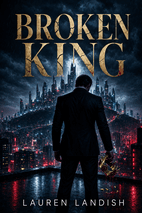
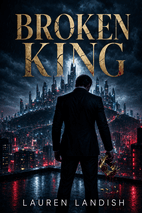
Lauren Landish's Broken King follows Leighton as she surrenders control to Ryker, a powerful man in the shadowed underworld of the Seven Hills, trading submission for proof that it means something as old contracts and quiet betrayals close in around them. A dark, tense captor-and-captive romance for readers who love slow-burning psychological tension.
Feature
Insta.Page
Blinkist
Shortform
Broken King
✓
✕
✕
Summary Depth
Full Chapter-by-Chapter
15-min overview
Section-by-section guides
Audio Narration
✓
✓
✓
Full access to all 800+ summaries
✓
✓
✓
Visual Mindmaps
✓
✕
✕
AI Q&A
✓
✕
✕
Missing a book? Request it, usually live within 48h
✓
✕
✕
Quizzes
✓
✕
✕
PDF Downloads
✓
✕
✓
Send to Kindle
✓
✓
✓
Price
$89.99/yr
$146/yr (PRO)
$199/yr
*Competitor data last verified July 2026.
1 Page Summary
In the shadowed underworld of the Seven Hills, Leighton finds herself bound to Ryker—a man whose authority she has stopped fighting and begun to accept. What begins as a battle of wills becomes a dangerous wager: she surrenders control in exchange for proof that the surrender means something, and he tests her obedience with waiting, restraint, and the slow discipline of his house. Around them, an unseen war grinds on—old contracts, quiet assassinations, and the cold machinery of Hill marriages as business mergers rather than love matches. The world Leighton thought she understood is unraveling, and Ryker is both the architect of her confinement and the one thing she cannot stop craving.
As Leighton learns hard truths about her family and the betrayals that shaped her past, a larger conspiracy closes in on Ryker. Rival agendas, false pretenses, and enemies working through the proper channels of the Hills turn private obsession into public danger, and the fragile arrangement between captor and captive collides with threats neither can fully control. Trust is tested, promises are broken, and the line between punishment and protection blurs, leaving both of them to reckon with what they have become to each other.
Dark, tense, and relentlessly charged, Broken King is a story of power exchanged for vulnerability, obedience tangled with desire, and two people circling each other while the world around them sharpens its knives. Readers who love intense captor-and-captive dynamics, slow-burning psychological tension, and romance set against a backdrop of secrets and quiet violence will find themselves pulled into the first book of The Seven Hills.
Part 1 - Chapters 1 to 5
Leighton makes her decision. After everything Ryker has shown her and everything he has threatened, she stops fighting the shape of the thing between them and submits to his rule. She asks him to show her who she belongs to, and the request is a trade: control for trust. She is handing him the authority he has been demanding, and in return she is asking him to prove that the surrender will mean something. It is not a defeat so much as a wager, and she makes it with her eyes open.
Ryker accepts. He does not gloat or rush. He tells her to wait, and the waiting becomes the first test of her obedience. He leaves her there with nothing to do but sit inside her own decision, and the delay sharpens the anticipation until it is almost unbearable. Leighton understands what he is doing. He is measuring whether her submission is real, whether she will still be there when he returns, and she stays.
She undresses and waits for him. The choice is deliberate. She could cling to safety, could keep some armor on, but instead she strips away every protection and gives him the vulnerability he asked for. The room holds the quiet tension of a woman who has decided to stop hedging. She is not passive in this. She is choosing anticipation over the familiar comfort of guarding herself, and the waiting becomes its own kind of statement.
When Ryker returns, he brings the cuffs. He does not simply put them on her. He asks where she wants to be, forcing her to name her own desire out loud rather than let him decide for her. The question matters because it keeps her inside the choice. Leighton answers that she wants the bed, and she lets him bind her wrists. The restraint is not something done to her against her will. It is part of the bond they are building, and she accepts it as such.
Bound and exposed, Leighton asks him for sex. Ryker teases her instead. He touches her, draws the moment out, and refuses to give her what she is asking for until she means it. The refusal is its own form of attention. He wants her fully present, not performing or going through the motions, and he will wait until her want is unmistakable. He kisses her and pleasures her until she orgasms, and in that stretch of it the tenderness underneath his violence shows plainly. He is capable of gentleness, and he spends it on her.
Afterward Leighton begs him to enter her. She does not leave it at a plea. She tells him she is asking, giving him explicit consent, making the words plain so there can be no confusion about what she wants. Ryker takes her while gripping her throat, and even with his hand at her neck, even knowing exactly what he is capable of, she feels safe. The danger and the safety exist in the same moment, and she does not flinch from either.
She orgasms again under his control and asks him to lose himself in her. The request undoes something in him. Ryker flips her over and takes her harder, and Leighton welcomes the intensity, welcomes the marks he leaves on her body. She is not enduring it. She is asking for more of it.
As he nears release, Ryker asks her for permission. The reversal is stark. The man who has spent this entire encounter commanding her now waits on her word, and Leighton tells him to come inside her. His release triggers her third orgasm, and the two of them finish together rather than with him taking and her receiving.
What happens next matters as much as everything before it. Ryker uncuffs her and holds her. He does not vanish once the intensity passes, does not discard her the way she might have expected. He stays, and the holding is proof that the surrender will not be punished.
Leighton lies there and reflects that Ryker has ruined her. She does not mean it as a complaint. She accepts it, accepts that she is now a woman who can live a life ruled by monsters, and the acceptance settles over her like a fact she has stopped arguing with. Then the account shifts. Leighton begins to tell how she got here, and the story moves out of the present and back into the past.
Leighton does not let her father's matchmaking slide. When he tries to steer her toward a setup, she confronts the attempt directly and refuses it, pressing him until he drops the matter entirely. The exchange sets the tone for the rest of the dinner: she is not there to be managed, and he learns quickly that she will not play along.
She then turns the conversation to the bank. Leighton presses her father about what he intends to do, and he reveals his plan: he means to call the state's bonds. The admission lands hard. Leighton warns him that calling the bonds will crush the city and gut the funding for her hospital. The stakes are not abstract to her. The hospital is hers, the city is where she lives and works, and her father's decision would reach directly into the institution she is fighting to protect.
She does not stop at the harm to others. Leighton appeals to her father's self-interest, warning him that when the violence spreads, he will be the one blamed for it. It is a calculated argument, aimed at the instinct she knows best in him, and it shifts the pressure of the conversation onto his own reputation and safety.
Having laid out the consequences, Leighton begs him to make a deal with the governor instead of calling the bonds. The plea is direct and personal, a daughter asking her father to choose a different path. He agrees to think about it, and she reads his tone as a sign that she has won. The concession is not a promise, but she takes it as one.
Leighton leaves the dinner believing she has likely talked him out of calling the bonds, yet she remains uneasy. The victory is not clean. Something in the exchange, or in her father, keeps her from resting easy, and the uncertainty follows her out of the room.
Ryker's Morning
Across the city, Ryker wakes and prepares meticulously, then scans his property for any sign of surveillance or intrusion. The care is habitual, the routine of a man who assumes he is being watched. The morning's small interruption comes when he helps his neighbor Mrs. Pomskey with her garbage can, and he deflects her matchmaking suggestion about her grandniece. The domestic moment passes, but his guard does not drop.
The Depot
Ryker drives to the Depot gym and asks Brick to wait before flipping the tire while Brick squats. The request is small but deliberate, a matter of timing and control inside a place built on physical strain. He completes his workout and showers, changing into his suit to maintain his cover. The transition from gym to suit is part of the same discipline: the body trained, the appearance managed, nothing left to chance.
The Summons
Then comes the summons, a single word: "Cathedral." Ryker finishes his steak before driving to the old church, unhurried, as though the message were an ordinary appointment. He enters the deconsecrated Cathedral, takes a seat in the confessional, and waits. The setting is stripped of its sacred function, a quiet room repurposed for other business.
The Priest greets Ryker and passes him an envelope containing a microSD with his assignment. The handoff is brief and wordless in its essentials. Ryker leaves with the card and whatever task it holds, the next move already in his hands.
The Priest slides a sanctioned kill order across the table, stamped by the Aventine Council, and Ryker takes it without warmth. When the Priest speaks of a week, Ryker cuts him short and demands three days. He leaves the Cathedral lighter by a donation he presses into the Priest's hands, his mind already fixed on the deadline: the target will be dead inside three days.
The Estate
Ryker scouts Andre Baker's estate and finds it soft. The security is thin, the patrols predictable, the whole place arranged like a man who has never truly feared for his life. He scales the wall and puts the first guard down before the man can raise an alarm. Inside, he clears the ground floor and kills a second guard waiting at the top of the stairs. At a bedroom doorway a third guard gets off a shot, the muzzle flash burning across Ryker's vision and leaving one ear ringing, but Ryker strips the pistol from him and finishes him with his own weapon. He reloads and pushes deeper, killing three more men who try to stop him.
The Study
He finds Baker in his study and has to restrain himself from firing on sight, forcing himself to remember the layered orders that bind his hand. Baker does not run. He admits he disobeyed the Conventio and offers Ryker a drink. Then he makes his argument: calling in the bank's bonds would bankrupt the state and hand power to the Seven Hills. Ryker will not hear it. The order and the consequence are all that matter to him, and he raises his gun to fire.
The Bargain
Baker breaks. He begs for his life and promises to call the debts by morning. Ryker reluctantly accepts the surrender, fires a warning round into the rug, and orders Baker to call the debts immediately. Baker hesitates, then offers Ryker his most valuable possession in exchange for two days. Ryker does not take it. Baker makes the calls, and when it is done he warns that by morning he will be a pariah. Ryker confirms the transfer, backs out of the room with his gun still on Baker, and disappears into the night.
💡 Try clicking the AI chat button to ask questions about this book!
Part 2 - Chapters 6 to 9
The Cathedral
Ryker arrives at the Cathedral to close out his contract, reporting to the Priest that six house staff are dead and nothing ties him to the killings. He wants the job finished and behind him, and he frames the report to keep the matter contained. He tells the Priest that Baker complied and fixed the problem, a move meant to keep the Aventine Council from taking a dim view of how things went down. The assassination is suspended until the order is reactivated, so the contract stays open but dormant rather than resolved. Ryker then hands over an address Baker offered in exchange for his life, wanting Baker to have two days to deliver it, and the Priest accepts the terms as within policy. The concession buys Baker time and keeps the arrangement inside the rules, which matters to Ryker because it protects him from blame later.
Aphrodisia's
Ryker leaves the church and heads to Aphrodisia's to unwind, where he finds Holden Michaels drinking at a shadowed table. The two trade shop talk about their recent work, each acknowledging the other's craft, and the ease between them shows a friendship built on shared trade and mutual respect. Holden reveals he has bought a new Nikon camera, a small personal purchase that hints at a life outside the work. Holden asks Ryker to build a custom dune buggy frame once Fiona's project wraps, wanting a personal project of his own, and Ryker agrees to send over starting chassis models. The agreement keeps their working relationship warm and gives Holden something to look forward to beyond the next job.
Holden turns melancholy, musing about a model's engagement and wondering whether there is more to life than this. The question opens a door Ryker does not want opened. Ryker shuts it down flat, telling him they don't deserve that life. The refusal is meant to close the subject and protect them both from wanting something they cannot have. The moment passes, but the weight of it lingers between them, a shared awareness that the ordinary life Holden glimpsed is not available to men like them.
Ryker's phone buzzes with a delivery confirmation and a warehouse security feed. He wants to know what Baker sent, and the feed shows a single crate dropped off by a cargo van. The confirmation turns curiosity into a task. Ryker tells Holden he has a new project to attend to, keeping the asset's identity to himself, and Holden offers help if he needs it. The offer is declined without insult, preserving the friendship. They say goodbye with their usual "be seeing you" exchange, preserving the friendship even as both accept that one day they may be ordered to kill each other. The farewell carries the unspoken knowledge that their loyalty to the order could one day put them on opposite sides, and they part without letting that knowledge poison the moment.
The Warehouse
Ryker drives a circuitous route to the warehouse, watching for tails, his curiosity building about what Baker valued most. The evasive driving is a habit born of the work, and the curiosity is personal: Baker gave up an address to save his life, and Ryker wants to know what was worth that trade.
Leighton's Balcony
Leighton receives a signed Veronika photo from Dakota on her balcony, delighted by her friend's gift. The gift is a small bright spot in Leighton's grinding routine. Dakota explains she sped up Veronika's track as petty revenge, a mischievous confession that shows the playful side of their friendship. Dakota then presses Leighton about why she grinds herself to powder at Valentine General, wanting her friend to have an easier life, and Leighton defends her work with the left-behinds. The defense is not just professional pride but a moral position: she believes the people the system discards deserve someone who stays. Leighton admits the ER is held together with tape and stubbornness, wanting Dakota to understand her truth, and Dakota warns that the tide will eventually drown her. The warning is meant as care, but it lands as a prediction Leighton refuses to accept. Dakota reminds Leighton to send people to her foundation, wanting to keep helping those in need, and Leighton promises she will. The promise keeps their partnership intact. Dakota rattles off her week's schedule of gigs, keeping their usual banter going, and the two settle back into their easy friendship. The banter restores the lightness the earlier argument threatened to break.
Leighton pushes back against Dakota's attempt to sidestep the painful subject of junior year, wanting to be supportive, but Dakota deflects into the comfort of food and wine rather than face what happened. The retreat frustrates Leighton's effort to reach her, leaving the old wound untouched. The conversation drifts instead toward Leighton's own life. Dakota presses her about dating, wanting her to consider someone, but Leighton refuses outright, insisting she will not date where she works, and she shuts down her father's matchmaking attempts with the same firmness. The refusals are a boundary she holds against anyone trying to arrange her life for her.
Dakota then reveals something that reframes her resistance: her trust managers have tried to arrange a match for her, an attempt to control her love life from the outside. The revelation explains why Dakota flinches at the subject of romance. Leighton validates her fear of being used for her money, and the two women share a moment of understanding about the ways other people try to steer their choices. The understanding is real, but it does not change their circumstances. The warmth of that understanding does not last. Leighton leaves Dakota's apartment wanting only sleep before her next shift, and in the parking garage two men ambush her. The ambush turns the evening's ordinary exhaustion into the beginning of the ordeal to come.
The Garage and the Crate
Leighton fights her kidnappers wanting to escape, but they overpower her. Her resistance is real and useless against numbers and force. They bind her, strip her to her underwear, and lock her inside a wooden crate. The stripping and crating reduce her from a person to cargo. The scene shifts to Ryker, who arrives at the warehouse wanting a routine pickup, only to discover the crate is heavier than expected and that something inside shifts when it moves. The shift tells him the cargo is alive. He detects no tracker and no chemical threat, wanting to avoid being followed, and spends an hour driving evasively before bringing the crate to his secret garage. The precautions are meant to keep the pickup clean and to keep whatever is inside from being traced back to him.
Ryker opens the crate wanting to see what Andre sent him and is shocked to find Leighton unconscious inside. The shock is genuine: the delivery is not what the arrangement implied. Before he can make sense of it, the Priest calls to tell him that Andre Baker jumped from the roof of his own bank, wanting him to know that the source of the arrangement is dead. The call closes the loop on Baker and leaves Ryker holding the consequences alone. Ryker reads Andre's letter and learns that Andre left Leighton to him as the only thing worth saving, and he realizes Andre chose his own death. The revelation lands as both a burden and a command. Andre's suicide is not an escape but a transfer, and the letter makes Ryker the inheritor of a responsibility he did not ask for.
A Decision and a Claim
Ryker decides not to kill Leighton, wanting a reason he can live with, and carries her to his van instead. The decision is a line drawn against the contract and against the easy solution. He covers her head with a bag and claims her as his, deciding the world will burn before anyone takes what is his. The shift in his intent is total: the pickup becomes a possession, and the woman in the crate becomes something he will not surrender. The claim is not affection but ownership, and it changes what he is willing to do to keep her.
Leighton wakes restrained on a foam bed in a white undershirt and padded cuffs, wanting to understand where she is and to escape. She screams for help and thrashes against the restraints, wanting freedom, but exhausts herself without breaking loose. The exhaustion teaches her the restraints are not going to give. A man enters the room, and Leighton recognizes him as her captor rather than a rescuer, wanting to survive whatever comes next. The recognition strips away the hope that the crate was a mistake.
Leighton wakes restrained and demands her release, but Ryker refuses and asserts plainly that she belongs to him now. The claim lands as a violation, and her captivity sharpens from confusion into a fight over who controls her body and her future. The demand and the refusal set the terms of everything that follows.
Ryker then reveals how much he already knows. He knows her name, and he knows that her father, Andre, never told her about the Seven Hills. The revelation reframes her whole life, because the ignorance she grew up inside was deliberate, a silence maintained by the person she trusted most. The secrecy was not neglect but policy, and her father was part of it.
He lays out the reach of the Seven Hills, describing their control over politics, religion, culture, science, banking, and the underworld. Nothing, he makes clear, sits outside their influence. The scale of it makes her feel small and surrounded. He then reveals that the Aventine Hill enforces the Conventio's will and that he belongs to it, so his authority is not personal whim but the machinery of a hidden order, which makes her position far more dangerous than a single captor. The order behind him means there is no outside to appeal to.
Leighton tries to bargain, promising silence in exchange for her release. Ryker tells her it is not that easy. Silence cannot undo what has already been set in motion, and her word means nothing against the structure she has stumbled into. The refusal closes the last door she thought she could open.
He admits he killed six of her father's guards, then delivers the deeper betrayal: Andre traded Leighton to him to save himself. Her father did not lose her to accident or enemy action. He sold her. The admission reframes her captivity as a transaction made by her own blood.
Ryker makes calls that strip away any remaining illusion of rescue. He phones Valentine, the General HR, and confirms that Leighton no longer exists in their system. He calls her condo building and learns her unit is listed as vacant. Her identity has been erased administratively and her home declared empty, so there is no record of her left to find. The erasure is total, and it means no one is coming to look for her.
Then he tells her that her father is dead. Andre jumped from the roof of his own bank after handing her over. Leighton's grief collides with her rage, and she vows she will not be owned. The vow is the last thing she has that is entirely her own. Ryker answers that everyone is owned by something or someone, so the argument is not about whether she belongs to anyone but to whom. The answer denies her the premise of her vow.
He threatens to "housebreak" her, and Leighton draws a hard line, warning him never to touch her sexually. Ryker promises he will not take that choice from her unless she explicitly asks. It is a strange, unsettling concession that leaves her no less trapped. The promise protects one boundary while the rest of her captivity remains intact.
Before he leaves, Ryker gives his real name. Leighton swears she will escape. He warns that if she does, worse creatures will kill her within hours and that he is the only thing protecting her. The warning is meant to make the cage look like shelter. Then he leaves her alone to rage and grieve, for her father and for her captivity. The grief has nowhere to go but inward.
Hours later, after she has screamed herself raw, Ryker returns. He offers her freedom in exchange for obedience. She refuses, and he leaves again. The refusal costs her the offer and confirms to him that she has not broken.
The narrator discovers that Leighton's body is natural, not surgically altered, and his desire for her costs him his self-control. He masturbates, then turns his disgust on her, blaming her for what he feels. The blame is a way of avoiding responsibility for his own want.
Leighton wakes and searches for an escape, then fights her restraints, wanting freedom. The struggle only exhausts her and provokes the narrator to escalate. Her resistance becomes the justification for tightening her conditions.
He offers her water in exchange for obedience, wanting her submission. She refuses and curses him, costing her the water and leaving her more desperate. The refusal is a choice she makes with her body as the price.
The narrator leaves the water just out of reach and walks out, wanting to break her will. Her continued defiance costs her warmth as he removes her blanket and lowers the room temperature. The cold becomes another lever against her.
Part 3 - Chapters 10 to 11
The Bath
Leighton sits with the wreckage of everything she believed. Her father betrayed her, and now he is dead, and the family she thought she knew has dissolved into something unrecognizable. The realization settles over her slowly and completely: her past is not what she imagined, and the trust she once placed in it is gone. Whatever she thought her life was, it cannot be recovered. The betrayal did not end with her father's death; it continues in the way her memories no longer hold together, in the way every certainty she once carried has been pulled apart and shown to be hollow. She has to sit with that, and sitting with it is its own kind of punishment, because there is no version of her history she can reach for that will not crumble when she touches it. The family she believed in does not exist. The father she loved was not the man she thought. And the woman she was before all of this, the one who trusted and belonged and knew her place in the world, is gone in a way that cannot be undone.
She makes a cold decision. She will behave. She will cooperate with Ryker, do what he says, and survive. But the compliance is a strategy, not a surrender. Somewhere beneath it she is already planning her escape, and every act of obedience is a coin she pays now to buy her freedom later. The cost is real: she is handing him control over her, one small submission at a time. She knows what she is doing. She is not fooling herself into believing that going along with him is the same as agreeing with him. But she also knows that every time she does what he asks, she is giving him a piece of something she will have to claw back later, and the ledger is already long. The decision is cold because it has to be. If she lets herself feel the full weight of what she is agreeing to, she will not be able to do it. So she files it away, makes it a plan instead of a feeling, and tells herself that survival is the first thing and everything else comes after.
Ryker lifts her and orders her to put her arm around his neck. He does not want her to fall or be hurt, and the instruction, practical as it is, does not fit the monster she has been building in her mind. He is efficient, yes, but there is care in the way he holds her, and she notices it against her will. The image she has of him shifts, just slightly. She has spent so long assembling him into something she can hate cleanly, and this small physical kindness does not fit the shape she has made for him. He is not rough with her. He is not careless. He holds her the way you hold something you do not want to drop, and the discrepancy between that and the man who ripped her clothes off and locked her in a room is a crack she cannot seal back up. She notices it, and noticing it makes her angry, because she does not want him to be complicated. She wants him to be simple. She wants to be able to hate him without interruption.
He mentions the chaise, and when she compliments it, he tells her he made it himself. The admission is small, almost offhand, but it lands. A man who builds furniture is harder to file away as purely cruel. He becomes more human in her eyes, and that is more unsettling than his anger. She can defend herself against anger. Anger is easy to understand and easy to resist. But a man who works with his hands, who makes something beautiful and then mentions it like it is nothing, is a man she does not know how to hold at a distance. The humanity in him is a problem, because it means the cruelty is not the whole of him, and if the cruelty is not the whole of him then she has to reckon with the parts that are not cruel, and she does not want to do that. She does not want to see him clearly. She wants him to stay a monster, because monsters are simple, and simple is survivable.
Then he warns her plainly: he is going to undress her for the bath. He wants her clean, and he will not negotiate about it. The warning strips away the last covering of the soiled shirt she is still wearing, and with it the last pretense that she has any say in what happens to her body here. He is not asking. He is telling her what is going to happen, and the telling is its own kind of taking, because it removes even the illusion that she has a choice in the matter. She is left with nothing to hold onto, no small dignity to preserve, no way to pretend that she is still the one making decisions about her own body. He has taken that from her, and he has done it without raising his voice, and somehow that is worse.
She refuses. She will not remove her clothes, and she says so. Ryker does not argue. He rips the shirt off her, and the illusion of choice goes with it. She is left exposed and furious, her refusal made meaningless. The refusal mattered to her even if it did not matter to him. She needed to say no, needed to hear herself say it, needed to know that she had not simply gone along with it. But he does not care about her no. He does not even acknowledge it. He simply takes what she will not give, and the speed of it, the ease of it, tells her something about the balance of power between them that she already knew but had not yet felt in her body. She is furious, and the fury is useless, and the uselessness of it is its own humiliation.
The fear that has been circling her since she woke finally finds words. She asks whether he or the kidnappers did anything to her while she was unconscious. She needs the truth, and she needs it now. The question has been sitting in her chest since she opened her eyes, and she has been afraid to ask it because she is afraid of the answer. But she cannot carry it anymore. She has to know. Ryker tells her he removed her bra and restrained her, nothing more. The answer loosens one knot of dread, but it does not buy him her trust. She believes him and still does not trust him, and both things sit together in her chest. She believes him because the answer is too specific and too unflinching to be a lie. She does not trust him because believing a man about one thing does not mean believing him about anything else. The two facts do not cancel each other out. They simply coexist, and she has to learn to live with the discomfort of holding both at once.
Ryker strips down to his briefs and climbs into the tub with her. He says he is there so she will not drown, but his nearness does something else entirely. She is suddenly, acutely aware of him, nervous in a way that has nothing to do with drowning. He is close, and he is nearly naked, and she cannot pretend she does not notice. Her body notices before her mind can stop it, and the noticing is a betrayal she did not consent to. She is nervous, and the nervousness is not fear, and she hates that she knows the difference.
He washes her back, her hair, her legs. He is thorough and businesslike, and that is precisely the problem. Her body responds to his hands no matter how firmly her mind objects, and her emotional defenses begin to erode under the warm water and the steady, impersonal touch. He is not trying to seduce her. He is not trying to do anything except get her clean. But the ordinariness of it, the matter-of-fact way he moves his hands over her, undoes something in her that she did not know was still intact. She is being cared for, and the care is coming from him, and her body does not care about the politics of it. Her body simply responds, and the response is a problem she cannot solve.
She admits that her feet always hurt from her ER shifts, an explanation offered almost absently. Ryker takes her feet and massages them, and the tension drains out of her until she is putty in his hands. For a moment there is no captivity, no plan, no fear, only relief. The relief is so total that it frightens her afterward, because for those few minutes she forgot to be afraid. She forgot to be angry. She forgot to be planning anything at all. She simply existed in her body and let him take the pain away, and the simplicity of that, the ease of it, is more dangerous than anything he has done to her so far. Because if she can forget, even for a moment, then she can be made to forget again, and she does not know what she will agree to in a moment when she has stopped remembering to resist.
The moment ends when he asks whether he can trust her to sit still while he showers. She agrees, and the agreement costs her even the ten feet of freedom she had. He steps under the water, and then he strokes himself while she watches, taunting her to ask for him. Her mind spirals into shame and desire at once, and she cannot separate the two. She said she would sit still, and she does, and the sitting still is its own kind of submission. He is testing her, and she knows she is being tested, and she does not move. She watches, and the watching is not something she can pretend she was forced into. He is touching himself, and she is watching, and the shame and the want are so tangled together that she cannot find the seam between them. She does not know which one is real. She does not know if either one is real. She only knows that she is sitting still, and he is watching her sit still, and the ten feet of freedom she had is gone.
He orders her to look at him. He promises her food once he has washed his hair, and the promise is a leash. She has to face him, and facing him means facing her own reaction, which is worse. She does not want to look at him. She does not want to see the expression on his face, because she is afraid of what she will find there, and she is more afraid of what she will find in herself when she looks. But the promise of food is a leash, and she is hungry, and she is tired, and she looks. She looks, and she survives it, and the surviving is not the same as being okay.
Afterward he carries her to the vanity, brushes her hair, and dresses her in his T-shirt. He wants her clean and covered, but when she asks for underwear he refuses, telling her she has to earn it. The denial costs her dignity, and he does not soften it. She is clean and covered, and she is still not allowed the small dignity of underwear, and the withholding is deliberate. He wants her to know that even the smallest things are his to give or refuse. He wants her to understand that she has not earned the right to ask for anything, and that the asking itself is a privilege he can take away. She understands. She does not have to like it to understand it.
Up close she sees his scars, many of them, and the sight raises questions she cannot answer. How does a man become both this cruel and this kind? The mystery of him deepens rather than resolves. She sees the scars and she wants to know their stories, and wanting to know is its own kind of danger, because curiosity is a door she does not want to open. But the scars are there, and they are many, and they tell her that he has suffered, and the suffering does not excuse him but it does explain something, and she does not want to be explained to. She wants him to remain a monster. She wants to hate him cleanly. But the scars are there, and the questions are there, and the mystery of him is not going to resolve itself into something simple.
He carries her to the dining room and tells her she does not need to ask for food, only to follow the rules. Her pride takes the hit, but hope arrives with it: there will be a meal. She does not have to ask. She only has to follow the rules, and the rules are something she can do. The pride takes the hit because she is being told that she does not have the standing to ask for food, that asking is not something she is permitted, that her hunger is not a request but a condition he has already decided to meet. But the hope is real too, because there will be a meal, and she is hungry, and hunger is a thing that can be satisfied.
Reavy wants to escape but stays seated, deciding she is too weak and disoriented to run. The impulse to flee is sharp and immediate, yet her body betrays her, and she knows she cannot make it far.
Part 4 - Chapters 12 to 14
The Test
Ryker makes a deliberate choice to leave Leighton alone, not out of carelessness but as a calculated test. He wants distance from the obsession that has been growing in him, and he wants to teach her a lesson about the limits of his house. He knows the risk: she might run. He accepts it. The distance is meant to cool the fixation that has been tightening around him, and the lesson is meant to show her that his house has boundaries she cannot cross without cost. He weighs the possibility of her flight and decides the risk is worth the education it will buy him, either way.
Leighton, for her part, promises to behave. She says what she needs to say so Ryker won't lock her in her room, and the promise is a lie from the moment it leaves her mouth. She intends to flee. That false promise is the hinge on which everything that follows turns, and it is what makes her later punishment inevitable. She measures her words for the effect they will have on him, not for their truth, and the lie buys her the room she needs to move.
The moment she is alone, Leighton begins searching. She combs the garage, then the house, hunting for keys with a single purpose: escape. She finds nothing. Every drawer and hook comes up empty, and the absence of keys forces her to improvise. The search is methodical and frantic at once, and its failure leaves her with no plan except the one she has been avoiding.
Breaking Out
Improvisation takes the shape of violence. Leighton grabs an umbrella stand and smashes the sidelight window, then squeezes her body through the broken frame. She wants freedom badly enough to tear herself up for it, and the glass cuts and scrapes her as she forces her way out. She is bleeding and free. The window gives her a way out and marks her in the same motion, and she carries the cost of it on her skin as she runs.
Her first tactical mistake comes immediately. Rather than working her way out through the side fences, she climbs the front gate, choosing speed over caution. She wants to get away fast, and the choice puts her in the open where she can be seen. The gate is the shortest path and the most exposed one, and she takes it because speed matters more to her in that moment than cover.
The Bank
Leighton goes to the bank and pleads for access to her account. She wants money and she wants her identity back, the two things that would let her survive on her own. The bank refuses her. No accounts are found in her name, and she is turned away with nothing. The refusal strips her of the resources she was counting on and leaves her with no way to fund the escape she has already bled for.
A stranger in the line mocks her, impatient and contemptuous, wanting her to hurry up and stop holding everyone back. Ryker, watching, marks the man for quiet ruin. He restrains himself in the moment, holding back so the lesson he is teaching Leighton can play out undisturbed, but the man has been catalogued and will pay later. The restraint is deliberate, a choice to let the lesson finish before he collects on the insult.
Leighton has one card left to play and refuses to play it. She declines to invoke her father's name, wanting to stand on her own rather than trade on the family she is trying to escape. She leaves the bank shaken, with no resources and no way forward. The refusal costs her the last lever she had, and she walks out with nothing but the determination that got her there.
The Circus
Ryker works out where she is going. He realizes Leighton is heading toward Valentine General, and he follows her, cataloguing her mistakes as he goes, wanting to predict her next move before she makes it. The tracking is patient and methodical, and every wrong turn she takes confirms his read on her.
Leighton wanders into the Circus, looking for a shortcut to the hospital. It is the wrong place to be alone. Five predators spot her and begin herding her, closing in from different directions. The shortcut becomes a trap, and the herd closes before she understands what is happening.
Ryker moves first. He ambushes the first thug at the lamppost, wanting to cut off the ambush before it can tighten, and drops him cold. Then he enters the alley. The first strike is meant to break the circle before it can close, and it buys him the moment he needs to go in after the rest.
The Alley
Inside, Ryker beats the four remaining thugs. He wants to protect Leighton and he wants to reclaim her, and he does both with his hands. When it is done he reveals himself to her as her "owner," and he lets one thug flee so the warning will spread: she is his, and the Circus knows it now. The flight of the last man is deliberate, a message carried out of the alley to everyone who needs to hear it.
He tells her the attack was her fault. If she had not broken the rules, none of it would have happened. He wants her to accept his authority, and she does. She submits and takes his hand. The blame is placed squarely on her choices, and she accepts it because the alternative is to stand alone in a place that has just shown her what alone means.
The Chain
The submission does not soften him. Ryker cuffs Leighton's ankles with a chain and makes her walk, punishing her for the lies and the escape. He humiliates her the whole way, and despite herself she grows aroused, her body answering him even as he degrades her. The chain is the shape of the lesson, and the walk is meant to be felt in every step.
He lists her offenses one by one and warns that she will pay for the window. He wants her compliance, and she sasses him anyway, refusing to be entirely broken. He threatens worse humiliation in return. The list is a ledger, and the sass is her refusal to let the ledger close without a fight.
Then Leighton accuses him. She wants to confront his manipulation directly, and she lands on the truth: the escape was a deliberate test. He let her run because he wanted to see what she would do, and she walked into it exactly as he expected. The accusation is the first time she names the game, and naming it does not free her from it.
Leighton confronts Ryker directly, demanding honesty about whether he set her up. She wants the truth from him, a straight answer about her capture. His response is not an answer but a demonstration of power. He pins her against the wall and asserts total ownership over her life, making clear that she belongs to him completely. He forces her to call him "sir," and the demand hangs there until she complies. Leighton feigns submission to end the punishment, but the cost is her pride. She feels reduced to nothing more than Ryker's servant, the word "sir" tasting like ash as she says it. The feigned submission ends the punishment without ending the lesson, and she carries the taste of it away with her.
The Knife
Later, Leighton grips a steak knife and threatens to kill Ryker. She wants to reclaim some measure of power, to prove she is not entirely broken. But the standoff ends when she realizes the truth: he would kill her first. The knife goes down, and with it goes another piece of her resistance. She backs away not because she has chosen peace but because she has calculated the odds and found them impossible. The calculation is cold and clear, and it leaves her with nothing to do but retreat.
Ryker's Confession
Leighton asks Ryker about his origins, wanting to understand the man who holds her captive. He reveals that he was broken by worse things than she can imagine, and that he is a prisoner too. The admission shifts something between them, a crack in the wall of his absolute authority. He explains the Seven Hills' structure of power, wanting her to understand the world she has been thrust into. He tells her that her father was a pawn who died obeying her wishes. The revelation lands hard, reframing her grief and her guilt in a single stroke. The confession does not excuse him, but it changes the shape of what she is looking at.
Leighton calls Ryker a monster, wanting to blame him for everything. He pins her to the counter and licks a tear from her cheek, insisting she is no better than he is. The gesture is intimate and violating at once, and it refuses to let her hold the moral high ground she reaches for. The accusation is turned back on her, and the intimacy of the gesture makes the turn impossible to dismiss.
The Offer
Ryker offers Leighton sexual escape, wanting her to ask for it. He wants her to beg, to choose him with her own voice. She refuses. She will not beg, preserving her self-respect at the cost of the pleasure she craves. The refusal is its own kind of victory, small and costly. The cost is real, and she pays it rather than give him the words he wants.
Ryker then reveals that he despises Leighton for her years of innocent ignorance. He wants to wound her, and he does. She is shaken by the accusation, forced to confront the comfortable blindness of her former life. He confesses his own cursed existence as an Aventine, wanting her to see their similarity. He admits he hates what made her but not her. The distinction is precise and unsettling, a confession that complicates everything she believes about him. The wound is meant to land, and it does, and the confession that follows it refuses to let her settle into simple hatred.
Leighton insists she needs more than food and sex, wanting to use her mind. She will not be kept as a pet. Ryker agrees to educate her on the condition that her mind serves him. The bargain is struck, and it is not freedom but it is something. The condition is the price of the education, and she takes it because something is better than nothing.
The Confessional
Ryker meets the Priest in the confessional, wanting his next assignment. He learns that the Aventine has chosen him for a job they think he will enjoy. The Priest hands him a memory card targeting a pimp who has overstepped, wanting an example made. Ryker accepts the mission without hesitation. The acceptance is immediate, and the card changes hands without discussion.
The Priest asks about Leighton, wanting to know how Ryker's acquisition is settling in. Ryker warns him off with a possessive answer, making clear she is not open for discussion. He admits that Leighton is stubborn but learning, wanting to protect her from gossip. He reveals that he will not let her rot or be taken from him. The declaration is a claim staked in front of a man who deals in information and leverage. The warning is meant to travel, and the Priest is exactly the man to carry it.
The Camera Feed
Ryker reflects on Leighton's punishment and the gradual return of her privileges, wanting her to accept her bondage. He plans to test her with a cooking lesson, a small domestic task that will measure how far she has come. He resolves to check his camera feeds on Leighton, wanting to ensure she stays out of trouble while he is away. The cameras are his eyes, and he intends to use them. The cooking lesson is the next small test, and the cameras are how he will watch it land.
The narrator asks the Priest to transfer Andre Baker's estate to him as compensation, and the Priest agrees to look into it while warning that the girl was promised to someone else. The narrator decides he will never let Leighton be taken from him and warns the Priest that the Seven Hills must not bypass its own rules for powerful people. The Priest accepts the warning and advises the narrator to be careful, calling the situation potentially extenuating. The warning is returned with a warning, and the promise of the girl to someone else hangs over the exchange.
The Feed
The narrator checks the surveillance feed and discovers Leighton sitting still but thinking, revealing his need for her to want his return. He admits to himself that he hates himself and the system he runs rather than Leighton, and that he wants more with her but cannot have it. He resolves that he will possess all of Leighton, mind, body, and soul, but only after she asks. The resolution is a vow, and the condition is the one thing he will not surrender.
The Man Who Will Come
The narrator realizes the Priest's warning means someone in the Seven Hills believes Leighton was promised to him and will come looking for her. He decides he will let that man come and will bury him rather than give Leighton up.
You've reached the end of the free chapters
Never lose the plot
Chapter-by-chapter summaries, characters and endings explained, and a book you can ask anything.
$0.00 due today · 7 days free, then $89.99/year ($7.49/mo) · Cancel anytime before day 7
Lauren Landish is a New York Times and USA Today bestselling author known for writing contemporary romance, romantic comedy, and romantic suspense, with popular series including the Bennett Brothers, Wild Hearts, and The Real Thing. Her work is recognized for blending humor, heart, and steamy romance, and she has built a devoted readership through both self-publishing and traditional publishing channels. Landish writes under a pen name and has become a prominent figure in the indie romance community, frequently collaborating with other bestselling authors in the genre.
Frequently Asked Questions about Broken King
What is Broken King about?
The story centers on Leighton and Ryker, whose charged relationship becomes a bargain of control and trust as she submits to his rules while he tests her obedience. Ryker is a dangerous man tied to the Cathedral and the Aventine Council, and his work draws threats from rivals and hired operatives. As Leighton confronts hard truths about her family and the cold machinery of Hill marriages, the stakes include her safety, her freedom, and whether their arrangement can survive the forces closing in.
Who is the author of Broken King?
Lauren Landish is the author. The chapters focus on Leighton and Ryker’s charged relationship and the dangers surrounding Ryker’s work.
Is Broken King worth reading?
It is worth reading for the intense psychological push-pull between Leighton and Ryker and the way each chapter escalates the tension. The story blends a captivity romance with conspiracy and danger, keeping the focus on trust, obedience, and what people reveal under pressure.
What are the main themes in Broken King?
The main themes include power and control, especially the trade between submission and trust in Leighton and Ryker’s relationship. Isolation and obsession loom large as Leighton waits, tests her restraints, and confronts why she misses the man holding her. Betrayal and family legacy shape her arc, while the Hill marriages as contracts highlight duty over love. The novel also explores danger, loyalty, and the machinery of hidden organizations.
📚 Explore Our Book Summary Library
Discover more insightful book summaries from our collection